
Translated material
"A crowd of devils is dancing around me"

What is sleepy paralysis, and how do people live who have encountered it
According to studies , almost 8% of people experienced sleepy paralysis at least in their lives. This is a state in which a person is conscious, but cannot move - and sees extremely realistic hallucinations that can cause panic fear. It often seems to people that otherworldly creatures appear at their bed who touch them or drag them somewhere; Some hear their speech. About how people who regularly see demons in their room or feel how the ghost is strangled, says Julia Dudkin .
In order not to miss the main materials of the "cold", subscribe to our Instagram and telegram .
"Why are we not sleeping?"
Julia P. dreamed of a terrible dream: she dreamed that she was in the apartment of her late grandfather. He sat in the kitchen with an unfamiliar woman, on the table was a bottle of alcohol and a table lamp - his grandfather was exactly the same during his lifetime. “What he does here, he died,” Julia was surprised. Mom appeared in a dream. She said: "Do not think about it, let's go to sleep." They lay together on the bed, and suddenly everything around began to move and rotate so that Julia flew down to her floor.
“Then I woke up,” she says. - Around there was my usual room - walls and furniture. For a while I was lying, examining them. I remembered what a terrible dream I had to come to my senses. ” Suddenly she felt: next to her on the bed, someone is lying. At that time, the girl lived alone in a rented apartment in Stavropol. At night, she always locked the door, outsiders had no keys. Julia froze with horror and began to sort out the options in her head: “Maybe someone climbed through the window? Or hacked the door? " At that moment, she felt how the stranger touches her - grabbing the skin on her ribs, squeezes it to pain. “My heart pounded wildly, I did not understand what was happening,” recalls Julia. “I knew for sure that this was not a dream, because I saw every detail in my room and thought quite clearly.” She remembered well how she locked the door, how she went to bed, how she woke up after a nightmare. Suddenly, a male voice whispered in her ear: "Why don't we sleep?"
Julia was panicked. She was scared to roll over and see who was lying next to her. Instead, she decided to close her eyes and not move - what would happen. For some time she felt the stranger’s hand on herself, and then she disappeared. Julia realized that he was lying in bed again. “At first I was afraid to move,” she says. - I did not understand what happened to me, whether it was a dream. But if I dreamed, then how could I see my room so clearly, hear and feel everything? ” Finally, she decided to get out of bed. There was nobody in the apartment. Julia cried: She did not understand where an outsider came from the room, how he could dissolve in the air, and what to do now. She was afraid to go to bed again: what if this is repeated? Until the morning, she could not fall asleep, and the next few days asked her friends to come to spend the night.
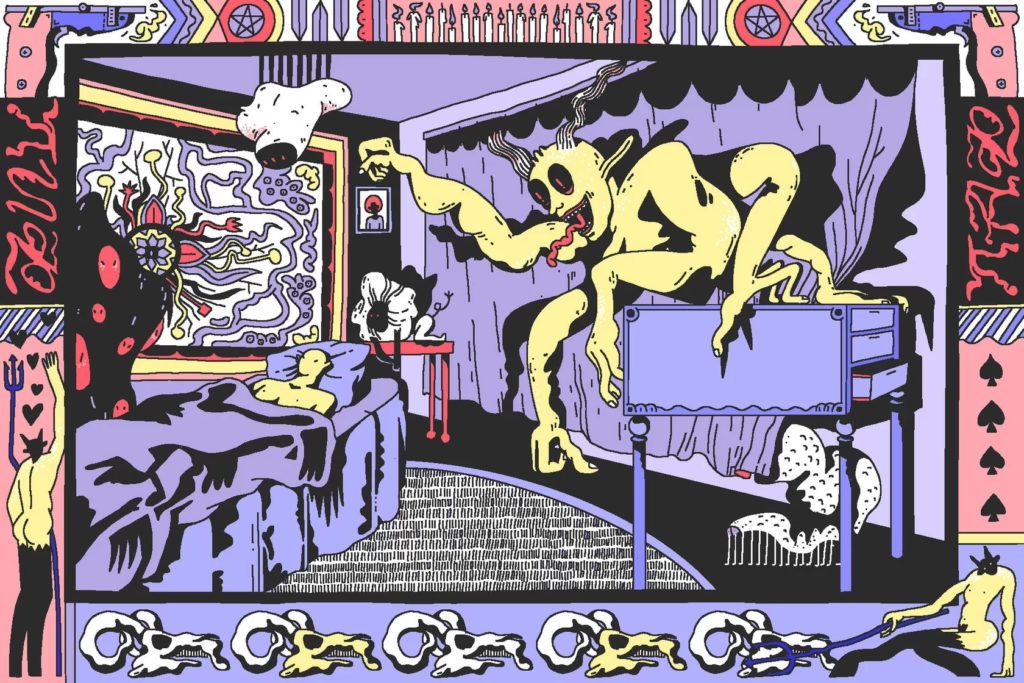
“I believe in paranormal phenomena,” says Julia. - So I thought that a ghost or demon came to me. I began to look for such stories on the Internet and stumbled upon the definition of "sleepy paralysis". Then I finally realized what happened to me. "
Sleepy paralysis, or sleep paralysis, is a condition that can occur between the phases of rapid sleep and wakefulness. “In a quick dream, we have muscle weakness, the skeletal muscles are becoming motionless,” says Alexander Melnikov, head of the departure of the Federal Scientific and Clinical Center for Otorinolaryngology, Alexander Melnikov. “So nature secured us so that we do not accidentally damage ourselves in a dream.” In the phase of quick sleep, only eyes can move. Sometimes during the transition to the phase of wakefulness or vice versa, a failure occurs: a person is already in consciousness, but the muscles are still immobilized. This is called sleepy paralysis.
In the international classification of sleep disturbances, sleepy paralysis refers to paracinnia. “This group of violations in which unwanted behavioral reactions arise in a dream,” Melnikov explains. “This also includes somnambulism (a person can walk under him without waking up), violations of food behavior in a dream (when people eat without contributing), nightmares.” Another paracinon is isolated, that is, not a symptom of any disease, sleep hallucinations. They appear when a person falls asleep or already woke up and opened his eyes, but his brain continues to generate dreams. Such hallucinations can be visual, auditory or tactile. They are very difficult to distinguish from reality, and they can truly scare a person or make them doubt their own mental health.
“There are many different paracinons, and they often intersect,” says Melnikov. “Sleepy paralysis can occur simultaneously with the hallucinations of sleep - it is at such moments that a person wakes up, sees strange things around him, hears sounds and cannot move.” When a person first encounters sleepy paralysis, he often cannot believe that these are just visions: everything looks absolutely real. It seems to many people in this state that someone is trying to harm them-for example, strangle. Perhaps that is why stories about the brownie who walks on the bed are so popular. In fact, this paracinon is not dangerous, says Melnikov. “Our brain can convince us of anything,” he explains. - Make us feel painful sensations in any part of the body. It is important to remember that the hallucinations of sleep do not harm any harm. ”
According to a somnologist, when the patient complains of regular sleepy paralysis, doctors first check if he has narcolepsy-diseases of the nervous system, because of which a person "falls asleep on the go." “Sleepy paralysis and hallucinations can be symptoms of narcolepsy,” he says. - This disease is quite rare, it is associated with genetic disorders and autoimmune processes. Narcolence can seriously affect the quality of life, we treat it with the help of drugs. ” But if it turns out that the patient has isolated sleepy paralysis, not associated with more serious diseases, he, as a rule, is simply advised to better monitor the regime and hygiene of sleep. “In the most difficult cases, antidepressants who suppress the phase of quick sleep can prescribe a person,” says Melnikov. - But they may have side effects, they need to be taken for a long time. If we take into account that sleepy paralysis is in itself harmless, I’m not sure that the end justifies the means. ”
Fight in the box
Olga P. from Samara is 28 years old. For the first time she ran into sleepy paralysis when she was 15. “I was not even afraid,” she says. -I just woke up in the middle of the night and saw some silhouette near the bed. Whoever it was, he did not try to harm me - he just stood nearby. I closed my eyes and fell asleep again. ”
Meetings with a mysterious silhouette began to be repeated. Olga did not pay attention to them - it seemed to her that everything would pass by itself, if you pretend that nothing special was happening. But then the visions became truly frightening. “Once I woke up and felt that someone was trying to strangle me,” she says. “Another time, they seemed to pull me out of bed.” She was sure that this was not a dream, because she “physically felt” how she was dragging her somewhere-or as someone's hands grab her and crushing her on her throat.
The girl told all relatives. “Aunt said that someone came to her by adolescence at night. And my grandmother explained that it was strangled by the brownie, because he doesn’t like me, ”Olga recalls. She herself began to look for what was happening mystical explanations: she was ready to believe in the brownie, and that she had witches in her family.
At 23, Olga lost a close friend. She was seriously worried about the loss, besides, from childhood, the theme of death and the afterlife was scared. The girl recalls that at that time she began “specific psychosis”. Now she woke up two or three times a night and saw dark silhouettes moving around the room. Someone's hands touched her, strangled, hanging over her. “Once I opened my eyes and saw that a crowd of devils was dancing around me,” Olga says. -It seemed that they are conducting some kind of ritual. They were low, black. Like in cinema. " Relatives persuaded her to go to church or to a psychic, explaining that she was haunted by "succubi who feed on her fear." It was said that this is a “hook”, and she needs to get rid of the demon.
One night, Olga felt someone with her nails painfully scratching her skin near the collarbone. Very next to her, an unfamiliar voice said: "He is following you." After that, she finally agreed to turn to a psychic. The meeting took place in an ordinary apartment. The light was muffled, a candle was burning on the table. “I heard from this woman a lot of things that surprised me,” says Olga. -For example, she said that before his death my friend saw some shadows and an angel of death followed him. But he really told me about something like that. ” The clairvoyant also said that a friend asks to convey to Olga "in a casket light." Later, his relatives suddenly gave the girl a box with his things. Inside there were different memorable little things, among them - a lighter.

Despite all the strange coincidences, Olga did not convince the visit to the psychic. “She laid out the Tarot and said that after a friend’s funeral, the spirit from the cemetery had a skeleton,” she says. - As if this spirit does not allow me to become pregnant, and if I do not get rid of it, I can die. The words about the imminent death seemed to me a psychological manipulation: as if a psychic wanted to intimidate me so that I would come to her again. " After hearing the clairvoyant, Olga decided to understand what was happening on her own and find a logical explanation for her visions.
The girl began by reading articles on the Internet about paranormal phenomena and shamanism. But this did not give anything. “Gradually, from esotericics, I switched to articles about the work of the brain and finally came across a sleepy paralysis,” she says. “It turned out that these are not devils and not succubi, but just small malfunctions in the brain.” Olga decided to see a doctor. From a neurologist, she got to a psychiatrist, from a psychiatrist - to a psychotherapist. The latter almost managed to solve her problem.
“The specialist could not make the sleepy paralysis disappear,” Olga says. “But we started working with fear.” When I open my eyes and see frightening shadows around, I just relax and remind myself: this is just a hallucination, it will pass. All this does not exist in reality. ” She learned to ask herself questions: “Do I remember how I went to bed? Can what is happening now, be real? ” In addition, Olga began to leave on the nightstand near the bed an on a laptop with a splash screen that shows time. If the dream has not yet ended, instead of numbers, some nonsense is displayed on the screen or the clock show different times every time, the girl explains. “Seeing that the clock behaves strangely, I calm down and remind myself that I just need to wake up to the end,” she says. - When I stopped being afraid of sleepy paralysis, he began to occur less often. The main thing is that now he does not prevent me from sleeping calmly. ”
As the somnologist Alexander Melnikov explains, psychological stress can affect the quality of sleep, and this, in turn, is one of the factors in the development of sleepy paralysis. But there is no accurate information about this - to date, there are few studies on sleepy paralysis. “We know for sure that the main reason is pathophysiological,” says Melnikov. “This is a violation of the interaction of sleep centers and wakefulness in the brain, and it can be completely random.” Nevertheless, according to the specialist, psychotherapy can really help the suffering from sleepy paralysis - if you get rid of fear, he delivers much less problems. “When a person wakes up, sees horrors and then cannot fall asleep [from fright], this can lead to a lack of sleep,” says the somnologist. “And due to sleep deficiency, the situation may aggravate.” Another argument in favor of psychotherapy is that if a person sees nightmares in a dream, then they can pursue him in hallucinations during sleepy paralysis. But if the patient’s psychological state stabilizes, then nightmares can disappear.
Scientific research devoted to sleepy paralysis is relatively few - since the phenomenon is not dangerous, it does not represent paramount scientific interest. But some studies exist: for example, in 2016, Czech scientists tried to find out at which factors most often sleep paralysis occurs. The sample includes 606 students, each of which faced this condition at least once in his life. It turned out that the average age when the subjects first experienced sleepy paralysis - 17 years, while 24% of the respondents replied that they experienced this experience before 15 years. According to the study, women more often encounter sleepy paralysis. Almost all participants in the study replied that it happens to them no more than several times a year; Its duration usually ranges from a few seconds to two minutes, but there are more long episodes. At the same time, it turned out that the nightmares were a noticeable prerequisite for the appearance of sleepy paralysis.
In 2018, the American Academy of Sleeping Medicine published preliminary results of a large study dedicated to sleepy paralysis. Students-sportsmen got into the sample. It turned out that 18% of respondents faced this condition, and 7% test it at least once a week. At the same time, those who complained about sleepy paralysis more often experienced symptoms of depression. According to another study , sleepy paralysis at least once in their lives happened with 7.6% of people, but this figure is much higher among students - 28.3% - and people with psychiatric diagnoses - 31.9%.
"The mother -in -law hung an icon around the apartment"
Natalia ( the name changed at the request of the heroine ) from Svirsk recalls that she was 18 years old when she first experienced a condition of sleep paralysis. She woke up early in the morning to close the door behind her partner, who went to study at the institute. When she returned to the room and lay back to bed, she heard someone ran around the apartment. The girl wanted to get up and see what was the matter, but suddenly she realized that she could not move. “Then the refrigerator rustled in the kitchen, and the obsession has passed,” she says. Similar episodes began to be repeated. Once Natalia was traveling in an electric train with a colleague. She fell asleep, and when she woke up, an unimaginable noise and a squeal stood in her ears. She tried to make sounds, move - hoped that a colleague would notice and wake her. But she did not pay attention. “I tried to raise my hand, but the body remained motionless,” says Natalia. “At the same time, I seemed to have a transparent, phantom hand that I could move.”
Then the colleague who was sitting nearby turned to the girl. From her voice, Natalia finally came to her senses and asked: “Why didn't you wake me up? I mumbled and moved in a dream. " But she replied that she did not notice anything like this - it seemed to her that Natalya was sleeping calmly.
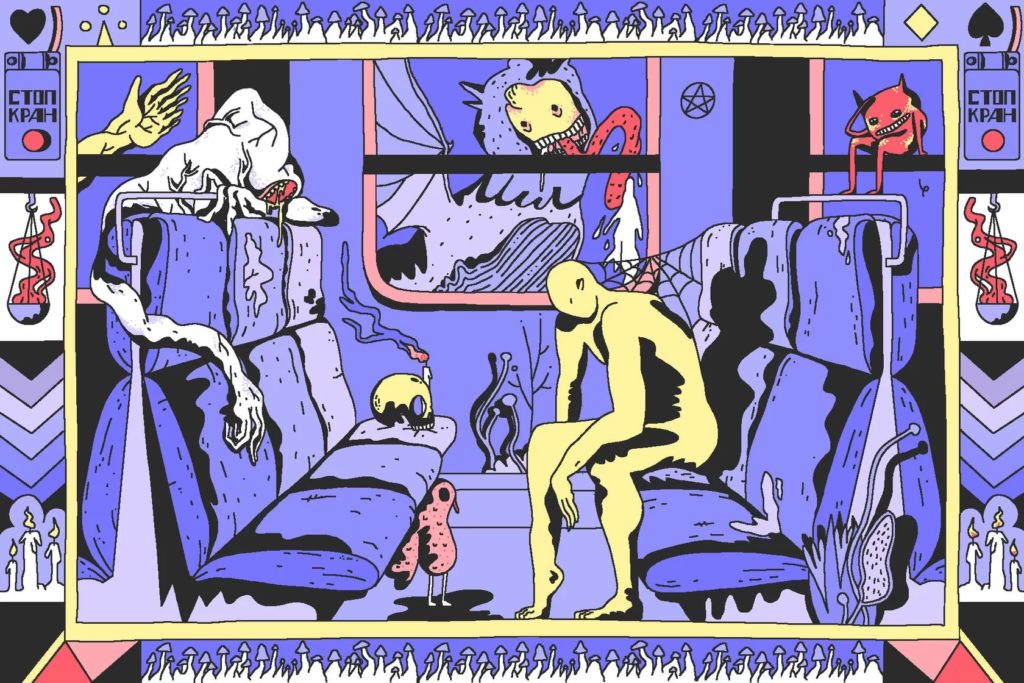
“For a long time I could not find information about what was happening to me,” the girl says. - I thought the brownie came to me. I went to church, put candles. The former mother -in -law hung an icon around the apartment and burned incense. But nothing helped. " Natalia went to neurologists - they prescribed her sedatives, but she refused to take medicines. She began to be afraid to fall asleep, often left the light or TV turned on for the night. The girl recalls that because of this she did not get enough sleep, tired and sleepy, she could not concentrate all day. Only five years after the first episode, she stumbled on VKontakte on the Sleep Paralysis public. “Finally, I found out that all this is happening not only with me,” she says. “I finally realized that everything that happens is explained by science and there is nothing to be afraid of.”
Since sleepy paralysis is a relatively little -studied phenomenon, many, faced with it, cannot understand what is happening to them. Some, not hoping to get help from experts, begin to conduct their own “research”.
Mikhail G. is 30 years old, of which 15 he regularly experiences sleepy paralysis. “I was looking for information on the Internet, talking with different people in thematic groups,” he says. “Once the Slavic priest told me that I was chosen by my mother-god of Darkness to become her priest.” However, such an explanation did not suit him. In 2017, Mikhail created a public paralysis/analytics to try to independently collect data about this phenomenon. “In the early years, when I only ran into sleepy paralysis, I lacked knowledge,” he explains. “I created public so that people who, like me at one time, do not understand what they were faced with.” Michael asks the subscribers questions and "checks different theories." For example, one of the latest polls sounds like this: “Can you predict if the paralysis attack will happen next night?” 62% of the respondents replied that their sleepy paralysis happens suddenly, 33% - that they can predict its offensive.
Паблик Михаила — далеко не единственное интернет-сообщество, где обсуждается сонный паралич. Самый крупный паблик , посвященной этой теме, объединяет почти 12 тысяч участников. В нем обсуждаются как научные объяснения этого явления, так и эзотерические. Типичные названия обсуждений звучат так: «Чем связаны сонный паралич и выход в астрал» или «Был ли у кого сексуальный контакт с суккубами?». Теории, объясняющие сонный паралич паранормальными явлениями, существовали, судя по всему, с древних времен. Например, в первом веке до нашей эры древнегреческий врач Темисон Лаодикейский утверждал , что во сне к человеку может приходить сверъхестественное существо — Инкубус. Подобные существа встречаются в мифологии разных культур часто, — обычно поверья гласят, что злые духи или демоны приходят к человеку по ночам, ходят по его кровати или искушают его видениями и прикосновениями.
Современные эзотерические практики часто рассматривают сонный паралич как «внетелесный опыт». Они утверждают, что в таком состоянии можно «выйти в астрал» — то есть покинуть физическую оболочку и начать совершать невероятные путешествия, проходя сквозь стены и перемещаясь в любую точку мира. Кроме любителей эзотерики, сонным параличом часто интересуются люди, которые стремятся освоить так называемые «осознанные сновидения», при которых человек понимает, что он спит, и может управлять тем, что происходит во сне. «Для тех, кто практикует осознанные сновидения, сонный паралич — один из способов входа в это состояние, — говорит 29-летняя Юлия Котенкова из Екатеринбурга. — Когда тело спит, а мозг бодрствует, наступает тот самый момент, когда человек может начать управлять своим сном». Котенкова — создательница онлайн-школы: с помощью платных вебинаров и консультаций она учит клиентов «управлять сновидениями».
"Don't be afraid"
Кристине Каграманян из Минска 46 лет, и она утверждает, что больше сорока из них регулярно испытывает состояние сонного паралича. Когда ей было четыре года, она увидела в своей комнате странную женщину в черной одежде и рассказала об этом маме. Но та оборвала ее, дав понять, что человек не должен видеть ничего «странного», и обсуждать тут нечего.
Но видения не исчезли, — напротив, по мере того, как Кристина взрослела, они становились все более страшными. «Однажды кто-то положил мне на лицо подушку и начал душить, — вспоминает она. — Я не могла издать ни звука, но громко кричала мысленно, внутри себя. Хоть я и не очень религиозна, я почему-то беззвучно завопила "Иисус"». По словам Кристины, после этого того, кто ее душил, отбросило в сторону. Она услышала, как что-то ударилось об стену. Еще несколько секунд она не могла открыть глаза, — но на ощупь слезла с кровати, поползла к балкону на четвереньках и ударилась о дверной косяк — и только тогда окончательно проснулась. На полу у стены девушка увидела подушку — ту самую, которой ее душили.
Кристина вспоминает, что ей было особенно трудно переживать эпизоды сонного паралича из-за того, что она никому не могла об этом рассказать. По реакции родителей она поняла, что подобные явления происходят с теми, у кого «проблемы с психикой». Ей казалось, что, если она снова попробует заговорить о своих видениях, ее насильно отправят в психиатрическую больницу. «Это было советское время, и подобные заведения внушали ужас», — говорит она.
О том, что такое сонный паралич, Кристина узнала восемь лет назад — случайно услышала этот термин, когда смотрела американский фильм ужасов. К герою по ночам приходили чудовища, а доктор убеждал его: «Это всего лишь сонный паралич». «Так вот как оно называется!» — подумала Кристина. После этого она стала читать интернет-источники и общаться с участниками тематических групп. Но объяснений, которые бы дали все ответы на ее вопросы, она так и не нашла. Кристина говорит, что, с одной стороны, она «логический человек» и верит лишь в то, что можно доказать, с другой — до сих пор уверена, что кто-то всерьез пытался задушить ее подушкой. «Я думаю, это не медицинская и не эзотерическая сфера, — рассуждает она. — Я считаю, что это сфера духовная».
Тем не менее, статьи, которые она прочитала, ее успокоили: она поняла, что сонный паралич случается не только с ней, что о нем можно рассказывать людям, и это состояние вовсе не означает, что у нее психическое заболевание. В 2019 году она записала и опубликовала на Facebook видеоролик «Сонный паралич — как с ним жить?», в котором рассказала о том, как в 1990-е годы обследовалась у разных врачей и как сильно переживала из-за того, что ни у кого не находит понимания. В видео она попросила зрителей не издеваться и не смеяться над родственниками, которые говорят, что «видели во сне что-то странное».
У Кристины шестеро сыновей, старшему — 18 лет. Три года назад он сказал ей: «Со мной сегодня было что-то странное. Я лег спать, но как будто не спал, а кто-то сел напротив меня на диване и смотрел». Кристина сразу рассказала ему про сонный паралич — и объяснила, что этого состояния не надо бояться, и что в нем нет ничего странного. Сын успокоился, и с тех пор они иногда рассказывают друг другу о том, какие «чудеса» им привиделись во время очередного эпизода. Кристина уверена — ее жизнь была бы гораздо проще, если бы в детстве кто-нибудь сказал ей: «Не бойся, с тобой ничего не произойдет».