
Translated material
An attempt to extend her reign turned into an ex-president of Pakistan Musharraf with a death sentence
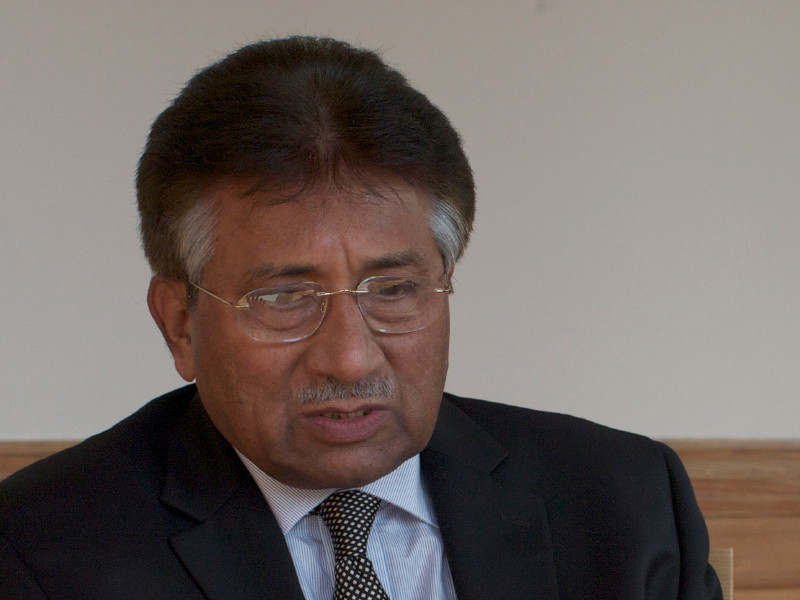
The collegium of a special court in Islamabad sentenced the former President of Pakistan Musharraf Perevo to the death penalty on charges of treason. Of the three judges, two were voted for the highest measure of punishment, BBC reports. This is the first case of a death sentence in the history of Pakistan to the former leader of the country.
In 2007, without waiting for an assessment of the court about the legitimacy of his re -election, Musharraf introduced a state of emergency in the country, suspended the constitution and arrested the judges of the Supreme Court, explaining his actions by the threat of extremists.
Thus, the ex-president hoped to extend his stay in power. Subsequently, this decision of Musharraf became the basis for initiating the case of the Stateizer . The verdict can be appealed. In December, the ex-president released a video message from the hospital bed, calling a criminal case against him unreasonable.
Musharraf came to power as a result of a coup in 1999, but officially held the president’s post from June 2001 to August 2008. He resigned his authority against the backdrop of the threat of impeachment, the refusal to support from the Western countries and the National Army.
In 2009, the case was opened against Musharraf because of the illegal shift of the judges, and in 2011 the court issued an order to arrest him in the case of the murder of Pakistan Prime Minister Benazir Bhutto in 2007. Later, Musharraf was released on a number of prosecution points, including involvement in the murder of Bhutto and the leader of the nationalists of the province of Belujistan Akbar Bugti in 2006.
Leaving the post, Musharraf lived in the UAE and Great Britain. In 2013, he returned to Pakistan to participate in the parliamentary elections, but was disqualified. In the same year, he was placed under house arrest, and in 2016 he was allowed to travel abroad for treatment. Since then, he has not returned to his homeland, reports Al Jazeera .
Now the 76-year-old ex-president is in Dubai and claims that he cannot return to Pakistan because of the numerous health problems that pose a threat to his life, the Gulf News newspaper writes.
Since 2008, a moratorium on the death penalty has operated in Pakistan. In 2014, after the Taliban attack on the cadet school in Peshavar, whose victims were more than 140 people, the country's Prime Minister canceled the moratorium on the death penalty for terrorists. The first after that, a Russian citizen and his accomplices were executed, who, according to the Pakistani authorities, were involved in the attempt on the Musharraf Perse in 2003.
Another attempt to attempt on Musharraf’s motorcade took place in 2014, after he was charged with the Stateizer. On that day, the ex-president returned from the Military Institute of Cardiology to his country residence in the suburbs of Islamabad. A bomb with a capacity of four to six kilograms in the TNT equivalent was laid in a pipe near the pedestrian path.