
Translated material
The International Group to Control of Losing Money recommended that Russia more actively remove the illegal wealth of officials
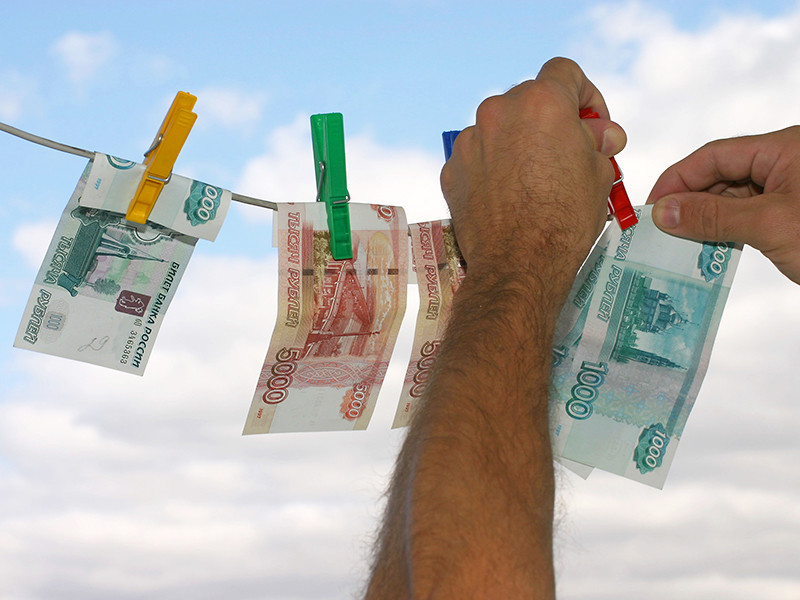
Russia should expand the list of assets of deputies, senators, federal and regional officials, heads of state -owned companies and judges who can be confiscated as illegal wealth. Such a recommendation was given in their report by an international group of developing financial measures to combat money laundering (FATF) following a comprehensive assessment of the Russian system for combating money laundering and financing terrorism (for/FT).
The Fatf’s visiting mission in Moscow took place from March 11 to March 29, 2019 and became the fourth check, the previous one took place in 2008. Experts of the intergovernmental organization assessed the level of the struggle of Russia with the laundering of criminal funds. On October 18, the first results became known, now FATF published an expanded report.
Experts note that Russia acts mainly as a source of criminal income, a significant part of which is laundered abroad. Most of the criminal income bring embezzlement from the budget, tax evasion, corruption, fraud in the financial sector and drug trade. The damage from the investigated cases of criminal income from 2014 to 2018 is estimated at 220 billion rubles. annually.
85% of the revealed crimes for the legalization of criminal proceeds are associated with drug trafficking and the theft of budget funds. 30% of all criminal revenues, or $ 1 billion, falls on theft from the budget.
From 2014 to 2018, almost 318.5 billion rubles were seized from criminals, not counting fines through the use of all confiscation mechanisms, compensation for damage and satisfaction of civil lawsuits. It is noted that the amount of confiscation in criminal order is much more modest than the total volumes of compensation for damage. The amount of voluntary compensation for damage is 8.5 times higher than the amount of confiscation for the verdict - 75 billion against 8.8 billion rubles. for 2018. This is due to the fact that voluntary compensation can lead to condescension when pronouncing the sentence.
In December 2012, Russian President Vladimir Putin signed a law on monitoring the compliance of expenses and income of persons replacing government posts that introduced a mechanism for confiscating the conditions of officials, whose expenses exceed their official income. According to the law, law enforcement agencies should pay attention to the civil servant if he or his family spends more of the income declared over the past three years. The Prosecutor General may demand from the official to justify his expenses. If the official cannot prove the legality of the origin of funds and property, he must be dismissed from the service, and the state is turned into state revenues.
The seized funds and income from the sale of assets are transferred to the federal budget. The Ministry of Finance receives cash and funds from the sale of confiscated property and luxury items, and the state security is precious metals and stones, jewelry and ingots. However, FATF notes that the unreasonable wealth of officials is confiscated only in cases of significant discrepancies between officially declared income and expenses. According to the latest data for 2017, which FATF cites, Russian officials confiscated 8.8 billion rubles. inexplicable wealth.
Only some types of assets are subject to confiscation by law: real estate, cars, yachts and securities. Cash and money from banks, jewelry and assets in foreign trusts do not fall under the law, although high -ranking civil servants is technically forbidden to have foreign accounts or foreign financial instruments.
In June 2019, the Ministry of Justice announced plans to establish a mechanism for contacting the state of funds received by officials, if their amount exceeds the total income of the civil servant and his spouse and they did not provide information confirming the receipt of these funds on a legal basis.
Fatf recommended that Russia legally expand the list of assets and the circle of persons who are subject to the law on monitoring the compliance of the costs of civil servants. A similar assignment was given to the government. The Cabinet of Ministers with the participation of the Prosecutor General’s Office and the Supreme Court was supposed to prepare proposals for expanding the types of property for confiscation, follows from the national plan for combating corruption for 2018-2020.
The Ministry of Justice’s press service did not answer the questions of RBC about the initiatives to tighten the punishment of officials for illegal enrichment, saying that the draft regulatory acts are developed in accordance with the national plan for counteracting corruption. According to experts, various initiatives to tighten the legal status of officials are regularly received by the State Duma. However, there is no any global bill yet, and the problem of corruption at the legislative level has not been solved even if there are sufficiently severe measures of responsibility.
In November, the Constitutional Court allowed to withdraw funds from distant relatives and acquaintances of corrupt officials. The issue was considered in connection with the case of the former police colonelDmitry Zakharchenko .
Then it was reported that the Criminal Code of the Russian Federation is planned to return the punishment in the form of complete confiscation of the property of corrupt officials, which should allow the authorities to more effectively reimburse the state damage from corruption crimes. This punishment was in the Criminal Code of Russia until 2003 and suggested that everyone could lose their property if it was acquired by criminal means. But in December 2003, the State Duma excluded confiscation from the Criminal Code.
In recent years, about 80 thousand criminal cases of corruption have been sent to the court in Russia. 5038 persons with special legal status were involved as accused under them - including more than 3 thousand deputies of local self -government and elected heads of municipalities of local self -government, 94 deputies of the legislative bodies of the constituent entities of the Russian Federation, 35 judges, 119 prosecutors, 516 lawyers, 604 investigators of various departments, including 122 - investigatives of the investigative committee.
Only from January to April 2019, the corrupt officials arrested property of 5.3 billion rubles. In 2018, only money and jewelry for 2 billion rubles were seized, and property for 15 billion rubles.
In addition, the Investigative Committee of Russia insists on the introduction of the Institute of Criminal Liability not only for individuals, but also for legal entities, since in the vast majority of cases, funds and financial instruments are withdrawn abroad through legal entities.