
Translated material
Russian police want to get the right to remove children from families
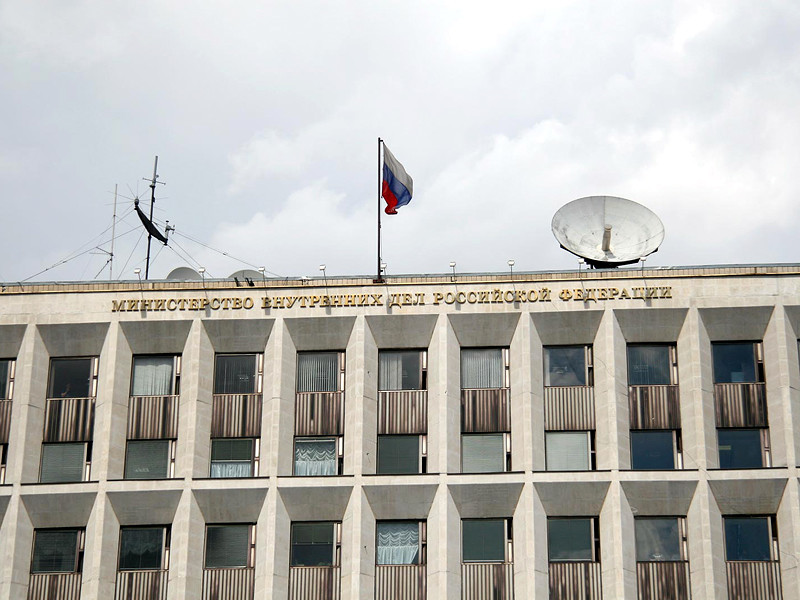
The Russian Ministry of Internal Affairs advocates a change in the Family Code in order to endow its employees with the right to remove the child from the family in case of a direct threat to his life and health. Only representatives of the guardianship authorities now enjoy this right, Interfax reports.
As the head of the relevant department of the Main Directorate to ensure public order and coordination of interaction with the executive authorities of the subjects of the Ministry of Internal Affairs of Russia, Stanislav Kolesnik, the ministry understands the "priority of the family preservation", however, at times they are faced with cases when it is necessary to immediately take measures to "insulate" the child from a dangerous situation.
The representative of the Ministry of Internal Affairs at a meeting of the Council under the Government of the Russian Federation on guardianship in the social sphere noted that when the police in such cases “isolating” the child, they act on the verge of violation, because Art. 77 of the Family Code of the Russian Federation provides that only guardianship and trusteeship authorities can remove a child.
“It must be understood that the guardianship authorities work only during working hours, from nine to six. And the rest of the police, police officers react to these messages. And here, police officers, acting on the verge of exceeding official powers, or accusations of negligence, are forced to use somewhat different powers to determine children who are in special institutions,” Kolesnik said.
In this regard, the representative of the Ministry of Internal Affairs noted, his department has already prepared "relevant proposals for adjusting the 77th (articles. - approx." Interfax " ) so that we have the same authority to be the same."
However, the Ministry of Internal Affairs does not insist that after the removal of a child from the family by police, a statement should automatically follow the court about deprivation of parental rights or restriction of rights. “Of course, the situation often requires proceedings, and this should be some kind of temporary removal in order to understand the situation in the future,” Kolesnik said.
Currently, in accordance with Art. 77 of the Family Code of the Russian Federation (a child’s selecting with a direct threat to the life of a child or his health), only the guardianship authorities are endowed with the right to remove children from families. They can do this after a decision of the relevant authority of the region or the head of the municipality. After the child is removed, the prosecutor is mandatory about this, and within seven days a lawsuit is filed in the court to deprive the parents of parental rights or their restrictions in parental rights.
We add that this year the law enforcement agencies began to work out the mechanism for the removal of children from citizens noticed among participants in protest shares. Families of Muscovites, in particular Olga and Dmitry Prokazovs , collided with a new form of pressure and intimidation.
The couple said that on July 27 they walked in the center of Moscow with a one -year -old son and relative Sergey Fomin. According to the prookazovs, they were not going to participate in the protest, although they are in solidarity with the requirements of the protesters to ensure honest elections to the Moscow City Duma with the participation of the opposition.
According to the prosecutor's office, the couple during a walk in the center of Moscow "endanced the health and life of the boy", passing it to the "third party" - Sergey Fomin. At the same time, Fomin is the cousin of Olga Prokazova and the godfather of her eldest son. Initially, the prosecutor’s statement also said that the child causes “physical and non-pecuniary damage”, but later this formulation disappeared from the press release.
The supervisory authority claimed that the prokazov, "exploiting the child, abused their parental rights to the detriment of the interests of his son." In the federal media, Fomin, who worked as a volunteer at the election headquarters of the lawyer of the Corruption Fund (FBK) Lyubov Sobol, was presented as a protest coordinator. The plots claimed that he was "covered" by a child to get out of a police cordon.
The prosecutor’s office was in such a hurry to file a lawsuit that she made a number of inaccuracies: she indicated the wrong year of birth of the child and did not find out the address of registration of the defendants, which is why the press release indicated that Dmitry Prokazov supposedly did not have Moscow registration and therefore cannot vote in the elections to the Moscow City Duma, which were dedicated to mass protests.
The prosecutor's office demanded to deprive the spouses of leprosy parental rights, but the Lefortovo District Court of Moscow rejected the lawsuit, but issued a warning to the leprosy.
A similar decision was made by the Nikulinsky District Court, considering the case of a large family of Peter and Elena Khomsky , whom the district prosecutor’s office demanded to deprive parental rights for participation with children in the protest of the protest on August 3.
Prokazov’s lawyer Ekaterina Tyagai noted that the requirement to deprive parental rights is applied as an extreme measure, when it is not possible to protect the rights and interests of children in a different way. Typically, this step (except in cases of a direct threat to the life and health of the child) should be preceded by a whole complex of social and legal measures aimed at preserving and strengthening the family.
"The transfer of the child to a relative to a relative to their parents in their own presence from a legal point of view does not apply to the above actions," the lawyer said. In her opinion, the political motive for interference in the affairs of the family was not even hidden. The prosecutor’s office was especially pressed that Prokazov supposedly did not have Moscow residence permit and the right to vote in the elections, but "such information does not characterize their parents and cannot affect the exercise of their parental rights, and even more so, the demand for deprivation of their rights."