
Translated material
The Charm of Robots
The book “Managed Heart. Rules for Feelings” by American sociologist Arlie Hochschild, in which the term “emotional labor” was first used, was published more than 30 years ago and has become a classic fundamental work in the field of the sociology of emotions. Recently, the Delo Publishing House of RANEPA published a translation of the book. We publish an excerpt in which Hochschild discusses the mechanisms of managing emotions in both private life and the work world, and the price we pay and what we risk by subjugating our feelings.
Why do our acts of managing emotions develop into social patterns? I believe that when we try to feel, we apply hidden rules for feeling. We say, “I shouldn't be so angry about what she did,” or “Given our agreement, I shouldn't feel jealous.” Acts of managing emotions are not just private acts. They are used in exchange according to the rules for feelings. Feeling rules are standards used in emotional conversation to determine what we owe and what is owed to us in the currency of feeling.
They help you understand what is “due” in every relationship, in every role. We give each other tribute in the currency of managing feelings. In every interaction we pay. We overpay, underpay, cheat on payments, admit our debts, pretend to pay, or admit what is emotionally owed to another person. In this way, we are sincerely trying to be civilized.
Because the distribution of power and authority in some private relationships is not equal, acts of emotion management may also be unequal.
A myriad of momentary acts form part of what we designate by the terms attitude and role . Like the tiny dots in Seurat's paintings, the micro-acts of controlling emotion through repetition and change over time create the movement of form. Some forms express inequality, others - equality.
What happens when managing emotions is sold as labor? What happens when rules for feelings, like rules for displaying behavior, are set not by private negotiation but by company rules? What happens when social interactions do not change or cease, as in private life, but are ritually reinforced and become irreducible?
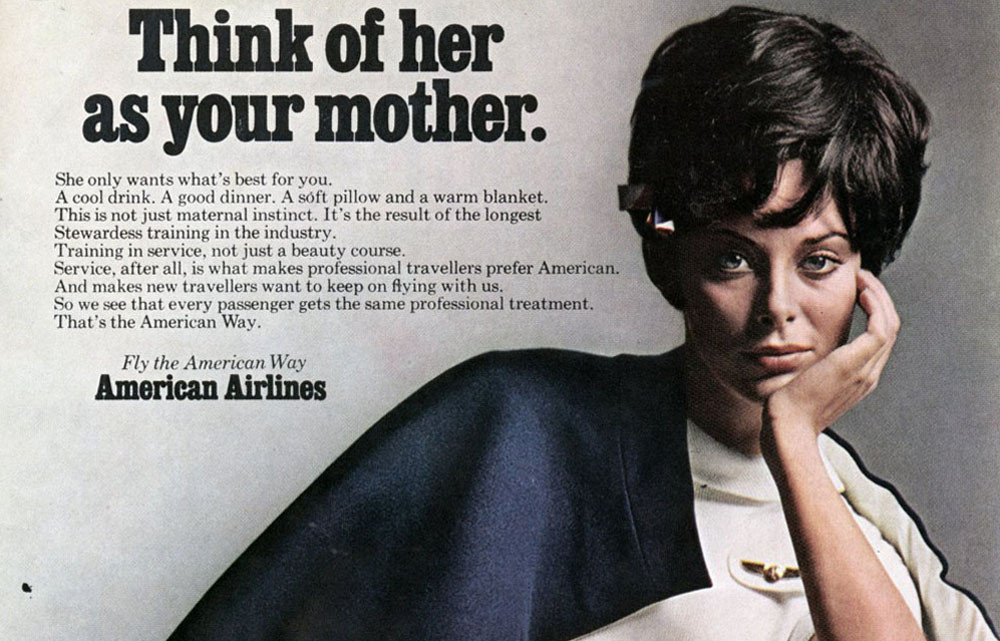
What happens when the display of emotion that one person is expected to show towards another reflects some inherent inequality? Airline passengers may choose not to smile, but a flight attendant must not only smile, but develop the warmth that goes behind that smile. In other words, what happens when our private ways of using the senses are transmuted ? Sometimes a big word is needed to indicate a single pattern of events that would otherwise be completely unrelated to each other. The word I suggest is “transmutation.” When I talk about transmutation of the emotional system, I want to point out the connection between a private act, such as trying to enjoy a party, and a public act, such as trying to make oneself feel good towards a client. I mean the relationship between a private act, for example, an attempt to dampen one's sympathy for a person in someone who is experiencing intense love, and the public act of a debt collector, suppressing one's empathy for a debtor. By the big phrase “transmutation of the emotional system” I mean everything that we do privately, often unconsciously, with feelings that today are increasingly the focus of large organizations, social engineering and the pursuit of profit.
The effort to feel what a person wants, expects, or feels necessary to feel is probably as old as emotions themselves. Following or deviating from rules for feelings is also nothing new. In an organized society, rules may never have applied only to observable behavior. “Crimes of the heart” have long been recognized because the injunctions have long guarded the “preliminary reactions” of the heart: the Bible says, “Thou shalt not covet thy neighbor’s wife,” not only to avoid acting on the emotions. The innovation of our time has been the prevalence of an instrumental attitude towards our innate ability to consciously and actively play on the gamut of feelings for a private purpose and its cultivation and management by large organizations.
This transmutation of the private use of the senses affects both sexes and different social classes in very different ways. Traditionally, emotion management was better understood and used more often by women as one of the gifts they exchanged for economic support.
Particularly among dependent middle- and upper-class women, it was common to take on the job of setting the emotional tone of social interactions: expressing ostentatious joy at Christmas gifts that others opened, creating a sense of surprise at birthdays, or showing alarm at the appearance of a mouse in the kitchen. Gender is not the only determining factor in the skill of such controlled expression of emotions and the emotional work required to succeed in this expression. But men who are good at this job have a little less in common with other men than women who are good at it have with other women. When the “feminine” art of observing private emotional conventions becomes public, it becomes tied to a different distribution of costs and benefits.
Likewise, emotional labor affects different social classes differently. If emotional labor is the specialty of women, the less privileged sex, then it seems that the middle and upper strata of the class system demand it most. And parents who deal with emotional labor at work will teach their children the importance of managing emotions and prepare them to learn the skills they may need in future jobs.
In general, the lower classes and working class work more with things, while the middle and upper classes work more with people. Working women are more likely to deal with people at work than men. Thus, both gender and class patterns are observed in the public and commercial use of feelings. This is my social thesis.
Emotional work comes at a cost: it affects the extent to which we listen to feelings and sometimes our very ability to feel. The management of the senses is an art fundamental to civilized life, and I suggest that in the larger perspective the fundamental benefit justifies the cost. In The Discontents of Civilization, Freud argued something similar about the sexual instinct: however pleasant it may be, we are ultimately smart enough to refuse its full satisfaction. But when the transmutation of the private use of feelings is successfully completed - when we successfully transfer our feelings to the engineers of the employee-customer relationship - we may pay for it in how we listen to our feelings and in what they somehow tell us about ourselves. When the acceleration of the human assembly line makes it difficult to provide “genuine” personal service, the worker may refuse to perform emotional labor and provide only a thin layer of tortured feelings in return. Then the price will change: the punishment will be a feeling of falsehood or insincerity. In short, when transmutation is in effect, the worker runs the risk of losing the signaling function of the senses. When it does not work, there is a risk of losing the signaling function of their demonstration.
Certain social conditions have increased the costs of managing feelings. One of them is the general unpredictability of our social world. Ordinary people these days move through many social worlds and experience dozens of social roles. Compare this to the life of a 14th-century baker's apprentice, as described in Peter Laslett's The World We Lost: a life that began and ended in the same place, profession, family, same worldview, and same rules.[1] Today, circumstances are less and less likely to suggest their correct interpretation or clearly and clearly indicate what feeling should be felt towards whom, when and how. As a result, we, as modern people, spend more and more time thinking about the question: “How should I feel in this situation?” Oddly enough, the second condition, more suitable for the baker's apprentice in Laslett's book, has not disappeared in more modern and fluid times. It seems we keep asking ourselves, “Who am I?” as if there was only one clear answer to this question. We still look for a solid, predictable core of our personality, even if the conditions for such a personality to exist have long since disappeared.
In the realm of feelings, Orwell's 1984 has quietly arrived, leaving behind laughter and perhaps the idea of getting out of this predicament privately.
When faced with these two conditions, people turn to their senses to understand where they are, or at least what their reactions to the event are. That is, in the absence of unquestionable external principles to guide, the signaling function of emotion becomes more important, and the commercial distortion generated by the management of feelings becomes even more important as the price that the person pays.
The answer to all these problems may well seem to us to be the increasing acceptance now accorded to the uncontrolled heart, the greater value now ascribed to "naturalness" or spontaneity. Ironically, people like Rousseau's noble savage, who smiled only “naturally” without any ulterior motive, are hardly qualified to work as a waiter, hotel manager or flight attendant. Great respect for “natural feelings” may thus coincide with a culturally imposed need to develop their exact opposite—an instrumental attitude toward feelings. For this reason, we rush around with spontaneous feelings as if they were a scarce and valuable resource: we elevate them as virtues. It would not be an exaggeration to say that we are seeing a call for the conservation of “internal resources,” to protect another undeveloped natural area from corporate interference and forever preserve in a “wild state.”
With the increasing celebration of spontaneity came jokes about robots. They play on the conflict between humanity - that is, the presence of feelings - and the position of a cog in the socio-economic machine. The charm of the little robot R2-D2 from Star Wars is that he seems so human. Such films return to us what is already familiar in an inverted form: every day, outside the cinema, we observe people who express feelings with the automaticity of robots. Today these ambiguities have become funny.
Both the growing celebration of spontaneity and jokes about robots suggest that in the realm of the senses, Orwell's 1984 has quietly arrived, leaving behind laughter and perhaps the idea of getting out of this predicament privately.
Notes
1. Laslett 1968; Stone 1965; Swidler 1979.
Anna Lavrik Publishing selection Valeria Anashvili Arlie Hochschild