
Translated material
Growth of protest moods
In cities where the “Development mode” is established (Novosibirsk, Tomsk, Krasnoyarsk, Irkutsk), protests will be quite organized and protesters will use long strategies of the struggle, shifting it in the electoral field.
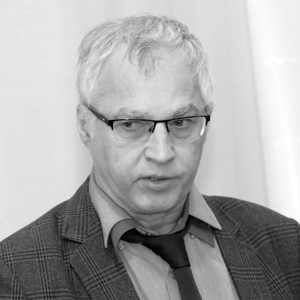
Yuri Pustovoit
Candidate of Political Sciences, Associate Professor of the Department of Political Sciences and Technologies of the Siberian Institute of Management (branch of the RANEPA) Yuri Pustovoit conducted a study for the project “How is a protest created? Spaces, symbols and leaders of protest communities in the cities of Siberia. ” He told Taiga.info about his conclusions.
The growth and specifics of street activity began to be discussed from about the middle of the “zero”, when the reason was the monetization of benefits. Then a number of studies were done after known events in 2011 and 2017.
The empirical base for the study was expert interviews, observations and analysis of the results of voting and publications. Plus, for 2018, we collected more than 50 interviews with leaders and participants in protest associations in Novosibirsk, Tomsk, Barnaul, Kemerovo, Novokuznetsk and Abakan. Typically, the interview consisted of five key blocks (biography, city problems, evaluating the organization of protest, motivation of participants, prospects for the future). We observed 9 rallies and held 8 focus groups. This year, the study was conducted only in Novosibirsk.
About the most protest regions and conclusions
Traditionally, the highest protest activity on the federal agenda is observed in the following cities: Barnaul, Irkutsk, Novosibirsk and Omsk, Tomsk and Krasnoyarsk. Protest activity is much lower in Chita and the Kemerovo region, and the lowest protest activity in the capitals of national regions: Ulan-Ude, Gorno-Altaysk, Abakan and Kyzyl. Of course, these data must be considered in relation to the population and a specific socio-economic and political situation.
In four rich and independent cities (Novosibirsk, Tomsk, Krasnoyarsk, Irkutsk), a “growth regime” with competitive elections and contesting of power initiatives, primarily by official opposition, has been formed. In Ulan-Ude, Gorno-Altaysk, Abakan, Chita, the “Status Quo” regime has developed, which ensures the stability of the prevailing power coalition in relations with federal and regional authorities. Violations of the political borders of the central government here lead to increased protest communities, the growth of electoral and street activity. In Barnaul and Omsk, the regime was not developed due to the dominance of the regional political power and the complex socio-economic situation, and in the cities of Kemerovo, Novokuznetsk, Kyzyl, the governor's vertical is supplemented by strong economic entities (first of all, coal mining companies) applying for the territory of cities and the region.
About Novosibirsk
We see a relatively prosperous large trading city without a clearly expressed industrial component with indicators above the average economic, rather low social (level of crime and drug addiction) and high cultural capital
The peculiarity of the Novosibirsk protests is their high level of organization and participation in the organizing committees of people, sometimes with a diameter political position. The city has several actually acting political associations of a very different nature, whose program is somehow connected with the federal agenda of the day. Sometimes they conduct joint rallies, sometimes they act separately.
Usually one ideological block with a pronounced social agend is represented by the Association “Pensioners for a Decent Life”, Communists (official Communist Party and various pro -communist associations) and “Nationalists” (as they usually denote the participants of the NOD movements, “Civilian patrol”, “Homeland”). Another block, with the agenda is rather political, is represented by liberals (Libertarians, supporters of Alexei Navalny and Yabloko).
All associations appear on the network to that extent, carry out everyday work, with the only difference being that in the first case this work is usually “street” in nature, in the second - educational. They have their supporters in the legislative authorities of all levels, in the administration and in business. There are usually representatives of associations that solve local problems at rallies: deceived equity holders, motorists, cyclists, fighters with illegal (more precisely with illegitimate development). There are stable communities and positive experience of struggle, when rally activity is supplemented by judicial practice and lobbying for their interests through legislators and officials.
Irkutsk, Krasnoyarsk and Tomsk
Irkutsk is an average economic development, characterized as a rich and independent city (wealth is evaluated by a sufficient amount of funds that allow you to solve any crisis situations, independence - a share of gratuitous revenues). The share in the local economy of the region for mining is zero!
Local media emphasize high protest activity in the region and its social orientation. Prior to the election by the governor of the communist Sergei Levchenko in 2015, the Communist Party played a significant role in organizing rallies.
In Krasnoyarsk, the same characteristics as Irkutsk. There is a high local protest activity, and the main problem of the local agenda, of course, is environmental. The peculiarity of Tomsk is the eternal desire of the protesters to join the argumented dialogue with the authorities and attempts to defend and use their public space. Note that the power in Tomsk is consolidated, there are no contradictions between the governor and the mayor. Official parties occupy their social and electoral niches, and high protest activity is aimed at solving local problems. Tomsk “Protester” is widely represented on the network, but it should be borne in mind that part of the city’s population evaluates its status as temporary (student), and participation in politics, and even more so in local policy, is not a priority for him.
"Cities without modes"
The example of Barnaul is interesting here. In Barnaul, from time to time, a few protest promotions and performances of a different orientation are held: against the TNT channel, development, corruption. The peculiarity of the Barnaul situation is that in social terms, the city loses residents who leave for more prosperous regions. The political field was thoroughly cleared by the former governor-prosecutor who did not tolerate any independence. The discretion of protest communities and the low political activity of the population are noted.
Cities united by the concept of "CVO status"
Ulan-Ude, like other cities of this group, is assigned to economic outsiders. Local rallies have a different focus: against specific politicians (heads of the city, prosecutor), annexation to the action of truckers was noted.
There are practically no protests in Chita. In Abakan, large enterprises are controlled by metropolitan business structures. The basis of the local economy is agriculture, state employees and security forces. In the city, time from the time passes protests both with a political agenda and aimed at solving local problems.
Kuzbass
Kemerovo and Novokuznetsk have average economic development. High protest activity is connected there with the federal agenda of the day. After the tragic events in the Winter Cherry, a sharp increase in protest activity occurred. The protest movement in Kuzbass is chopped into several parts. Official parties practically do not interact with unofficial movements. The North (Kemerovo) requires the subordination of the South (Novokuznetsk, Myski and Mezhdurechensk, where the most active protesters live) and replay it in organizational games.
The older in age and political experience is sympathetic, but rather does not take seriously and does not support youth initiatives. If we add a deterioration in the environmental situation, the lawlessness and arbitrariness of coal companies, as well as the outflow of the population from the region, the authoritarian management model, combining neopatriconialism, the local oligarchy and, until recently, socialist rhetoric, then the low chances of developing protest communities become clear.
The origin of the protest
The protest is based on protest associations with the federal agenda (pension reform, access to participation in the elections, corruption). Activists regularly carry out their public events, attract the attention of the media and participants. They give the opportunity to put their requirements to representatives of associations with a non -political agenda of the day: motorists, ecologists, pointing opponents, deceived equity holders and so on. This trend is most clearly manifested in large cities, where opponents of large -scale construction (Fourth Bridge and Garbage Polygon in Novosibirsk), environmental problems (Krasnoyarsk), the construction of temples in microdistricts (Tomsk) receive organizational and information support from political activists of parties and associations of the widest ideological direction.
The growth of protest moods can be noted, which is manifested in an increase in the number of rallies, the number of protesters, the number of detainees. It is still difficult to highlight some uniform trends, but you can indicate two types of requirements for power. Firstly, this is a protest against a violation of a “social” contract (Communist Party, GCD, “pensioners for a decent life” and so on) and, secondly, a protest for compliance with the “political contract”, that is, observing the spirit of the Constitution of the Russian Federation (supporters of Navalny, “Yabloko” and so on).
Forecast
The opposition is represented by two (systemic and non -systemic) echelons, but so far does not contain signs of counter -lite. The system opposition, having certain resources (economic viability and a higher level of protest identity), does not have an alternative “agenda”. The non -systemic opposition, generally focused on an alternative agenda (the growth of human capital through the development of a system of law, political and economic competition), is currently not resources.
I must say that the protest political communities are more likely to be built on values on the agenda and the degree of identity. They value their right to self -determination, the opportunity to choose and are more focused on a street protest than on the Cloarrier agreements. The proclaimed values fit poorly into the current agenda - that is why at rallies and events you can see the same faces. The impulse of social activity is not rationalized and is not translated into specific goals, public articulation and a value agenda. Therefore, given the lack of funding and the reaction of the authorities, it is difficult to expect quick victories and success, despite the attractiveness, modernity and humanism of the ideas expressed.
I can assume that in cities where the “Development mode” is established (Novosibirsk, Tomsk, Krasnoyarsk, Irkutsk), protests will be quite organized, and the protesters will use long -term political strategies, shifting it depending on the circumstances in the electoral field, striving for interaction with parliamentarians, using the media and social networks. The power confrontation here will be presumably limited.
Cities in which modernization processes are not pronounced, or modernization is only in one of the vectors (industrialization), presumably will not give steady protest dynamics, due to a lack of organizational resources: Gorno-Altaysk, Kyzyl, Abakan, Kemerovo, Novokuznetsk, Ulan-Ude and Chita.
In Kuzbass, Kyzyl, Ulan-Ude and Gorno-Altaysk, shares will have a limited nature of short-term outbreaks, sometimes fading, sometimes suppressed with the help of repression. In Omsk, Barnaul and Chita, perhaps a street policy will be the main means of expressing groups of groups.
And it is worth clarifying that the study at this stage is more likely to provide some of the streamlined data and hypotheses with which I am going to work for at least another year, which can allow you to highlight and describe some key trends.
Recorded by Vladimir Kuzmenkin