
Translated material
Human Rights Watch calls on the Russian authorities to stop freely detaining and beaten migrants
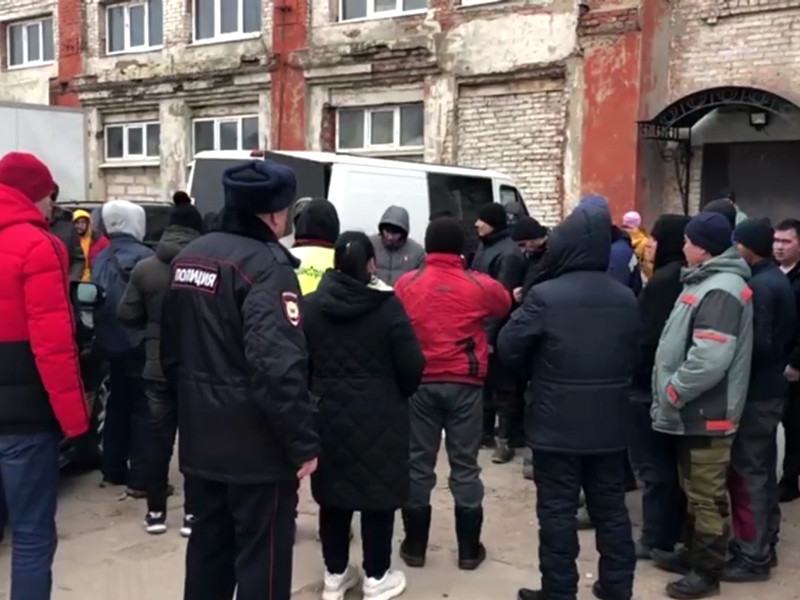
The Human Rights Watch international human rights organization appealed to the Russian authorities to stop the pursuit of migrants. According to human rights activists, security forces are groundless in the regions of foreigners, and also beat them. Several raids accompanied by these abuses were carried out in December, at least in six regions.
“Inspections on racial characteristics, mass detentions and cruel circulation in the police with (detained) migrant workers and Russians of non -Slavic appearance are illegal and unfair,” said Hugh Williamson, director of the HRW department for violation of human rights in Europe and Central Asia. “This should immediately stop.”
On December 12, the Kyrgyz media reported that Russian police officers in Khabarovsk conducted searches in a transport company in which visitors from Central Asia work drivers. As a result, dozens of minibuses were detained and beaten. Most of them are immigrants from Kyrgyzstan, but also among the detainees there were citizens of Tajikistan and Uzbekistan. Later, all the detainees were released, except for two citizens of Tajikistan, who allegedly expired a visa.
Human rights activist Valentin Chupik, who leads the Tong Zhorti organization, accepts complaints from migrants and helps them, said that the police detained drivers under the pretext of “personality testing” without any additional explanation.
One of the detainees said that 103 people were instituted in two Autosak buses and taken to the building on Voronezh Street. There, law enforcement officers beat migrants with batons and bats, having previously scored video cameras. Before the execution, the security forces forced the detainees to go to the floor. The most cruelly at first was beaten by those who did not immediately fulfill this requirement. Then the others were greatly beaten.
"Narrow -eyed, tired! Get out of here so that you are no longer here!" - the tormentors said in police uniform. The beating lasted three hours, then the migrants were ordered to lie and not move. They released them only in the morning.
Passports and valuable things were seized from the detainees. They returned only the small part of the selected. According to Valentina Chupik, about 80 migrants were beaten by beating.
Returning to the car depot, the victims recorded their injuries on the camera and called an ambulance. However, doctors refused to hospitalize them under the pretext that migrants did not have documents that remained in the police. “At first, the ambulance took me, it seems that the rib was broken. But on the way, when they found out that the injuries were in the police, they landed and left. Now I’m lying at home,” said one of the detained residents of Khabarovsk.
Only a day later, when information about the incident got into the media, two beaten citizens of Kyrgyzstan were hospitalized.
The Chupik confirmed the negligent attitude of the doctors to their duties: “There were five of the most difficult people there, they at first“ ambulance ”seemed to be going to take away, and when they recognized the details where they got these injuries, these“ heavy ”simply landed on the road:“ There are no passports, we can’t hospitalize because of this. ”Although, of course, this is nonsense of the blue mare.”
According to the human rights activist, one of the detainees "spilled a Russian passport to shreds," and to many others "spilled migration accounting." “The guys emphasize that they are all in Russia absolutely legally, and none of them have problems with documents. For many years they work legally in Russia. Someone already has a residence permit. That is, there should not be any complaints about the documents at all. Yes, no one had verified them, they simply selected the documents, with sticks, as they say, they knocked out these documents,” added Valentina Chupik. Her words are cited by the news agency "Siberia. Real."
The Embassy of Kyrgyzstan in Moscow informed HRW that it received complaints and requests for assistance from 18 citizens of Kyrgyzstan. The Foreign Ministry of Kyrgyzstan spoke with a protest about the incident, which said that Russian officials assured the Kyrgyz authorities that the incident would be investigated.
The Kyrgyz Consul in Khabarovsk Kadyrbek Myrzabaev sent a note to the Ministry of Internal Affairs, the prosecutor's office and the FSB. According to him, the victims claim that they were beaten by OMON of the Rosguard.
Chupik said that since the end of November he receives information about the conduct of such raids in other regions. The score is detained and beaten for hundreds. Moreover, most of them are released, and only in some cases there are grounds for deportation.
On December 11 in the Samara region, police special forces held a raid together with the FMS and the traffic police. As one of the detainees told HRW, the security forces stopped cars along the highway towards the border with Kazakhstan, identified people with non -Slavic appearance among drivers and passengers and sent them to the nearest rest for rest. For two hours, more than 100 people were detained. They were forbidden to talk to each other and use mobile phones.
When the detained man approached the boss of the security forces and asked if he could name the grounds for detention and do it in front of the video camera turned on, the citizen was taken to the room where three police officers applied a stun gun and beat him.
The man also saw how the police beat other detainees if they tried to shoot what was happening on the telephone cameras.
According to Chupik, after this raid five people turned to medical help. In two of them, fractures of the ribs were diagnosed, one thigh is broken, in two more - traumatic brain injuries. Most detainees during the raid are citizens of Uzbekistan.
In the period from December 11 to 15, the same raids were carried out in Saratov, Orenburg, Tosno (district center in the Leningrad Region) and in one of the areas of Moscow. More than 300 people were detained in them. In one of the raids, the police seized not even foreigners, but citizens of the Russian Federation of Kazakh nationality. Some detainees were held for up to 20 hours.
According to Chupik, during the raid in the Tosno, the police gathered more than 100 people in buses, who were kept there without heating, access to the toilet, drinking water or food. In this position, people spent all night, after which they were released.
HRW notes that the prohibition of racial or ethnic discrimination is enshrined in Russian legislation and key human rights agreements, including the International Covenant on Civil and Political Rights and the European Convention on Human Rights, of which Russia is.
"Migrants with Non -Slavic appearance is one of the most vulnerable and mute social groups in modern Russia," says Williamson.