
Translated material
Vasil Ivanovich, parrot!
Where and why jokes disappeared: Dmitry Bykov answers
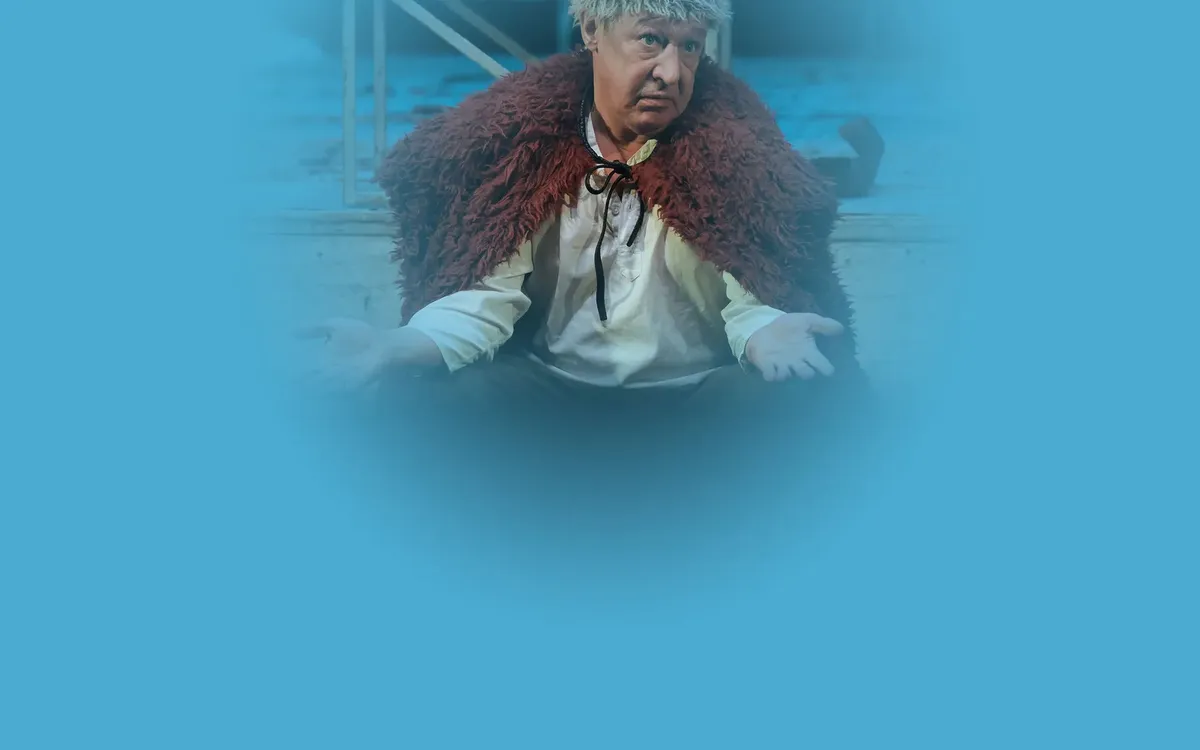
In 1999, the tokens on the subway disappeared. In 1992, vodka coupons disappeared. In 2019, jokes disappeared. Remember which of you told your loved ones what you can laugh at together. We asked the writer Dmitry Bykov and the 20+ generation, DOXA magazine, where jokes have gone.
Andrei Sinyavsky - not only a philologist, but also a collector of folklore - believed that Russia had two main contributions to the culture of the twentieth century: a thieves song and a joke. Both genres are represented in the art of other countries, but nowhere - in such quantity and quality. The anthology of Soviet jokes of the work of Mikhail Melnichenko occupies more than a thousand pages and is predictably lacking. We can say that jokes told the entire population of the USSR, which was generally skillful to speak. Yes, and thieves' songs sang everything, including those who were not -off - there were even more of them than the military.
To say that now the joke has died is not entirely correct: it has been modified. The best joke that I heard in the past year is good even against the backdrop of the old Soviet ones:
Petka brings Vasily Ivanchu a parrot.
- Vasil Ivanovich! Parrot!
Vasily Ivanovich takes a parrot, twists his head and says sadly:
- Well, wounded ... Further what?
This is very funny, especially if you tell you correctly; If you are alive to portray Petka, who with naive enthusiasm presents a parrot and pronounces a replica with a stink, with a hatching of the eyes, because this is indeed delighted by this outlandish. And Vasily Ivanovich is also not to blame, he just has one reaction to everything new and incomprehensible. He can only scare, and radically, twisting his head, but nothing more. This is very similar to today's Russia and generally funny that sad funny that is characteristic of most successful local jokes.
As for the disappearance of political jokes, replaced by the ontological jokes, i.e. Absurdian - I had a convenient hypothesis: the joke usually sticks its blade into the gap between the official rhetoric and the true ideology of the state. Well, for example: will there be a third world war? No, but there will be such a struggle for peace that there will be no stone on the stone. The aggressive nature of Soviet propaganda, always disguised as pigeon peacefulness, is hissed. Or: Russian, American and Frenchman argue, whose wife is more beautiful. The American says that when his girlfriend sits on a horse, she takes her feet to the ground, and this is not because such a low horse, but because such long legs. The Frenchman can hug his girlfriend with the same hand to steer, and not because such a long hand, but because such a thin waist. And the Russian, going to work, slapped his wife in the ass, and when he returns, the ass is still trembling. “And this is not because,” he ends triumphantly, “that such a big ass, but because the shortest working day!”
But today's Russian propaganda is non -peaceful, and politics is non -social; Communist demagogy has gone, not accepted to be shy, and why do we need such a world in which Russia is not?! Modern Russia was not in vain and even included Solzhenitsyn in the school curriculum, because for the first time in its history it does not live by lies: there is no hypocrisy in it. The propaganda of the war sounds through all federal channels, and the fact that society has not yet rolled up to the most fuel fascism is explained only by his, society, with laziness.
By Soviet standards, any headlines on the modern news site could sound by Soviet standards, only it would be a sad joke.
Russia was not in vain ten years, throughout the nineties, composed anti -utopia: now it lives in them. The resource of anti -utopia, by the way, is unlike the resource of revolutions - we really scooped up. It is pointless to compete with reality today, because in reality the bets are higher: no satirist can repaid this Herod, and the social satire really died. It’s even boring to write about her: in the seventies there was more, although Ryazanov in the “garage” claimed that she was not there. There is no it now, for the satire assumes the presence of a social ideal, and our time has called him into question. The golden words of Mikhail Uspensky that the normal state of mankind is fascism (the novel “Paradise”) have never had such clear confirmations. German fascism could still give rise to jokes, for at least occasionally hypocrite; Modern fascism is marvelous, it is not masked under anyone and is frankly proud. What to laugh at? Over his atrocities? So not funny.
Over time, it even seemed to me that the disappearance of the joke is more likely a positive result of the tenths. Slave genre, giggling into a fist, pair release. Anyway - how much can you adapt, give conformism for inner freedom, hiss in kitchens? Some jokes are brilliant satirical miniatures, but these masterpieces do not justify the modus itself, which leads, alas, to degeneration. And everything is funny for us. But in fact it is not funny. Now is the time of pathos. Such thoughts from me periodically arise today, although they look premature. But others appear with them:
The joke does not arise now precisely because there is nowhere to tell it and no one.
Still, a successful joke is an example of folk art, and the people do not at all time. And then an entertaining question arises: composing a book about Okudzhava, I seriously thought about the phenomenon of the new folk song - the author. She was no less popular than the “steppe and steppe around”, simply designated a new quality of the people. Hence the easiest answer to the fatal question about whom to consider the people. The people are called the one who writes folk songs and generally creates folklore. If today the author’s song almost does not exist, and the jokes remained mainly from the joke, among which the unfinished ones prevail - does this mean that we simply have no people as a carrier of national identity?
In fact: most of the Russian population in the seventies and eighties was fronted, that is, it was critical to power. The joke arose in this skeptical environment as naturally as mold patterns on the glass of the greenhouse. Today, a completely different sensation prevails among the masses: we are not like everyone else, yes, but this is because we are better, special, we should not be equal to anyone and report to common sense, because common sense is not right, and our specialty is right. Everything that is not consistent with her is Russophobia. Alien recipes are not suitable for us, we are the same as there are others, and therefore we do not have to strive for anything. We have reached homeostasis and can exist in it indefinitely. Any development in such a Buddhist worldview is sinful and catastrophic; Involuntarily, Limonov recalls - “My friends with offending and fervor scold this unanimous power, and I think everything with the Indian in some shade: what is it to me?” Harms is also recalled: “On the remark:“ You wrote with a mistake ”, answer:“ It always looks like this in my spelling. ” Today, folklore, if it were, would not have been in irony, but in the praise of such a status close to perfection, because perfection is usually not the perfect world (it does not happen), but the maximum compliance of desires with opportunities. And in fact,
If we consider the blogs today's folk art, another folk genre prevails in them, namely a denunciation.
This is also folklore, by the way, and in the composition of denunciations, the Russian population succeeded at least in the invention of jokes, and then, if you think about it, quite funny; Simply is the basis of the joke, and the denunciation is based on complacency, the feeling of its rightness against the background of someone else's irregularity. Read many blogs, not only with paid trolls or Kremlin propagandists, read the homerically ridiculous and equally sad records (it would be more correct to say - with rassers), say, the Crimean blogger A. Gorny, who even fronts - but, so to speak, on the right (as one of the last jokes, we do not criticize Putin for the fact that it is too much Putin, and for the fact that he is not enough Putin). This is modern folklore, generated by a new, unprecedented aggregate state of the people - or rather, its deepest crisis, which is doomed to lead to a new stratification. Together, these two peoples can exist in one value paradigm, and their quantitative ratio is far from 86 to 14: in fact, this is about 10 percent of opposition and loyalists plus 80 percent of the inert mass, which are not any people and are only waiting for certainty.
In order for an anecdote to exist, it is necessary that there is someone and for whom to tell it - that is, to exist, firstly, the environment, and secondly, the cultural level of the narrator. It is naive to think that all the jokes were invented in the CIA or NTS: they have such knowledge of life that emigrants have traditionally lacked (which is why most of the emigrant literature was amazingly naive). All this was the work of the same education, which was actually the Soviet intelligentsia, that is, people with higher education, without the ability to political struggle, but with a clear understanding of the dead end of the Soviet path. To compose a joke, it is necessary not only the consciousness of dysfunction, but also a certain cultural level, and that creative state, which just arises from a combination of hopelessness and hope. It was the hope of changes with all the hopelessness of the seventies who were inspired by jokes - for example, a classic joke about a restaurant: “Bring the coffee and the newspaper Pravda. - “The newspaper Pravda no longer comes out.” “Then the vodka and the newspaper Pravda. - "But she does not come out!" - “Great. Then borsch, a Kiev cutlet and the newspaper Pravda. - "The newspaper" Pravda "does not work out how much you can repeat!" - "And you repeat, repeat ..."
Finally, a joke is a type of creativity, and creativity is possible not under any circumstances. Akhmatova spoke out of this exhaustively: “I am not a prophetess at all, / My life is bright like a stream, / but I just don’t want to sing / under the ringing of prison keys.” It is under this ringing, no matter how much your ears, today's Russia lives, and it is not so important here whether real corrupt officials, ordinary officials intended for a slaughter, or opponents of the regime, which were provoked by specially trained azefyat. The ringing of these keys was deafening in the thirties - and there were relatively few jokes; It has somewhat incurred in the seventies - relatively seven -thousands against the background of the thirties - and the joke has blossomed, like the author’s song. Not everyone wants to compose in such an environment; Some of my former friends, including people, are far from mediocre, experienced a true creative take -off in 2014-2016, but such a thing to do, their psychophysics. What to do, for some it is the acidic environment that is optimal, such mutants appeared in us, but for the most part people are little capable of singing and wit against the backdrop of universal moral fall and rapture with this fall. In such an environment, sexual orgies should be good, as in late Rome - but things are medium with the lyrics and satire. Actually, Apuley’s “metamorphoses”, better known as the “golden donkey”, is very so compared to Katull.
Finally, to tell jokes, you have to get together. Today's time is more with solitude, because looking at people today is ashamed. Someone, perhaps, is not ashamed, but such people do not compose jokes. The genres of the era of decline - diaries and denunciations - require silence.