
Translated material
Thirty -one game
Lukashenko is trading with Putin not for oil, but for support in elections
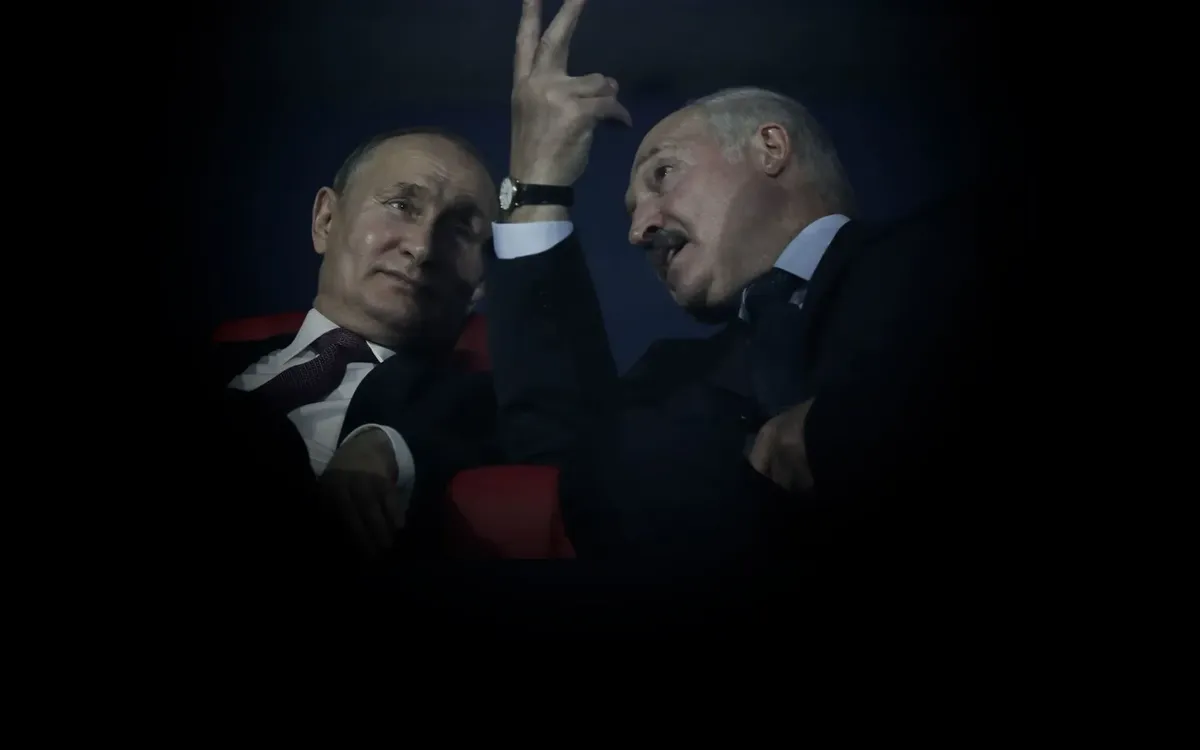
The end of last year did not bring any integration sensations: the December meetings of Alexander Lukashenko and Vladimir Putin, announced as fateful, with the signing of a package of integration documents and the beginning of a new life, did not take place. Rather, they took place, but by no means in the format of fateful ones. However, what to talk about integration, even if the parties for the first in the history of bilateral relations could not agree on the price of oil and gas?
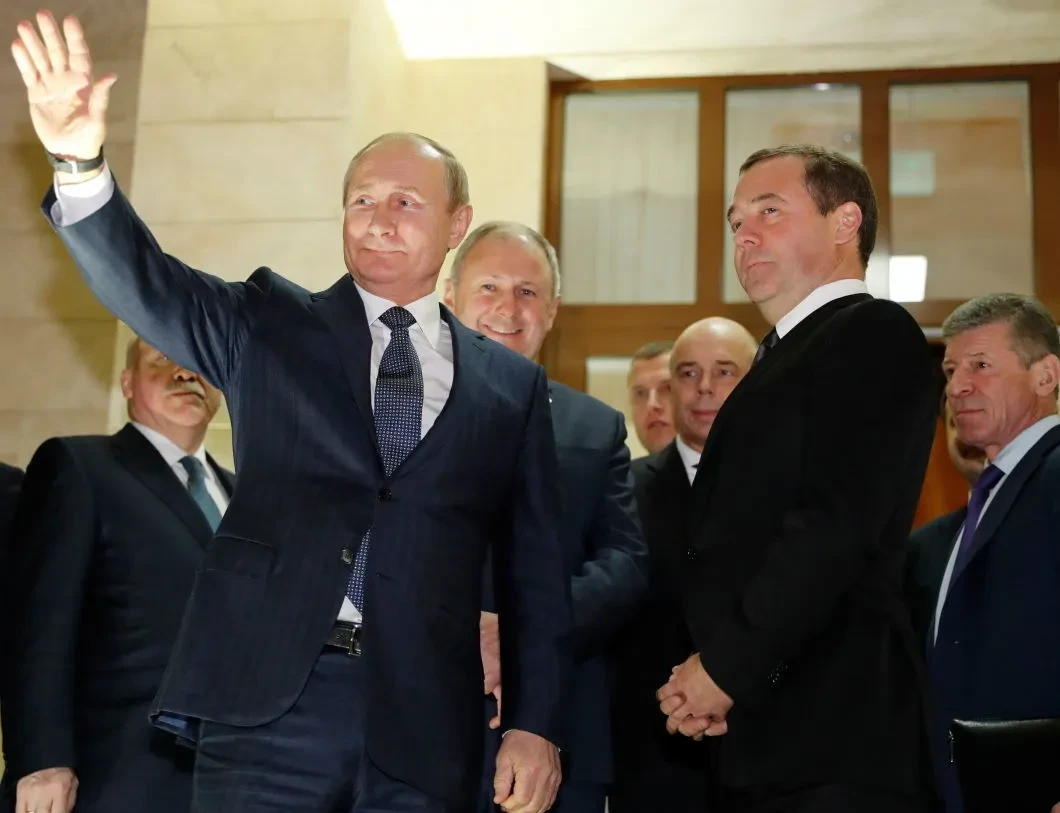
First, Alexander Lukashenko and Vladimir Putin met on December 7 in Sochi - a day earlier than the planned celebration of the twenty years of the Union Agreement. It was assumed that on this day they would sign mysterious road maps, which were talked about for a year, and the next day, December 8, there will be magnificent integration festivities. But after negotiations, Alexander Lukashenko sat on the plane and flew away. There was not even a joint access to the press with ordinary in such cases "we are brothers forever and continue to work." Only the head of the Ministry of Economic Development Maxim Oreshkin then said that the parties reached a serious convergence of the positions on oil and gas.
The next day, both Minsk and Moscow began to scribble with press releases about the next meeting, which will be held on December 20 in St. Petersburg, and then everything will be signed and celebrated. Belarusian Prime Minister Sergei Rumas regularly reported on the progress of the coordination of road maps: in November, he said, 20 out of 31 maps were agreed, and in December-30 out of 31. All these cards remained a deck closed to citizens, their maintenance was reported only approximately: they coordinated energy, customs, roaming ...
But on December 20, a meeting of the EURASEC and an informal summit of the leaders of the CIS countries-and again nothing fateful, took place in St. Petersburg.
Alexander Lukashenko, however, tried his best to inspire oil and gas optimism:
“We agreed by volume, and oil agreed that we will buy 24-25 million tons of oil from Russia. Prices will not be higher than the level of the current 2019 ... In oil within two days there will be a price. And for gas, I think, two or three days. On Tuesday in Gazprom, specialists will meet, and there will already be specific numbers. But in general, the price remains at the level of the current year. ”
The press services hastened to report that the next meeting with integration negotiations will be held on December 29, but it did not take place at all. But on December 23, Dmitry Medvedev partially revealed the mysterious thirty -first card: the speech there, according to the head of the Russian government, is about the creation of supranational authorities, a single currency and a single emission center. That is, for a long time both Russians and Belarusians lied all officials of both countries, assuring that roadmaps concern only economic issues and do not at all affect the issues of sovereignty.
Alexander Lukashenko simply clamped the thirty -first card in his fist and promised that it would be signed after the conclusion of oil and gas contracts. But neither one nor the other was signed.
There was no such New Year's night in Belarus. Even at the very peak moment of the 2006 Gas War, Minsk and Moscow signed a gas contract at 23.59 on December 31, a minute before the chimes.
In 2019, this did not happen. Rather, in the last hours of the year, Gazprom agreed to sign a contract for two months while maintaining the previous gas price - $ 127 per thousand cubic meters. And the annual contract was not signed for the first time in the history of Belarusian-Russian relations.
In early December, Alexander Lukashenko, speaking to the deputies, was indignant: “What can we talk about further integration if we do not have a contract for natural gas supplies today?” The key issue of this round of trade was to reduce the price to the level of the Smolensk region, that is, not 127, but $ 72 per thousand cubic meters. Almost twice cheaper. The argument for reducing the price was simple: integration is equal conditions for business entities and equal energy prices. At the same time, according to Alexander Lukashenko, Gazprom insists at a price of $ 152 per thousand cubic meters - if the integration does not take place. In any case, it was this figure that Lukashenko called in an interview with Alexei Venediktov at the end of December.
With oil, too, nothing has happened yet. Russia proposed maintaining the prices and conditions of 2019, and Belarus insisted on compensation for the Russian tax maneuver, which she could not achieve over the past year. Losses from the Russian tax maneuver in the Government of Belarus were estimated at $ 10 billion, but the Russian side proposes to conduct compensation only after the unification of tax legislation. In addition, the allies did not agree on compensation for Russian “dirty” oil: Moscow is ready to compensate only for documented losses, while Minsk insists on compensation for the missed benefit. And, finally, the issue of the prize for the supplier: before it was $ 10 per ton, but against the backdrop of the tax maneuver, Minsk refused to pay premium. Intensive negotiations of the end of December did not lead to the signing of contracts, and from January 1, Russia stopped supplying oil to the Mozyr and Novopolotsky oil refineries. Enterprises reduced the loading of capacities up to 30 percent and continued to work on reserves. At the same time, Belarus stopped export to meet the needs of the domestic market.
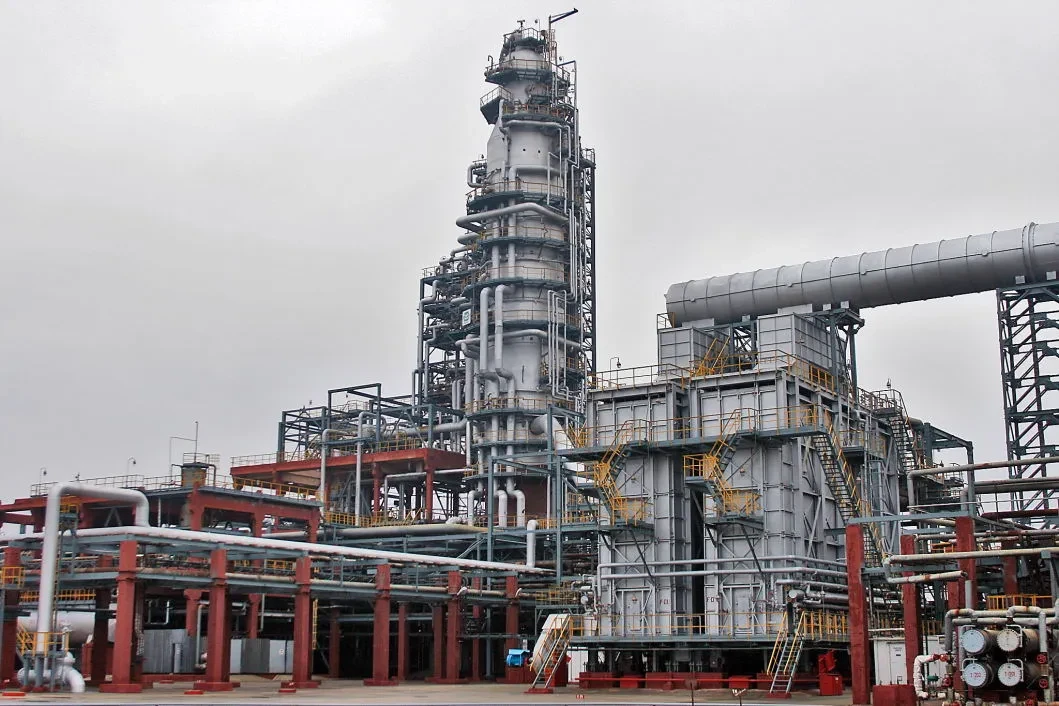
On January 3, a statement appeared on the website of the Belneftekhim concern: “The current situation is not the best stage in economic cooperation with Russian partners. So, taking into account the implementation of the next stage of tax maneuver in the Russian Federation, the price of “cheap duty -free Russian oil” today is 83 percent of the world. Of course, taking into account the compensation, which the Russian Federation provides its oil refineries, this negatively affects the prices of prices in the domestic markets of Russia and Belarus. ” And the very next day it became known that there will be two Russian companies to supply oil to the Belarusian “Naftan” - Russneft and Nefteis, which are part of the Safmar conglomerate belonging to Mikhail Gutseriev. Details of the contract are not disclosed. Moreover, it is generally unknown whether the contract between Belneftekhim and potential suppliers have been signed -
Or Lukashenko’s old friend Mikhail Gutseriev simply with a wide gesture cast oil without any pieces of paper.
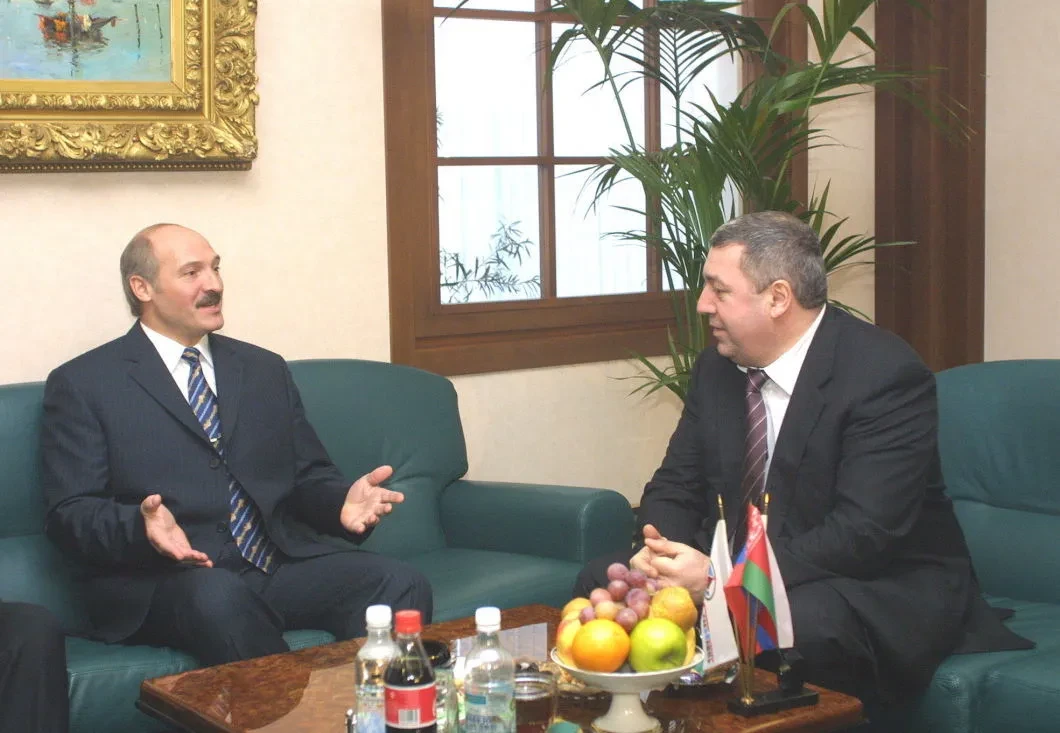
Belarus for Mikhail Gutseriev is the very spare airfield that every Russian billionaire is simply obliged to get. Although it is temporarily, but more reliable than Western countries: there, as a recent history shows, they can be interested in the origin of money, freeze accounts and arrest assets, cancel the citizenship or investor visa. And in Belarus, any friend of the ruler with billions in his pocket will be able to open the door to any state cabinet and with confidence “bend your fingers” even with the minister, even with the prime minister. Therefore, Mikhail Gutseriev, just in case, had long been “kneaded” with Alexander Lukashenko. And when Gutseriev in Moscow had a danger of arrest on charges of tax evasion in 2007, he did not fly to London from Moscow, but from Minsk, having spent a week in the cottage near Minsk and receiving the most sincere assurances in eternal friendship.
Now Gutseriev is building in Belarus, not far from Lyuban, a mining and processing plant, and Lukashenko promises to rename Lyuban to Gutserievsk.
Well, so, according to trifles, the head of Rusneft got an economy in Belarus: built a hotel, a terminal at the airport, a recreation center, a business center, and also builds a school and a church. So everything is clear with neighboring help.
It is clear and something else. Integration or lack of integration is what is interested in Alexander Lukashenko last. Secret conversations are now being conducted about something else. In the summer in Belarus, the presidential election (at least this is called). And Alexander Lukashenko, as usual, should enlist the financial support of Moscow for its entire seventh period, since it was on it that the previous six lasted. In 2016, the IMF appreciated the total support of the Belarusian economy by Russia on average of $ 10 billion a year. These numbers have not changed.
So Alexander Lukashenko needs $ 50 billion from Moscow for all five years of the seventh period.
And you say - a tax maneuver, prizes to suppliers. You need to think more largely.