
Translated material
"Solder" got to two billion
Why is the main film of the New Year the comedy Klim Shipenko
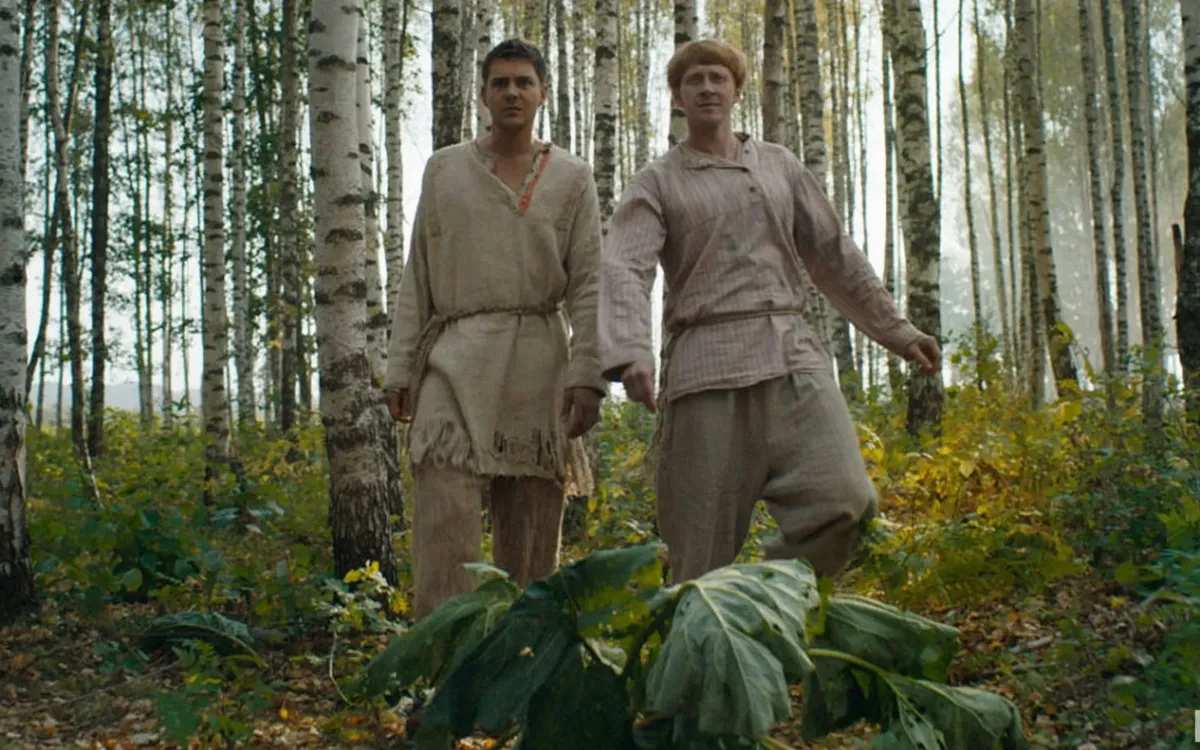
The Kolop adventure ribbon rented on December 26 became the leader already in the first weekend and overcame the line of 2 billion rubles to today (with a budget of 160 million). The next “Truman show” in sundresses and kokoshniks to educate the next Mitrofanushka was to the liking of a different aging audience. What the Decembrists failed was carried out by the Major Grisha groom, jumping out of slavery to a bright future, and the New Year's pie was pretty biting. We understand the reasons for the success of the film with director Klim Shipenko.
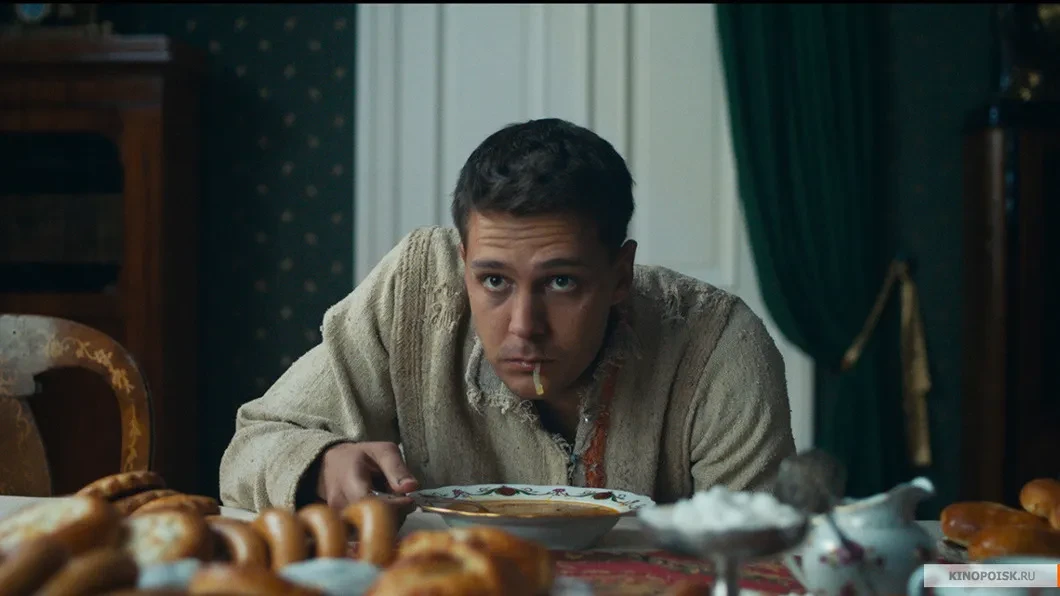
This is the story of Major Grisha, who falls in the 19th century as a simple groom. This is a psychological experiment on the re -education of a presumptuous insolent, driving without rules on a convertible and juggling credit cards.
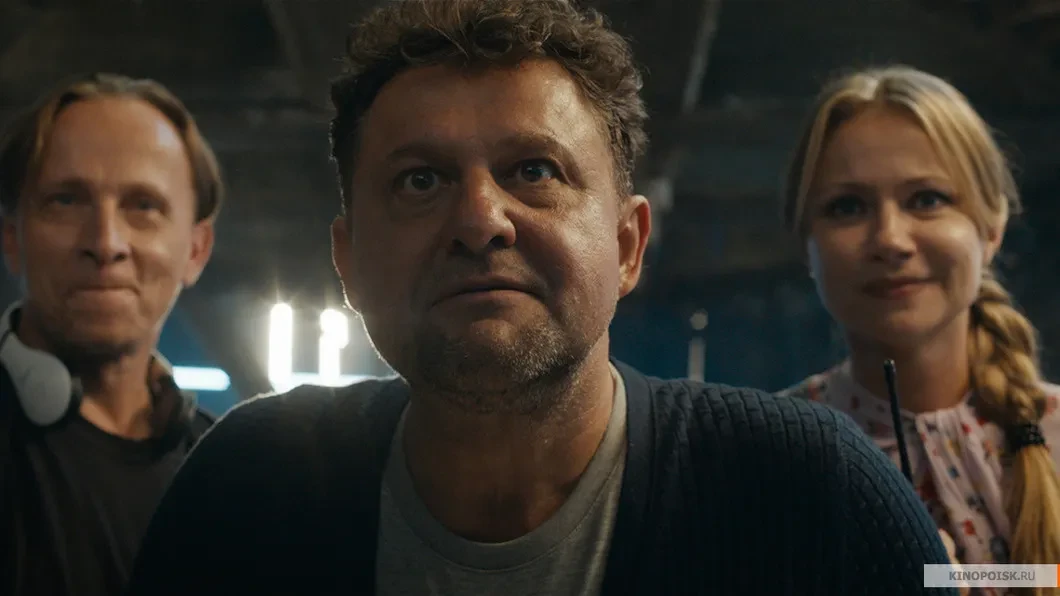
At the head of this large -scale reconstruction - Demiurge, the director performed by the crazy Ivan Okhlobystin. Next to him, a large businessman (Alexander Samoilenko) and his decisive friend television producer (Maria Mironova) experiencing for his son
They create an artificial space, the next “Truman show” in sundresses and kokoshniks to educate the next Mitrofanushka. And from the long-distance mill, a masking film studio, showranners observe what is happening in the century before last, making amendments, adjusting the online show in the course of the development of events.
The reasons for success
There are many of them.
The inconspicuous comedy of Klim Shipenko is addressed to the widest audience. Among the main competitors in the New Year’s battle (“Union of Salvation”, “Invasion”, “Fixies against the Crabots”) it was the “servant” that turned out to be the most universal proposal.
The authors and producers managed to interest the young audience and the age viewer, who knows the Nazubok, the Gaidaevsky hat "Ivan Vasilievich changes the profession."
The scriptwriters sewed popular genres in one sentence: melodrama, adventure, costume comedy of the provisions. In addition to the action with the author’s greetings, Sergio Leon is dominated by the romantic line: “The world will save the world.” Including, from slavery (events in a funeral village occur in 1861 on the eve of the abolition of serfdom).
What the Decembrists failed was carried out by the Major Grisha groom, jumping out of slavery to a bright future.
For all the external archaic, the humor in the film is a topical, and Fonvisian edification rushes closer to the finale with a slight cloud.
The film has a lot of parody (a parody is the most popular genre in Teleke), including a satire on modern Russian historical cinema and its reliability. The hero is the victim of the exam is a walking parody of the “education” of a new generation, ready to come to terms with the Tatar-Mongol yoke in the 19th century.
In the role of Bad-Boy, handsome Milos Bikovich (“ice”, “Balkan line”, TV shows “Hotel Eleon” (STS Channel), Grand (Super Channel)-a new idol of Russian girls.
The vacation release was again cleared of Hollywood: in the schedule of cinemas, most sessions were given to domestic films. Therefore, the New Year battle flared up between them.
The film has a great sundress.
But the main reason for success is the director.
Klim Shipenko becomes one of the most influential Russian directors. Before the “slave” came his crime drama “Text”, collecting a good box office (379 833 609 rubles) . Prior to this, there was a decent blockbuster “Salyut-7” (fees 783 169 039 rubles) and here is a new quality comedy.
We talked with director Klim Shipenko.
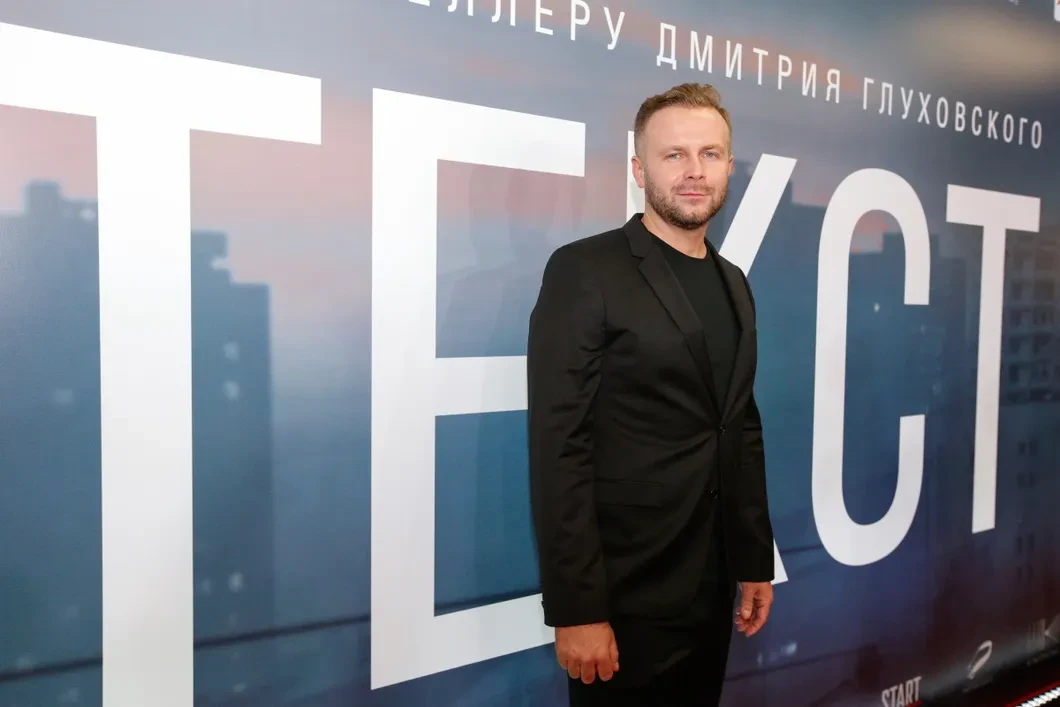
- “Solder” came out immediately behind the “text”. Did you shoot two paintings in parallel?
- No. I took off the “slave” earlier, in the summer. I mounted immediately and began to prepare the “text”, which was filmed in winter.
- The producers were waiting for the New Year's slot for comedy?
- Yes, the time of the release of the “slave” was known in advance.
- The ideas of both films came from the producers?
- Yes, both projects were proposed by my producer Eduard Iloyan. The book and script of the "text" went to the market. Eduard calls: "Listen, they offer to buy rights, if you do it, I - for." I quickly read the book and immediately agreed. It was just intended for cinema. And the “servant” script was the guys Comedy Club Production. Edward said they want to make a big film. I read the script, talked with the authors, we found a common language. It seemed that I could finalize the script with them.
In almost both films, I had a Final Cut (final installation), that is, all the final creative solutions remained with me. Although they argued, discussed. However, in the "text" they did not give me a single editing of installation. True, it seemed to them that it was long. I explain: "Yes, but it should be so." And they agreed. In the “slave” it was about the same: I showed installation. We discussed it, finished something ... but nothing fundamental. Therefore, I am really comfortable working with Ilyan.
- And how much did this work differ from the creation of the “salute”, where there were such movie generates as the producers as Selianov, Zlatopol?
- It was very different. Still, Salute is a command film. Selianov controlled everything. You understand, this was my first major picture with a large budget.
I was a dark horse for them. They could not just give 400 million: "Yes, do what you want!"
We looked carefully, controlled. But we discussed all the ideas with Bakur Bakuradze, he is a truly creative person.
- Is it more difficult to participate in producer cinema?
-You know, differently. Other games. You just need to agree on the shore. When all the creative decisions are followed by me, on the one hand, it is more convenient for me-I need to argue less, convinced someone, spending energy ... On the other hand, my responsibility is completely. In producer cinema, you share responsibility with people who are responsible for the project, they will then engage in, promote, sell.
Before shooting the “slave”, we agreed that this is a film for a mass viewer, a wide rental, we count on the box office. With the "text" there were no overstated expectations from the box office. They did not set such a task. And he gathered a good box office. Probably a combination of circumstances. I immediately told the producers that it would be honest. They replied: "Yes, it suits us."
- It turns out, honestly in the “text” and not very honestly in the “slave”?
- No, just different genres. It was clear what exactly the viewer was coming from such a comedy.
If the “text” is a piece of life, then the “serf” is a piece of a delicious sweet cake that you want to try on holidays.
-Counting the success of the film, the author should make any concessions so that the viewer would be more interesting, easier? Is the creative task changing?
- Not really. Just in mass cinema, as the author, you constantly do not forget about the viewer, you try to like it. And "Text"? I did not know if he would like whether he would go out at all. They just did as they felt. In Salute 7, we constantly thought about the viewer. This does not mean that you are stepping on your throat. The fact that in the “slave” or in “Salute 7” we shot, I myself was interested. But even if you compare films about space. There is "Solaris", but there is "gravity", each has its own audience.
-It seems to me that your path, after all, is not purely mass cinema, rather the desire for an art-Mainstream with the audience potential.
- Well, of course. And yet I am no longer for myself, I work for the viewer. At the same time, yes, in every picture, in every genre I try to add something unique, my own.
- Your film is compared with many paintings: from "Ivan Vasilievich ..." to "We are from the future." What is your “special”, Shipenkovskoye in the “slave”?
- I wanted to take off the comedy as a visual attraction. And not so that the viewer said: "Well, then, we'll see these jokes at home." Therefore, I decided to shoot it like Western Sergio Leono. And this village itself, and music, and Zuma ... and hoped not only for humor. How to make sure that even people who are not funny, it was interesting to watch it. Many scenes were shot by one long plans, which is uncharacteristic for comedy.
- Yes, with long passages of the camera, approaches to the Barsky House, to the "directorial cabin".
- They pay attention to this. In addition, when I worked with the screenwriters, he said that
In a good comedy, you can cry at some point.
We were not afraid to affect serious problems. And after all, the main character, one way or another, turns to God in the finale.
- Did you choose the actors?
- Yes, I have long wanted to work with Milos, I love him very much. He is both smart, and beautiful, and funny ... And everyone else came to the samples.
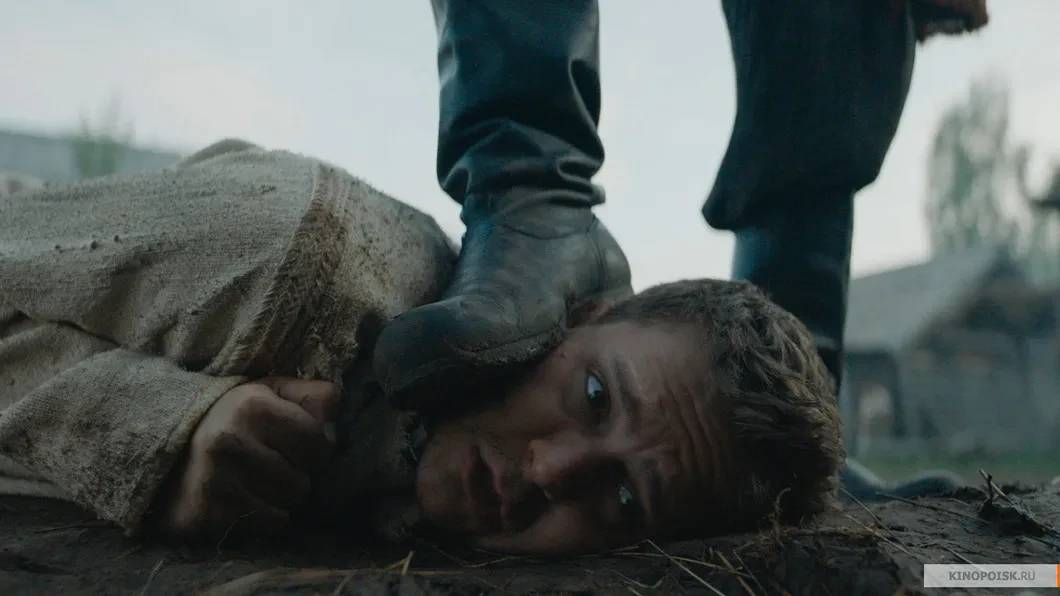
-The action takes place in the year 1860, that is, a year before the reform. At the same time, the feeling that you can get along with serfdom.
- Well, you understand, this is a comedy. Naturally, we wanted to torment our Barchuk in full, that is, without romanticization. But comedy intonation, maybe creates such a feeling.
- Yes, the intonation of the fairy tale, as in the music film "The Fortress Actress" Tikhomirov. Still, we have a specific attitude to the majority in our country, and your Gregory is closer to the final, causes sympathy.
- Well, yes, he was rebuilt, the revaluation occurred. And first there should be a repulsive sensation.

- Many people want to make a cash register comedy, this is the second most importantly after patriotism of the cinema trend - few people get. What do you think, how did the serf attracted the audience?
- It seems to me, first of all, diverse. This is not just such a comedy - neighing. Different people can find some different things for themselves. And, of course, we understand that if the film had not been released on New Year's holidays, I would probably have gathered some kind of cash register, but not a record. The vacation factor greatly affects attendance. But, on the other hand, we know films from the New Year's release, which the audience is not very willing to go too much, despite the holidays.
- And despite the artillery shelling of the viewer on the main federal channels.
- Yes, from all morning irons from morning till night they bomb. As for the “slave”, I think that at the right time the viewer was given the desired composition of the ingredients in one film, and this, as they say, had to go to the table. Maybe in winter the audience needs a solar comedy about love, with music ...
- Do you think laughter unites or disconnects?
- Of course, unites. People laugh together in the hall, feel that they participated in some general joyful event.
- They just laugh at different ones: some over Petrosyan, others over the Comedy Club, others over the English comedy.
- OK then. The main thing is to laugh, and not conflict implacibly.
- You studied in California film prism, operator skill, then acting. Does American education help or interfere in the realities of Russian cinema?
- It seems to me that the versatility of my education very much supports: when not everything is given to you, you have to re -think a lot, do it yourself.
I think it is useful for directors to learn from operators, and master the installation, and to be actors. To know what to say to the actor when time ticks, and the sun comes in.
-But the American cinema system is still significantly different from ours.
- There is more competition in all positions. Therefore, the director does not have to be a universal. The operator is such a high level that the director is not required. Or a requiser, an artist-winner. And we have different ways. And often you can’t dismiss a person, because there is no one in return, and therefore is forced to do everything himself. In America, everyone is running, jumping, for each position there is a long queue from the pros.
- And the last, your name Klim ... Is it really in honor of Voroshilov?
- Well, the family has different versions. The last thing I heard was named in honor of Elem Klimov.
- “Go and watch” your favorite movie?
- No, this is too heavy the film to be loved.
- Well, then the comedy “Welcome, or the entrance is forbidden”?
- Of course, I am with great love of all his work and the highest degree of professionalism.