Translated material
Chicago
Chicago is working to calm traffic and make streets more comfortable through tactical urbanism. This is the triangle of visibility. It improves street comfort and safety:
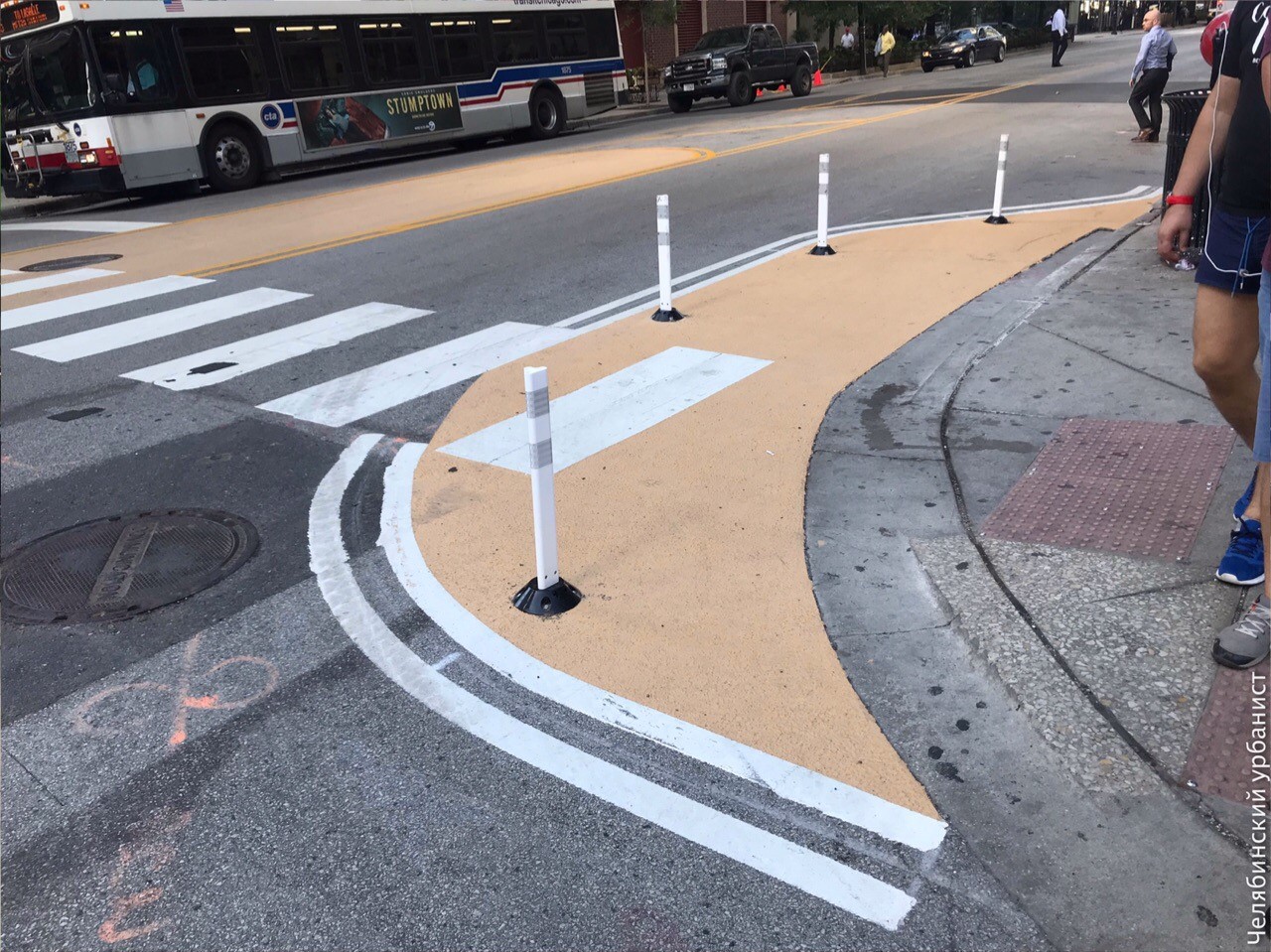
It is needed to remove excessive crossing width in unused areas of the road and calm traffic:
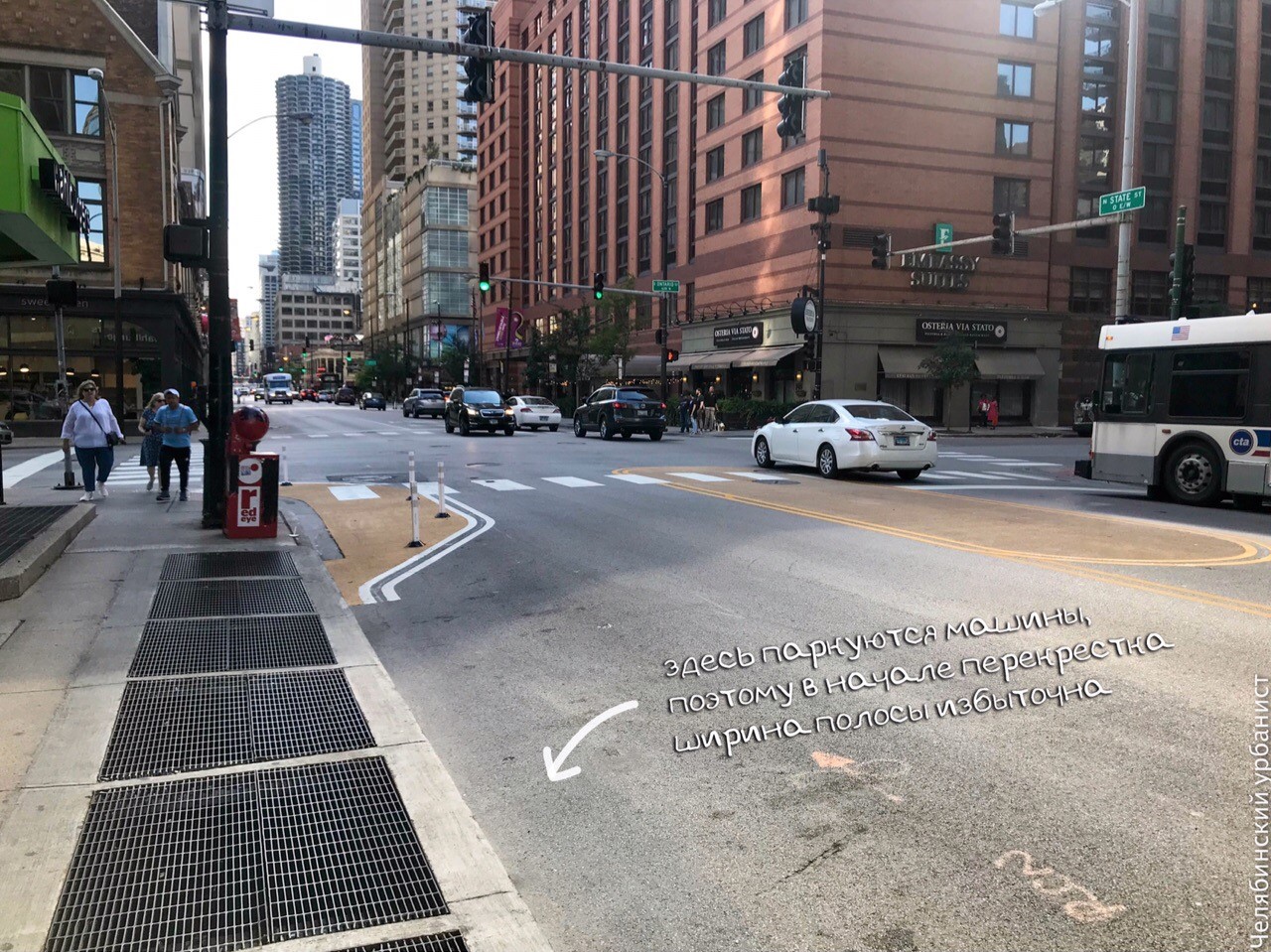
This is a temporary tactical marking. After the test, a major reconstruction of the sidewalk is usually done:
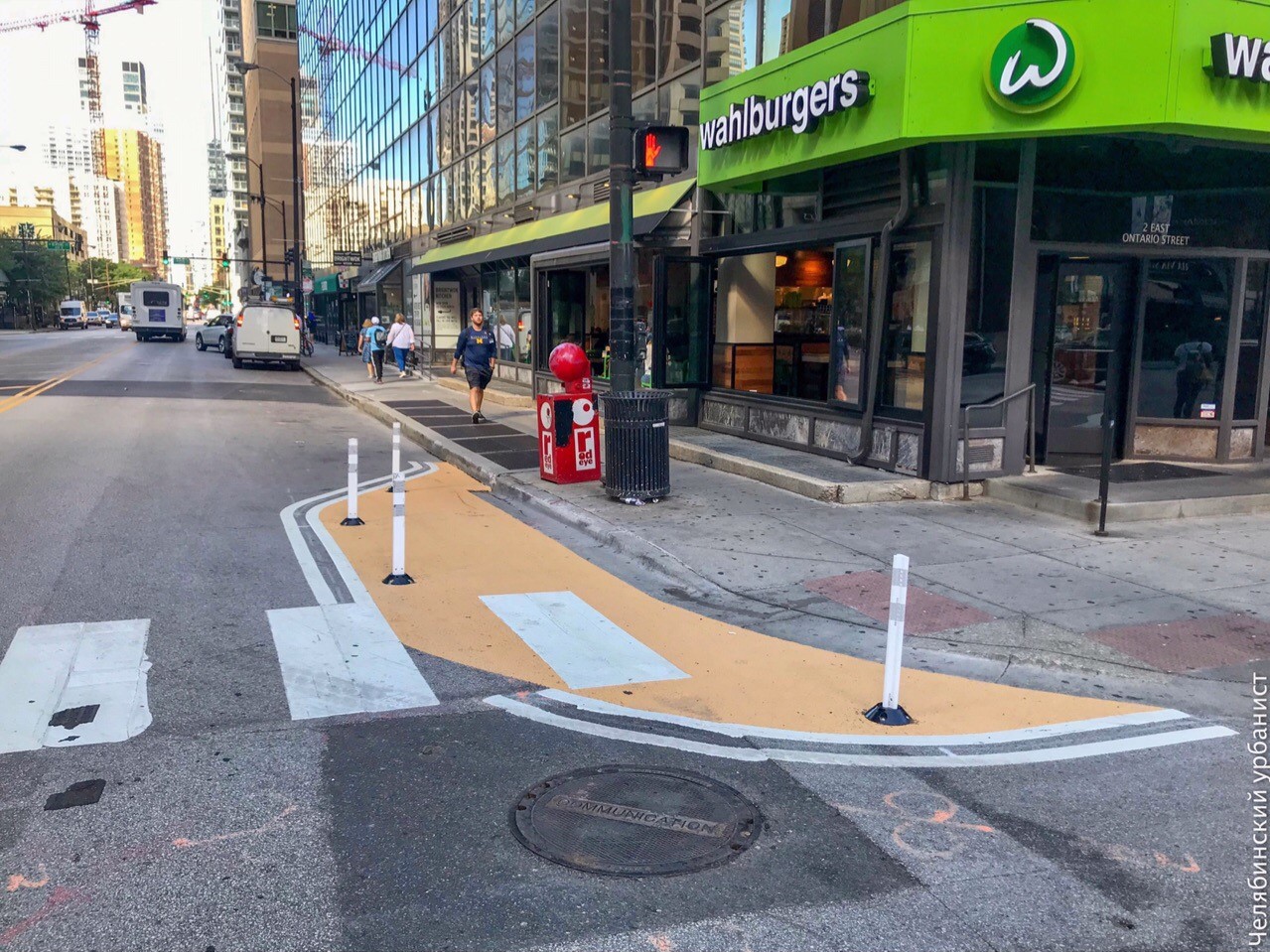
Thanks to visibility triangles, the driver can see the pedestrian in advance:
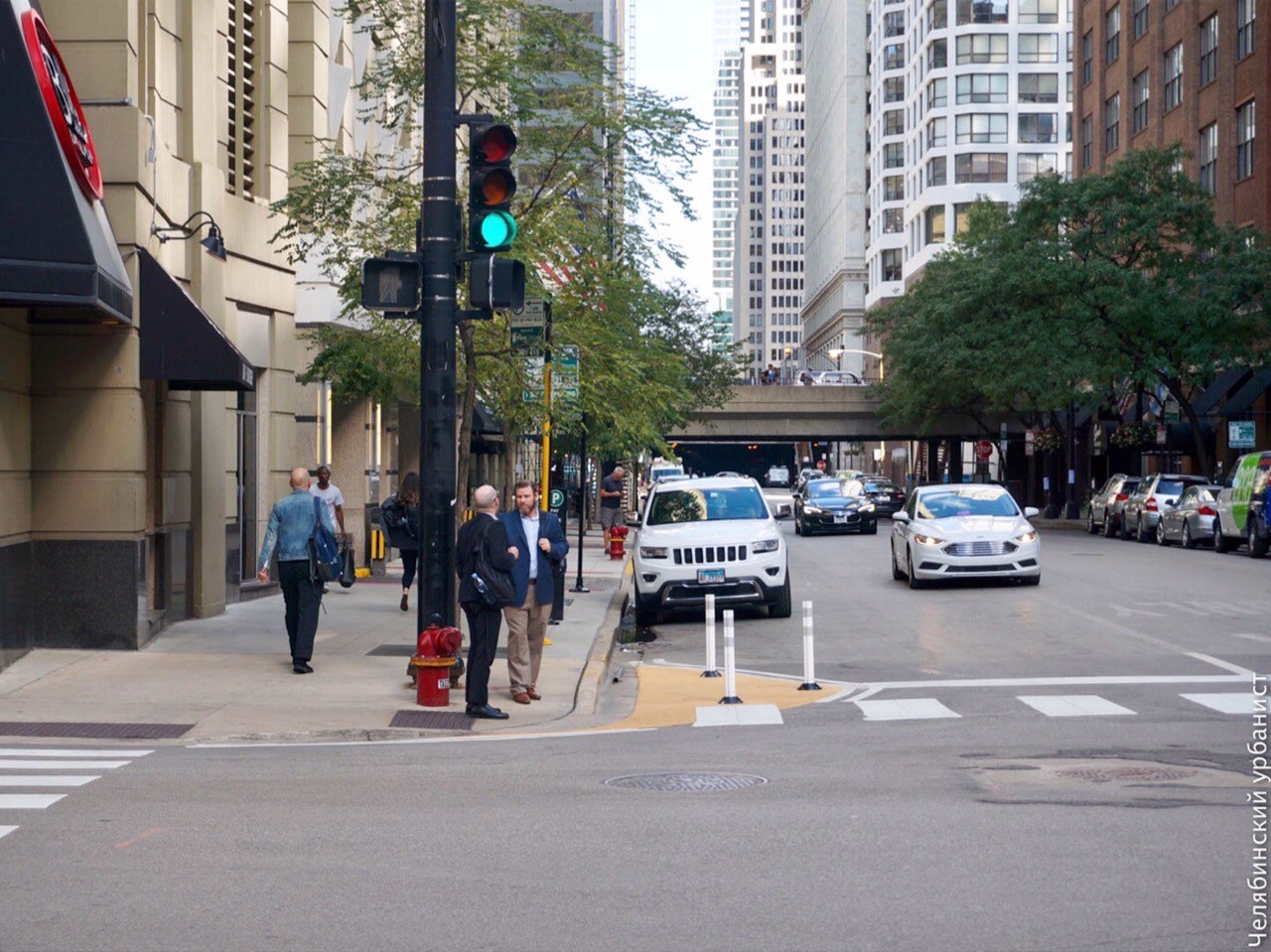
These “ears” also slow down the speed of the car when turning, preventing it from flying into the crossing:
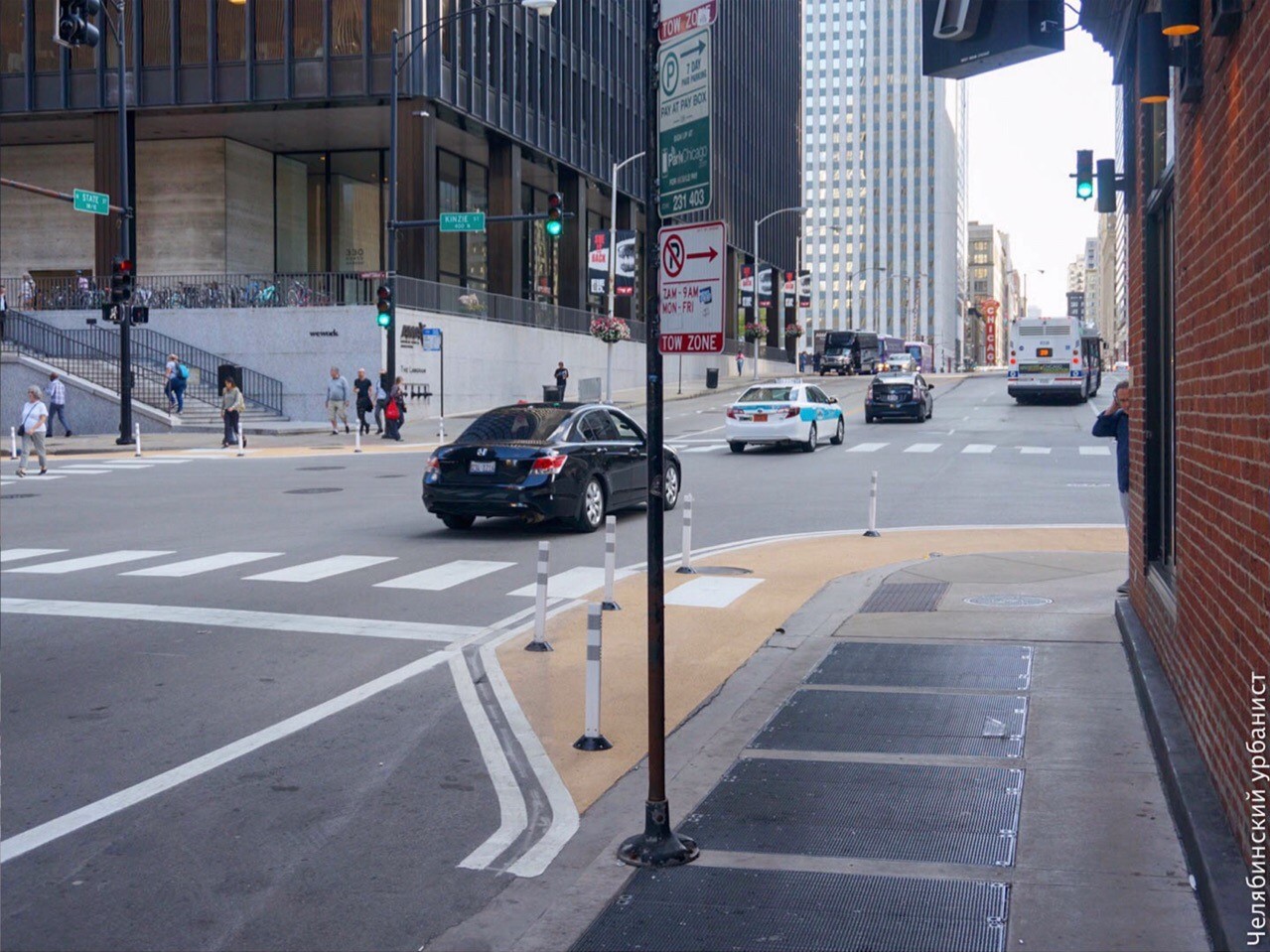
This is what urbanists mean when they talk about a “road diet” and narrowing roads:
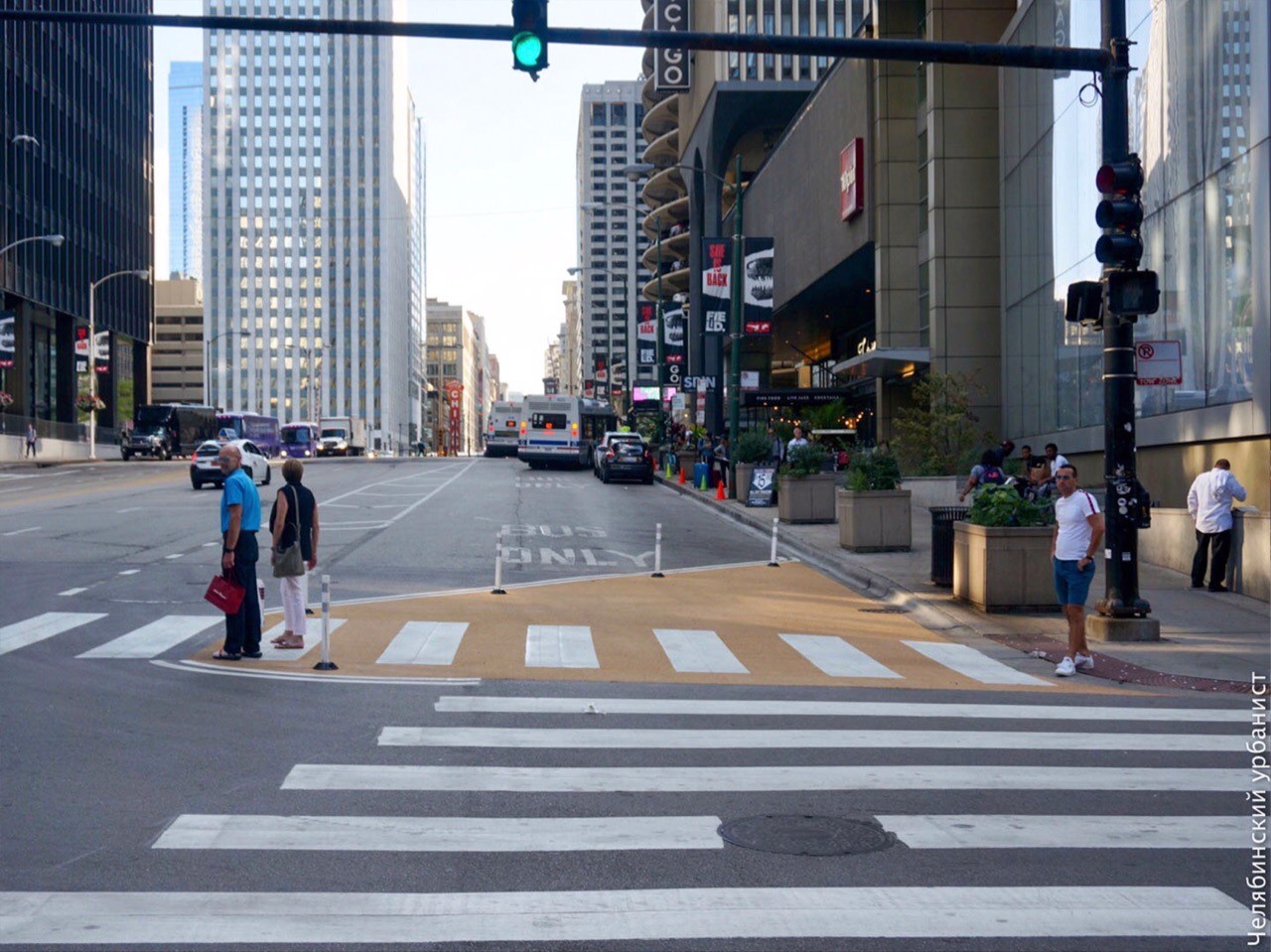
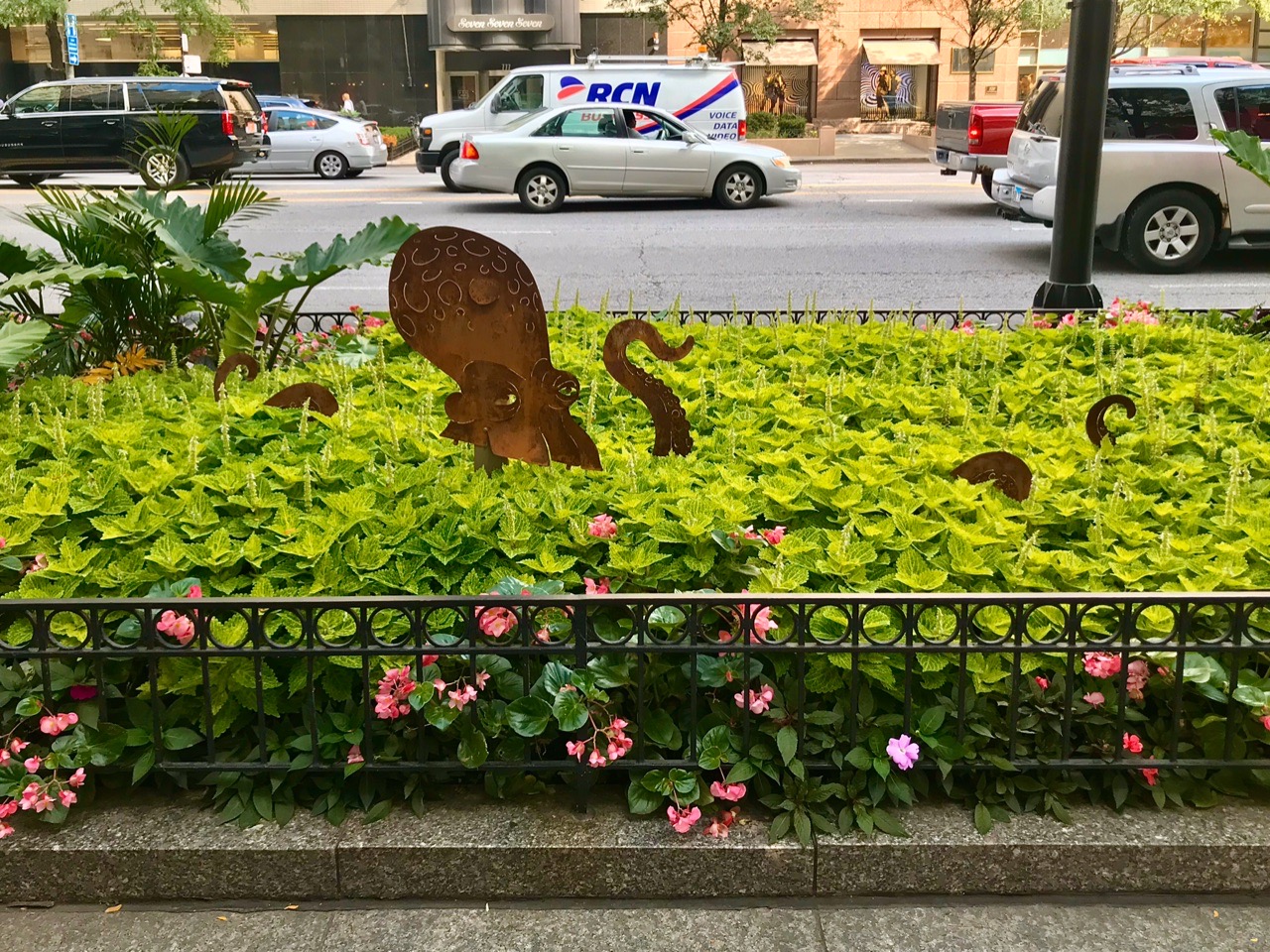
A cool art object in Chicago is an octopus hidden in the abyss of greenery.
This kind of art is unobtrusive and has a clear connection to the context of the environment. It does not need to be tinted - it is made of Corten steel, the surface of which oxidizes beautifully and stops corrosion inside:
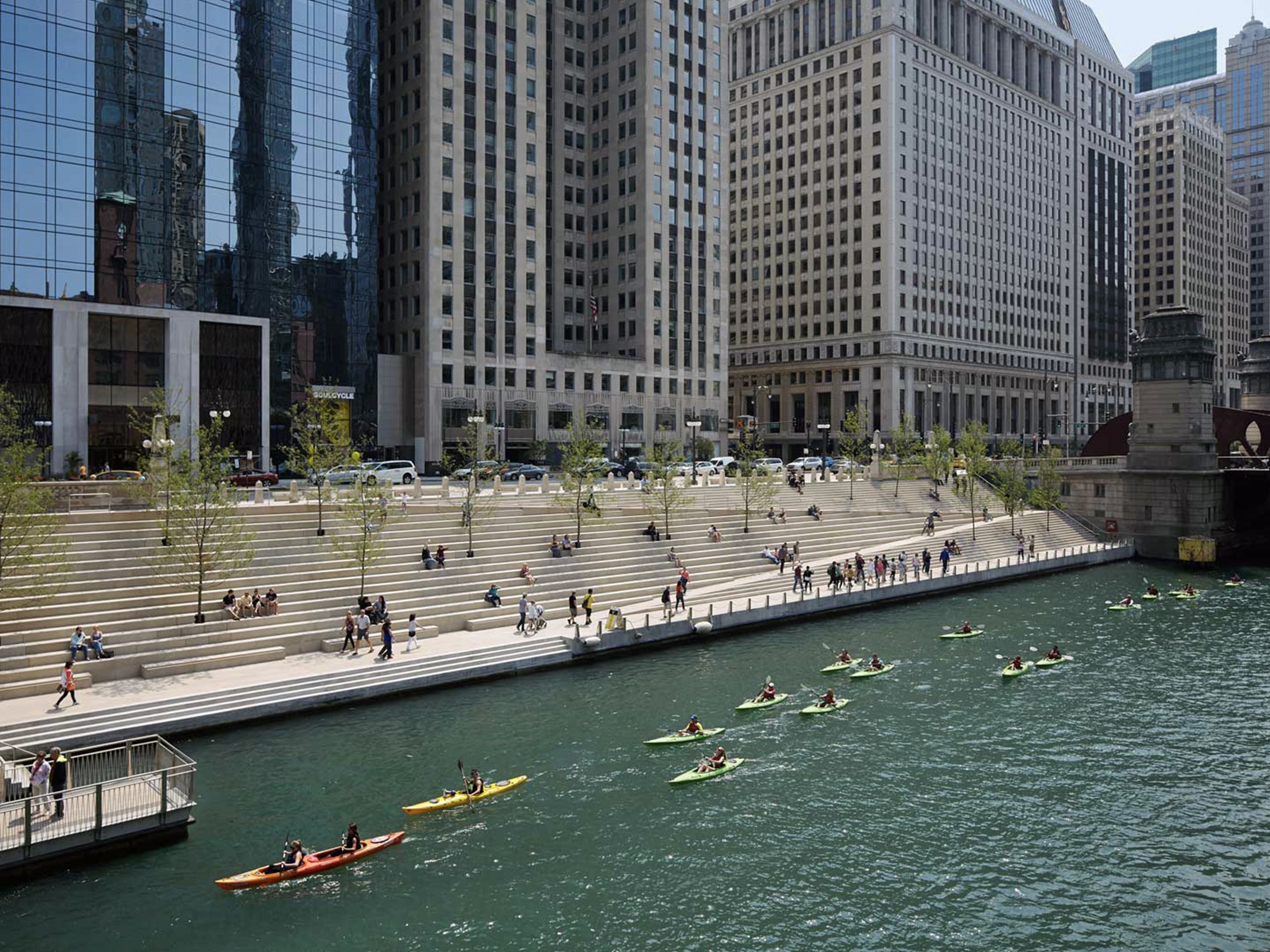
Waterfront in Chicago. It was completed in 2016:
All metal in the landscaping is aluminum or stainless steel. It is not painted, has a natural color:
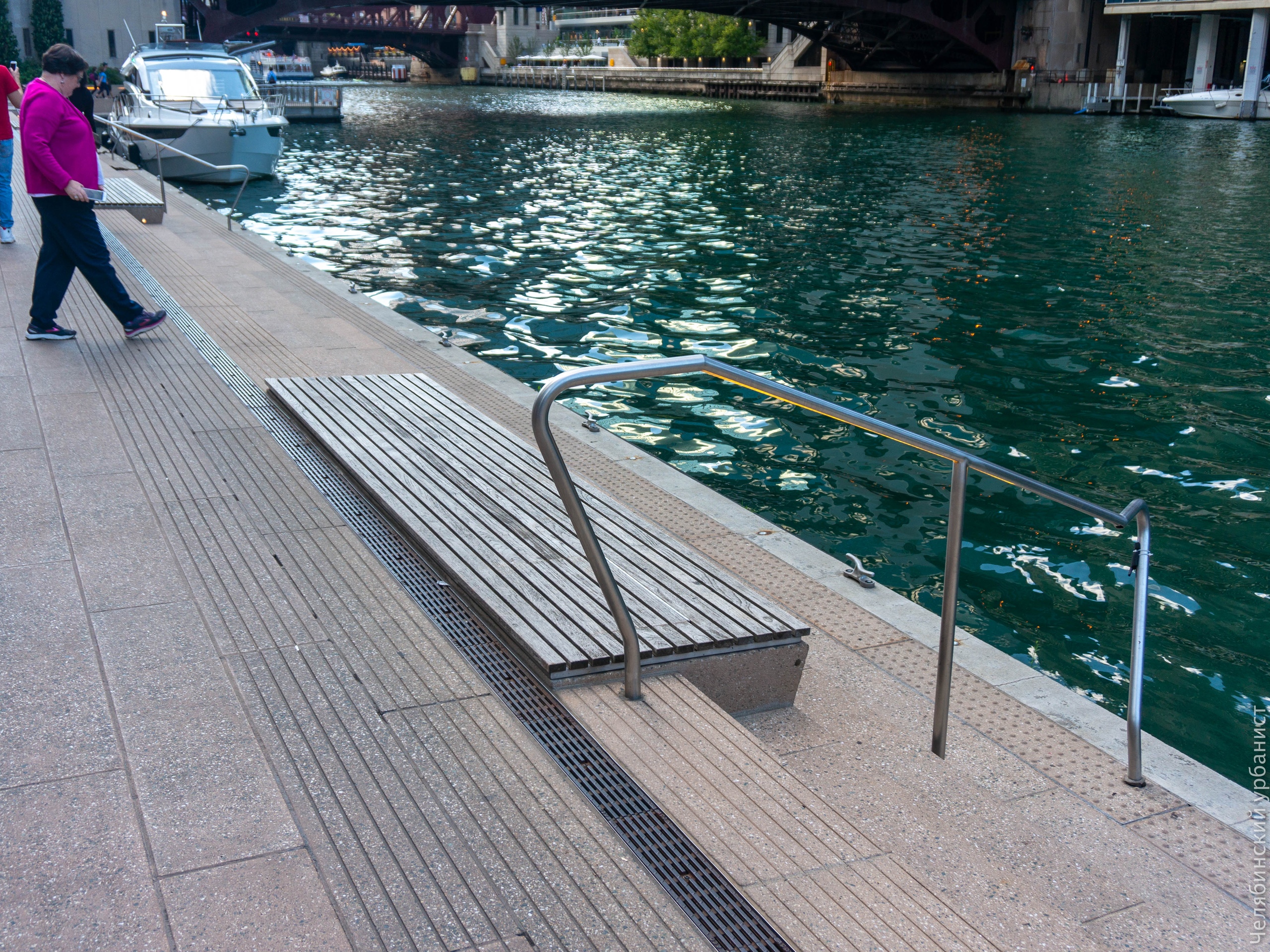
All wood is not painted, faded, has a natural color:
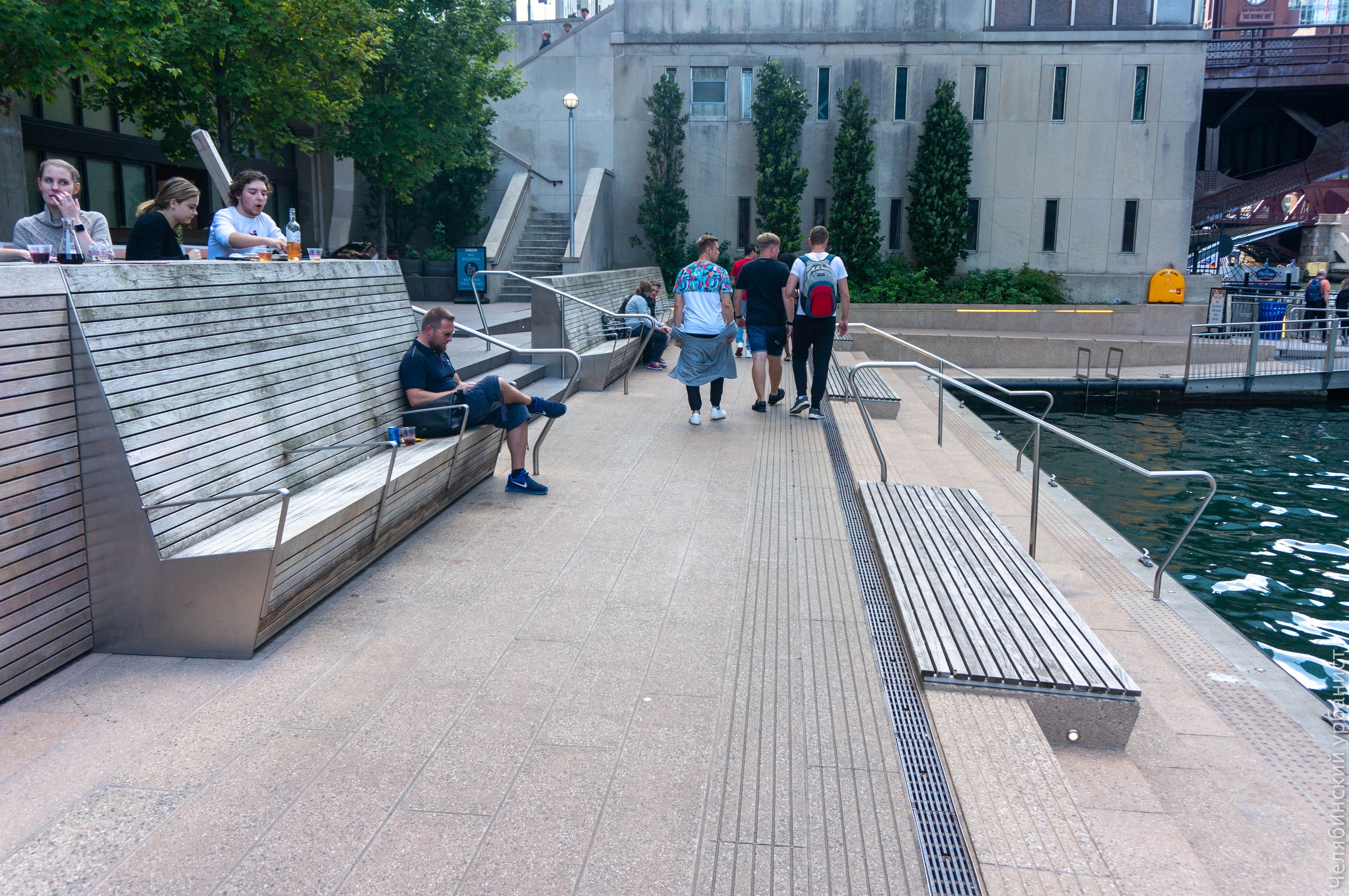
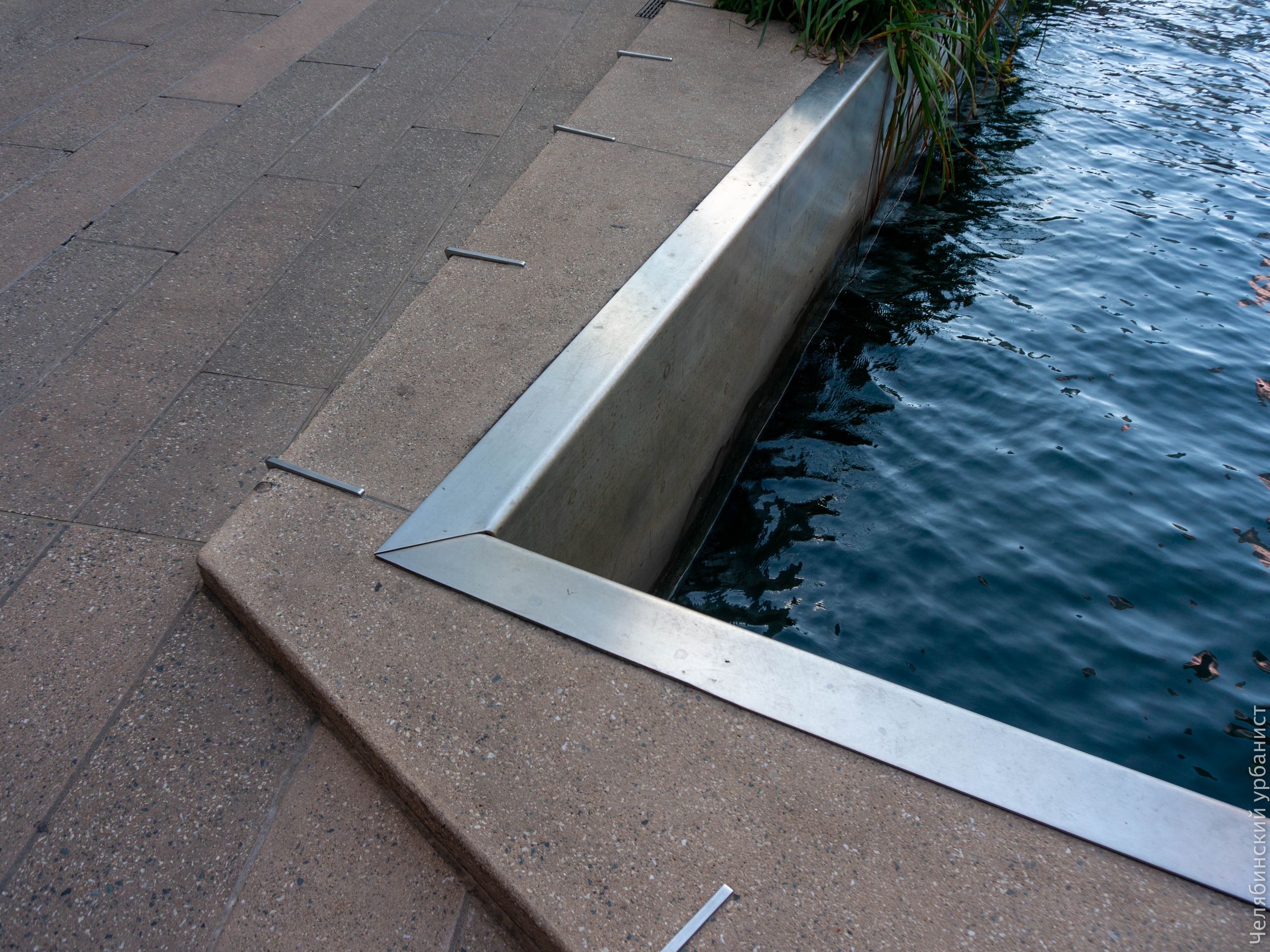
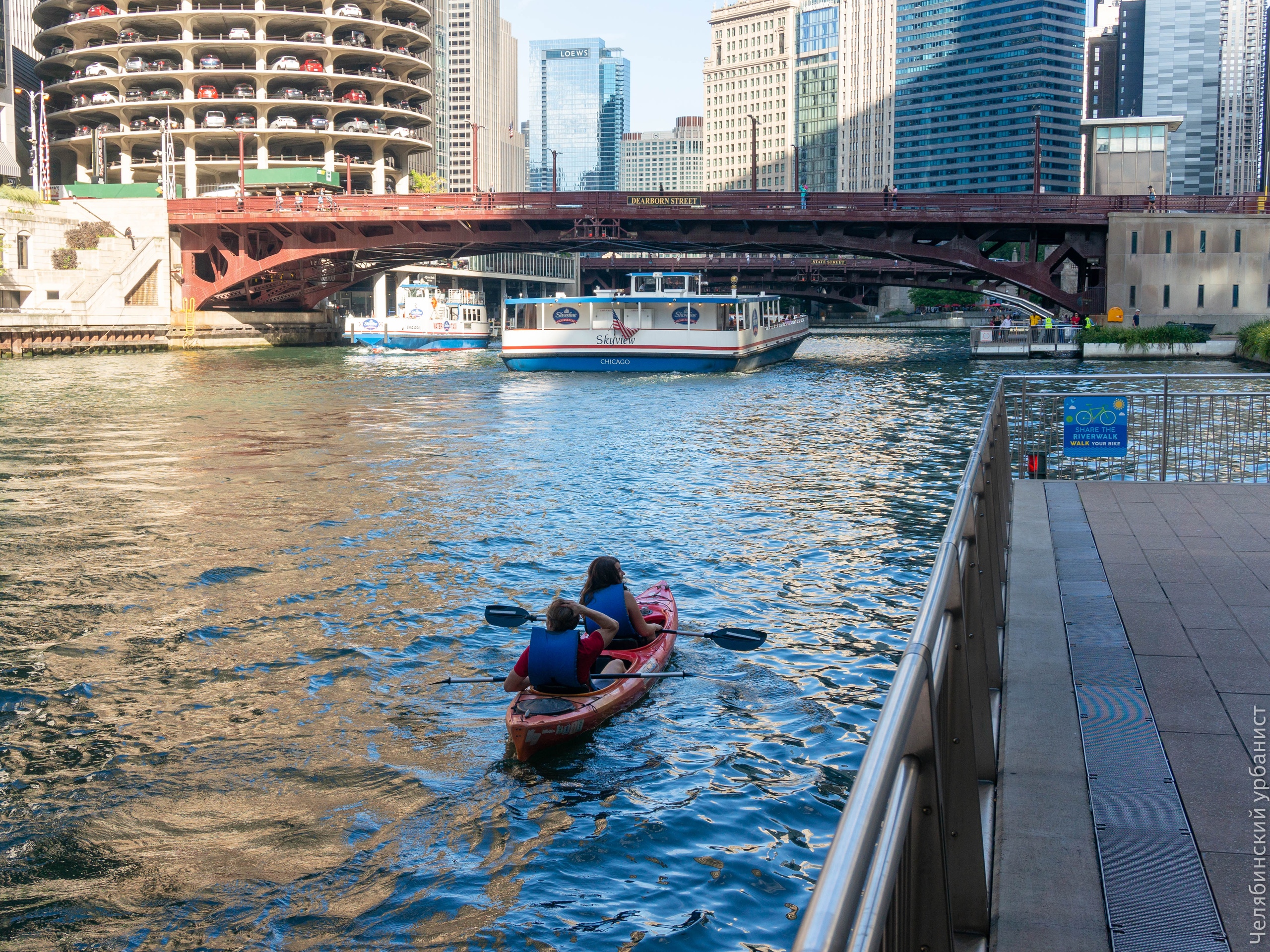
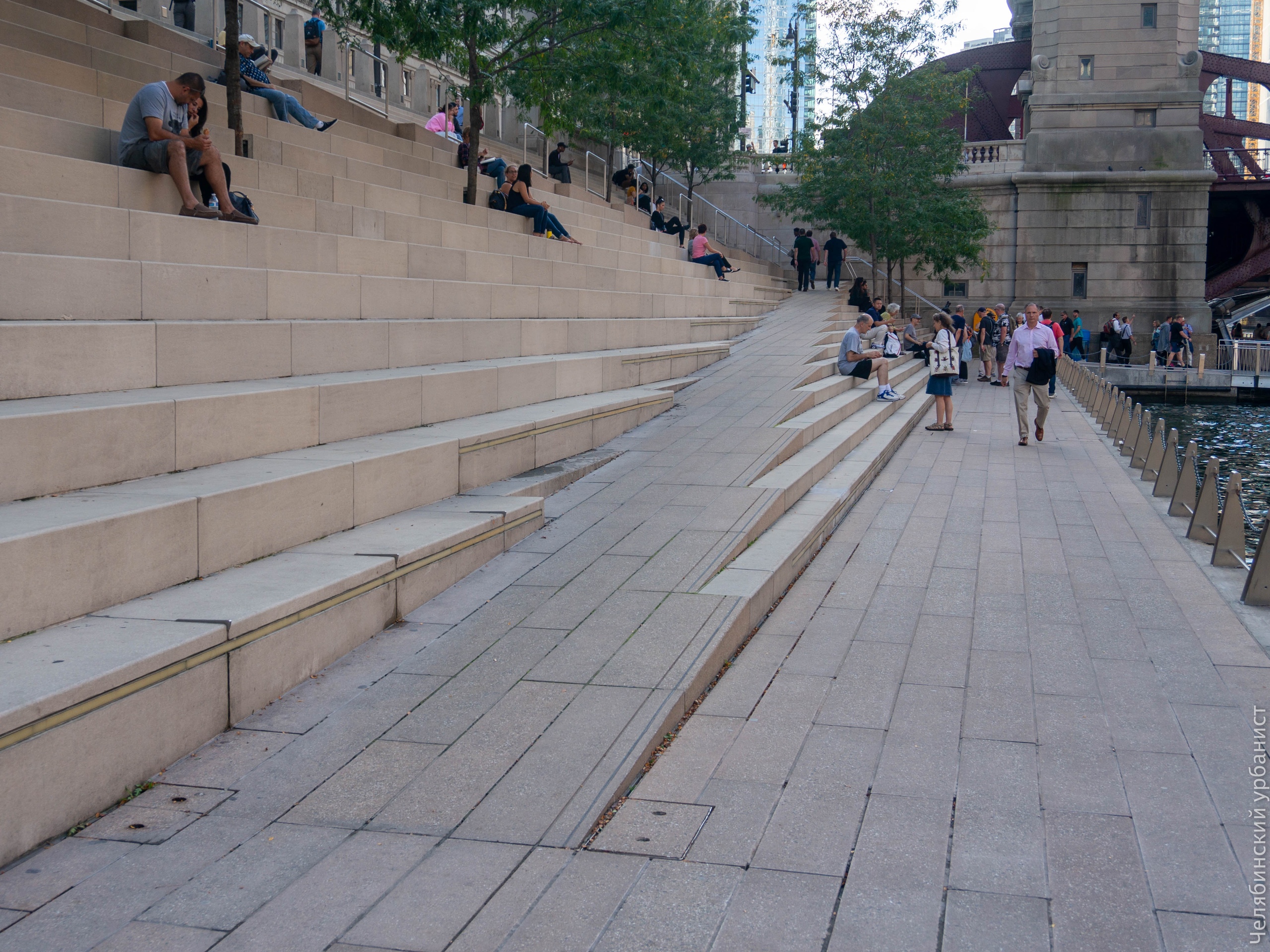
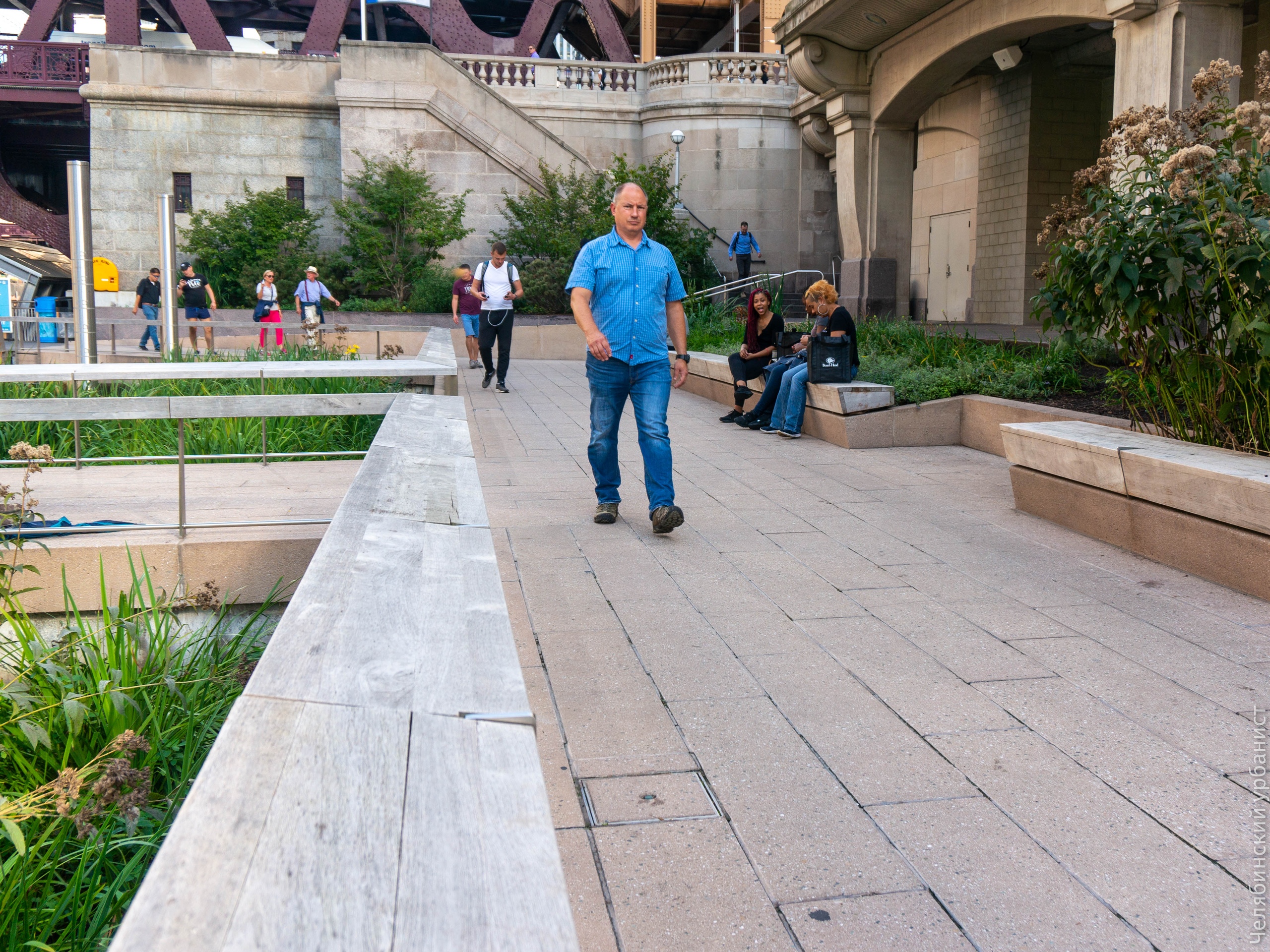
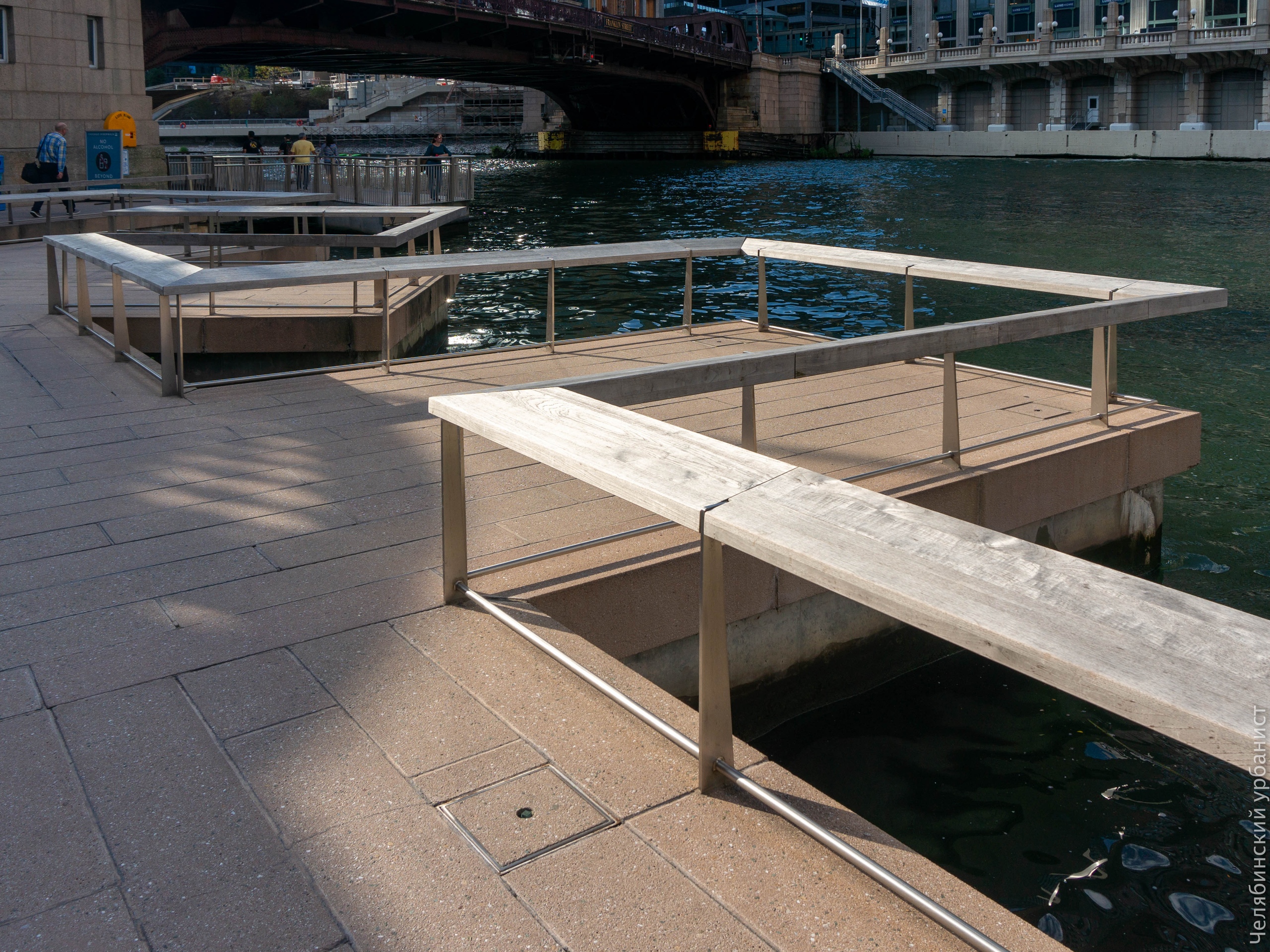
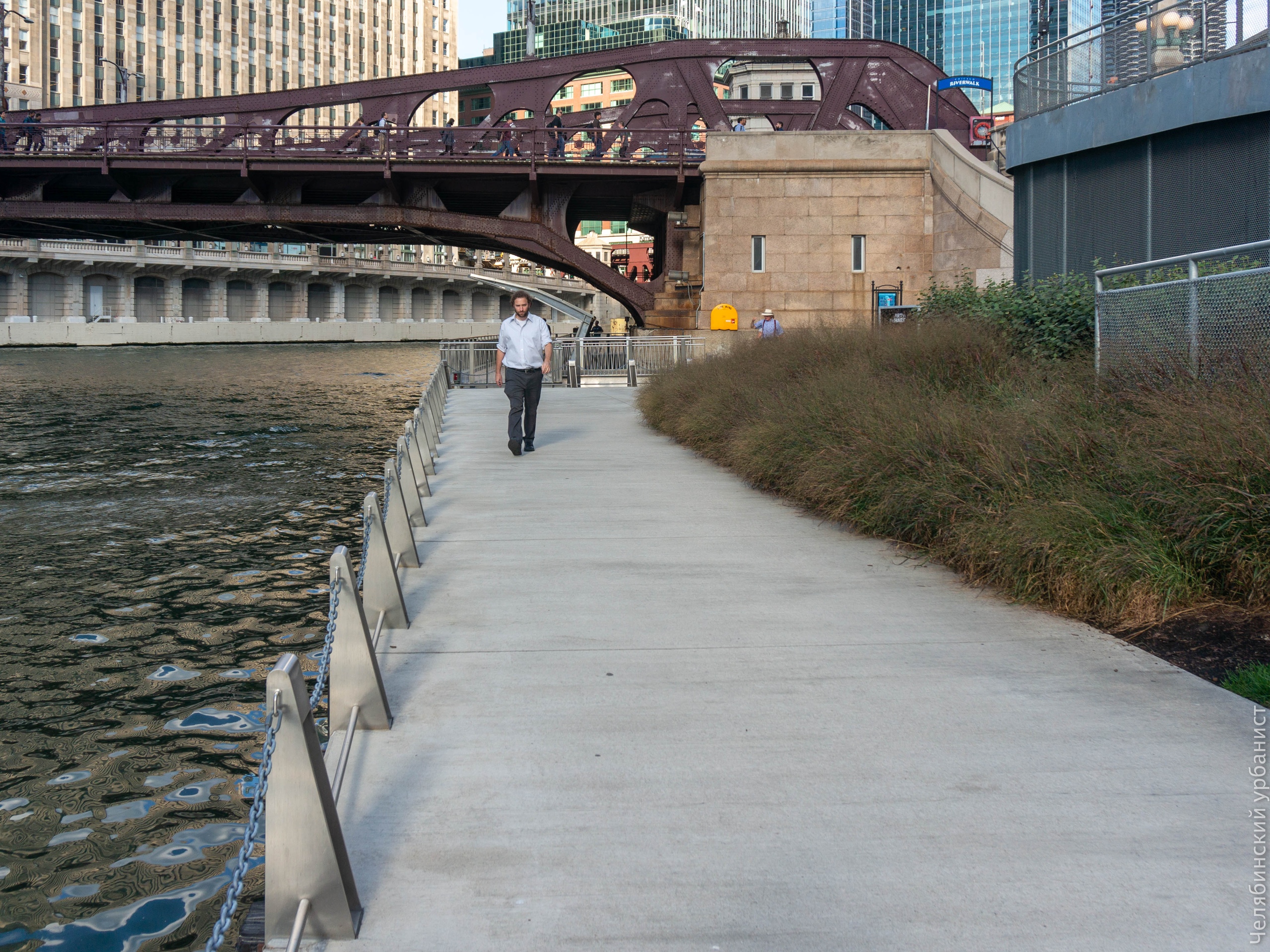
This approach has a huge advantage from an aesthetic point of view. The materials age beautifully; in the spring, utility workers don’t fill everything with paint.
Once again: any ferrous metal that needs to be coated with paint is a short-lived story (primarily in terms of aesthetics), which, if possible, should be avoided in major landscaping. For wooden coverings, you need to choose strong, durable species and not paint them. The faded color of the wood looks seasoned, natural and fits any architectural palette. Wood can sometimes be painted a certain color to support some idea in a space, but there is no need to paint to imitate the color of another tree. Good architecture does not tolerate deception.