
Translated material
Memory wars and first person
Was it necessary to personally enter into hostilities
Shortly before the New Year, President Putin conducted a public thorough “lesson of history” in two actions - first for the leaders of the CIS, and then at the expanded collegium of the Ministry of Defense. Promising the third action in the form of an article on the 75th anniversary of Victory. The theme is who is to blame for the outbreak of World War II. The most pre -war Poland got most of all - and for the fact that her leadership, according to Putin, “threw its people under the chariot of the German Nazi military machine,” and for the capture of the Poland of the Teshinsky region of Czechoslovakia after the Munich conspiracy of 1938, and for the fact that the then ambassador of Poland in Berlin was allegedly “solidified with Hitler” in anti -Semitism.
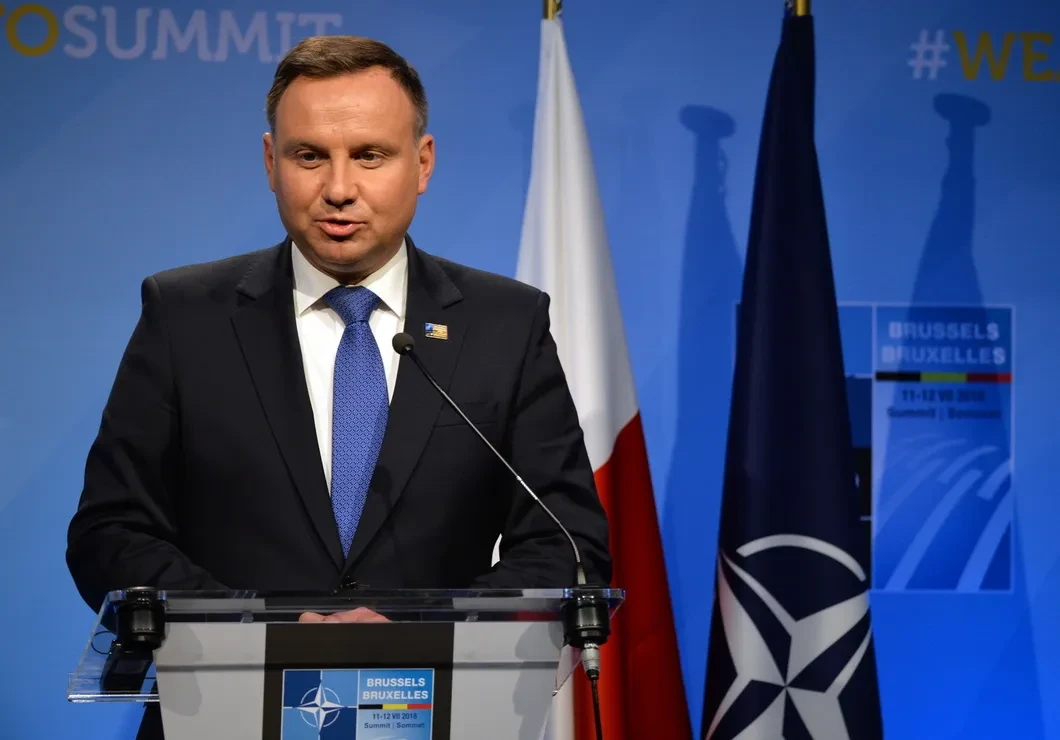
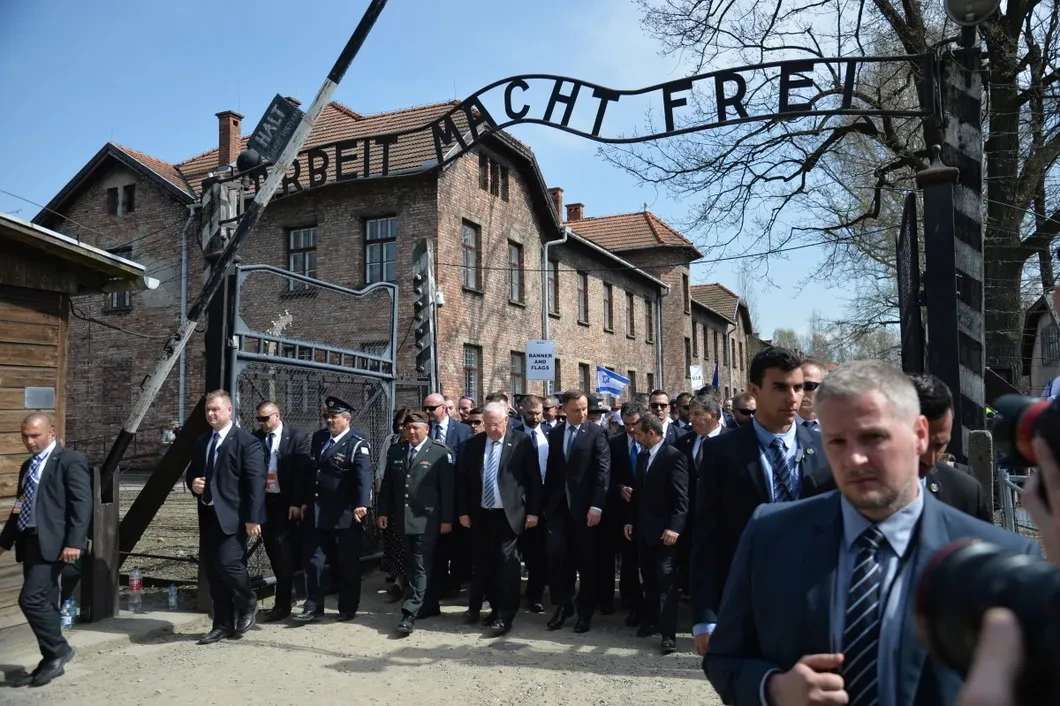
Then the various “answer” from Poland followed - historians, Jewish figures, Minister of Foreign Affairs and the prime minister protested. The President of Duda refused to go on the day of memory of the Holocaust victims to Israel (according to the official version-due to participation in Putin’s event), and the Polish Sejm adopted a special resolution condemning “provocative and untruthful statements of representatives of the highest authorities of the Russian Federation”.
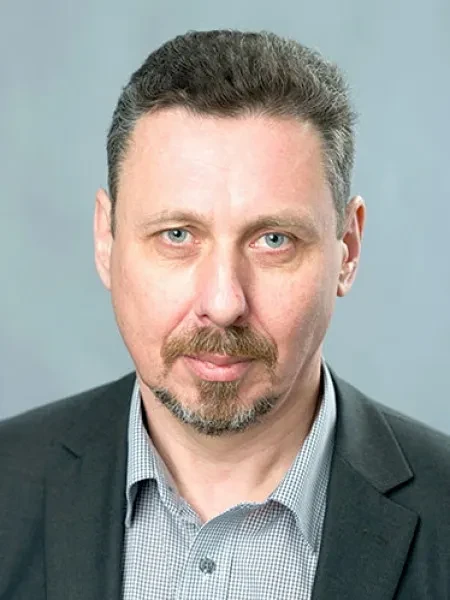
We are discussing the Russian president to “Memory Wars” with Alexei Miller, a professor at the European University in St. Petersburg, the scientific director of the Center for the Study of Cultural Memory and Symbolic Policy.
- What, in your opinion, are the reasons for the Putin's “Lesson of History”?
- I can only assume. I would begin with a resolution of the European Parliament adopted on September 19 last year. In October, Putin did not know anything about her. I had the opportunity to verify this during the Valdai session - then he simply did not understand the question asked to him. Apparently, after the event, he asked his assistants - and what was they asked me about? Reach. When he began to deal with the resolution, he realized that her initiative came from Polish deputies in the European Parliament.
And the resolution itself caused, firstly, a sense of anger, and secondly, serious concern, because it is fraught with serious political consequences.
Hence, in his “Lesson of History”, a criticism of the pre-war policy of Poland and insults to the then Polish “Ambassador-Antihmit”.
By August 2019, some materials, assessments and performances for the anniversary of the Molotov-Ribbentrop and the beginning of World War II were preparing. Then the president did not take personal participation in this, and the statements were delegated to the second -line figures: Sergey Ivanov, Naryshkin, Medinsky. Now he himself got involved in the "War of Memory." Moreover, it went mainly to the Poles.
The second probable reason is the upcoming January Visit of Putin to Israel to the Holocaust memory forum. If we assume that he wanted to achieve something in tactically, then he achieved: Polish President Andrzej Duda will not go there. This is also a continuation of the story-after all, the Poles last year did not invite Putin to commemorative events related to the 80th anniversary of the beginning of World War II.
- Why suddenly such a reaction to the September resolution of the European Parliament? After all, various resolutions and other documents have already been adopted, where “two totalitarianisms” were declared responsible for the outbreak of the Second World War?
- This resolution is not one of those standing in the row, it has a certain feature. If earlier such a agenda was promoted mainly by Eastern Europe (primarily, Poland and the Baltic countries), then here we have, with the exception of left -wing deputies (several dozen of them), consensus voting. This is the first.
Second. From the Kremlin side, this may look like this: well, in September, the deputies of the European Parliament adopted this resolution, we waited until December, but not a single European political leader spoke about this - they say, it is necessary. In turn, if we do not respond, then this position becomes a new norm.
In 2015, Pelevin wrote that we were already made with Hitler responsible for the Second World War, they will now make responsible for the Holocaust.
If then it seemed a little funny, now it is no longer laughing-the trend is noticeable. And in this situation, Putin’s decision to bring the discussion of this issue to the highest level can be considered as a challenge to other leaders, other political heavyweights: if you think that it will be so simple without a hard discussion, then do not count on it.
-But does it not seem to you that the Putin's “lesson” is associated with the upcoming 75th anniversary of the Victory, which in mythological form is the main ideological support of power?
-As for the specifically celebration of the 75th anniversary of Victory, on which many, including some Western, leaders have already confirmed their presence, a serious issue arises. Does this help build the correct scenario of the celebration of the 75th anniversary in Moscow? Rather, I see that it creates additional problems.
After all, these celebrations should be a reason for rapprochement, to stated that we fought together with the largest powers of the West, and on the “right side”. The intensity of passions on the issue of mutual accusations of responsibility for the beginning of World War II is unlikely to help create the correct atmosphere of these celebrations.
- In this whole story, the so -called narrative of the war is extremely important. The repeated appeal of Putin to the 1938 Munich transaction is an attempt to contrast the concept of responsibility for the outbreak of the war of “two totalitarianisms” of another, in which all political players of the pre-war period are to blame for one degree or another, for all in their own way “snouted”. At this stage, it turns out that most of all the fluff was given out by the perplexing and angry Poles - the first victim of the Second World War and the Molotov -Ribbentrop Pact, which, based on the tragic history of the next section of their country in September 1939, most actively promote the narrative of the “two responsible”, which categorically does not suit the Kremlin. For which they received.
- Putin’s proposal - let's discuss the Molotov -Ribbentrop Pact, Munich and other circumstances of the pre -war history from the point of view of how everyone is to blame to one degree or another - this in some sense corresponds to the old, previous post -war tradition of the European memory culture, which suggested that everyone was to blame for one way or another.
And the position of Eastern Europe, and especially Poland and Baltic, is a refusal to recognize any responsibility. This all began for a long time, because in 2009, when the European Parliament adopted the Law on August 23 as the day of the memory of victims of totalitarian regimes, its original project said about the memory of the victims of "totalitarian and authoritarian regimes." But in the final document under the pressure of representatives of the Eastern European countries, in which in the pre -war period there were precisely authoritarian regimes with all their charms, including, by the way, anti -Semitic excesses, the word “authoritarian” was seized.
Thus, instead of understanding, including in their sins, a convenient concept of two totalitarianisms was proposed that are responsible for everything, and besides which no one is to blame.
The proposal - let's all discuss together how we are all to blame - it sounded from Putin’s mouth in his speech at the last big anniversary of the beginning of the Second World War on September 1, 2009 at Westerplant in Poland.
- But at Westerplatt, he was not at all about the Molotov Covenant - Ribbentrop not what representatives of the Russian authorities say about this. I think it is appropriate to recall that then the president was said: “ In CE, from 1934 to 1939, attempts to pacify the Nazis, concluding various kinds of agreements and pacts with them, were unacceptable from a moral point of view, and from a practical, political point of view - meaningless, harmful and dangerous ... Of course, these mistakes need to be recognized. Our country did it. The State Duma of the Russian Federation, the country's parliament condemned the Molotov -Ribbentrop Pact. ”
- A big mistake that we did not continue to stand in this position, but instead we began to talk about the great victory of Soviet diplomacy. Only a lunatic can describe the Molotov -Ribbentrop pact.
By the way, then Putin and Tusk ( Prime Minister *of Poland from 2007 to 2014 - *a. L. ) acted almost a duet, speaking of overcoming the heavy heritage of the past and finding reconciliation and understanding. In particular, Tusk said that the Soviet army could not bring freedom, since it was not free itself, but it freed from Nazism. And Putin stood nearby and nodded his head. And then there was Kachinsky, who literally defiantly introduced a resolution on the recognition of Katyn with genocide to the Sejm.
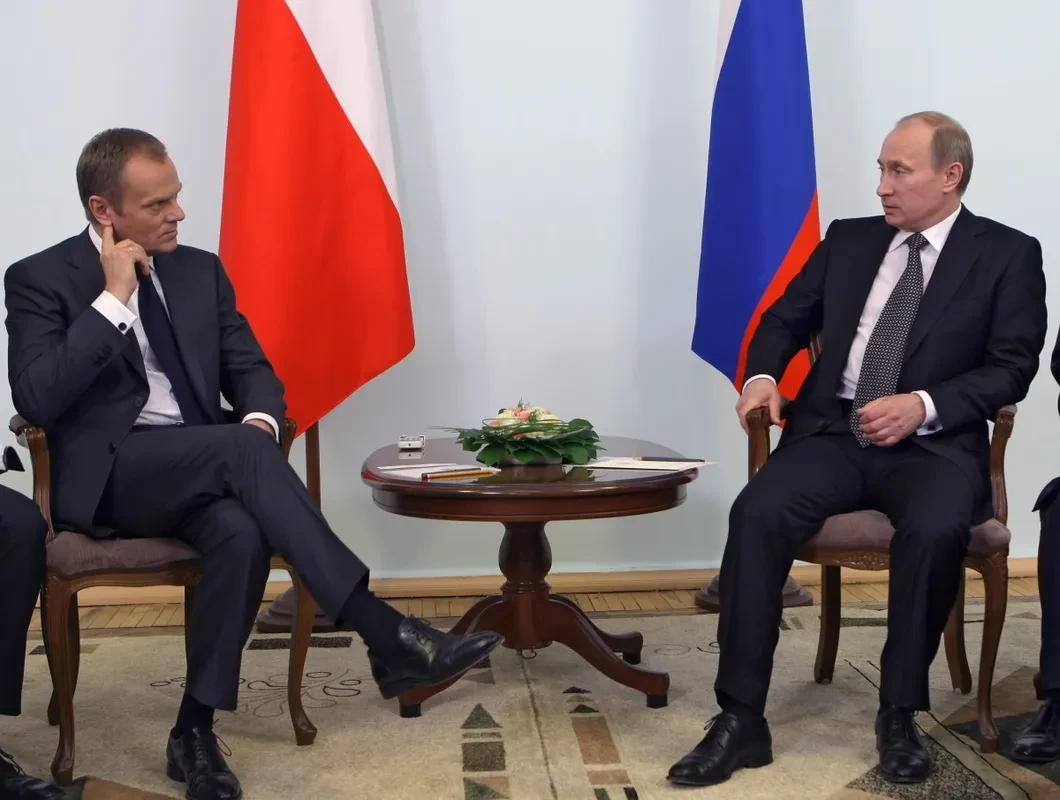
Here we often say: "Political instrumentalization of the past." But it can be very different. Putin and Tusk “instrumentalized” the past for some kind of discharge and reconciliation searches, and Kachinsky was completely frankly with the help of the past torpedoing. Unfortunately, this second, confrontation logic has now won. Why understand something, “bring the line”, fill the “white spots” and wash “black spots”, put up to overcome the past and eventually be friends ... Now the meaning of turning to the past is different is the war of destruction. No one is going to put up with anyone.
- You have long been studying the phenomenon of historical policy and, accordingly, arising from this “wars of memory”. Why is this necessary?
-When I turned to this topic in the early 2000s, it was the interest of a historian who noticed that they began to use history not for understanding and reconciliation, but for confrontation. I believe that 2004 was a turning point - it was then that the Poles openly spoke about historical policy as a necessary part of a political arsenal.
For a number of years, my main motive, the main call was this: “Guys, why do this? Let's not fall into it! " But from a certain moment it became clear that we had already fallen there.
Then you begin to study the mechanisms of these wars of memory, how they are being conducted, who and how it does. And then you understand that your country is somehow drawn into all this, because you cannot say that, they say, you are fighting there, but we don’t participate in it because it knocks on your door. And you begin to speak with different judgments about what your country should have done in the framework of this situation. You do not stand in the position of a functionary of historical wars, but you express your position on what to do. And you find yourself in a sense himself is engaged to all this. This is a very serious professional and moral problem.
- Please tell me, what is the mechanism and tools for implementing this policy, who does this and is responsible for this?
-Firstly, in some countries there are state institutions called the institutions of national memory (as in Poland and Ukraine) or, say, a commission for the study of damage from the Soviet occupation, there are museum structures such as museums of the history of Soviet occupation in Riga, Vilnius, Tallines, Tbilisi and Kyiv. Some of them were originally private, and became state. There are appropriate activities of foreign policy departments - both public and non -public.
- Well, the official statements of the Mids are understandable. How do they act non -public?
-If suddenly someone, for example, in Germany, says something that the Lithuanian Foreign Ministry does not like, for example, the Lithuanian embassy in Germany begins to bombard various institutions with letters, including universities. I'm talking about real facts, not assumptions, this is not an abstract example.
-And one of the first persons, except Putin, joined the “war of memory”?
- Until recently, this was practically not at a public level. True, there was a speech by the Israeli President Reuven Rivlin in the Verkhovna Rada of Ukraine in September 2016, which reminded of the active participation of Ukrainian nationalists in the extermination of Jews during the war.
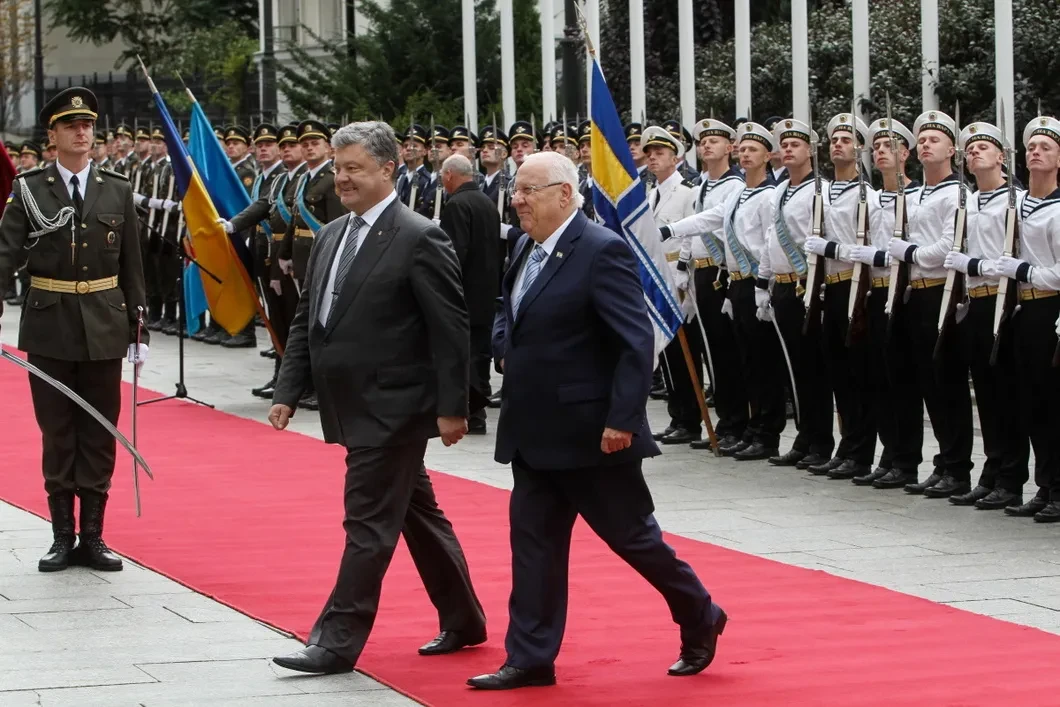
Although it is clear that if foreign policy departments, state institutions and proceedings are engaged in this, we will not be naive, believing that the presidents and premieres do not know about this that the center has not authorized this.
- And what about Russia?
- Russia was just very late. During the 90s, the main player on the field of historical memory was the Memorial. And a little Orthodox church. Then the authorities begin to create some crazy structures such as the presidential commission to combat the falsification of history, which lasted from 2009 to 2014. And ingloriously disappeared. In 2012, formally non -governmental organizations appeared that are closely connected with the authorities and are controlled by it. This is a Russian historical society and the Russian military-historical society. The Foundation “Historical Memory” created in 2008, sharpened precisely on the “War of Memory”, unfolds its activities.
In the same 2012, the law on “foreign agents” was adopted, which cleans, including the field of historical memory from “harmful” foreign influences and injections, and in parallel the state begins to pump quite a lot of money into this area, and not only to the largest NPOs.
As a result, many people begin to receive state funding for historical research, and this somehow affects how you formulate your research tasks.
By the way, at the same time, work begins on the historical and cultural educational standard. And also in 2013, large -scale exhibitions from the series “Russia is my story” begin, which later turn into historical parks with the same name.
Official Russia has embarked on the path of institutionalization of memory policy late, this policy in our performance is largely reactive.
- To date, it turns out that the only ally of Russia in the interpretation of the memory of the war is Israel for which the theme of the Holocaust remains the rod?
-For Russia in the framework of the Wars of Memory, the theme of the Holocaust is rather winning, because the Soviet Army stopped him at some final stage, breaking the Nazis. Secondly, because the scale of the participation of Russian people in the Holocaust (and such were also) incomparable with what happened in Ukraine and in the Baltic states. And, most importantly, they are not heroized with us, and this is a fundamental difference between our historical policy, our memory policy and memory politics in Ukraine and the Baltic states. It is clear that not every Ounovets ( *member of the OUN, an organization banned in the Russian Federation and politically rehabilitated in Ukraine. - *a. L. ) killed Jews.
But we know that hundreds of monuments and commemorative boards to the Holocaust participants are standing and hanging today - this is important. And in this sense, this is just the topic in which Israel and I are ready to be allies.
And if you look at the script of the ceremonies that will be held in Israel on January 23, then the previous narrative of the war is fixed there. Because the leaders of the largest powers of the anti -Hitler coalition, of course, the Israelis themselves will say, and it seems the Germans. Why will the Polish President Duda go there? Not only because Putin “offended” Poland. And because the Israelis explained to him that he would not say, and even more so to say after Putin and answer him to what he would say.
- I would like to return to the Putin's "Lesson of History." Was it necessary to personally enter the fighting on the battlefields of the “War of Memory” battles?
- I think this is a mistake. When you are at war (including the “War of Memory”), you certainly think about how to inflict a blow to your “enemy” more closely. But these are tactical considerations. But there is another question of how to get out of the war. After all, it is impossible to assume that this war will last forever - there are no wars that last forever. Moreover, this war has such a property that you can become its hostage. Until recently, when the Russian authorities looked at the expansion of the Eastern European countries of these “wars of memory”, they appealed to the leaders of larger Western powers ...
- From the so -called old Europe ...
- ... so that they explain to their "younger" partners that, they say, to do this is not good. And now we are faced with an unpleasant reality when the “younger” actually imposed on everyone their agenda, because the “elders” did not want to get involved in this and considered that here they could give way and not violate Western solidarity. And in this situation, it turns out that if you get involved in the highest level, then this becomes another element of the general confrontation along the Russia - West, and it will be very difficult to get out of this state. Why were all these non -governmental NGOs created? In the end, there is a minister and head of RVIO Medinsky - a powerful weapon. Выпустите товарища, пусть он скажет все, что считает нужным в рамках логики «войн памяти», и оставьте вне этой, безусловно, разрушительной (прежде всего, для репутации) войны первую фигуру страны. Сохранение для лидера страны пространства для маневра, его положения над схваткой и возможности выхода из войны со стратегической точки зрения важнее, чем возможные тактические успехи. Хотя еще надо доказать, что они были достигнуты.
Сейчас еще рано давать оценки последствиям, но предпочтение в политике тактических соображений в ущерб стратегическим — это всегда слабое решение.