
Translated material
Unreal income
Business jets and elite yachts are guaranteed by beggarly salaries of the rest of the Russians. The Kremlin is unable to change this

The large Russian authorities remembered the low income of Russians. And it hinted that she would do something, after which these income would grow. For example, they say the authorities, you can not levy income tax from those who receive less than one and a half living wages, and raise the tax for everyone else. To take money from the poor and a small part of this money to be given to the poor.
But even if you are behind the threshold of poverty, do not count on additional money. It is the low income of people - the foundation of the existing economic model and the source of profit of state business.
And the current growing poverty is an objective and expected result of economic policy, which has been sequentially implemented in Russia for the past ten years.
With the income of citizens, this is the story. These income grew from the end of the nineties to the end of the zero, and they grew quite confidently. There was a time when the Moscow Office Plankton received more for its activities than in any European capital. It is clear that high oil prices helped both the budget and citizens. After the barrel fell asleep, of course, income decreased. But since then, oil has grown and cheaper, but people did not get money anymore. Well, since 2014, there is no money at all.
At the same time, the authorities are firmly convinced that people still have enough money, and you only need to shake their pockets. In favor of such bossy conviction, statistics speak.
Strange parity
The authorities are very fond of counting the Russian gross product for the “purchasing power parity”. Say, it doesn’t matter that Russians have low salaries, but our prices are also low, so for less money Russian can buy more “beig poppies” than the same American. So, counting “by parity”, the Russian Plush GDP is at the level of $ 27,200 a year, a decent indicator, in the sixth ten countries, just below Croatia and slightly above Chile. If the per capita GDP is comparable, it means that it is comparable and labor productivity. So, minimal salaries should be comparable.
Yes, in terms of dollars, the minimum wage in Croatia (a little more than $ 500) and in Chile (a little more than $ 400) are quite comparable. That's just in Russia three times less minimum wage - at the level of $ 180.
Something is wrong here. Are the Russians work so worse than the Croats or Chileans? In addition, despite all the long holidays, in terms of the number of working hours a year in Russia they work more than in any developed country.
Well, the boss will say, what's wrong here? Nobody lives on the federal minimum wage, this “minimum minimum” receives no more than 2 % of the workers. If people continue to buy at existing prices and regularly confirm their loyalty in the elections, then they still have some money, and their hands can be twisted more. And in general, the “minimum wage” in Russia is just a fiscal indicator that allows the state to calculate the guaranteed amount of taxes charged. In the existing form, the minimum wage does not affect the labor market.
Moreover, statistics will tell us, three quarters of low -paid jobs are concentrated precisely in the "state sector". It turns out that it is the state with its corporations, “national plans” and “effective managers” responsibly for such a low salary? That's right.
Where does the money come from?
Where does the growth of employees revenue come from? First of all, the driver of this growth is competition between enterprises for workers. Each new business is an increase in the supply of money in the labor market. This is what pulled up the revenues in the zero. Secondly, this is an increase in performance - the more a person creates, the more expensive his work is for an entrepreneur. And the so -called "social policy" of the state may not increase, but only redistribute income.
The state is not only the main buyer of the labor resource in the country, but also the regulator of the level of remuneration. Please note that all sorts of decrees on raising salaries to “doctors -teachers” are required to focus not on a specific amount of earnings, but on the “average in the region”. What does that mean?
That no large private entrepreneur or investor will increase the salary of his employees, even if he wants to.
The growth of salaries at a large enterprise will mean the growth of average indicators used to calculate salaries to state employees, which the authorities are completely not interested in.
From the experience of economic growth in the zero authorities, he made several strategic conclusions, which are steadily follows.
The first conclusion. In the world market, the Russian economy has only two advantages. This is hydrocarbons and cheap labor. Hydrocarbons are a key source of currency and at least a quarter of the country's budget. And cheap labor is the only magnet for foreign investment. Why foreign? Because their, relatives, state-minded, national-oriented, spiritually external entrepreneurs in orders and uniforms do not want to keep their own funds in Russian jurisdiction. All as one patriots and defenders, they are ready to eat land on this, but personal money is hidden in London and Geneva. And whoever is not allowed into London, he wares tons of money in Moscow apartments, although he could well put them into business turnover, everyone would be better. But officials do this because they know each other well and their laws - they themselves write them and fulfill them.
And they know firmly - as soon as the large owner ends the administrative resource, so its large property also ends.
No dynasties and family capital will take their own and share their own. And the little one - it was not property.
A foreign investor (even if he operates with washed and repainted Russian money) looks at things simply. If the organization of production business in Russia brings the same money as the organization of the same business in Poland, then it is better to arrange business in Poland. Not to mention Germany or Finland. There is an understandable level of prices for products, which means that profit can form where costs are reduced. And the easiest way to reduce salary costs - but if the employee has nowhere to go. The Russian authorities have already been convinced in practice:
As soon as the cost of labor in Russia begins to approach the world level, so the risks of doing business in our country begin to outweigh the benefits.
The authorities can inflate cheeks as much as they like, but they perfectly understand that all Russian industrial growth is a derivative of European growth. The main buyer of Russian raw materials and the main supplier of technologies and equipment. But Europe is growing, but Russia is not. And these are already questions for those who control the Russian economy. The real growth of the economy is an increase in employees' income, there is no other way. But instead of the growth of employees' incomes, the chiefs prefer to see the growth of the profits of their enterprises-a completely acceptable logic for top managers of some “East Indian Company of the Southern Seas” two hundred years ago. And how do the current Russian authorities differ from them by and large?
Barbecue in a fire
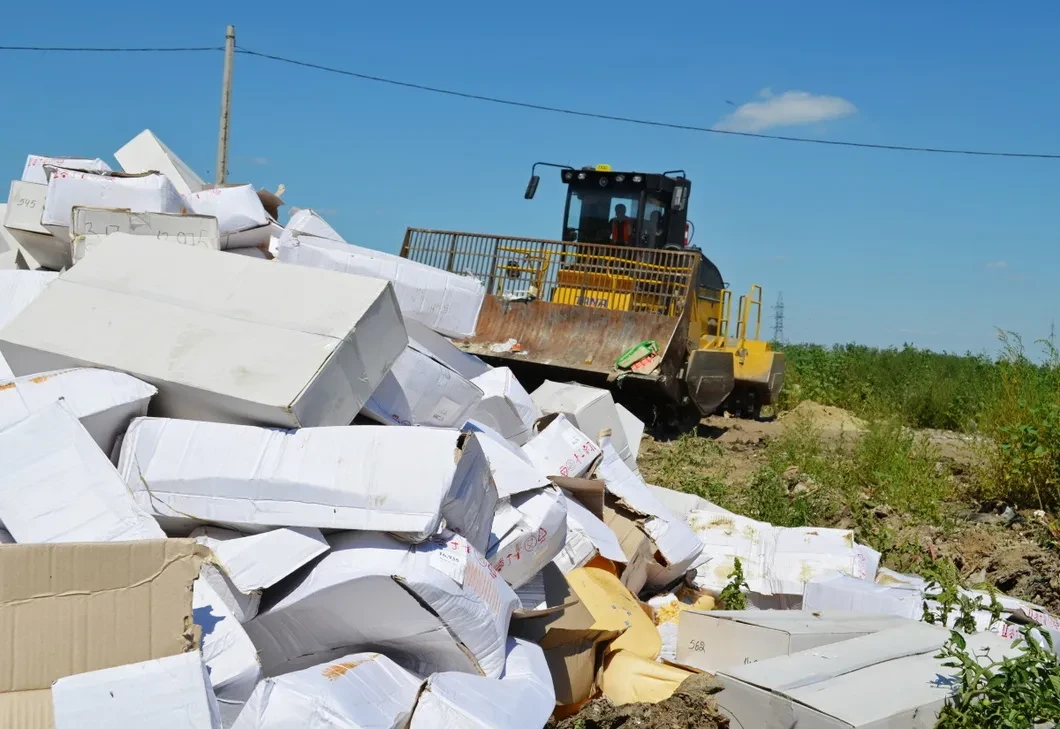
The wise decisions that the bosses make in caring for their own profits are similar to the actions of a person who sets fire to someone else's house to fry their barbecue on the stake. The most striking example here is “grocery antisanctions”. It was they who launched a decrease in the real income of Russians, and here's how. Contrary to the assurances of the authorities that the prices of domestic products as a result of the “anti -Sankitsy” will not increase, of course, they rose. But in the small budget of the Russian household, food expenses occupy a fairly significant part, more than 30 %.
What does the increase in food expenses mean in the family budget? That's right, reducing expenses for everything that is not food.
Less consumption of goods and services is less business revenue. Less business revenue is less than the amount that the business is ready to allocate for the payment of employees. Less salary is less consumption, and ... an increase in the share of costs for food, and the rejection of high -quality, but “low -margin” food in favor of various pseudo -products. But the profit of Russian agricultural holdings, closely related to the authorities, and the profit of palm oil suppliers increased.
Another conclusion made by the authorities is the “perniciousness” of high salaries for the growing budget sector. The official understands that if salaries in the non -state sector are growing, then the budget will have to compete for labor resources with private entrepreneurs. The authorities, obsessed with the “profitability” of their state enterprises, does not want to this competition, wanting to remain the only employer. Moreover, one that can pay a little-he has no competitors.
The third observation, made by the authorities who carefully monitored the Russians temporarily rich in zero, is the desire of citizens, all other equal ones, to purchase exclusively imported (or disguised as imported) goods for consumption. Why not establish the production of such goods in Russia? Look above - the investor of such production needs either low wages or guarantees of protection of property rights. There are no guarantees, it means that there will be a low salary. And there will be a low salary - it means that there will be no money to buy quality goods and there will be no production. A vicious circle.
It is ridiculous, but it turns out that the “struggle against the oligarchs” for the “strong state” and the situation in which only power guarantees property, turns into low salaries of employees and the fabulous increase in the profits of the same oligarchs? That's right. As the economist Lauren Graham joked, the Russian authorities all the time want to get “milk without a cow” - to make people work hard and work well, but they get little and spend. The bosses remember that Comrade Stalin arranged a similar thing at one time, remember the stories of their grandfathers, how they commanded the camps of the camps, and try to reproduce this model.
The most expensive
But what happens if the Russian state-commercial authorities suddenly change his mind and decides to give people money? No, one and a half rubles between the poor and very poor will not redistribute. And will be directed to salaries, for example, not seven to eight percent of corporate revenue, but fifteen or sixteen percent? What then?
In this case, the authorities will have to significantly reduce personal consumption. That is, the beautiful companions of the bosses will have to transfer regular flights from personal business women. Sales of Kia Rio, Solarisov, and Lad will grow, but the sales of Roys and Bentley will be reduced. The outlets-models will kill requests, but in general, the large Russian love market will even grow up-the growth of mass consumption always means an increase in intimate entertainment. And in general there will be fewer boutiques and Gourmet restaurants, but more shopping centers, coffee houses and beer.
Budgets of large cities (due to taxation of citizens' income) will increase, but the profitability of businesses for laying and recording street tiles will decrease. This means that the excitement of renovation and reconstruction will decrease. On the streets it will be “like in Europe” - clean, but not very rich.
At the same time, from small cities the population will run to the capital even more actively (for money). The metropolitan housing will rise in price. The authorities will have to choose between inflation and the opening of borders for imports - people will want to update wardrobes and interiors. Again, the demand for “all -inclusive” tours will grow outside the country. In general, the demand for currency will grow, and its course will grow. Exporters will be satisfied, but industrialists will not.
How about foreign investment in modern production? Not the fact that they will grow. The need to pay high salaries combined with knowledge of the behavior of the Russian authorities is a business climate. Credit rates will not decrease - small entrepreneurs who want to earn money on a consumer boom will line up to bankers. But collectors will slightly reduce the volume of their business.
The state employees will go, demanding that they increase salaries. This can be done, but here the official will have to choose which state employee is more valuable for him - with a school pointer or with a rubber club.
All this enumeration is a little like what happened in zero and even nineties, but with an important difference-in this economic model, the Russian authorities will have to live on a high (ten to twelve to fifteen thousand dollars a month), but a limited salary. And one hundred and even two hundred thousand dollars a year by Russian standards - this is not a luxury at all. Not enough for a collection of Swiss watches, nor on a status companion. So, a modest European level. It is richer, of course, than in Croatia, but not much.
Do you really believe that today's authorities are ready to make their luxurious consumption for the growth of your modest income? I really tell you, it should be some other bosses.