
Translated material
"Elections to the State Duma acquire meaning"
One of the authors of the Russian Constitution Viktor Sheinis - on amendments to the basic law proposed by Putin
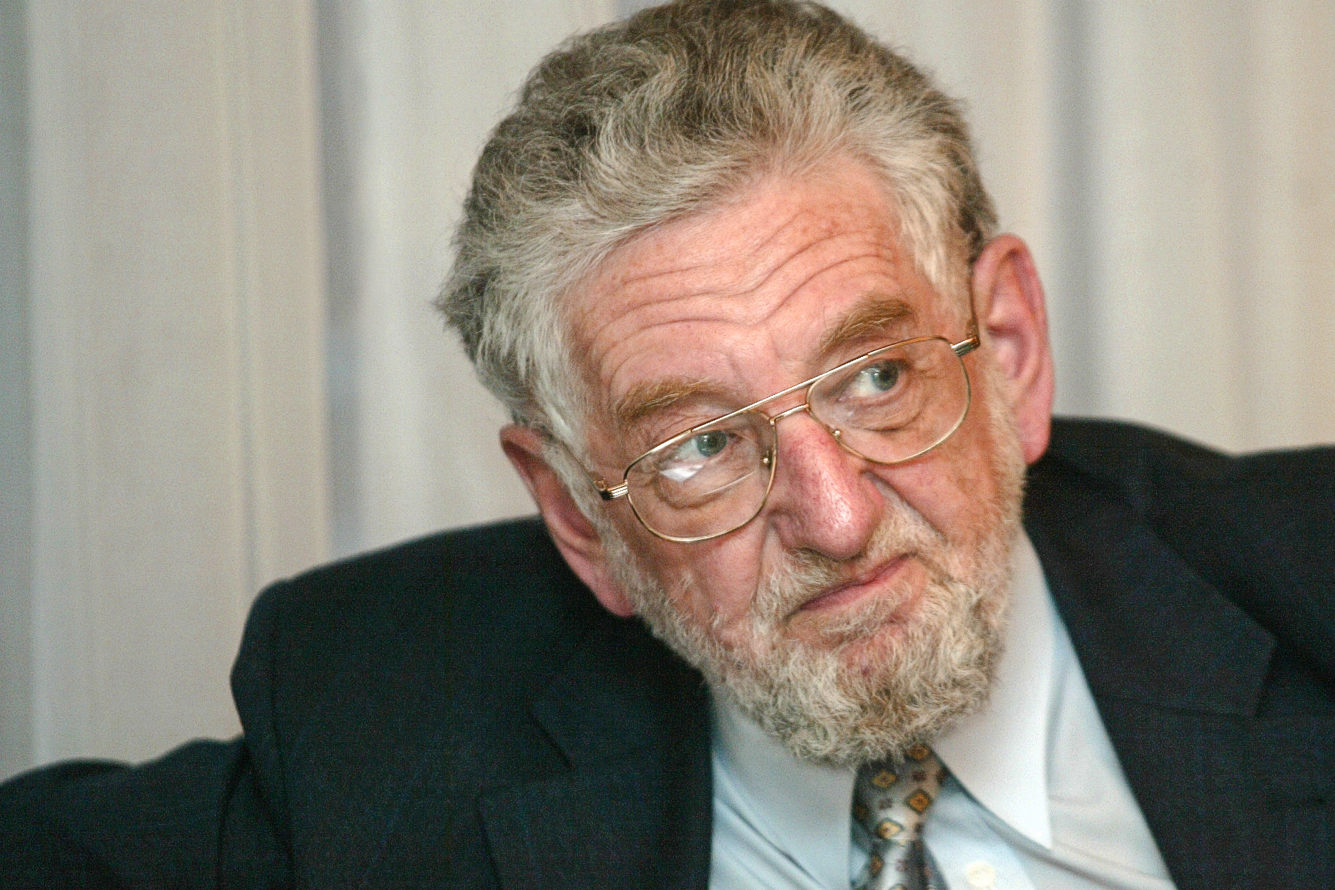
On January 15, in his message to the Federal Assembly, President Vladimir Putin announced constitutional reform. Among the proposals - to strengthen the parliament, increasing its role in the formation of the government and the appointment of the leaders of law enforcement agencies, as well as to consolidate the State Council in the Constitution - now it is an advisory authority. One of the authors of the current Russian Constitution, Viktor Sheinis, explained to Medusa whether the reform will help Vladimir Putin to remain in power when he leaves the presidential post, and what can be a popular vote on amendments to the basic law of the country.
- In your opinion, the amendments proposed by Vladimir Putin can be considered the amendments, or in fact it is about the new Constitution?
- In order to give a qualified answer to your question, one should not only listen, but also read the sentences. Therefore, what I say will be preliminary.
Answering your question: it depends on how to count. If we assume that everything is captured, that everything that is said by the president will be picked up and voted in a unanimous impulse of delight, then this, of course, is not a new document. But those changes that Putin proposed are quite important. First of all, the main of them are the accountability of the State Duma of the appointment of ministers, deputy prime ministers and the prime minister. This can be treated differently: the Duma is obedient, the elections are known as organized, the majority in the Duma also know how it develops-therefore it will be the same as now, but only when gleeing the Duma. Nevertheless, the basic law introduces the possibility that the Duma can show character.
- Is this opportunity really great? Because when the Duma showed character, she already demanded to coordinate the names of government members: the deputies did not agree to Chernomyrdin, but received Primakov.
- In fact, you repeated what I said before that. If the Duma will form as it is formed, if its composition is approximately the same-plus, for example, some small opposition-it will be the way you formulated. But the formal possibility of mainly the law is laid, and the elections to the Duma are acquired by a certain meaning, including for those who do not agree with the essential aspects of current policy.
- What do you say about the introduction to the Constitution of the organ called the State Council? Now he is advisory, and this is such a regular opportunity for governors in Moscow to see the president.
- The answer is approximately the same as on the previous question. Now the State Council consists of the actually appointed governors and satisfies their ambitions and ambition. Another thing is if governors are selected by the population. After all, nothing was said about this, everything is supposed to be left as it is.
- It does not seem to you that the State Council is such a future form of the existence of Vladimir Putin as a politician: so that he will retire the chairman of this body?
- If he loses the presidency with the powers that are recorded in the Constitution, with the powers that he expanded - for example, the influence on the appointment of judges of the Supreme and Constitutional Court - now if this all loses Putin with a presidential post, then this is significant. Even if we receive in the person of the new president of a certain Bekbulatovich , known from Russian history, or Medvedev , memorable to us - who performs what they say to him.
- About the Russian constitution there is such a point of view that it does not work as it should: the president is not the head of the executive branch, but the defender of the Constitution. The widest powers are given to him to resolve crises, conflicts between different institutions. Do new amendments increase the contradiction?
- I always said differently: that the constitution is contradictory, but it has positive moments that are extremely important as a kind of record, as a certain fixed position. On the other hand, it provides a system of power that is somewhat contrary to what is said in the first two chapters - it allows you to expand the powers of the president, the executive branch, and the legislative and judicial. We have a kind of “rocker”, when one, the other side (that is, a branch of power) may be upstairs. If all these organs are largely fictitious (what they are now and what they have become from the moment Putin’s arrival to power), then these changes are not very significant.
- Another fundamental statement by Putin that, under the Constitution, Russian legislation should become prevailing over the international. I am not a jurist, but it seems that this is an impossible correction: about international law as part of the legal system of the Constitution, it is said in its 15th article. This is the first chapter, and the first chapter cannot be amended - only to accept a new constitution.
- That's right. But I can’t answer the question whether it is feasible or not - again, you need to read the amendment document. Now we are faced with an attack on the 15th article, on the provision by which we depend on the decisions of the European Court of Human Rights. A partial exit from this contradiction was found [the chairman of the Constitutional Court Vladimir] Zorkin. In that law , a scheme was invented according to which there is supposedly there is allegedly there.
The legislator is now facing the following choice: either it changes paragraph 4 of Article 15 of the Constitution, but for this you need to run the entire gimp related to the constitutional assembly, a change in the first and second chapters, and so on. The president did not say about this, it means you will have to go on a different path-you can come up with some kind of article, some other formulations that the provisions of international legal acts are somehow taken into account in our Constitution, since international treaties are ratified by parliament, which means that they are introduced into the legal system.
- If the first chapter is changed without convening a constitutional assembly, can the main document be considered illegal?
- It can be changed by convening a constitutional assembly. To amend at least one of the articles [of the first chapter] means to accept a new [constitution]. But I think that this will be tried to avoid: preserving the formula that is recorded in the 4th paragraph of the 15th article, to interpret it with some kind of wording, which will be invented by Valery Dmitrievich Zorkin (he is generally a great specialist), and she will show that we strictly follow the international standards ratified by the Russian Federation.
- Not so much about law as about politics. Putin proposes to increase the qualification of the Settlement for the President of Russia from 10 to 25 years. A person who lived, say, for six months of studying abroad, as Alexei Navalny did, will not be able to be elected. Well, or a person from Crimea will not be able to become a candidate. Is it constitutionally?
- I listened to the radio now, and in one of the programs there was a discussion of the political scientist that this was directed against [Mikhail] Khodorkovsky. 25 years is how to interpret. It can be counted from birth to 25 or from today. It all depends on the wording that will be proposed.
In general, I do not really understand why this norm Vladimir Vladimirovich Putin was needed.
- Social points (on indexing pensions and equalizing the minimum wage with a subsistence minimum), which are also proposed to be entered into the constitution, is just populism?
- Well, this can be done. In essence, the size of the minimum wage cannot be recorded in the Constitution - this is a mobile value. Therefore, the fact that it should be no less than the subsistence minimum is relatively easy to observe. In general, I listened less attentively to the social part of the message-it is of such a propaganda-populist character.
But I did not touch on another important constitutional issue, namely, how the president intends to obtain the consent of the people [to amend the basic law]. This was stressed: the people - the owner, as the people will decide, will be so (in fact it was said). How are they going to do this?
- I understand what you are talking about: the president said “voting”, not a “referendum”. Then, as you can conduct changes to the Constitution through the parliament or arrange a referendum that will have a direct force. The vote will be optional, can it not take into account?
- It is assumed that they will be taken into account. But whether it will be held as a referendum is the first fork. And now the second fork: if the question is put on a referendum, then how? "Do you approve of proposals made by the president?" All this will be dumped into one pile and voted? In 1993, strictly speaking, there was also no referendum, then there was no law on a referendum.
But if they follow the way when each of the six to seven points will be formulated as a question, and you will need to answer whether you approve or not, then there is a big chance to run into the fact that some points can be rejected, or get a solid amount of votes against.
- You have obvious political sympathies , and let's the final question will not be neutral. Do you think the amendments proposed by Vladimir Putin are needed to remain in power after the end of the presidential term, or to transfer power to a new person?
-Will there be some kind of design in which Putin will maintain a set of powers that are now assigned to him, or will transfer them to someone else? This issue is not resolved not only for me as a supporter of the “apple”, but also for Vladimir Vladimirovich. I think he himself does not know yet. Obviously, the Belarusian version is not working now.
- Under the “Belarusian” you do not mean unification with Belarus, but how does Lukashenko have new and new presidential terms without restrictions?
- Yes. When he [Putin] began to speak in a message about a change in the Constitution, I thought that he would now say to remove the word “in a row” [normally about the number of presidential terms that one person can occupy]. But he did not say that. Apparently, as the most likely option, it remains to transfer authority to someone. This is probably from a legal point of view and not very likely based on the political situation that develops today and which will last until 2024.
-Do you think that Putin will remain, but someone will be elected president, and, for example, a year later he will leave the post so that the current president will be able to take the post again?
- As one of the options. Or [the President of Russia] will be Bekbulatovich.
“You know, while we said, Dmitry Medvedevannounced the resignation of the Cabinet of Ministers and said that“ we, as the Government of the Russian Federation, should provide the president of our country with the opportunity to make all the necessary decisions. ” Is it from a legal point of view (I can’t choose a polite word) nonsense?
- Replace it with “exotic”, and it will be true.
Vladislav Gorin