
Translated material
The fourth stage
Cycle " Disaster Medicine "
The fourth stage.
A study of how the poor in Russia has stopped treating in Russia
Project team, January 15, 2020

Russian doctors flee from state hospitals to private ones, despite the promise of the state to increase salaries. Those who remain, work outside the strength: the more the load on doctors in the region, the more the mortality of the able-bodied population from cancer or cardiovascular diseases.
As we thought
To assess the dynamics of the number of doctors, the staffing of the state of hospitals and the provision of regions by doctors, we used the data:
- The number of doctors in private and state institutions providing medical services in the regions of Russia (Rosstat, published on the website of the Unified Interdepartmental Information System (EMISS)).
- The staffing of state hospitals by doctors (the Ministry of Health of Russia, published on FedStat.ru )
- Information on the consumption of paid medical services (Rosstat, published on FedStat.ru ).
- Information about the salaries of employees of the healthcare sector in the Russian regions (Rosstat, published on GKS.ru ).
To assess the effectiveness of healthcare systems in the regions,:
- Data on the mortality of the able -bodied population according to the main classes of the causes of death (Rosstat, published on FedStat.ru ).
- Data on the mortality rate of the first year of oncological diseases and indicators of neglect of oncological diseases (statistical annuals “The state of oncological assistance to the population of Russia” in 2012 and 2018, M.: MNIOI named after P. A. Herzen branch of the Federal State Budgetary Institution “NMIC Radiology” of the Ministry of Health of Russia, published on Oncology.ru )
Where to live in Russia to survive
- Once I came to the local pediatrician to find out about the child’s operation: it was necessary to cut the umbilical hernia. And she says to me: "Make a fee, do you have money?" Everyone who can pay at least something is going to private accounts. And whoever wants to be really treated, go to Chelyabinsk or Yekaterinburg.
Svetlana Emelyanova lives in Shadrinsk, the second largest city in the Kurgan region. The population of Shadrinsk - 75 thousand, mound - 326 thousand people. In the Kurgan region, which in Soviet times was famous for its medicine, the stars of Soviet orthopedics Academician Gabriel Ilizarov and surgical gastroenterology, Professor Yakov Vitebsky, worked in the Kurgan, now the largest burden on doctors in Russia: only 46% of regular units are occupied in clinics. There are 29 doctors for 10 thousand people, and 81 doctors in the in-leading region-St. Petersburg. Here, in the Kurgan region, and the highest level of death from cancer among the able -bodied population: second place in Russia, almost twice as much as in Moscow. Worse only in the Oryol region. Mortality in Kurgan does not decrease, in 2012-2018 hesitated from 97 to 111 people. for 100 thousand people, and in the end returned to the value of 2012 - 102 people, although in recent years in the region they began to more often identify cancer in the early stages of the disease.

Why so - the versions are different. Local residents see the traces of the accident at the Mayak nuclear plant in 1957. But there is a simpler explanation. Kurgan region is the poorest in the Urals. The gross regional product per capita in it is one and a half to two times smaller than the nearest regions, the Sverdlovsk and Chelyabinsk regions, and ten times less than that of the rich northern neighbors-the Khanty-Mansiysk and Yamalo-Nenets districts (Khanty-Mansi Autonomous Okrug and Yamalo, respectively), show the data of Rosstat. The residents of the region and doctors go there-for a salary two to three times higher, Rosstat about salaries is evidenced about this. Moreover, there is no own medical university in the Kurgan region: you can only hope for the return of young doctors to the region after studying in neighboring Chelyabinsk, Tyumen or Omsk. And this happens infrequently. In 2016, this is the latest data that the Ministry of Education and Science publishes - 89 graduates from the medical services of these three cities with an average salary of about 30 thousand rubles came to the region. Their classmates, who left for the Khanty-Mansi Autonomous Okrug and the Yamalo-Nenets Autonomous Okrug-218 people, began to receive 60-70 thousand rubles, can be seen from data on employment and salaries of graduates on the Ministry of Education and Science.
Private medicine does not save: the Kurgan residents have nothing to pay for it. Residents of the Kurgan region spend three times less on paid medical services than their neighbors in the Sverdlovsk region, show the information of Rosstat about the expenses of Russians for paid services. The Kurgan Regional Clinical Hospital (OKB) in 2018 earned 8% of its income for paid services. Sverdlovsk OKB No. 1 - 10%, Novosibirsk - 12%.
The Kurgan region is not the only one where high mortality is combined with increased load on doctors. Residents of poor Russian regions, where there is no money for private medicine, and there are a large turnover and shortage of personnel in state hospitals, die from severe diseases one and a half to two times more often than residents of Moscow and wealthy resource regions. This is how it happened.
Where doctors went in Russia
From 2000 to 2011, the number of doctors in Russia grew almost every year, although slightly, most often within 1% per year. However, this was accompanied by numerous complaints of low salaries and high load. In 2012, Vladimir Putin issued the so -called “May decrees” - including an increase in the average salary of doctors to 200% of the average wage in the region. The measure looked justified: after all, in 2012 the number of doctors in Russia decreased by 4% compared to the previous year, which was not even in the 90s. This is partly explained by the fact that the Ministry of Health ceased to take into account among the doctors of graduate students, interns and clinical residents, but how many of them were, it is not known - their total number is not published separately.
How did the number of doctors in Russia have been changing since 1990
Changes as a percentage
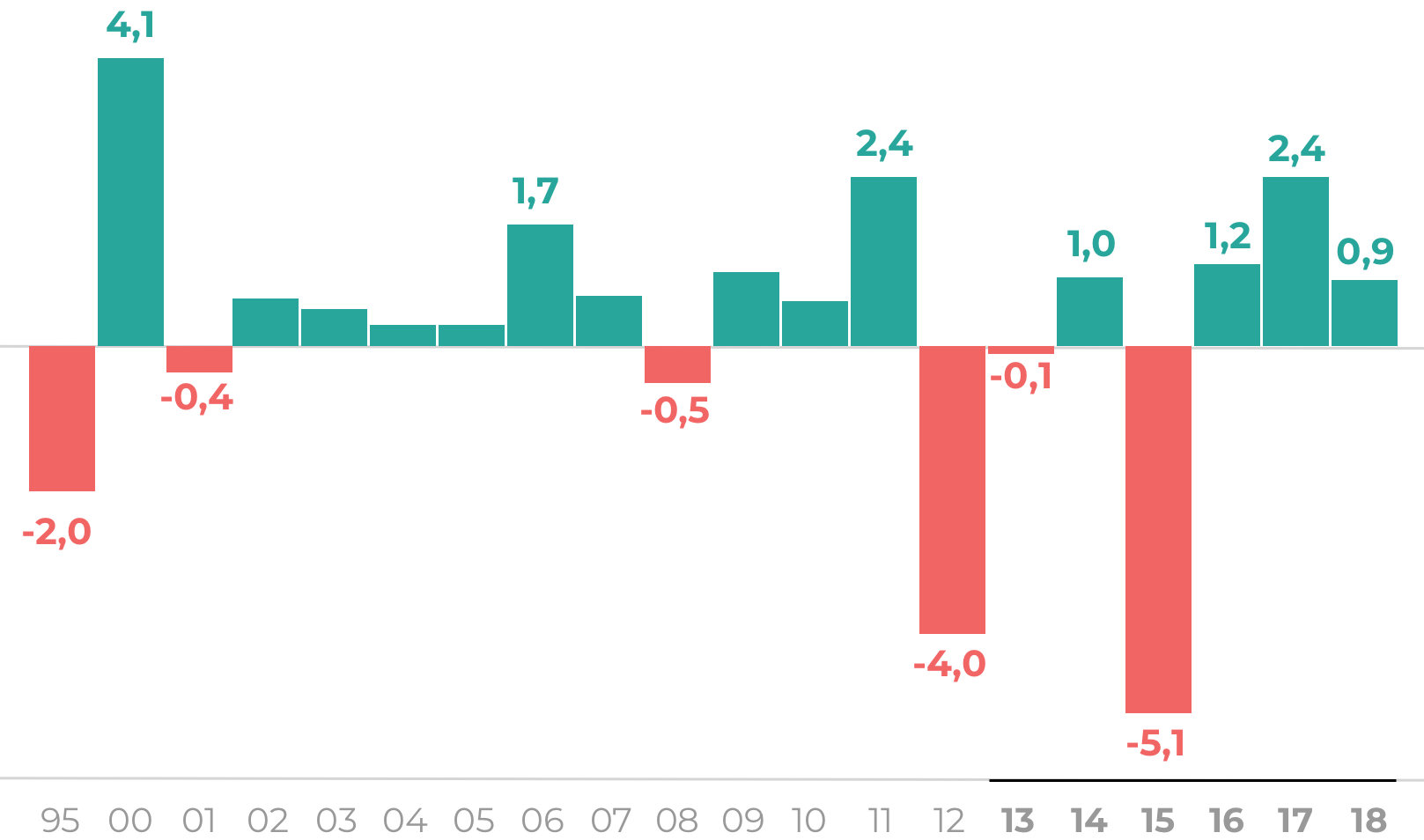
In recent years, the total number of doctors began to grow
Data source: FedStat.ru
The “May” increase in salaries helped to keep and even slightly improve the situation. In 2013-2014, salaries grew by 9% annually. The doctors became a little more, but according to the results of 2015, their number fell again - already by 5%. Then the second stage of increase in salaries began: in 2017, they grew by 11%, in 2018 - by another 33%.
How did the number of doctors in Russia change against the backdrop of salaries according to the May Decree
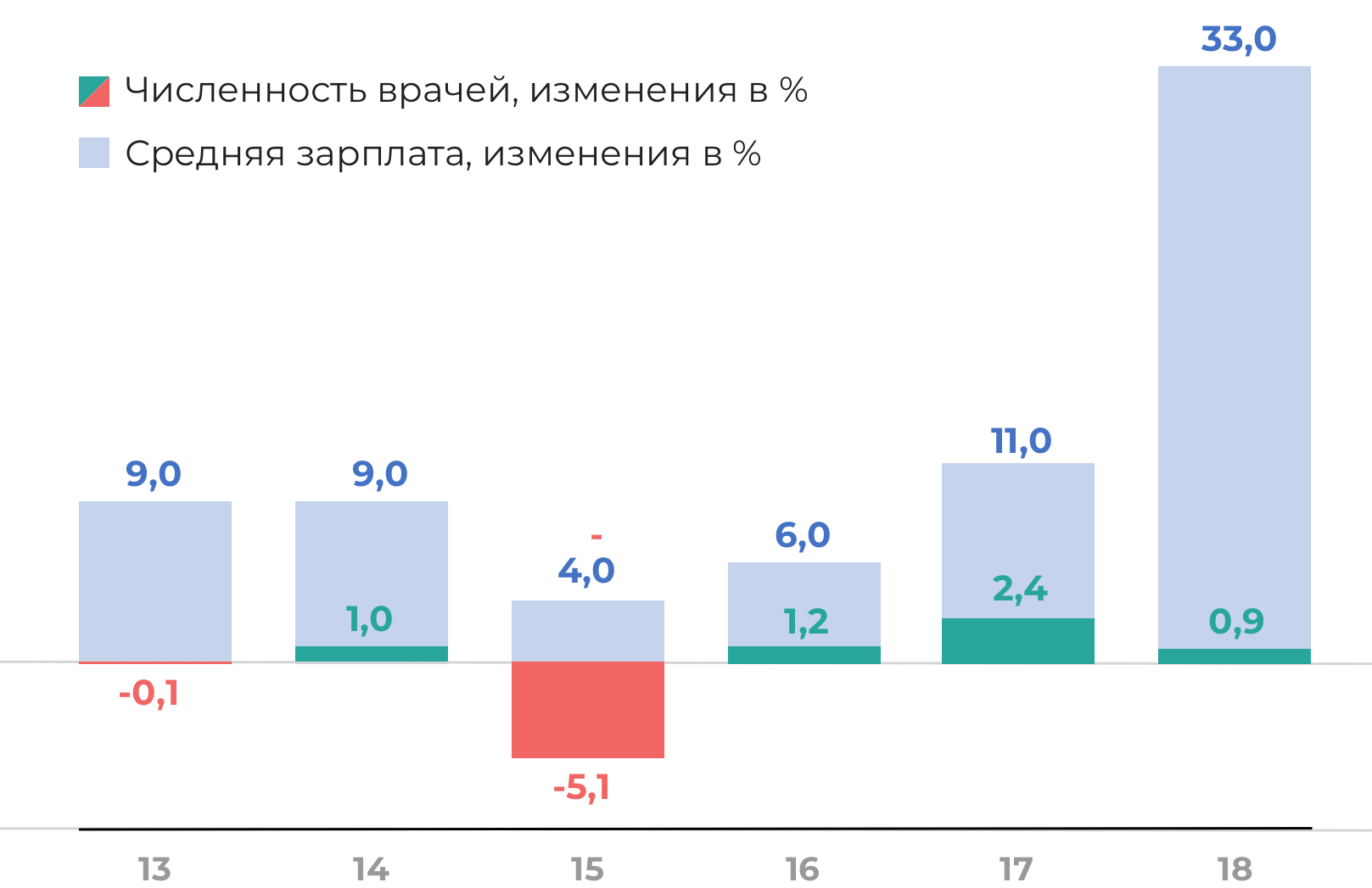
Salary growth has little effect on the number of doctors
Data Sources: Fedstat.ru , gks.ru
There were more doctors again, but there is a nuance: almost all the growth occurred at the expense of the private sector. For 2017-2018, the number of doctors in private hospitals increased by 12.2 thousand people (this is 20% of their total), in state-by 5 thousand people, that is, less than 1%.
The growth of the number of doctors in 2017-2019 occurred at the expense of the private sector
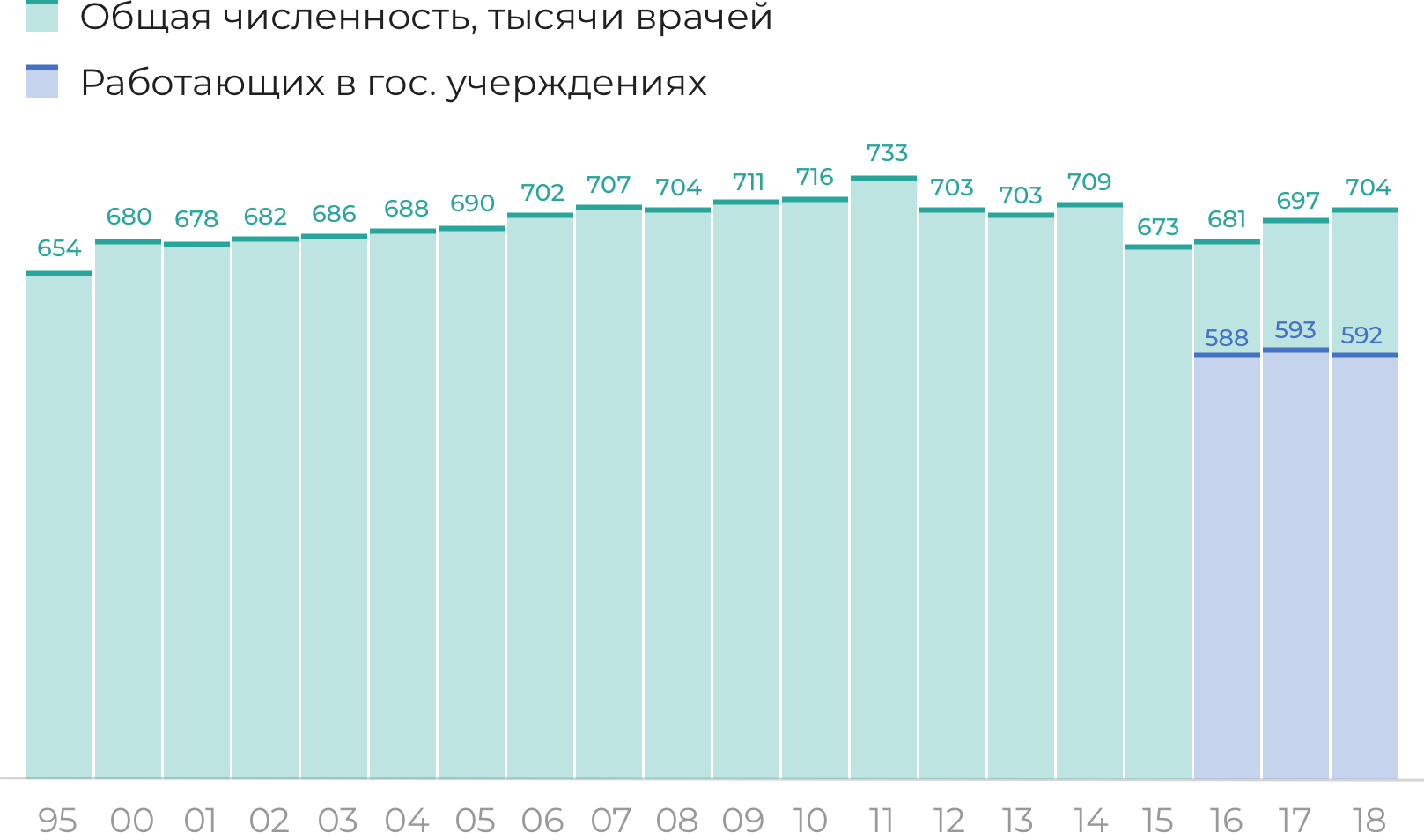
The private sector grew by 20%, the public sector - only 0.7%
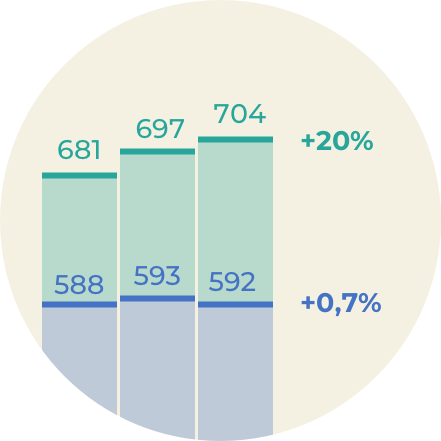
The increase in the number of doctors in 2017-2019
Data source: FedStat.ru
In the regional context, this trend is even more indicative. In almost all regions, the number of doctors in private hospitals increased in 2018 compared to 2016. The number of state ones is less than half of the regions.
In the Tyumen, Novosibirsk, Sverdlovsk, Nizhny Novgorod regions, every fifth doctor has the main place of work - a private clinic. In Moscow, St. Petersburg, Tatarstan, and Kaliningrad region-at every sixth. In half of the regions of Russia - every tenth. And this is only the main place of work - how many doctors simply combine work in state and private clinics, it is not known exactly. The first vice-rector of the Higher School of the Healthcare Department (VSHUZ) Nikolai Prokhorenko estimates the share of such doctors at 30-35% in Moscow and up to 70-80% in other cities.
Most of the state doctors-5-7%-lost in 2016-2018 Belgorod, Murmansk, Novgorod, Pskov, Sverdlovsk regions, Kalmykia, Jewish AO (EAO). In all these regions, in addition to the latter, the reduction in the number of state doctors is compensated by the increase in the number of private ones.
In the EAO, both were reduced. Just like in the Lipetsk, Oryol, Ryazan regions, Nenets AO, Crimea.
How did the number of doctors in private and state hospitals change
Changing the number in 2018 compared to 2016
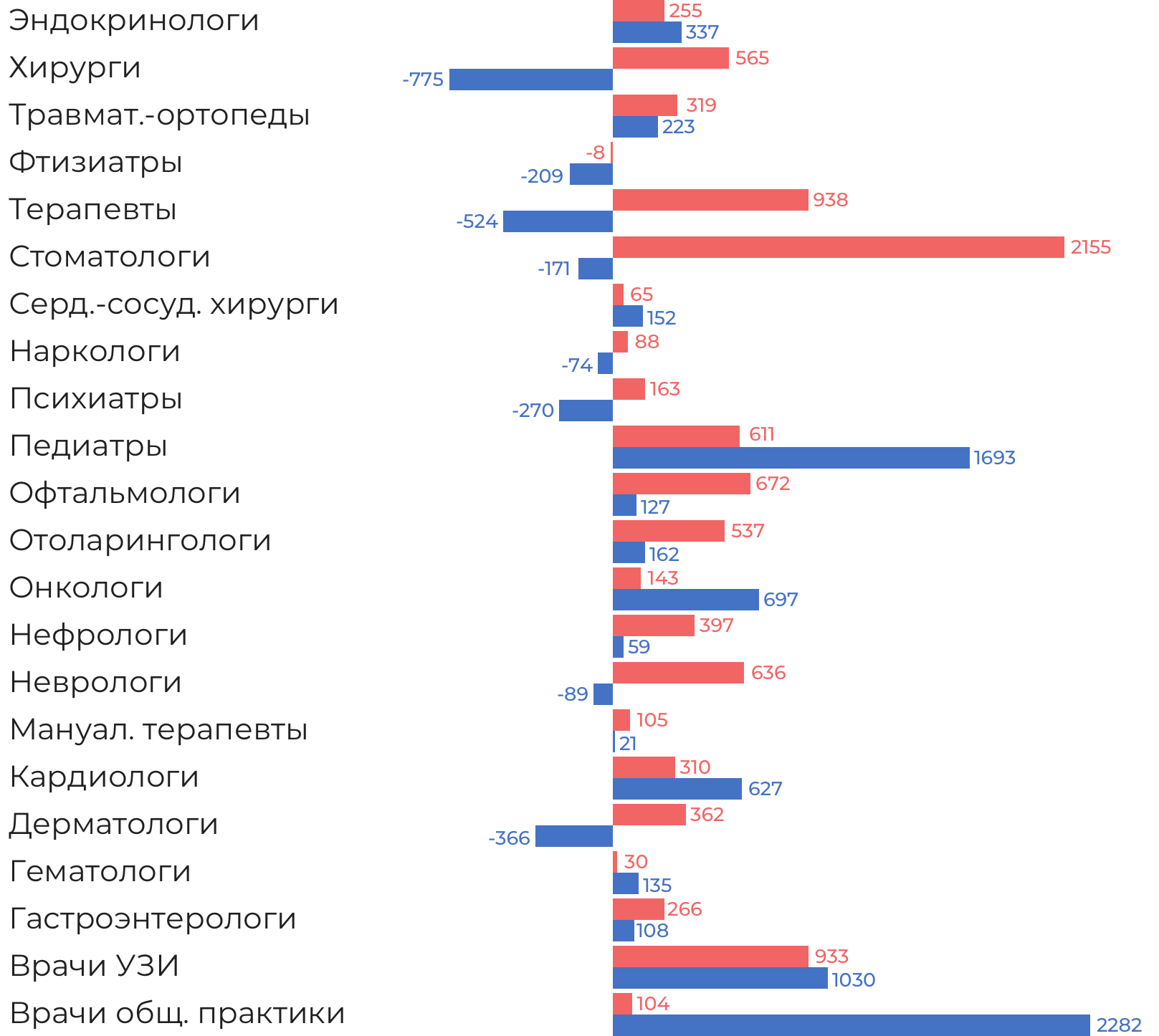
Doctors preferred private medicine
The largest outflow from the state buildings for 2016-2018 is among surgeons. Only the number of endocrinologists, pediatricians, oncologists, cardiologists, ultrasound specialists and general practitioners grew more in state hospitals than in private ones.
Data source: FedStat.ru
In addition to private medicine, doctors in search of a higher salary migrate from poor regions to rich. In the hospitals of Moscow, Khanty -Mansi Autonomous Okrug, Yamalo -Nenets Autonomous Okrug, graduates of all medical universities in Russia and the CIS countries work. In the largest multidisciplinary hospital in Moscow - Botkinskaya - 44% of doctors (out of more than 1200) graduated from medical services in other regions. In the remaining large hospitals of Moscow - GKB named after Yudin, No. 15, 67, 52, Morozov’s hospital - the share of doctors who graduated from universities in the regions ranges from 36% to 54%. According to the calculations of the "project" based on the lists of doctors from hospitals. In smaller and outskirts, it can be even larger: for example, in the city clinic No. 36 of Moscow, from 158 doctors, 55% came from other regions, and in the hospital “grasshoppers” in New Moscow - 80%. They also come from the CIS countries: Tashkent, Samarkand, Tbilisi, Yerevan, Azerbaijani and several Kazakh bearings supply doctors to Moscow. In hospitals of poor regions - only graduates of local universities or institutions from neighboring regions.
For six years, from the beginning of the execution of the “May decrees”, the provision of doctors in Russia in some regions fell by 15-18%: in the Ivanovo, Tver, Kemerovo regions, Trans-Baikal and Primorsky Territory. True, in all these regions, the decline was also accompanied by a reduction in the population: both doctors and their patients decreased.
There are no world provision of provision of doctors: in the EU countries there are from 13 to 60 people per 10 thousand people, according to the European Bureau of WHO, in Russia - 48 as a whole, according to Rosstat and 37 for state hospitals. . But the Russian Ministry of Health considers the dynamics of the number of doctors as one of the indicators of progress in healthcare and laid its growth in the Healthcare national project, which started at the end of 2018. The official results of the performance of this indicator have not yet been disclosed. In addition, doctors can be considered differently: the Russian Ministry of Health, for example, does not take into account the interns, but WHO does it.
Expert assessment states that there are not enough doctors in the country. For example, according to Nikolai Prokhorenko from the VSHUZ, 60 thousand doctors are not enough in Russia, of which 37-40 thousand in the primary link-that is, local therapists and general practitioners.
To fill out vacancies, the Ministry of Health is trying to increase students' reception for medical specialties and force all graduates to get a job in clinics and hospitals - now it is almost impossible to enter the residency without work to receive a narrow medical specialty.
In 1990-2005, the number of freshmen of medical services ranged from 25 to 35 thousand people, and in 2018 there were already 60 thousand. Each eighth student-medical student, however, did not reach the release, it follows from the Rosstat about the release of medical specialists in 2016-2018 in comparison with the reception of 2010-2012. “Already in the second, they directly say: why do we need these sciences, chemistry? We’ll go to cosmetologists, ”the rector of a large regional medical union shrugs his hands. 86% of the 2010-2015 medical services graduates settled on medical specialties, Rosstat calculated, according to the healthcare collection in Russia 2017. But it is not as difficult to force a young doctor immediately after release as to convince it after a few years of practice.
According to the VSHUZ, less than half of the graduates of the medical services remain in the profession three to four years after the release.
Doctors are forced to leave the profession or in a more calm private sector growing professional risks and loads, Prokhorenko notes. According to the Investigative Committee, in 2016, 878 criminal cases were opened on doctors, in 2018 - already 2229.
How much Russian doctors work
- When working for one bet - this is 154 hours a month - it turns out on average 30 thousand rubles. Therefore, all without exception work in two or three works. According to experience, the doctor’s working day should not exceed 12 hours. But I did 48. All are wildly overloaded, because the number of patients exceeds the norms many times.
Maria S., who agreed to talk with the project correspondent on anonymity, is a neurosurgeon in the regional clinical hospital in the region included in the TOP-20 of the GRP per capita. To the headquarters in the hospital, Maria adds a quarter of the rate in the clinic of the same hospital where it works. The total salary consists of salary with supplements for experience and harmfulness, night duty and paid patients, “who may not come,” she adds.
The head of the other department in the same hospital says that doctors earn a little more-40-50 thousand for a bet with a load volume of 160-170 hours a month, given all the allowances for experience and qualifications. He estimates the average load of his doctors at 1.25 rates, which is 200 hours a month and allows them to earn up to 60 thousand rubles.
“This is a maximum of normal load,” he adds. - There are people who work full two rates in two hospitals. About forty years old can be stretched, then they begin to get sick, drink. ”
Putin's “May Decree” set a goal to increase the doctor’s salary to the level “twice as high as average in the region”. It was made in 58 regions, in the 21st regions of the salaries of doctors now-195-199% of the average in the region, that is, the purpose is almost fulfilled there, it follows from the comparison of Rosstat data on the average salary of doctors and other employees published by the department.
Doctors, however, continue to complain about low salaries, and there are several explanations for this. Firstly, the growth of average salaries was achieved due to a strong difference (up to six times, according to the recommendations of Rosminttrud between highly qualified and leadership personnel and ordinary workers. The Ministry of Education and Science, before which there was also a goal to increase teacher salaries to the same 200%, excluded salaries of the heads of their federal institutions. But for health care institutions, such There are no restrictions.
If you study the website of the Rostrud vacancies Trudvsem.ru and the sites of regional hospitals where they place vacancies, you can see a real slice of salaries. In the same Kurgan region, the average salary of a doctor in 2018, according to Rosstat, amounted to 53 thousand rubles, but in the regional hospitals of the region, doctors offer salaries from 14-18 thousand, most often to 40. For a regular working day, a therapist or a neurologist-20-30 thousand, more-with part-time. In Orenburg - with an “average salary” of 55 thousand - the scatter of salaries in vacancies is the same as in the mound, 13 - 40 thousand.
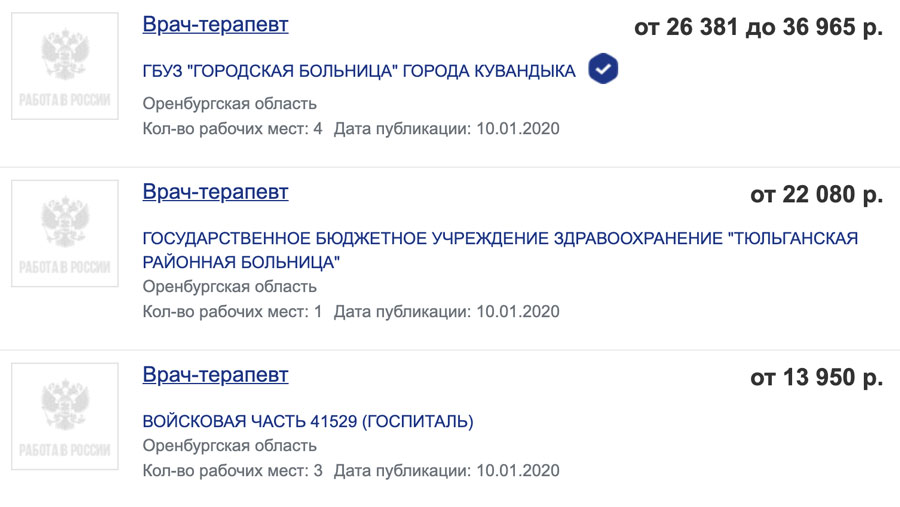
Screenshot from the site of the Rostrud vacancies Trudvsem.ru
High average salaries are achieved at 1.5-2 rates-this has become the norm for both doctors themselves and for officials. The Ministry of Health of the Khabarovsk Territory reprints the publication from the local newspaper Pacific Star, where doctors tell how they work for days:
“Work at two bets involves nine duty per month. I work day. I'll be on the night. Then I work another day. The schedule is not normalized. ”
Almost nowhere in Russia the states of hospitals are not fully filled. The attitude of real doctors, “individuals”, to regular rates, the number of which should correspond to the population, is becoming less - that is, each doctor has more and more patients. The Ministry of Health published data on the staffing of state workers by the Ministry of Health in 1990-2006 (*, in the reports of “Healthcare in Russia” issued once every two years), then stopped and returned to these data only in 2017-2018, when the performance indicators were included in the target indicators of the National Project “Healthcare” and began to publish on the site and began to publish on the site Emiss. From these data it is clear that the load has grown markedly.
In 2006, 93% of the full -time units of hospitals were equipped with doctors at one rate, that is, the average load on the doctor was 1.07 rates. Over the next years, the concept of “bets” - loads from 30 to 39 hours per week, depending on the profile of a doctor - has lost its meaning. In no region, doctors do not work at the same rate. Therefore, now the Ministry of Health takes on a standard load of 1.2 rates (combination coefficient). With a load of not more than 1-1.2 rates per person, doctors work in only four regions of Russia: Dagestan, North Ossetia, Ingushetia and the Tyumen region-in them the provision of doctors is more than 100%. The reasons are different: in the northern regions of doctors, high salaries attract, in the Caucasus, high unemployment makes all jobs even with a low salary.
In all other regions, the load is higher. The average load on the doctor in Russia is 1.5 rates. In 34 regions, doctors work on average at 1.5-2 rates. And in the same Kurgan, Tula, Pskov regions and the Jewish AO for each real doctor, there are more than two bets. При этом положение дел ухудшается: почти в половине регионов России в 2018 году нагрузки врачей выросли, в Республике Алтай — сразу на 7%, в Камчатской и Костромской областях, в Хакасии, Туве и Калмыкии — на 5%.
Укомплектованность по регионам
Процент при работе на одну ставку
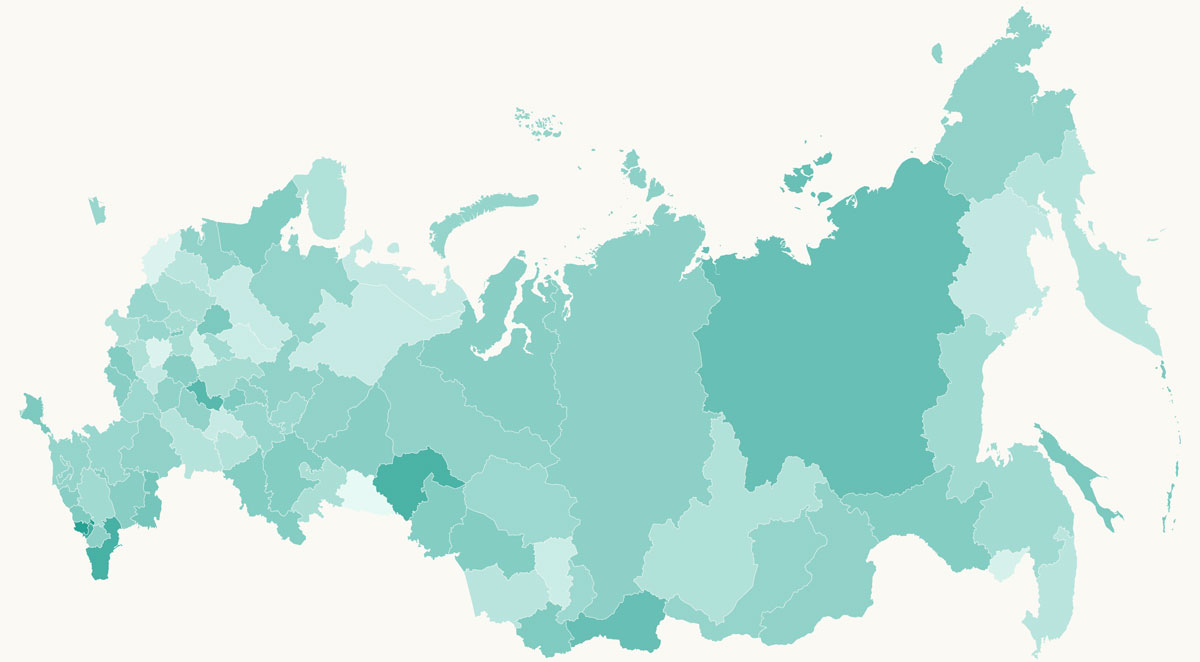
Самые неукомплектованные:
Самые укомплектованные регионы:
Источник данных: fedstat.ru
Растущую нагрузку можно видеть и по следующим данным. Минздрав в 2012 году выпустил нормы , в составе положения об организации работы поликлиник, исходя из которых поликлиники должны набирать врачей: участковый терапевт должен быть один на 1,7 тыс. взрослых, врач общей практики (более квалифицированный, чем терапевт) на 1,2 тыс. взрослых. Невролог, ЛОР или эндокринолог — на 20 тыс. Исходя из этой рекомендации должно рассчитываться штатное расписание, но конечное решение о том, сколько врачей должно быть в больнице — как штатных, так и реальных, — принимает ее руководство. Согласно сайту электронной регистратуры Курганской области , по состоянию на декабрь 2019 года, в поликлинике Шадринска, в котором проживает 60 тыс. взрослых, ведут прием 11 участковых терапевтов, то есть на одного приходится 5,5 тыс. пациентов. В поликлинике Мегиона (ХМАО) с населением 54 тыс., из которых 40 тыс. взрослых, — 16 участковых терапевтов и врачей общей практики, то есть на врача приходится по 2,5 тыс. пациентов , также согласно данным электронной регистратуры. У шадринского терапевта есть 13 минут на первичный прием одного пациента, хотя Минздрав рекомендует 15 минут.
Как это влияет на шансы выжить в случае тяжелой болезни
Весной 2016 года Илдус Зайногабдинов, житель села Зеркло с населением 379 человек в 120 км от Оренбурга, обратился в районную больницу с жалобами на кашель, температуру, слабость. Несколько месяцев его лечили: сначала в Шарлыкском райцентре, потом в областной клинической больнице. Подозревали туберкулез, позже воспаление легких. Только после второй госпитализации врачи в Оренбурге диагностировали Илдусу рак — саркому предсердия. Ему сделали операцию в Челябинском онкоцентре, но лечиться отправили домой. В том же году Илдус умер. В Шарлыкской ЦРБ 58 врачей — это 34 врача на 10 тыс. человек, немногим ниже среднероссийского уровня. Но кардиолог и уролог работают на четверть ставки, онколог — на полставки. Уролог и хирург — один и тот же врач, также как дерматолог и врач УЗИ.
В Оренбургской области смертность трудоспособного населения от онкологических заболеваний в 2018 году — 97 человек на 100 тыс. населения. Для сравнения: в Москве — 58. Смертность от рака больше всего зависит именно от обеспеченности населения больничными койками, состояния больниц, наличия врачами всех специальностей и средней нагрузки на врача-терапевта — такие выводы, в частности, содержатся в кандидатской диссертации врача Анны Брянцевой; тот же вывод в разговоре с «Проектом» подтверждает директор Медицинского радиологического научного центра им. А. Ф. Цыба Сергей Иванов: «На смертность от онкологических заболеваний влияет комплекс условий: и квалификация врачей, и текучка, и недостаток оборудования и ресурсов, и бедность населения».
Смертность трудоспособного населения от онкозаболеваний
На 100 тысяч человек, 2018 год

Регионы с низкой смертностью
Регионы с высокой смертностью
Источник данных: fedstat.ru
Сейчас шансы выжить, заболев раком или в случае инфаркта, у жителей Москвы в полтора-два раза выше, чем у жителей других регионов России. Разница велика, даже если не принимать в расчет крайние значения — регионы Северо-Кавказского федерального округа или Чукотку. Во всех окружающих Московскую область, кроме Ярославской и Ивановской областей, смертность трудоспособного населения почти в два раза выше, чем в Москве. На севере европейской части России положение дел еще хуже, как и почти во всех регионах за Уралом, за исключением Томской и Тюменской областей и Забайкальского края.
Летальность в течение первого года болезни раком — один из ключевых показателей эффективности системы онкологической помощи. В Московской области, например, он в два раза лучше, чем в соседней Тульской. В целом по России этот показатель с 2012 по 2018 год снизился на 15%, но в Белгородской, Брянской, Смоленской областях — вырос на 4-6%. В общем, болеть в России можно только в Москве, Санкт-Петербурге и богатых нефтяных регионах.
Некоторые показатели качества работы больниц ухудшаются и в целом по России. Среднероссийский показатель запущенности (доля онкологических заболеваний, выявленных на IV стадии) вырос за 2018 год с 20,2% до 20,3%. Но в некоторых регионах рост значительный. В Чукотском автономном округе показатель — сразу с 25,3 до 32,2%, Астраханской области — с 26,0 до 31,6%, Магаданской области — с 23,3 до 28,5%.
Наихудшие показатели запущенности
Доля онкологических заболеваний, выявленных на IV стадии, 2018 год
Среднероссийский показатель запущенности в 2018 году составил 20,3%
Источник данных: fedstat.ru
Смертность трудоспособного населения от сердечно-сосудистых заболеваний за шесть лет снизилась больше — на 17%, но в ряде регионов осталась практически без изменений: например, в Красноярском крае и Орловской области, а в Нижегородской даже повысилась.
В большинстве регионов с высокой смертностью трудоспособного населения число врачей за последние годы снизилось. Например, в Смоленской, Тверской, Ивановской областях с 2010 года перестал работать каждый пятый врач, в Оренбургской и Кемеровской — каждый седьмой, в Иркутской, Курганской, Псковской — каждый десятый. Число врачей продолжало снижаться в 2017-2018 годах. Во всех этих регионах смертность трудоспособного населения в два и более раз выше, чем в Москве. На то, что врачи вернутся в государственные больницы, не особенно надеются даже чиновники.
В регионах с высокой смертностью врачи больше работают
Укомплектованность при работе на одну ставку и смертность трудоспособного населения от всех причин на 100 тыс. населения, 2018 год
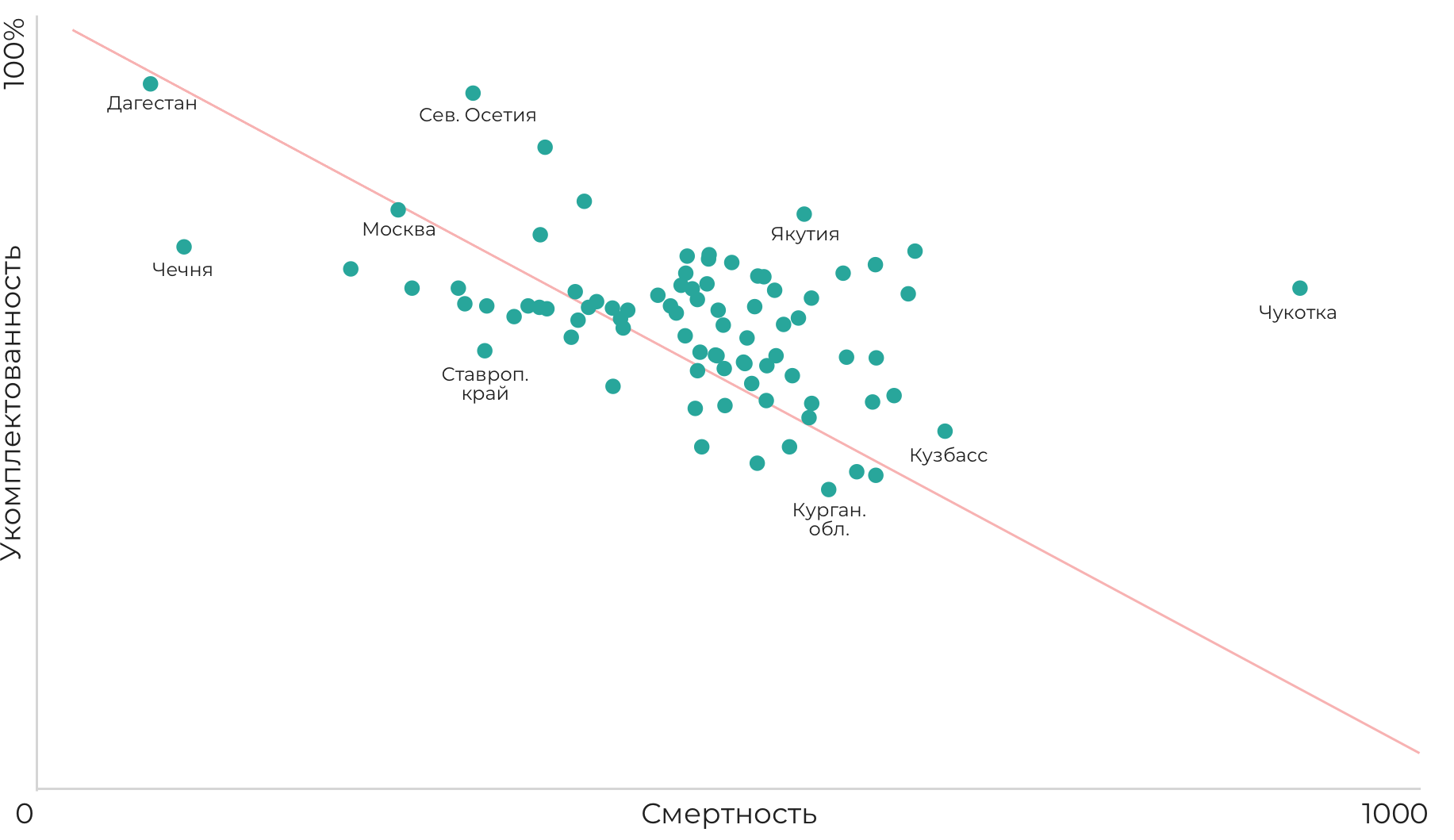
Высокая нагрузка на врачей и высокая смертность населения часто встречаются в одних и тех же регионах
Источник данных: fedstat.ru
Согласно нацпроекту «Здравоохранение», принятому в декабре 2018 года, к 2024 году число врачей в государственных больницах должно вырасти на 7%, а укомплектованность поликлиник — на 19%. То есть даже при выполнении плана по росту числа врачей их все равно не хватит, чтобы заполнить все ставки. Достичь обоих показателей сразу можно будет, только сократив штаты поликлиник, то есть еще больше увеличив нагрузку на врачей. Лишь фантастический прогресс в технологиях медицины сможет в такой ситуации повысить шансы излечиться от тяжелых заболеваний тех жителей России, которые пока не успели переселиться в Москву или Ханты-Мансийск.