
Translated material
In Abkhazia, the pro -Russian opposition overthrew the pro -Russian president. How did it happen? And what role did the immigrants from the DPR and thieves in law play there?
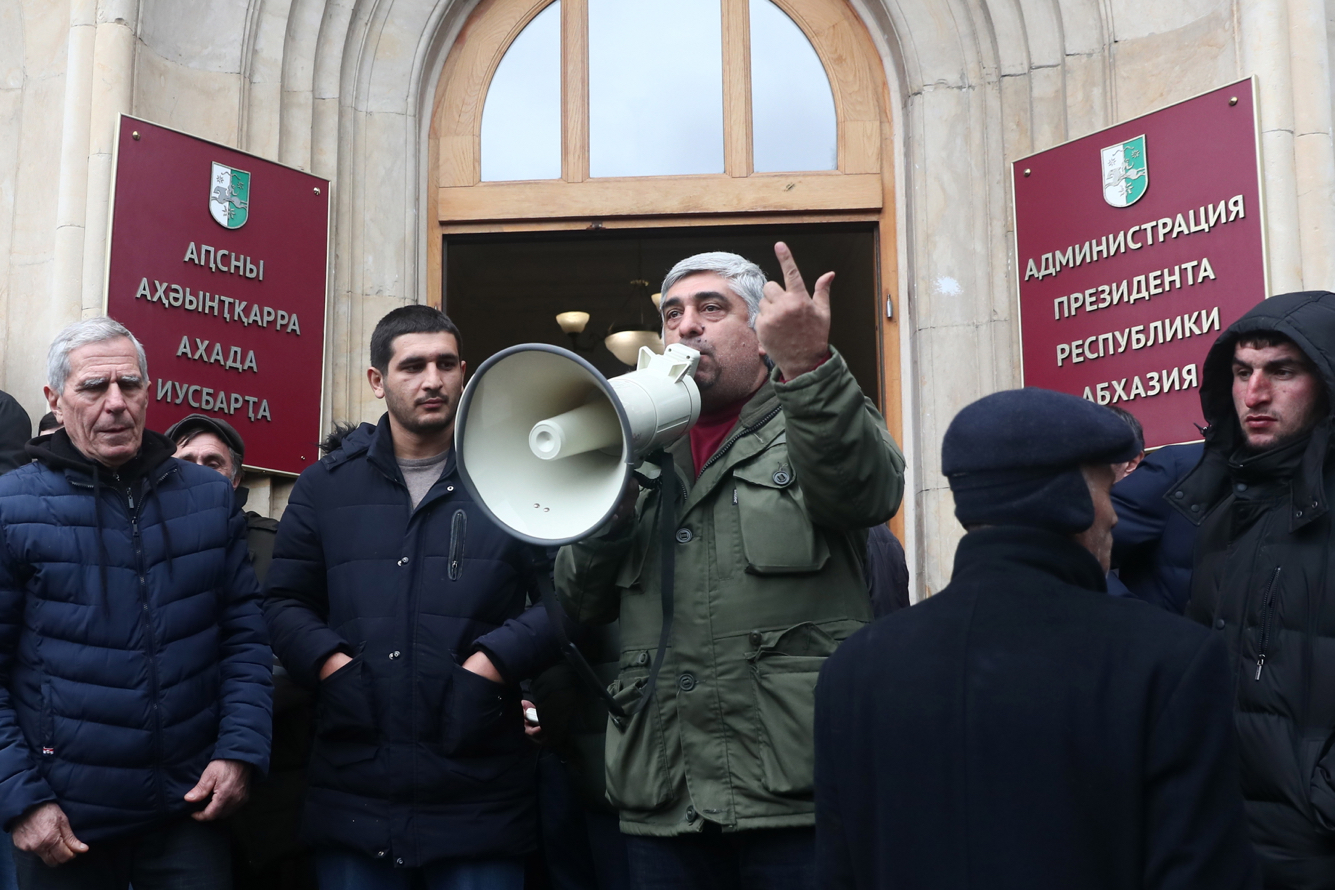
In Abkhazia, after a short domestic political conflict, President Raul Hadjimba resigned ahead of schedule. For the first time, he nominated for the presidential post back in 2004, only on the fourth attempt he achieved it and several months after the election for a second term was forced to leave - after several days of confrontation with the opposition. Russia intervened in the conflict in the republic, which recognized its independence in 2008 and remained one of the few countries in the world that did it. Medusa asked an employee of the Institute of Oriental Studies of the Russian Academy of Sciences Alexander Skakov to tell what interests Russia pursues in Abkhazia and why the support of Moscow did not make the republic more stable.
When and because of what the crisis began? Who opposed to whom?
In Abkhazia, the opposition is not formed on the basis of other than in power, foreign policy orientation, a different economic program, and a different vision of the future republic. The opposition here is formed from the rejection of the errors of the authorities and the authorities itself, and at the level of personalities. According to the principle "we are for all good, against everything bad." Accordingly, if the authorities make few errors and the ruling team includes many positively perceived persons - the opposition is weak. If there are many mistakes, and the “bench of spare” in power is small, the opposition is amplified.
In addition, in Abkhazia, the opposition, as a rule, tries to be more pro -Russian than power, trying to achieve, if not support, then silent sympathy from Moscow. Having come to power, the former opposition may not fulfill its promises, since in everyday work it depends on the Abkhaz elite and Abkhaz society to a greater extent. For example, if the future president of Abkhazia meets Moscow and allow the sale of property in the republic to the Russians, this will cause a serious split and crisis in society, and not the fact that he will be able to maintain power. Now the sale of property is prohibited to all foreign citizens, and Russia has long been insisting on changes. Each new president on the way to power promises to solve this issue, but in the future it lowers everything on the brakes.
The current crisis began not yesterday or even during the latest presidential elections. The background of the domestic political crisis in Abkhazia originates in 2004, when the successor of the first president of the Republic of Vladislav Ardzinba Prime Minister Raul Hadjimba lost to a more experienced apparatchian and politics Sergei Bagapsha.
What happened next?
A civil confrontation began in the republic, a threat of bloodshed arose. Moscow first played a destructive role, but then tried to correct its mistakes. The situation was reassured. In the new elections on January 12, 2005, Khadimba as the vice president was in tandem with Bagapsh, who, of course, easily won.
But the post of vice president was purely decorative, and Hajimba soon went to the opposition. While the authorities made few mistakes and especially after the recognition of the independence of Abkhazia by the Russian Federation in 2008, the opposition had little chance of success, but the nuclear electorate (as the enemies called them, “Ardzinbists” or “Hadimbists”) was preserved. In the elections in December 2009, Hajimba again lost Bagapsha. However, on May 29, 2011, Bagapsh suddenly died, and Alexander Ankvab, a strong and tough politician positioned himself as his successor. In August 2011, Khadimba once again lost, now an ankvabu.
But then the situation began to change: at first, the ankvab tried to change something in the republic, reform the economy, restore order, then for some reason, rather, not because of resistance, but because of some unspoken sabotage, all these attempts went into the sand. Many former associates left the questionnaire, began to sound louder and louder to the accusations of irrational and uncontrolled use of large (at that time) financial resources coming from Russia. Accordingly, the opposition rating grew. The last straw was the non -legitimate certification of the inhabitants of the Galsky district, which was launched by the questionnaire, while maintaining (which is a violation of the law) their Georgian passports. It would turn out that citizens of hostile Georgia would choose the president and parliament of Abkhazia, this caused quite understandable indignation. On May 27, 2014, the presidential residence was occupied by protesters, the ankvab disappeared on the Russian military base, and on June 1, remaining alone, he resigned.
On August 24, 2014, Khadimba, with the fourth attempt, finally became the president, quite convincingly defeating his opponent Aslan Bzhania. By the way, like Khadimba, he is a native of the KGB system. The opposition (prevailing on the basis of the former “power”, the ruling elite of the time of ex-presidents of Bagapsha and an ankvab) needed six months a year to restore strength and go on the offensive. Rather, it was a series of “offensive”, attempts to force the “Hadjimby team” to leave power.
Meanwhile, the new leaders attacked the same rake as all the previous ones: at first they tried to change something, reform, restore order, and then chose the tactics of inaction and responding to problems, and not warning them. The number of personnel errors, resonant scandals and crimes, ill -conceived and unprecedented steps multiplied day by day. Russian financial assistance against the backdrop of the economic crisis was reduced, there was no change for the better, there was no plan of reform or the concept of development of Abkhazia.
Many of those who initially supported Khadimb were disappointed in power, departed from the president and ceased to engage in politics in general. At the same time, not everyone went to the opposition, because it also did not suit everyone. If only because in a large part it consisted of the “former”, that is, those who were in power, but did not do anything positive. A request for the emergence of a "third force" grew. Even the head of the sacred Metropolis of Abkhazia, Father Dorofei (DBAR), tried to claim the role of her leader, but he realized in time that some forces seemed to be a bet on him, they just wanted to use it. As a result, the opposition, led by Bzhanya, was still able to build up her support. Everything went to the fact that in the summer in the summer of 2019 he would win, and already in the first round.
But unexpectedly on April 17, 2019, in serious condition, he was in a hospital with suspicion of poisoning. Nothing pointed out that Hadjimba could be involved in this, and there were many other influential players and clans in the republic, who were not satisfied with the possible victory of the bastard. As a result, the rather inexperienced and unharismatic alkhas Quicinia went to the elections on August 25 as an understudy.
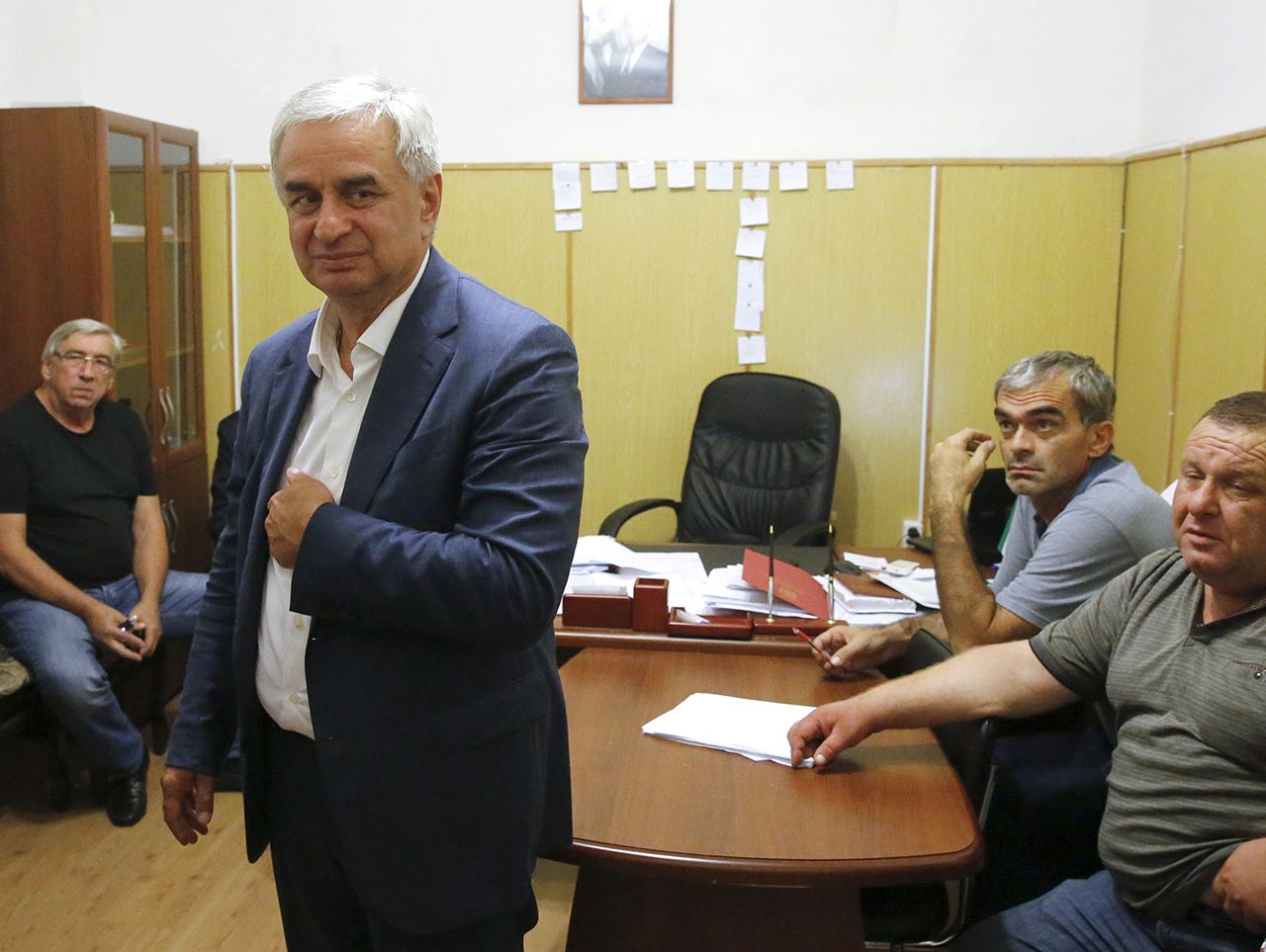
Nevertheless, Khadimba was able to win only in the second round and with a slight advantage - and most citizens simply did not come to the polls. Inexperienced Quicinia before the second round went to the Gentlemen Agreement with Hadjimbo - not to take into account the vote “against all”, since both candidates understood that they could only win with a slight advantage. This agreement was not approved as an amendment to the law by parliament, which had gone to the holidays very on time.
As a result, the unconvincing victory of the Hajimbi was immediately disputed in court. The court sessions were drawn, and Khadimby had time to identify the program of action and show activity. But he again chose the tactics of inaction. The next scandals followed: the appointment of a new head of the Gagra region, and then the cancellation of this purpose under the pressure of a crowd of protesters. Then there was a murder of two thieves in the law of Astamur Shamba and Alhas Avidzbe in broad daylight in a cafe on the Sukhumskaya embankment, while the waitress serving them died. People associated with the surroundings of the Hadjimba were involved in the murder.
The indignation was expressed by a crowd of protesters. Hajimba again went back and removed the leadership of the power structures. After that, confidence in him in power structures fell. The power rating, meanwhile, fell, approaching zero: it showed weakness and inability to perform basic functions. Her overthrow was a matter of time and technology.
What role did the DPR representatives play in this confrontation, which the Abkhazian authorities spoke of? And what kind of local crime?
I would like to believe that among the protesters against the murder in a cafe, the majority made up the sympathizing with the deceased girl, and not the relatives of the two killed bandits. But, unfortunately, I can’t believe it. Apparently, the participation of figures associated with the environment of Khadimby in the murder of thieves in the Law of Shamba and Avidzba on November 22 increased the number of his enemies. In Abkhaz society, unfortunately, very many with respect and pet treat thieves in law. Accordingly, the Hajimba’s entourage was used by one of the parties to the gangster disassembly for their own purposes, for which there was a certain “reckoning” from the other side. Perhaps that is why no one stood next to Hajimbo on heavy days for him on January 9-12.
The role of the organizer of the crowd, who occupied the presidential residence and the government complex of buildings on January 9, 2020, was performed by ARR Avidzba, a participant in the war in the east of Ukraine and Hero of Donbass. There were several of his friends with him. The DPR as such has nothing to do with it: the stimulating factor was that one of the killed on the Sukhumskaya embankment was his relative. In other words, his claims to Hadjimbe are at the level of almost blood feud. The main thing for him was to coordinate protest moods, to direct the crowd, and a relatively small even by the standards of Abkhazia, only a couple of thousand people. For this, neither numerous supporters nor special political talents are needed. Apparently, Ahra Avidzbe has the qualities of the leader, although in the last elections to the Parliament of Abkhazia he did not even reach the second round in his single -mandate district. At least today, he is not a political figure of the first row.
Who does Russia support in the conflict? Is it true that Khadimba was a man of Moscow?
Russia has advocated and advocates stability in the republic. Khadimba or Bazhia, the Kremlin did not care, it was important for him that the head of Abkhazia and his team controlled the situation in the republic, fulfill their promises, would be responsible for spending financial resources coming from Moscow - they make up almost half (45.3%) of all revenues of the republic. Both Khadhimba and Bzhaniy in recent years have been their people in the Moscow office of the authorities. If he becomes the president (and he will most likely become them) and will be able to stabilize the domestic political situation in the republic, he will be even more “Moscow Man” than Hadjimba.
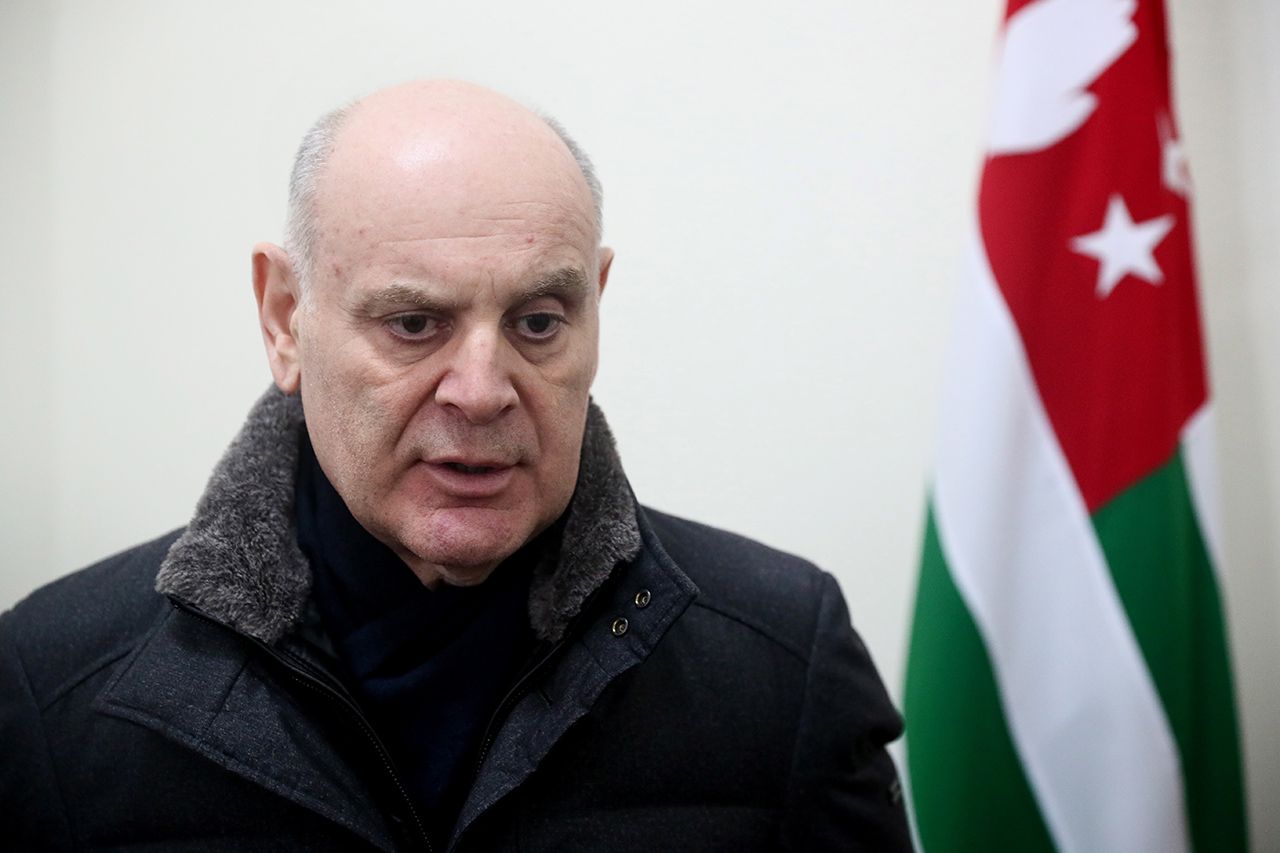
If he cannot curb crime and Abkhazia and will continue to rule because of the wings the characters such as the most famous thief in the law of Raul Bartzba (aka Piza), his reign will end the same as the presidency of Ankvab or Hadhimby ended. The new President of Abkhazia will face many almost overwhelming tasks. The big question is whether he can solve at least some of them. A bad example is contagious, and in Abkhazia there has been a very dangerous practice of an unconstitutional change in power.
Why did Moscow decide on direct intervention? What are her goals in Abkhazia? And who is responsible for all this?
The arrival of Rashid Nurgaliev and Vladislav Surkov still cannot be called direct intervention. Rather, they played the role of intermediaries. Direct intervention is the overthrow of the current president or, on the contrary, holding it in power by any means and methods. For Moscow, the main thing was to ensure stabilizing the situation at least now and avoid bloodshed (and this is very dangerous in the conditions of Abkhazia and is fraught with a complete collapse) and armed confrontation.
Many are responsible for the Abkhaz direction in Russia. This is Vladislav Surkov as a curator of the President, this is the Office for Border Cooperation of the Presidential Administration, this is the Ministry of Defense with the GRU, this is the FSB, this is the Foreign Ministry. It is clear that the seven nannies have a child without an eye. There may be a rivalry of projects, personalities, intrigues and setups. But, by and large, they all solve purely technical problems. Only one person is responsible for the strategic course - Vladimir Putin. Based on what he makes or does not make certain decisions, you can only guess.
The policy of Russia in relation to Abkhazia in recent years is quite inert. Almost everyone who wanted to receive Russian passports. According to official figures, more than 80% of the inhabitants of Abkhazia have them. At the same time, some residents of the Gali region manage to have both Russian and Georgian passports at the same time, which is illegal. The factor of Russian passports had some influence on the situation in the region until 2008, now it is irrelevant.
Stability and maintaining the status quo are at the forefront. This is due to the fact that Georgia, Abkhazia and South Ossetia are currently pushed to the side of the world politics. Much more attention of world centers of power attracts the Nagorno-Karabakh conflict in the Caucasus and what is associated with it. Nobody is waiting for a new war between Russia and Georgia, only a crazy can speak of a new invasion of Georgia in Abkhazia or South Ossetia, the question of Georgia’s entry into NATO is pushed to a long-long perspective. Accordingly, there is no interest in Abkhazia, and not only in Russia, but also in Turkey, America, the EU, and so on. And the money here rotates too small to be interested in them.
Can a change of power in Abkhazia somehow influence relations with Georgia?
The foreign policy course of Abkhazia is quite defined, there are no vast or anti -Russian forces there. Sometimes “expert assessments” or “information leaks” that the opposition in Abkhazia works for American, English or Turkish money appear - nothing more than black PR. Georgia for today's Abkhaz society is a stranger and unfriendly country, and almost the only road to the outside world for citizens of Abkhazia lies through Russia.
Sometimes-and every year more and more often-due to the lack of positive dynamics of internal development, one can hear conversations about the possibility of joining Abkhazia into Russia (by the way, we note that there were almost no such conversations 10 years ago). But no one ever even implies the possibility of joining Abkhazia into Georgia under any conditions. There is no doubt that the course of the new President of Abkhazia will be as pro -Russian as the former - with restrictions related to the characteristics of the Abkhaz society. But Russia is definitely not going to go to its connection in the foreseeable future.
Alexander Skakov