
Translated material
Retrive Russia!
Behind the facade of the transit of power and the text of the President’s message, the idea of creating a corporate state is hidden. This has already been, and not in the USSR
"Well, we will put these, but we won’t find others! .."
"Quartet and" - election day
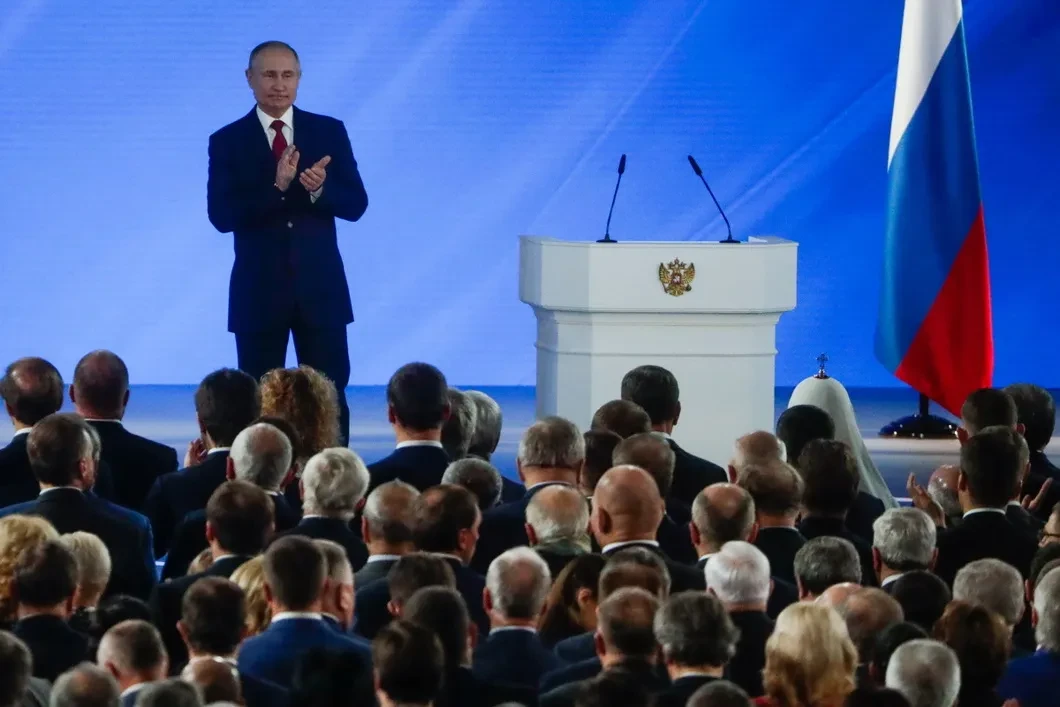
It was like mass psychosis - he went on stage, excuse me, on the podium, and everyone understood: it began. Kirill Rogov was the first to wake up and with the intonation of the boy from the “naked king” asked: “What, in fact, started?” Others started behind him and came to their senses. So now I have a cooling mind in literally in everything that was inspired by a well -stripped session of political hypnosis. But it scares me not at all what I did not see, carefully looking, no transit, and the fact that the facade of non -existent transit was not a void.
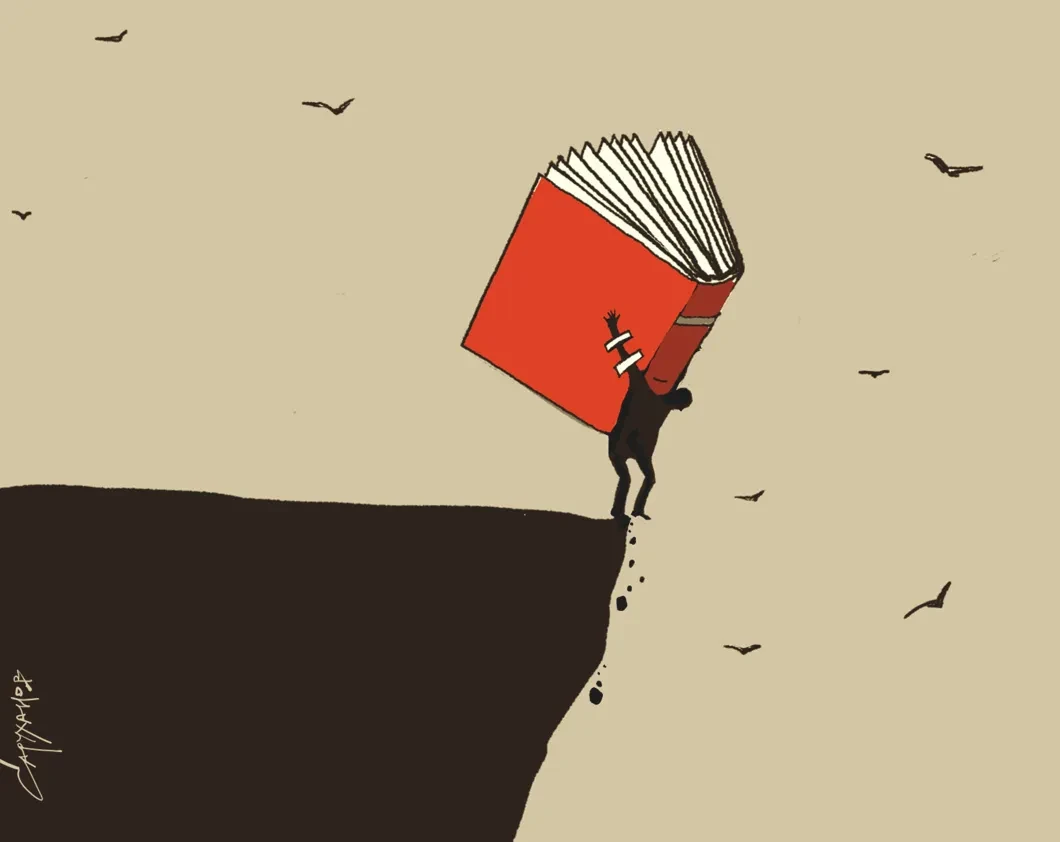
The president hung a smoke curtain, under the cover of which he intends to reformat the political system for a new ideological project. For a multi -layer veil of empty words about “constitutional renovation” it is impossible to consider what is actually happening. The dumbfounded layman will now, as an archaeologist, to remove the “constitutional noodles” from his ears to get to the truth.
Constitutional fog
Hastily voiced his constitutional initiatives, Putin acted as a constitutional spoiler, trying to intercept and vulgarize the idea of a real, rather than fake constitutional reform.
The need for such reform is obvious, and calls for it have been heard from all sides for many years, including in Putin's immediate environment.
But this need is not at all in the fact that life has gone forward, and the old constitution does not keep up with it, as the president formulated, but by the fact that due to generic injuries caused by the current constitution during the birth of subsequently aggravated by unsystemic constitutional counter -reforms, many disproportions and distortions were formed in the Russian political system, first of all - in the relationship between the executive, legislative and judicial authorities. In this matter, the chairman of the Constitutional Court Valery Zorkin, traditionally anticipating the constitutional extracts of the Kremlin with his articles, looks much more frank and intelligible than the president. By the way, the only, undoubtedly, positive change proposed by Putin, applies precisely by the Constitutional Court in terms of expanding his competence, so that Zorkin at least received something in return for the trimmed independence of judges.
The President’s Epistle creates the appearance of a response to the request of the Company on the redistribution of powers between the branches of the authorities in favor of the parliament and the court, while in practice its proposals should lead to the exact opposite effect - to strengthen the imbalance and strengthen the “presidential vertical”. The message in this part looks like “for health”, but in reality it is a prayer “for the repose” of the system of separation of powers, which, however, was in a coma for many years, imitating constitutional life.
Actually, there are not so many specific ideas regarding the reformatting of relations between branches of power.
Firstly, the president offers not to coordinate the candidacy of the prime minister with the Duma, but to approve it in the Duma. This is nothing more than a game of words, a trap for simpletons - in fact, this proposal in the balance of power does not change anything, it is politically neutral. This is pure propaganda.
Secondly, the president proposes to approve the candidacy of deputy prime ministers and ministers proposed by the prime minister in the Duma. This is really a step, or rather - a small step towards the parliament, since the president shares part of his powers with the Duma: he himself claimed to be both. But, having taken this little step towards the parliament, Putin immediately takes two huge steps back.
Because, thirdly and fourthly, Putin proposes to change the procedure for the appointment of law enforcement ministers and prosecutors, which in the real political life of Russia is incomparably in weight with the appointment of economic and other ministers, which, in reality, are “ministers without a portfolio” like the unfortunate Abyzov.
Previously, power ministers at least formally had the same status as other ministers, and seemed to the president for approval as part of the adopted ritual to the prime minister. Now this will be over-their constitutional and legal status is brought in line with their actual status “the first among equals”. Now they are appointed by the President according to the results of consultations with the Federation Council, which are purely formal nature, due to the fact that the upper house of the Russian parliament since 2003 is not elected, but appointed. A similar trick is proposed to be done with regional prosecutors, the purpose of which will be carried out according to the same scheme that is proposed for power ministers.
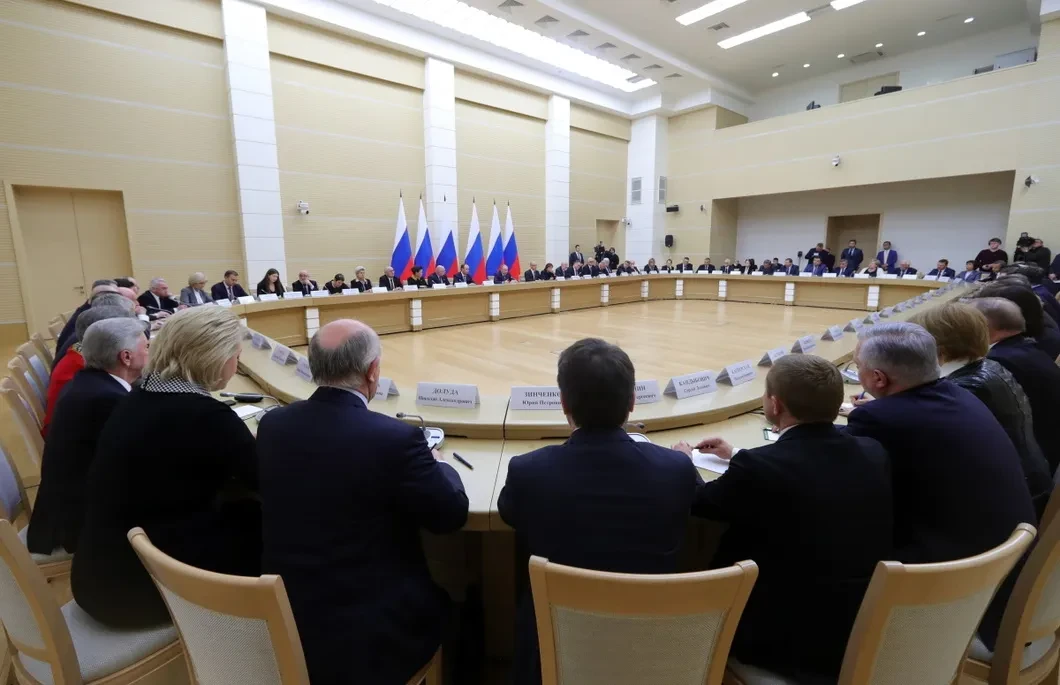
Both that, and another innovation means a sharp strengthening and so pumped by the constitutional anabolics the “presidential vertical” of the authorities, with a more than compensating courtyard bow towards the Duma in the form of granting it the right to have entertained by the appointment of “second -hand ministers”. Thus, Putin, as an experienced striker, with false constitutional feint at once laid all the defenders of civil society on the field and, creating the illusion of movement in the direction of the parliamentary republic, ran directly in the opposite direction - to pseudo -monetary autocracy.
Legalization of the "conceptual constitution"
As the author of the text of the “conceptual constitution”, it is especially pleasant that its individual provisions are finally becoming incorporated into the official constitution, which reduces the distance between the real set of rules by which Russia has long been living, and the constitutional Potemkin village, which is built on the sidelines of the political regime created by Putin.
The President proposes to integrate the State Council into the Constitution, which is translated from the constitutional and legal language into universal human means "shove the non-bogger." The fundamental principle of albeit “Potemkinskaya”, but still formally acting constitution is the principle of separation of powers. It sounds beautiful, but for the majority in Russia it is as clear as Stravinsky's music. I'll try to explain.
Any authority must have clearly defined competence and profile - executive, legislative or judicial. All these organs should be built into a complex system of constant competition with each other, which is conceived in order to prevent any of them from dominating the rest. You can argue for a long time whether it is bad or good, but so far it is a constitutional axiom.
And on this axiom, Putin proposes to “put” a large and beautiful “state council”, which can not be attributed to the executive, nor the legislative, nor the judicial power in the strict sense of the word, but it is a body of developing strategic decisions.
Of course, the older generations know well what the State Council is, is the CPSU Central Committee: an filtered and distilled gathering of the nomenclature elite, in the usual mode, the decisions made to political ratification, and in a crisis, which serves as an instrument for resolving inter -plane conflicts between these very leaders. By a number of the President’s hints, one can understand that the “Politburo” is ready for this new Central Committee of the CPSU - this is the Security Council in which Medvedev allegedly prepared the role of the “secretary in ideology” under Putin’s “General Secretary” and the “organizational secretary” of Patrushev.
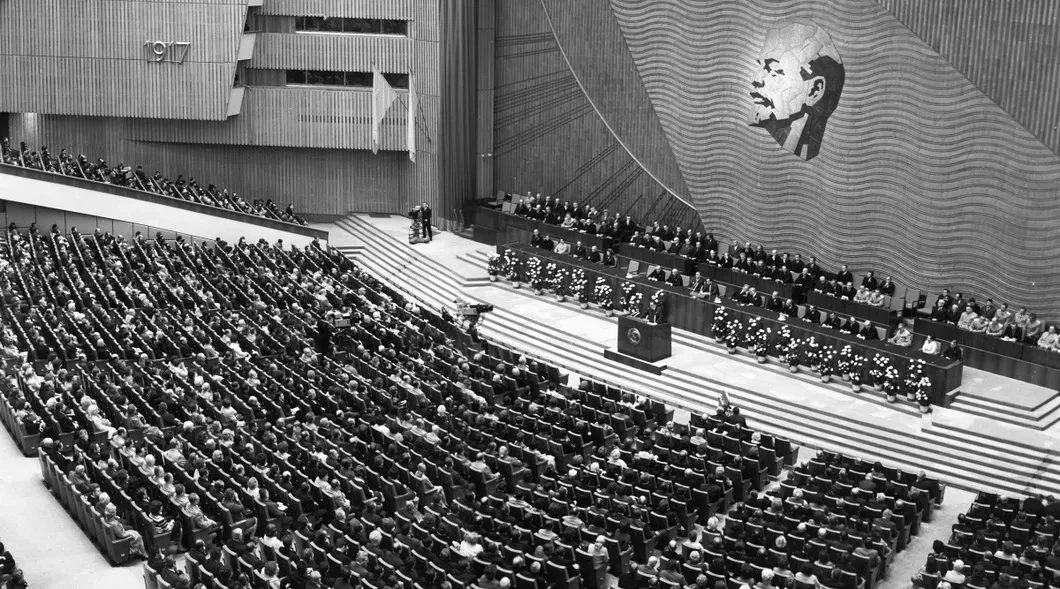
The idea to introduce the State Council into the Constitution against the backdrop of everything said by Putin, it seems passing and not paramount. He himself hid her somewhere in the middle of the message. But in reality, it is one of the key. This is a window through which the principle of “democratic centralism”, that is, the imperial principle of a single -channel, built from top toe, is poured back into the constitution. No need to build illusions - in life this principle has long prevailed.
And we already see how, behind the “state council”, all the other “lotions” of the Russian “conceptual constitution” climb into the window. Local government in Russia has been almost burned out over the past ten years. A huge political resource was spent on suppressing individual foci of resistance in large cities, such as Moscow or Yekaterinburg. The incomprehensible “municipal” from the province with a rank lower, like a six, marry in a pre-trial detention center. The Kremlin is all tired of no less than he himself was tired of society, and there they decided to “solve the problem” dramatically:
To extend the vertical of power down to the very end and constitutionally consolidate the status of local self -government as part of a single centralized state machine.
All this indicates that the constitutional reform proposed by Putin, most likely, has nothing to do with the so -called “transit of power”, he simply completed the legal execution of the political system created by him in twenty years of the reign of the political system.
It also follows that the question of the forms of this very “transit of power” remains open - simply put, so far everything is possible, no conclusions on the basis of Putin's proposals on changing the constitution cannot yet be made. Moreover, the proposed configuration of the authorities indicates that the most likely form of “transit” is the lack of transit - Putin will remain the president, however, it is not yet clear what. It seems that I can still lose my friendly dispute with Khodorkovsky, who, unlike me, who does not really believe in the political potential of the “Belarusian project”, believes that attempts to impose the Union State will intensify Belarus.
The expulsion of "constitutional spirits"
The constitution is a complex and multi -level social phenomenon. On the surface, he reveals itself as a set of norms that form the foundation of the political and legal systems. Behind this normative gloss, the frame is hidden from the intricately intertwined political and legal principles and values, but this whole design is held on a philosophical and worldview pillow, which is not just a significant part of the Constitution, but its core. Only the presence of this philosophical and worldview context allows the constitution to be a “living right”, applicable to the most diverse conflicts of being. Any constitutional doubts are always interpreted in favor of the philosophy that was sewn into her fabric at birth.
Actually, the totality of philosophical and worldview views and inextricably linked political and legal principles and values is accepted to allegorically call the “spirit of the Constitution”, in certain situations contrasted by its “letter shell”. This, paraphrasing the famous ideologist of Putin's statehood, is a real “deep constitution”.
But both the “Holy Spirit” is invisibly present on each of the pages of the gospel, and the “spirit of the Constitution” does not hide with a bare abstraction in heaven, but leaves its imprint in specific articles of the Constitution - and its attentive and trained look will easily find it. What Putin did, representing the next message to the Federal Assembly, was nothing more than the expulsion of this “spirit” from the Constitution of the Russian Federation.
The 1993 Constitution of Russia, despite the tragic circumstances of its birth, noted by the president, was not from scratch, but was a philosophical and political manifesto of the conquering communism of new political power and new ideology, and although it was extremely unpleasant to remember this today, liberalism was this political force and ideology. Accordingly, the current Russian Constitution, in its philosophical and worldview orientation, was and remains liberal. And while no one has canceled this.
Non-naive fathers inconsistent and in some ways-the founders of the post-communist Russian constitution managed to drive two supporting piles into the foundation: the postulate of the unconditional priority of the rights and freedoms of an individual over the interests of the collective, society, the state (in this postulate there was an expression in the concentrated form of the denial of the past totalitarian experience) and the postulate of the integration of Russia into the world (de-Faksov -Western, European) political and legal space. Both of them and the other postulate found direct and direct embodiment in various articles of the first and second chapters of the Constitution.
Read also
Grigory Yavlinsky (video): “I urge the whole society in no case to give the constitution to the private hands of the impudent bureaucracy. Amending the Constitution is the case of all Russians "
It was on these two postulates that Putin fell in his message, paying more attention to this issue than all his other specific proposals. Firstly, he easily the magician replaced the main object of constitutional legal protection, gently moving the rights and freedoms of man to one position down and putting the “sovereignty of the people” to the vacant place. Secondly, with the same virtuosity, he replaced the self-identification of Russia as part of the global (essentially Western) political and legal system, to the self-identification of Russia as a besieged fortress, conducting a continuous and total war on the fronts on the fronts. In this interpretation, Russia is an antagonist of Western cultural and political heritage. And these are not only words, but also actions: the nationalization of bureaucracy, restrictions on participating in political life for those who are associated with an alien and hostile outside world - this is only a small part of this new constitutional philosophy.
The president, like any citizen of Russia, has the right in his own opinion, and I am deeply convinced that the point of view expressed by him will find many real supporters in modern Russian society.
The only problem is that the current constitution is built on a completely different philosophical and worldview platform, and in order to replace it, a new constitution must be adopted.
And for this there is a completely different mechanism that requires convening a constitutional assembly, which the president does not want to launch for conjunctural and political reasons.
Putin does not want to admit that he actually introduces a new constitution. He prefers, without attracting special attention to the secret meaning of what is happening, to refresh the current “constitutional carcass”, turning it into a pretty “constitutional scarecrow”, which will later be filled with a suitable “constitutional minced meat”. That's just the quality of this “constitutional minced meat” causes me the greatest fears today.
Sooner or later, the story itself will naturally sit from his ship and Putin and his associates, noble wealth will be redistributed, scores will be reduced, new Putins, new wealth and new scores will appear, but with Putin’s “constitutional minced meat”, perhaps Russia will have to swim for a long time.
Constitution of the "corporate state"
The danger is not that the president once again decided to adjust the Constitution to his current political tasks - this has long no longer, if you understand, nothing especially new, just a little goes into quality.
The danger is primarily in the fact that, adjusting the constitution to its political needs, the president fills it with a completely new ideological content.
The “constitutional minced meat” he used smells very badly. It is far from as fresh, as it seems to many, and, despite the patriotic rhetoric, was bought from the warehouse of the European ideological “secondhand”. Already on the spot, sharp spices were added to it to repel the smell. But this does not help much.
The release of the film by Vladimir Solovyov about Mussolini, apparently, was completely almost by chance that he had almost coincided with the epoch -making message of the president and could have the goal of preparing a general public for the correct perception of constitutional innovations. Moreover, Mussolini is indeed the best background for the perception of ideas about the priority of the sovereignty of the people over the rights of an individual. However, even without Mussolini, coupled with Franco, surrounded by the second decade of the clans of the rather frank and secret adherents of the ideology of the “corporate state” invented in Europe at the beginning of the 20th century, an alternative to a democratic and legal state. It is enough to refer to published with unprecedented pomp and with the obvious support of the Kremlin “RUSSIA PROPERTION”, through and through through the ideology and practice of European far -right movements and zoological hatred of democracy. Another thing is that, as is often the case with import substitution, a legally imported high -quality product (albeit dangerous) is replaced by an unlicensed rude fake.
This is not a revolution from above, as some have died in a burned -out.
Это последняя и высшая стадия той ползучей конституционной контрреволюции, которая с небольшими перерывами продолжается начиная с 2001 года.
На финишной прямой эта контрреволюция бросает откровенный вызов тому цивилизационному выбору, который Россия сделала во время революции 1989–1991 годов и который она конституционно закрепила в 1993 году. Империя, казалось бы, ушедшая в прошлое, наносит свой ответный удар, становясь снова главным, теперь почти возведенным в конституционный ранг принципом государственного строительства в России.
PS
О транзите власти
Не то чтобы тема транзита власти совсем не волновала Путина на этот раз. Но, похоже, общество недооценило уровень его амбиций и притязаний. Он видит свои гарантии не в ханжеских заверениях в преданности назначенных им преемников, которые, как показывает история, почти всегда оказываются лживыми, не в многопудовых институциональных веригах, налагаемых на общество, которые, как учит та же история, почти всегда ржавеют и рассыпаются в прах при новом правителе. Он хочет сломать хребет непокорному русскому обществу и переучредить Россию заново по своему образу и подобию, встав в один ряд с Лениным и Сталиным. И тогда никакие разоблачения ему будут не страшны, потому что всегда останутся те, кто будет считать его Богом.
Он хочет повторить то, что удалось большевикам, но, позаимствовав у Запада не идею коммунизма, а другую родственную ей идею, которую официально в России не принято называть по ее собственному имени. Это и есть настоящий транзит власти. И я думаю, все у него получится…