
Translated material
After the seagull
What will happen to the Prosecutor General and its ex-head: experts say
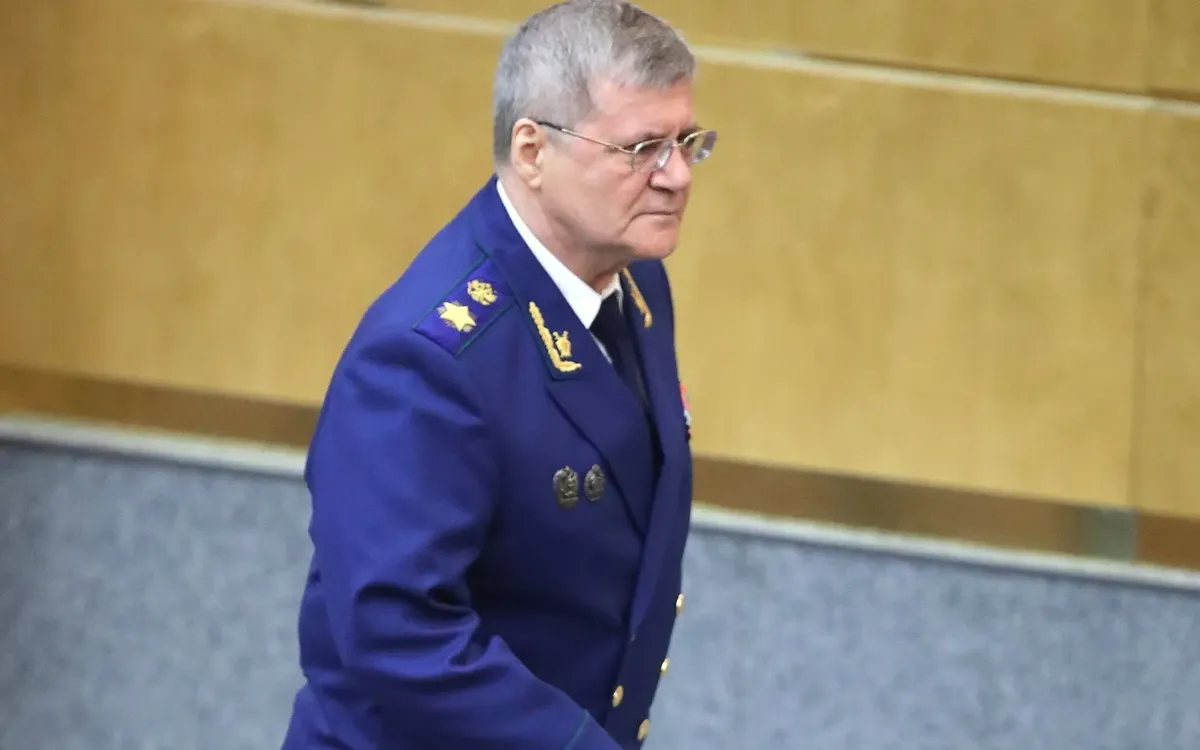
Yuri Chaika leaves the post of Prosecutor General “In connection with the transition to another job,” according to the Kremlin website. President Vladimir Putin proposed to appoint Igor Krasnov as a new General Prosecutor General of the deputy head of the Investigative Committee.
Kirill Titaev
Associated professor of sociology of law named after S.A. Muromtseva European University in St. Petersburg
On the role of seagulls in the reform of the Prosecutor General after 2007
The main changes in the work of the General Prosecutor's Office that occurred during the leadership of this department Yuri Chaika are connected precisely with the initial stage of his career. In 2006, he headed the Prosecutor General, in 2007, the Investigative Committee at the prosecutor's office was allocated from its composition. Thus, the investigative functions were brought out, in 2011 they were finally divided. There have been no other significant changes in this scale since then. In the next nine years, everything worked about the same, with small adjustments.
Practical work on the local prosecutor’s office and SK was built differently. In some territorial divisions, the interaction was quite working and constructive, somewhere-quite conflict. What is a conflict between the investigative unit and the prosecutor's office? It is assumed in this situation that the prosecutor’s office identifies some violations during the investigation or does not accept the work, because the indictment is sent to the prosecutor who signs him, and then one of the assistants of the prosecutor submits a state charge in court.
How motivated by ordinary prosecutors for the widespread use of these tools? In general, it is slight, since general control over crime by virtue of the law on the prosecutor's office is listed as the prosecutor's office.
If the prosecutor’s office begins to find fault, wrap all matters, find many violations, then both the heads of the investigative body and the district prosecutor will be punished for this.
Accordingly, there are no fundamental grounds for them to be in constant conflict. If we see how this work has changed after the investigators were allocated from the prosecutor’s office, then we will not see significant changes in statistics. That the investigator worked in the prosecutor’s office, and the district prosecutor was his immediate supervisor, gave him orders that the investigator worked autonomously, and the district prosecutor was his overseeing boss, but also at the same time a receiver, following the chain and responsible for the result.
If we look at the Code of Criminal Procedure, it may seem to us that the powers of the prosecutor after the reforms of 2007-2011 were significantly reduced. This is not entirely true, because the prosecutor is still doing a thing that is not reflected in the procedural code, but in the daily work of the investigating authorities and inquiry bodies it is extremely important: the prosecutor signs statistical cards.
That is, no significant action of the investigator - the charges, initiation of a criminal case, its termination or suspension - will not be in the account system without a visa of the prosecutor.
This creates the conditions for a constructive working interaction between the prosecutor's office and the Investigative Committee. You need to understand that this constructive interaction is not quite what citizens should strive for. Because it is a high level of formalization and work and at the same time a very strong distribution of responsibility. If we find out that something went wrong, that during the investigation there were violations, it is more or less incomprehensible who should answer-the investigator, his boss, operatives, or the chief of the police, or generally the prosecutor? As a result, no one answers.
About the interaction of personnel
The mobility of the personnel between the departments is completely normal, since this is an adjacent structure, and certified employees work there and there. I had to meet such cases, they are completely normal. Go from the investigator to the state prosecutors and vice versa - there is nothing in this, which would cause shock or stupor inside the system.
About the effectiveness of the reform
The allocation of the UK from the structure of the Prosecutor General’s Office, in my opinion, is absolutely unjustified.
The very idea of the investigation and investigator as a separate figure, regardless of where he is, it is quite strange. This is a Soviet idea, this is not in the world.
Initially, the Code of Criminal Procedure of 1961 gave us a standard global system in which there was a consequence, but the investigator was an employee of the prosecutor's office (what he was called unprincipled). However, for various reasons, the investigation appears quite quickly as a separate service in the ministries of the protection of public order of the Union republics, and subsequently, after the rollback of the Khrushchev reforms, as part of the Ministry of Internal Affairs of the USSR. And then the strength and the individual investigation from all other services continuously increased. If the two -zone system, in which there is a police and the prosecutor’s office, and the second is responsible for legal registration and the subsequent presentation of the case in court, this is a more or less working system, then the system in which the investigation becomes a separate unit separated from both the state prosecution and from operational work in the police is the most sad story of the possible ones.
In a situation where the two -zone system works, the person who represents the case in court is the same person who practically conducts the case from the very beginning. Accordingly, he is responsible for everything that happened to the suspect or the victim. He should be aware of everything that happened in practice. By the time we are transferred from the investigator from the investigator, everything that happened at the pre -investigation stage is not visible to the investigator.
Then, when it goes to the prosecutor, he is not at all visible operational work and all the violations that were committed, and the work of the investigation is poorly visible.
This creates the widest opportunities for unscrupulous work on the one hand and obstacles to those who control the situation, eliminate the injustice admitted at the previous stages.
In a normal situation, the prosecutor is turned on from and to defend and reject qualified violations. In our case, the state prosecutor who stands with this case in court sees this case for the first time. Of course, trying to ask him for torture or other violations is pointless, so the court focuses on the case file.
The same goes for the story with the victims. When they try to achieve the protection of their rights, in our case they have to go through several stages and understand what happened there at the initial stage, when the first refusal was written by the operative or district police officer, the prosecutor does not know and does not have the opportunity to really find out.
About other reforms
There is another not very large story-the transformation of the prosecution authorities into bodies coordinating control and supervision activities. We are talking about creating a single inspection register, authorizing the prosecutor's office of inspections of other departments. In this case, this is a small step in the right direction. In our model, it is completely pointless when the prosecutor's office has the right to its own checks. When, for example, they complained that we did not deceive the ice, and the prosecutor has the right to go out with his check, this is completely excessively. There are other profile organs for this.
But the prosecutor’s office, as a body overseeing the work of the rest of the control and supervisory authorities and protecting the interests of citizens and organizations, when these interests infringe on the control and supervision authorities, this could be a completely working, correct and effective model. And the creation of a single registry of inspections and focusing supervision on the coordination of this work is just a relatively healthy step. It turned out to be done with large reservations. Some things were a success, the prosecutor's office reduced the number of scheduled inspections, ensured the work of a single inspection register, but this is all so far very raw and unfinished. Not all departments and not in all regions normally load the data into the register, it is filled in such a way that the search is very difficult for it, the prosecutor’s office is often oriented to fulfill its plan for checks than coordinate the work of other control and supervisory authorities.
Evgeny Mingchenko
Political scientist
- From the point of view of Putin, the seagull was quite effective in this position, otherwise for so many years he would not last. He was very competent: even in the conditions of a very serious tension with the West, the Seagull was a person who very well built relations with his colleagues abroad and solved a lot of tasks, including issues of extradition in a number of high -profile affairs, therefore, I think his position is very good.
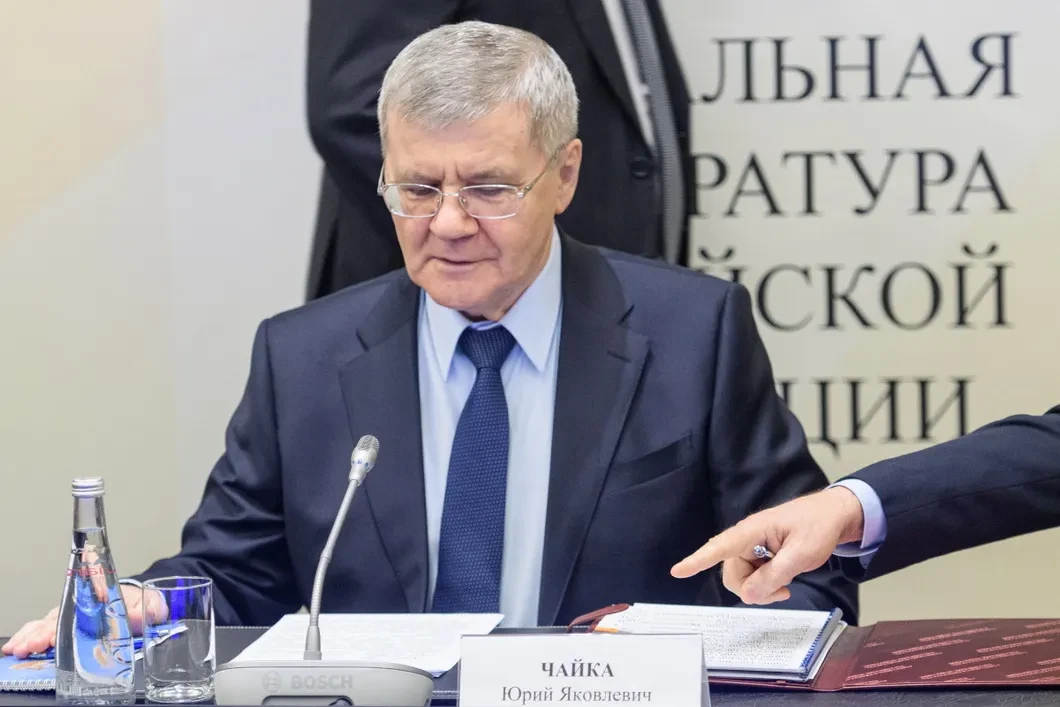
Still, he is aged, so I am not yet ready to say that he will go to increase. The options can be different.
We do not know what position he will go to. Maybe he will take a position that will be important to Putin and will be useful for the business of his children.
I think that we will understand the meaning of personnel permutations only in a couple of months, when they all end. It is still difficult to say what fate awaits law enforcement agencies and power structures as a whole, perhaps this is only the beginning of large permutations. I believe that we are rebuilding the whole personnel bench as a whole. It began with the government, now - the Prosecutor General, further, I do not exclude that there may be progress in the Investigative Committee, and the Ministry of Internal Affairs, and the FSB, and so on. The probability of this is very high.
About the conflict of Seagulls and Bastrykin
It is not yet clear what will happen to the Investigative Committee. This is not that personal relations, this conflict is laid down by the separation of two departments. Some carry out the investigation, others exercise control. Between these two structures, tension is inevitable. First of all, this is an institutional conflict, and then the conflict of two figures.