
Translated material
In the United States, a drone with pigeon feathers (video) was created in the United States
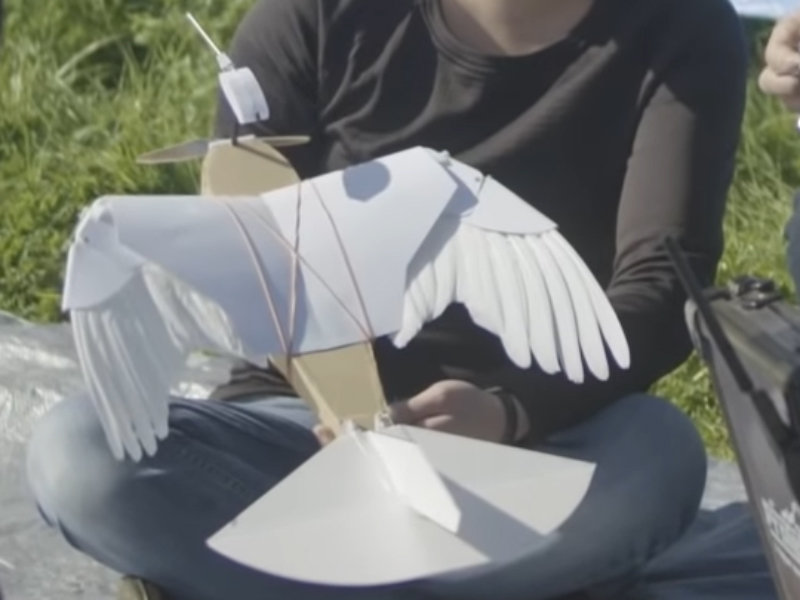
A group of engineers from Stanford University has developed a drone with wings made of pigeon feathers. This project is designed to investigate the features of the pigeons, and to date, articles about it have been published in Science Robotics and Science magazines.
As N+1 explains, the birds are maneuvering during the flight, changing the shape of the wings. In addition, the shape and surface of their feathers have a significant impact on flight features. Aircraft designers have long been considering the possibility of borrowing from the nature of bird flight mechanisms and creating elements of aircraft similar to parts of poultry wings, but a thorough study of the features of a bird's flight is difficult.
To conduct active studies with poultry wings, American engineers designed a aircraft type with a mechanized wing of a variable shape. This wing is made of feathers (on each console, 20 feathers of a dove are fixed), but does not make in flight of fly movements, but only can fold in a horizontal plane. For the movement of the aircraft forward, the screw installed in the front is in front. Each wing console consists of three segments, one of which is statistical, and the other two can move and thereby change the shape of the wing.
As part of the project, scientists have already conducted several experiments. So, they found that folding one of the wing consoles, the drone can roll in the right direction. At the same time, it turned out that the deviation of the wing wrist allows a great influence on the flight, and the deviation of the finger is suitable for small and accurate maneuvering. The described roll differs from the crane of aircraft, which is regulated using alerons. Another experiment showed that the wing feathers can slide relative to each other to a certain level, however, there are no intervals between them, since neighboring feathers adhere to each other thanks to the microstructure, which is hook -shaped elements and protrusions.