
Translated material
For the right of the "small"
Does the West retreat from Christian values?
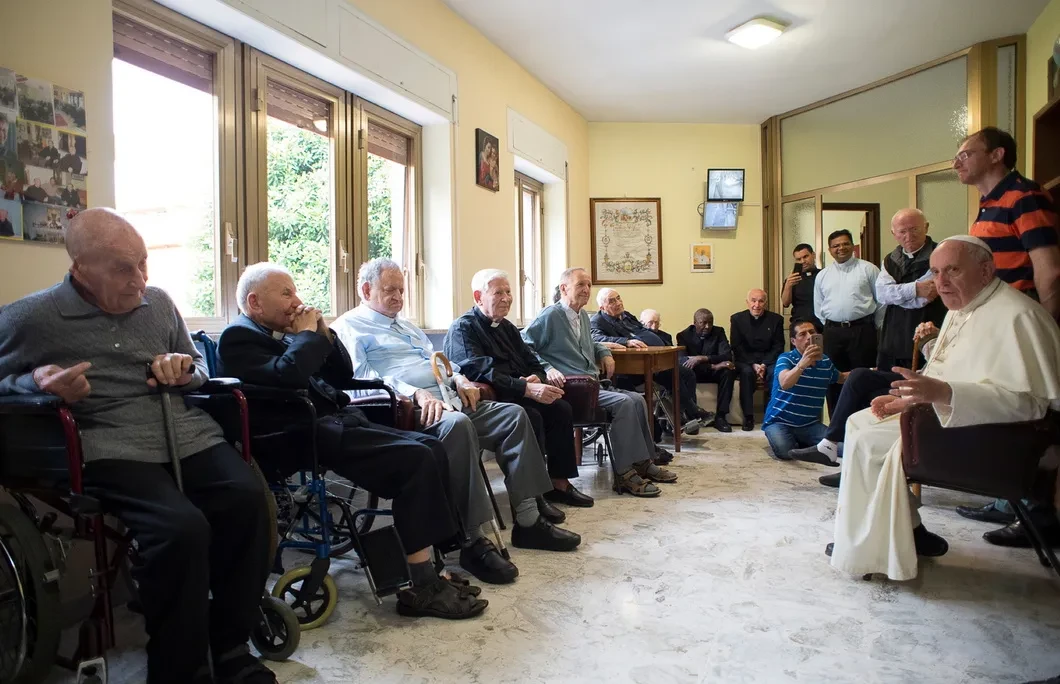
It is customary to blame modern Western civilization of a deviation from Christian values.
Reception of refugees - mainly from Muslim countries - and inconsistency or insufficiently strong resistance to the spread of Islam.
The promotion of same -sex marriages and the acceptance of everything that was previously considered a sin and perversion.
Women occupy positions in church hierarchies, previously intended only for men.
Many temples are closed, the young generation perceives rituals and dogma as something alien, archaic, and in general the fate of the Church is in jeopardy.
All this is delighted with the hateers of the West, contrasting him with a different faith and shrines (Islam, Orthodoxy). And for those who love the West, these signs of its “end” cause sorrow, mourning by perishing Christian civilization.
But is it really so? The facts are true, but interpretation? The basis of Christianity is an active love for one's neighbor, self -denial, rejection of ritualness and dogmas for a living single person. “Saturday for a person, not a person for Saturday” (Mark, 2, 23–27). And that which seems to be the retreat of the West from Christianity, in fact, the impetus continues that Christianity gave the historical movement of mankind.
Accept the neighbor in his otherness. Allow a person to feel his value, respect his dignity even contrary to all his shortcomings. Take sinners and share a meal with them.
In theological terms, this can be described as Kenosis: the descending of God in the thick of human life and even in its hellish lower classes, the devastation of God as His vascular, the depth of dedication up to self -abuse. Therefore, the self -abundation of Christianity as an institution, as a church, as a separate sacred space, as a system of rites, symbols, dogmas can be considered as a further entry of Jesus into the life of mankind. The continuation of the path on which God is humanized, and the Church is mentioned in order to turn his good news into order of earthly things.
Western society was created by Christianity. If Christianity dies there as a special religion, then precisely because it managed to enter the flesh and blood of society, become practice.
This is manifested primarily in relation to the weak, strangers, professing another faith belonging to other traditions and orientations. Compare how in different countries they relate to disabled people, orphans. Patients and newcomers in the West are not alien to, they are treated, educated, take care of them, take them to their house, dedicate their lives to them. There are so many warmths, care, participation for those suffering and dying!
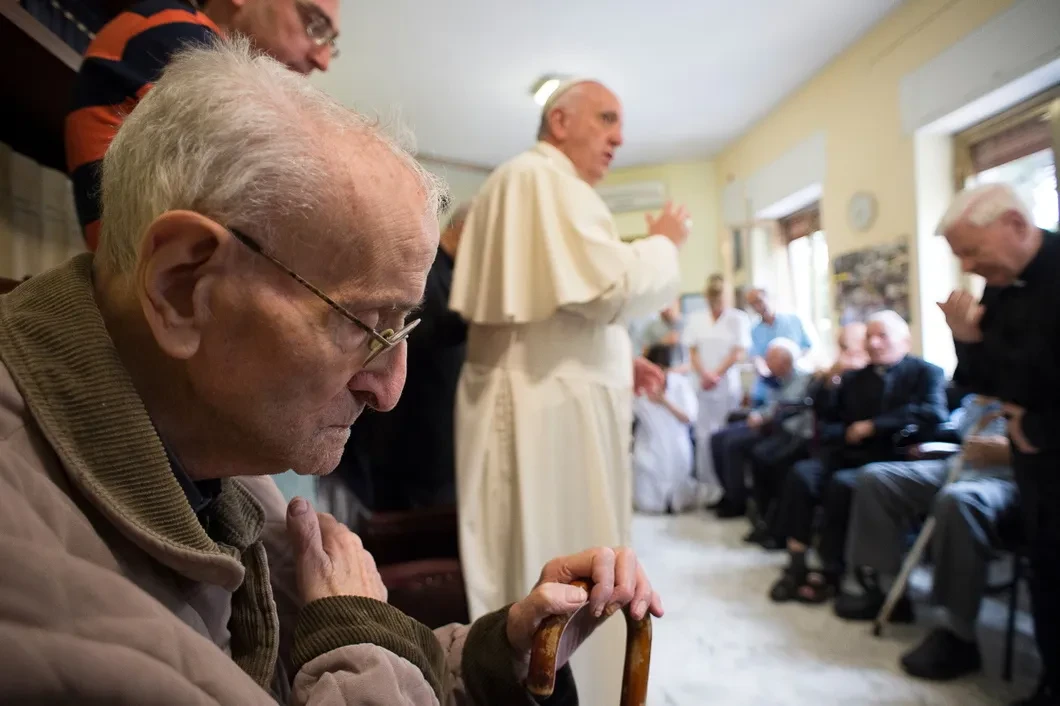
Olga Sedakova recalls: “In the West, children with developmental features are usually included in the class. When I first saw this, this practice seemed strange to me. And I asked: "How do you like this?" They said: "This is very good." "Doesn't it bother you to study?" "No, it does not bother." In childhood, I myself was terribly afraid of all manifestations of the disease, I could not look at cripples, and I think this is a common attitude. And there they are accustomed from childhood that these are the same members of society. ”
In all public institutions, public spaces - special devices that make life easier for the disabled. The main thing is that everyone feels like people, so that there are no outcasts and doomed. This is practical Christianity. Its essence is not in the rites, but in loving the neighbor as himself. Christianity in the West can be rejected as an institution, a church, but the deepest core of the West, in my opinion, - at least in America and England, where I lived for thirty years - remains Christian.
The rituals in combination with pride so common in Russia - they say, we are true Christians, and all the rest of the non -Christ is anti -Christianity, the very Pharisee with which Jesus fought.
In Russia, alas, they often do not understand the West, they believe, for example, that the rights granted to sexual minorities are a challenge to Christianity. There is such a danger, but the primary motives here are Christian: they are not to “encourage licentiousness”, but to recognize in these “unconventions” - people endowed with equal rights, protected from humiliation. Christianity does not preach debauchery, but calls on a part to treat those who do not comply with certain moral norms and customs. Christ defended a woman who committed adultery, talked with the Samaritans, drove a company with inconspicuous people, preferring them to a scientist, correct and righteous Pharisees. The main thing in Christianity is the ability to accept another, to feel it like yourself.
Hence such a scope of ecological movements - love for neighboring a foreign -human nature, for animals and plants, for the world created by God, self -denial or self -restraint of the human race in the name of salvation of all living and being.
When I arrived in the USA in 1990, the first years was very skeptical of "multi -cultural". But gradually he realized and felt that there is truth in it, those who are weaker, who are in the minority and need protection. Sometimes this right, reduced to the legal plane, acquires grotesque features, replacing ethics with law and casuistry. It is bad when the aftertaste of political levis and demagogy is introduced into noble actions. Where minorities begin to aggressively trample the general laws and demand exceptional privileges for themselves, there my sympathy ends with them. It is disgusting when the repentant aristocrat or intellectual begins to insult the mob that was exalted by him.
But at the origins of the protection of the rights of minorities - a Christian sense of compassion and self -denial: strong, dominant culture - for the right of the "small ones".
Of course, in the West, as in any earthly society, there is selfishness, cynicism, and corruption, but unlike Russia, where the state favors the development of these vices, Western society really fights them, this is an internally Christianized society, where the rights of the individuals and dignity of “little people” are recognized. This is manifested in relation to wanderers, foreigners, and even to enemies - "bless the cursing you, benevolent you hate you."
That is why, despite the many dangers and even direct threats due to the influx of refugees, the West is still determined to accept them, although, it would seem, what do we care? You are young healthy men - fight yourself for your country! Or look for refuge from your co -religionists in wealthy Arab countries. But the West accepts even those who are hostile to him and want to destroy him or subordinate him to other people's religious dogmas. And if the West will die, then the same way as Christ on the cross, blessing those who crucify him.
Of course, one cannot but think about the full sense of the commandment "Love the neighbor as himself." It is not said there: more than yourself. It is the love for oneself that is set by a model of love for one's neighbor. I would like the Christian West to love himself more, his spiritual and historical heritage, his faith, which has transformed humanity in two millennia. But where is the line, beyond which love for the neighbor becomes self -destructive, where self -denial goes into suicide, and love for sinners becomes encouragement and the severity of sin? What is this: the will of will overcoming pride and egoism of a rich civilization or weakness of will, loss of goals, civilizational breakdown and a harbinger of death?
However, the West does not die contrary to the fact that now, like a hundred years ago, during the First World War and the Spengler "sunset of Europe", they are trying to bury it. Who only did not spat on him and did not stop!
But the West did not die either from world wars or from revolutionary movements of the XVIII - XX centuries. The Marxists and Communists were, of course, worse than the current “postmodernists”, supposedly responsible for the internal “weakening” of the West. The power of the West is precisely in its openness, which should not be taken for weakness. The West is open to both thesis and antithesis, as a result of which a mighty synthesis is formed. And in one-dimensional systems, where only a religious-functionalist thesis or revolutionary antithesis sounds loudly-everything is quickly cemented and then collapses because the spirit breathes, the earth is alive and you can’t take it with cement.