
Translated material
Intelligentsia and Voronya Slobodok
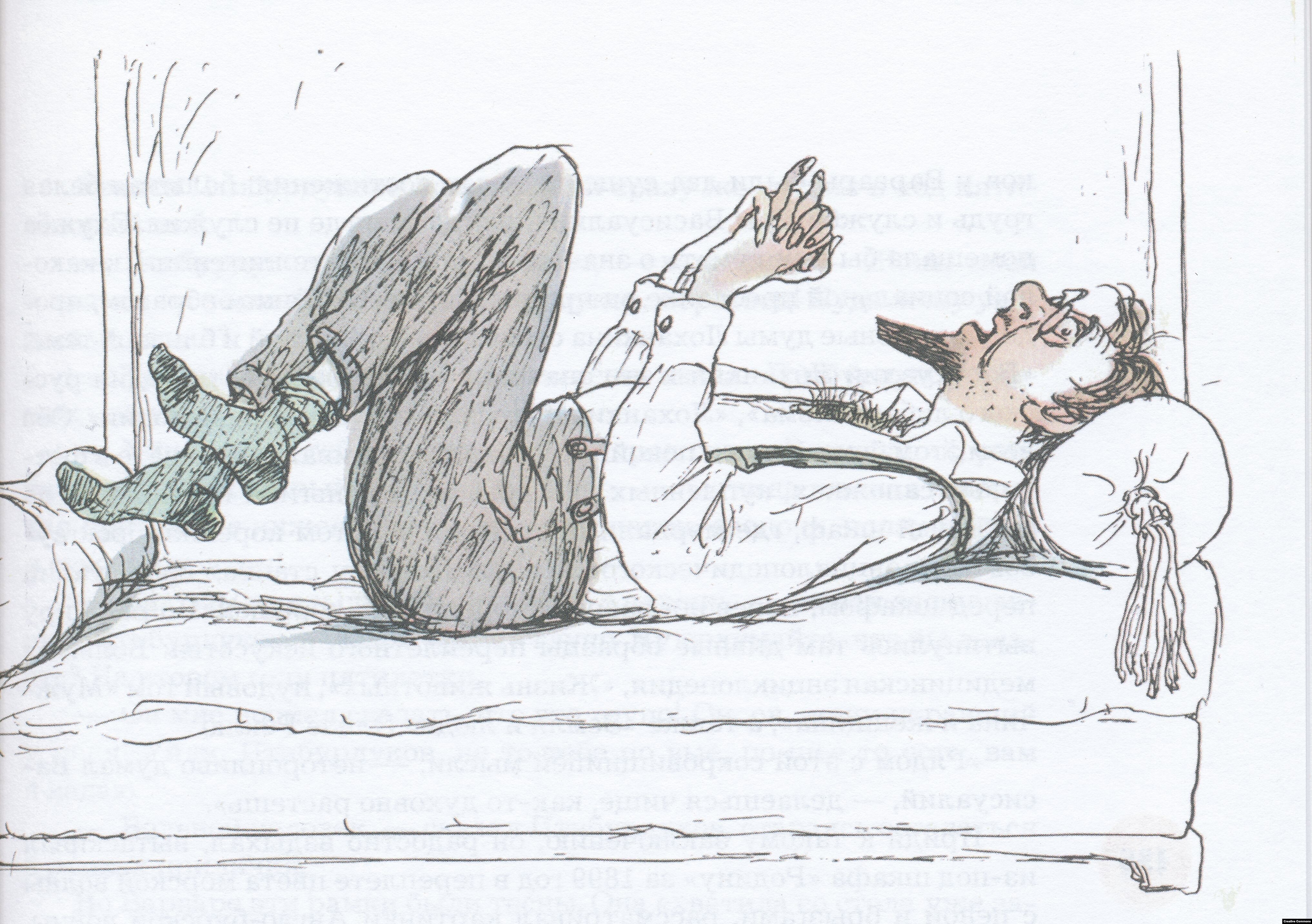
Conversation of lovers of the Russian word with Boris Paramonov
Boris Paramonov: A few years ago an interesting book appeared - a commentary on the novels of Ilf and Petrov, written by a famous literary critic and literature historian Yuri Konstantinovich Shcheglov. I once walked past her, did not read it on time, but recently I found its electronic version on the network-and read it. The book is amazing, not to break away from it. You plunge into the atmosphere of your favorite novels, as if re -read them, but at the same time as if with a magnifying glass. The impression that you have long known the heroes in life and have now learned all the approaching ones - the real comment made by the researcher is so rich. The books are overturned by the time in which their action takes place, a real life background is seen, and from this some kind of super-planned depth emanates.
A small example: in the "twelve chairs" it is written that in the morning people working in this enormous building flow to the house of unions, and among them some armored delays. What's happened? What armored bias? Isn't it a metaphor? No, the reality of the twenties, Nepovsky even times: it turns out that young people from sixteen to twenty years old, for whom, under the then unemployment conditions, were booking at enterprises and institutions jobs. And such explanations are given almost to every phrase of famous novels.
And the second layer of comments is already purely historical and literary. Again, almost every phrase is given parallel places to the entire body of world literature - intertext or subtext, or what else is called there. This or that literary motif is distinguished - its parallel is sought in literary pantries - and almost always is located, and in the broadest range - from the pre -revolutionary magazine "New Satyricon" to the "metamorphosis" of Ovid.
It turns out that well-known novels, always perceived by readers, so to speak, immanently, in their irreducible to any quality, in reality-books among books. This is generally a Point of literary criticism as a science, this is a discovery, that books are not taken from life, but from other books that there is an immanent literary series. Moreover, in the novels of Ilf and Petrov, Shcheglov shows, these associations and reminiscences are especially difficult, their books are written, if you like, consisted, made of literary cliches. And this serves as a great literary, artistic effect: it turns out that the deafeningly new Russian - already Soviet - life - life can be perfectly and almost completely described, inscribed in ancient, eternal, so to speak, situations. New is a well -forgotten old one, as the French proverb says. You think that you have discovered new, unprecedented ways for humanity, but in fact you are floundering in the same surrounding tenets. This is like nothing else contributes to the satirical effect, this is satire.
Books are not taken from life, but from other books
And so, Ivan Nikitich, reading the book of Shcheglov, I discovered, or rather, I did not find some necessary comments regarding the plots, about which I myself have something to say. Express your considerations.
Ivan Tolstoy: Do you think Boris Mikhailovich, why did these novels with their satirical, comic pathos generally appeared in Soviet times? It is clear that the twenties, when the Twelve Chairs came out, were still relatively soft time for literature, but the publication of the Golden Calf, written in 1931, met well -known difficulties. Almost two years have passed from the publication in the journal "Thirty days" to a separate publication. This means that the authorities saw a certain “non -wise” of this composition, alien to its Soviet affirming canon. Nevertheless, both novels became Soviet classics and were widely published in the thirties, very tough years. When both books in the same volume published after the war (in the anniversary series by the thirty years of Soviet literature) was followed by an acute reaction: the books of Ilf and Petrov were recognized as harmful, alien, slanderous - and fell under the ban, up to the post -plastic years. In the 56th alone, they were reprinted-and finally entered the category of Soviet classics. How does this problem illuminate in its comments Scheglov?
Boris Paramonov: Actually, he begins with this. The most commentary - real and literary - Scheglov premises the theoretical, rather extensive preface. And this question - about the place of the novels of Ilf and Petrov in the Soviet canon - puts the first thing. He writes about the skillful bonds of the novels, about how the satire organically combined with the apology, and just sees the artistic originality of both novels in this. Here you have to quote it directly.
“Announcer: “ Firstly, the selection of those manifestations of the Soviet era that co-authors include in their epic are significant. Many “hot” topics are carefully circumvented: so, nowhere is the struggle with the oppositions, the “wrecking” processes of 1928–30, excesses of cleaning, forcible collectivization. Only a careful reading allowed us to find us, sometimes quite enough. caustic, for some of these circumstances. "
Boris Paramonov: Here is one private example of the satirical depth: a secret hint can be seen in the topic of the offices "Horn and Hoofs". The private trader Ostap has this business, but after his return to Chernomorsk, he sees that the office began to flourish. What is the matter? And in the fact that the NEP with all private offices ended, the village of the village occurred - to which the peasants responded with the mass fog of the livestock so that they would not be given to collective farms. Hence the abundance of this product, horns and hooves-everything that remains of the previous meat and milk wealth. Here is an example of a penetrating understanding by Shcheglov of the real subtexts of Ilf and Petrov.
The NEP has ended, the village of the village occurred. Hence the abundance of this product, horns and hooves
But this is a special case - these are hints and references to situations that are understandable in those years. But the general approach, the general reception of Ilf and Petrov, which allowed their topic to enter the corps of Soviet literature:
“The major and ultimately the optimistic mood of the novels ensures the already mentioned binarian structure of their world. The ideal entities of true socialism occupy a hierarchically dominant position in it, forming a level at which many of the imperfections of the Soviet way of life are removed or neutralized. It turns out that the details of the“ earthly ”socialism, which are such an undetestive picture, not They can be considered the main or final reality, and that the point of view of the people irritated by them, although in their own way, is not the last instance in the judgment of a grandiose experiment in Russia. Related to the quality of life and personal rights of the individual, as poor and poor, as well as the features of the new reality, are drawn as it were and do not have firmly established forms;
Boris Paramonov: Shcheglov writes that in the dilogy a certain background is very noticeable and specially built - or the horizon at which the satirical scenes of Soviet life lose their dominance. Well, for example, in the "Golden Calf" at the beginning of one of the chapters (where the Sinitsky Rebusik appears) there is a discussion about the big and small world: in the big world "dead souls" are written, and the sculpture "Bathing Collective Farm" was created in the small world. And another technique that allowed legalizing the satirical composition:
“ There is no doubt that such restraint, regardless of its motives, was beneficial for the dilogy. Some blurring of a critical aspect in harmony with the abstract of the aspect of the idealizing one, does not allow the latter to abruptly stand out from artistic unity. In addition, the emphasis on the political anger of the day would lower the universalism of the picture. Co -authors depict not so much specific events and controls of their far from idyllic The era, how many of them are the most significant and unchanged laws. The domestic reader of any special historical and cultural knowledge to understand the situation depicted in them.
Boris Paramonov: Well, and another technique, it is not clear, cunning or not cunning: the main objects of ridicule in the novels are, as Panikovsky would say, people from the early time - natural marginals of new Soviet life. And now one question is connected with this, which in our time has already caused a very noticeable discussion and critical assessment of famous and most importantly-novels beloved by Russian-Soviet readers.
This is the question of whether the satire of Ilf and Petrov extends to those people, to those layers of the Soviet population who were, without a doubt, they were unfairly infringed on by the revolution. Are the authors of the bedridges beat? Do they finish the beaten? Examples directly suggest, clergy and pre -revolutionary intelligentsia. You, of course, understand, Ivan Nikitich, who needs to keep in mind here.
Ivan Tolstoy: Of course, Father Fedor in the "Twelve Chairs" and Vasisuali Lokhankin in the "Golden Calf".
Boris Paramonov: Undoubtedly. It lies on the surface. But first, I want to touch on some elements of the secrecy in other parties of the dilogy - where I did not have the Scheglovsk commentary. At least in that place of the Golden Calf, where Ostap tells the new story of the eternal Jew, which, it turns out, still found his death: he was shot by the Petliurians in Ukraine during the civil war. And I found a literary parallel to this plot: this is the story of Leonid Andreev "The Adventures of Scheodanov." The hero of this story also does not seem to burn, in fire and in the water he doesn’t sink-but in the end he still dies. The thing is built on bringing the plot to zero.
The authors are accidentally pronounced: they have Leonid Andreev with their own person
And what is still interesting: having borrowed the plot from Andreev and without designating this, the authors are accidentally pronounced in another place: they have Leonid Andreev with their own person when they come to a hotel in which Hercules was located, and about one sinister room, occupying which one or another Hercules does not finish well. It turns out that the writer Leonid Andreev, the author of the gloomy "story about the seven hanged people," once lived in this issue. This is the simplest psychoanalytic plot: hidden in one place will be exposed in another. Just don't yawn.
Ivan Tolstoy: This is your addition to literary intertexts. But in real terms, for a real comment, did you find any additions?
Boris Paramonov: I think yes. Let us recall the episodic character of the Twelve Chairs-the hackist Lyapis-Trubetskiy, who supplies the departmental magazines of the rhymes about Gavril, capable of working in all the fields. Scheglov recalls several suitable hacks of the twenties, but he cuts the main one. This is Mayakovsky. The great poet of the revolution did not disdain the most elementary hack, supplying poetic responses to all revolutionary holidays and current events. This could not but cause a critical attitude of smart contemporaries to such a low -standing activity of a wonderful poet. By the way, Scheglov mentions Mayakovsky in a commentary on this plot, but very casually, and Lights the candidacy of Mayakovsky. They wrote about this, as it is clear from Shcheglov, the authors of another commentary to Ilf-Petrov-Odessa and Feldman.
Ivan Tolstoy: What are you, Boris Mikhailovich, the grounds for the approval of Mayakovsky for this role?
Boris Paramonov: Well, firstly, as I said, the actual vast and frequent performances of Mayakovsky with such rhymes are a fact undeniable and especially noticeable in his case. And here is such a detail: the pseudonym of this Khalturist Lyapis - Trubetskoy: the loud pseudonym, the trumpet voice of the poet, who loved oral performances when he was indeed a wonderful voice, trumpet bass.
Another detail - Lyapis talks about a strange story that happened to him: yesterday he returned home late ... - From Hina Cholek? -the listeners sarcastically ask, referring to the woman of his lyrics. From this Hina, Chelek is at hand to Lily Brik - a clear sound likeness.
From this Hina Chlek, a brick on Lily is a clear sound - a clear sound likeness
Ivan Tolstoy: It sounds convincing. The co -authors have already encroached on Dostoevsky. Father Fedor from "Twelve Chairs".
Boris Paramonov: It was noticed that the letters of Father Fedor Popadier parody the correspondence of Dostoevsky and his wife, published just in those years. Even the signature in one place was literally reproduced: your husband is always Fedya's husband. Especially when you consider that Dostoevsky has a story called "Eternal Husband".
The critic Benedict Sarnov noticed this allusion, which simply designated this circumstance. And the literary critic Lyudmila Saraskina made from this "Big Dil", as the Americans say. And then, in fact, this plot ended up in the press from Samizdat: the idea that Ilf and Petrov took up arms against their social sufferers - the clergy and the intelligentsia.
Ivan Tolstoy: It is necessary, Boris Mikhailovich, to recall who in samizdat spoke with such statements and, directly, accusations: Arkady Belinkov in the book about Olesha and Nadezhda Yakovlevna Mandelstam in the second book of his memoirs.
Boris Paramonov: Yes, and the statement of Nadezhda Yakovlevna was especially weighty. I remember she called Ilf and Petrov young savages. It was good that she, unlike Belinkov, remembered well those twenties that were described in the "twelve chairs". By the way, she made the main contribution to the exposure of the myth of the twenties as a bright time - the myth that, it seems to me, was inclined to share Belinkov, who did not find this time.
Ivan Tolstoy: Belinkov himself suffered from power, he had the right to say what he said.
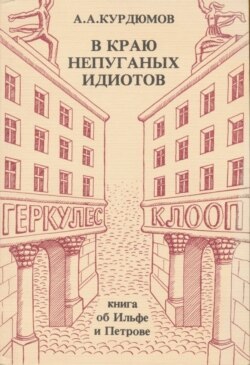
Boris Paramonov: He later suffered, before the war, it seems. The twenties he did not find in adulthood. But back to the topic: indeed, this war against Ilf and Petrov was a sharp plot of Sam- and Tamizdat. (Another then the object of such criticism was designated-Ehrenburg.) It is interesting that in the same Tamizdate there was also a convincing response to this criticism-and not some kind of typewritten article, but a whole book: “In the region of non-frighty idiots,” the author of the Kurdumov, who came out of the underground and turned out to be a solid, scientific employee of the Pushkin’s house in the Pushkin house Solomonovich Lurie.
Ivan Tolstoy: Well, if such a person is not offended by the intelligentsia, then there is no way to talk about. But it is time to indicate openly what is about, what stories of the dilogy are meant.
Boris Paramonov: We have already said about Father Fedor. By the way, Lurie writes that his portrait is not at all angry: he, of course, is a nonsense, but good -natured and, so to speak, in his own right. Only one character of the Golden Calf remains for consideration-Vasisuali Lokhankin-the figure in the novel is marginal and, as it were, for the development of the plot, not necessary, but all the more exciting interest: but what is it for? That's just to make fun of the intelligentsia? Why else, it seems.
But we will see first what the author of the comment says - he and the cards in his hands. And immediately say that Yuri Konstantinovich Shcheglov resolutely disagrees with this suspicious interpretation of Lokhankin as a satire on an intellectual. Let's see what he says.
Announcer: “The legend received a legend, according to which Ilf and Petrov seemed to fulfill the“ social order ”, which consisted of poisoning the intelligentsia,“ claiming their own opinion. ”Loudly outraged by the caricature portrait of Lokhankin and in a hurry under this pretext to cross out the whole work of Ilf and Petrov, their critics forgot about the same or even even more incredible image In fact, all major writers of the first third of the century were tribute to the intellectual figures: L. Andreev, Blok, Ehrenburg, Nabokov, Pasternak, Olesha, Zoshchenko, Erdman and others. The ironic attitude to the language and behavior of the liberal intelligentsia was a common place of modern literature, the co -authors did not introduce anything new here and only reproduced anything new here. condensed form long -standing motives and stereotypes.
The thesis about the "anti -intelligence" Ilf and Petrov suffers primarily vague, since its supporters, as a rule, use the term "intelligentsia" outside the historical context. Между тем на протяжении своей истории, включая советский период, понятие это не раз наполнялось новым содержанием и употреблялось в разных значениях одновременно. Утверждение, что соавторы нападали на интеллигенцию (вообще, без уточнения, на какую именно), само по себе бессодержательно. Чтобы решить — и, если будет позволено, закрыть — данный вопрос, стоит еще раз вернуться к нему и разобраться в том, какая интеллигенция представлена и какая не представлена в лице Лоханкина, и намного ли грешнее смеяться над ним, чем, скажем, над Хворобьевым или Воробьяниновым".
Борис Парамонов: И затем комментатор дает чуть ли не социологический анализ пореволюционной русской интеллигенции, выделяя в ней несколько слоев: тут и принявшая советскую власть, и тайно фрондирующая, и до сих пор не решившая, кому поклоняться. Притом что понятие интеллигенции необычайно расширилось после 17-го года, интеллигенцией стали называть чуть ли не всех людей, не работающих руками на производстве, а сидящих в конторе над бумагами. Получается, что все сотрудники "Геркулеса" – и Полыхаев, и Скумбриевич – интеллигенты. Вывод же Щеглова такой:
Диктор: "Лоханкин – во многом искусственная, мифологизированная фигура, в которой в карикатурном, хотя и узнаваемом виде отражены избранные (и наиболее уязвимые) черты архетипического, т. е. прежде всего дореволюционного, интеллигента прогрессивно-либерального толка: есть в нем что-то от народника и славянофила, преклоняющегося перед мужичком-богоносцем (сермяжная правда), от либерала-просветителя (А. Кони), от кадета (П. Милюков), от эсера (голодовка) — и все это на фоне таких общероссийских универсалий, как обломовский диван, маниловские прекраснодушные мечтания, полная непрактичность и непригодность к жизни".
Борис Парамонов: Автор комментария находит в современной Ильфу и Петрову литературе персонажа, очень напоминающего Лоханкина и данного так же сатирически – Алексея Ивановича Тишина из "Хулио Хуренито" Эренбурга. Тоже ведь окарикатуренный образ. И ведь никто из интеллигентов российских за это на Эренбурга не обижался.
Иван Толстой: Но ведь эренбурговское знаменитое сочинение отнюдь не реалистическая вещь, а заведомо фантастическая: там не жизненные типы, а некие аллегории изображены, это вещь открыто условная.
Борис Парамонов: Так любая литература заведомо условна, она не изображает, не отражает и не выражает жизнь. Видеть в литературе картину жизни эстетически безграмотно. Произведение искусства всегда автономно. Но это не значит, что, скажем, литература не может от чего-то оттолкнуться в своих построениях, от какой-то реалии, вернее – от какого-то фрагмента реальности. Вот как Чехов в "Попрыгунье", считается, изобразил свою знакомую Кувшинникову, которая, как Оленька Дымова, была замужем за врачом и в любовниках числила художника (Левитана). И на Чехова обиделись – не только сама Кувшинникова и Левитан, но и актер Малого театра Ленский – потому что среди Оленькиных гостей был толстый актер, которого Ленский посчитал своим – опять же карикатурным – портретом. И я предлагаю: не уходя в сферы историко-социологические и не считая, что в Лоханкине высмеивается несчастная интеллигенция, попавшая под большевицкий пресс, поискать прототип Лоханкина среди конкретных фигур русской культуры. Мне кажется, что я такую фигуру нашел. Это Блок.
Иван Толстой: Благороднейший рыцарь Прекрасной Дамы и безукоризненный джентльмен Блок – прообраз Лоханкина? Вы не боитесь, Борис Михайлович, что вас дезавуируют любители русской поэзии? Последнюю любовь отнимаете.
Борис Парамонов: Искусство – вещь капризная и опасная, художники – народ непочтительный. И художественная провокация тем, так сказать, несправедлива, что ей нет дела до целостного человека – а вот возьмет художник и вместо всего человека изобразит одну какую-нибудь черту, гиперболически ее преувеличив. Такой жанр и называется карикатурой. И на карикатуры не принято обижаться, Это только в России до сих пор на "Кукол" обижаются и запрещают. На Западе, когда политика долго не высмеивают, он начинает беспокоиться: это значит – рейтинг падает, забывают про него.
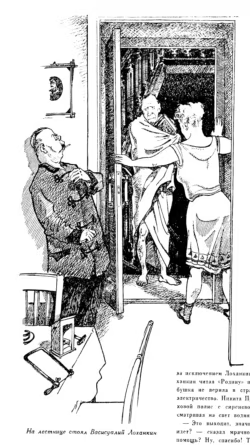
Иван Толстой: Так какая же, по-вашему, черта Блока гиперболизирована и окарикатурена в Лоханкине? Почему не просто русский интеллигент, а именно Блок?
Борис Парамонов: О, Господи, как не догадаться, почему комментатор не просек, как нынче говорят? Ведь на первый план вынесено! Что в Лоханкине самое характерное? Он же ямбами говорит! Where could this come from? И ведь уже подобный прием был у авторов – отец Федор, пишущий письма Достоевского: твой вечно муж Федя. И как всё в плане генезиса сходится: письма Достоевского были изданы ко времени написания "Двенадцати стульев", а Дневники Блока – в 1928 году – специально подгадали к "Золотому теленку".
Еще убойный аргумент: Варвара Лоханкина, уходящая от Васисуалия, в воображении авторов не могла не корреспондировать с Блоковой женой Любовью Дмитриевной, постоянно от него уходившей – это одна из тем его дневников. Свежий ветер играет с терновником, ты ушла на свиданье с любовником. Женитьба Блока была очень сомнительной антрепризой.
Иван Толстой: Вспоминается, как Ахматова отзывалась о воспоминаниях Любови Блок: называла их порнографией.
Борис Парамонов: Цеховая солидарность с Блоком. Но я бы не спешил осуждать эту женщину. Она с Блоком была несчастна.
Ну и главное: Васисуалий, рассуждающий о сермяжной правде и готовый видеть таковую в дворнике Никите Пряхине, подвергающем его порке, – это тот же Блок, пишущий статью "Интеллигенция и революция", принимающий большевицкий переворот за некую народную правду. Это Блоково капитулянтство, за которое его единодушно осудила подлинная интеллигенция. И тогда получается, что Воронья слободка – это поэма "Двенадцать": иронически сниженный распинаемый Христос в компании красногвардейцев.
Еще и еще раз: конечно, Блок это не Лоханкин и Лоханкин не Блок. Незабвенный Васисуалий – эффектный художественный образ, и как таковой он существует в себе, вне соотнесения с тем или иным прототипом. Не надо видеть в литературе картин жизни. Литература существует в себе и по себе, жизнь для нее только стартовая площадка – или одна из ракетных ступеней, отделяющаяся от нее. Вернее, сама ракета от нее отделяется: литература отделяется от постылой жизни и уходит в чистое космическое пространство. Вот подлинный русский космизм – литература.