
Translated material
Star electorate
Robert de Niro against Clint Eastwood: who will support Hollywood in the US presidential election
As it approaches the November superfinal, the domestic political struggle in the United States acquires a more acute character. The process includes new groups of influences that form the subjects in the desire to find candidates who are ready in case of victory to provide practical benefits in their further implementation. Each party has its own traditional supporters: the military-industrial complex (for example, Boeing and Lockheed Martin) is largely aimed at the Republican Party, while the high-tech lobbs (Microsoft and Apple) consistently provides financial assistance to democrats.
Of course, in America, as in most countries with a market economy, large companies strive to minimize risks, so diversification in ensuring access to serious policy has become a completely normal phenomenon. However, in addition to the corporate lobby uniting the pragmatic world of business, there is also a conditional block of the ideological group of influence (religious, ethnic, public, legal organizations). In this block, strong alliances also developed over time. For example, the conservative Israeli elites are closely connected with the “elephants”, and the moderate reformist Jewish groups with “donkeys”.
One of the most influential and well organized is the Hollywood lobby.
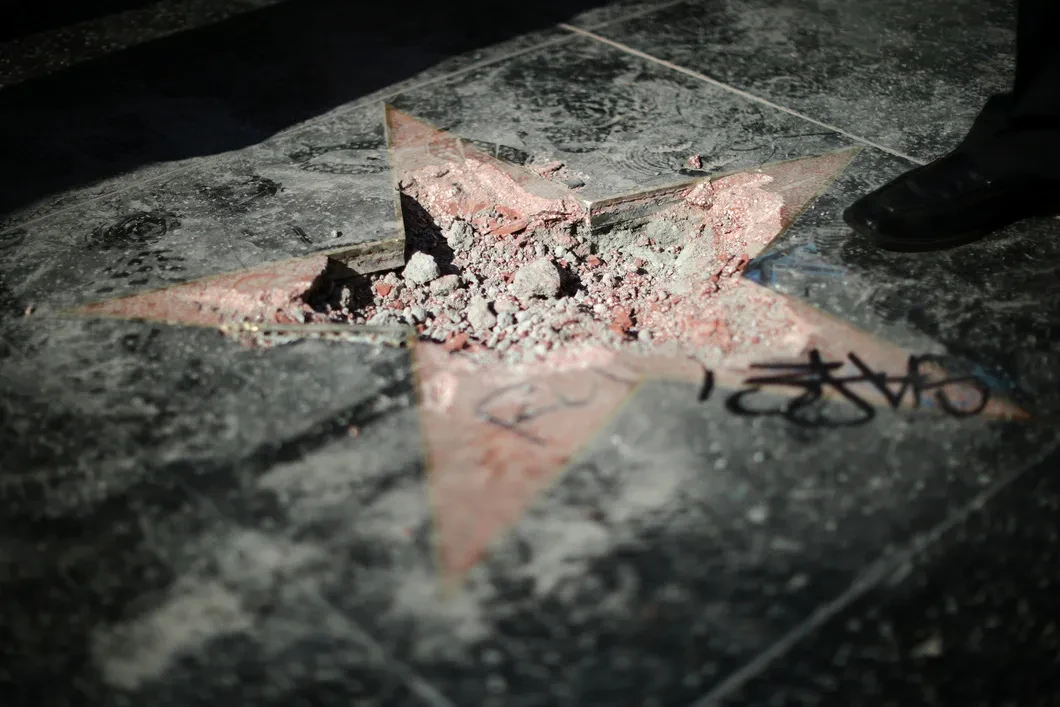
It not only plays a key role in the formation of public opinion, but is also considered the most important element of modern American political culture. The current head of the Oval Cabinet of Donald Trump without exaggeration can be called the most criticized by the conditional film elite as a leader. Its representatives with great enthusiasm took the news about the impeachment process against the Republican.
The current president is not particularly restrained. So, he stated that the liberal Hollywood is evil and highly racist. This confrontation is one of the most discussed in the general public, and the dynamics of positive and negative reviews can create the impression that the film industry is striving to destroy Trump's reputation. This is partly true, but even inside the so -called Hollywood aristocracy not everything is so unambiguous. It is important to understand that one or another political orientation of Hollywood has always been a product of a complex of objective and subjective factors.
From the moment of entering the United States, California has become almost the most significant component of the federal electoral cycle: today the staff gives the largest number of votes of electors-55. The beginning of the 30s. It has become one of the most difficult periods in history. In addition to the systemic economic problems that smoothly flowed into great depression, the country began to gradually depart from the monopoly influence of the Great Old Party (GOP), whose candidates from 1860 to 1928 won 15 out of 18 campaigns.
A temporary fracture occurred during the reign of Franklin Delaino Roosevelt, who, in the conditions of the internal crisis and the Second World War, was perceived only by the third father of the nation after George Washington (war for independence and foundation of the state) and Abraham Lincoln (victory in the civil war and preserving the unity of the country). At that time, Hollywood was experiencing an era, which later began to be called gold. His elites, on the one hand, supported the reformist "new course" of Roosevelt and welcomed the entry into the war against Japan and Germany, and on the other -
sought to preserve white elitarism,
Which was the basis for the formation of the nucleus of the national political and cultural aristocracy.
With the outbreak of Cold War, Hollywood again became “red” (the color of the Republicans) and was an important part of state propaganda in the fight against the communist threat. The success of the Soviet Union in the war made the ideas of the global revolution and socialism as the only tool for the construction of a fair society for the whole world. The states were no exception: local underground communist cells spread the theses according to which Franklin Roosevelt began the social revolution, and it had to be continued without allowing a return to wild capitalism and the second economic depression.
Special services reported the serious activity of agents of Soviet influence in California,
spreading left ideas among Hollywood stars.
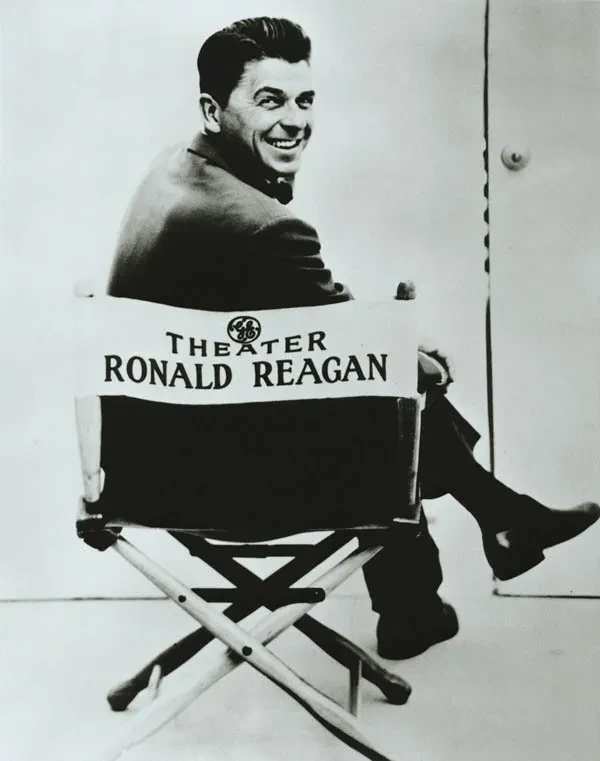
For the counterweight, the FBI used the authority of the actors who were convinced opponents of social-communism and the USSR. One of these “agents” was the future US President Ronald Reagan (at that time film actor), who passed the feds lists of Hollywood elites, which criticized the capitalist model and sympathized with the Soviet one. The films that were shot during the Second World War, expressing sympathy for the USSR and Stalin (“Mission to Moscow”, “Northern Star” and “Song of Russia”), became the object of close investigation and were recognized as products of Soviet lobbying.
Despite the fact that California in two campaigns consistently voted for the Republicans of Eisenhower and Nixon, Hollywood was increasingly unfolding towards the Democratic Party. Stars such as Paul Newman, Marlon Brando and Bert Lancaster, supported John Kennedy in the 1960 elections, were at the front line in the struggle for the civil rights of African Americans and demonstrations against the Vietnam War.
Since then, the film industry has become one of the indicators by which one could understand the development trends of American society.
It was through Hollywood that the nation was accustomed to the idea that the African American, Latin American and a woman could become the president of the country, and representatives of non -traditional sexual orientation have the right to make marriages along with heterosexuals.
Through the films they showed political failures of various administrations and formed public opinion about good and evil. Most often, Washington is an evil - the capital of power, where there is no place for justice and morality. At times, Hollywood propaganda really tries to adhere to the principle of objectivism, but to a large extent the objects of its constant attacks are republican politicians. Say, the impeachment of Richard Nixon was shot (for example, Frost against Nixon), while the perjury of Democrat Bill Clinton about the ties with Monika Levinsky was simply ignored.
Hollywood, along with demographic changes, played one of the key roles in the process of total conversion of California into a producing staff: since 1992, in the presidential election, he votes exclusively for “donkeys”.
Another important factor is intra -block. From the point of view of ethnic influence in Hollywood, three conditional groups are distinguished: Irish, Italians and Jews.
The Irish lobby stood at the origins of the creation of the American film industry and always used this tool to achieve certain political tasks. Their original capital of influence was formed by the legendary families of Disney (from Walt Disney), Clooney, Cooper and Kelly. Irish roots have such stars of our time as George Clooney, Bradley Cooper, Pierce Brosnan, Liam Nison and others. With the help of many well-known films-“Done by the Wind” (Clark Gabel and Vivien Lee), “Molly Maguires” (Sean Connery), “The Gangs of New York” (DiCaprio and De-Lyuis), “The Property of the Devil” (Brad Pitt and Harrison Ford) and “Last Prayer” (Mickey Rurk)-Irish groups of influences formed the influence The positive image of their compatriots and the small homeland (including the justice of the struggle for the independence of Northern Ireland).
Politically, this group is closely connected with Massachusetts (Kennedy) and Pennsylvania (Casey and Fitzpatriki) clans.
Therefore, there is no doubt about their support for the democrat-the Irish Catholic Joseph Biden,
If he still becomes a single candidate from the Democratic Party.
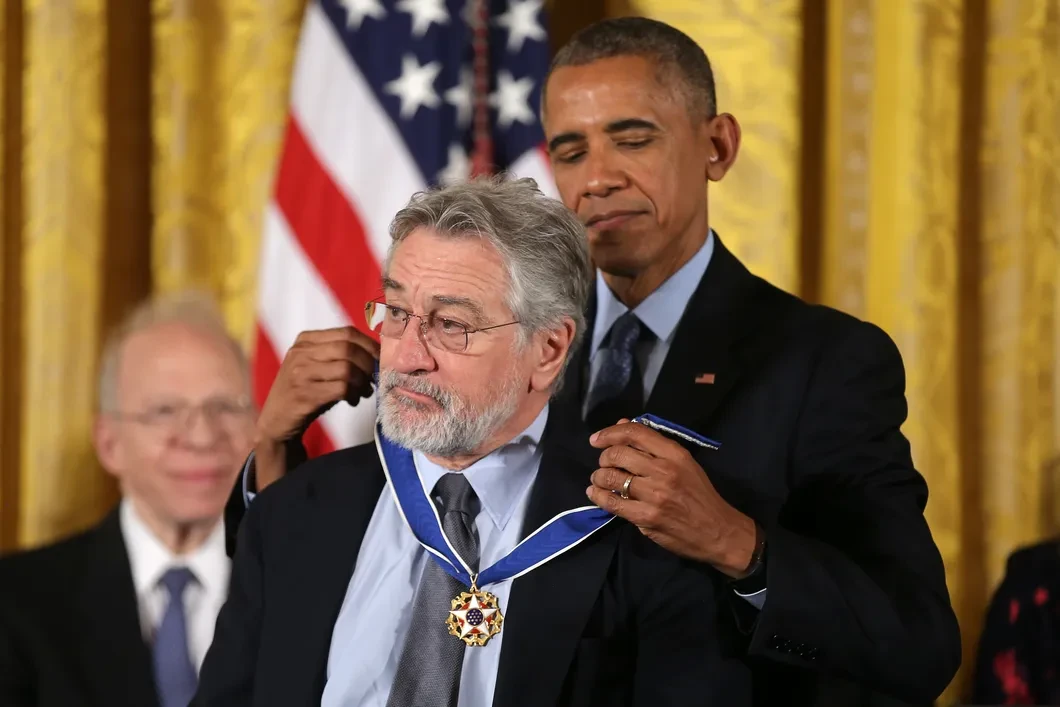
A similar situation with Italians and Jews. Most celebrities with Italian roots - Robert de Niro, Leonardo DiCaprio, Al Pacino, Lady Gaga, Madonna - consider Trump not only the worst president, but also with a shame of a national scale.
The Jewish Hollywood aristocracy consists of a generally made liberal reformists (for example, Dustin Hoffman), who are the main opponents of the traditional conservative production clans (Adam Sendler), supporting Donald Trump.
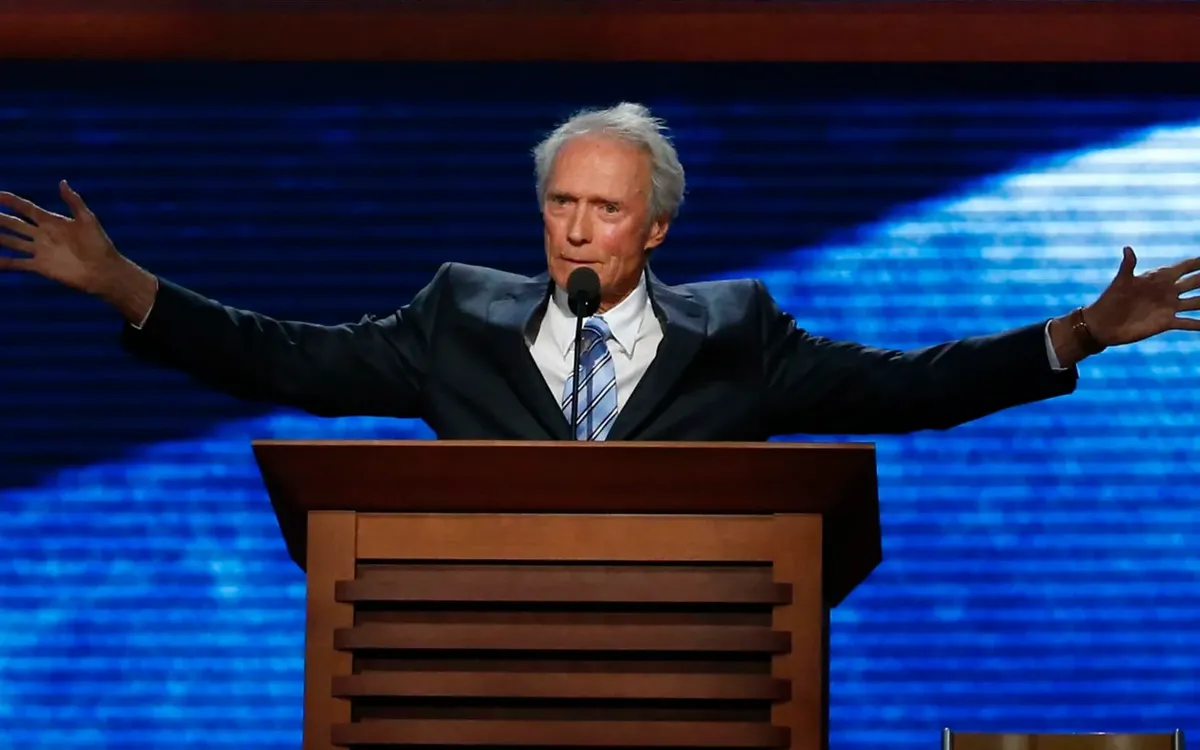
Obviously, the Republican does not believe in the possibility of repulse California from the “donkeys”, but he carefully seeks support in Hollywood, whose impact on minds extends far beyond the “golden state”. Of course, in this direction it will be difficult for him to compete with the Democrats, but his lobbyists also have a rather impressive influence on public opinion. First of all, we are talking about the evangelist group in the person of actor John Voit (father of Angelina Jolie) and the old conservative elite led by Clint Eastwood.
It is difficult to say how effective their support will be on a national scale, but they have already solved an important problem - they created the Protrampov discourse, which slowly recruits supporters.