
Translated material
Hundreds of thousands of requests
How citizens changed the constitution 30 years ago
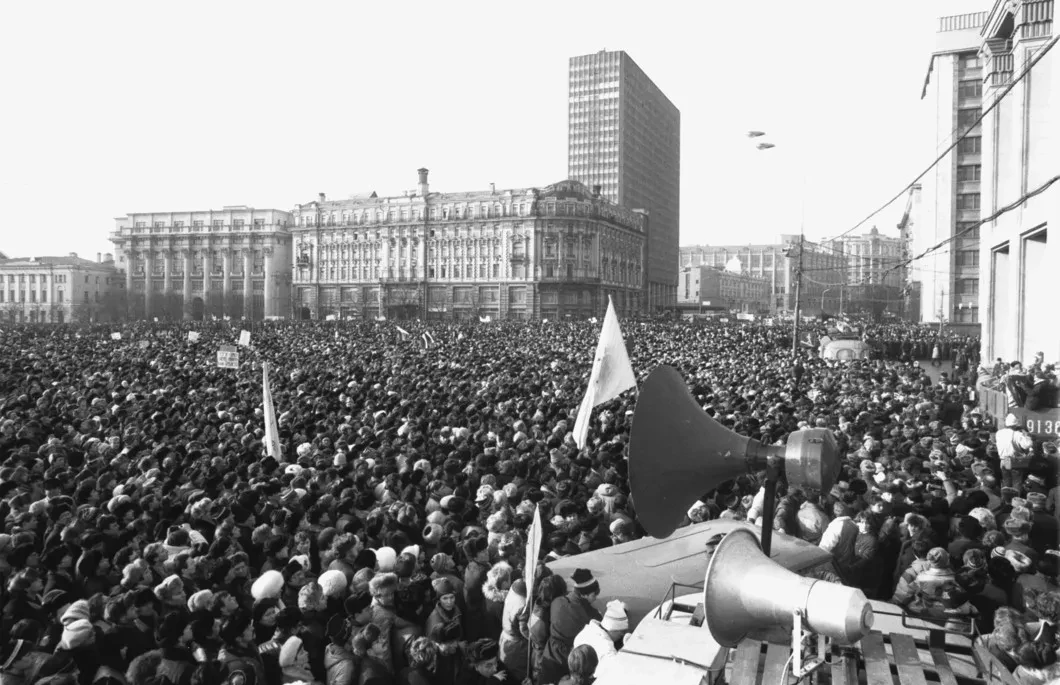
On February 4, 1990, from 300 thousand to half a million Muscovites reached the Square of the 50th anniversary of October (now Manezhnaya) with a request to cancel the 6th article of the Brezhnev constitution, the fixing leadership of the CPSU. This was what a real civic mobilization and a genuine request for amendments to the Constitution looked.
This is the main difference from the current Russian situation, when the first is simulated as part of a “popular discussion”, and the second descends from above.

A rally on February 4, in front of which citizens passed along the Garden Ring and Gorky Street, became historical. Against people who filled the entire gigantic space of the area opposite the Kremlin wall, it was impossible to use force. Strength in general is rarely effective and even turns out to be weak if every tenth, fifth or second resident of the metropolis was on the street with political slogans.
Upon impression from what they saw, the Soviet authorities carried out emergency constitutional reform. Already on February 7, the Plenum of the Central Committee of the CPSU decided to cancel the 6th article of the Soviet Constitution
And officially allow a multi -party system in the country.
As is usually in authoritarian regimes, not only the popular street movement played a significant role in this victory, but also the split of the elites: as a headliner, as they would say today, the rally was a deputy of the Supreme Soviet of the USSR Boris Yeltsin.

But the elite is easier to split when people themselves are ready to defend their rights: the abandonment of the political monopoly of the CPSU was perceived in 1990 as a vital necessity and common sense at the same time, for this it was impossible not to go outside. And people did this that for current activists it looks almost a miracle: like Soviet citizens who have no experience in political participation, dared to regain the street, and even did it without the help of messengers and social networks.
On the example of a rally on February 4, it is clear that you can change the constitution differently. Or with the complete passivity of citizens and on the wake of the official excitement in this regard.
So the Brezhnev constitution was adopted, and now the second Russian can be adopted.

Or under real civil pressure, supported by powerful political figures - so thirty years ago we were left without a guide and guide.
Today, it seems, in the name of changes in the Constitution, nor in its defense to the street hundreds of thousands of people will come out. And this means that the time of great political mobilization has not yet come. With its political special operations, the Kremlin is now only preparing the ground for it.