
Translated material
The way out of the void
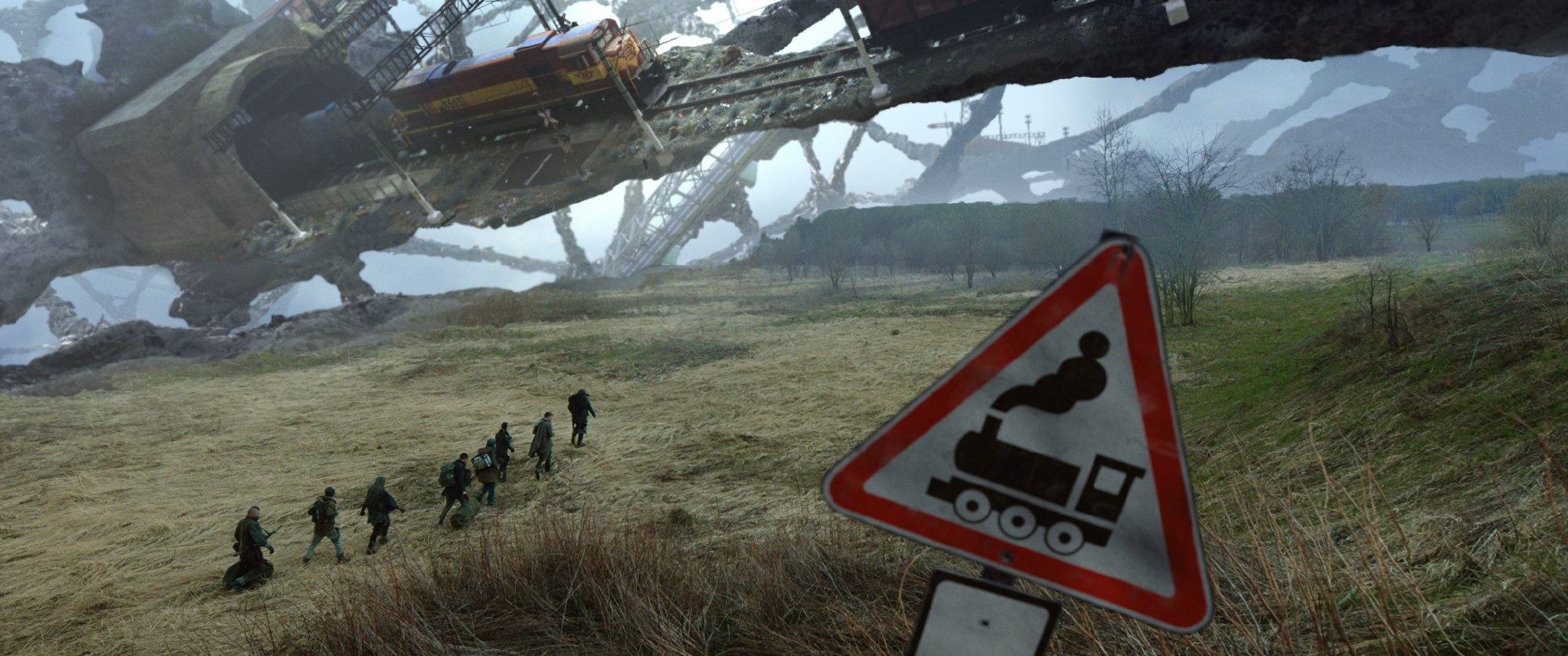
A fantastic film “Coma” was released on Russian screens - a picture of a world of memories where you can get only by falling into a deep unconscious state. “Such things” decided to find out what a coma actually is
“Imagine that you are leaving the house or from the bar where you and I are sitting now,” says actor Rostislav Gulbis, who played one of the main roles in the film “Coma”. “You stand and look at the building on the contrary, and it disappears, scatters into pieces-and something from your past, something very familiar, imprinted in his memory, comes to a shift. Where did you spend your childhood?
- In Yaroslavl.
- Great. There is definitely a station there, right? - I'm nodding. - Amazing. You leave the bar, the building opposite disappears, and you get to the station square. This is a coma.
The pile of dilapidated buildings of different eras, bridges and roads that are not leading, - as the director Nikita Argunov sees. Chaos in the spirit of post -apocalypse. Inside him, people who forgot who they were once gained new abilities and try to survive.
“My gnome is a technician, inventor and the only cheerful character in the“ coma ”, positive, even a little dumbbell, Rostislav laughs.” - He at least a little dilutes the seriousness of the film. I just remember the gnome, directly joy in the soul instills.
Coma on the screen and in life
While the comic was shooting, in 2017, Rostislav managed to withdraw in the short film of Igor Abidov Vegetable.
 Rostislav Gulbis Photo: Dailyinformator/Wikipedia.org
“Actually, I played a“ vegetable ” - a person who can only open and close his eyes, completely immobilized,” recalls Rostislav. - The whole film you just lie, and then you are so immersed in this state as if you are falling through. It becomes uneasy. Really".
When the final trailer for the film “Comes” was laid out on the network, in whom Rostislav’s father fell.
“Three days later, he died, not conscious,” the actor is silent for a moment. - When I came to him on the first day, I could not even force myself to speak. In the second he began to talk with him. And on the third he said that I really love him. A few hours later he was gone. I'm sure there was some kind of connection with him. A man in a coma hears the world around him. ”
The boy who survived
There is no scientific evidence that our faith could rely on the fact that loved ones could hear us, being unconscious. But she reinforces her confidence that science is not known yet.
Vera helped Elena Smagina not to despair when her only son was in the coma, to wait for his awakening. On May 29, 2017, Gleb rode a bicycle near the house when he was shot down by an SUV, traveling at a speed of 80 kilometers per hour. The boy flew into the windshield, and after he was discarded by several meters. The woman at the wheel of the car could not do anything - she only closed her eyes with her hands with fear. While Gleb was taken to the hospital, he survived two heart arrest. And then there were shock, unknown and long days in intensive care.
“I was with my Gleb around the clock,” Elena recalls. - When she spoke to him, the pulse on the monitor became more frequent. There were no tears: I knew: if I pay, he would be upset. "
According to Elena, the son recognized not only her, but also the voices of his classmates. When she put their voice messages to him, tears flowed from under the closed eyelids.
“For a long time, doctors did not give forecasts. They said one thing: stably heavy, pray. On the thirties in the evening, the doctor came up: “I will be frank with you. Your son will forever remain like this.” I thanked for the directness, but replied that they decided completely different forces. I believed: my child will wake up, he will walk again and live a full life. ”
Gleb needed 75 days to completely open his eyes, and a few more days to move his hand for the first time. Doctors said: you can not even dream of the return of speech. But Elena did not give up. She found the opportunity to go to Greece with her son to continue rehabilitation.
“In Greece, we managed to find a Russian -speaking speech therapist. Together with him, Gleb learned to make a deep exhalation, made the first sound, then we learned to pronounce the letters. Once I gave him a book in his hands, he turned it around and squeezed out: “Ro-man!” So the speech returned to him. ”
Today, Gleb carefully walks around the house with his mother, tries very hard. According to Elena, he is in clear consciousness, but there is still a long way of restoration ahead.
The first step up
Cinema most often shows a rapid exit from a coma. A person opens his eyes, immediately begins to speak, recognizes loved ones. Consciousness is clear, the speech is coherent, the movements are clear, as if it were not in a coma, but slept properly.
 Frame from the movie "Coma" Photo: Provided central partner
“Unfortunately, reality looks completely different,” explains the neurorea, senior researcher at the intensive care unit and intensive care of NMIC neurosurgery named after N. N. Burdenko Alexander Sychev. - Coma is an unconscious state caused by damage to the brain. The reasons can be different. The most common-traumatic brain injuries, poisoning, hypoxia, stroke. And the way out of a coma is a long process. If the damage is shallow, the coma did not last long, the patient can already walk around the department in a week. This is a very quick result and great luck. ”
Opening the eyes is the first sign of coming out of a coma, but at the same time the connection with the outside world is not immediately restored. And not always.
“Previously, the state when the patient can only open and close his eyes was called“ vegetative status ”. Now a more accurate term is used - “Areactive consciousness”, or “Areactive wakefulness”. This is the first step in coma. Unfortunately, we know examples when patients remain in this state forever. But no less cases are known when, with the help of rehabilitation and attention of relatives, they switch to higher levels of consciousness, including reaching complete recovery, ”explains Sychev. - In my practice, there was a case when a person was in an unconscious state for three years. Relatives did not lose heart, constantly dealt with him, after discharge they drove through rehabilitation centers. I saw him later. Yes, damage to the brain was evident, but he went, talked, could eat it on his own. So there is no arise of consciousness yet. ”
According to experts, the best forecasts are given to patients in a coma for no more than ten days. In this case, the chances of recovering completely are very high.
“Everything is very individual. You can’t measure everyone with one measure. Much depends on the primary damage and on the timeliness of the provision of medical care. Good forecasts in patients who fell into whom after injuries or strokes. With hypoxic damage, when a person did not breathe for a long time, and the brain did not receive oxygen, the situation is much more complicated. ”
The cerebral cortex, without receiving oxygen, perishes faster than all other organs - on average in 50 minutes. In the case of its death, even if the heart, kidneys, lungs and other body systems work normally, a person will no longer return to life.
“And if we talk about other situations, then everything happens in our practice. It happens that the bullet will fly through his head twice, the patient will be in a long coma, and over time comes out of this condition and returns to work. ”
At the level of feelings
“Do you know who the gnome is? - Rostislav looks at me squinting. - Dwarf is me in childhood, only the other way around. When I was a child, I loved to disassemble everything, but did not like to collect. But in the “coma” I collect all sorts of interesting things, in the sense of not me, but a dwarf. ”
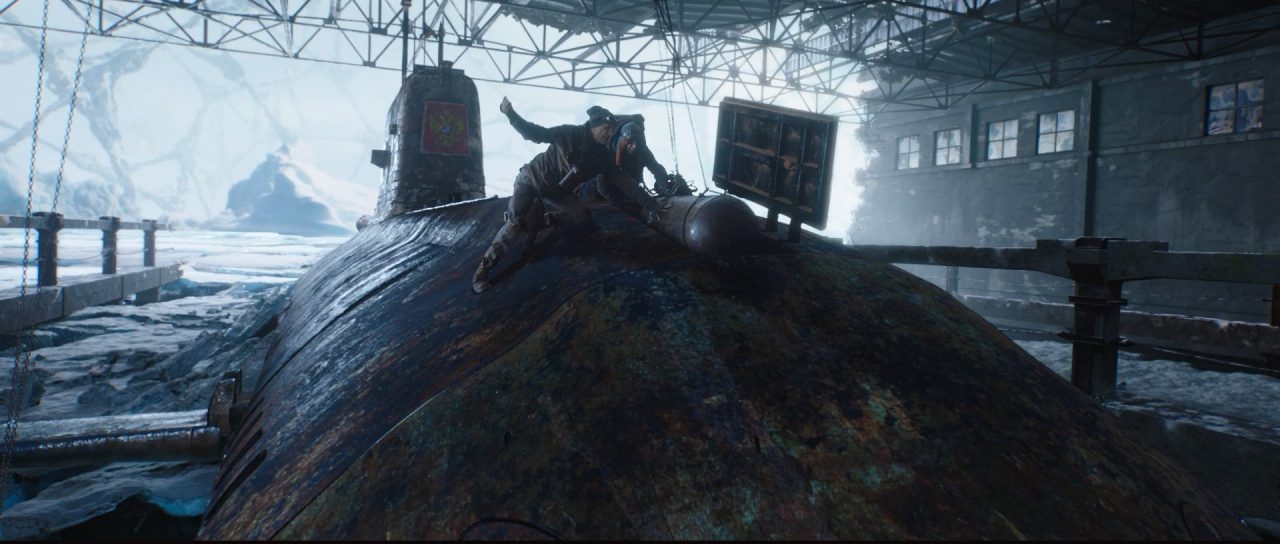 Frame from the movie "Coma" Photo: Provided central partner
Sometimes people, returning to consciousness, tell how they lived in a coma exclusively at the level of feelings, as if they were returning to the earliest childhood, when emotions were the only way to understand and convey something.
“It was strange,” Svetlana Mamedova closes her eyes, breathes very quietly. “This story has not caused fear and anxiety for a long time, but remains the most unpleasant memory in my life.”
A simple and terrible plot: a young girl, evening, street, a blow to the head. 3 thousand rubles and an inexpensive phone became the prey of the robber. Sveta opened her eyes two days later, and could only get up after a week and a half.
“It seemed that I was in that state longer. It was a black time for me. All I remember is sensations. I did not understand, but felt everything that was happening around. Somehow it was possible to distinguish between people who approached me, but only at the emotional level. When I realized that I was leaving the darkness, I felt fear. The first conscious thought was: the main thing is not to confuse parents with someone else. ”
From clear consciousness to the bottom
According to Nikita Argunov, the world into which the heroes of his film falls is at the deepest level of a coma. The laws of physics are violated here, there are practically no rules, and time flows much faster: in one day, in reality, you can live a whole life there.
In reality, the coma is a complete lack of consciousness, absolute oblivion.
“Different levels or degrees of such a state are distinguished,” explains Alexander Sychev. - The Glasgow coma scale is a worldwide gradation, where points are assigned to the states of consciousness. Normal, clear consciousness - 15 points. Minimum - 3 points, the deepest coma. ”
There are no reflexes in the three -point coma, and the patient has very few chances to get out of it. But this condition has its own term. The coma lasts about a month, a maximum of 45 days. A longer stay in an unconscious state often falls under the determination of the first stage of return to reality - a vegetative status (or area of arbitrary wakefulness).
" Mom, I saw God "
According to Elena Smagina, when Gleb was able to speak again, he told her that he met God in a coma. He was very beautiful and showed the boy various miracles. Elena does not tell which one is very personal.
In the mid -nineties, Marina Isaeva spent three days in a hypoglycemic coma.
“I remembered that I was walking along the dark corridor,” the woman recalls, “and someone walked next to me, to whom I complained about my hard and stupid life. The time then was hungry, hopeless and dreary. When I ended the confession, my companion took me by the shoulder and threw me into the wall with all the scope. I just heard: “It's too early for you!” “And she opened her eyes.”
Alexey Sinitsyn, who received severe injury after falling from a motorcycle, about the time spent in a coma, does not remember anything. The most interesting thing began after.
“I spent two weeks in a coma,” recalls Alexei. - When he came to his senses, he did not immediately enter what happened. I went recovering quickly, but interesting, very realistic visions began. For example, I saw that I was not in the ward, but in some huge bus, and the guys and the guys in the next bunks are going somewhere rapidly. Honestly, it scared me, but over time it passed. "
 Frame from the movie "Coma" Photo: Provided central partner
The visions that people who have visited a coma talk about is another topic, operated by cinema and the media. We want to believe that behind the last line there is something else, so stories about meetings with dead relatives, divine entities, paintings of other worlds or stories about walking along the white corridor are very popular. Unfortunately, science believes that these trips have nothing to do with reality.
Angels in white robes
Oleg Zaitsev, psychiatrist of the highest category, professor, head of the psychiatric group of NMIC neurosurgery named after N. N. Burdenko and the author of a number of scientific publications on traumatic brain injuries, I am sure: stories about visions in a state of coma do not correspond and cannot correspond to reality.
“Such visions occur in shallow states of violation of consciousness. Strictly speaking, this is not a coma. This effect can also occur with a quick exit from a deep coma. At this moment, perception is restored and a person captures some fragments of reality, which then can in the most bizarre way to weave with his ideas about the world. ”
According to Professor Zaitsev, most often people talk about a white corridor or tunnel and angelic entities located next to them.
“Most likely, this is just a hospital corridor and doctors in white robes,” Oleg Semenovich explains. - Similar visions are productive psychopathological symptoms in which there is no complete integration of mental activity. Often, the condition in which patients begin to see something is called dreaming, or oaroid. ”
When Oleg Zaitsev worked in a psychiatric hospital, a patient came to him. His eyes were open, but he did not react to anything else.
“I touched his legs to make sure that there were no edema, and also felt the liver. Such a state could be caused by intoxication. ”
The patient had no signs of poisoning. The next day, he came to his senses and was able to talk with Oleg Semenovich.
“He said that he flew among the stars when someone approached him in white. The patient was sure that he saw an angel. But the man puzzled that the angel touched his legs and climbed under his ribs. And I understood that the patient had seen me instead of a foreign entity. ”
The impossibility of memories of a coma is explained from a neurobiological point of view.
“The coma is characterized by complete indecentality and the absence of signs of mental activity,” explains Professor Zaitsev. - In this state, complete disintegration between the left and right hemispheres of the brain occurs, between stem and hemisphere structures. In these conditions, it is simply impossible to remember anything. ”
Take away even deeper
In the final of the film “Coma”, the main character manages to return to the real world, but then he is again taken into the depths of the unconscious so that he can save his beloved girl. In the real world, a person can also “turn off” from reality on purpose. True, for other reasons.
 Frame from the movie "Coma" Photo: Provided central partner
Serious damage to the brain can lead to its edema. In these cases, doctors resort to the method of drug sedation (from Latin Sedatio - “calm”) - with the help of drugs they reduce the patient's reaction to external stimuli to a minimum. This process is better known as the “artificial coma”.
“This is a protective regime for the brain that reduces the growth of edema,” explains Alexander Sychev. “If this is not done, the brain can strangle itself.”
The artificial coma itself is not dangerous. The process is under constant control. With the help of intracranial pressure sensors, doctors observe how swelling develops. If it progresses, there is always a space for maneuver with drugs. If it subsides, medicines can be canceled.
“Often, people who need such a procedure are already in a coma,” Sychev explains. “We just deepen this condition.”
Relatives of patients in an artificial coma often believe that if a person can be introduced into it, that is, drugs that can return it back to consciousness. But there are no such drugs.
The protocols of hope
“At the end of the film, that is, the gnome, the reaper attacked me,” says Rostislav Gulbis. - And all. The dwarf ended, disappeared. "
In the "coma" of Nikita Argunov, the reapers are the most unhappy characters in history. These are also people, but their brain died, and relatives did not agree to disconnect them from the apparatus of artificial life support. They wander in a coma, constantly breaking up and trying to at least touch something living. A close acquaintance with them always ends the same: the brain of the next hero dies and a new reaper appears.
The heroes of the film, alas, are poorly familiar with Russian medical legislation. In our country, the plot of negotiations with the patient’s relatives and his subsequent disconnection from the systems of maintaining life is simply impossible.
“In Western countries, there is an End-OF-Life protocol that launches with extremely unfavorable forecasts,” explains Alexander Sychev. - The states in which it is applied, for example, the UK, differ in strict insurance policy and high cost treatment and rehabilitation. In agreement with relatives in these countries, patients can be disconnected from apparatuses and cancel supporting medicines. ”
In Russia, the legislation does not imply instructions similar to End-OF-Life, as it does not allow euthanasia.
“We have a protocol of the death of the brain, after which we can stop treatment. For its performance, it is necessary to perform a number of tests, including with the participation of magnetic resonance imaging, encephalography and other studies. This process has a well -written algorithm and criteria for assessing the state of the brain recorded in the instructions of the Ministry of Health of the Russian Federation. ”
Alexander falls silent, carefully looks at me, smiles, and then clearly, slowly, with an emphasis on every word says: “We do not turn off patients. We always hope and fight to the end. ”
The only meaning
“What do you think about our cinema? - Rostislav takes a break, and then he answers his question. - About love. In general, everything that we remove, do, create, about it. Although there are, of course, films about something else. And should be about her! "
 Frame from the movie "Coma" Photo: Provided central partner
«Единственное, на мой взгляд, правило для друзей и близких в общении с человеком, пережившим кому, — любовь, доброта и бережное отношение. Единственный подход — принятие сложности человеческого устройства, осознания растерянности, с которой мог столкнуться их близкий, — объясняет клинический психолог Ирини Тихонова-Борсато. — Исходя из личного опыта работы с тяжелобольными, в том числе пережившими околосмертный опыт, людьми, я бы порекомендовала еще и не навешивать никаких ярлыков — ни научных, ни религиозных, ни эзотерических, ни каких-либо еще. Не стоит подходить к таким людям со своими проекциями, догадками и представлениями, что происходило с ними, пока они были без сознания».
Специалисты призывают относиться к людям, пережившим кому, очень тактично. Осознание пережитого зачастую становится серьезным стрессом. После комы пациенты могут впасть в депрессию, столкнуться с тревожным расстройством и другими нарушениями эмоционального равновесия.
«Имеет смысл сосредоточиться не на том, что происходило тогда, а на процессах, происходящих сейчас, — говорит Ирини. — Если человек чувствует себя плохо из-за случившегося или из-за реакций на произошедшие события, стоит сосредоточиться на вопросе: “Как улучшить свое состояние”. Возможно, поможет изучение научной литературы или разговор с психотерапевтом».
Не важно, реальны ли воспоминания людей, переживших кому, или это всего лишь галлюцинации, для них все произошедшее — реальность, наполненная особым смыслом.
«Максимально бережная реакция на рассказ человека о своем околосмертном опыте — поблагодарить его за доверие и показать, как оно ценно для вас, — говорит Ирини. — Так или иначе, то, что он пережил, — его уникальный опыт. И только он сам знает, сколько ценности для него этот опыт несет».
Несмотря на многочисленные исследования и бесконечные научные споры, точного ответа на вопрос, что такое кома и что именно переживает человек в этом состоянии, нет до сих пор. Но если кто-то из наших близких побывал за этой чертой и вернулся, в наших силах помочь ему заново освоиться в реальном мире. Реабилитация и восстановление — долгий путь, на котором не так много чудес, как хотелось бы. Пройти его помогает тесное взаимодействие с врачами, знающими, что происходит и как с этим справиться.
Заголовок текста — отсылка к названию фильма Гаспара Ноэ «Вход в пустоту», основанного на Тибетской книге мертвых. Лента символически показывает путь от смерти до следующего перерождения. Социальная мифология рассказывает, что подобные видения посещают и тех, кто оказался на грани жизни и смерти — в коме.
The names of some heroes are changed.
кино кома медицинская помощь