
Translated material
Personal data of more than 1.2 million customers of microfinance organizations leaked to the Internet
The data of more than 1.2 million customers of microfinance organizations were on sale on a specialized website. According to RBC , the "sample" of the base containing about 800 records includes surnames, names, patronymic, phone numbers, email addresses, date of birth and passport data of Russians.
The seller does not disclose the name of the MFIs whose data he had, but most customers who answered RBC calls said that they had applied for loans to the Higher School. Also in the "Probe" there were data from customers of the microfinance companies "Buser" "Ekapusta", "Lime" and "Microcrass". They contacted MFIs from 2017 to the end of 2019. Part of the base contains irrelevant numbers of phones that are no longer serviced or replaced by the owner. Some participants in the base confirmed that their data in the database are correct, but claimed that they had never applied for loans.
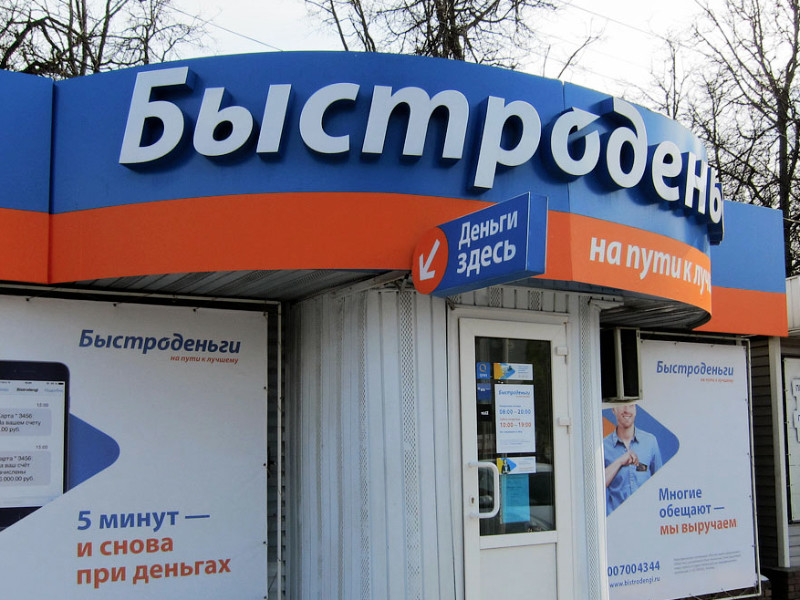
In the "speed", having studied part of the "probe" (100 records) in comparison with their own base, it was reported that the level of coincidence in the lines is 33%, but not in all respects. “For example, the full name coincides, but the phone number is different from the specified in our system,” said Anton Grontov, who holds the position of security director of the EQVANTA group of companies, which includes “high -speed”.
In the microfinance company "Zayer", an operational official investigation has begun in connection with a possible leakage of personal data of customers. Preliminary results showed that the leaks of personal data from the existing database of the IFC customers did not occur, nevertheless, the company's management turned to law enforcement agencies. "Microcated" said that in the trial there is no data from its customers. The remaining large MFIs did not respond to RBC's requests.
Grontov said that in December there was a similar incident in the distribution of the database supposedly MFIs. From the current one, it was distinguished by a set of information and the name of the columns. A source close to the Central Bank said that the basis sold is similar to combining these MFI clients from different sources, and not a leak from one company.
Soil believes that the database cannot belong to MFIs or banks because of its unsuitability for work, since there are fields that contain only the phone number and mail. In his opinion, the source of this data may be a webmaster or lidogeneters that collect customer data for further resale.
"Buser" also came to the conclusion that the source of leakage may be the database of partner companies that collect applications for loans on the Internet and sell them to the MFI. In addition, it was assumed that it could be an integral database of customers of several no longer functioning MFIs.
This can be the base of one MFIs, which is collected by pieces from various sources, including from the base of its own customers, says Ashot Oganesyan, founder of the company's information security company. In his opinion, the database contains loan applications, while some of the applications may belong to the current customers of this MFI. “The seller himself confirmed this by writing in the announcement that the company itself is using the mailing base, but very rarely,” Oganesyan explained. The leak could occur through the insider channel: either the seller himself or the one who handed him the base works in the MFI.
According to the head of the department of the fraud of the Center for Safety Safety Systems of the Infosystem Jet, Alexei Sizov, this database can be a combination of data from several different sources. "For example, it can be collected from the store of the store loyalty program, supplementing with information from the systems for checking counterparties and other sources," the expert says.
"Partial coincidences of the data on customers sold on the network with the data of existing financial companies are explained by the model of the behavior of MFI borrowers: wanting to receive money, they contact several microfinance companies at once," the bucket explained.
According to experts, these data can be used both by other MFIs for attracting customers and scammers to create a scheme of deception under the pretext of obtaining "profitable" loans. In order not to become their victims, bank customers after calling are recommended to put the phone and call back to the bank at the official number.
To get a microse online, you need passport data and SNILS, the last type of document is not contained in the database sold, but scammers can get it by calling customers. In addition, to verify the passport belonging to a person who has sent an online application, many companies request scans of the passport and selfies of the client with a passport in their hands. The “speeds” notes that, despite the improvement of scoring systems and security services, scammers still manage to take loans for third parties, and the scale of fraud is growing: each tenth application for the loan entering the MFI is characterized as a potentially fraudulent one.
At the end of October last year, the Central Bank said that the debt load of Russians has reached the maximum since 2012 : the number of debtors who have expired payments and the number of those who use several types of loans at once is growing. Real incomes of the population do not grow even if salaries are increased: to pay off some debts, people climb into new ones, and more and more often take money in microloan offices. The need to pay interest on loans as one of the reasons for the fall of income was spoke in the Ministry of Finance.
As the study of the IFC "Buser" showed, more than a third of customers of microfinance organizations are people who are delaying salaries. According to the National Bureau of Credit Story, the most difficult all are guards , doctors and social workers, as well as other borrowers with income of less than 20 thousand rubles a month. In the spring, a bill was introduced to the State Duma, which limits the work of the MFI up to the full ban, but it is still without movement. Meanwhile, according to the media, the largest microfinance organizations are the children of oligarchs, scandalous state managers and ex-wife of the President of the Russian Federation Lyudmila Putin (Ochorata).