
Translated material
"My people are always in me"
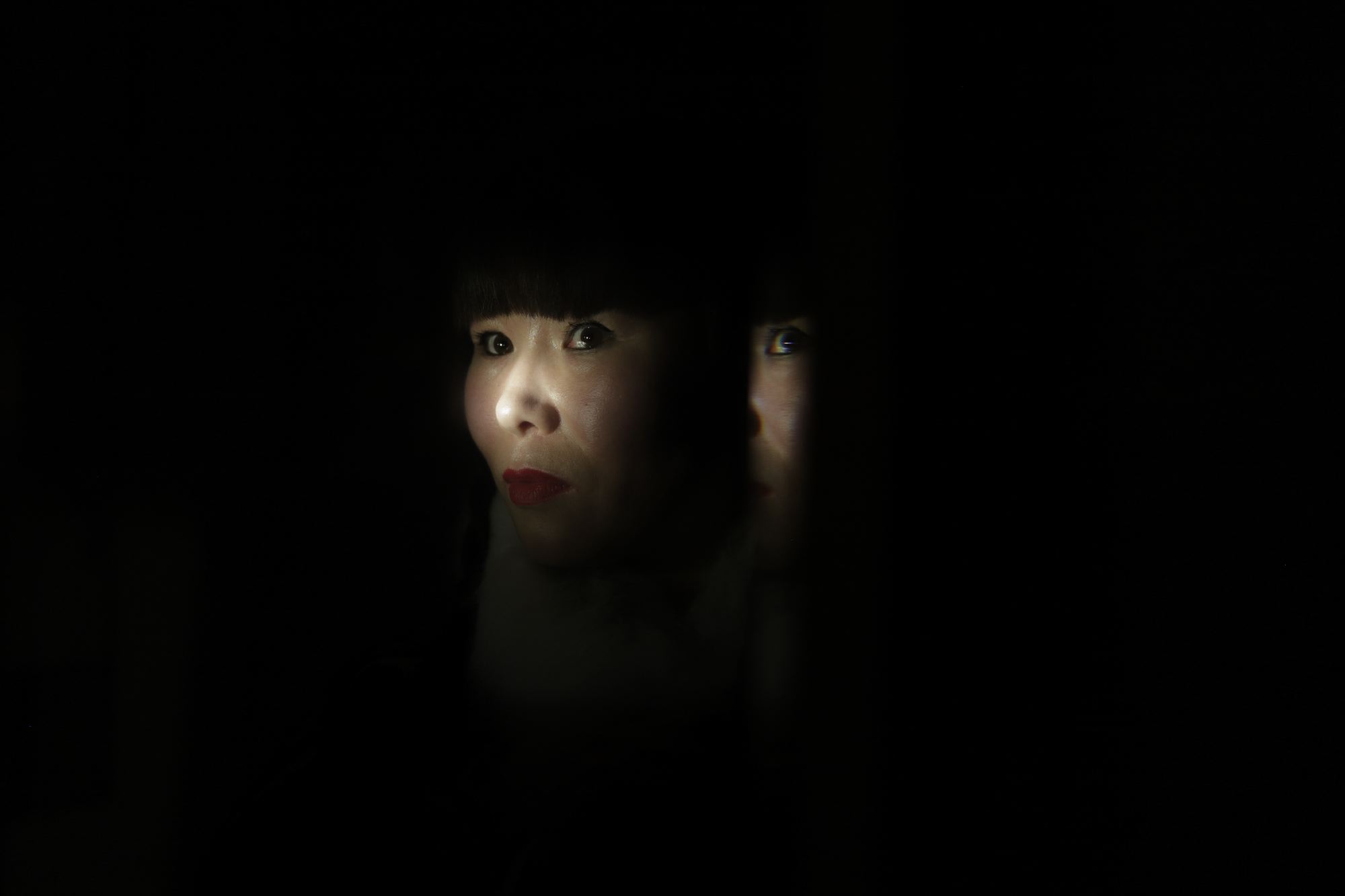
As an alloy of national motives and current trends, he led the Seamen Elena Ader from the Arctic to the Italian Vogue and helps to preserve the disappearing Nenets culture
When Elena was three years old, her grandmother gave her a nail, deer veins and a piece of fabric. The girl tied the vein to the nail hat, made a needle and made her first stitches. And at twelve she sewed her first yagushka, a traditional coat of deer fur.
Elena Ader sews traditional Nenets clothes all her life, and several years ago began to combine national elements with modern fashion trends. As she herself says, " took up stylization ." Last year, the Yamal designer won her first grant to create and popularize traditional Nenets clothing, and shortly before that, her outfits were on the pages of the Italian Vogue .
So they learned about the craftswoman from the Arctic Elena Aer in the world, but they still do not know in Russia.
Master from the Mount of the Dead
In 2009, Elena Ader left the plague from her husband. There was nowhere to go, she was allocated a room in the Social Center "Care" in the village of Tazovsky. In her native Gydan tundra, Elena was considered the first craftswoman, she often ordered clothes and shoes. The rumor about the arrival of a good seamstress scattered quickly, orders appeared. To feed the children in the village, I had to sew from morning to evening. Traditional Nenets ornaments, yagushki, shirts, pussies, burrs - Elena sewed everything manually until she accumulated on a sewing machine. A year later, she was given an apartment in the village (for indigenous peoples on Yamal there are programs by which it is quite possible to get housing), it has become easier to live. However, Elena does not consider a year in “care” difficult.
“I did not work there more than in the tundra,” she says. - And in the tundra we do not pronounce the word “hard”. We simply do not understand this. We must work, help parents, husband, that's all. ”
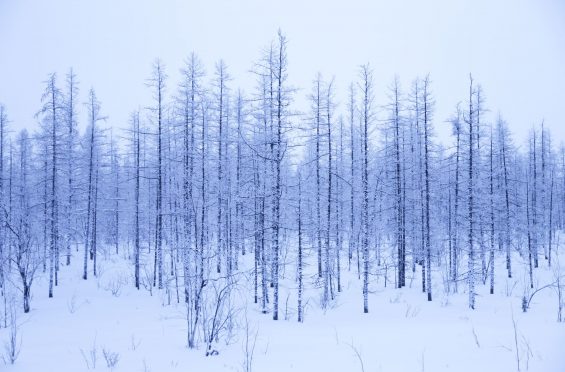
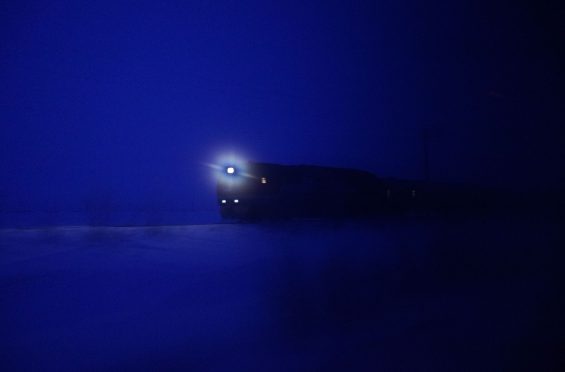
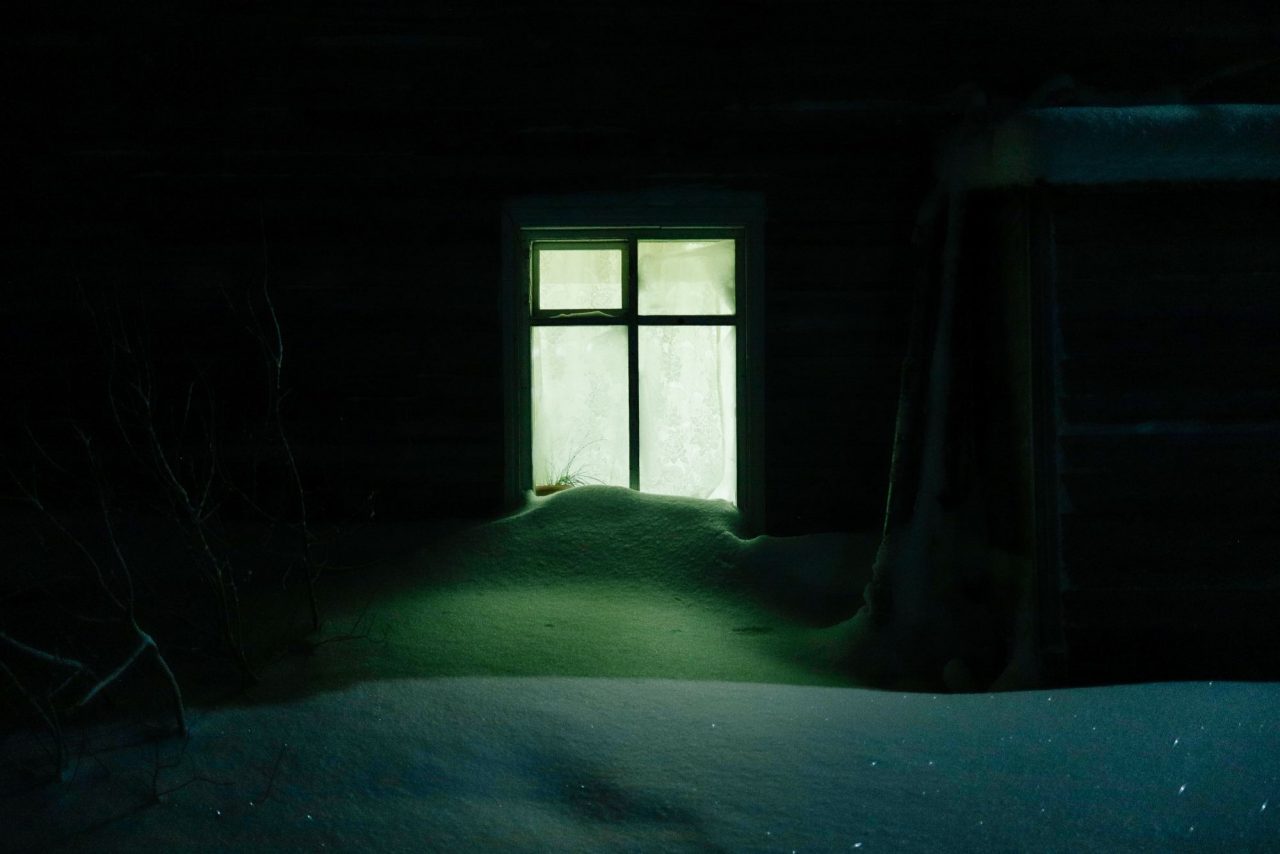
The village of Tazovsky is located behind the Arctic Circle. The closer to the village, the less often and thinner the trees; The track turns into concrete blocks laid in a row. At some point, the trees disappear, only the snowy tundra and the low twilight sky remains. It seems that there can be no life, but suddenly vague spots of colored lights appear ahead.
Once the village was a fishing factor. It was founded in 1883 on the site of the Old Nenets cemetery. They called it accordingly: Halmer Sede (translated from Nenets-“Mountain of the Dead”). In 1949, the factory became the village of Tazovsky, now it is a city -type village. Tazovsky - the center of industrial development of the Arctic, is actively built up, develops thanks to oil and gas enterprises. The village is decorated with garlands and Christmas trees, in the center there are many new residential buildings. In one of them is the workshop of Elena Aer - under it she rents a one -room apartment.
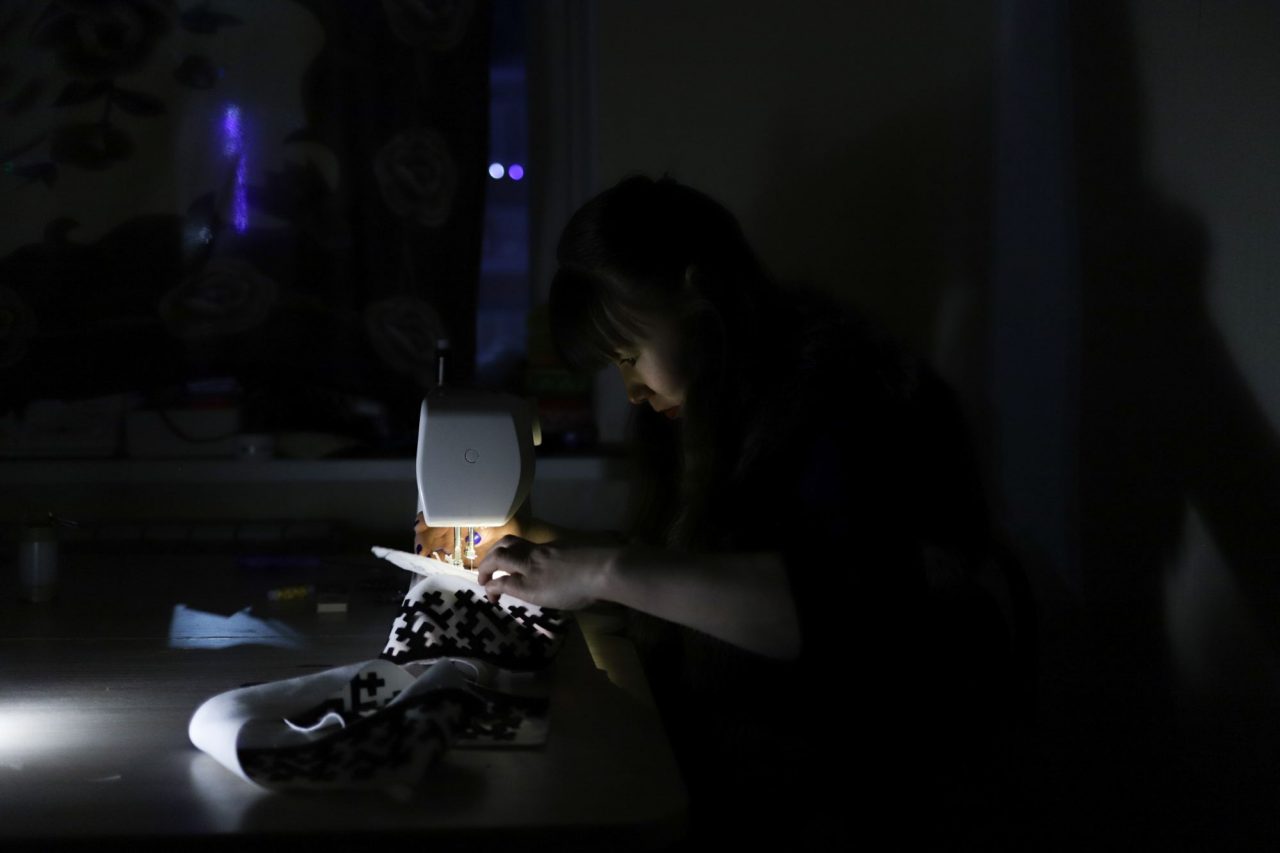 Elena sews in her workshop in the village of Tazovsky photo: Maria Gelman/VII Agency for TD
To heat the room, the ads includes a gas stove in the kitchen. In the cramped room by the window there is a table with sewing machines, along the wall of the mannequin with costumes. Here, almost every day, Elena is late for orders and personal projects. They come here to sew and chat friends. For example, almost all the free time in the workshop at ADER is spent by Larisa Saliner - Tundrovichka, who moved to the village after Elena. They met already in the village and became friends against the background of a general hobby: Larisa also loves to sew - and now she, like Elena, creates and wears stylized tundra clothes.
Deer blood
Elena makes a traditional Nenets doll. A cloth dress, decorated with pieces of fur, instead of a head duck beak. Maucchus doll, female doll, chamin doll (it is larger than others and with a swan beak), cradle. For a tundra child, this is not just toys, but amulets: my mother always gave Lena dolls when she left one in the plague - they looked after the child.
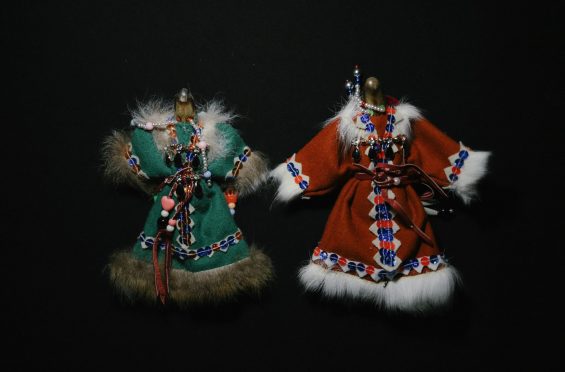
They are taken from Elena willingly - both as toys for children, and to themselves, following the beliefs. For example, if the girl has difficulties with finding a good groom, you can buy a male doll. A man, on the contrary, buys a female doll. And if there are no children in the family, the cradle acquires.
With the doll, Elena bow low over the table, her face brightly illuminated by a table lamp. How old she is, it is impossible to guess, and she does not admit, she jokes that she is twenty -five - but she says that she looks younger than her present age, because she washed with snow and drinks reindeer blood.
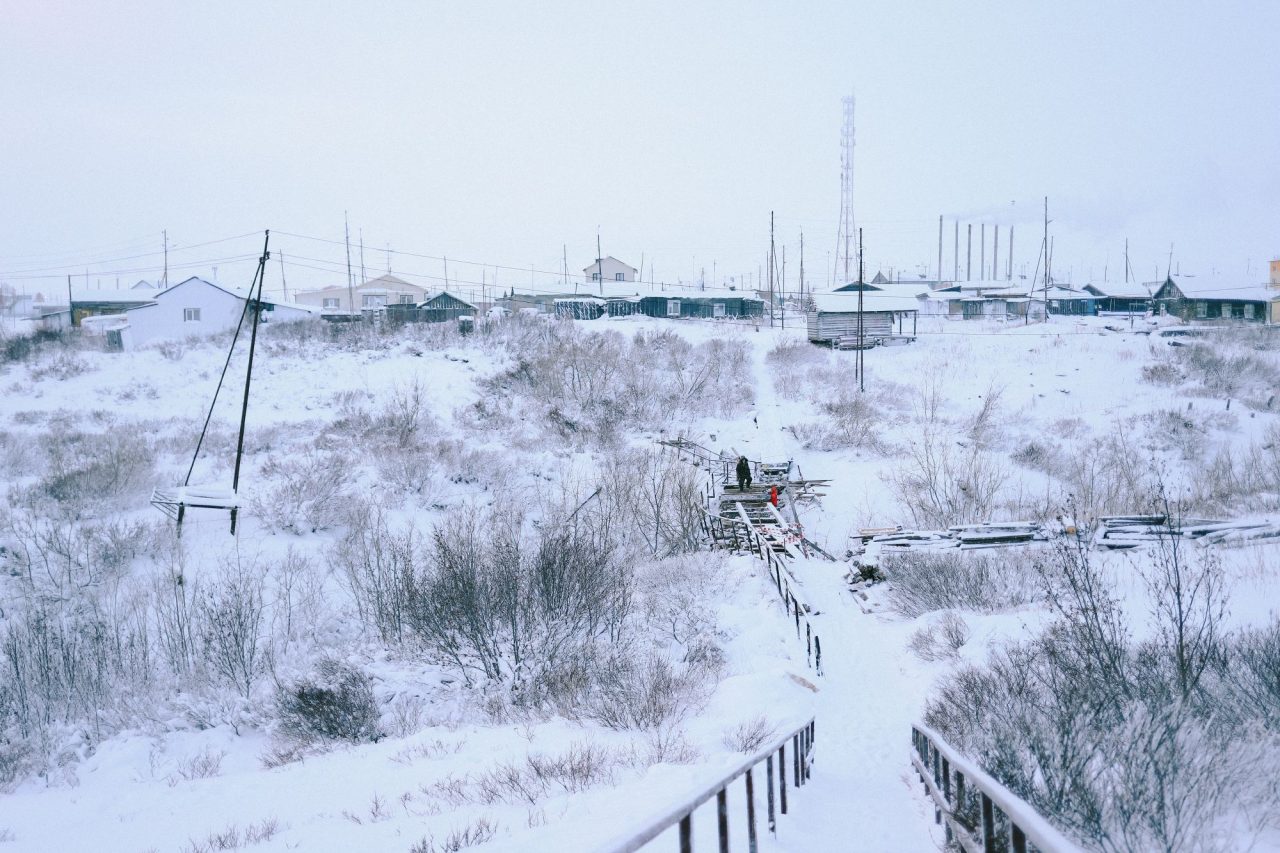 Tazovsky village, Yamalo-Nenets Autonomous District Photo: Maria Helman/VII Agency for TD
“I cannot wash myself with water and soap, as in the city. In the summer there is nowhere to go, of course, and in the winter I open the window in the morning, scoop up a handful of snow and wipe it. Like in the plague. I do not eat store meat and semi -finished products. Only the fresh venison and fish, which relatives bring from the tundra. When a deer is clogged in the tundra, I will definitely drink a mug of still warm blood - it is useful and tasty. ”
A nail and tears
“I am from the nhary family, the daughter of a fisherman. Born in the tundra, at the Zauribe Factory, this is in the north of the Gydan Peninsula, ”says Elena. -My tundra name Yalyan, translated from Nenets “girl-light”. Grandfather and grandmother had ten sons and not a single daughter. And the sons were also born boys. Grandmother was upset that she had no granddaughter, and when I was suddenly born, it was a whole event! He and my grandfather adored me, I jumped all my childhood from the plague into the plague, between them and my parents. ”
In the tundra, children begin to train early. Girls - at home, boys - hunting and skill.

“From an early age, I was cleaned in the plague. Place, wash the dishes, fill the furnace with wood, cook meat. Only when you do it all, you can walk. In the tundra, children begin to cut fish at five. First small, ash, and then the fish is larger. I cut the fish, made deer skins, repaired the sled ... At ten years old I seemed to be twenty, I was an adult and knew everything. I even accepted the first birth at thirteen at our daughter -in -law. There were only she, me and my grandmother. Before that, I saw only how deer are born, and then I had to cut and tie the umbilical cord. I managed, even my hands did not tremble. ”
Elena calls her childhood happy. “I remember how we celebrated the holiday of spring, the holiday of the first booty - when the geese flew. My father and I went to bird hunting, and then cooked it and set the tables in the camp. They played a lot (I don’t understand how, but there was always time for games). It was fun when a rag was smeared with ash, then wiped her face with her. No one could not find out, it was necessary to guess who is who. I really miss my childhood in the tundra. "
A good seamstress in the tundra is an enviable bride. Tundrovichi say: "You can’t sew it - the husband will freeze." Jagushka, geese, shirts, pussies, bucks, mittens, hats ... Clothing should be warm, high -quality and beautiful. The more complicated the ornament on the female yagushka, the more the hand is the bride. It is not surprising that the grooms first look at the girl’s clothes and only then - at her face.
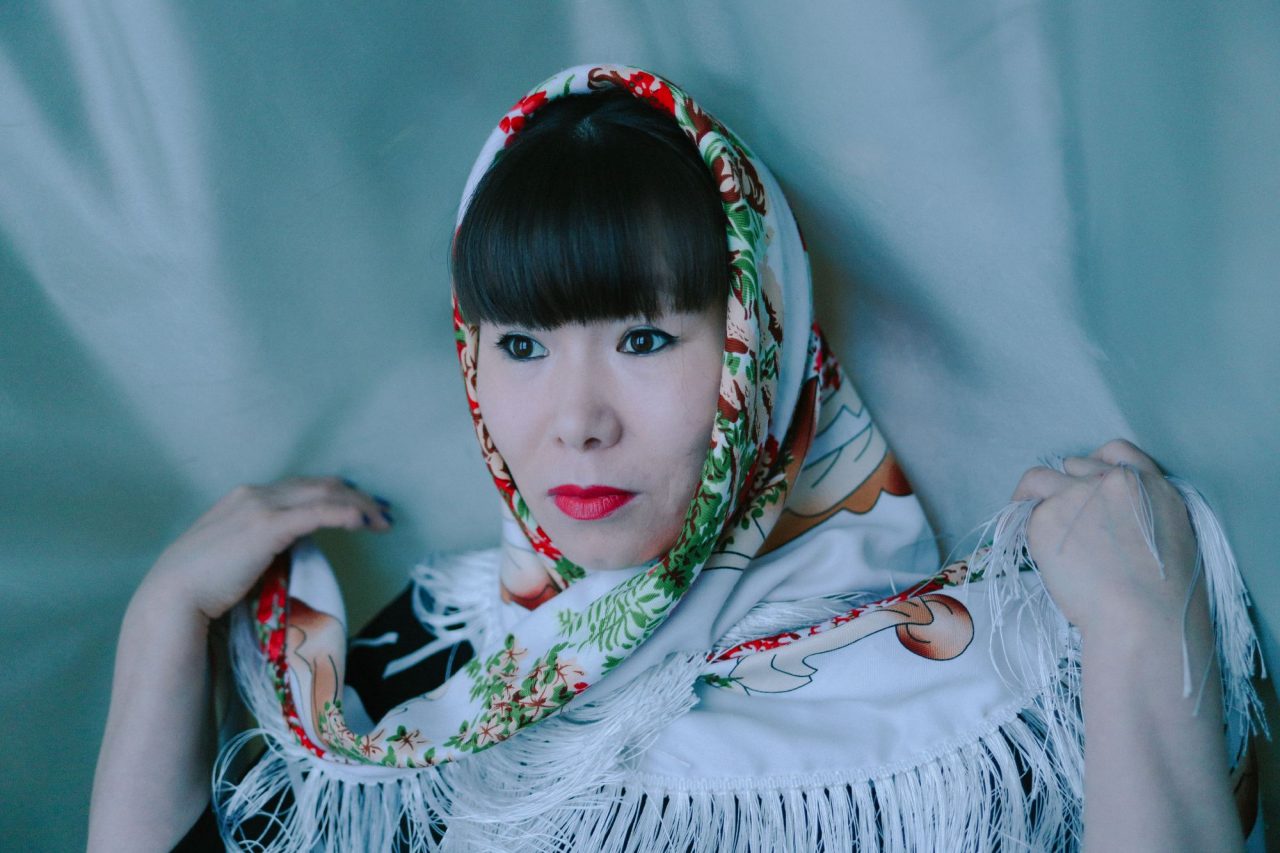 Elena is going to the holiday "Day of the district" in the village of Tazovsky photo: Maria Gelman/VII Agency for TD
Elena was an enviable bride in a square. Because she knew how not only to sew and cook, but also to get food: the brothers and father taught her to hunt. “In the summer, I often helped my father. He took me fishing and hunting. He taught me to shoot from a baby onions, and then made me a real one. At first I shot little birds, then I learned to kill ducks, geese. I shoot aptly. If a husband suddenly dies, and you do not know how, how will you survive and feed your children? So I can do everything. "
Grandmother taught to sew Lena. She gave her granddaughter a piece of fabric and a match, asked to repeat the movements of the “needle” behind it.
“I already realized that I could not sew anything like that, and was upset that it was not possible to pierce the fabric. Grandmother regretted me and gave a clove. I tied the vein to the hat and sewed them. At five, they gave me a needle. Grandmother gave shreds of cloth, from leather. I quickly got it, at the age of six I already sewed dolls, and at twelve I sewed my first yagushka. There was a lot of cried over her, because the ornament did not work out. It is cut out of reindeer paws [Elena has in mind the skin with deer legs. - approx. TD ], thin and painstaking work. Mom cursed: “How are you going to continue to live if you don’t have enough patience?” And I was terribly ashamed that I was so big, and I can’t finish the job. ”
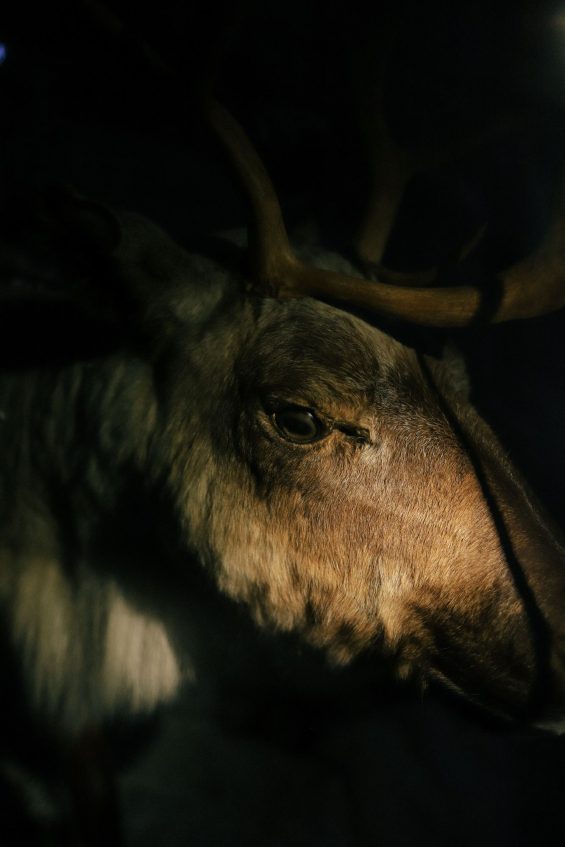
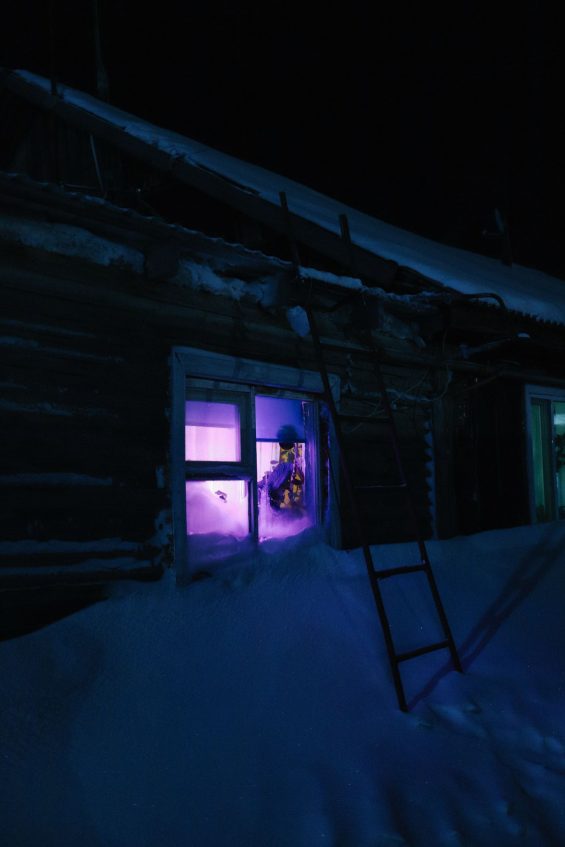
Once, Elena's father brought a magazine in which she saw photos of dancers in fur dresses with pompons. A six -year -old girl was surprised that clothes could be completely different than she used to see, and decided to sew similar outfits to her dolls. “Then I sewed national clothes with pompons - sewed them everywhere. Already then I wanted to sew something not quite ordinary, to decorate as no one decorates. Dad hunted a lot, there was always a lot of fur in the plague. That I just did not do with him! "
" Failed from the plague "
For the first time, Elena left the tundra at the age of seven-in a village boarding school. After the boarding school, many do not return - they act to study at universities and colleges. From childhood, Elena dreamed of becoming a policeman (saw in the cinema), but could not study - her father became very ill. At fifteen, she returned to help her mother take care of her father and younger brothers.
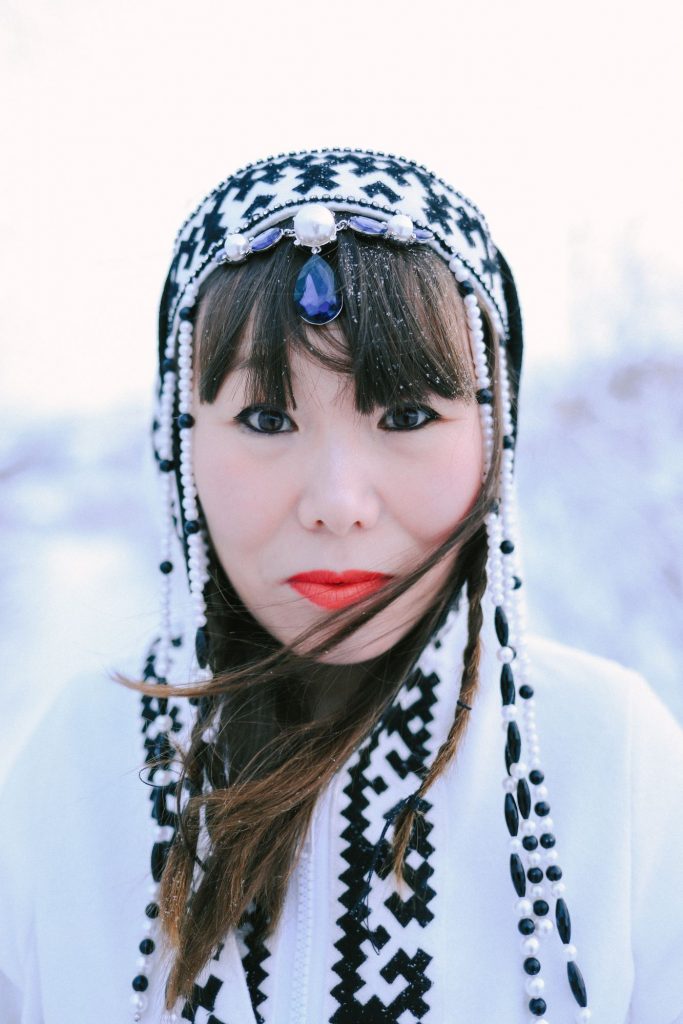 Elena photo: Maria Gelman/VII Agency for TD
“First, dad was sick, then mom. I cleaned, cooked, hunted, sewed all clothes. I thought about myself last. But still, I had several beautiful outfits. Until the bear once broke them. In the summer, the bears came to the camp, one shot one, and the second began to rush between the plague and destroy everything. The clothes lay in a sleigh, he turned them over and torn everything. The next winter we lived without normal clothes, I barely managed to sew the most necessary for everyone. ”
 Tazovsky village, Yamalo-Nenets Autonomous District Photo: Maria Helman/VII Agency for TD
When his father recovered, Elena was married: the groom got up, the relatives considered that the party was good, and the daughter did not argue. Elena does not want to talk about her husband: “I didn’t grow together with him, five years later I ran away from the plague with my children.
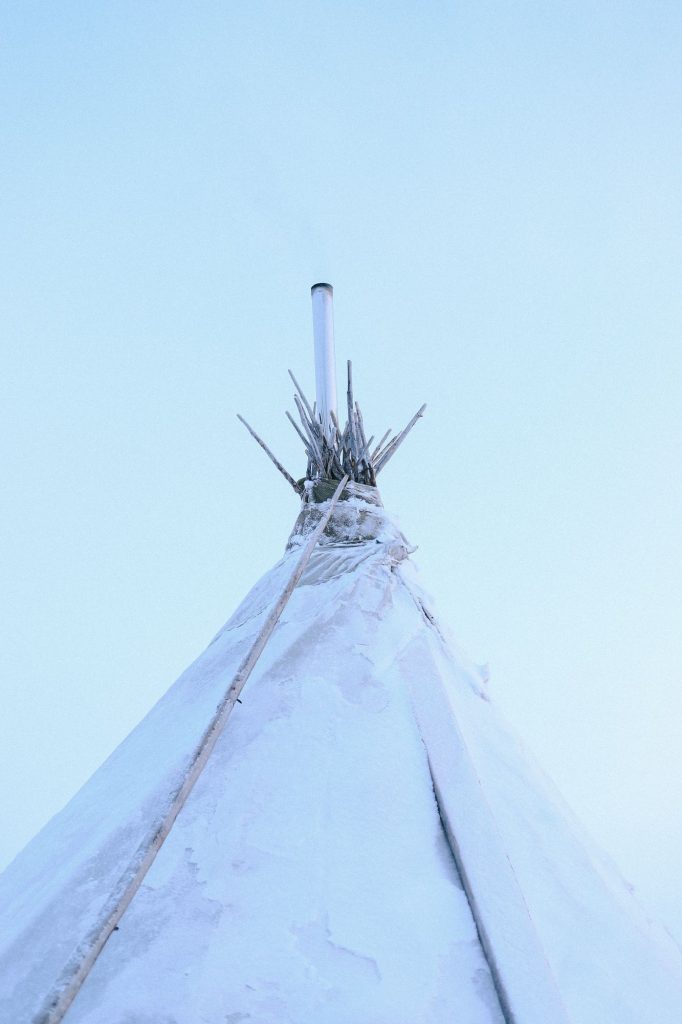 Stylization of the plague in the courtyard of the Tazovsky district local history museum photo: Maria Helman/VII Agency for TD
 I took with me only children and a knot with personal things. I could not return to my parents: if the girl left her parental house, then everything, you can’t return. ”
" Good seamstress "
After the plague, living in the apartment was unusual. “I could not sleep on the bed,” the woman says, “too high, too soft.” Even now, sometimes I steal a mattress on the floor. And it is more convenient for me to sit on the floor, not on a chair. It’s always cool in my apartment, I am unusual for heat. ”
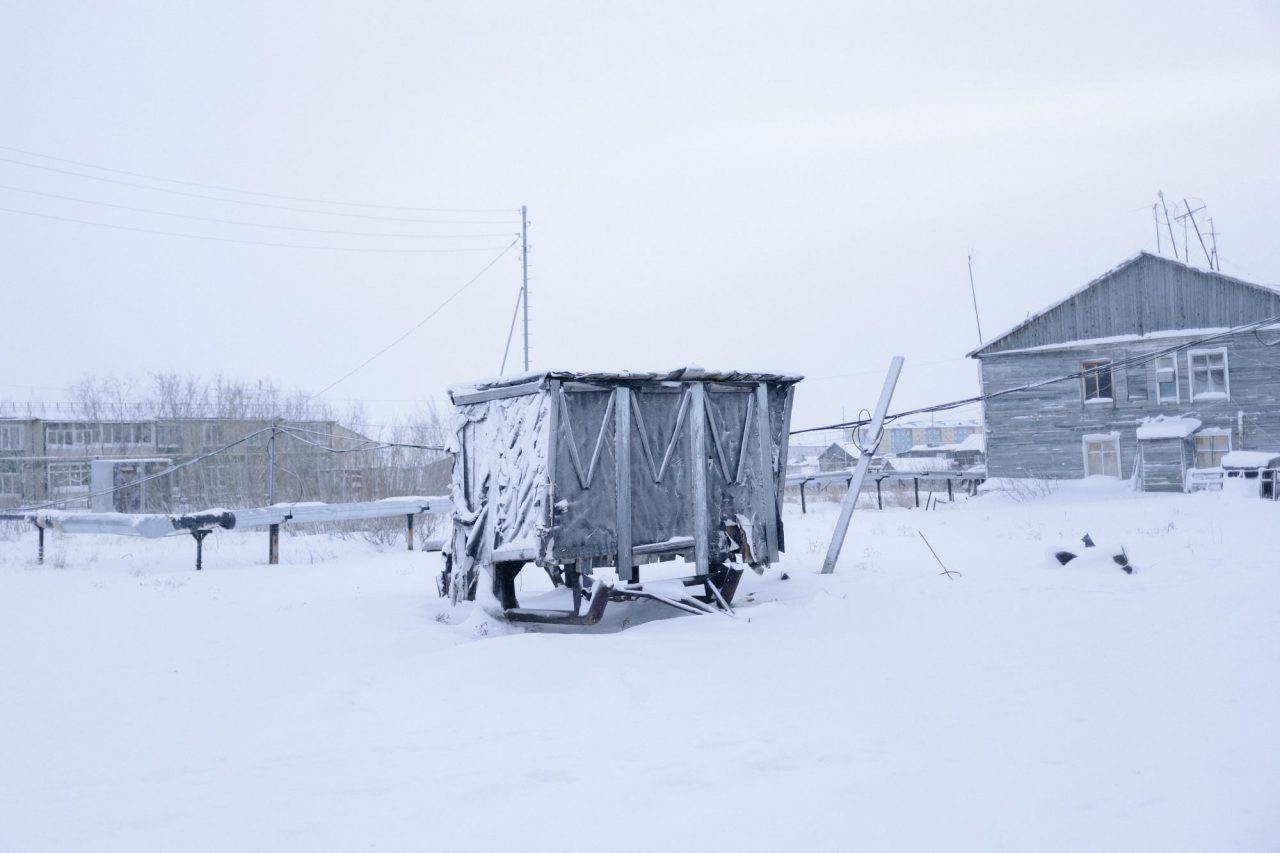 Tazovsky village, Yamalo-Nenets Autonomous District Photo: Maria Helman/VII Agency for TD
“And the children laugh at me due to the fact that I open the windows in the winter! - Elena Larisa Saliner's friend picks up. - They say: “Mom, maybe you do a hole in the ceiling, so that it was just in the plague?” ”
Larisa left Tundra eight years ago. I did not plan to leave: seven children, hundreds of nonsense, all life in the tundra, the other is not necessary. But in 2012, Larisa’s husband went by boat in the village for groceries and drowned. Larisa had to give deer to the brothers and leave the plague.
In Tazovsky, Larisa got a teacher at a boarding school for reindeer herders.
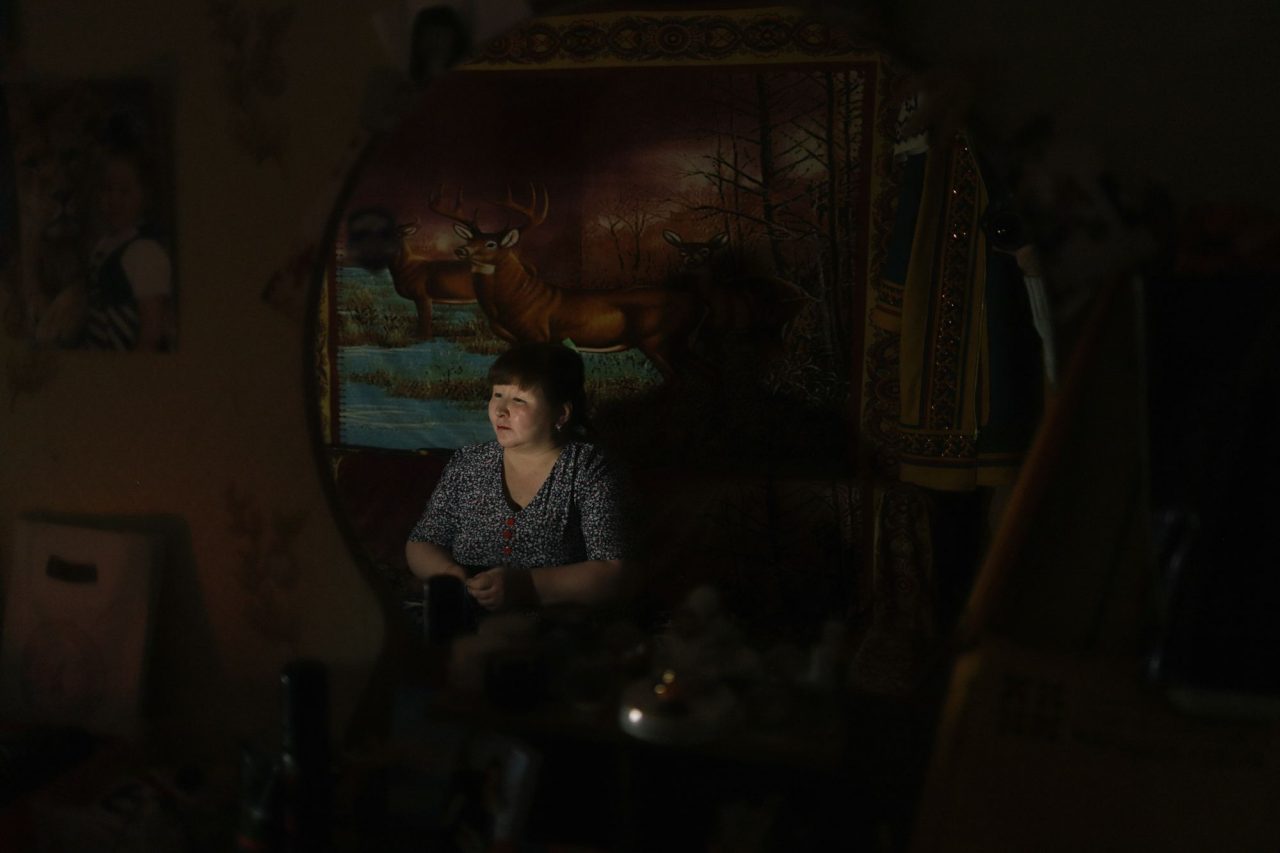 Larisa, a friend of Elena, sits at home. A carpet with deer has been hanging with her for a long time: a woman yearns for them and on the tundra photo: Maria Gelman/VII Agency for TD
“My dad is a reindeer herder, mom is a chum worker. She was a working and good needlewoman, in order to catch everything, woke up at three in the morning. You go to bed - mom sews, wake up - sews. It feels like she did not sleep. ”
Larisa is nice to remember life in the tundra, during a story about a past life, her face is overshadowed only when it comes to her husband. She is still sad, and after years the desire to get married re -never appeared.
Tundra woman
The next day, Elena and Larisa show the village. On the embankment near the river port, near the houses - there are snowmobiles, tundra transport everywhere. “Ten years ago, deer stood instead of them,” says Larisa. - And now they almost do not drive them. I had a favorite deer in my tundra, my mother fed his chest: the deer’s mother died, he did not take a bottle, it was a pity for him. When we have races [on the day of reindeer herders arrange competitions for the fastest harness. - approx. TD ] And my name is a member, I refuse. I really feel sorry for the deer. These are such patient animals, hard workers. He is lucky, tired, but he will not make a sound. It often happens that the deer from fatigue just falls dead, although it was still normal a second ago. They are not pity on races, they run out of their last strength. I can't look at it. "
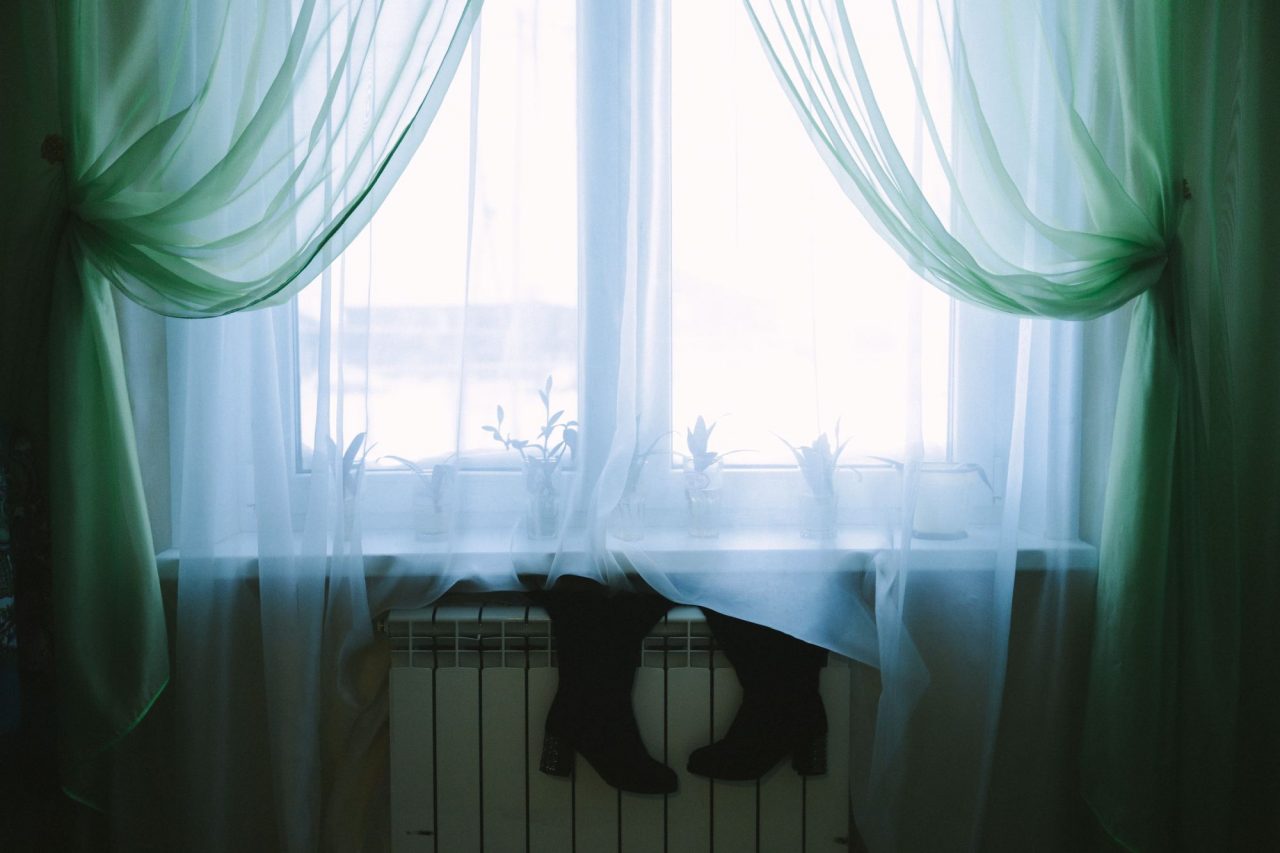 In the apartment of Elena in the village of Tazovsky photo: Maria Gelman/VII Agency for TD
Against the background of white snow and blue sky, women in bright national clothes look fantastic. On Larisa, a white outfit with beads, a taxpecker and a belt that she sewed herself. Elena has a long green coat with a hood and red ornament. Frost, but Larisa without mittens: "I am a tundra woman, I'm not cold."
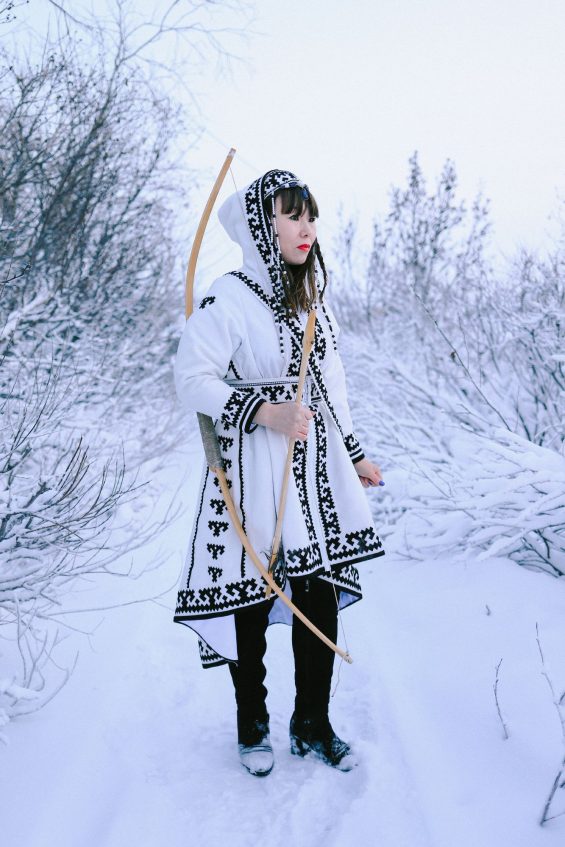

Residents of Tazovsky, even if they recently lived in the tundra, wear ordinary clothes - down jackets and fur coats. On the streets or in the store you can meet a woman in a yagushka and a man in a little one (clothes from the skin of a deer with a hood with fur inside), but these are tundra who come for a while to the village on business. Elena and Larisa are one of the few who lives in the village and walks the streets in stylized national clothing. Even if Elena is an ordinary fur coat, she will still put on her hand -made handmade Burka embroidered with the Nenets ornament and tie a bright scarf on her head. So ader is trying to show that tundra clothing is beautiful in any environment.
 Tazovsky village, Yamalo-Nenets Autonomous District Photo: Maria Helman/VII Agency for TD
“I do not understand those who come from the tundra and try to hide it,” says Auder. -It happens that the girl only arrived, you look at her: her eyes, she made her hair, put on a mini-cub and pretends to know that she does not know his own language. You speak with her on Nenets, and she asks to explain what you said. Even if you live far from your family, you need to remember your language and your culture! Although I moved for a long time, I still remained a tundra woman. I speak Nenets, I sing songs in this language. And the clothes are stylized by the sewing because I want it to be considered beautiful and worn not only in the tundra. ”

Young people are increasingly remaining in the village, Elena continues, in the tundra there are fewer fewer people every year. “Previously, children from camps came to a boarding school with home -made toys, with pieces of fur and fabrics,” Larisa picks up. -And now they come with mobile phones and almost do not speak nenets. Almost all of my children after the boarding school left to study, some in Tyumen, some in Omsk. They will not return to the tundra, they are cold there, tundra life is alien to them. And I understand that nothing can be done about it. ”
Conscious consumption
In the courtyard of a three -story building there are two women and a man sawn a frozen deer carcass with a saw. Meat shavings scatter in all directions, staining the snow into pink. These people also moved from the tundra to the village, but the deer was both the main and favorite food. The carcass sawn on the bars will be put in a bag and removed on the balcony. And until the very spring they will eat the whole family, taking out a piece.
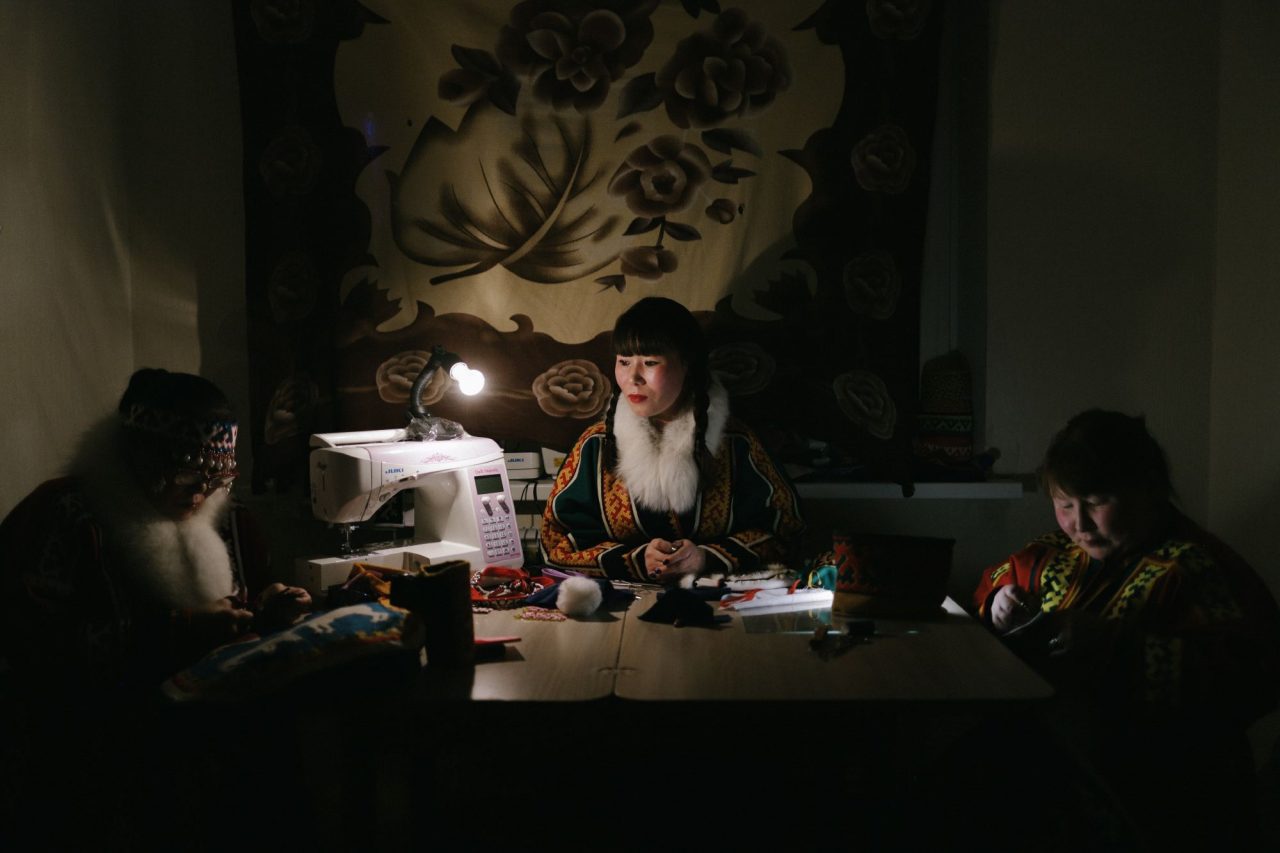 Elena spends every day in the workshop. They often gather with friends in the evening to sew and communicate photos together: Maria Gelman/VII Agency for TD
We come to the workshop to Elena. Soon a client will appear - a visiting master in icy sculpture, during the cutting of ice, a down jacket was damaged. Sarafan radio led him to ads. She offers to a cut and along the whole lightning sew a traditional ornament with a deer horns. It turns out beautiful and unusual, the client is satisfied. He will wear this jacket outside Yamal, and Elena rejoices that the Nenets ornament will be seen somewhere else.
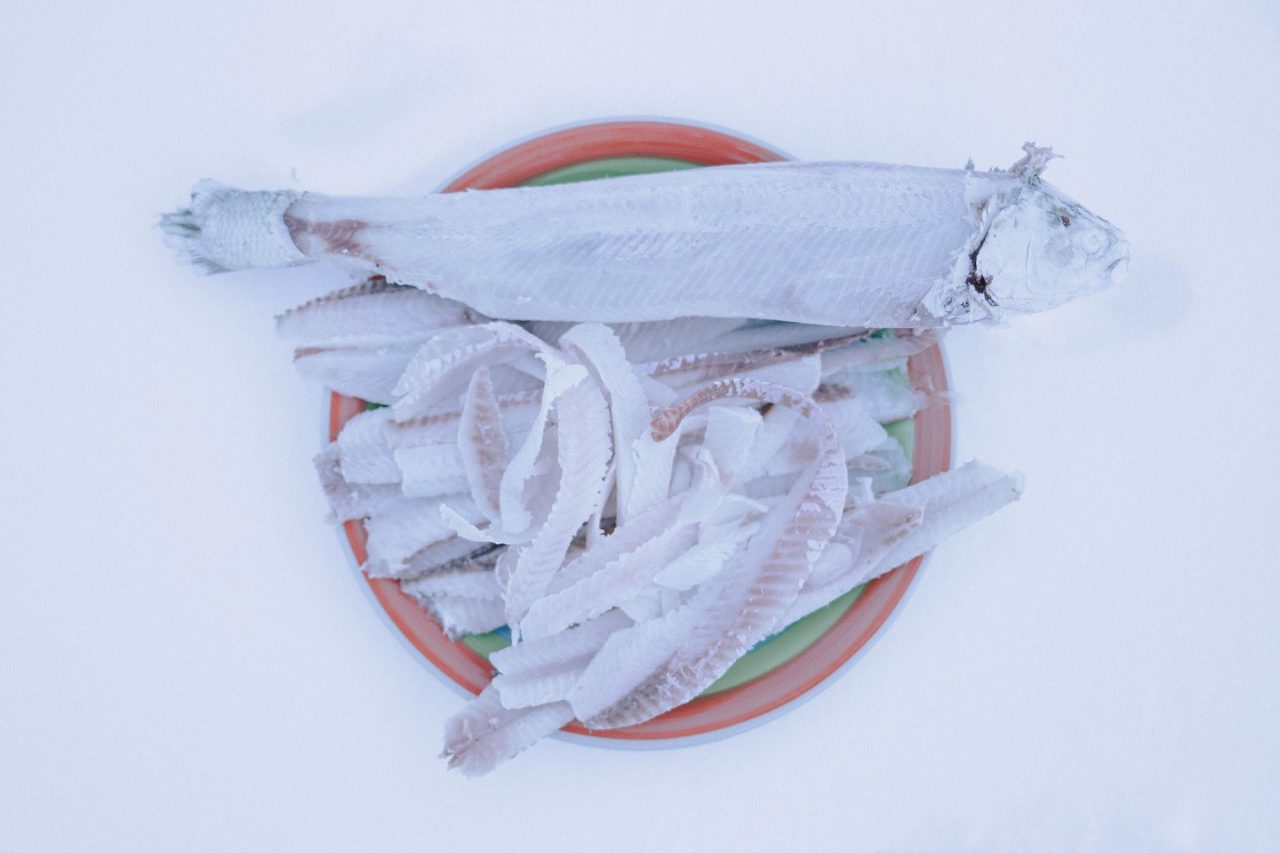 Stroganina from Elena photo: Maria Gelman/VII Agency for TD
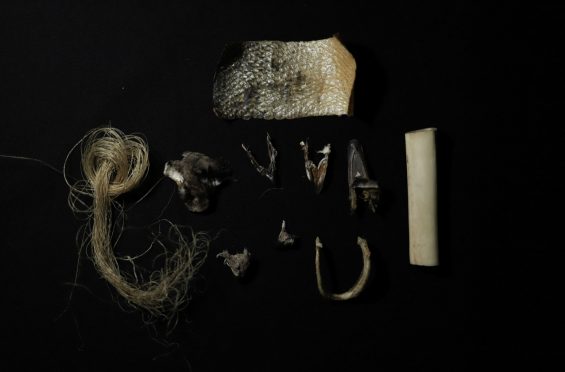
Auder lays on the table the beaks of partridges, a beaver skin, a fish skin, deer bone, a goose and deer tendon. He talks about the tundra conscious consumption: everything that is killed in the tundra is used without a trace. The greatest value, of course, is a deer. The meat is eaten and used as a currency: exchange for fish, gasoline, building materials. The same story with horns. Panta can even be exchanged for a snowmobile. Fresh blood is drunk. From the skin they sew clothes, bedspreads, shoes, plague coating. Everything is used, without a trace, even the legs, which the tundroviks for some reason call their paws-they make kits (fur boots) of them. Кишки используют в подготовке шкур, содержимое желудка можно нанести на лицо и тело как маску (так делала бабушка Елены и, по ее словам, дожила до девяноста лет без морщин). Из костей и зубов делают украшения, сувениры. Из сухожилий — нитки.
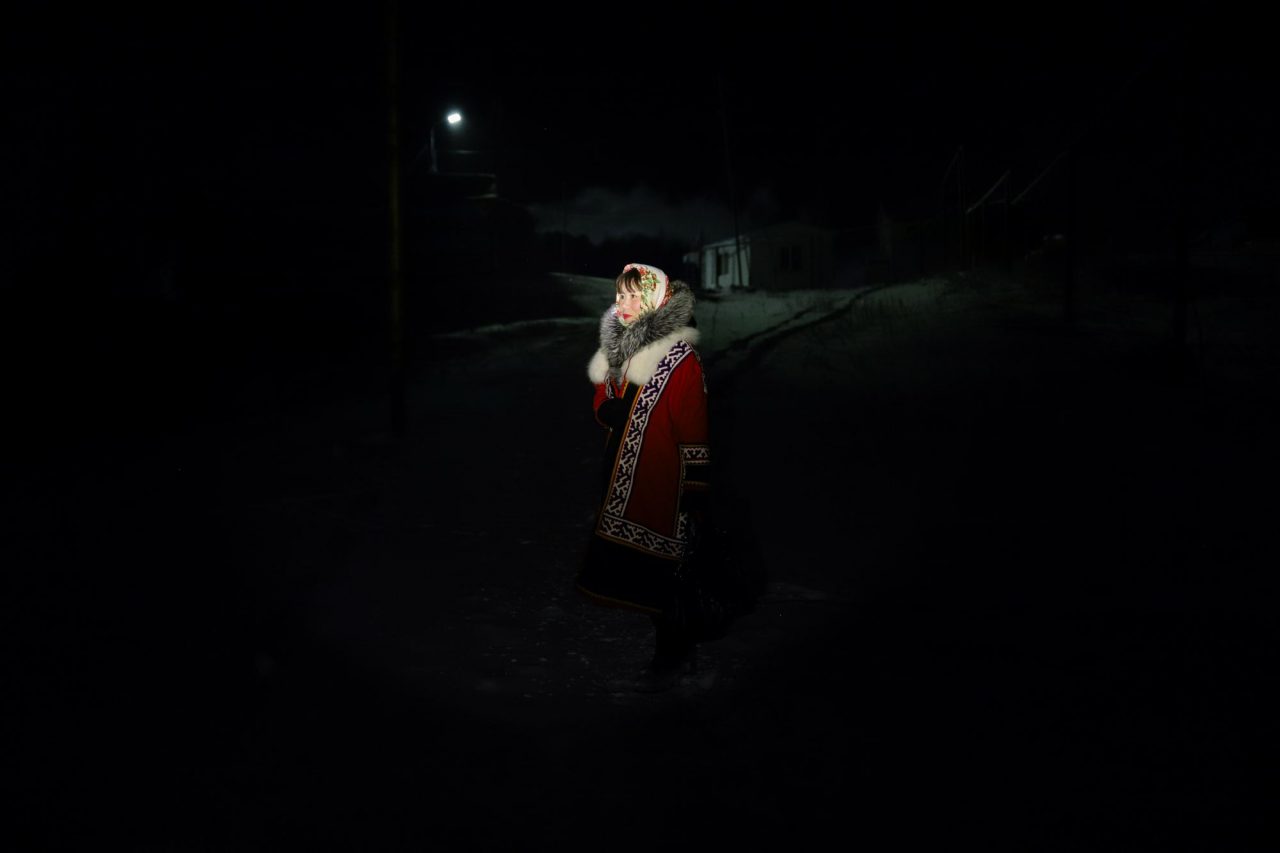 Елена возвращается домой через темный овраг из мастерской Фото: Мария Гельман/VII Agency для ТД
The same story with bird and fish. Из клювов куропаток Елена сошьет кукол. Рыбья кожа пойдет на украшение кисов или сумки. Кость оленя превратится в игольницу, которую повесят на сумочку. Из ключицы гуся Лена сделает ободок для игрушечной люльки. Сухожилия оленя пойдут на нитки и плетеные украшения.
Локоть лисы и заячьи уши
Свой первый стилизованный костюм Адер сшила в 2014 году. «У нас одна писательница носила пиджак обычный с традиционным орнаментом. Мне понравилось, я подумала: а если зашить костюм такой? И зашила черное пальто с орнаментом — изобразила на нем стойбище: чумики, оленей, людей — и сумочку. И сразу попала с ним на какой-то районный конкурс, не помню название. Тогда никто так не одевался, все удивлялись. Я зашила еще что-то, а в 2017 году мне сказали: “Придумай еще несколько костюмов — и поедем в Москву на фестиваль “Сокровища Севера”. Ну и с тех пор я и мои модели регулярно выходим на сцену в стилизованных костюмах».
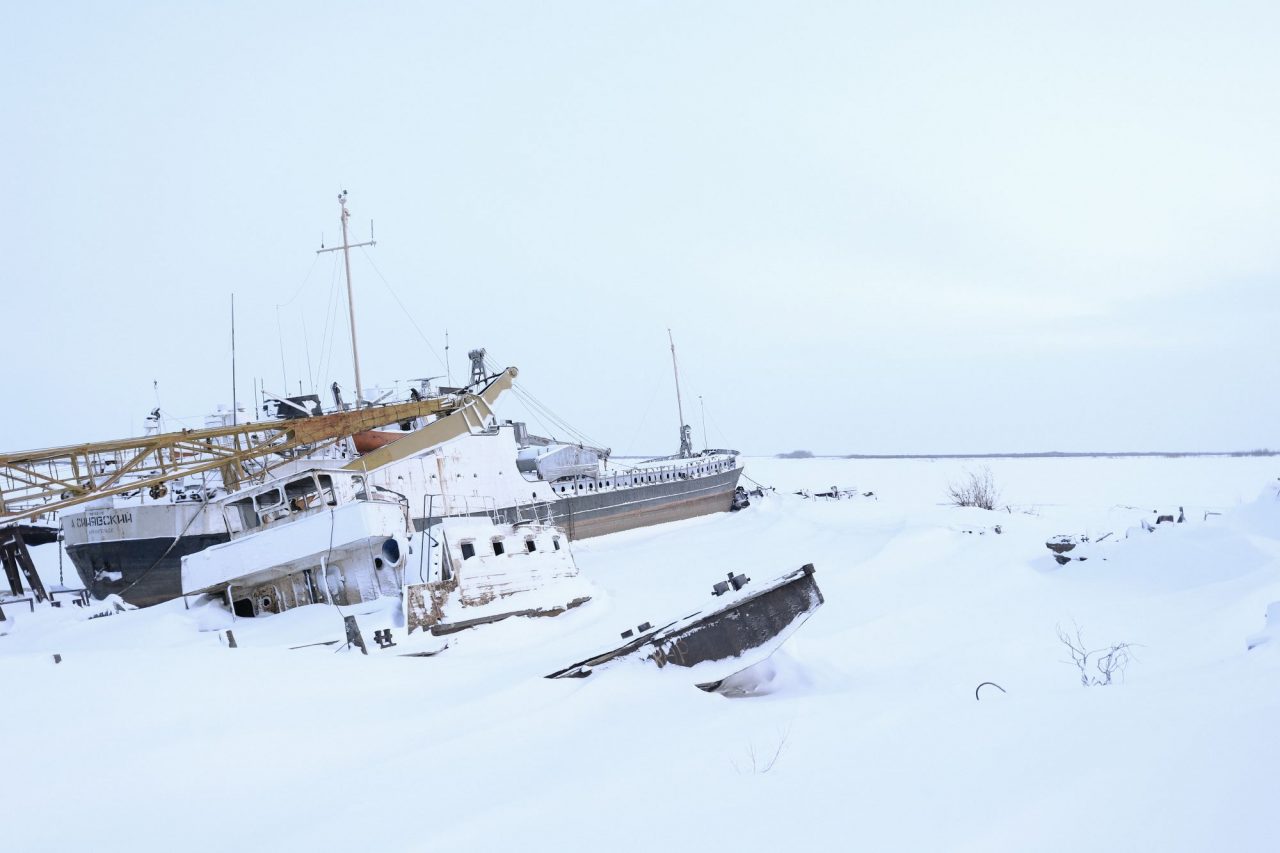 Заброшенные корабли на берегу реки Таз в поселке Тазовском, Ямало-Ненецкий автономный округ Фото: Мария Гельман/VII Agency для ТД
Истории с журналом Vogue Адер не придает большого значения. Елена участвовала в региональном конкурсе «Ямал — центр арктической моды». В числе приглашенных экспертов конкурса был итальянский фотограф Марко Д'Амико. Елена вышла в финал конкурса и продемонстрировала свою коллекцию одежды на итоговом дефиле-шоу, и Д'Амико отобрал одежду некоторых финалисток для фотосессии. Этим все и закончилось . Гораздо важнее для Адер было получить грант на свой первый проект по созданию ненецкой одежды.
Традиционный женский тундровый костюм шьется из сукна (на лето) и оленьего меха (на зиму). Больше всего меха (четыре шкуры плюс лапы на орнамент) уходит на ягушку. Самое ходовое сукно в тундре всегда было красное, это символ достатка. На манекенах в мастерской Адер висят наряды самых разных цветов. Наряд невесты — белый, традиционные мужские и женские сорочки — синие, голубые, зеленые. Но главное отличие ненецкого платья от любого другого — не цвет, а орнамент. Его можно читать как книгу.
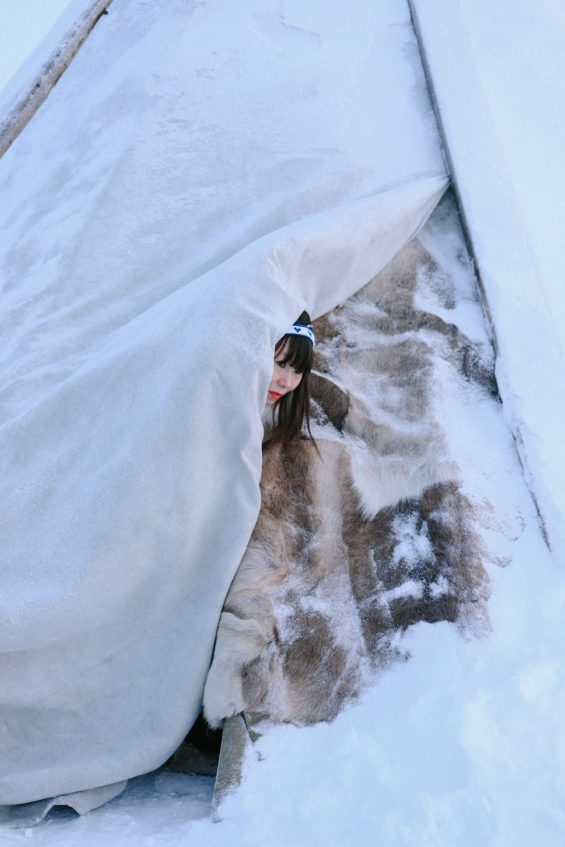
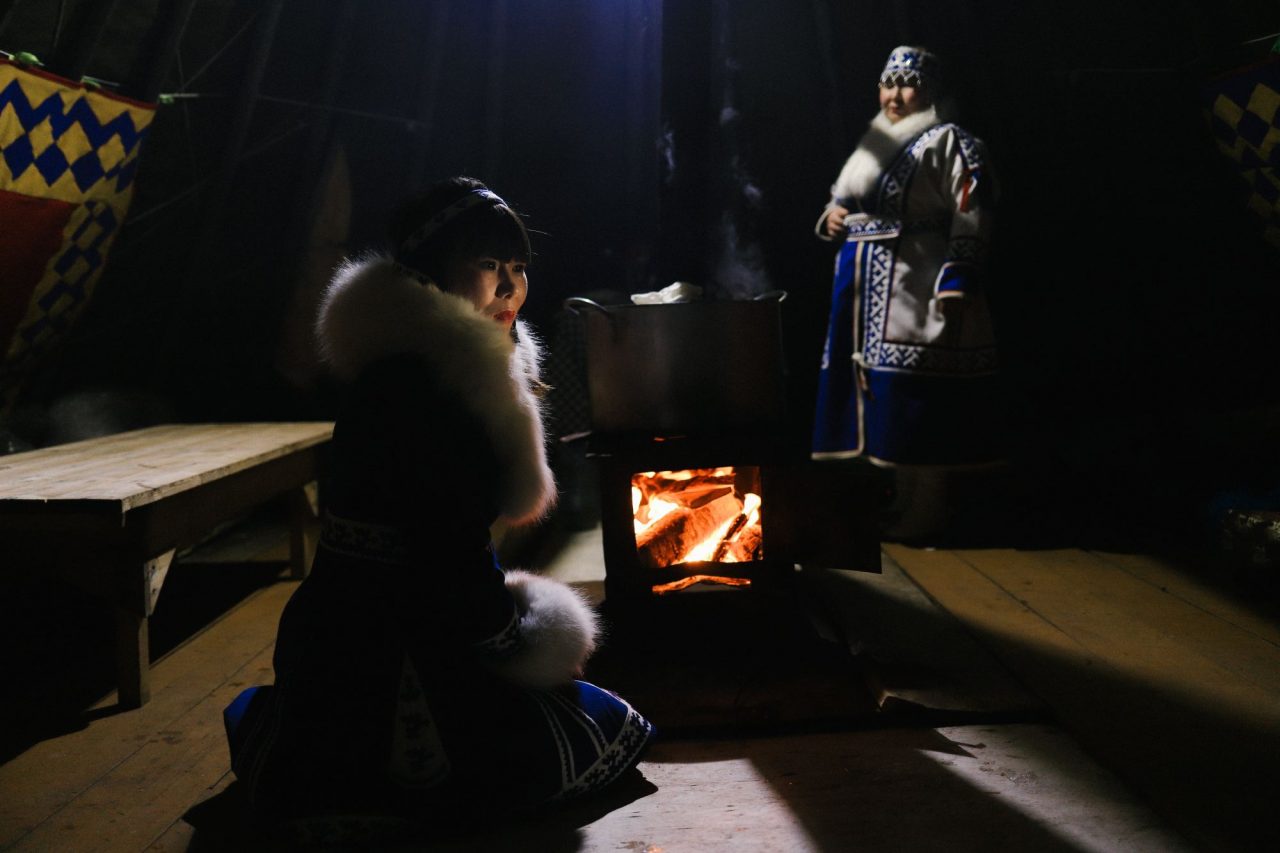 Елена и Лариса внутри чума во дворе Тазовского районного краеведческого музея Фото: Мария Гельман/VII Agency для ТД
Для человека из тундры узоры на ненецком костюме — это символы, которые могут рассказать о носителе одежды. М ожно определить, чем занимается человек, говорит Елена, например, охотник он или рыбак. Основные орнаменты, которые использует Адер: рога оленя, рога лося, заячьи уши, хрящ осетра, локоть лисы, крылья гуся, рога лося, след медведя, мужские и женские половинки (символы, обозначающие мужчину и женщину), ветви березы, чумики, морошка. Орнамент — самый сложный элемент костюма, особенно если он из меха и сшит вручную. Полоски с орнаментом часто заказывают чумработницы, которые не могут сшить его сами.
«Одна полоска орнамента стоит 1,5 тысячи рублей, — говорит Елена. — Шесть полос закажут — уже зарплата. Сорочка мужская суконная стоит 20—25 тысяч. Женская ягушка с орнаментом — до 100 тысяч, бурки — 30 тысяч».
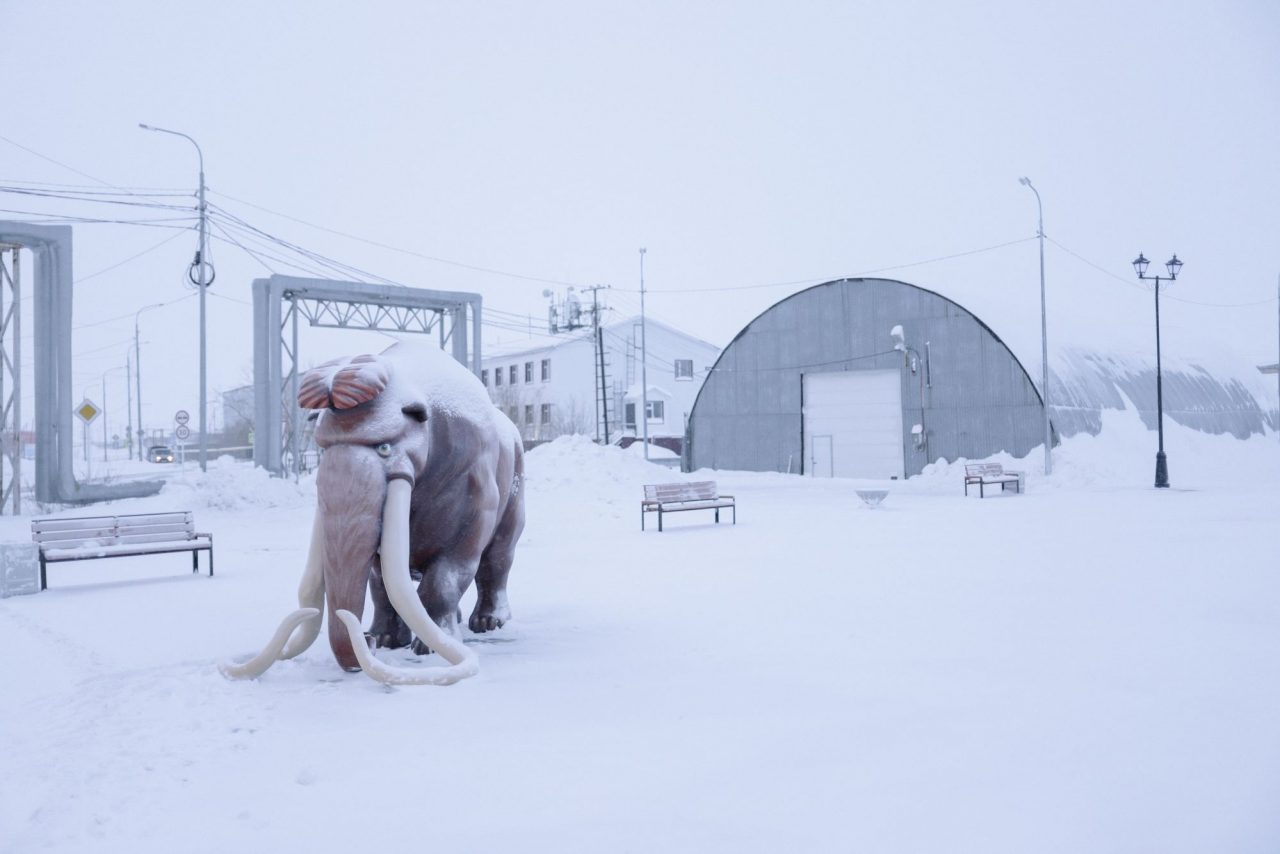 Поселок Тазовский, Ямало-Ненецкий автономный округ Фото: Мария Гельман/VII Agency для ТД
Одежду и обувь Елене заказывают со всего Ямала. И городские, и тундровые жители.
«Вот недавно мне заказали белые женские бурки 43 размера стопы и ляжки 48 сантиметров. У меня таких оленьих лап нет. Тут в пору лосиные лапы брать… Отдала в Гыду, там найдут такие лапы, зашьют».
На новые наряды Елену вдохновляет природа: «Иногда увидишь на снегу олений рог или следы — и сразу представляешь, каким будет следующий орнамент. А бывает, просто на оленей на стойбище смотришь и вдохновляешься… Наряд невесты я зашила, когда увидела лебедя, неподвижно сидящего на воде».
« Живут, пока работают »
В тундре у Елены осталась почти вся семья: отец, мать, братья. Родители Елены, как и многие другие, не хотят уезжать в поселок и трудятся в тундре до последнего. «Как только пожилые возвращаются из тундры в поселок, сразу у них болезней букет и чахнут. Потому что тундровые люди без дела сидеть не привыкли, они живут, пока работают».
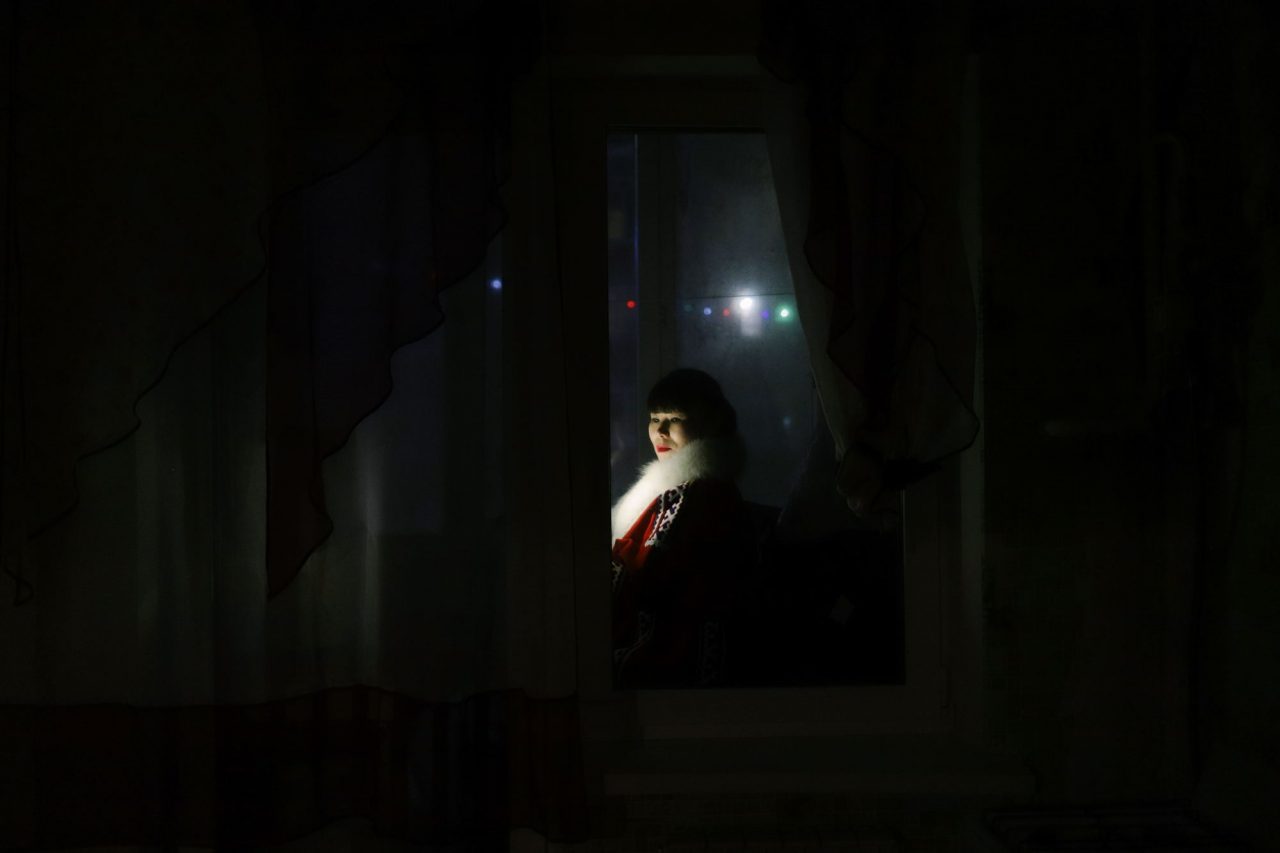 Елена в своей мастерской в поселке Тазовском Фото: Мария Гельман/VII Agency для ТД
Выбираться из Тазовского в Гыду трудно: или вертолет (дорого), или «буран» (долго). Поэтому Адер бывает дома только по большим праздникам — например, на Дне оленевода — или по делам. Но в подвале ее дома (он на сваях, поэтому подвал — это пространство между землей и основанием дома) хранятся нарты, чум и зимняя тундровая одежда. Устав от жизни в поселке, Елена заказывает грузовой автомобиль, грузит в него чум и прочее имущество и уезжает.
«Сейчас замуж в тундру я бы не пошла, — говорит Елена. — Меня устраивает моя жизнь. Я много работаю и в то же время занимаюсь любимым делом. Людям нравится то, что я делаю, и каждый день мне удается напоминать им о красоте нашей культуры. Это моя миссия — быть здесь. Но я могу отправиться в тундру в любое время!»
В тундре она ставит чум и живет в нем. Если весна, берет с собой капкан и лук и охотится. «Весной легко охотиться на куропаток. Я леплю куропатку из снега и ставлю подле капкан. Самец думает, что перед ним самка, бежит к ней — щелк! - I got. Как-то я сняла на видео, как сворачиваю куропатке шею, и показала его своим детям. А они сказали: “Мама, ты как бандит!” Они у меня современные уже. Дочке двенадцать, она иногда шьет, орнаменты вырезает, но ей это не сильно интересно. А сыну шестнадцать, он думает поступать либо на ветеринара, либо на дизайнера одежды. В тундру они жить, конечно, не поедут».
В сумочке у Адер всегда лежат два оберега. Показать она может только один — маленький камушек, который оказался в ее люльке сразу после рождения. «Камень этот нашел шаман. Сказал маме, что кто-то его положил туда и что это будет мой оберег. С тех пор я всегда ношу его с собой, перекладываю из сумочки в сумочку». Другой оберег Елене дала бабушка — его нельзя никому показывать, и даже сама Елена не знает, что это.
 Elena photo: Maria Gelman/VII Agency for TD
Наш последний разговор прерывает звонок телефона Адер. Какая-то этническая мелодия, отдаленно напоминающая вой волков. Елена отвечает по-ненецки, а потом поясняет, что всегда, при любых обстоятельствах говорит с людьми на родном языке.
«Для меня мой народ — это все. Мой язык, мой народ всегда во мне».
The material uses links to publications of social networks Instagram and Facebook, as well as their names are mentioned. These web resources belong to Meta Platforms Inc. - It is recognized in Russia as an extremist organization and is prohibited.
The material uses links to publications of social networks Instagram and Facebook, as well as their names are mentioned. These web resources belong to Meta Platforms Inc. - It is recognized in Russia as an extremist organization and is prohibited.
Заполярье россия такая работа тундра