
Translated material
Bloomberg: The United States is afraid to impose sanctions against Rosneft, so as not to cause chaos in the economy
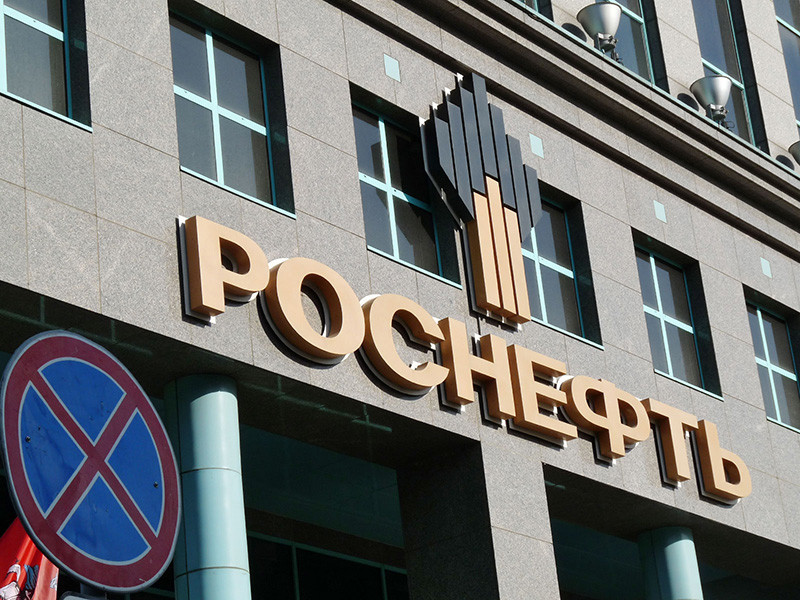
The United States is studying the possibility of imposing sanctions against Rosneft for work in Venezuela, but they are afraid that such a step will provoke chaos in the world market and a jump in oil prices, Bloomberg writes with reference to unnamed sources.
This scenario has already been implemented in the case of Rusal billionaire Oleg Deripaska, when in addition to the company itself, its customers around the world and the market as a whole suffered. And although the sanctions against Rusal did not fully enter into force, an increase in aluminum prices reached 20%.
Although tough American sanctions are in effect on Venezuela, the regime of President Nicholas Maduro continues to make a profit from oil trade. Raw oil accounts for 95% of Venezuelan exports.
Last year, direct sales of Venezuelan oil fell to a 34-year minimum due to American sanctions, although until that moment the United States was the largest trading partner of Karakas. But Russia, after imposing sanctions against Venezuela, became the second largest oil importer in the United States. According to the American authorities, in October 2019, oil and oil products export to the United States grew to 20.9 million barrels, which has become a maximum since November 2011.
Rosneft also became the main carrier of Venezuelan oil, which enters mainly at the refinery in India and China, says Bloomberg. Rosneft also led the Venezuelan state oil company PDVSA $ 6.5 billion.
In addition, in exchange for raw oil, Rosneft supplies gasoline and diesel fuel to Venezuela. Cheap energy helps Maduro to maintain power in a country suffering from inflation, a lack of food and a widespread humanitarian crisis. Gasoline is so cheap that Venezuela can fill the fuel tank by paying less than $ 1.
The possibility of introducing American sanctions against Rosneft was commented by the Russian Foreign Minister Sergei Lavrov at a press conference following a visit to Mexico. "I heard the next threats from Washington - to punish everyone who cooperates with Venezuela in one way or another. We are already used to it. We are also used to the fact that, without embarrassment, American officials say:“ Yes, Washington is committed to the doctrine of Monroe. And the Monroe doctrine should be implemented, ”he said. TASS gives the words of Lavrov.
“If Latin American countries feel comfortable with such guardianship, then this is your sovereign right,” the Minister Lavrov added. “I think that it is offensive to all Latin America countries, no matter what position they take on Venezuela or any other international problem.”
Recall that in the doctrine of the Fifth President of the United States James Monroe, published in 1823, the principle of US foreign policy was formulated. Washington refused to intervene in the affairs of European states, but warned that attempts to intervene in the affairs of the former colonies in America would be regarded as a violation of US life interests.
The situation in Venezuela, experiencing the most difficult economic crisis, worsened after in January 2019 the leader of the local opposition Juan Guydo, whose appointment to the post of speaker of the parliament previously annulled the Supreme Court, declared himself the acting president. He was recognized as a temporary head of state about 60 countries, including the United States. After these events, Washington, considering Nicholas Maduro an illegitimate dictator, imposed sanctions against the Venezuela oil sector and forbade American oil companies to work in the country.
In September 2019, Venezuela Special Representative Elliot Abrams stated that Washington does not exclude the possibility of imposing sanctions against Rosneft due to an increase in oil trade from Venezuela. Subsequently, Abrams, like other American officials, repeated critical statements addressed to Russia for cooperation with Venezuela in the field of energy, Interfax reports.
This week, after the US President Donald Trump, in an appeal to the nation, promised to “crush the tyranny” Maduro, Robert O'Brian, the American authorities intended to consider the issue of imposing sanctions in connection with the activities of Rosneft in Venezuens in the coming weeks.
"We intend to consider this issue very carefully in the coming weeks ... Probably, the United States in the near future will take measures for this problem," O'Brian said.
Rosneft previously explained that deliveries within the prepaid (before the imposition of sanctions) contracts do not violate the sanctions regime and are allowed by the American authorities. Any attempts to limit Rosneft in the return of investment in Venezuela are unlawful, the company reserves the right to defend itself, the company said.
"The threats of imposing sanctions against the company or its structural divisions and the simultaneous presence of a number of general licenses that allow American parties to continue to carry out some activities with PDVSA, including within the framework of existing debts or within the framework of joint ventures, can be regarded from the American authorities as unfair competition aimed at gaining advantages by American companies in the global oil market". - noted Rosneft.
In the November presentation of Rosneft, it was said that in the third quarter Venezuelan PDVSA reduced the debt to the company to $ 800 million. At the beginning of 2019, Venezuela's debt amounted to $ 2.3 billion, at the end of the first quarter of 2019 - $ 1.8 billion, at the end of the second quarter - $ 1.1 billion.