
Translated material
War of distortions of history
Russia and Latvia are arguing about the causes and consequences of World War II
Russia is actively preparing to celebrate the 75th anniversary of victory in the Second World War-including ideologically. President Putin set the tone, who in December gave a detailed historical lecture first to the leaders of the countries of the former USSR, and then at the College of the Ministry of Defense, in which Poland especially went - for participation in the Munich conspiracy, and for the "anti -Semitism" of the then ambassador of Poland in Berlin. In response, the diplomatic scandal, the return replicas of the Polish Prime Minister, the resolution of the Polish Sejm, condemning “unfair statements” from the Russian authorities, erupted.
Although Putin decided to focus precisely on Poland, it turned out not only to hurt her. The Baltic countries, including Latvia, reacted more actively to the Russian-Polish disputes. This is not surprising: there has been its own war for historical truth for a long time, where, on the one hand, the liberation of the Baltic countries by Soviet soldiers from the Nazis (as it is seen from Russia), on the other, the violent occupation and joining to the USSR began immediately after the “liberation” (as it is seen in Latvia).
"Recognize the occupation"
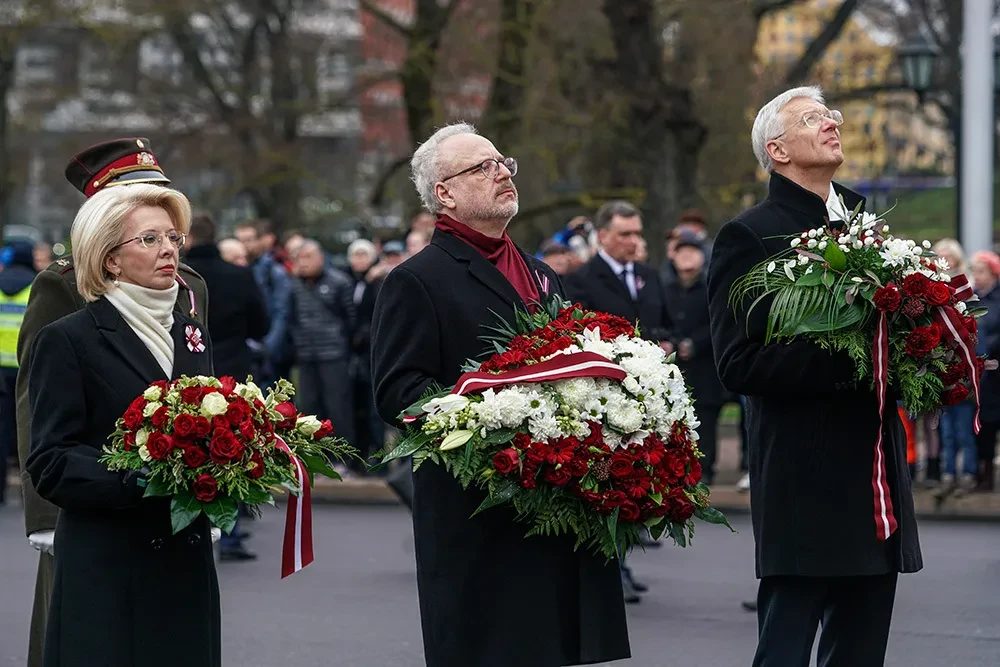
In mid -January, the Diet of Latvia adopted the resolution "On the inadmissibility of distortion of the history of the Second World War." The resolution does not offer any specific actions - except that the call to Russia "to recognize the fact of occupation and illegal annexation of Latvia and refrain from politically motivated distortion of history." The task of the document is to indicate the position of official Riga in this discussion.
“On August 23, 1939, two totalitarian regimes-the National Socialist Germany and the Soviet Union-agreed to divide central and eastern Europe into the spheres of interests in violation of international law and its international obligations, concluding an agreement on non-aggression between Germany and the USSR, the so-called Molotov Pact-Ribbentrop and its secret additional protocol, the most initiating World War I - The resolution says.
Then the crimes of the Soviet regime against Latvian citizens are listed: mass repressions, murders, arrests, deportation, and violent Russification.
Now, according to deputies, Russian politicians are trying to "revise historical assessments recognized at the international level, to justify the actions of the Soviet Union against sovereignty and the territorial integrity of other states." The authors of the resolution promise that Latvia will “continue to contribute to an objective explanation of history”, and call on the international community “to pay attention to the efforts of officials of the Russian Federation to rewrite the history of World War II”.
One war - two approaches
In fairness, this is not the first (and hardly last) document of this content. The position of Latvia in this matter is completely unambiguous: the territory of the state was forcibly occupied by the Soviet Union, which means that we cannot talk about any liberation. The problem is that politicians and only part (albeit significant) society argue in this way. The other is mainly Russian -speaking, many of which, after restoration of independence, received a rather unpleasant status of “non -citizens” - do not agree with such an interpretation. Therefore, for example, in Latvia the end of World War II is still celebrated twice: on May 8, when the president performs, Latvian flags are posted and official commemorative ceremonies are held in the center of Riga, and on May 9, when Riga’s liberators remaining from the Soviet era with the Immortal Regiment with St. George ribbons and Russian flags. On May 9, the main Latvian politicians traditionally ignore, with the exception of Neil Ushakov, until recently - the mayor of Riga, now the Eurod.. But his role is understandable: Ushakov is the leader of “consent”, a party based on a Russian -speaking electorate.
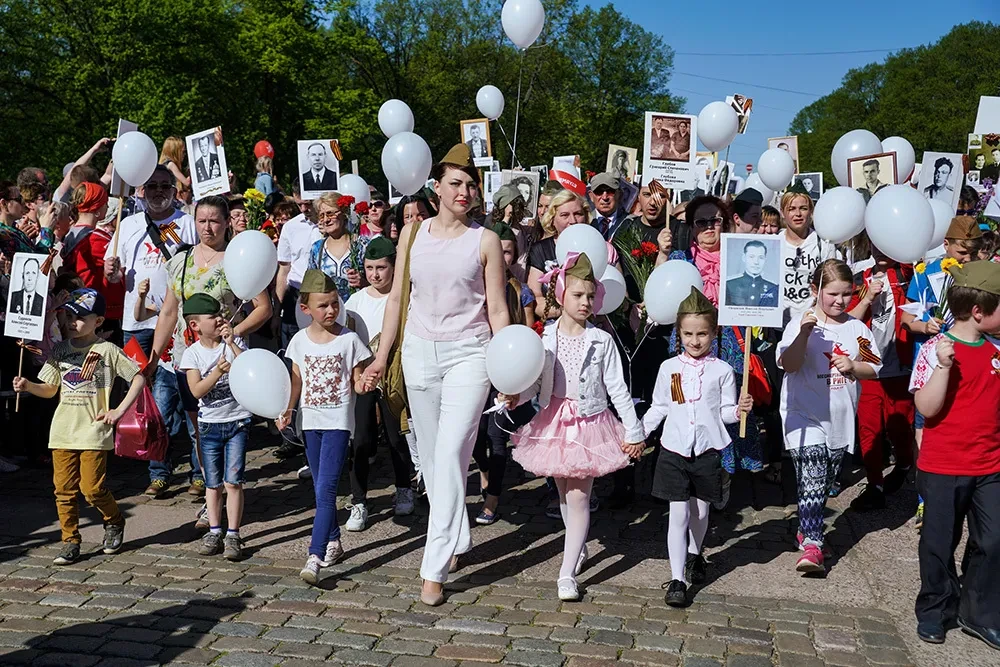
According to the Latvian historian Yuris Tsiganov, the deputy director of the Military Museum of Latvia, such a split is inevitable. “We have two parts of society that have a different historical memory,” he says. - For a large part of the Latvian society on May 9, this is an unacceptable date. And those who celebrate May 9 do not know what is May 8, because in the USSR on May 8 it has never been emphasized - and these people live in the post -Soviet space. ”
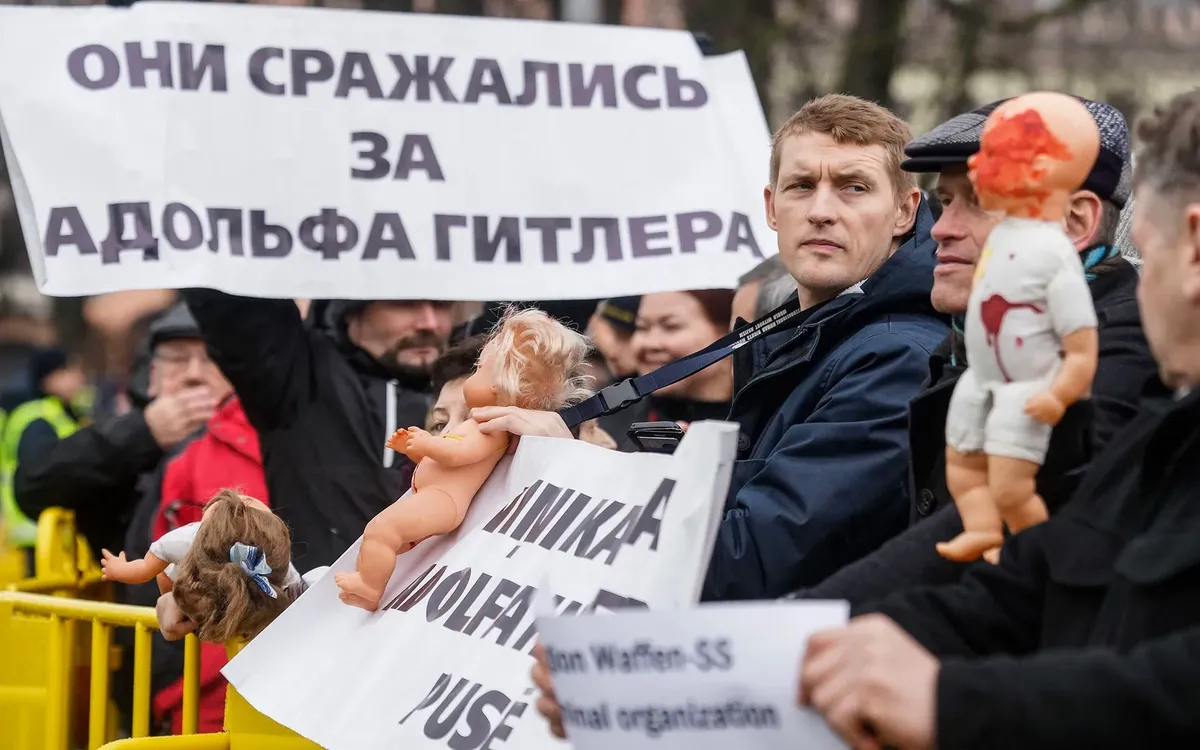
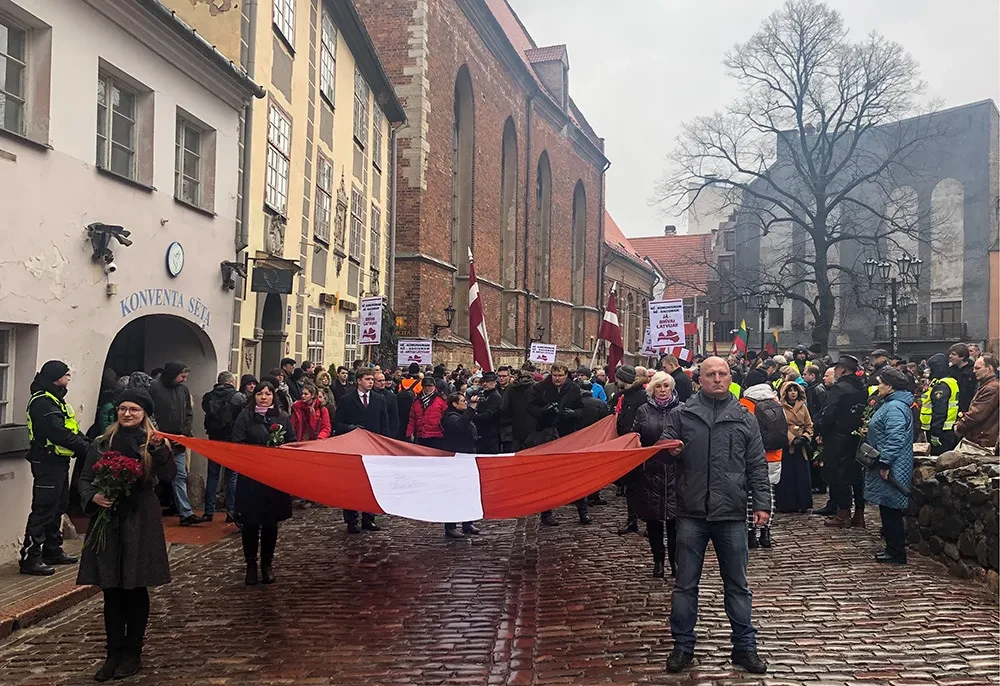
May 9 is not the only controversial date in Latvian history. No less disagreements are caused by March 16-an unofficial day of memory of Latvian legionnaires, that is, those who fought as part of the two Latvian divisions “Waffen-SS” during the war years. As a rule, on this day the former legionnaires themselves, and more often - their children and grandchildren - gather in the city center and a procession reach the monument of freedom, the main symbol of the Latvian Republic. A couple of thousand participants gather crowds of journalists. What is not surprising:
It is unlikely that somewhere else in Europe an event is taking place, albeit unofficial, the memory of those who fought on the side of fascist Germany.
Latvian historians say: they say, everything is not so clear. Firstly, about 90% of the legionnaires were mobilized forcibly, disobedience was punished first by conclusion, and then even death. Secondly, the choice was small: the German occupation was replaced by Sovetskaya and was not much worse.
But there are many nuances, and, perhaps, the main one is the Holocaust. Initially, only those who were part of the military divisions were called legionnaires - that is, they fought on the side of the Third Reich, but did not participate in the destruction of the Jews. In 1943, Himmler gave a new definition to the legionnaires, including security units, and, for example, Araice’s team, known for the mass executions of Jews. The European Commission for Combating Racism and intolerance has long been concerned about this event. Nevertheless, every time it passes - to the inconvenience of the official authorities and the joy of Russian television channels.
What are historians fight for?
Juris Tsiganov agrees that now there is a new round of war for historical truth. However, this war itself is not new. “History since ancient times was the object of political speculation,” he notes. “Through the historical truth or lie, the states tried to achieve specific goals.” Tsiganov admits that Latvia, like the neighboring Baltic republics, to withstand this struggle at the same level with Russia is difficult - the resources are not the same, it is difficult to “compare with the propaganda machine”, which is entirely oriented towards “restoration of former greatness”.
According to the historian, in any country - including Latvia - it is necessary to share academic history and “historical political science”. Academic historians are engaged in their business, study documents,
Sometimes the results of their research are used by the state - as an actual base for its declarations.
Sometimes a state order comes to - when you need to investigate a particular topic. Here the interests, as a rule, coincide: the state receives data analyzed by specialists, historians - financing for their research.
So, for example, back in 2005, a commission for the study of damage from the Soviet occupation was created under the patronage of the Ministry of Justice. The head of the commission Edmund Stankevich describes her work: “We have several areas. Historical: We study documents and collect information of that era, make interviews with people. Economic: We consider the losses that arose due to occupation, direct and indirect. We publish books on this topic. "
In 2016, the commission calculated that the damage caused to Latvia by the Soviet occupation is 185 million euros in monetary terms. In Russia, in response, they twisted a finger at the temple: Latvia during the years of the USSR was one of the subsidized republics, where money from the All -Union budget was actively poured.
Stankevich, based on data from the archives, argues with these arguments. Firstly, he says, part of the money came in the form of subsidies, but then went back in the form of taxes. Secondly, huge amounts were spent on the maintenance of the KGB and other security services that were not needed by independent Latvia. Thirdly, it is necessary to take into account the “lost profits”-if Latvia were not forcibly included in the USSR, it could well follow the economic path of the same Scandinavian countries. And most importantly - human losses: repression and deportation. This is a separate part of the work that has not yet been completed - according to historical documents to recreate the database of repressed, in which all the victims of the Soviet regime would be listed by name.