
Translated material
Scientists have completed the largest project for cartography of the tracks leading to cancer
Mutation signatures, harmful rejuvenation and DNA salad
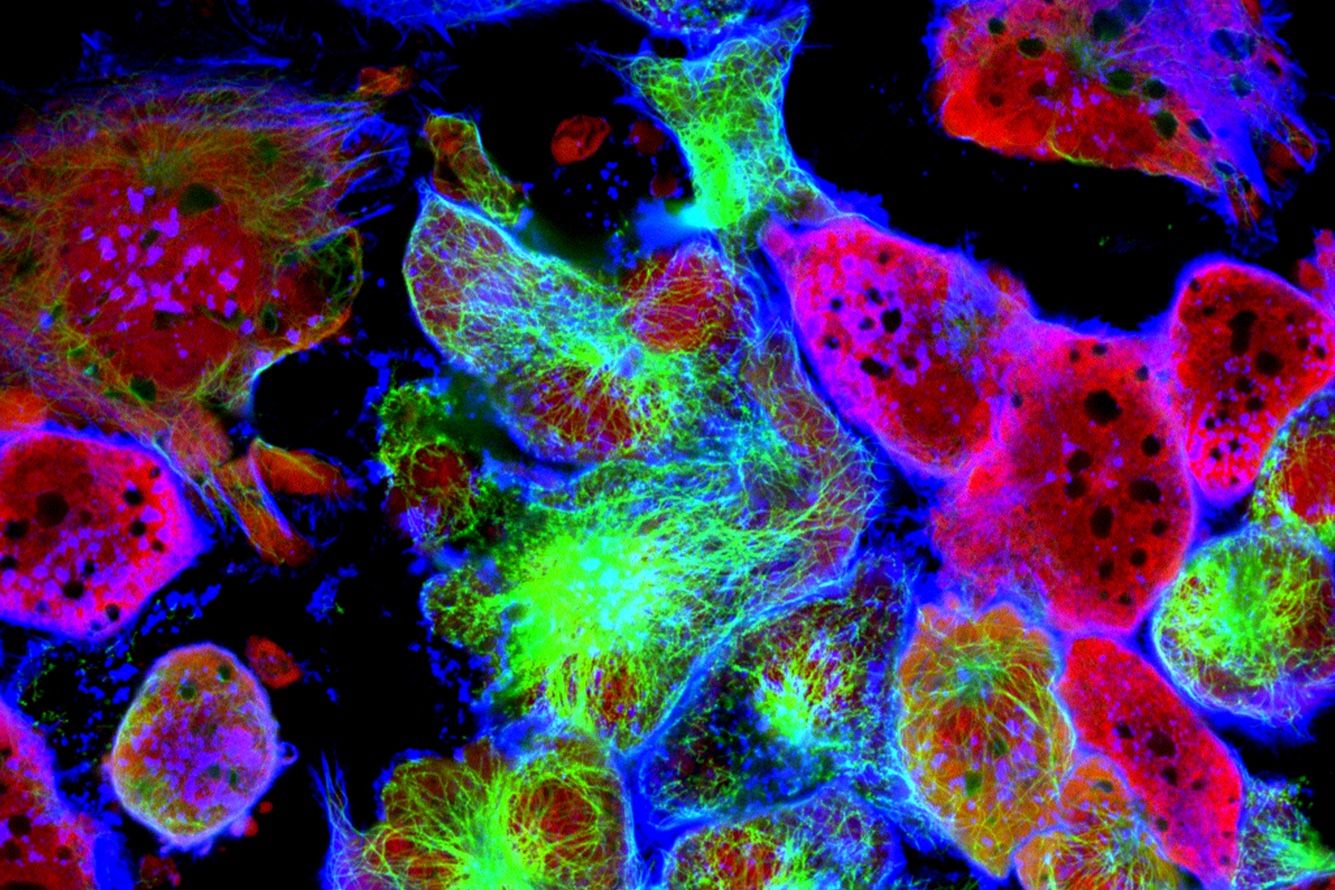
In early February, the large international project Pan-Cancer Analysis of Whole Genomes (PCAWG) for the collection and analysis of cancer tumors ended . Thanks to the cooperation of scientists from four continents of 744 research institutions, it was possible to make a detailed analysis of more than 2600 tumor samples of 38 types of fabrics. The project does not promise a universal medicine for cancer and gives rise to new questions about the mechanisms with which the disease annually takes away millions of human lives. But scientists believe that it will allow you to bring the knowledge of mankind about cancer genetics to a fundamentally new level, and, therefore, will make it closer to victory over the disease.
I had to study thousands of samples of tumors, taken from different people. Otherwise you can not figure out how cancer works
The totality of cancer is the second cause of mortality in the world; About 8 million people die annually from cancer, and, according to some forecasts, this number will increase by 50% in the next couple of decades. Despite the fact that on conducting studies related to cancer, according to various estimates, up to 90% of the total financing of biological and medical sciences in the world, clarifying the causes of the emergence and development of many types of cancer, as well as the development of methods for their effective diagnosis and treatment, is still unattainable. The answer to the question why this happens is in the very nature of cancer.
A cancer tumor, in essence, is an immortal, capable of uncontrolled propagation, protected from the impact of immunity by an independent system; Moreover, it can come to such a state in a variety of ways. There is no single universal way of developing tumors, which could be easily tracked and “blocked”. Therefore, the hope of winning this disease completely lies not in the sudden insight and selection of one brilliant concept, but in the most large -scale and at the same time detailed study of all possible types of tumors that arise, develop, react to successful or unsuccessful treatment, manifest themselves a second time and so on.
At the moment, one of the largest platforms devoted to the collection and analysis of all kinds of cancer data is the program of The Cancer Genome Atlas (TCGA), which arose in 2006. It provides more than 2.5 petabytes of data that is in the public domain for analyzing them by scientists around the world. In addition to TCGA, the Consortium International Cancer Genome Consortium (ICGC) is engaged in such studies at the global level.
Both of these platforms (TCGA and ICGC) are the main participants in the Pan-Cancer Analysis of Whole Genomes (PCAWG) project. In the title of this project, which translates as “pan-rack full-genomic analysis”, the “pan” particle implies that a wide range of genomes is analyzed. Traditionally, the term “Pangen” refers to bacteria, because inside one of them even the number of genes in genomes of different representatives can vary greatly. The totality of all genes in all famous representatives of some species or genus is called Pangenom. In the case of bacteria, the number of genes in the Pangenom and inside the genome of one individual may differ by an order of magnitude - it becomes clear here that you will not receive a complete picture, having read the genome of only one individual. In the highest organisms, in particular, animals, this, as a rule, does not happen. Two different people with a huge degree of probability will have the same number of genes, although these genes themselves, of course, will have differences.
Nevertheless, the authors of the project considered the variety of all kinds of genetic characteristics of cancer tumors so significant that they called their project “pan-Rakov”. In total, within the framework of PCAWG, 2658 cancer tumors were read, and a “control” sample was also read to each of them, that is, an example of a healthy fabric of the same person.
They studied not only genes, but also that part of the genome that was previously considered “garbage”. DNA intergenery also affect the development of cancer
Unlike many other projects, PCAWG participants analyzed not only genes, but the entire genome, including intergene spaces, which in humans make up at least 98% of the genome, but the functions and structure of which are still not clearly clear enough.
Although the human genome was read almost twenty years ago, knowledge of the sequence of “letters” does not mean an understanding of what is recorded in it. In the human genome, about three billion “letters”. About 1-2% of them belong to the genes, that is, proteins are encoded-these are about twenty thousand genes, each of which consists of tens of thousands of “letters”. In the spaces between the genes there are all kinds of regulatory areas necessary for the proper coordination of genes, as well as, for example, many “mobile elements”, which, in the first glance, seem either garbage or parasitic objects like viruses that use our genome as a platform for their own reproduction and distribution.
However, recently, it has become more and more clear that “just garbage” in DNA, apparently, is almost gone, and even the notorious mobile elements play in the evolution and in the life of their owners many different roles. It was they who caused the occurrence of, for example, the mechanisms of acquired immunity in mammals. Recent studies have shown that in the brain they, apparently, participate in cognitive processes and the formation of memory throughout human life. In addition, new buildings of active mobile elements sometimes cause cancer.
People still do not know a lot about both intergeneous spaces and the functions and methods of the interaction of genes. Obtaining new data on sequences of genomes, RNA or proteins in certain cells does not imply automatically understanding what exactly we observe. But it is precisely the large-scale comparison of the data from people who are known that allows you to get an increasingly complete picture of human genetics and the causes of his diseases. Therefore, not only data from samples of tumors were collected, but also about patients from whom these samples were obtained.
In addition, 1,188 cancer transcripts were also analyzed - RNA aggregates in cells; The RNA study allows us to understand which areas of DNA in this sample are expressed, that is, they “work” and which are not.
Naturally, such projects imply titanic work, both in laboratories and in the framework of computer processing of the data obtained, that is, the “bioinformatic” part. We are talking about hundreds of data on data and complex algorithms on cloud servers, which are usually called "fees" (due to similarity with pipe fastened into a row, through which data "drive away" data). After bioinformatic processing, it is often necessary to return to the laboratory part - after all, the mutation found using a computer analysis of the mutation, for example, must be confirmed experimentally.
Scientists have found many mechanisms of the emergence and development of tumors - up to genomic disasters that make Salad from DNA
In the February issue of Nature magazine, seven articles were published regarding the PCAWG project.
Genomic disasters
The first is a general review of the data obtained during the project. Scientists report that on average, each cancerous genome contains 4-5 “drive” mutations that give cells a selective advantage and allow tumors to develop inside the body. Of all the studied tumors, only 5% did not contain identified mutations of this type.
Moreover, many types of cancer demonstrate the manifestation of “genomic disasters”: not a few mutations appear in the cells, but a whole avalanche of genomic restructuring. Disasters occur as a result of multiple ruptures of DNA chains in one or more chromosomes and subsequent random stimulations (these events are called chromomplexia or chromotripsis, depending on the nature and scale of the restructuring). After that, the DNA chain inside the chromosome can resemble a salad chopped from random pieces previously in a slender order. The scale of such phenomena became clear recently, because earlier the sensitivity of DNA analysis methods did not allow this “salad” to consider correctly - scientists worked with too small pieces of DNA or with their insufficient amount, and therefore could not fully track the degree of mixing them.
PCAWG project participants report cases of chromomplexia and chromotripsis in 18-22% of cancer samples; In the case of aral melanoma, for example, it is claimed that they precede the appearance of any other cancer mutations, and may be the original cause of the tumors.
Recipe for cellular immortality
Another article is devoted to the non -leading areas of the genome. The authors managed to identify new, previously unknown DNA sections, structural changes in which can cause the appearance of tumors. So, for example, the frequent appearance of mutations in the cancerous samples in a non -dodging area belonging to the TERT gene, which leads to an excessive increase in the work of this gene - an increase in the production of the telomerase enzyme.
Telomerase is known as the key to “cellular immortality”, since it is necessary for increasing new pieces of DNA to the ends of the chromosomes, which are shortened with each cell division. In mice, for example, telomerazes work all their lives, but in humans, most cells do not produce it in adulthood, so there are many research projects related to aging.
You can’t just “turn on” everywhere Telomerase and find “good” immortality. The fact is that the activation of telomerase turns off important signals in human cells regarding the programmed cell death necessary in the case, for example, when the cell already has a number of mutations and risks turning into a cancer. As a result, the “dangerous” cell survives without committing cell suicide (apoptosis), as it was supposed to be. In essence, this is how often happens in cancerous tumors - telomerase is activated as a result of a structural change in DNA, the cell becomes immortal (not subjected to apoptosis, although its genome continues to be unstable). When some additional mutations appear, the mechanism of its uncontrolled division is launched and it turns into a real cancer cell.
Mutation signatures and cancer watches
This area of DNA modifications has arisen relatively recently. In the case when mutations are found in the DNA-for example, some of its “letters” are replaced by others compared to control “healthy” cells, you can study not only which letters have undergone changes, but also what surrounded this happened, that is, what their closest letters are, and whether there were any laws in this sequence. If the pattern is found, this can allow you to understand what served as the initial cause of degeneration: errors in the DNA replication system, the effect of genotoxins (for example, tobacco or ultraviolet radiation), etc. These letter contexts are called signatures; Different signatures are associated with different types of cancer.
In the new work, it was possible to identify and describe 97 different signatures, and for the first time, signatures related to large rearrangements of DNA (CNV) sections were described, and not only with the nearest several neighbors mutating the “letters”.
Another study was devoted to the "molecular watch" of the tumors. Scientists have developed a technique that allows you to evaluate when and in what sequence mutations arose in this particular tumor - this information is very important for understanding how malignant degeneration of cells occurs.
One of the authors of the work, the head of the group at the Brude Institute Ignatius Leshchiner described the essence of the method: “In short, the“ Timing ”is based on the reconstruction of the procedure for the occurrence of mutations recorded in the genome: when part of the chromosomes are amplified, mutations that appeared until the amplification are duplicated, and those that appeared after are fixed on only one copy. Knowing this, you can evaluate when exactly each of the amplifies occurred in time - this allows you to look many years ago in the history of the development of a particular tumor. ”
Such a study, in particular, allows us to understand what mutational “trajectories” are in tumor cells, that is, according to which scenario, the accumulation of mutations that lead the clones to predominant or, conversely, inexperienced positions can go. It turned out, in particular, that the drivership, the most important mutations, usually occur in the early stages of the emergence of a tumor - this sometimes means that the mutation in human cells that are necessary for the occurrence of cancer can appear over the years before they have a corresponding diagnosis.
With the help of the same analysis, it also turned out that mutation signatures in cancer cells with the development of a tumor often (at least 40% of cases) change. The contribution of the influence of external factors on the already existing tumor was, in particular, overestimated, and the contribution of violation of the repair systems (reparation) of DNA is underestimated.
Driven genes
In a study regarding 1188 transcriptomes - the analysis of the composition of the “working” DNA sections from which RNA is read - scientists tried to find out the contribution of mutations to the work of genes. They found that the main factor that significantly affects the expression of genes in the cell is large structural DNA modifications (CNV). However, smaller mutations were also found, first described and turned out to be significant for cancer. They lead, for example, to the fact that the non -leading section of the DNA turned into part of the gene and this “spoiled” its sequence; In other cases, two genes could, for example, “glue” with each other and also change their functions, participating in the development of the tumor.
87 samples are separately noted in which no mutations were found at the level of the genome, and changes were revealed at the RNA level that led to the emergence of cancer.
Mobile elements
A special project was devoted to the study of genetic mobile elements that occupy at least 50% of the human genome. Some of them are capable of “movement” inside the genome; For example, active representatives of the Line1 family are able to read their own DNA sequence and copy it into new locations. In ordinary cells, these abilities are suppressed, but sometimes “blocks” can be removed - for example, in certain phases of cell reproduction.
It is known that the new buildings of mobile elements can lead to a violation of the work of oncopressors or to activate the operation of oncogenes, and ultimately serve as the cause of the development of tumors. The work showed that new buildings are found at least 35% of cancer, and that their role is particularly significant in the appearance of structural changes in DNA with the development of the esophagus adenocarcin, cancer formations of the head and neck (Head and Neck Cancer) and Coloretic Cancers.
The accumulation of data gives rise to many new questions. But there are no other ways to win cancer
In general, a huge amount of data is a new stage in the understanding of processes associated with the emergence, development, diagnosis and methods of cancer treatment. On the other hand, a larger amount of data gives rise to new questions. The feeling does not leave that the more you dig, the more various mechanisms are detected, allowing cancer to take away millions of lives annually. The number of these mechanisms is sometimes doubtful of the possibilities of modern science.
However, the way of struggle against ignorance, as before, is only one is to obtain new knowledge. And that is why scientists are not going to stop there. Hundreds of new articles appear every month; Methods of treatment, which before have not been completely, appear more and more. So in large -scale projects of the PCAWG type, there really is people's hope of understanding and defeating cancer.
Anna treasure