
Translated material
The GENT OPEN OF YAN VAN EIK, the largest collection of his works in history
We tell you why this is one of the main artistic events of the year
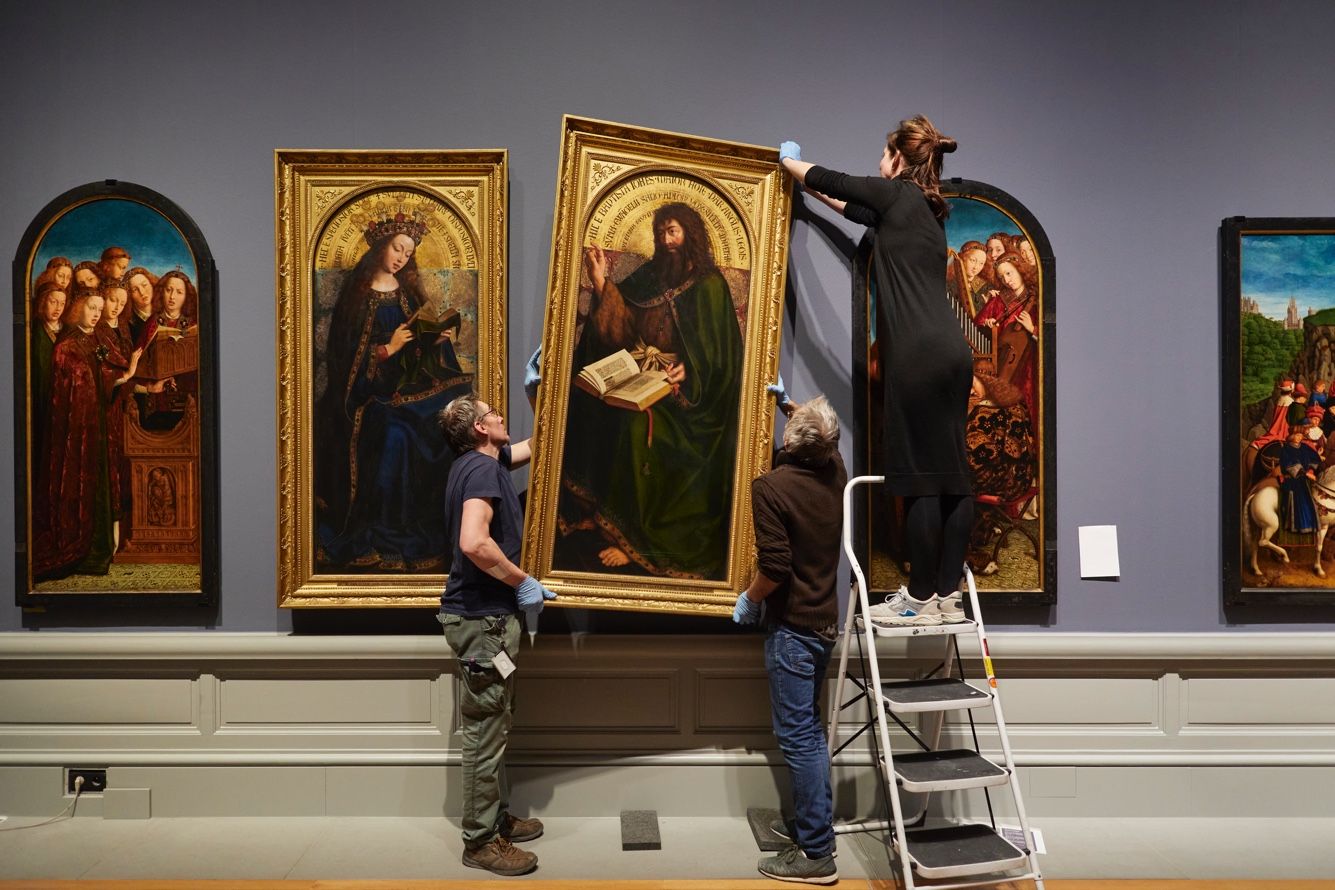
The exhibition “Jan van Eik was opened in the Museum of Gena's Fine Arts. The optical revolution ”(lasts until April 30, 2020) - and this is one of the main events of the year in the art world. For the first time in history, so many works of an artist of the 15th century were exhibited in one place - almost half of all the paintings preserved to this day. We tell you what the uniqueness of this exhibition is.
The exhibition of Yana Van Eyka in the Genth Museum of Elegant Arts (curator Johan de Family) is the largest collection of works by the Flemish artist ever shown to the general public. The exposition included 11 paintings by Van Eike himself (approximately half of his paintings preserved to this day), several paintings from his workshop written by students, copies of his missing paintings and 100 works of the late Middle Ages created by various European authors. Museums of Austria, Belgium, Germany, Spain, Italy, Romania, Great Britain and the USA were provided for the exhibition.
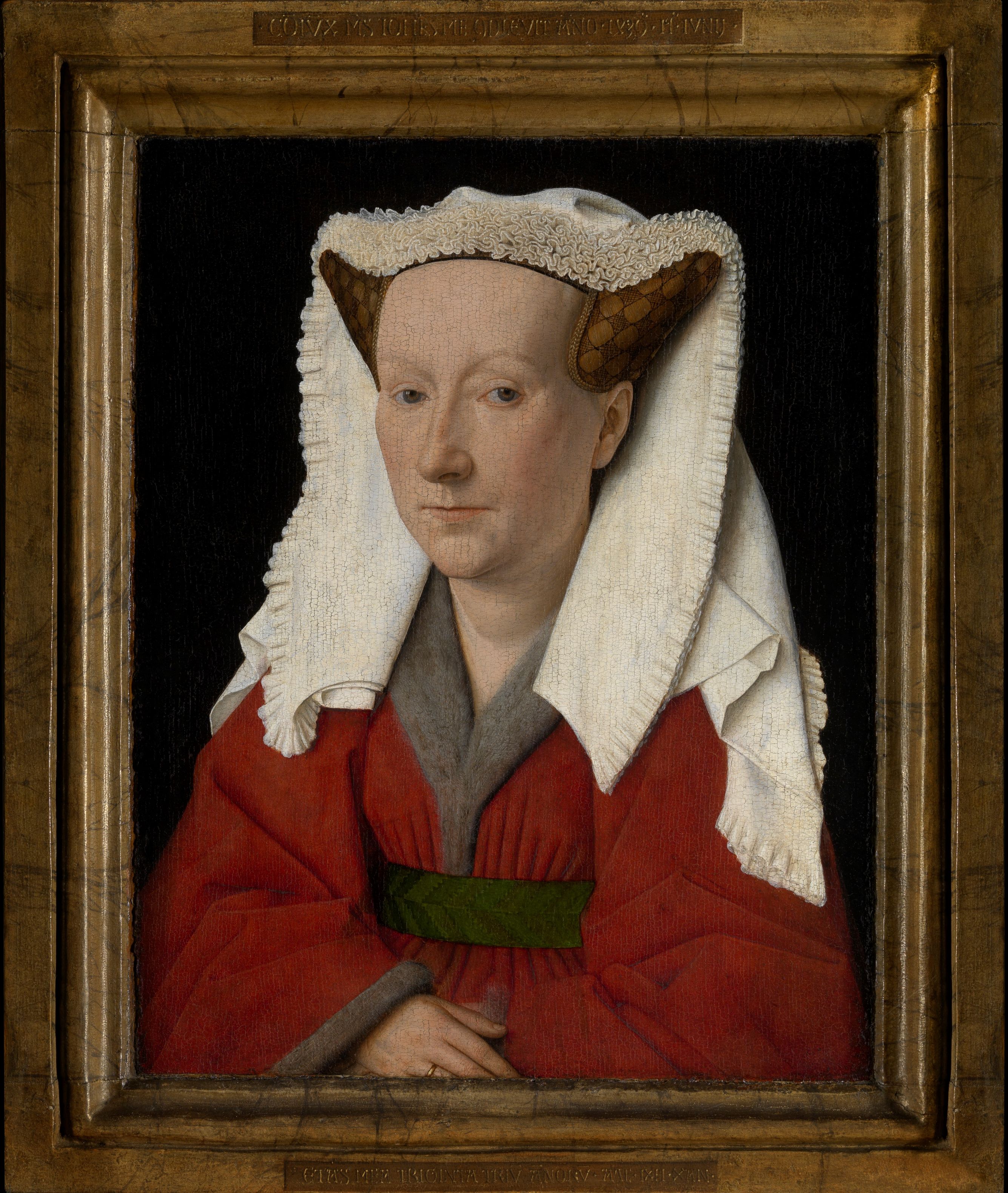
Some of the most famous paintings by Van Eike, “Portrait of the Arnolfini couple” and “Portrait of a man in the Red Tourban” (presumably a self -portrait of an artist) from the London National Gallery, as well as “Madonna Chancellor Rolen” from Louvre to Gent - the canvases are too fragile and may not withstand transportation.
Among other works by Van Ayk in the exposition, you can see his only picture that was once in Russia-this is the "Annunciation" from the National Art Gallery in Washington. In 1850, Nicholas I bought it from the King of the Netherlands Wilhelm III. Then she got into the Hermitage, where she was transferred from boards to canvas. In 1930, the picture was sold to the American philanthropist and collector Andrew Mellon for 502 thousand dollars.
Van Eyka paintings that can be seen at the exhibition in the Gene
List of Van Eyka's paintings from the exhibition in the gent:
- Jan and Hubert Van Eike, Genth Altar or “worship of the mystical lamb”, 1432 (external panels), St. Bavona Cathedral, Gent
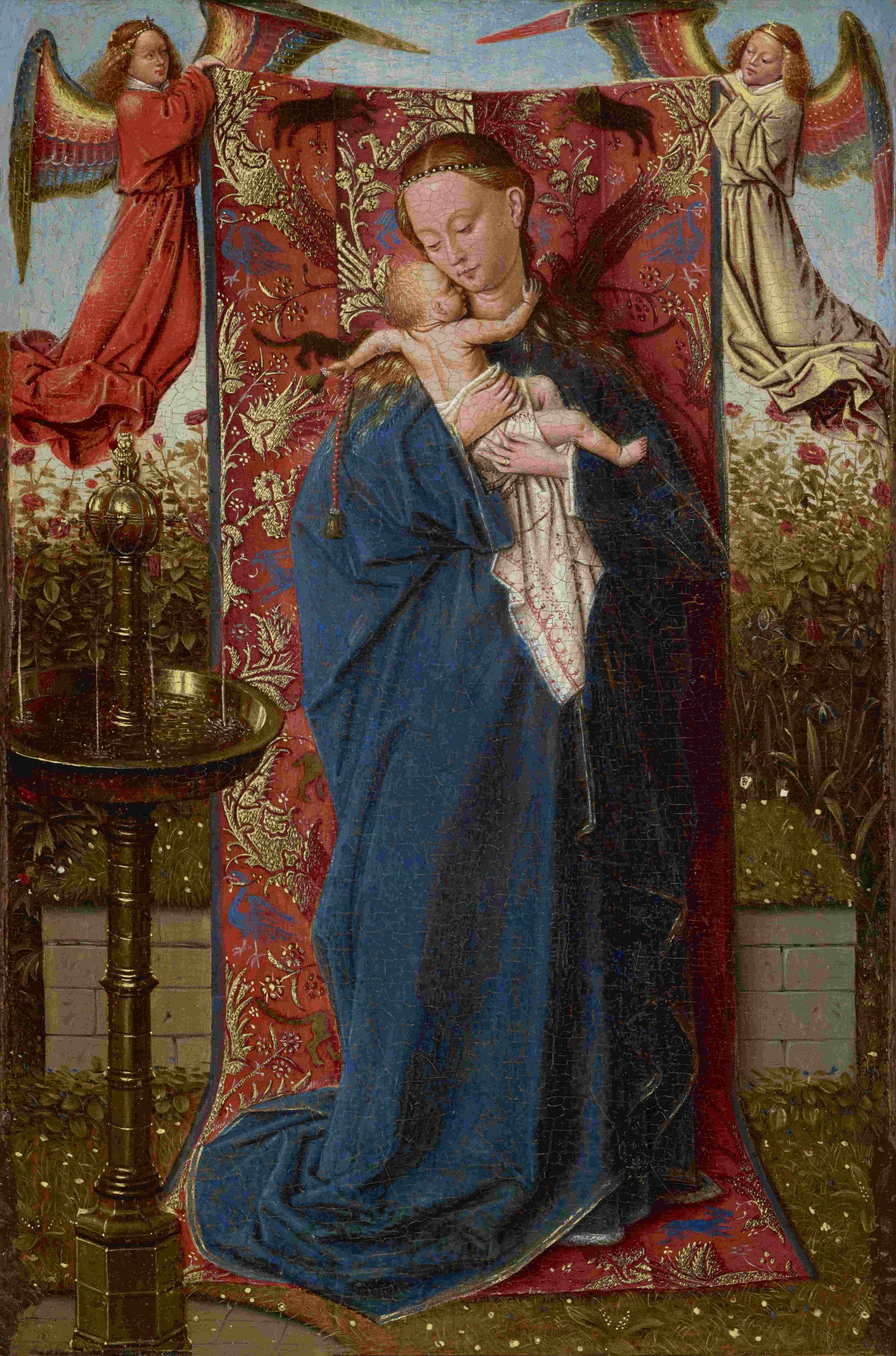
- Jan Van Ayk, Madonna at the Fountain, 1439, the Royal Museum of Fine Arts, Antwerp
- Jan van Aik, “Portrait of Baudouin de Lannua”, approx. 1435 - Berlin Picture Gallery
- Jan van Ayk, "Annunciation Diptych", approx. 1433-1435, National Museum of Tissen-Boremis, Madrid
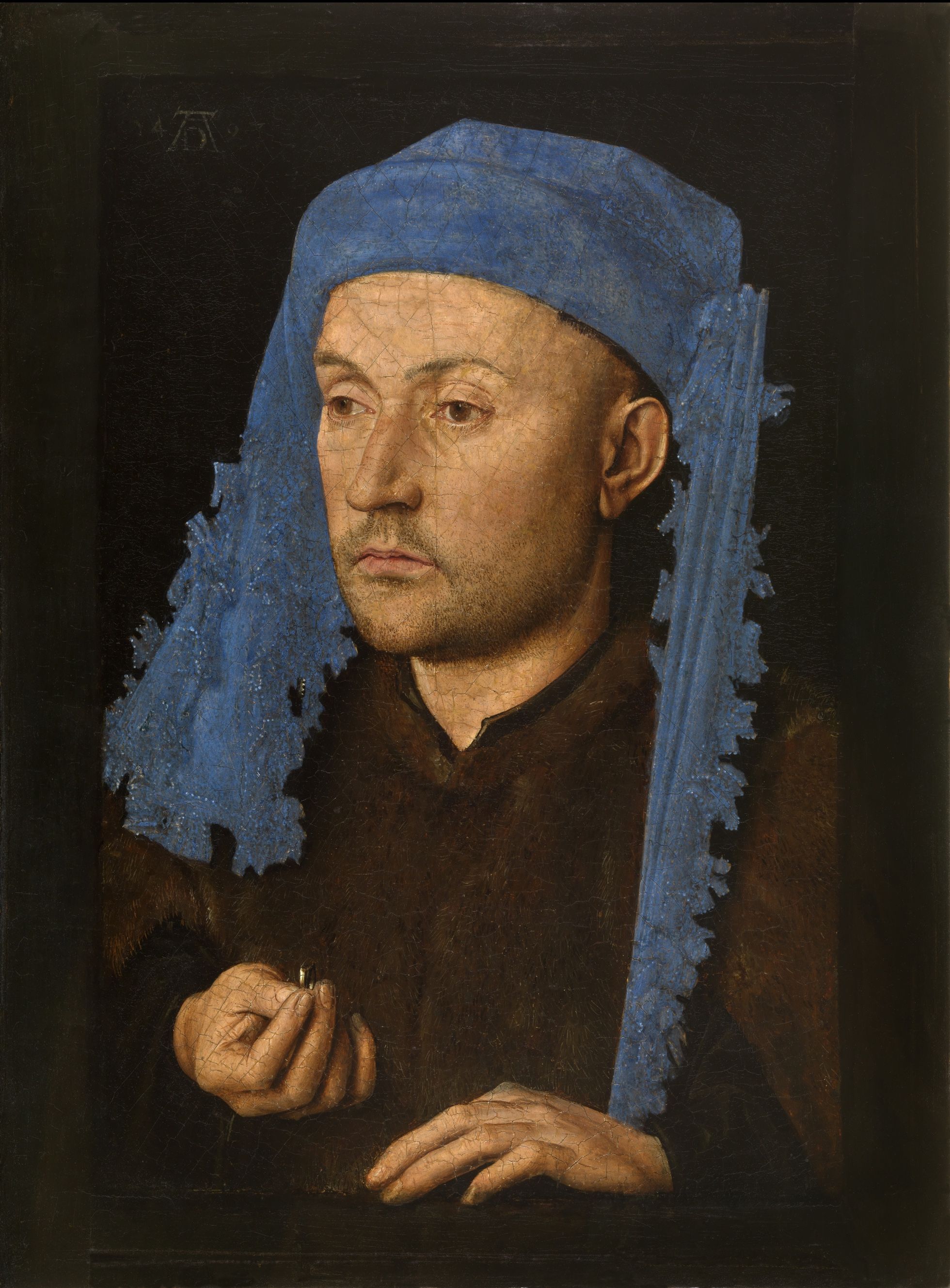
- Jan van Aik, “Portrait of a man with a blue chaperon”, approx. 1428-1430, National Museum of Brookental, Siberu (Romania)
- Jan van Ayk, “Holy Barbara from Nicomedia”, 1437, Royal Museum of Fine Arts, Antwerp
- Jan van Aik, "Annunciation", approx. 1434-1436, collection of Andrew W. Mellon, National Art Gallery, Washington, District of Colombia
- Jan van Ayk, Portrait of Yana de Leiva, 1436, Museum of the History of the Arts of Vienna, Picture Gallery
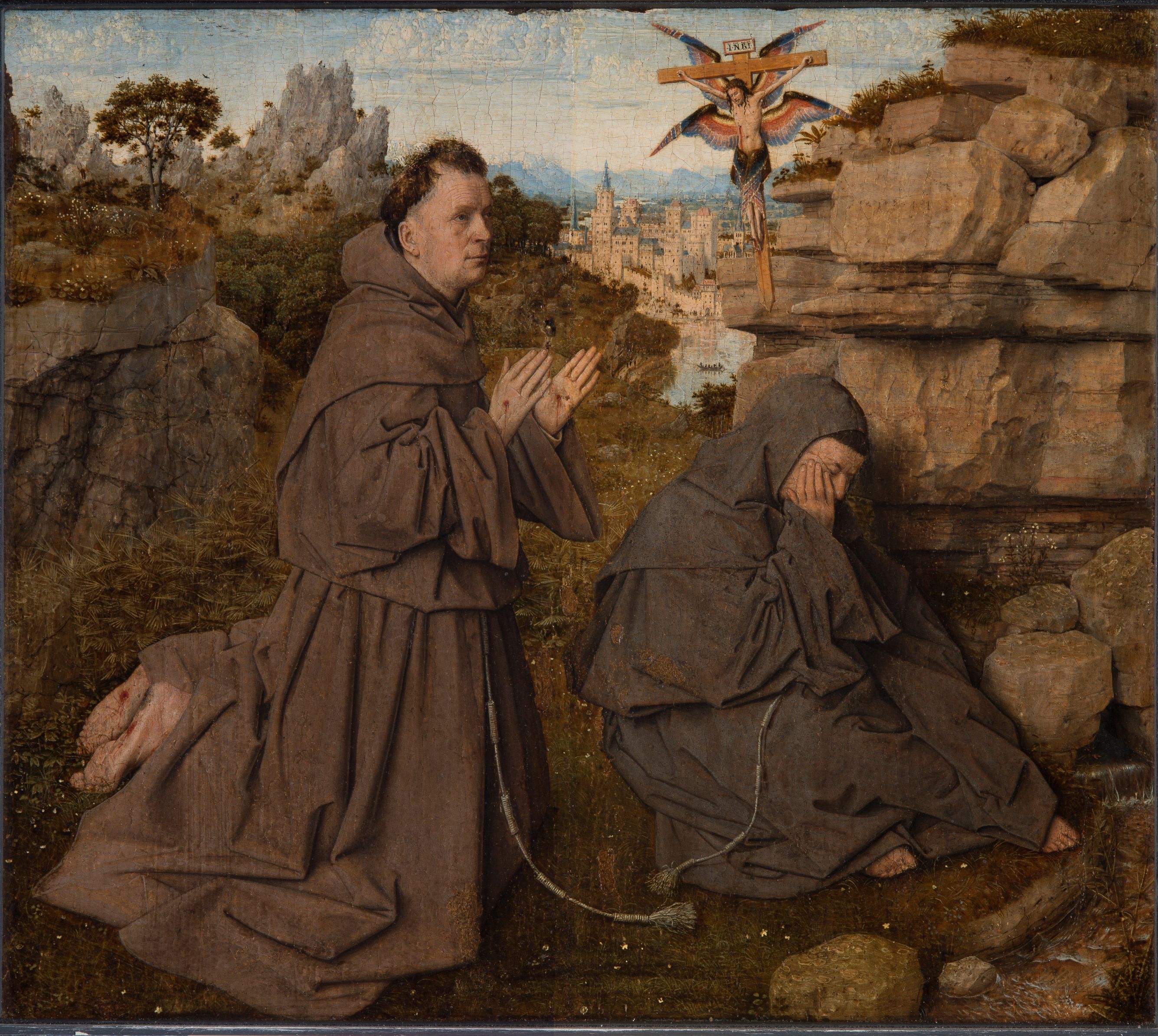
- Jan van Aik, “St. Francis of Assisian, receiving stigmata”, approx. 1430-1432, Filadelphia Arts Museum, John Johnson's collection, 1917
- Jan van Aik, “Male Portrait”, also known as Timofey and Léal Souvenir, 1432, National Gallery, London
- Jan van Eik. "Portrait of Margarita Van Ayk", 1439, Gruninka Museum in Bruges
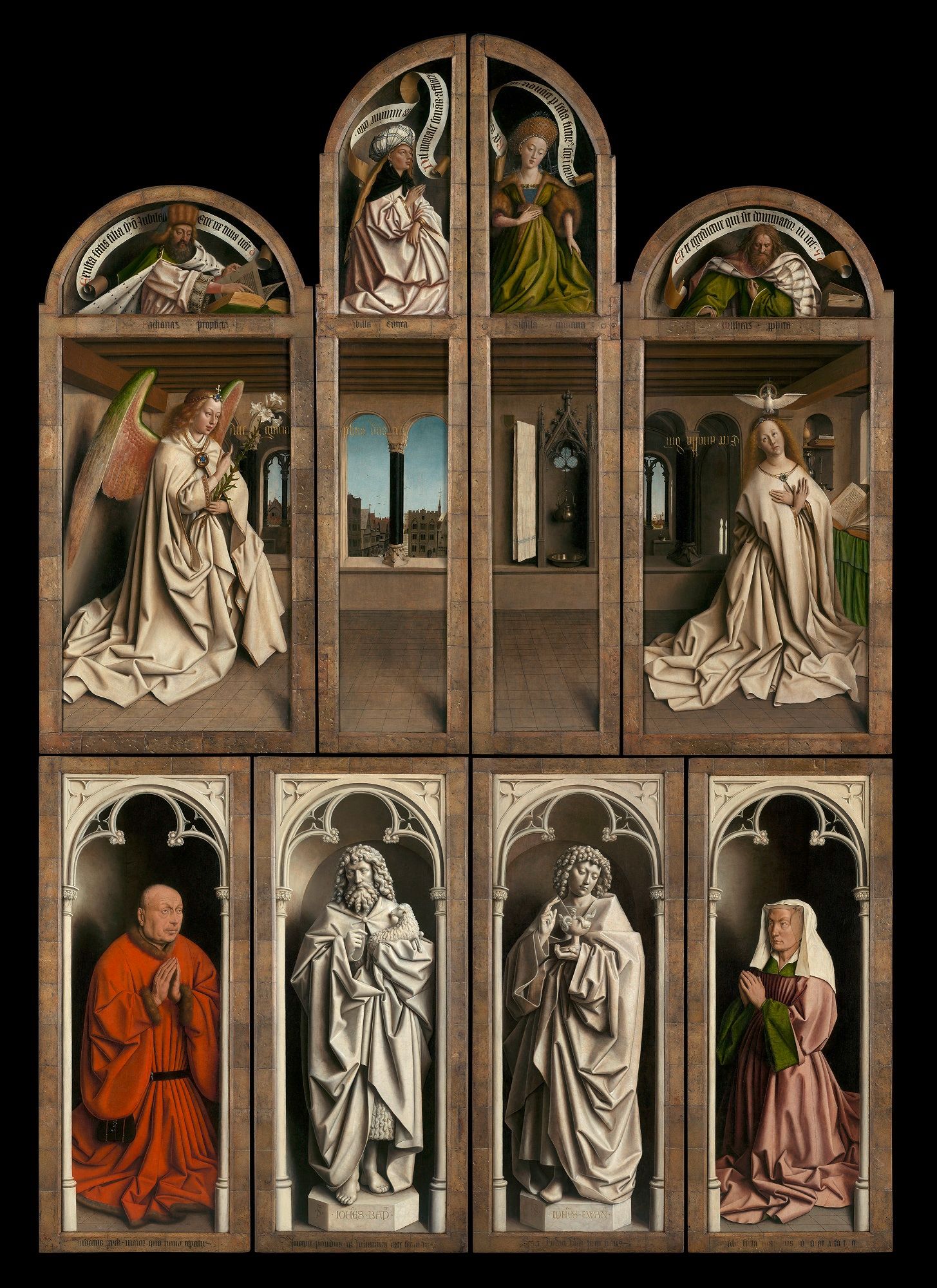
The central place in the exposition is occupied by the famous Genth altar (1432) - eight restored external panels and unrestaled images of Adam and Eve will be distributed through several halls of the exhibition. The authors of the exhibition emphasize that this is the only chance to see the altar so close, after the end of the exposition it will be transported to the Genth Cathedral of St. Bavon, where it was before the restoration, begun in 2012. The organizers say that after returning to the cathedral, the altar will never leave its limits. In addition, other submitted work is also unlikely to ever be able to collect at one exhibition.

More about the Gaent altar
The plot of work is the worship of the lamb from the revelation of John the Theologian. During it, the prophets, forefathers, apostles, martyrs and saints flock to the altar, on which there is an lamb, symbolizing Christ. On the outer side of the altar, his customer Yos Weidt and his wife, praying to the icons of John the Baptist and John the Theologian, are depicted. The Annunciation scene is above - between the figures of the Virgin Mary and the Archangel Gabriel, a window is depicted, behind which is believed to be written from the windows of the Weidt house. The Old Testament prophets and pagan prophetesses are depicted above - it is these parts of the altar that will be shown in the gent. Inside the altar, God is depicted by the Father, the Mother of God, John the Baptist, Angels, Adam and Eve, Cain and Abel, the Lamb, symbolizing Christ, the fountain, the Old Testament righteous, the apostles, dads, bishops, monks and laity, hermits, pilgrims, the army of Christ and righteous judges.
The general altar was painted many times in parts or taken away from the gunt. During the Second World War, he was in the hands of the Nazis and was stored in a salt mine. In 1945 he was discovered by the American army, after which he returned to Belgium. One of the parts of the altar - with the image of the righteous judges was stolen in 1934, was never discovered, in 1945 it was replaced by a copy.
In 2012, the restoration of the altar of the Royal Institute of Cultural Heritage of Belgium (Kik-IRPA) began-the process took place in a specially equipped workshop of the Genea Museum, whose visitors could observe the work of restorers through glass. In 2020, the first stage of restoration ended - the lower part of the altar was updated, it took about two million euros. In the course of the work of the lamb , an extra couple of ears (the result of earlier restorations) disappeared , and the expression of his muzzle turned out to be completely human.
The restoration of the upper part of the altar will begin in 2021.
After the exhibition, the altar will be transferred to the Cathedral of St. Bavon (during the restoration, the upper part will be replaced with copies). In the fall, a special center will be opened in the cathedral, where it will be possible to learn more about the creation of the cathedral and the altar, but as close as at the exhibition in the Museum of Fine Arts, it will no longer be possible to consider it.
The exposition is built so that the audience is able to compare the technique of Van Eike himself with the works of other masters of that time. This technique clearly demonstrates the unique technique in which Van Eik wrote - this is the “revolution”, which was carried out in the name of the exposition. “A comparison of Van Eike’s painting and his surroundings with Italian art demonstrates how his luminous, as if a precious picturesque surface differs from a matte, more restrained in the colors of Florentine painting, and the golden backgrounds of Siensky artists,” writes The Art Newspaper Russia .
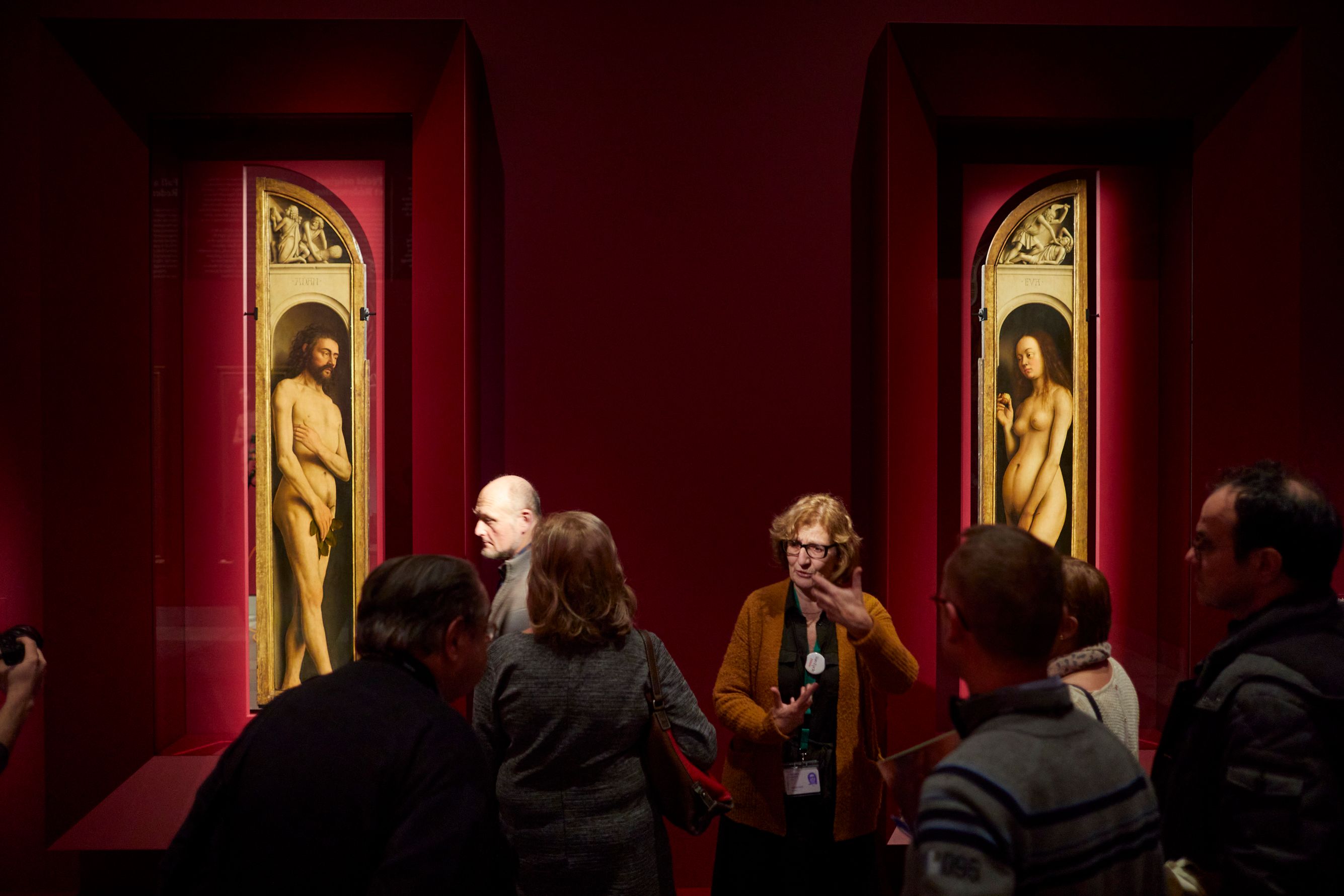
Each hall of the exhibition is devoted to certain topics: the influence of Van Eyka on oil painting, the image of the spatial depth, architecture, sculpture in painting, portraits. The hall with Adam and Eve tells how the artist wrote a naked nature, on the example of the same works you can see how the master experimented with space - Adam seemed to appear from his niche behind the frame of the picture, his fingers seem to hang in the air.
All 2020, the General will take place in the Generals related to Yan Van Ecom, entitled “OMG! Van Aeck was here. " By May, 75 plants depicted by Van Acom in the central part of the Genth altar will be planted in the square next to the Cathedral of St. Bavon. In September, the premiere of the work for the choir and the Arvo Pyart - “Lamb of God” will be held in the cathedral. From St. Nicholas, from March to October, they will show the multimedia video installation “Lights on Van Eyck” of modern British artist Mete Collishaw.
Natalia Gredina