
Translated material
To kill a nouveau rod
"Homework" from society for the entrepreneurial class in Russia
Last year, the volume of charitable donations in the United States broke the next record, amounting to $ 427 billion. Two billionaires donated more than $ 1 billion each, more than ten largest entrepreneurs took obligations for hundreds of millions of dollars. In July 2019, Warren Buffete made the largest donation in his life: the shares of his companies by $ 3.6 billion were transferred to the Bill and Melinda Gates fund, the Susan Thompson Buffett Foundation (named after the late wife) and the funds leading three of his children. According to Forbes, over his life, Buffete donated more than $ 38 billion.
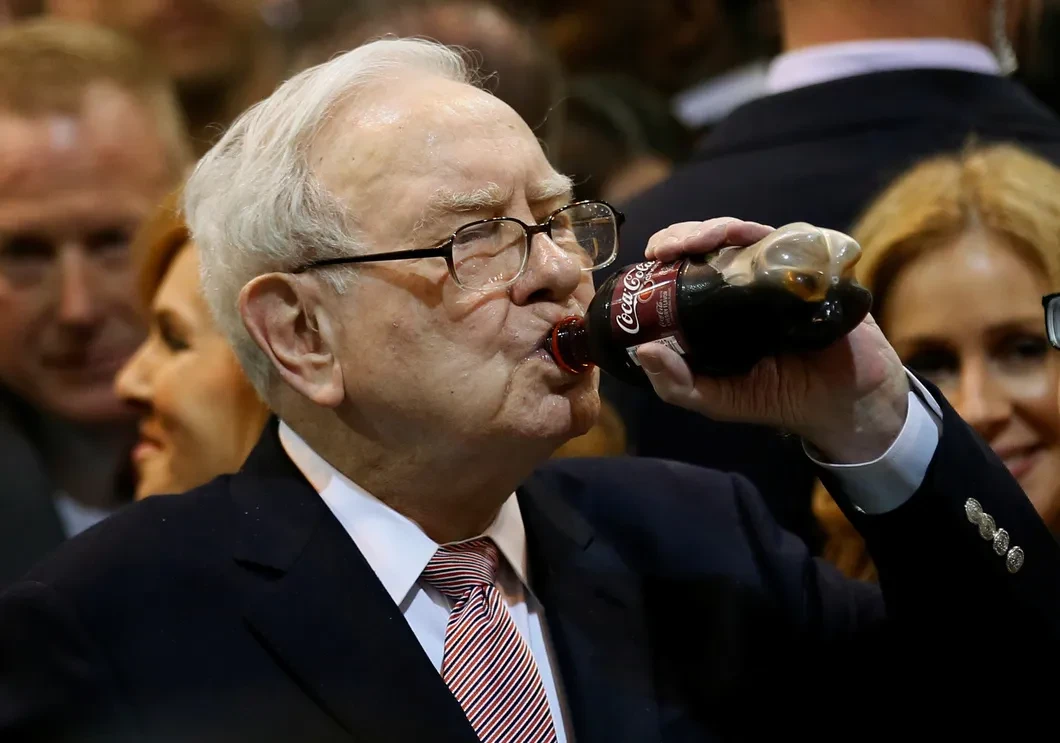
Ten years ago, the “oracle from Omaha”, as one of the richest people on the planet is called, who still lives in a bought in 1958 for $ 31.5 thousand, lunch at McDonald's and travels on an old Chevrolet, together with the founder of Microsoft, Bill Gates launched the Giving Pledge campaign. They called on the same as them, billionaires to give more than half of their condition to charity. By May 2019, 204 billionaires from 23 countries joined the campaign, in the list of philanthropists - Michael Bloomberg, George Lucas, David Rockefeller, Mark Zuckerberg and others. Jeff Bezos remained the only of the five richest Americans who ignored the mental impulse of brothers in the workshop.
In Russia in 2019, the amount of funds received for various charitable projects also shifted for 400 billion, but already rubles.
Which, respectively, is more than 60 times less than in America.
Moreover, the lion's share of this budget is made up of donations from the state and corporations controlled by it. So, Sberbank annually spends an average of 4 billion rubles on charity. As for representatives of private capital, they are in no hurry to part with the fact that "acquired by overwhelming labor."
As in any rule, there are worthy respect for exceptions. Serious amounts through their funds are allocated by such famous philanthropists as Mikhail Gutseriev, Gennady Timchenko, Alisher Usmanov, Victor Vekselberg. But they do not make the weather.
And some examples of “philanthropy” are generally looking like a mockery.
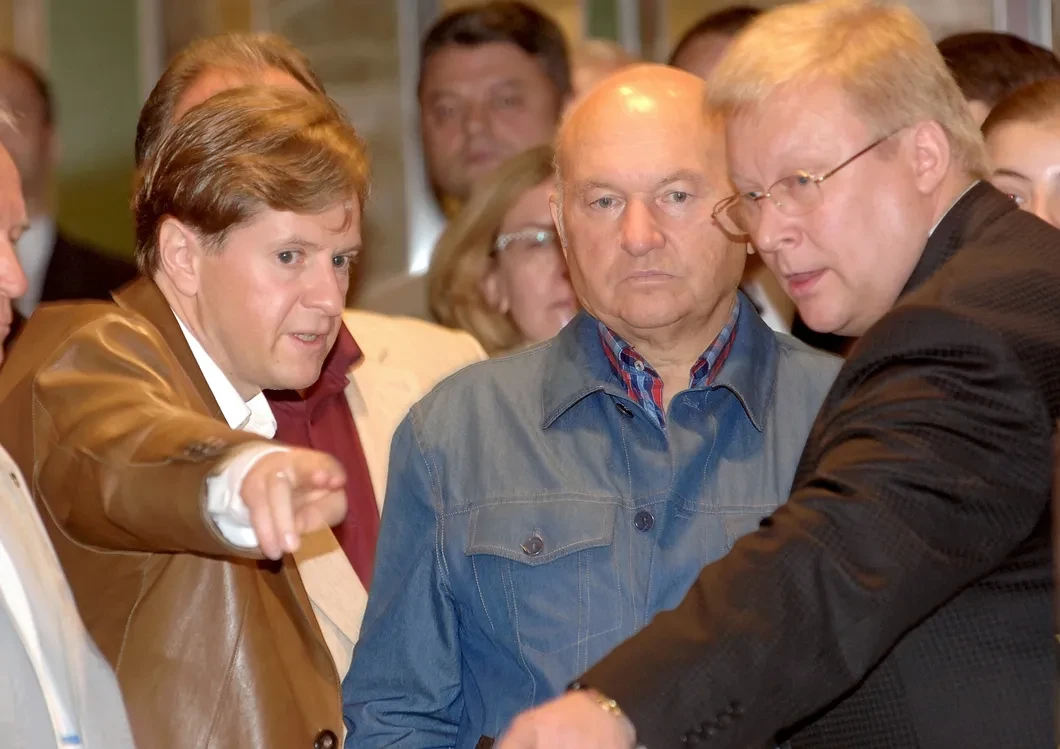
For example, Andrei Borodin in 2018 allocated the Dobroserdia to the Foundation, which he, when he was the top manager of the Bank of Moscow, established with his wife Tatyana Korsakova to help children with cerebral palsy, as much as 9 million rubles, i.e. $ 150 thousand. Despite the fact that more than $ 3 billion disappeared from Luzhkov in Luzhkov, and a modest financier paid 130 million pounds for the estate in England, which once belonged to Prince Charles, which once owned by Prince Charles. I suspect that taxes and Kommunalka at the current place of residence of a “fighter with a regime” are more expensive for him than helping sick children.
Of course, they may object to me that America is a country of millionaires. About 12 million people live in the United States whose assets are more than $ 1 million (they are called Hnwi - High Net Worth Individuals, “people with a high personal condition”).
This is more than the entire population of such a non -poor European country as Sweden.
In Russia, according to the World Wealth Report, Hnwi report is about 200 thousand, i.e. 60 times less - in full accordance with the current exchange rate. However, if we take the ratio of the number of billionaires, then here the scatter is not so striking - 110 in Russia against 585 in the United States. At the same time, it is necessary to keep in mind the differences in the social structure: in America, the bulk of the population is the middle class with a significant share of the “high middle class” (Upper Middle Class), earning from 100 thousand to $ 1 million a year. In Russia, between millionaires (not to mention the billionaires) and most citizens who are poor by American standards, there is an abyss.
In this situation, it would seem, the richest part of Russians could approach their social behavior more responsibly. Especially when you consider that for many of them wealth literally fell on the head, or, as the British say, was “brought by the wind” (Windfall Wealth). It was the result of either a wild “initial accumulation” through the privatization of the 90s, or is a derivative of corruption. A society that allowed its separate members to bite a large piece of the pie is entitled to count on the fact that they will voluntarily give at least some of its part of it.
Alas, they do not demonstrate anything like the "lucky" for the mass.
They are more likely to push away than they will share.
The ostentatious craving for the luxury of the new Russian capitalists became not only the parables in the way in his homeland, but also the stamp in world culture. In the cinema “oligarch from Russia” is a character that symbolizes cynicism, greed, the absence of any moral restrictions and brakes.
Having hung with gold and diamonds, surrounded by girls with low social responsibility, he must definitely sit on some breathtaking villa, fly on a chic private plane or swim on crazy yacht, of which he often has not alone.
It seems to me that our businessmen, especially large ones, have to think about this existential problem and stop being nouveau riches. In the modern world, with all the charms of scientific and technological progress, a reasonable person physically cannot spend more of a certain amount on satisfying his fantasies in the field of personal consumption, whatever they were. It would be nice to inform this threshold to the business community and establish as a moral self -restraint.
All other income that the entrepreneur does not plan to use for investment should be directed to charity. Moreover, it is advisable to not just give out money to those in need (this is precisely the concern of the state), but to invest in projects that determine the future of the nation - education and science, culture and art, the media, or in socially significant infrastructure projects that do not bring super -profits (for example, aircraft construction or the formation of a healthy lifestyle through proper nutrition, what your humble servant does).
In one of the scenarios of the movie epic about the global financial apartheid I had conceived, her hero, who had rich in the oligarch's collateral auctions, lives in southern France. But not in the palace, as is customary for the oligarchs, but in the cave. Like Francis, Assisian and Seraphim of Sarov, he abandoned wealth and now preaches asceticism, advising by investigators. I do not insist that everything
The oligarchs followed the path of famous saints (alas, sinful), but becoming pious parishioners and renounce some of the capital will not interfere with some of them. Including for the sake of preserving their other part. And then our authorities are uneven, having perceived the signals of the society dissatisfied with the injustice of the society, will look closely at the experience of the hereditary prince of Saudi Arabia Muhammad Bin Salman, who in 2017 selected more than $ 100 billion from among the royal family members, returning them to the budget.