
Translated material
Six centuries of the lawn
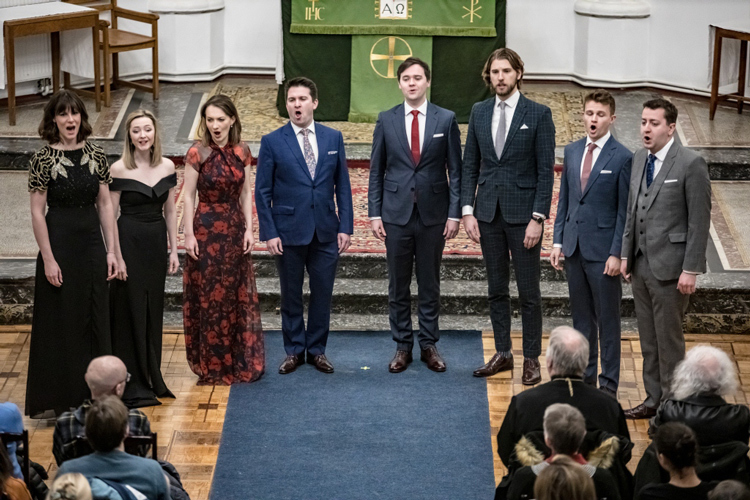
The choir culture, from century to century, grown and selected with the help of boyish singing in church services, is one of the important components of British national identity. The top of this huge iceberg from musical texts and performing traditions we already begin to distinguish a little. The year 2019 contributed a lot of this - the year of music of Great Britain and Russia, the central event of which was the “December evenings” with the performance of the vocal ensemble I Fagiolini . Another important point of this successfully prolonged year is the program “Six centuries of British choral music”, which the recently opened the Apriori Opera festival.
The interests of the already small, but proud, bold and from all the different festival are much wider than what is stated in its name. In addition to the opera, a wide variety of vocal genres are possible here, always in high esteem and, conversely, freshly engaged in music. Those and the other easily converged in the first concert under the arches of the Church of St. Andrew and represented international and interfaith choral cooperation.
 © Ira Polar / Opera a priori
The English opuses of the XVI - XXI centuries sounded, and the pair of performed authors was in the hall. Composer and conductor Father Ivan Moody ( Fr. Ivan Moody ) sat in the first row in the cassock; He wrote his choir play “Transfiguration” in English and Church Slavonic. His colleague named Livine, who had long emigrated to England by guitarist Alexander Levin from the popular Soviet group “Singing Hearts”, was now present at the world premiere of his essay “ Thy Will Be Done ” (“ Let your will be ” - from the prayer“ Our Father ”). Another modern score “ Love Endureth ” (2012), belonging to the Polish-British composer Roxane Panufnik, was beautifully imposed on the ancient songs of the Spanish Sephardes and was the most secularity.
 © Ira Polar / Opera a priori
But in general, all this music spoke not so much about the present as about a long, continuous and still relevant tradition. The works of living authors were almost not contrary to the works of the long -dead: William Burd, Orlando Gibbs, John Mandy, Thomas Wilks, Robert Lucas Pirsol, Charles Viliers Stantford. The authentic bearer of the tradition was the British ensemble Voces 8-a fantastic tool of eight voices that perfectly merging with each other (two sopranos, Mezzo, two tenors, baritones, bass and artistic director of Barnabi Smith, singing a bass baritone and counteratradice). In order to take the first chord at the same time, the singers may even not look at each other or at someone's hand-just hear Smith's breath. Severe transparency and an incredible volume at the same time - it is completely incomprehensible where this sound comes from.
 © Ira Polar / Opera a priori
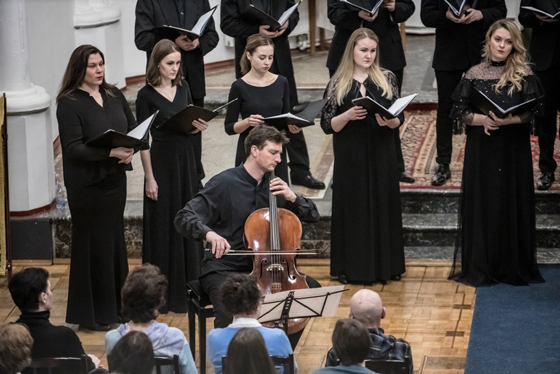
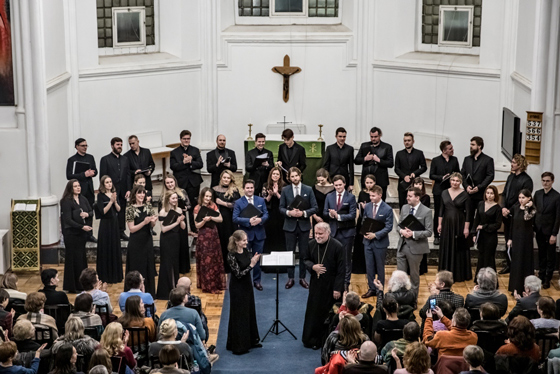
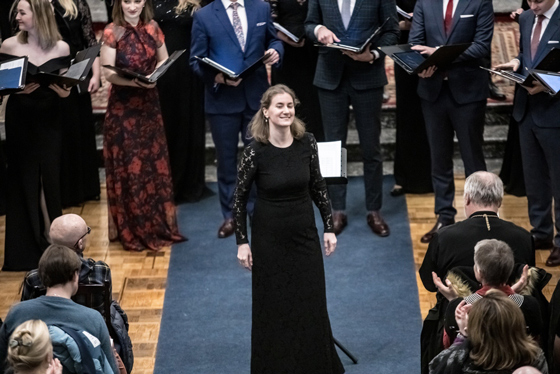
An indispensable ensemble of Ekaterina Antonenko Intrada participated from the host Russian side in the concert. Almost all noticeable choral projects are being held on it now. The “Christmas oratorio” of Bach in the Lutheran Cathedral and Philharmonic-2 with Vladimir Yurovsky, the “Seasons” of Haydna in the Chaikovsky Hall with Maxim Emelyanychev-these are only the exploits of the last month. At a concert in the Anglican Church, Intrada supplemented the modern picture of the choral world with the composition of the Orthodox Englishman John Taverns “ Svyati ” , strongly colored by Eastern mysticism (on the solo cello, Peter Kondrashin sang). The “Transfiguration” of Ivan Moody - the student and follower of Tavernus - suggested the joint performance of Intrada and Voces 8. And the crown of the whole program was the first fulfillment of the motate “ Spem in Alium ” Thomas Tallis - the greatest English composer of the pre -forming, Catholic, tradition, master of high polyphonic writing. The motet, which appeared in the area of 1570, is a national treasure. He is not sung on two voices, not three or even five - but forty! True, in the united array of two ensembles, not 40 people counted, but only 38, but the sound adventure under the arches of the cathedral from this was no less bright.