
Translated material
Enemies of the people
Who and what was Stalin repressed for?
Before last year’s business trip to Gorbachev’s homeland in the main storage of the country's periodical press, in the newspaper complex of the Russian National Library, I was found binder of the district newspaper of that period.
It turns out that far from all. There are no first four years (from 1931 to 1934) in general, for 1935-36-separate numbers. But further - full sets.
For several days I sat in the reading room, making extracts and trying to imagine what was left behind these yellowed pages.
Found, for example, the verses of Alexei Getalov, the Privolninsky teacher, who invariably responded to all the important events of the surrounding life with a fiery poetic line. This is what he, in particular, writes in a work entitled “Happy Youth (I devote to young combines Ryazantsev and Potapov)”:
... swept over the joy of hot
Starushki mother and fathers-
- Sons - heroes, not otherwise!
- Sons - such fellows!
Do not forget you a famous meeting!
Efim Georgievich himself was -
How much vigor
short speech
He is in the hearts
I poured your work! ..
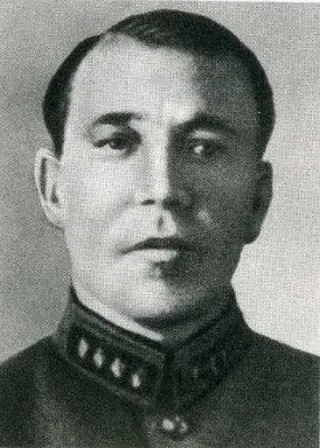
What is this, the question arises, for Efim Georgievich, such, inspiring the word of young workers into new and new victories, generously pouring vivacity into their hearts?
The area, which includes the pet, was once called Medvezhensky. In 1934, Efim Evdokimov became the first secretary of the regional committee of the party, so a year later one of the districts (just Medvezhensky) was honored to be renamed in honor of the party leader
Evdokimov was one of the worst executioners in Soviet history.
In 1920, he was the head of the special “Crimean shock group”, who was a preventive destruction of the prisoners of the White Guards, despite the official promise of the amnesty. For the work done, he was presented to the Order of the Red Banner:
“During the defeat of the army of General Wrangel in Crimea comrade Evdokimov with an expedition cleared the Crimean peninsula from the white officers and counterintelligence who remained there for the underground, having seized up to 30 governors, 50 generals, more than 300 colonels, the same amount of counterintelligence and in general up to 12,000 white element, which warned the possibility of the appearance of white gangs in Crimea. ”
Comfront Frunze made a resolution:
“I consider the activities of Comrade Evdokimov a deserving encouragement. Due to the special nature of this activity, the award in the usual order is not entirely convenient. ”
The rewarding was because, as it was later called, "closed decree."
Then Evdokimov served at the responsible posts in the OGPU, but as a result of internal squabbles, he was forced to leave his favorite work and was thrown to work party, first, in Stavropol (then Voroshilovsk), and in 1937-in the Azov-Black Sea region.
On November 9, 1938 he was arrested, and was shot on February 2, 1940.
In 1956, he was posthumously rehabilitated and restored in the party.
But the fate of the person, whose name is named the district, remained unknown for the inhabitants of this area. Only the most perspicacious were able to understand why the Decree of the Presidium of the Supreme Council suddenly struck and the district became Molotovsky. True, the reason was called in the decree: “The petition of the working people of the Evdokimov district”, but it was difficult to imagine the fact of such a petition of the workers. It was only clear that something unpleasant happened to Efim Georgievich.
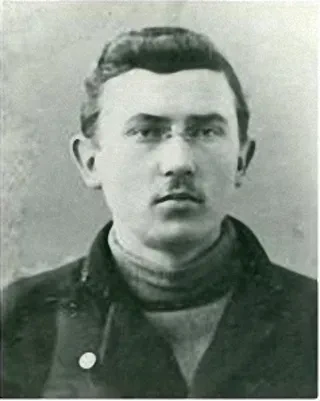
And the first of the regional committee was another fiery Bolshevik Konstantin Maksimovich Sergeyev (the former, by the way, the secretary of Comrade Stalin himself), and was immediately approved by a member of the regional Chekist "troika", who passed the bloody broom in the region.
Here the election campaign for elections to the Supreme Soviet of the USSR of the first convocation arrived. She went, of course, in the raised atmosphere of enthusiasm and unity. And the workers (Evdokimovsky still) the regional department of the NKVD at their general meeting unanimously called the first secretary of the regional committee as their candidate.
Unfortunately, Comrade. Sergeev did not justify the hopes of gullible Chekists.
Of course, he became a deputy of the Supreme Council. But already on April 29, 1938 by the decision of the Central Committee of the All -Union Communist Party of Bolsheviks, he was removed from work with the “expression of political distrust”, arrested on May 9, and on August 28 for terrorist activities and participation in KR was shot.
And the head of the regional department of the NKVD shot himself.
Sergeev is also rehabilitated.
And the Molotovsky district after 1957 was renamed again - to Krasnogvardeisky.
***
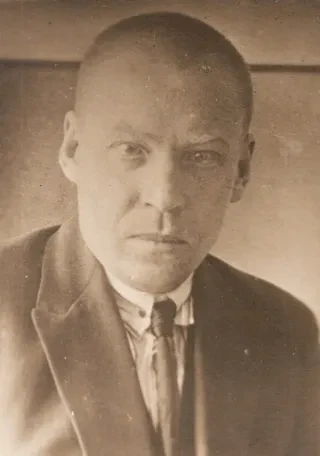
The senior researcher at the Institute of History and Archeology of the Ural Branch of the Russian Academy of Sciences, candidate of historical sciences Andrei Sushkov from Yekaterinburg last year wrote a book - “The Empire of Comrade Kabakov. Ural Party-Minopers in the 1930s. " And he published it with a circulation already in 500 copies. I admit that she turned my, from high school, preserved, ideas about industrialization and-wider-about life in the 30s of the twentieth century.
The main idea of the book, I admit, is not close. According to the author, if I understood correctly, the local nomenclature finally fought off, broke out, ignored the direct instructions of Comrade Stalin (he constantly called for party modesty, even spoke about this from the rostrum), was corrupted to the limit, in the hungry country of Khapal everything she saw ... In general, the author was justified by the author, as it seemed to me, just that.
But, oh god, what documents the candidate of historical sciences of Sushkov dug up! .. What evidence does it give! What are the facts! ..
What a gallery of party -prophetor! .. Energetic arrears, fiery twists, cruel Sibarites and self -lovers - this is the team of the first secretary Kabakov, closely united around his favorite business. On the other hand, where did others get? Judging by the book of Sushkov, there was one desperate knight, idealist, authorized by Partrol Paperde, and even quickly cropped, checked, exhibited from the region. Here's about whose future fate I would read with interest ...
And after all, there is no reason to assume that in the rest of the regional committees it was somehow different.
The problem of marriage in the USSR of the 1930s
... Ordzhonikidze, having visited the construction of the Uralmashzavod, decided to bring the term for its launch. Contrary to the opinion of Soviet and foreign experts, he ordered the installation of equipment in the workshops under construction simultaneously with the construction of the buildings themselves. This, of course, significantly accelerated the commissioning of the main production units. However, the auxiliary units are behind. Expensive equipment, the most precise imported machines, unique German presses installed in unfinished workshops, suffered from dust, wind, rain or snow. Valuable measuring devices were left in the open air, rusted and became unusable ...The construction of the Novotagil Metallurgical Plant began in 1931. Over the next six years, the Presidium of the Supreme Economic Council of the USSR and the People's Commissariat of People's Commissariats four times dramatically changed design tasks - they increased or reduced the number of domain and Martenovsky furnaces, and changed the composition of the equipment of the rental workshop. As a result, only drawings and projects were canceled by more than 12 million rubles, and blasting and rolling equipment produced for NTMZ in Uralmashzavod in the amount of almost 900 thousand rubles had to be written off as scrap.
... marriage on the Wheel of Gryffin’s wheels at a wagon -building plant in Nizhny Tagil for the second half of 1934 amounted to 99.4%
(only 100 pieces of wheels from 17,000 cast were recognized as suitable).
... Hundreds of tons of marriage regularly produced Uralmashzavod. The Medeelectrolyte Plant in Verkhnyaya Pyshma suffered the same, where the marriage reached 60%, and the Verkh-Isetsky Plant in Sverdlovsk. On a visa, which specialized in the production of dinamnaya and transformer steel, for several years, rolled metal at a lower temperature than it should, which extremely accelerated the process and allowed many workers to go to overheads. “For March, 343 tons of marriage were given in appearance, and 200 tons - a non -attachment to analysis,” the representative of the technical control of carpenters in April 1937 reported at the Party Party Country. - According to a large workshop of 271 tons of transformer steel - 181 tons of marriage. The Lower Nestabolecal Wilde gave 70 thousand sheets, and the marriage is 25 percent. The Dinoman workshop gave 45% of the marriage. "
What can I say!
From a third to half of the axes and grasps launched in the Kalatinsk and Nizhny Tagil plants in the Kalatinsk and Nizhny Tagil factories. Only 20% of the horseshoes made in Nizhny Tagil were recognized as suitable,
But as for the moom , the Tagil residents were not able to release any such high -tech household appliance without marriage that year.
The failure of the equipment, marriage and accident at the enterprises put into operation were a typical “shadow side” of the Ural industry, but not the worst option. The construction of many other enterprises, including such large factories as the Urals of the Ural Chemical Engineering Plant in Sverdlovsk, the Novotagil metallurgical in Nizhny Tagil, the medical tank in Revda, the aluminum in Kamensk-Uralsky, due to illiterate leadership, the spraying of resources, the rainfall and mismanagement, it was frozen. The country's economy suffered tremendous losses.
At least the incompetence of the regional authorities can be explained by the campaign deployed by the regional party committee in 1933-34, to use cows for plowing and harrowing of the Earth. Komsomol organizations obediently picked up the initiative and began to accustom the cows to agricultural work. As a result, serious damage was caused by livestock: a large amount of livestock fell or lost dairy productivity ...
Mass postscribes. In 1933, Kabakov asked him to accept from state farms the Ural region on the spot, that is, in the warehouses of state farms) 1 million pounds of grain. When checking the presence of grain in the state farms, it turned out that only 207 thousand pounds in stock ...
***
Ivan Dmitrievich Kabakov is the first secretary of the Ural regional committee of the CPSU (b), a person with a parish education, who then headed the boundless territory many times exceeding the area of England, France and Italy combined (later from the Ural region “cut” the Tyumen, Perm, Chelyabinsk, Sverdlovsk ...) “beloved leader of the Urals Bolsheviks "," Chief Engineer of the Socialist Urals ",
Kabakov, until the last day, was considered the most faithful student of Comrade Stalin and literally on the eve of the execution was awarded the highest Order of Lenin in the country.
As soon as three years passed, Kabakov arrived in Sverdlovsk, the Magnitogorsk mine began to carry his name who entered into operation. Three years later, the city of Nadezhdinsk and the district, the center of which it was. Over time, Kabakov’s name began to be worn by the Verkh-Iset Metallurgical and Sinar Pipe Plants, the Ural Metallurgical and Sverdlovsk State Pedagogical Institutes, the Sverdlovsk Construction College of the Kaganovich railway, the Sverdlovsk pilot air school, school No. 1 and kindergarten No. 23 in Sverdlovsk, collective farms in the regions of the region ...
At the same time, the processes of decomposition into the party and state apparatus went so far, Sushkov writes that many representatives of the power structures were more reminiscent of members of the Banditical and Vorovskiy Gangs than “people who were able to ensure the specific leadership of the entrusted work and strengthen the party-Soviet discipline,” as Stalin demanded at the XVII party of the party. Their illegal actions were recorded by party and Soviet control bodies, sometimes law enforcement agencies, some “cases” were brought to court. However, not customers fell under court, but only direct performers, and even thereby, thanks to high patronage, incompetibly soft or even acquittal sentences were carried out.
It should be borne in mind that back in the late 1920s, the position of the Ural population worsened significantly.
In the early 1930s, in a number of regions of the Urals, peasants were forced to eat rats, cats, dogs, buried corpses of fallen cattle.
On the basis of hunger, the disease of the digestive organs and hungry edema was widespread, epidemics of infectious diseases were rampant, there were facts of suicide and cannibalism.
But the visit of the People's Commissar of Ordzhonikidze cost the Perm City Council near 1.400 (then) rubles. In addition to meat, butter, cheese, various vegetables, bread, flour, cereals and pasta, milk and cottage cheese, various seasonings, tea and coffee, cookies, marmalade, etc. Millograms of sturgeons and a balyk, 6 cans of caviar caviar, fish canned food were allocated for servicing the trip - 20 sprat cans and three sardin banks. 40 bottles of beer, 10 bottles of fruit wines, 6 bottles of Abrau-Durso, 5 bottles of cognac, zaranttsevo and port, 2 bottles of vodka, spotykach, black-brown and sherry, cranberry bottle, apricot liqueur. On September 7, 1934, the Kamvodnarpit Trust presented the City Council by the Perm City Council, thanks to which it became known about the "food support" of Ordzhonikidze's trip.
But what's the People's Commissar, not every month is visiting. But local leaders were also supplied.
All enterprises of the region were overlapped with “natural tax”. So, the manager of the Vostonostal trust Y. Ivanchenko abundantly sponsored both the leading elite of the region and the local party apparatus. Only in 1934, Vostomostal paid the secretary of the Nizhny Tagil city committee of the CPSU (b) Kuznetsov 3200 rubles, gave him the hours of Pavel Bure and the camera. The secretary of the Chusovsky city committee Maltsev received 1700 rubles and a camera; Secretary of the Nizhneseldinsky district committee of Bogachev - 500 rubles and a camera, secretary of the Kuvshinsky district committee of Pozdnyakov - 500 rubles, a camera and hours of Moser, Secretary of the Pervouralsky district committee of Chernetsov - 500 rubles, Pavel Bure and a camera clock; The secretary of the Kabakovsky district committee of Spirov - 500 rubles ... In total, more than 260 thousand rubles used to pay various employees, almost 24 thousand rubles for evenings and banquets.
If “in the doors, windows and floors of the barracks where workers lived, huge cracks gaped, the restrooms were located next to the housing, and from them, as well as from the premises for animals, where cows were kept, stenchs came right into the huts” if “there were terrible tightness in the barracks, even drummers with families lived in the same room 3 by 3 meters,” then regional watches built themselves in the same room. Several dachas for "individual projects".
To satisfy the growing needs through the Sverdlovsk city treatment commission, specially created for the treatment of nomenclature workers,
A regular transfer of money was organized allegedly to medicines and the treatment of especially needy comrades and members of their families. From year to year, payments grew, in 1934 the expenditure part of the medical committee exceeded the revenue by 7 (!) Times.
How was the cash gap closed? Yes, it is very simple, the money was transferred from the accounts of large construction projects and industrial enterprises, the directors of which participated in their subsequent “cut”.
In addition to payments from the accounts of the Kabakov medical committee and his close associates received money from a special secret fund, which was personally disposed of by the chairman of the regional executive committee V. Golovin.
In addition to various kinds of postscribes and accounting tricks, the Kabakov proteges did not disdain direct thefts. For example, the People’s Commissariat of Foreign Transfiguration sent money to enterprises to pay labor dispossessed, but these funds were systematically spent on other needs.
The OGPU in the circular No. 45 dated June 11, 1934 “On shortcomings in working with special migrants” especially noted that special settlers are arrears of salaries are 4-5 months, and in some cases they reach 10 months.
In the Sverdlovsk region, the total amount of money that was unpaid to special migrants at that time reached 962 thousand rubles - these funds were credited to the balance of enterprises, but at the whim of management were wasted on anything except the salary.
***
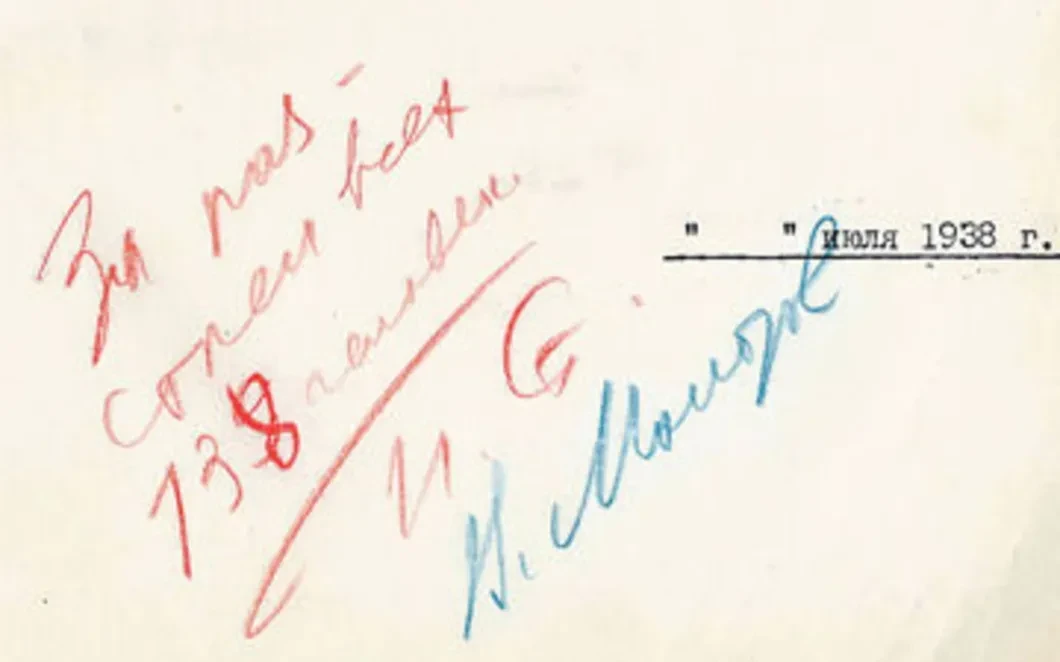
The first serious blow to Kabakov was the arrest of his nominee Vasily Fedorovich Golovin. On January 11, 1937, the Plenum of the Executive Committee removed him from his post for “political mistakes”.
The case was rapidly promoted, no one in Sverdlovsk, apparently, implied the ability of a freshly known head of the regional department of the NKVD to such a “Stakhanov” pace, already on March 24 Golovin was shot.
Rehabilitated.
From that moment on, the fall of Ivan Kabakov was only a matter of time. It is not entirely clear whether Kabakov himself understood. At the end of the second decade of May, he calmly went to Moscow, not knowing that literally on the eve of the Politburo of the Central Committee adopted a laconic and peremptory resolution, which read: “Based on the available materials in which a member of the Central Committee of the All -Union Communist Party of Bolsheviks is accused of belonging to the counter -revolutionary center of the right, to exclude Kabakov from the CCP (b) and from the party) The transfer of his case to the People's Commissariat. "
Kabakov is rehabilitated. His name is now wearing a street in Tula.
Далее последовала зачистка верхнего этажа местной номенклатуры. В течение летних месяцев лишились должностей (как по причине ареста, так и без ареста, а также в связи с исключением из партии) все секретари, 10 из 10 заведующих отделами и секторами обкома партии (один застрелился). Из десяти первых секретарей горкомов заменены 10, из десяти вторых секретарей горкомов — также все. Из имевшихся на территории области 81 райкома партии (в т.ч. райкомов, входивших в состав городских комитетов) секретари 77-ми сняты и один застрелился (судьба троих неизвестна). Согласно штатному расписанию обкома, 221 должность относилась к номенклатуре ЦК ВКП(б), так вот из числа занимавших эти должности коммунистов на своих местах к концу декабря остались лишь 12 человек. Другими словами, с мая по декабрь принудительной ротации подверглись 95% высшего партийного эшелона области.
Начальник управления НКВД Дмитрий Матвеевич Дмитриев настолько хорошо справлялся со своими обязанностями, что 19 декабря 1937 г. был удостоен ордена Ленина с формулировкой в Указе Верховного Совета СССР «за образцовое и самоотверженное выполнение важнейших правительственных заданий».
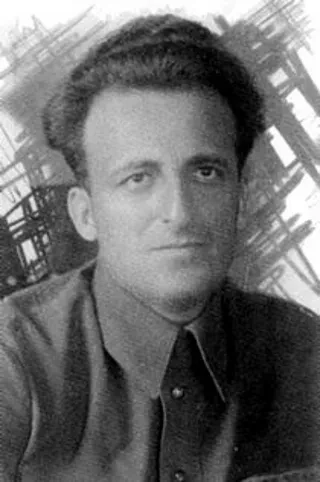
Сменивший Ивана Кабакова на посту первого секретаря обкома ВКП(б) Абрам Столяр, по-видимому, сильно недооценил чекиста. Во всяком случае, Абрам Яковлевич уже через полгода полностью повторил путь своего предшественника.
Rehabilitated.
Однако последующая судьба самого начальника Свердловского НКВД, комиссара госбезопасности III ранга Дмитрия Матвеевича Дмитриева (Мейера Менделеевича Плоткина) была печальной — арест, обвинение во вредительстве и шпионаже. В самом конце жизни его стали использовать в качестве внутрикамерного агента — «наседки», подсаживая в камеры к самым важным для НКВД арестантам. Но несмотря на готовность к всемерному сотрудничеству, интерес следователей к Дмитрию Матвеевичу довольно скоро пропал и уже 7 марта 1939 г. он предстал перед Военной коллегией Верховного суда СССР, чей приговор к высшей мере наказания был очевиден и неизбежен. В тот же день Дмитриев был расстрелян.
Реабилитирован 9 декабря 1994 года.
***
Собственно говоря, Кабаков и все его подельники (как и Евдокимов, Сергеев, Дмитриев-Плоткин и все прочие) какого-то наказания, на мой взгляд, конечно же, заслужили.
Но вот секретное сообщение Ежова — Сталину, перед которым я замираю в растерянности и недоумении. « Спецсообщение с приложением телеграммы Д.М. Дмитриева о «повстанческой» организации на Урале.
ЕЖОВ — СТАЛИНУ. Secret
«…По показаниям арестованного бывшего полковника Генштаба ЭЙТНЕРА, бывшего члена Бюро обкома ВКП(б) ЯНА, бывшего начальника Камского госпароходства КАНДАЛИНЦЕВА и допросам арестованных кулаков устанавливается существование Уральского повстанческого штаба — рабочего органа подготовки вооруженного восстания. Штаб был создан блоком уральских троцкистов, правых, эсеров, белоофицерской организацией и представителем крупной повстанческой организации митрополитом Петром ХОЛМОГОРЦЕВЫМ. Идея создания повстанческого штаба принадлежит КАБАКОВУ, который с середины 1935 г. повел переговоры через ряд лиц с троцкистами, эсерами и другими группами о необходимости выделения штаба, после чего штаб был создан.Полковник ЭЙТНЕР был связан с агентом РОВСа штаб-ротмистром отряда ШКУРО — ЕПИФАНОВЫМ, проживающим на нелегальных условиях. Белоофицерская организация с начала своего возникновения (1929 г.) руководилась ЕПИФАНОВЫМ. В середине 1925 г. полковник ЭЙТНЕР связался с бывшим заместителем командующего УРВО ВАСИЛЕНКО, который был связан с указанным ЕПИФАНОВЫМ. ВАСИЛЕНКО привлекает ЭЙТНЕР к работе в Уральском повстанческом штабе, связывает его с ПШЕНИЦЫНЫМ, который возглавлял работу Уральского повстанческого штаба.
Показаниями устанавливается, что в повстанческий штаб входили от правых: ПШЕНИЦЫН, бывший дальневосточный партизан, КОРМИЛОВ, бывший второй секретарь Свердловского горкома, от троцкистов: КОРКИН и известный партизан Назар ВАСИЛЬЕВ, от эсеров: АГАПОВ, от офицерской организации: ВАСИЛЕНКО и ЭЙТНЕР, от церковников повстанцев: митрополит Свердловский ХОЛМОГОРЦЕВ. Впоследствии штаб был пополнен партизаном ВЕТЧИНИНЫМ — председателем Облпотребсоюза. По решению штаба область была разделена на 6 повстанческих округов, во главе которых стояли повстанцы-руководители. Были созданы: Коми-Пермяцкий национальный округ, Березниковский, куда входили районы Кивеловский и Сулиндынский, Надежденский, куда входили районы Верхо-Турский, Лялинский, Гаинский и Изделя. Пермский округ, куда входили 22 района, Красно-Уфимский, куда входили 18 районов. Свердловский, куда входили 22 района.
По другим показаниям было создано 7 повстанческих округов.
Первичными повстанческими соединениями являлись взводы, организация которых сосредоточивалась в колхозах. На каждые 4 взвода имелся уполномоченный от начальника повстанческого округа. Для приобретения оружия ГОЛОВИНЫМ был завербован Председатель областного Осоавиахима — ВАСИЛЬЕВ. Далее с этой целью был привлечен к деятельности штаба комбриг БЛЮМ, начальник артиллерии УРВО, с целью добычи оружия на артскладах округа.
Полковник ЭЙТНЕР называет состав белоофицерской организации. Организация имеет в своем распоряжении яды, в целях распространения инфекционных заболеваний сибирской язвой, холерой, сапом, которыми, в момент выступления повстанческих отрядов, заражают питьевые источники, вагоны эшелонов. Часть ядов была использована в Ишимском районе для распространения септической ангины…»
РЕЗОЛЮЦИЯ СТАЛИНА
"T. Ежову. Дмитриев действует, кажется, вяловато. Надо немедля арестовать всех (и малых и больших) участников «повстанческих групп» на Урале. Ст.».