
Translated material
Provocateurs in WhatsApp
The authorities of Kazakhstan are accusing the messenger users of inciting the rake
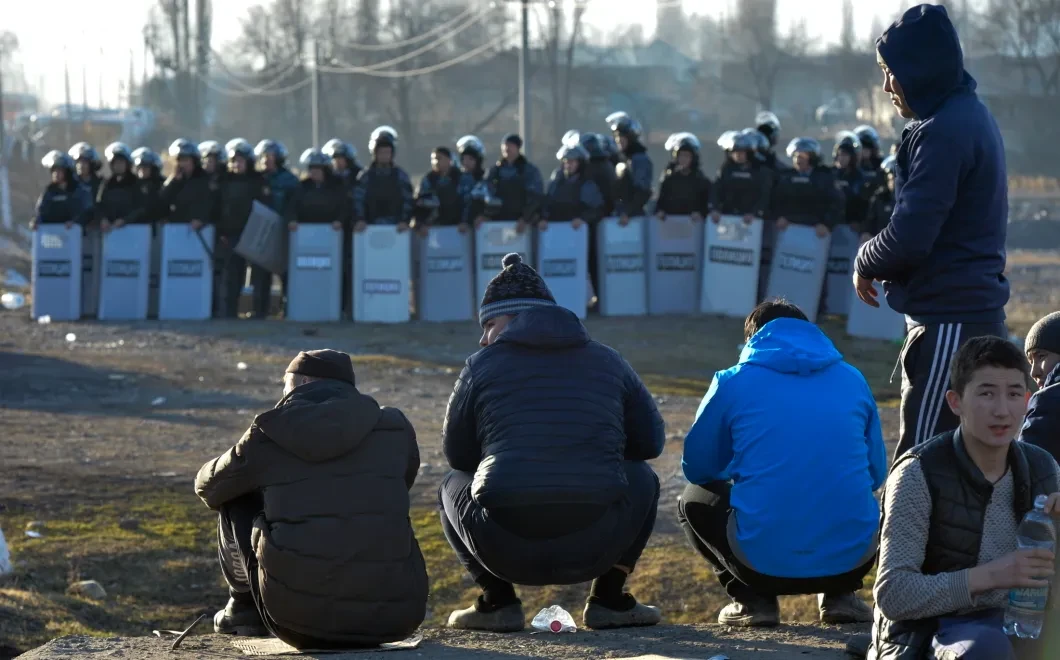
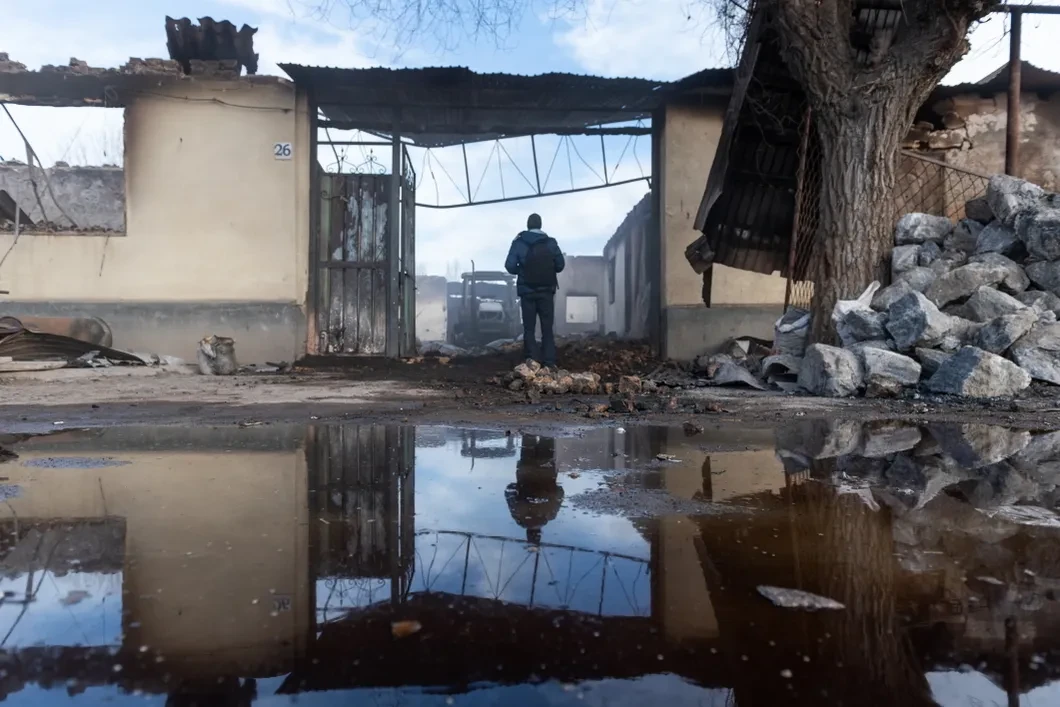
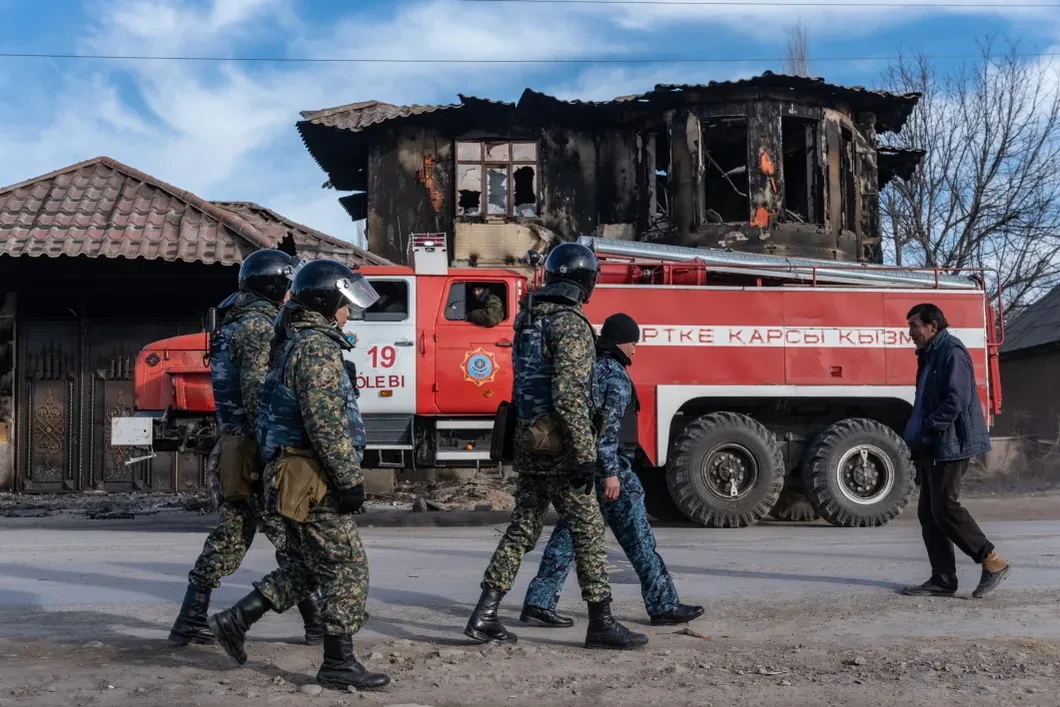
Mass pogroms in the south of Kazakhstan in the village of Masanchi of the Kordai district of the Zhamble region, which killed 10 people and more than a hundred suffered (including 19 police officers), occurred, according to the Republic of Ministry of Internal Affairs, due to a domestic conflict.
“Some drove directly along the road - three, three more on a heavy car at that moment drove out of the house on the road. Conflict - who did not give way to whom. As a result, as it usually happens, from words passed to the assault on the spot, ”said the deputy head of the Ministry of Internal Affairs Alexei Kalaichidi. It happened on February 5, the fight participants reconciled on the same day, but less than two days later
Residents of the neighboring village threw stones at a police car and an indignant crowd (according to various sources, up to 1000 people) went to burn houses in the village.
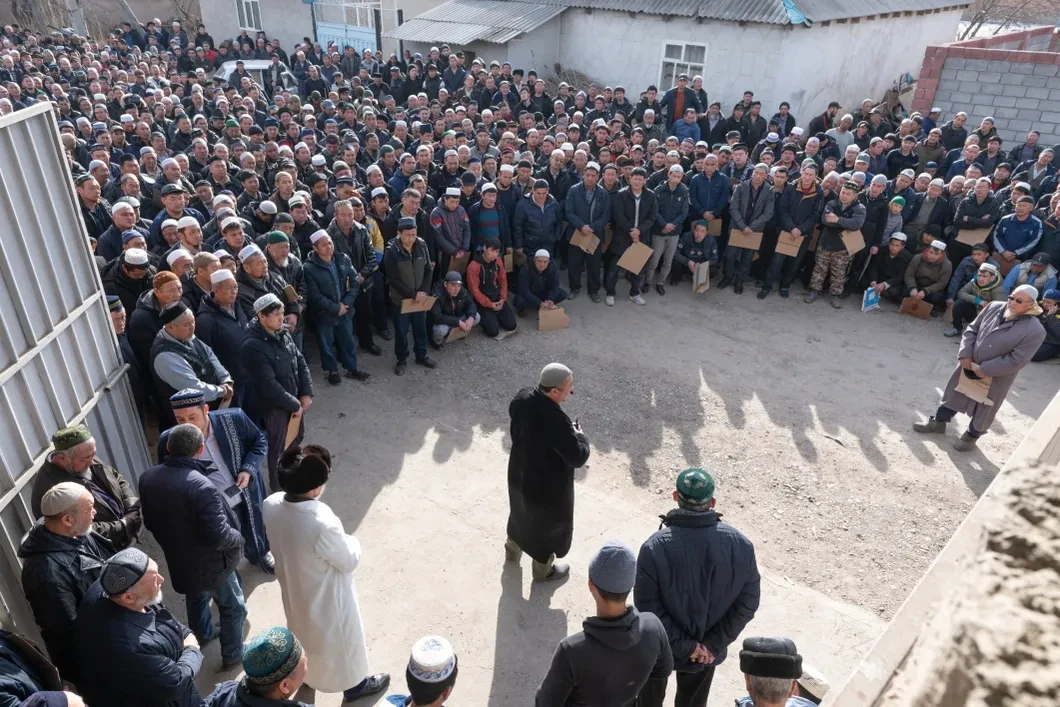
The authorities of Kazakhstan very carefully treat the term “interethnic conflict”, although in fact a clash occurred between the Kazakhs and concentrated in two villages in the south of Kazakhstan by the Dungani - a nationality that moved 140 years ago. Several thousand Dungan after the battle on February 7–8, in a hurry, starred from their seats and massively flowed into the neighboring Kyrgyzstan - the benefit is very close. The authorities did not want to hear about the fact that it could be criminal showdowns, although on the eve of the pogroms in Kazakhstan they detained a thief in the law of Serik-head, which was also influenced by smuggling, and it, in turn, is sometimes associated with some representatives of the Dungan diaspora.
Bakhytzhan Toregozhina, the head of the human rights organization Ar.rukh. Khak, believes that there is a provocation, because the numerous videos from the scene show that the attackers were "in the same jackets and hid their faces." Yes, the provocation, Kazakhstani power joyfully echoes, only provocation is by no means from the side of the authorities, as some commentators hint, but from the part of unknown persons who mobilized people through a fake newsletter in the WhatsApp messenger.
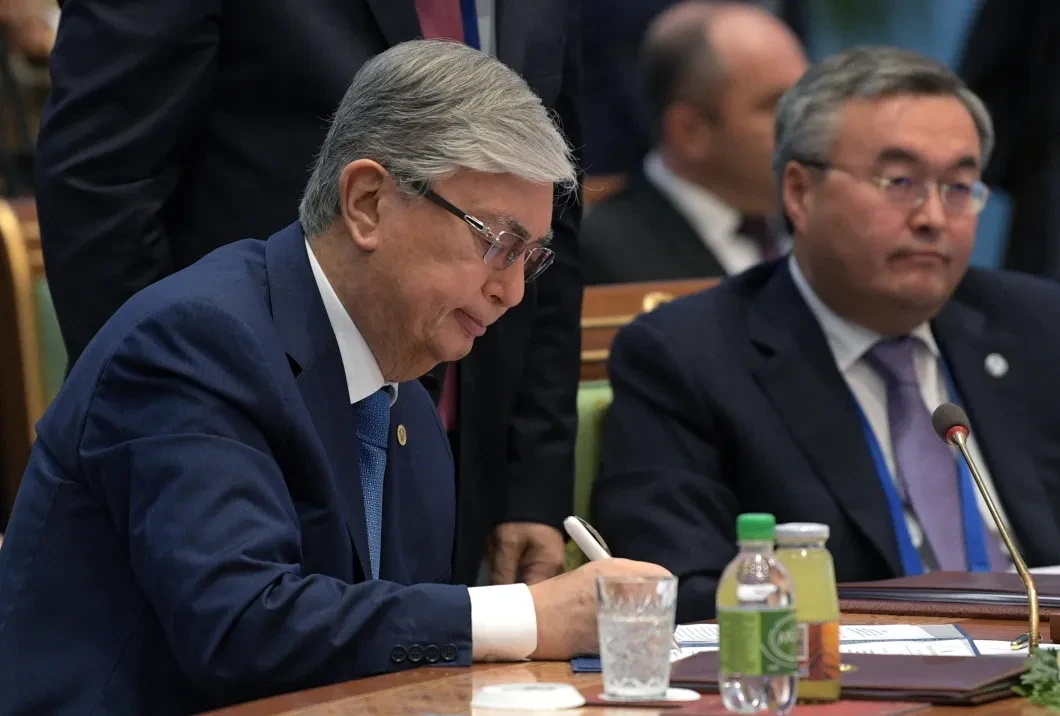
The word "provocateurs" in all ways in the first hours after the battle was repeated by the president of the country Kasim-Zhomart Tokaev.
The newsletters of video and text messages with calls to beat someone really appeared in messengers during February 7, but the authorities' statements that they provoked such a wave of aggression still cause some skepticism. Another question is that mass stuffing in WhatsApp causes the country's citizens much more trust than official messages, and the stream of mailings is not able to control. Kazakhstan wants to change the rules of behavior in WhatsApp at the international level, but for now, even a conveyor for the establishment of criminal cases does not help to cope with mailings and in terms of power in the messenger.
ATTENTION! Read this message!
There is no system that WhatsApp has acquired such an influence in Kazakhstan, it is just a combination of circumstances. After the extinction of the My World system, which was in the republic to the last, people needed something more convenient in functionality, and whatsApp was just at hand.
In 2016, the messenger, according to analysts from Similarweb, was recognized as the most popular in Kazakhstan, and inside it, according to human rights activist Evgeny Zhovtis, began to grow “community” interests. “The functionality and principle of communication inside WhatsApp falls well on the traditional mentality of the Kazakhs, where the Uzun-Kulak ( “ Long Ear ”, an analogue of the expression“ sundress radio ” -V.P. ) in the steppe was a dominant way of obtaining information,” explains Zhovtis.
Simultaneously with the distribution of WhatsApp in Kazakhstan, confidence in the current government fell catastrophically,
Despite the gigantic interest that Nursultan Nazarbayev received in the presidential election. In such conditions, the like-minded people written in the messenger inside the groups, it began to be perceived as truth, even if at some point one of the comrades sent a picture or a message with anxious information from the outside. “WhatsApp is not intended for a public discussion, this is a quick connection with each other and an ideal platform to support the so -called weak ties: a child’s teacher, a familiar dentist, a grandmother’s neighbor,” says one of the authors of the book “Dangerous Soviet things” about the mechanism of creating urban legends Alexander Arkhipov. “In a situation where trust in power institutions falls, trust in“ weak ties ”increases, therefore, in a country with an unstable political and economic system, rumors coming through WhatsApp become very powerful.”
For the first time, in a large way, Kazakhstan experienced this during the next wave of devaluation in February 2014, when people through the Bankruptcy of the largest banks of the second level began to arrive through whatsApp. In one day, depositors in a panic withdrew from three banks almost a billion dollars. The authors of the newsletter were able to calculate, but only demanded to give a refutation, there were no other tools at that moment in the presence of security forces. In six months after the distribution of banks, the pressure tool appeared: the new Criminal Code introduced criminal liability for the spread of rumors (Article 274 “Distribution of knowingly false information”), which involved in the most strict version up to 10 years in prison. This did not help:
By the beginning of 2020, the Kazakhstani authorities became a common place for a permanent public refutation of mailing in WhatsApp.
From the latter: the jailers are forced to make excuses that they supposedly had someone from the colony; Doctors - that coronavirus was raging in Kazakhstan (while the newsletter went from the doctor himself; his colleagues were angrily called him a provocateur, and the security forces detained him).
A much more serious problem was the political orientation of the newsletters: because of such messages, people began to go out onto the streets. In the fall of 2019, Kazakhstanis was alarmed by the information that was being distributed through WhatsApp that 55 Chinese factories were going to transfer to the country: a wave of protest rallies swept around the country, and several ministers had to be performed with a refutation. A trendy newsletter right now is the draft Code of Health, according to which cadaveric donation will be allowed in the country if a person has not forbidden the transplantation of his organs before his death. WhatsApp argues that the doctors controlled by the authorities have already formed the Black Transplantologists teams: they will allegedly kill living people right on the operating table for the sake of spleen or kidneys. People are excited and demand the abolition of any such initiatives, and even better resignations, but they still do not go out on the square.
Plant and turn off
Dragon terms do not stop anyone for such rumors, because Kazakhstani special services are not very well looking for authors. “WhatsApp is arranged so that you can send the mailing list even your contacts only by indicating a certain phone number. But the SIM card can always be bought illegally in another country, and besides, with the development of VPN and the ability to go to WhatsApp from a computer, finding the source source becomes extremely difficult, ”says Mikhail Klimarev, director of the Non-profit organization Society for the Internet Protection. In practice, this means that
Either very naive people come into the hands of special services, like a video doctor with a fake about coronavirus in Kazakhstan, or very lazy.
Against the rest, the security forces in the old fashioned way fight with locks: on the night of the pogroms in the village of Masanchi, the problems with WhatsApp were throughout the republic. Here, Kazakhstan is notorigin, Klimarev adds: such a technique is used in particular in India, where fake links are the same headache.
The second method is to be introduced into interest groups and calculate the main provocateurs. The acute need to work out such a technique arose in the beginning of 2019, when the Kazakhstan court recognized the organization of the disgraced oligarch Mukhtar Ablyazov as a banned in the country, the “democratic choice of Kazakhstan”. The hidden agents of the special services, which was not really hiding, were looking for who approves the actions of Ablyazov most in themed chats, and tried to bring these people to justice. But such searches were widespread in Telegram, and over time he introduced the function of hiding the number in the account. After that, a significant part of the Internet agents flowed into WhatsApp, where she concentrated in groups discussing non-traditional religious movements. “I assure you: in such groups of special services agents more than near the president’s residence,” says political scientist Idos Sarym. “This is a completely legitimate practice, and although we are humanities, for everything human, but we cannot help but understand that it is especially impudent to be given in the ears.”
In fact, “in the ears” are now being received by those who do not even call for anything extremist, but are simply interested in religion and its discussion. “Maybe some WhatsApp group of small merchants-traders, who are all Muslims. Someone begins to be interested in how to properly lay a rug for prayer, someone sends a picture, ”the human rights activist Bakhytzhan Toregozhin outlines the habitat of agents. At some point, someone can send a picture in Arabic without any back thought, not even understanding its content, and this may turn out to be something prohibited in Kazakhstan.
After that, the agents will try to bring a specific user to a personal conversation in order to collect the evidence base and provoke even greater revelations, which are drawn to the composition of the crime. Then it is almost impossible to get away:
After the livestock registration of mobile phones was introduced in Kazakhstan and tied each number to a particular device, it cannot be said that someone else wrote these messages, not you.
“At the trial, a person then does not even understand what his fault is: he says that he reposted the picture, because she seemed beautiful to him, and in the correspondence he did not say anything special,” says Toregozhina. Often, such networks come across supporters of Hizb U-Tahrir (the movement is recognized as terrorist and prohibited both in Russia and Kazakhstan), and the most peaceful (like women); More radical is smarter and are almost not conducted on the provocations of agents.
For those who came across, they give the deadlines on a grand scale: in August 2019, in Almaty, eight chat participants in WhatsApp on religious topics gave from five to nine years the colony on the basis of a simple correspondence: the KNB sent these messages for a political science examination, which considered that the defendants committed a “crime against the safety of mankind”. In January 2020, two women who discussed the status of a woman in Islam in WhatsApp gave five years of restriction of freedom. The state prosecution asked six years of real term, the defendants were saved only by the presence of relatives on dependent.
Even supporters of such work methods agree that this is a one-time catch and there is no systematicity in the actions of the security forces, and you need to do something with mailings in WhatsApp, the KNB can easily miss a potentially dangerous stuffing if it is not related to religion or an attempt to attempt on power. “I am increasingly coming to the conclusion that through such newsletters the country may well“ swing ”. Unfortunately, it is necessary to admit that people did not use the Internet to enter the London library and did not critically comprehend what was written in it - other forces may well use it, ”the liberal, generally political scientist Idos Sarym, states. “Another thing is that you can offer either idiots or the same provocateurs as a [main] method.”
The Kazakh authorities are probably ready to continue the conversation about the new cybersecurity rules in relation to WhatsApp and messengers in general at the UN level, Sarym believes. This conversation was launched with Russia, which was able to sell a new resolution on cybercrime at the UN General Assembly at the end of last year. The only problem is that 60 countries - mainly Western ones - opposed this resolution, so that two conventions on cybersecurity will now operate at the international level. And the Convention that Kazakhstan joined is rather not about the fight against fake newsletters in WhatsApp, but about an attempt to wrap the fight against cybercrime against political opponents.
At the internal level, it is possible to solve the problem of people's uprising due to stuffing in WhatsApp without international resolutions: it is necessary to strengthen the work of power institutions and increase the level of confidence in them.
“The problem is not in the messengers, but that people are so easily believed in what was written there,” -
Says Mikhail Klimarev. But to increase its authority, providing the company with reliable information as opposed to fake newsletters, the Kazakh government seems to be not ready. On February 7, when the pogroms began in Masanchi, the police officially announced the “localization of the conflict” and threatened his responsibility for the distribution of “fake information” - exactly at the moment when the attackers burned at home, shot the same police officers and killed civilians.