
Translated material
Stars and dust
Cycle " School of Life "
Stars and dust.
Report on how Russian astronomy destroys the apartment issue
Ekaterina Reznikova, 12 February 2020
The Russian astronomer from the Crimean village of Scientific Gennady Borisov, who recently opened the first interstellar comet, became a world star. However, there may not be more such discoveries: the developers surrounded the scientific one, which could interfere with observations of the sky. This has already happened with two other large Russian observatories.
On August 30, 2019, amateur astronomer Gennady Borisov looked at his home, in the Crimean village of Scientific, pictures of the starry sky, which he took by a home-made telescope with a 65-centimeter mirror. Suddenly, on the very edge of the frame, he saw an unfamiliar object with diffuse contours. Borisov immediately recognized the comet in the facility: he already had seven open comets on his account. He devoted the next few nights to study the object.
The calculation of the trajectory of the heavenly body stunned Borisov. The comet clearly flew from behind the limits of the solar system-the results of these calculations were later confirmed by the leading ground and space observatories. So the Russian enthusiast revealed the second interstellar object known to humanity (the first was the asteroid 1I/Oumuamua opened in 2017), which was given the name 2I/Borisov, where I means “interstellar” from English interstellar, and 2 - the serial number in the list of interstellar facilities.
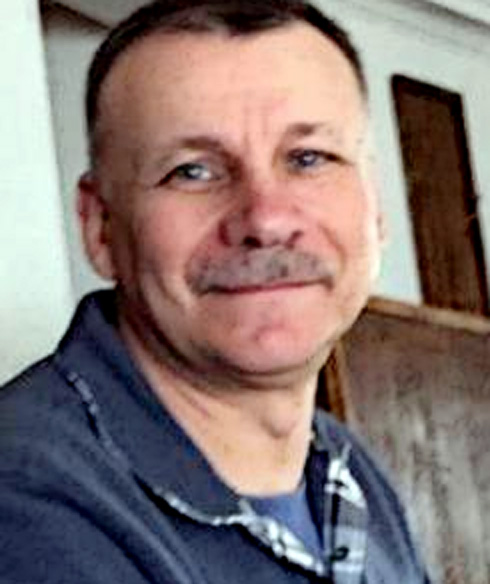
The next few weeks, the most powerful telescopes of the world followed the comet, and the amateur astronomer from Crimea became a world-class celebrity. “The discovery of Borisov caused a storm of observations of this object around the world,” says astrophysicist, a popularizer of astronomy Konstantin Batygin.
World glory was not easy for the scientist: he himself is closed, he does not like to talk about himself, he did not want to talk with a correspondent of “project” and about anything other than his discovery. By January, he had already given more than fifty interviews, calculated Borisov himself and was tired of communication. Meeting with the “project”, after all the journalists who had given him, he complained that none of the previously coming correspondents even brought the cake to tea.
When asked how such a strange hobby appeared, the “Combet Clover”, so amateur colleagues and journalists call Borisov, Borisov explained: “I am an astronomer by training. But from professional science has long left. Why? Well, you see what is happening with our science. ”
But Borisov, a lover of Borisov, is not at all a short -teacher, as you might think about his "amateur" status. He works as an engineer at the Moscow State University Observatory and says that he leads the observation center of the astronomical scientific center - a large contractor of the Roscosmos to observe near -Earth satellites - the head of the ANC Borisov point, seems to journalists and officials. Borisov also constructs and sells tools for astronomical observations, and in his free time he is engaged in astrophotography and finding comets, says Borisov about himself. The astronomer's colleagues believe that he did not call himself “an amateur”: this status allowed him to receive in 2014 the Edgar Wilson Award, which is distributed precisely among amateur astronomers for pioneer. Borisov is indignant at such reasoning, all the money, according to him, he spends on new telescopes.
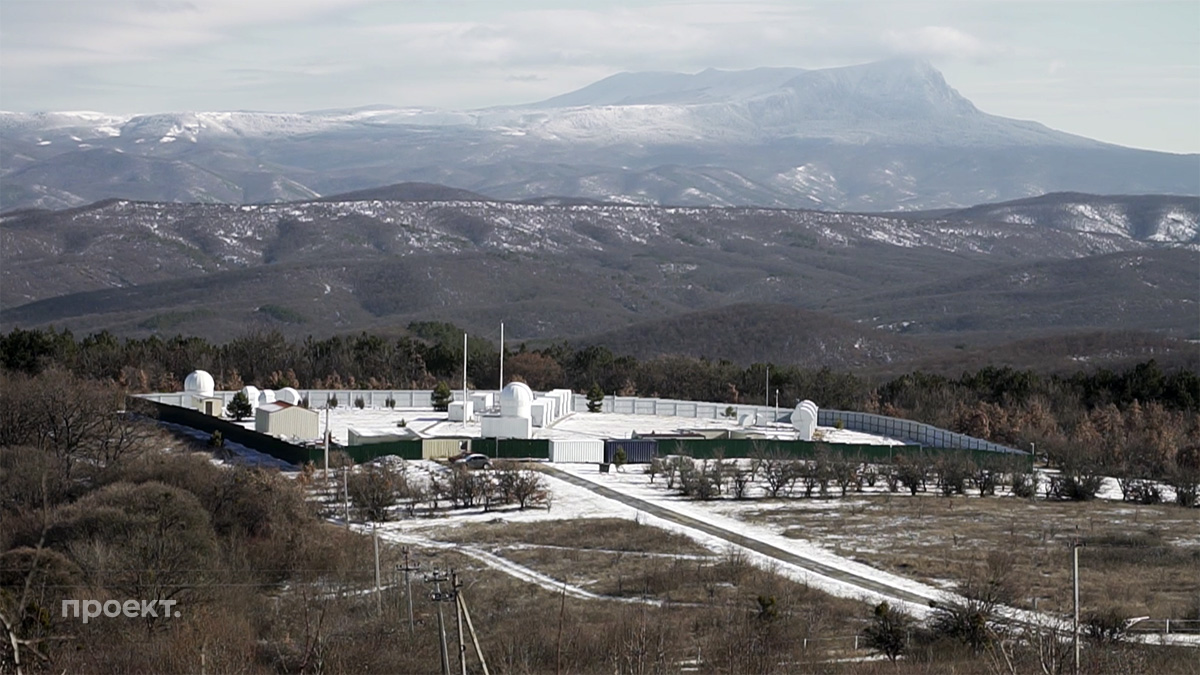
Borisov has a private Margo Observatory - the abbreviation from Mobil Astronomical Robotics Genon Observatory. It consists of homemade telescopes, each of which has its own name Genon, on behalf of Gennady.
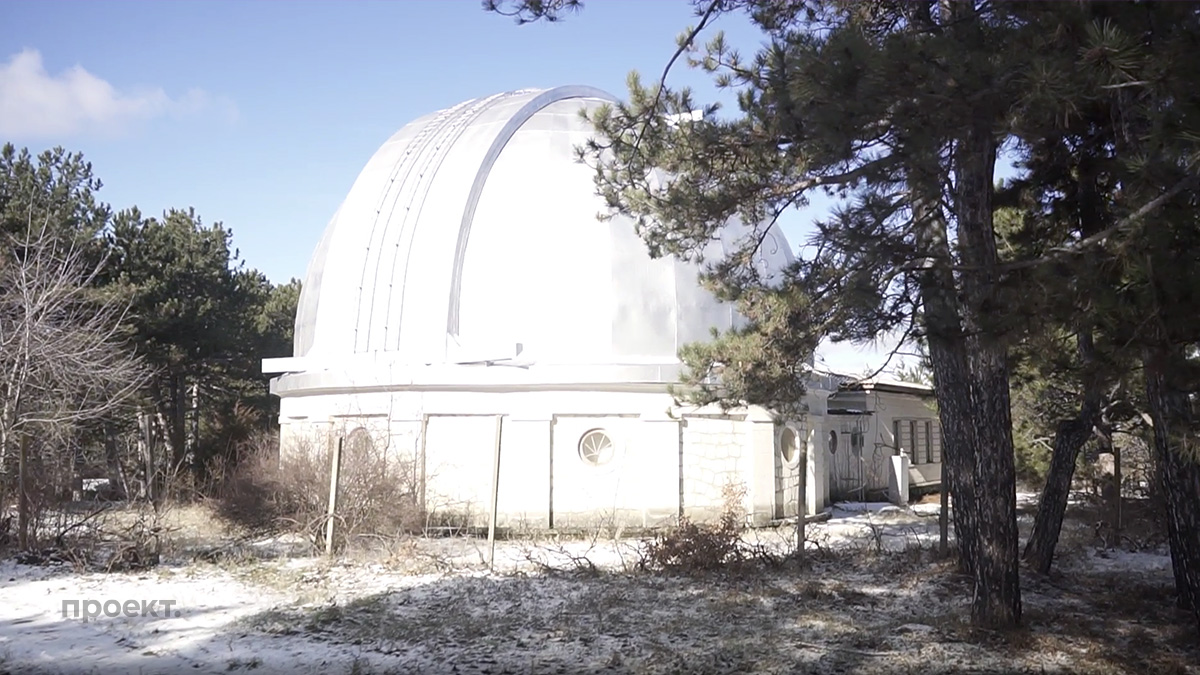
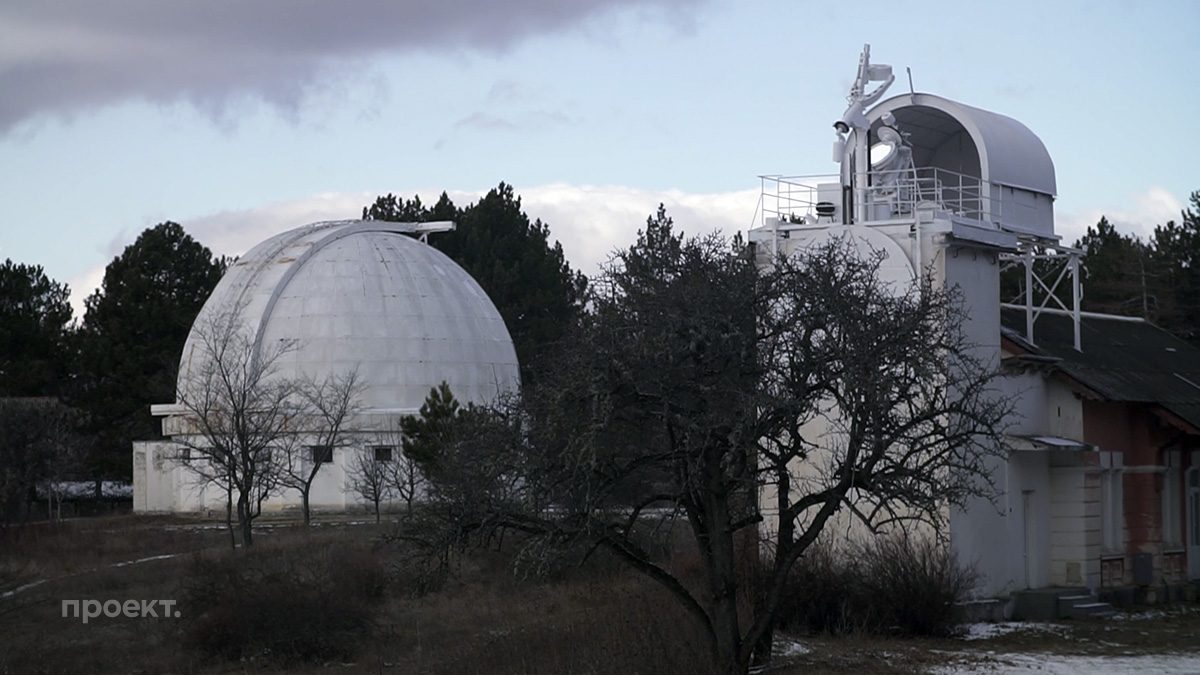
There are telescopes in the Crimean village of Scientific. Three large astronomical institutions are also located there: the Crimean Astrophysical Observatory (Krao); Laboratory of the State Astronomical Institute. Sternberg Moscow State University and the Crimean branch of the Astronomical Scientific Center. There are no references to the ANC website about the observation post in the Crimea, although there is its photo.
In scientific, not only professional astronomers and astrophysics work, but also amateurs. Several times a year there are ranges of both experienced observers and completely newcomers. The fact is that in the village of “good sky”, the astronomers themselves say: it is located in a distance from large cities, in the mountains, where a minimum of light from residential buildings and street lighting, which affects the accuracy of optical observations, exhaust gases, dust, atmosphere is transparent and there are no turbulence that affect the clarity of the images obtained using telemotes.
But in 2019, at the same time, when Borisov made his sensational discovery, the scientific problem began. A large construction site unfolded in the village, which threatens the destruction of Crimean astronomy as a whole - both professional and amateur.
The Crimean Astrophysical Observatory in the scientific is one of the three major observatories of the Russian Academy of Sciences located in the European part of Russia. The largest-the main astronomical observatory in St. Petersburg-has been folding observations at Pulkovo altitudes since 2018. For the same reasons, which is now threatened with scientific.
Why should we follow comets and asteroids?
Astronomers are looking for new comets and small planets not just out of curiosity. They solve important practical problems - they expect orbits to predict a clash of a large cosmic body with the ground in advance.
Comets can tell how our star system originated, because in fact these are giant refrigerators that have not been opened for 4 billion years. Studying the composition of comets, you can learn a lot about the chemistry of the Sun and the planets and try to answer one of the main questions of mankind: is this chemistry enough for the emergence of life?
In the bowels of asteroids, deposits of valuable minerals can be hidden. For example, asteroid psyche is entirely consists of metal, however, scientists have so far only approximately determined its composition.
Scientific party in the mountains
Astronomical observations have been conducted in Crimea since the beginning of the 20th century. The first telescopes stood in the village of Simeiz near Yalta. But during the battles for Crimea during the Second World War, the observatory on the coast was completely destroyed. After the war, she was transferred to the mountains - away from the "flash" of large cities, to places with a more stable and transparent atmosphere. In exchange for lost telescopes from Germany, Carl Zeiss tools were brought. Near the telescopes they built houses for scientists and service personnel of the observatory. So on the map of Crimea a new settlement appeared - the village of Scientific.
Today, the village is more like a sanatorium than a science of science: two -story houses in the style of the Stalinist Empire, shady alleys from the pine trees and cedars brought from the Nikitsky botanical garden, lanterns in deep lampshades: their light should not interfere with the work of astronomers. Telescopes. And silence.
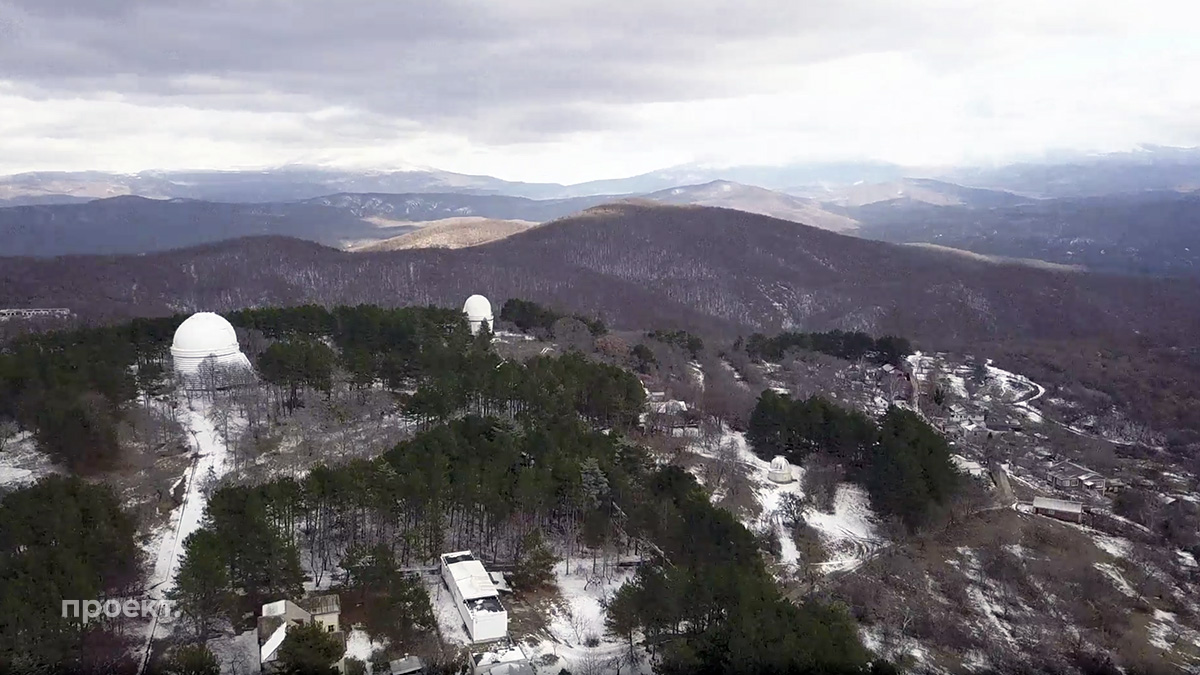
In the village where about 600 people live, there is a school, kindergarten, an outpatient clinic, mail, hotel, library, shops. And all this half an hour from Simferopol.
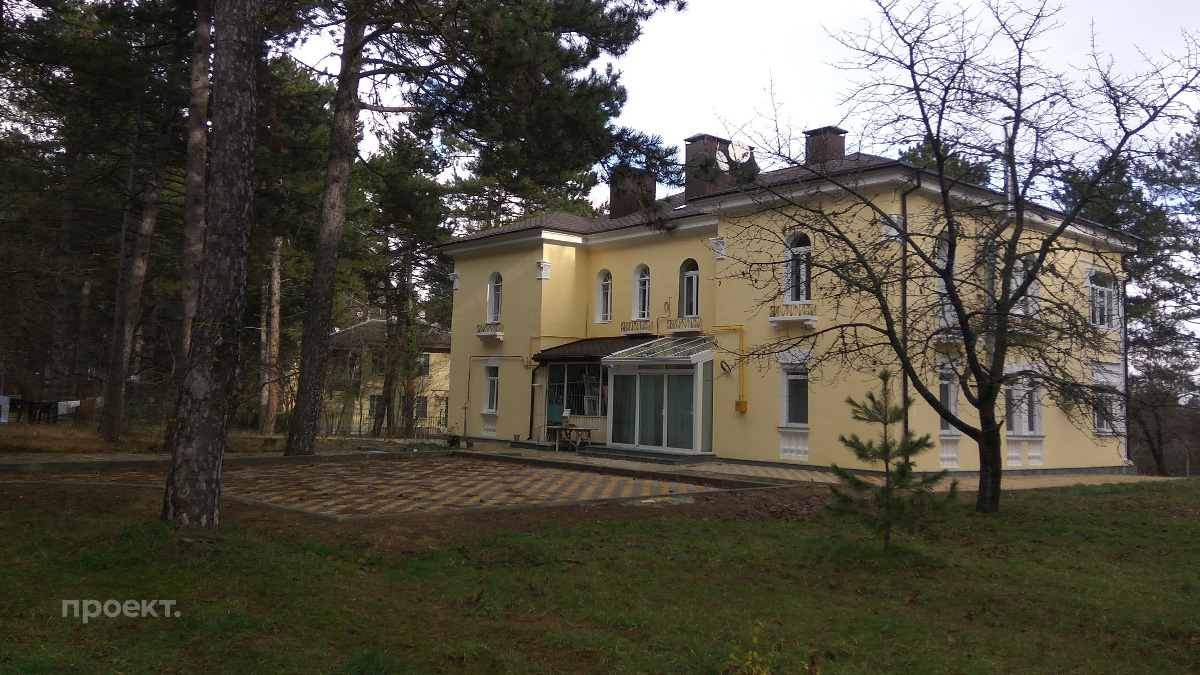
Large construction without coordination with the Presidium of the Academy of Sciences in the village is prohibited: back in 1945, it was assumed that a three -kilometer light protection zone would be installed around the observatory. The order to create a security zone was published by the Executive Committee of the Crimean Regional Council on December 1, 1945, a similar decision was made by the Supreme Council of the Republic of Crimea in Ukraine, in 1997. But its borders were never officially defined. This was the use of the developer.
The discoveries of Crimean astronomers
Back in the 30s of the XX century, the astronomers of the Crimean observatory under the leadership of academician Grigory Shain experimentally proved that the stars, like planets, revolve around their axis.
Throughout the history of Krao, 11 comets and more than 1,500 asteroids were opened. A significant contribution to the opening was made by a group of black spouses, which in the 60-80 years, using a search telescope, discovered more than 800 asteroids-about 30% of all small planets known to the world at that time.
The philanthropist and developer
The head of the State Council of the Republic of Crimea, the hero of the Russian Spring, Vladimir Konstantinov grew up in scientific and went to a local school, where his father taught physical education. Konstantinov did not become astronomer, but became a politician, making his career on the party line. Since the late 90s, he met in the Crimean parliament, and in 2010 he headed it, becoming the deputy chairman of the local cell of the “Party of Regions” of Ukraine. After the attachment of Crimea to Russia, the post of Speaker Konstantinov did not leave, but only changed the Partyle of the “Regional” to “United Russia”.
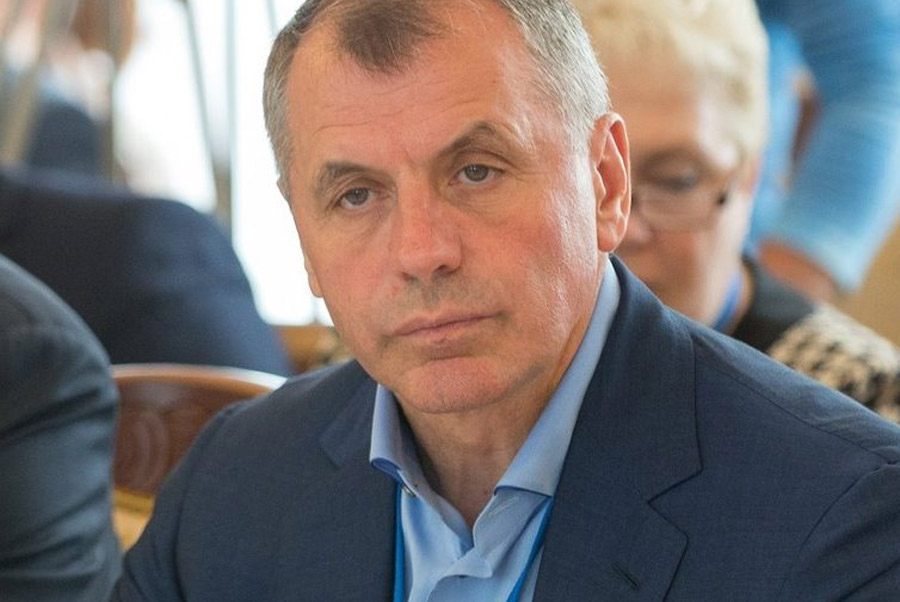
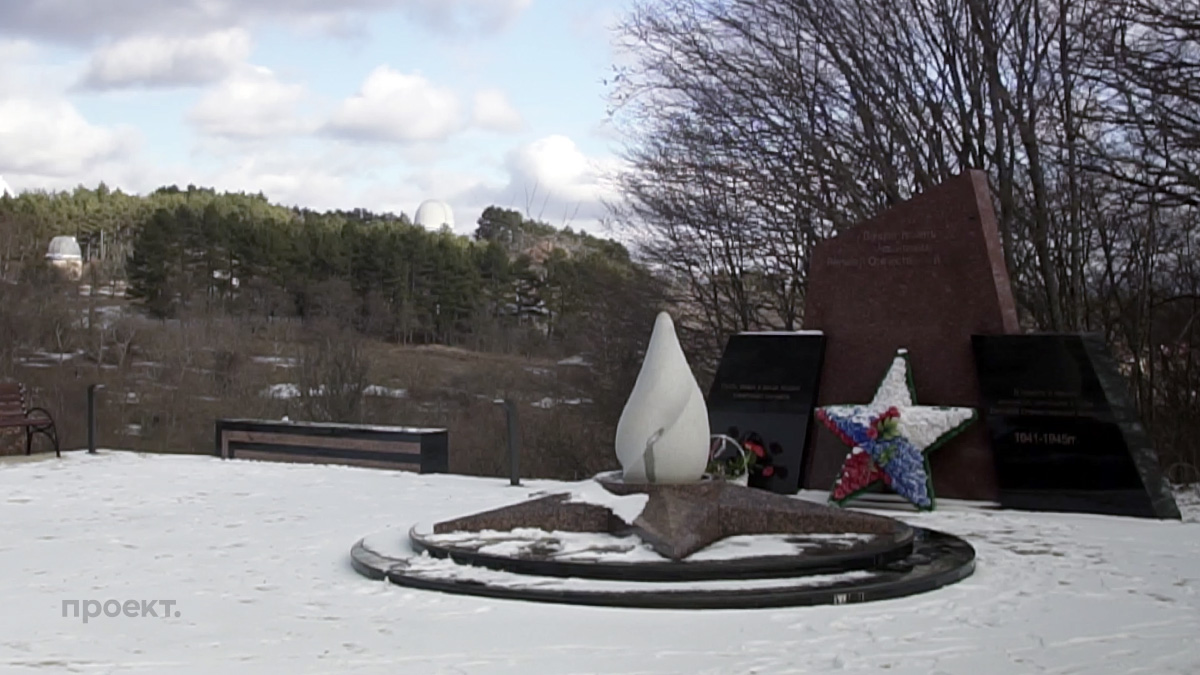
Konstantinov and now lives in the village. He is actively engaged in landscaping: at his own expense he puts tiles in the alleys, sets fences around the houses, helps to repair school, children's and sports grounds, changes asphalt on a long -broken road, say residents of the village, their words confirm in the administration of the observatory. Last spring, the politician built a memorial opposite his house in memory of fellow countrymen who died during the Great Patriotic War. The monument aroused bewilderment among the old -timers, because the scientific did not exist in the war of the village.
Without Konstantinov, there would be devastation in the village, the deputy director of the observatory Leonid Limarenko admits. The Bakhchisaray administration, which is formally scientific, cannot invest in its infrastructure, since it stands on the federal land. In 2016, by order of the Council of Ministers of Crimea No. 1385-r dated 08.11.2016, the land plot under an observatory of 86.8 hectares was transferred to federal ownership. In fact, this is the whole village of scientific. And Konstantinov somehow solves these issues. And the observatory staff helps: to whom to issue a pension, who to buy a plane ticket, told the “project” by the director of the Crimean Astrophysical Observatory of the Alla Rostopchin-Shakhovskaya observatory.
Konstantinov himself, not without pride, talks about his participation in the life of the village. “We achieved good results in the improvement of the village of Scientific,” he said in June 2019 on the air of the Crimea24 television channel. “The school was reconstructed, roads were paved, a modern sports street complex was installed, children's playing and sports grounds are equipped, a memorable square is opened.”
However, Konstantinov’s interest in the scientific turned out to be not only philanthropic.
In parallel with the political career, Konstantinov was engaged in the construction business. Before making a political career, he led large development projects.
The most famous business of Konstantinov is the console group of companies that he founded, now is one of the largest developers of the peninsula. Until 2001, SK CONSOLE-Construction LTD was headed by Konstantinov himself, and then, as the company's website wrote, he went into politics and “appointed the successor” . The son of Konstantinov Oleg is still working in business: he owns a share in the main company-Oleg Konstantinov-the beneficiary of KSK LLC, which has a share in the authorized capital of SK CONSOLE-Construction LTD, and even a deputy reception is in the office of Consoli
. The younger Konstantinov is a deputy of the Yalta City Council.
At the turn of the 90s, two residential five-story buildings were laid in the scientific. The apartments in them were intended for scientists. But the observatory could not complete them on their own due to a lack of funding. To finish the construction, in 2007, the director of the Krao Alla Rostopchin-Shakhovskaya, heads the observatory since 2005, signed a contract with a console, according to which the observatory was supposed to be 15% of the finished area, the project itself was told by Rostopchina-Shakhovskaya.
Two five -story buildings did not end. The investor conceived a resort complex: nine apartment buildings, four Townhaus, five cottages, sports grounds, an indoor tennis court, a sport-inventory rental point, a 20-room hotel with a restaurant and a spa center, the project of the project at the disposal of the project is at the disposal of the project from 2008. And all this is in the center of the light -protective zone, 250 meters from working telescopes.
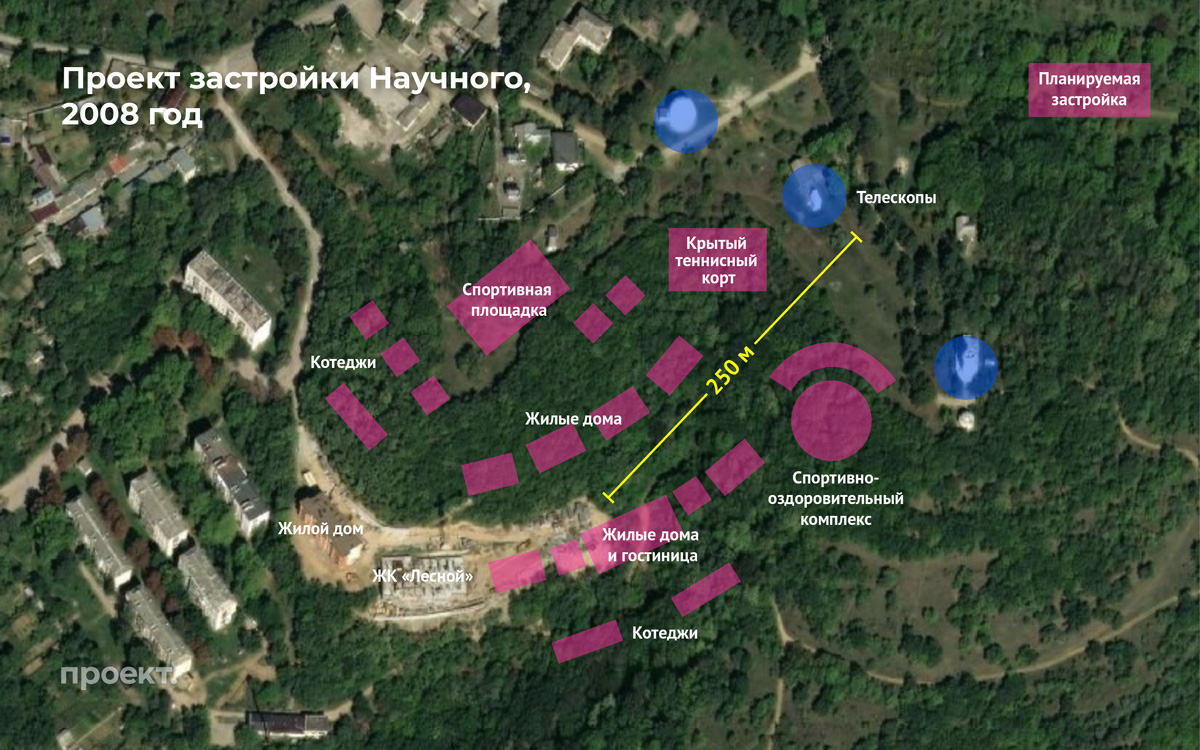
The astronomers were indignant: the light from new buildings, the dust and thermal pollution would damage all 26 telescopes of the observatory, nine of which were recognized as the national property of Ukraine. From 2008 to 2011, scientists arranged rallies at the construction site, wrote letters to the authorities to authoritative scientific organizations. As a result, the Ukrainian Astronomical Association stood up for the observatory, a commission was created inside the observatory, which found a compromise option: the “console” will build two medium -storeed houses on the site.
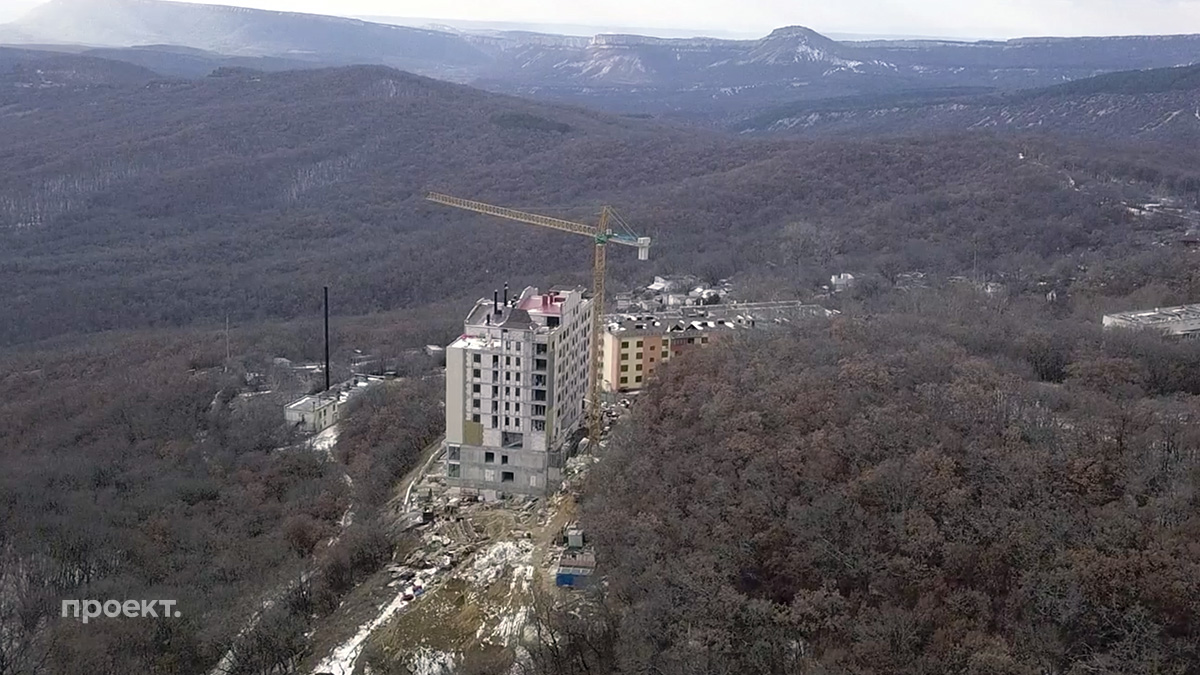
All this time, preparatory work was underway at the construction site in the scientific work: workers dug pits, and strengthened the slope of the retaining wall. The main stage of construction began immediately after the attachment of the peninsula to Russia. The skeletons of the old Soviet non -construction were dismantled, and in their place already in 2015, the Console erected a five -story building of the new Lesnoy residential complex.
In the spring of 2019, a giant skeleton of a ten -story building began to be erected near the five -story building. According to the documents, this is a residential building, according to the Gosstroynadzor of Crimea, in the declaration of the start of construction this building is designated as “Residential House No. 2/2 on the GP”. But local residents and builders believe that this will be a private hotel: even according to the already built frame, it is noticeable that the first few floors are supposed to be occupied with non -residential premises. The official requests on behalf of the “project” at the Console company were refused to answer the development plans in scientific.

Apartments in the “Lesnaya” complex in scientific are sold on the website of Consoli. Now the price is not indicated, but more recently, a square meter in the complex cost from 52 to 55 thousand rubles.
By the fall of 2019, the observatory spoke that 19 apartments in the Lesnaya residential building would go to astronomers. But to whom exactly, scientists do not know. In a conversation with Project, the director of Krao Alla Rostopchin-Shakhovskaya complained that she could not finally distribute the area, since the institution does not belong to the institution. And she asked for “not to raise noise”, otherwise scientists risk not getting anything at all.
The director's fears are not soundly found. According to the documents, the construction customer, and hence the owner of the house, is the observatory. However, over the years that have passed since the signing of the contract with the Console, the Observatory was subordinated to four different departments of Ukraine and Russia. In 2007, the Crao Research Institute was an independent legal entity, in 2013 the Cabinet of Ministers of Ukraine retrained the observatory to the Kyiv National University named after Shevchenko. Under Russia, a republican scientific institution was created on the basis of Krao, and in 2015 - federal, subordinate to the Russian Academy of Sciences. The current FGBUN “Krao RAS” is not the successor of Ukrainian and Russian predecessors. At the same time, new agreements with the investor were not concluded, says Rostopchin-Shakhovskaya.
Moreover, the land under the observatory does not legally belong to it, the data on the owner of the plot does not occur in the USRN. Since November 2016, a plot of 86.8 hectares was transferred to the federal property, by order of the Council of Crimea No. 1385-r of 08.11.2016, but its boundaries have not yet been determined. With responsible for the property of scientific organizations, the Federal Agency of Scientific Organizations was liquidated in December 2018; The decision on liquidation was made in May 2018, when the Ministry of Education and Science was divided into two departments-the Ministry of Education and the Ministry of Higher Education and Science, construction was not agreed, Rostopchin-Shakhovskaya admitted in a conversation with the “project”.
The fact that the director of the observatory, having no right to the site, in 2017 received permission to build a high -rise building, interested the prosecutor's office. During the audit, it turned out: documents submitted to Gostroynadzor contain “signs of forgery”. The results of the audit are at the disposal of the "project". Thus, the Bakhchisaray administration allowed to build a medium -storey building - not higher than eight floors, but on a city -planning plan submitted to the Gosstroynadzor of Crimea on behalf of the observatory, multi -storey high -rise buildings were indicated. Now the prosecutor’s office is suing the officials who issued these documents to the developer.
Crimean astronomers are outraged by the construction in the same way as ten years ago, but they openly no longer protest. “The older generation of scientists who created the observatory has already died, and the youth still,” complains the senior researcher at Krao, doctor of physical and mathematical sciences Yuri Tsap. “In addition, rallies in Russia are prohibited.”
There is another reason: with the transition to Russia, astronomers were significantly raised by salaries, began to pay for business trips and participation in conferences. The main part of the salary is stimulating payments, and astronomers are simply afraid to lose their premium, several observatory employees shared with the “project”.
Director Krao assures that in addition to the two already erected houses, “console” will not build anything in scientific.
Military brothers
The Console is not the only company trying to build up the surroundings of the observatory. Literally a kilometer from the village, on Mount Sel-Bukhra, private investors bought four sites with an area of 24 hectares. Владеют ими физлица — Юлия Беграмбекова, Максим Чайковский и Галина Мареева. Максим Чайковский — председатель правления товарищества собственников недвижимости «Дачное некоммерческое товарищество „Сель-Бухра“», зарегистрированного в селе Песчаном Бахчисарайского района , по данным системы Контур.Фокус. Вместе с Беграмбековой он выступает учредителем московского ООО «Клинмед Консалтинг» — компании, занимающейся полиграфической деятельностью. Всех трех собственников в Крыму представляет глава бахчисарайского отделения «Боевого братства» Павел Врублевский и член организации Владимир Бабин . Врублевский показывал корреспонденту «Проекта» доверенности на распоряжение участками.
Сейчас это земли сельскохозяйственного назначения, но в новом генплане , который принят в 2017 году, участок размечен под объекты здравоохранения.
Осенью 2017 года на участках снесли все деревья, затем на гору провели водопровод, а весной прошлого года начались работы по укреплению лесной дороги. Вереницы КАМАЗов с эмблемой субподрядчика трассы «Таврида», компании «Камдорстрой», везли в лес материалы для строительства дороги. Работы велись ночью, машины поднимали в воздух клубы пыли, а фары создавали засветку, мешая телескопам вести наблюдения . В ответ на обращение общественников Министерство транспорта Крыма заявило, что не несет ответственности за действия субподрядчика, выполняющего строительные работы вне рамок проекта трассы «Таврида».
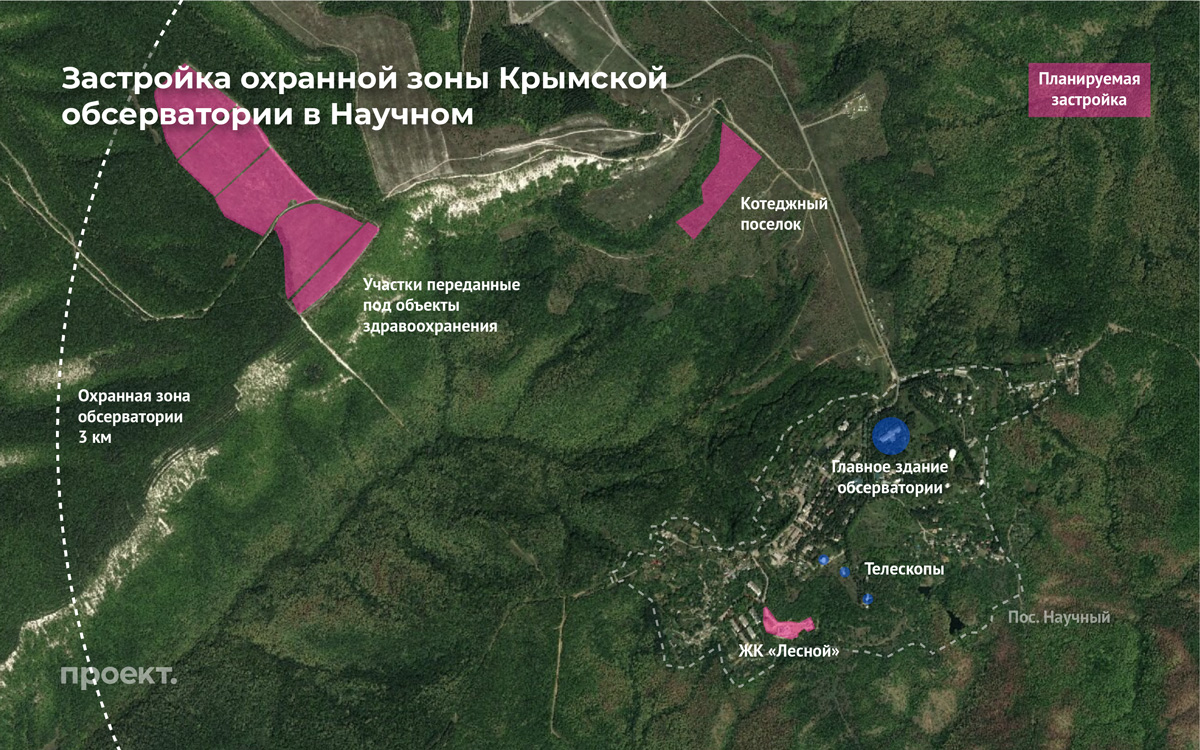
Весной 2019 года Врублевский не смог объяснить корреспонденту «Проекта», что именно новые инвесторы собираются строить в горах. Он назвал одновременно три версии: реабилитационный центр, персиковый сад, дачный поселок воинов-афганцев, а спустя год отказался комментировать «Проекту» текущие планы.
Осенью в Бахчисарае прошли публичные слушания еще по одному участку близ обсерватории. Елена Цеханская, владелица сельхозугодий, расположенных в километре от телескопов, хотела построить на склоне коттеджный поселок — проект планировки участка опубликован на сайте администрации района, на слушаниях ее тоже представляли «боевые братья» Врублевский и Бабин . «Проекту» Врублевский заявил, что собирается разбить на этой земле сад, хотя в вынесенных на слушания документах весь участок размечен под капитальную застройку.
Но астрономы всех трех обсерваторий Научного солидарно выступили против, руководство МГУ — письмо за подписью ректора МГУ Виктора Садовничего было зачитано на публичных слушаниях в ноябре 2019 года — и РАН направили в адрес крымских властей письма с просьбой не согласовывать строительство.
Высказался даже любитель Борисов, которого коллеги называют человеком закрытым, непубличным. «Вы строили дорогу, и ваш транспорт нам очень мешал, — обратился Борисов к представителю застройщика. — А мы [Астрономический научный центр] выполняем задачи Минобороны, работаем по лицензии ФСБ. Вам это надо, связываться с Минобороны и [ФСБ]?» (* Видеозапись выступления Борисова есть в распоряжении «Проекта».)
В итоге проект коттеджного поселка чиновники не утвердили, но Врублевский обещает это решение оспорить , об этом он сам сказал «Проекту».
Скоро любому потенциальному застройщику будет проще получать согласование на строительство. Дело в том, что Росимущество требует, чтобы научные учреждения избавились от непрофильных активов — это, например, земли и здания, не используемые непосредственно для нужд науки.
Сейчас КрАО проводит кадастровые работы по разделению большого участка обсерватории , рассказала «Проекту» директор обсерватории. За учреждением останется только земля под телескопами, основным и обслуживающими зданиями, а остальная территория перейдет под управление администрации Бахчисарая. Когда земли Научного официально передадут в собственность муниципалитета, застроить обсерваторию будет проще, ведь никаких согласований с астрономами больше не потребуется. В принятом в октябре 2018 года генплане Бахчисарая значительная часть территории Научного отнесена к общественно-деловой застройке.
Спасти ситуацию могло бы официальное установление охранной зоны вокруг обсерватории. С таким предложением в конце 2019 года выступило Министерство высшего образования и науки. Проект постановления об охранных зонах обсерваторий, разработанный российским правительством, уже прошел общественное обсуждение, но пока не подписан. Однако в этом документе указаны лишь максимальные границы охранных зон — не более 35 км, минимума нет: в теории если руководство обсерватории не захочет противостоять застройке, она точно так же продолжится.
Путем Пулково
В России и Крыму насчитывается более 30 астрономических обсерваторий , по данным Центра малых планет США. Три крупнейших в европейской части — Крымская астрофизическая в Научном, Специальная астрофизическая на Кавказе, Главная астрономическая обсерватория (ГАО) в Пулково с филиалом в Кисловодске — подчиняются РАН. И все три теперь под угрозой из-за наступающей застройки.
В июне 2018 года президиум РАН посчитал, что астрономические наблюдения в Пулковской обсерватории, вблизи семимиллионного, расширяющегося на юг Санкт-Петербурга, бессмысленны. Теперь ученые обсуждают возможность превращения обсерватории в вычислительный центр — без наблюдений.
Как и в случае с Научным, прекращению наблюдений предшествовала ползучая застройка и протесты защитников обсерватории.
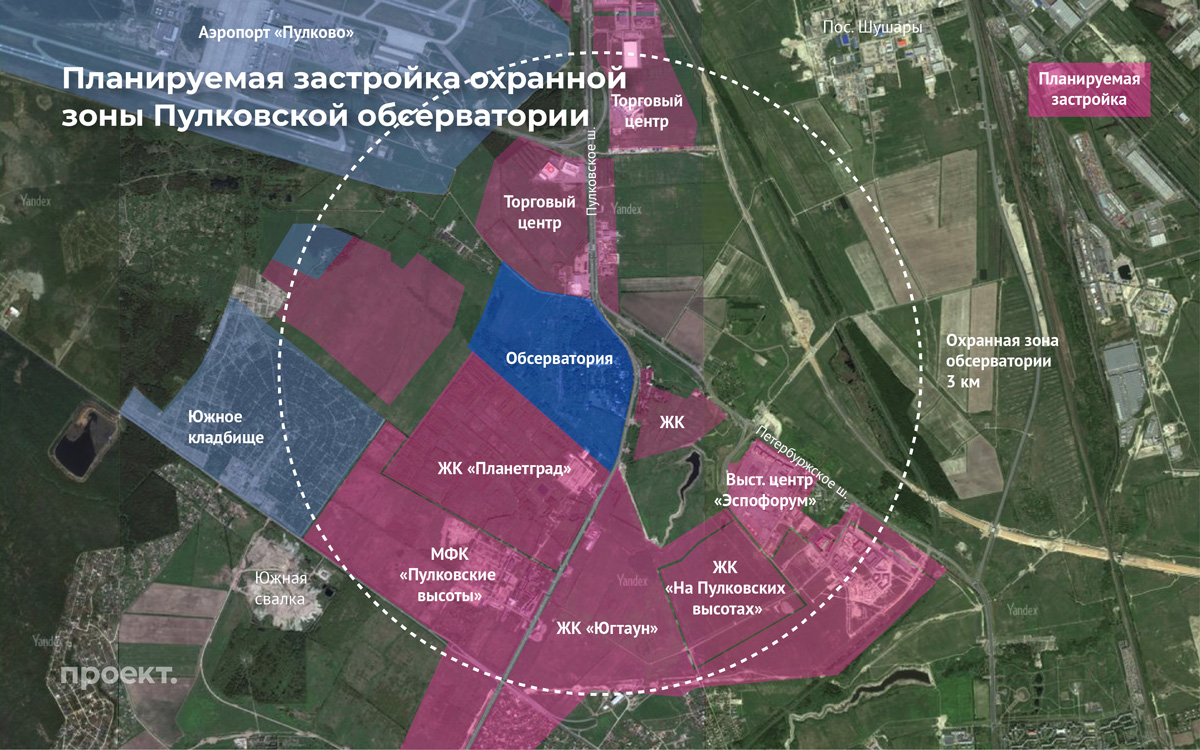
Территория около Пулково стала привлекательной для инвесторов после расширения Пулковского шоссе , рассказал «Проекту» ныне уволенный инженер-астрометрист из Пулково Александр Шумилов. В 2014 власти Санкт-Петербурга утвердили проект планировки территории микрорайона «Планетоград» на 100 тысяч жителей прямо в защитной парковой зоне обсерватории. Однако без согласования с учеными строительство начаться не могло.
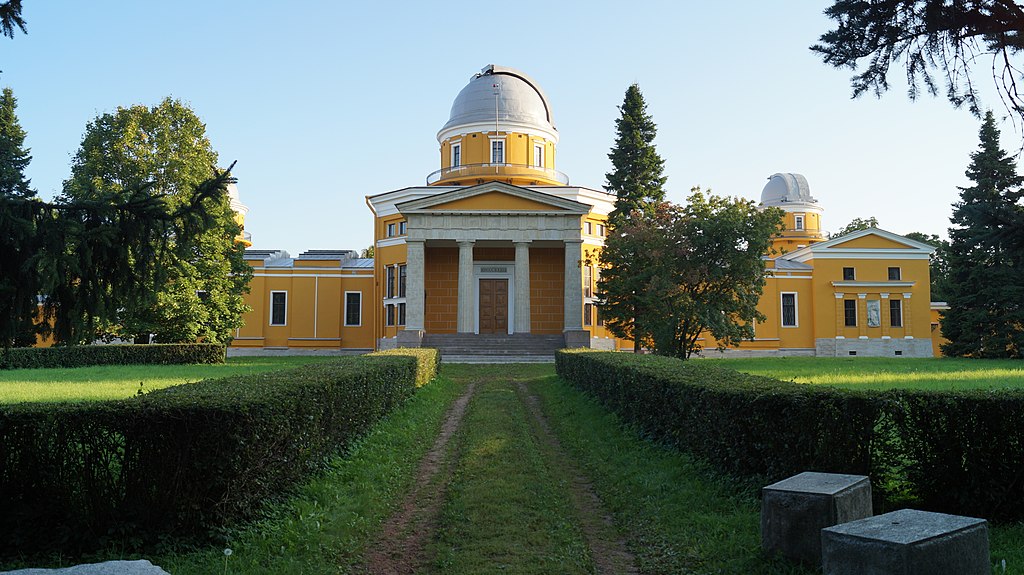
Два года ученые сопротивлялись застройке. Но в 2016 году директор обсерватории Назар Ихсанов подписал согласование первой очереди микрорайона. Защитники обсерватории обратились в суд, но проиграли. Не помогло и вмешательство ЮНЕСКО. Весной 2019 года миссия ЮНЕСКО посетила Санкт-Петербург и пришла к выводу, что сохранность всего исторического центра и Пулковской обсерватории находится под угрозой. Губернатор Санкт-Петербурга Александр Беглов в ответ витиевато объяснил , что соблюдать конвенцию об охране мирового наследия ему не позволяют российские законы.
Сейчас наблюдения в Пулково постепенно сворачиваются, а астрономы ищут новую работу. В 2019 году директор Пулковской обсерватории Назар Ихсанов — тот, что в свое время согласовал застройку близ Пулково, приезжал в Научный договариваться о ведении наблюдений на крымских телескопах , рассказывают астрономы КрАО, их слова подтверждает директор обсерватории.
Почему Пулковская обсерватория важна для мировой науки
Заниматься современной астрофизикой по соседству с многомиллионым мегаполисом невозможно. Но для астрометрии, изучающей скорости и орбиты небесных тел, условия в Пулково до начала застройки были вполне подходящими. Здесь располагалась одна из двух оставшихся в мире лабораторий — астрометрией, помимо Пулковской, занимается Морская обсерватория США.
Главное богатство Пулково — самый стабильный в Европе 26-дюймовый рефрактор, который ведет наблюдения более 60 лет. Накопленные астрометрами длинные ряды наблюдений сами по себе представляют ценность для науки — по ним можно сверять точность наблюдений других, в том числе, космических телескопов.
Наблюдениям Специальной астрофизической обсерватории (САО) на Кавказе, где установлен самый большой в России , входит в 20-ку самых больших телескопов мира, оптический телескоп БТА — Большой телескоп азимутальный с шестиметровым зеркалом, тоже мешает засветка . С 2010 года в 30-километровой светозащитной зоне телескопа строится всесезонный горнолыжный курорт «Архыз»: почти 25 километров освещенных трасс, четыре подъемника, гостиницы, отели, рестораны.
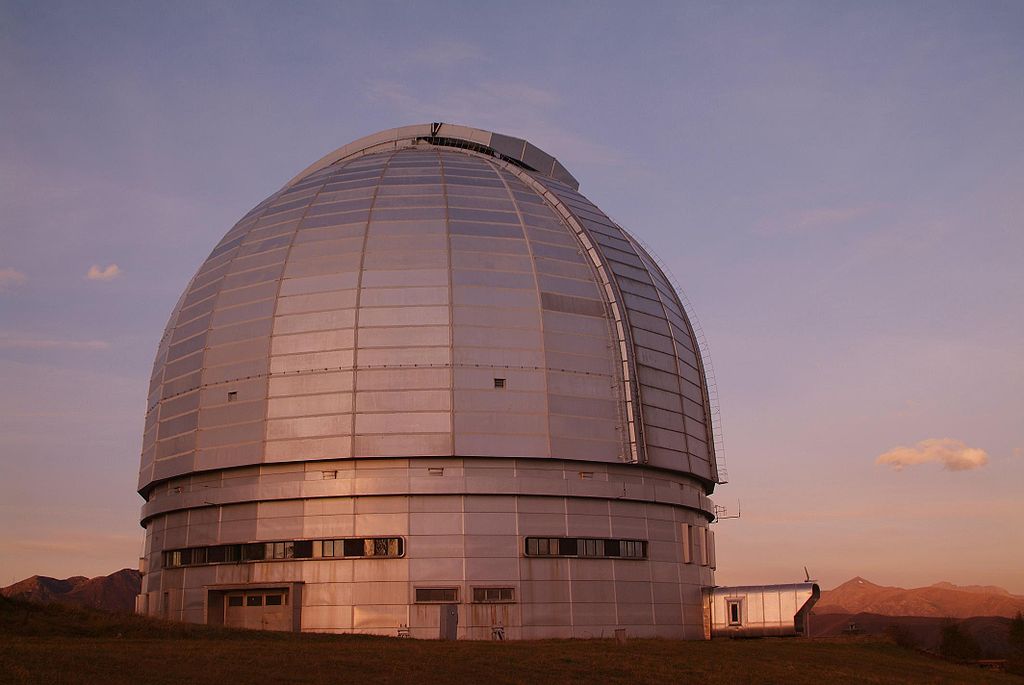
Для наблюдений современным астрономам и астрофизикам нужны обсерватории и мощные телескопы. Но для супертелескопов с диаметром зеркала в десятки метров астроклимат России не подходит . Диаметр зеркала самого большого на Земле телескопа — 39 метров, оно состоит из почти 800 сегментов. Такие телескопы строят в высокогорной пустыне Атакама в Чили или на вулкане Мауна-Кеа на Гавайях . Телескоп в горах может зафиксировать гораздо больше приходящих из глубин космоса инфракрасных лучей, которые практически не доходят до уровня моря — их поглощают взвешенные в атмосфере пары воды. Строят вскладчину, сразу несколько институтов или даже государств. Кто строит — тот и пользуется, попасть на такой телескоп астрофизику со стороны практически невозможно , говорит издатель научно-популярного интернет-журнала N+1 Андрей Коняев.
Россия в международных проектах по строительству телескопов пока не участвует, но это не значит, что обсерватории со старыми телескопами вовсе не нужны. Во-первых, довольно эффективной может быть модернизация старых оптических телескопов.
«История астрономии наполнена открытиями, которые были сделаны на второсортных телескопах. Прекрасным примером является текущий проект ZTF, который проводится на телескопе Palomar в Калифорнии, который был построен в 1948 году», — объясняет важность старых обсерваторий астрофизик Константин Батыгин. Проект ZTF работает на недавно модернизированном телескопе Шмидта с диаметром зеркала 1,2 метра. Замена корректора, механики и установка хорошей светочувствительной камеры позволила телескопу Palomar сделать фото межзвездной кометы Борисова за восемь месяцев до того, как она была открыта самим Борисовым , рассказал «Проекту» сотрудник КрАО Сергей Назаров.
Во-вторых, телескопы — лишь инструмент, для открытия нужно «хорошее небо» и люди, способные обработать данные.
Методика астронома-любителя Геннадия Борисова из крымского поселка Научный оказалась результативной. В ноябре 2019 года в небе над Научным он открыл еще одну, девятую по счету комету — на это раз из Солнечной системы.
Star wars.
Видео о том, как застройщики уничтожают обсерватории в Крыму