Date
Author
Арнольд Хачатуров, Мария Ефимова
Source

Preserved copy
Translated material
Digital divorce
Why is the government redeems Sberbank from the Bank of Russia
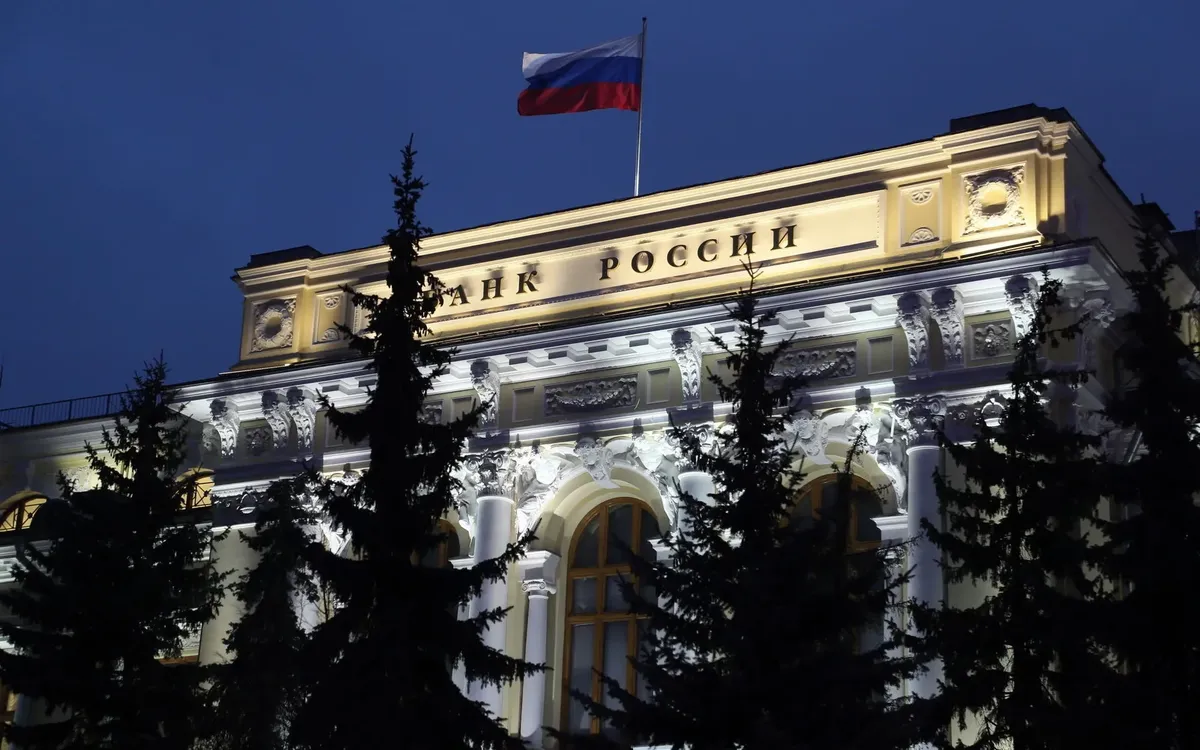
The government will buy a control package of Sberbank shares from the Central Bank (52.3%) for 2.5 trillion rubles, said Anton Siluanov Minister of Finance on Thursday, February 13. This is about 400 billion rubles below the market value: the full capitalization of the State Bank is 5.7 trillion rubles. The first part of the transaction in the amount of 1.2 trillion rubles can be passed in March, when the State Duma will accept the relevant law, and the latter - over the next year.
The purchase will occur at the expense of oil and gas excesses of the National Welfare Fund, the volume of which will reach 9 trillion rubles this year.
“We send a FNB funds to a deal with a Sberbank, which exceed the 7%level. This is a good, profitable investment, ”said Siluanov.
Part of the money from the transaction will remain in the accounts of the Central Bank, which will allow the regulator to improve his financial situation. In 2017 and 2018, the losses of the Central Bank from the sanitation of banks exceeded 300 billion rubles, says Maxim Osadchiy, head of the BCF Bank, now they will be closed due to the sale of a stake in Sberbank. The rest of the Central Bank’s profit from this transaction will go to finance social expenses announced in the message of Vladimir Putin.
Most likely, this is the economic meaning of the scheme to change the owner of the largest bank in the country. The fact is that in order to fulfill the promises of the President until 2022, the Ministry of Finance needs to find somewhere an additional 2 trillion rubles. The FSNT directly unpacked the budget rule according to which oil and gas revenues should accumulate in reserves. Therefore, it was decided to send this money to buy a share in Sberbank from the Bank of Russia, which is then obliged to transfer 75% of his profit to the federal budget.
The long -playing reason for the change of the controlling shareholder of the State Bank is associated with a conflict of interests, says Osadchiy.
- A completely abnormal situation was formed when a regulator (Central Bank) is also the owner of structures (banks) regulated by it, including Sberbank and Banks of the Moscow Ring.
This is a typical conflict of interests, so the decision [to change the structure of property] is generally positive.
In addition, the working relations between the head of the Central Bank Elvira Nabiullina and the chairman of the board of directors of Sberbank German Gref recently developed not easy. Disagreements worsened in October last year, when Gref “sabotage” the connection to the system of quick payments created by the Central Bank, explaining this by the presence of a better similar service for Sberbank itself.
In the views of Nabiullina and Gref, deep contradictions accumulated on the development strategy of the State Bank. In recent years, the leadership of Sberbank has been conducting an independent course, trying to move away from the image of the Soviet Sberkassa and moving in the direction of the technological company. In the Central Bank, Gref’s hobby for a digital economy is perceived skeptically, says Stanislav Volkov, managing director of the rating agency National Credit ratings.
- As far as Sberbank should spread beyond the financial sector, building its ecosystem is a topic in any case. And what do members of the government think about it, we do not know yet, ”he says“ new ”.
Already after the announcement of the transaction, Nabiullina criticized “ultra -powerful ecosystems”, which suppress competing and inhibit the development of the banking sector. “We do not want us to have digital financial monopolies in the market,” said the head of the Central Bank.
Sberbank, in turn, meets the Central Bank criticism of the rigidity of banking regulation and accuses the regulator of artificial inhibition of mortgage lending growth.
Apparently, a peaceful divorce in this situation will be better for everyone. But supporters of digitalization still look the winning side. On Wednesday, Gref met with Mikhail Mishustin to discuss the parameters of the transaction. The Prime Minister, known for his love for Djital, said that Sberbank’s services will be used to build a state digital platform.
In fact, this means that the State Bank will play a key role in the performance of the national project in the digital economy.
Investors positively reacted to the news about the transition of Sberbank under the wing of the Cabinet. The quotes of the largest bank in the country rose by 2% (90 billion rubles). True, by evening, the actions returned to their previous meanings.
Although the story seems complete, even the most unexpected scenarios of the development of events cannot be ruled out, up to the change of top management of Sberbank, Osadchiy believes. Gref himself recently said that he would leave his post if the bank development strategy will change with the change in the main shareholder.
- Now the uncertainty and personnel risks have increased sharply. There is a change of key employees. Therefore, a positive market reaction to this decision can be a little premature, ”the expert believes.