
Translated material
AD Electrician Petrov
On February 20, an exhibition of the works of Oleg Grigoriev will open in the capital's gallery “Antiquarium”. The famous poet will appear in the role of a bright and original artist
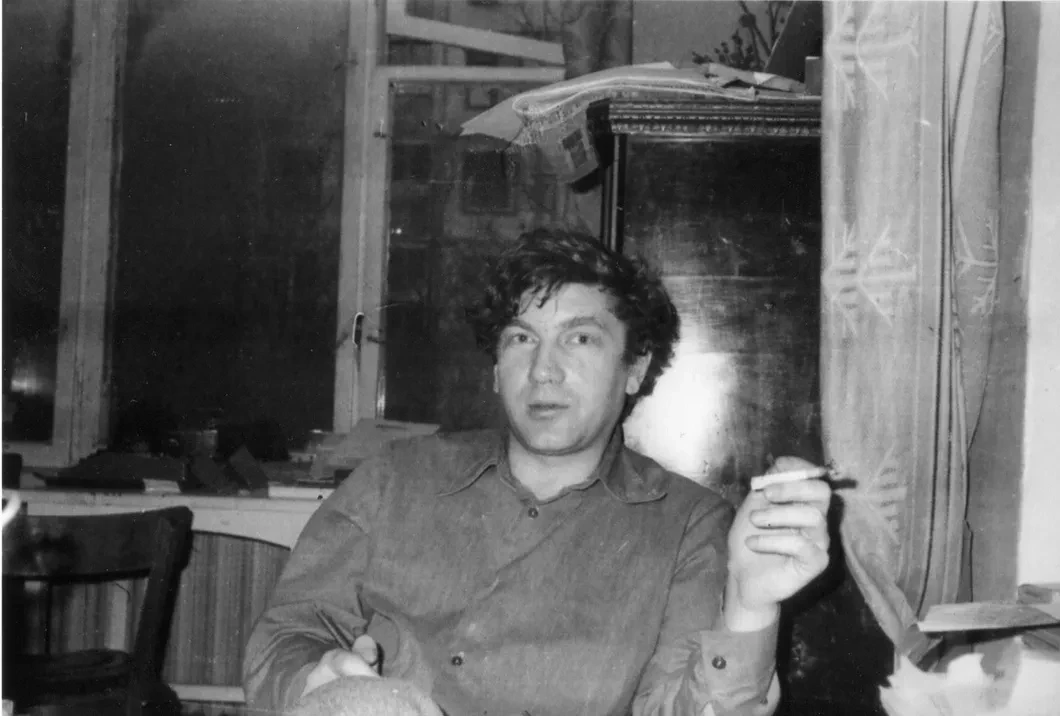
Grigoryevo poetry is familiar even to those who have never heard the name of the poet. Which of us did not laugh, feeling in his chest the "draft" of icy horror, over these lines:
I asked electrician Petrov:
- Why did you wrap the wire around your neck?
Petrov does not answer me anything
Hangs and only shakes the bots.
Many of Grigoryev’s poems during the life of the author went to the people. His wife recalled how Oleg once returned from the store shining: “Irka, you know that two homeless people read my poems to each other!”
The folk poet led a semi -underground and in many ways a self -destructive existence, however, completely congenial to the life and being of his heroes, so vividly embodied the absurdity of Soviet reality. There was no question of the publication of the “adults” poems of Grigoryev, I had to get out, working as a watchman at the railway station, or workers in harmful production.
“It is not necessary to go to the other world to get to hell” is one of his favorite thoughts. What Oleg Grigoryev did in poetry is quite comparable to what Venedikt Erofeev did in the same years in the same years. Grigoriev convexly described the world in which, according to the definition of the writer Alexander Krestinsky, “the border between the zone and freedom, between the prison and not the prison” was erased. His poetry, like the Erofeevskaya prose - “an artistic report from the very bottom, and not in the role of a business being sent to the bottom, but in the natural role of the inhabitant of this bottom.”
Like a pass, an apartment,
But I'm not going to the bottom.
One on one with the world
Honestly waging a war.
Many saw in the Grigoryevsky life -creature a trace of the Oberiutian tradition organic for bohemian Leningrad, others moved on. So, theater director Boris Ponizovsky believed that his friend Oleg
“He accepted this role, the role of the homeless, since a very medieval person, even a pagan, sat in him. Here, parallels with Viyon are clearly suggested. ”
Humor, fantasy and grotesque allowed Grigoryev to rise and inflame over hell.
Hoping to earn a living by literary work, he, like Muscovites, Igor Holin and Henry Sapgir, probably chose the only legal opportunity for “internal emigration” - work in children's literature. And did not lose. The book “Eccentrics” published in 1971 is still loved by little readers. And not only small, of course. In 1980, the second book of Grigoriev “Vitamin Growth”, which became the beginning of a long disgrace, was released. According to legend, transmitted by the same Krestinsky, Vitamin Growth fell into the house of one of the elderly members of the Politburo. “The venerable old man was resting when the uncontrollable laughter of his grandson was heard. Grandfather woke up and wanted to know the reason for such a violent joy. The grandson, panting with laughter, read:
- Well, how are you on a branch?
- asked the bird in the cage.
- On the branch, as in the cage,
Only rods are rare.
Grandfather flinched and grabbed the telephone. The chief of children's literature S. Mikhalkov with F. Kuznetsov and A. Aleksin together took up Grigoryev. ”
The name of Grigoryev for almost ten years disappeared from the press. Only in the last years of his short life, who over time coincided with time of cardinal changes in the country, the poet got the opportunity to publish not only “children's”, but also “adults” verses. Then he ended up on the bench. The plaintiff became the district Bakalov, as if leaving the pages of Grigoryev’s works. “It was necessary to see nearby a hefty policeman who hastened to fix the traces of the nails on the cheek, and a low, puny, sick Grigoryev,” the film critic Mikhail Trofimenkov recalled. - After a half -year imprisonment in the “Crosses”, the “Mitkov” exhibitions “one hundred paintings in defense of Oleg Grigoryev”, after collecting signatures among cultural figures and a conditional sentence, he was free, and God forbid, that this was the last trial in Russia over the poet. What were they planted for?
For the inability to the police and communal life, for non-standard and freedom, which in the official language was called malicious hooliganism. "
The fact that the people's poet Grigoryev is also an extraordinary artist is known to few. Meanwhile, his craving for artistic creativity was visible to people almost immediately after the start of communication. Valery Dmitryuk, who issued the ill -fated “vitamin growth”, said that when he and Grigoryev discussed the layout of a future book, “it became clear: he himself wants to illustrate his books. But they do not give. And he does not really like all other artists. But what can you do. He did not say this directly, but it was obvious. "
The first teacher of Oleg Grigoryev was Solomon Levin, a teacher of the art studio in the Palace of Pioneers, who was engaged in Alexander Arefiev, Valentin Gromov, Vladimir Shagin and other boys, who later became large figures of nasal non -conformism. In 1956, Oleg entered the secondary art school at the Academy of Arts. “There, he immediately attracted the attention of both students and teachers,” recalls his friend Oleg Frontinsky. “At the age of fifteen, he already had a reputation as a genius.”
One of the main aesthetic shocks of the young man was the Pablo Picasso exhibition in the same 1956, which revealed to him that "art is not an imitation of life, but another life in which everything is possible."
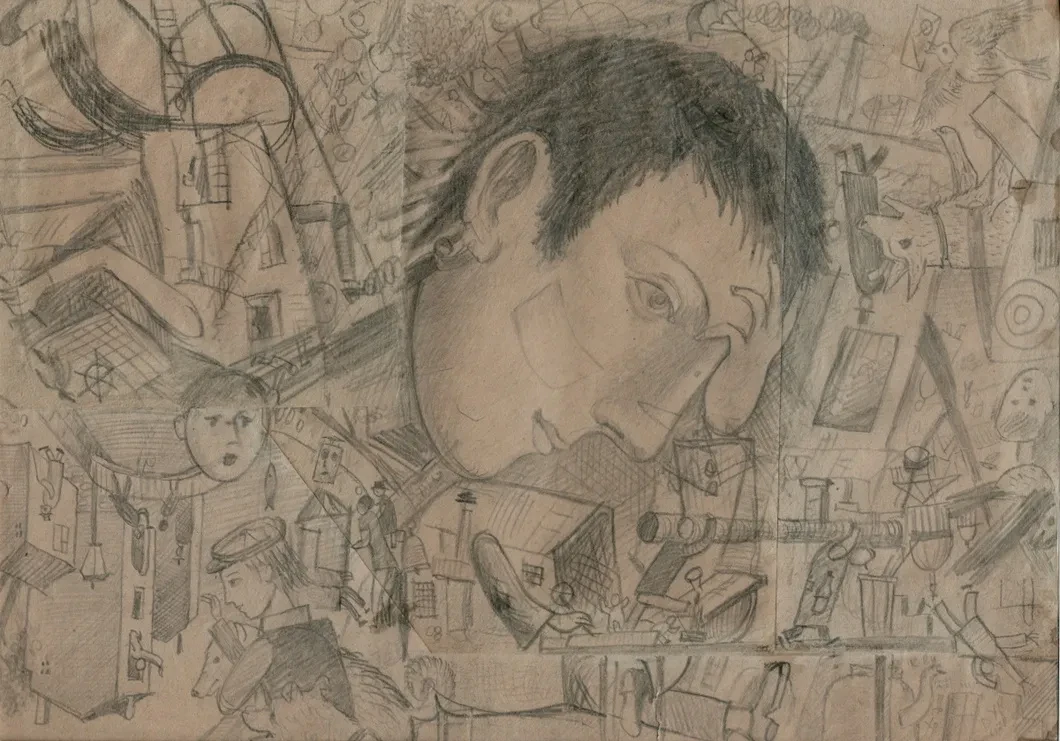
The influence of Picasso and Miro became more and more distinctly to appear in Grigoryev’s works, which, of course, met a rebuff from the mentors-socialists. Ultimately, Grigoryev, like the "Arefevo", was expelled from school for formalism. According to the poet Mikhail Yasnov, he was “expelled for drawing the wrong and wrong. For mocking and scandalous. For the fact that he had a special view, catching the funny and tragic illogicality of life. ” The same fate will soon befall Oleg's classmate - Mikhail Shemyakina. The road to the Academy of Arts was closed ...
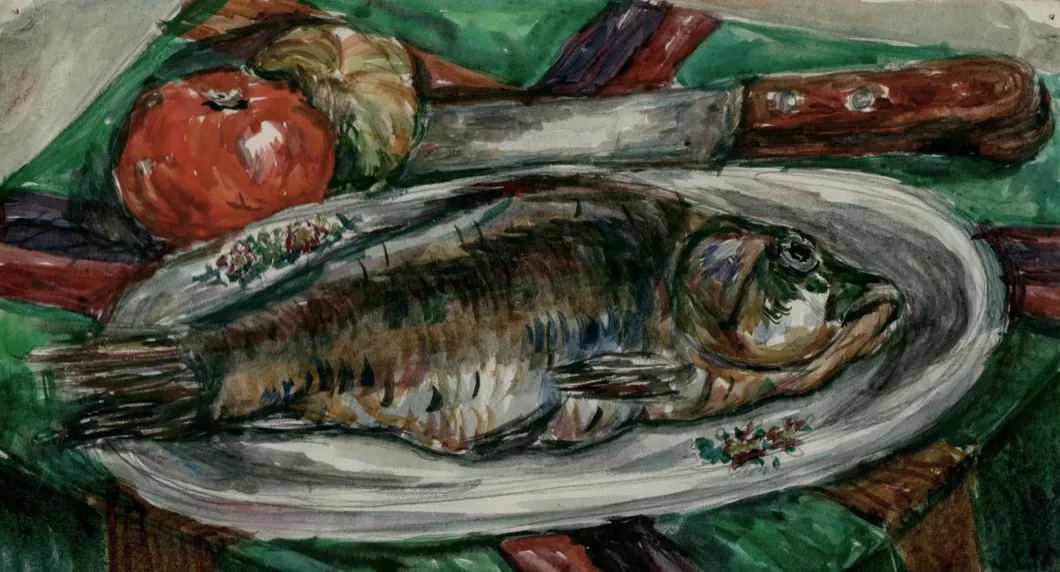
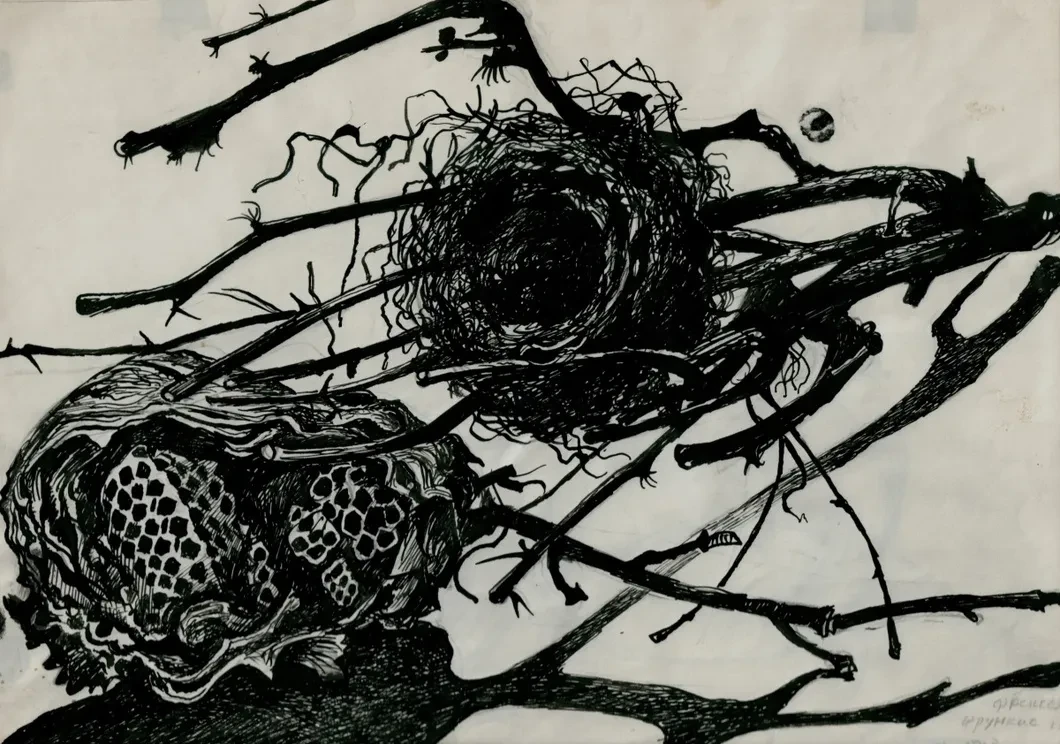
Although poetry pushed the arts of art in the background, Grigoryev never forgot about paints and pencils. His artistic heritage is very diverse. There are virtuoso drawings with the image of animals - dogs, rats, birds, snakes, and phantasmagoric multi -figure compositions, and still lifes, portrait sketches. A special place in Grigoryev’s creativity is occupied by “dead things”, drawn “without disgust and tenderness” - barrels, brooms, rusts and buckets, dolls, torn shoes. The art critic Nikolai Goryatutov notes that "the intentional understatement of the subject as if in the peak of an official pathos is emphasized by a masterly realistic pattern." The characteristic applicable to Grigoryev’s poetry.
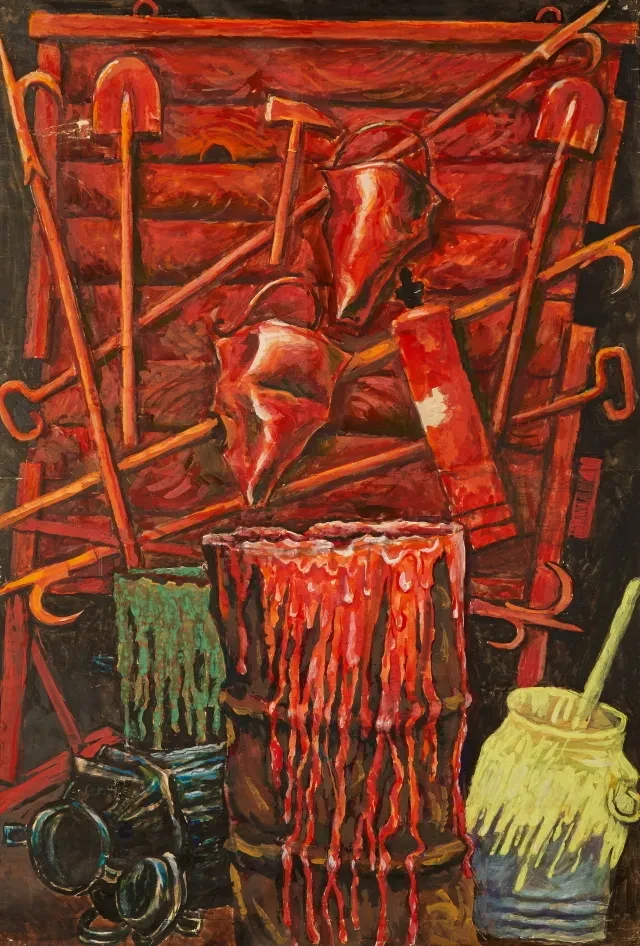
Oleg Grigoryev had happened to become a participant in the official art exhibition only once. But what! His works were exhibited at the famous Nonconformists exhibition in the Nevsky recreation center in the fall of 1975. “In the fullness of the presented areas of our art of that time,” says Grayutov, “Grigoryev’s works stood out piercing objective realism, without the slightest trend in stylization. But artistically tense images expressed a sincere tense subtext. The close-up of a fire-red fire shield is especially remembered, hung with aggressively prickly bregs, axes, shreds ... below-a barrel with red, due to the reflection of a red shield in it, liquid. Maybe it was the most acute and terrible picture of the exhibition in a hidden meaning. ”
Almost half a century later, it will become the “nail” of the first Moscow exhibition Grigoryev, which was prepared by the Gallery of Antiquarium. It will include picturesque and graphic work from several private collections, as well as illustrations for the works of Oleg Grigoryev, made by his friends - Oleg Frontinsky and Mitki. There will be no Grigoryev-Poet aside. Among the exhibits are children's almanacs of Leningrad poets and writers “Friendship” (1969) with publications of poems by Oleg Grigoriev. The author’s hand restored the “associated” versions of the poems.
Gallery "Antiquarium", February 20 - March 3, 2020
Mikhail Kartashev - especially for "New"