
Translated material
"He held out his hand - received three years"
Interview with lawyer Svetlana Baiturina, who defends Andrei Barnei, Vladimir Emelyanov and Kirill Zhukov in the “Moscow case”
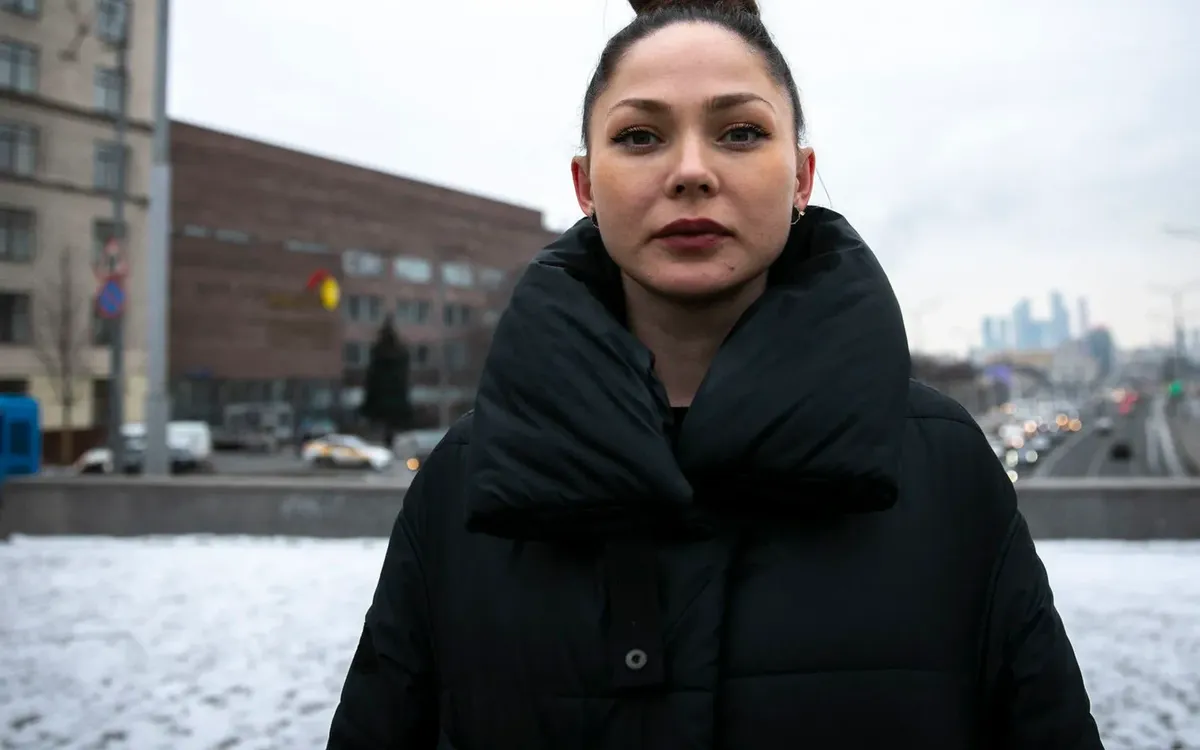
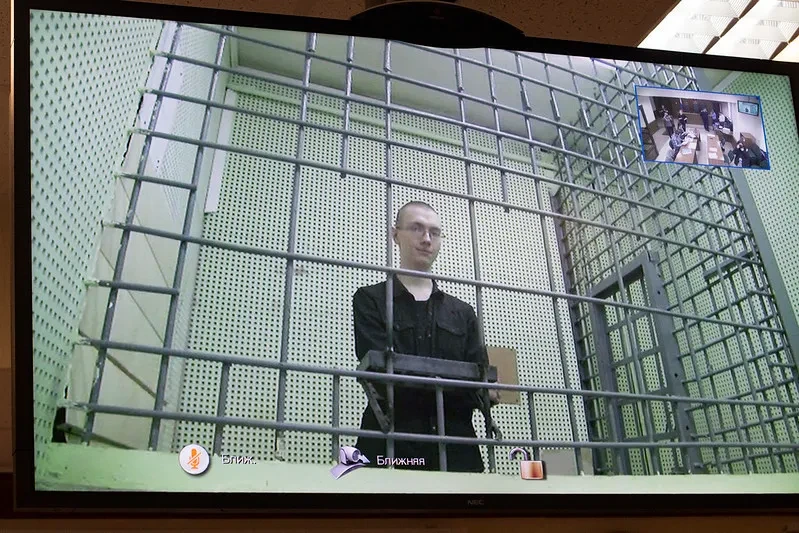
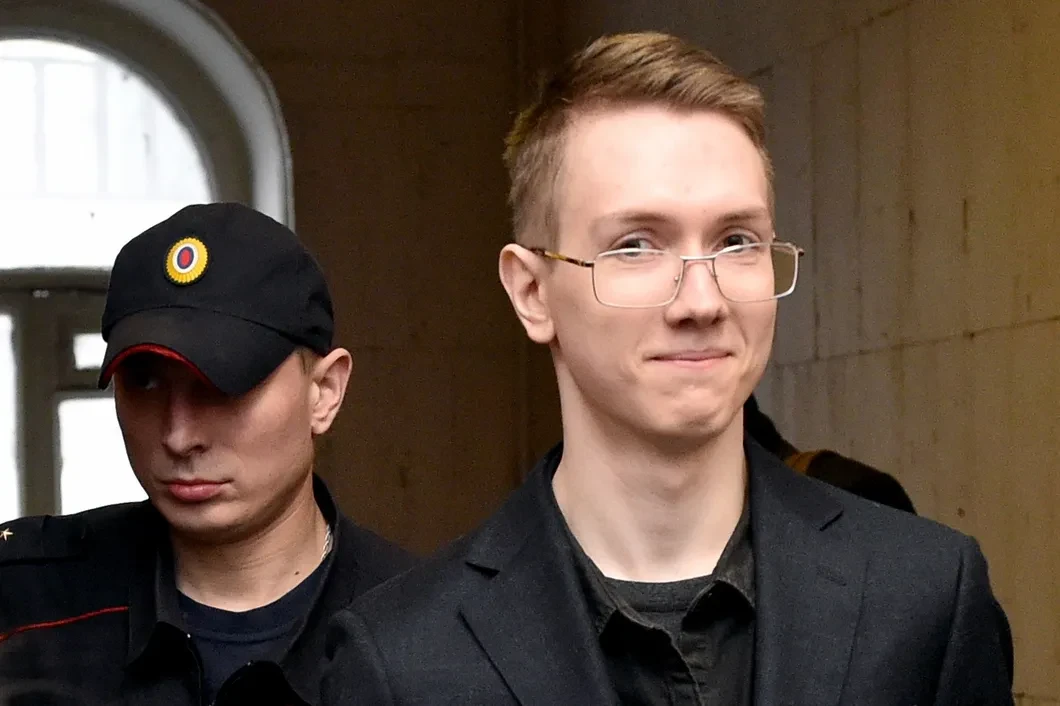
On February 17 at 12:00 in the Meshchansky court, the consideration of the case of Andrei Barnei, at the moment of the last person involved in the Moscow case with Art. 318 of the Criminal Code, which has not yet been sentenced. A 21-year-old excellent student of the MAI is accused of applying violence against the Rosgvardisian for protests on July 27. During the investigation, Barshay did not give dates with parents, sent to a psychiatric examination to the Serbian Institute. The special correspondent of Novaya Gazeta Ilya Azar talked with the defender Barchei Svetlana Baiturina - perhaps the most striking lawyer of Moscow business right now. Bayturina spoke about the process of Barchi, the specifics of the “Moscow case” and why she began to engage in political affairs.
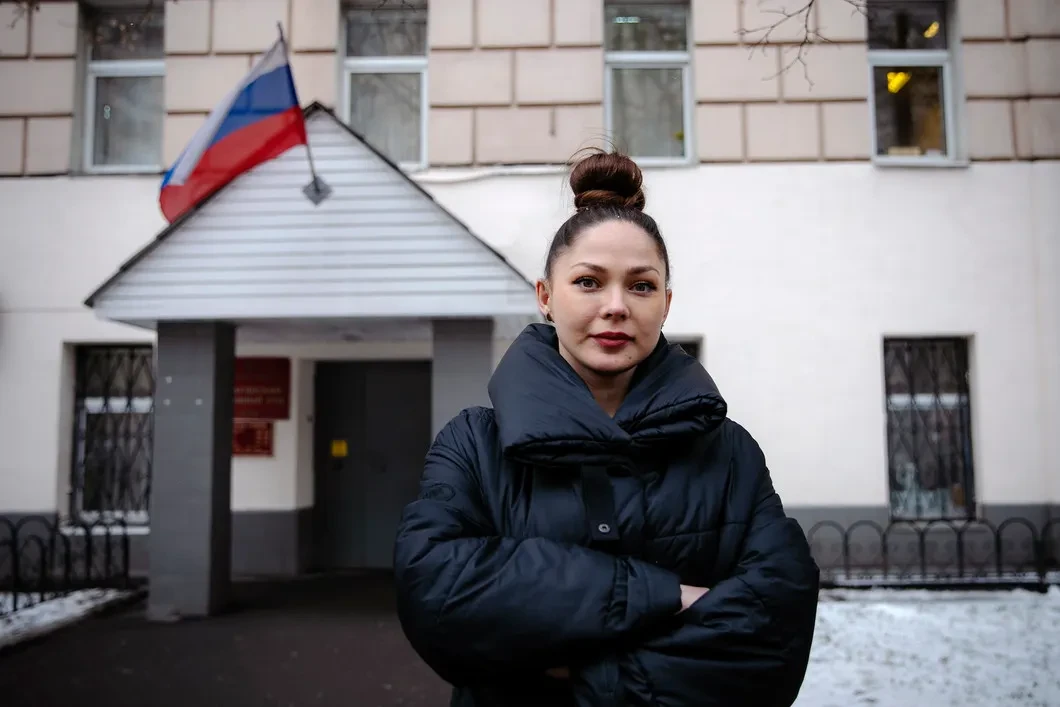
Svetlana Bayturina
The lawyer specializes in criminal protection and administrative offenses.
-What are the prospects of the case of Barchi, given how other things on the 318th developed if Andrei is charged with a jump on a policeman from the back?
“[The defendant of“ Moscow Case ”Vladimir] Emelyanov, who, in principle, had contact, as they call it, he pulled Kosov’s body armor,“ although they sentenced the conviction, he was imposed on a conditional punishment. Since this sentence resisted and was not appealed on an appeal, this is already to some extent the practice of the philistine court.
Given these circumstances, of course, we hope for the best, for the fact that there will be no real term. Considering that these two episodes - Emelyanov and Barchi - almost one after another follow in a fraction of a second [near the children's world]. When Emelyanov pulled the victim Kosov for the body armor, and the victim Kozlov began to beat him with a club on the head, Andrei jumped on him, to stop it, because they still beat the vital organs.
-I do not see the point of arguing, but still to other participants of that episode to Yegor Forest and Maxim Martintsov, nevertheless, the real terms were given.
-This is still an unpredictable thing. I’m not saying that it will exactly be so, I say that it will be almost victory for us, because, unfortunately, another option is impossible. Yes, Martintsov had real terms from the forest, but there are still a lot of different related circumstances, and each business is unique.
- In general, it plays a role - pulled the accused by the vest or jumped on his back? From a philistine point of view, it seems that the second is more suitable for the 318th article. Or is it not important?
“Speaking from the point of view of the composition of part 1 of Article 318, which is charged, then this is“ the use of violence that is not dangerous to health and life. ” Now the criterion is “not life -threatening” is excluded and already in the indictment is “the use of violence that is not dangerous to health”. But violence implies some consequences for the victim, that is, [must be] some confirming medical documents, some damage, some [removed] beatings, maybe. Based on the practice, for the court, the victim says that he experienced physical pain.
I had the feeling that this composition was interpreted in the form in which he was still in the Criminal Code of the RSFSR, where there were no sophisticated phrases about the danger to life and health, but there was simply a “attack”. Everything that happened, - jumped, pushed, pulled - just corresponds to the composition of the "attack". Go prove what an attack is.
The design “Application of violence that is not dangerous to life and health” has appeared. Law enforcers, in this case, judges, interpret this precisely as an attack, but they must somehow get out and get into the new composition, but it is very clear, as a formula that has such and such signs.
And it turns out that, by and large, the judge, allegedly tested, interprets as the fact that this is not dangerous for health, violence took place. And physical pain is a subjective sensation, it cannot be checked at all. Therefore, in the absence of all signs of the composition of people, they are found guilty. That is, it seems like there is no pain, it is impossible to verify this pain, [the victim policeman] says “it hurts”, but someone is painful from the bite of a mosquito.
-And now there is any composition that is suitable for such actions?
-The fact of the matter is not.
-That is, it turns out that according to the law you can touch the policeman, and if he did not go somehow to testify his pain, then this can be done with impunity?
- Formally - yes. Because violence, not even dangerous for health, is always based on the interpretation of the Plenum - the truth related to another article of the Criminal Code - beatings, repeated blows and so on.
But it is necessary to take into account the fact that part 1 of Article 318 applies precisely by representatives of the authorities. These are not any household things: the fights of the spouse or something else. Therefore, such a strict punishment, and by and large it turns out that the representative of the authorities is not even only touched, even you cannot stretch out your hand in his direction.
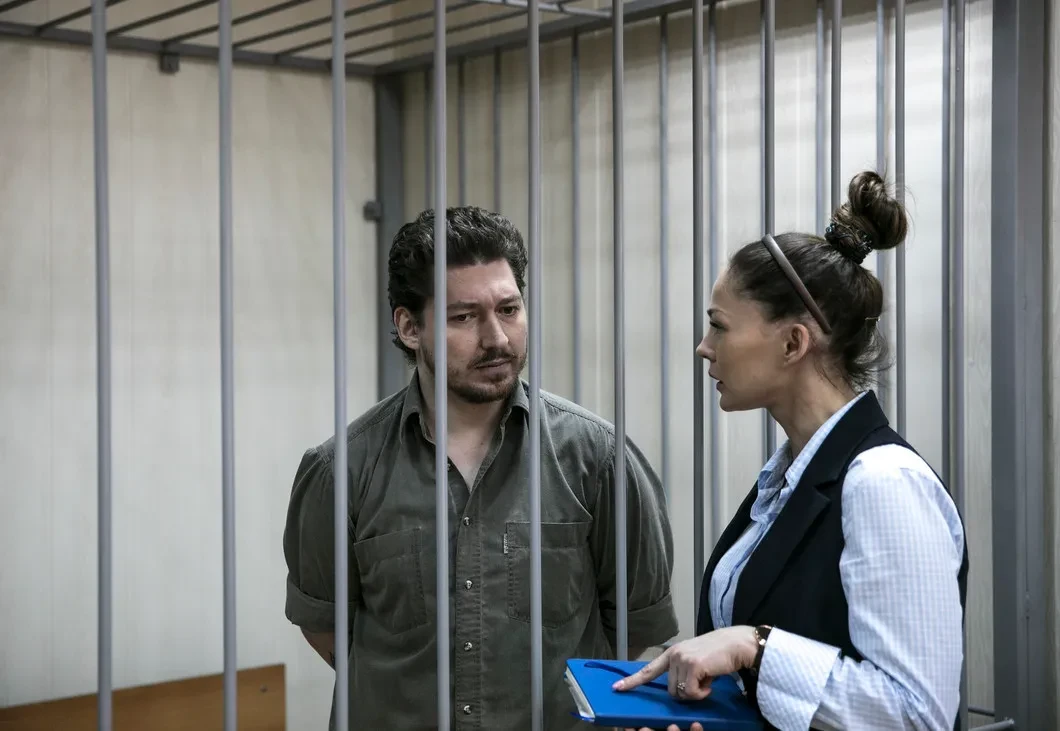
After all, the [another person involved in the “Moscow business”, the client of Baiturina] Kirill Zhukov actually had only a hand directed towards the Rosgvardean. From the video we see that there was no touch, but if, as the accusation says, it was, then this is far from violence. If he held out his hand and the mosquito slammed on his shoulder [Rosgvardean], then, it turns out, this is already the composition of the 318th, but this does not comply with the law. There are no signs of composition because there is no violence.
After all, there is, for example, another 319th article-"insulting action."
- Is this, show the middle finger?
- A slap in the face, for example, give epaulettes, pull the hat on the face. There is no physical pain, this is not violence, but an insult by action. If Zhukov extended his hand to the side, and the policeman insulted it, then this can be regarded as an insult by action. But where does the use of violence come from? This, of course, is absurd.
When I talked about this in the Investigative Committee, they answered me:
“Let us pay you another 319th, for God's sake, but the 318th will not go anywhere.”
-But in the 318th article there is a fine and public work. Why are the colonies take three years if there is a fine?
- The penalty was made against Samariddin Rajabov for an abandoned bottle, which frightened the Rosgvardists with the sound. Here I don’t understand what the composition can be. It is impossible to experience physical pain here, but what is the fright of it, is not dangerous for health? The composition here does not just stretch, but such things are pushed into it, sorry, which cannot be there.
But on the basis of practice, if the matter is not political and does not concern protest actions, then imprisonment under part 1 of Article 318 is not assigned at all.
Read more about the practice of sentences under Art. 318 of the Criminal Code - in the study of "New"
To attack a policeman with cold weapons is a conditional term, grab the wrist at the rally - 2 years in a colony. How in Russia they judge by 318th article
Even for the real use of violence and with certificates. As for the so -called political affairs, the situation here is different, there is an unambiguous feeling that the rest of the sanctions are invisible, that there is only imprisonment. The only question is whether it will be real or conditional ... here [the defendant of the Moscow Case Alexander] Mylnikov was conditionally appointed two years.
- Yes, but he has three young children.
- And Emelyanov had two grandmothers. For Barsha, you can’t give any forecasts, unfortunately. I hope that there will definitely not be a real term. It is not necessary to say that someone pulled a little behind the body armor, that this is less in actions, because it is possible to go to the point of course with this violence applied to the representative of the authorities.
When Andrei jumped on the Rosgvardein, just Emelyanov was beaten, they beat him so that he covered his head. I talked with a lot of people enough, a lot of witnesses came to us, and when I watch a video of the episode on the Christmas, I have the feeling that I know everyone there and that I was there. The atmosphere there was terrifying, because [the beaten by the Rosgvardei] Kantorovich screams, [his girlfriend] Inga screams, they ask for help, dogs bark, government officials use violence, in my opinion, unreasonably. All witnesses said the same thing -
That it was scary, there was a feeling of some kind of unreality of what was happening, there was an atmosphere of general condemnation of the actions of the police.
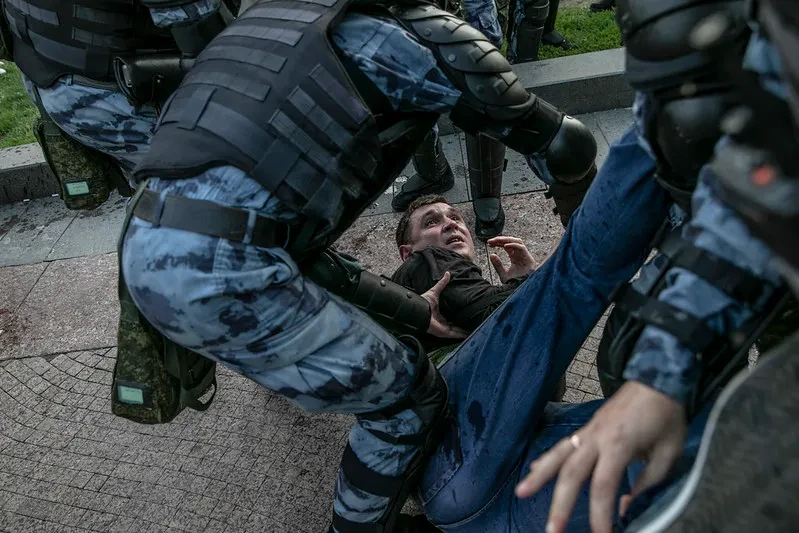
In this situation, those who were most susceptible to emotional influence and precisely the request for help, they reacted. Andrei did not just fit, he saw that Emelyanov could simply score - he said that he had already swam - and tried to intervene. What was his emotional state at that moment? It is clear that he really wanted to help him, to stop, at least this [beating]. And it really stopped, by the way.
- Judging by the letter, Barki Rosgvardeza Kozlov, it seems that he is even too emotional guy.
- He is emotional, of course. We had an examination of a certain personal feature, which I, unfortunately, cannot talk about, but the fact that it is responsive and, accordingly, could not stay away from such injustice, and therefore reacted in a certain way.
Do not forget that Barshay is a young man, he is 21 years old, and he is generally a very household child. It is no longer a child, but a person who was constantly brought up in the family was brought up in certain ideas about how correct, what is good and what is bad. And these ideas, worldview, personal characteristics, sensations, in this situation, as I understand it, they acted on it in the sense that it is necessary to intervene. Who, if not me? He is an absolutely non -conflict person, a person who loves to read, loves to study.
If it were not for clear violence in relation to an unarmed person from the part of the government, then Andrei, of course, would not commit any actions.
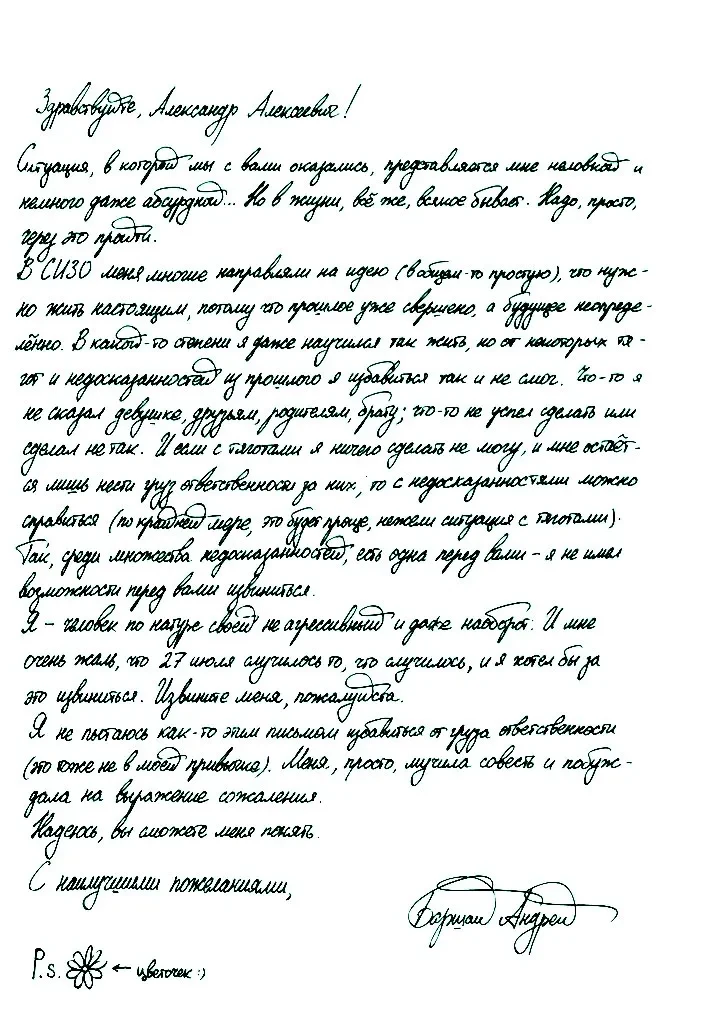
- And there was no answer to the letter? In general, it seems to you, it makes sense in it, can you reach somehow to the victim?
- We, as adults, intelligent people, well -educated, we understand that pushing another person is not very good. Since this happened, and yet he pushed it, and we do not dispute the action itself, but try to explain why this happened, then we thought and considered that it was possible to apologize for this.
“But this is not a guilty plead?”
- Andrei does not admit guilt in the use of violence. After all, a person is still, firstly, in uniforms, secondly, on him special equipment, thirdly, if we compare the situation to the absurdity of the situation: when we play some group game, for example, volleyball, then any impetus that can happen will be a violence that is not dangerous to health. But based on logic and common sense, it is clear that it is stupid.
About the same thing happened here, because when you try to save a person, standing behind, you have no options except to push away.
- And you came across this goat, no?
- I saw him in a bourgeois court at preliminary hearings. She asked: "Have you received a letter?" He said he received. Well, the letter was introduced.
- And said nothing?
- No. You see, part 1 of article 318 is a two -part object. The victim itself is an individual, that is, how you and me. But, on the other hand, this victim is a representative of the authorities. How can an individual be painful for him, for example, and he can forgive or somehow not crave blood, but as a representative of power, how can he do it? The state endowed him with authority, but who should provide him with the opportunity to take and say on behalf of the state of the state: “Yes, I have no complaints about you”?
Often they are trying to make this public damage to the state, to introduce, for example, funds to some charity fund or something else. That is, two directions are obtained: in relation to the victim as an individual and something good for the benefit of society. Since this must be done, we do it, I will say this.
-If somewhere the victims asked not to punish the accused in all severity, then in the process of forest victims were quite rigidly configured.
- The forests were just the victims of the goats. The same victim in different processes can behave completely differently. For example, why is Emelyanov such a [conditional] sentence? The victim in his case said that he did not remember the moment when this happened, would he have experienced physical pain. Because someone who just did not pull him on this day, and now this moment he does not remember and can only testify to the video.
I watched these videos, and Kozlov and Kosov, partners, they have been going in a coupling for a very long time. They go, twitch, there people are everywhere around, they hold tightly, as it should be according to the instructions, each other constantly pulls here and there, much stronger than Kosova Emelyanov pulled. They generally do not react to this, this is a normal situation, because they go together and do not look at each other, one there, one here. And therefore, of course, Kosov said that he could not say that he experienced physical pain.
- And there was no witness from the EE center?
- And the same cannot say about physical pain. Based on the video, yes, Emelyanov pulled him. But we have a stumbling block - there was physical pain or not, based on the practice of law enforcement, again, not based on the composition. He says: "I do not remember." When I asked the specific question “You can answer: at the moment when my client pulled you, did you feel physical pain or not?” He said: “I don’t remember, I can’t say for sure. I suppose that I probably had to experience, but I can’t say for sure. ” And all.
What to put in the verdict? It turns out nothing.
That is, he saw in the video, from the video he said in the preliminary investigation that yes, he experienced pain, but in court he did not confirm this.
Given all other circumstances, and investigators are such [poorly compiled] cases now that take [anything] and recognize unacceptable. They see all this anyway, and the judge as a professional lawyer sees it. And then the victim comes and says that he does not know whether he experienced pain or did not experience. And besides pain, there is nothing, she herself is already attracted by the ears to this composition.
- And it is clear that if there was no case and order, they would never have declared pain.
“They act more like military people here, and I think that there is a certain order.”
- As I understand it, you cannot speak about the results of the examination, but its appointment was an attempt to put the barley into a psychiatric hospital, or what?
- Let's just say that the investigation had reasons to appoint this examination. That is, they were originally, they appeared during the election of a preventive measure, and in this regard they appointed it. I can’t say what grounds, because this applies precisely by personal circumstances of the client.
-On his actions?
- No, not on his actions. On the information received, let's say, by the investigating authorities directly in the process ( earlier Barshay was already lying in the Kashchenko hospital. - “New” )
“But there would have been nothing good if he was recognized as insane?”
- No, it would be much worse, believe me. Forced measures of a medical nature are also that pleasure. I was really very afraid of this. I knew absolutely clearly, but I communicate with Andrei that the examinations do not need to be afraid. But since the matter is political, the paranoid certain thoughts are already beginning, you think-what if they write something there, God forbid.
By and large, this was very tightened by the matter. I always say that Andrei is a student, a student-man, and he needs to study. At least under house arrest remotely do this. But in conditions of pre-trial detention center it is impossible even to convey some elementary books, and there are 8-10 people in the chamber.
That is, the right to training specifically Andrei Barkhy, I believe that the content of the detention is very seriously violated.
And the second point is that he never had all this time with his parents. Investigator Felde did not allow a date ( for the first time Barshai saw his mother after this conversation, because the case was received in court, and not the investigator, but the judge, was already resolved by a date. - “New” ).
- Is that purpose? Is mocking?
- For the first time, I actually encounter such a situation, because they usually always allow. Moreover, he is only 21 years old.
- As I understand it, the investigator wanted both the father and the mother to make witnesses, and then they did not have to date.
- Dad ultimately went to interrogation, and he goes through the case in the status of a witness, despite the fact that he did not give any testimony, but it does not matter, and formally he can no longer communicate with his son. I am the investigator to the question "Why?" He said that he was “entitled”. Well, indeed, the investigator decides, this follows from the Code of Criminal Procedure, but I did not have the practice of refusing relatives in a date. For what? Это ничего не дает.
Я еще раз говорю: Андрею 21 год, он все время живет с родителями. У меня старшему сыну 21, я понимаю, что это такое. Да, вроде как они дееспособные и вроде как совершеннолетние, но они дети еще, тем более с учетом того, что Андрей все время дома. Ему необходимо с родителями общаться. Он надолго никогда не уезжал, в общежитии не жил, в каком-то другом городе тоже не жил.
— Но это же садизм практически.
— Похоже на немотивированное и необоснованное воспрепятствование общению с близкими родственниками, назовем это так. С какой целью — непонятно.
— Вы считаете, что приговоры по «Московскому делу» спускаются сверху или с каким-то люфтом, чтобы судьи могли принимать самостоятельные решения по срокам, например?
— Не могу сказать, как это на самом деле происходит. Но у меня возникло такое ощущение, что очень многое зависит от личности судьи. Спускается — не спускается, но кажется, что есть такие веяния определенные, которые судьи каким-то образом расценивают. Вот им кто-то что-то сказал по телевизору, а им показалось — надо ужесточить или, наоборот, чуть-чуть можно помягче. Но как на самом деле это происходит, я не знаю, ведь все такие [сигналы] можно по-разному интерпретировать. Безусловно, есть определенное давление, но как это происходит, я не могу сказать.
— А как можно дать Устинову три года без какого-то сверху указания?
— Послушайте, но ведь по всем [фигурантам] нельзя было избирать меру пресечения в виде содержания под стражей. Ни по кому, ведь они никто к уголовной ответственности не привлекались ранее. Все понимают, что Андрею или Емельянову не место в СИЗО, но тем не менее с чем пришел следователь, [то и назначили].
Вот по Мыльникову, у которого трое детей, изначально у следователя уже в ходатайстве указан домашний арест, и в отношении него был избран домашний арест. Это не судья сам принял решение. Получается, что все, о чем просит следователь, удовлетворяется судом по этим делам.
— Имеет ли тогда смысл по этим делам адвокатская работа?
— Адвокатская работа совершенно абсолютно точно имеет смысл, и мы это видим очень четко. Если мы смотрим все эпизоды, все дела, которые были, смотрим назначенные наказания, то вроде все похоже, плюс-минус, но все равно везде по-разному, с учетом, конечно, личности судьи, с учетом того, как проведено все.
Я всегда говорю, что судья как юрист может реагировать только на то, что к ней попало очень плохое дело. Мы же как собаки Павлова, в хорошем смысле, на это реагируем. Одна из целей заключается в том, чтобы донести до судьи, какое ей принесли из следствия дело. Если бы это было не [политическое] дело, то я думаю, что ни один прокурор такое обвинительное заключение никогда бы не утвердил. Never.
Например, когда в отношении Емельянова еще не возбуждено дело, он не является ни свидетелем по «Московскому делу», никем, уже назначается и проводится экспертиза портретная. То есть вот, например, в отношении нас с вами в рамках «Московского дела» или дела Андрея Баршая формируются доказательства, идет активная обличительная деятельность. Это не происходит в рамках проверки, мы не можем защититься от этого, потому что мы просто об этом не знаем и своими правами воспользоваться не можем.
И здесь получается, что такие дела утверждались и попадали к судье на стол, но ей, в общем, не очень все это интересно, и именно адвокат должен донести до нее, что ей привезли. На это очень четко судьи реагируют, конечно, именно на это. У нее все равно формируется определенное отношение к делу, и, соответственно, та тактика, стратегия, которая адвокатом избрана, очень важное значение имеет.
— Следователь на продлении ареста по Баршаю говорил о примере фигуранта «Московского дела» Айдара Губайдулина, который уехал из страны.
— Да, эти грабли долбанули нам по лбу. Я тогда вспомнила, что когда мне звонили журналисты после его отъезда, я говорила, что это никак не отразится [на Баршае], потому что все равно избирается то, что избирается.
Но с другой стороны, разве эти материалы по Айдару как-то отразились? Что, без них они бы отказали в продлении? Нет, не отказали бы, совершенно четко не отказали бы. Просто следователь более ответственно, скажем, подошел и решил подстраховаться и сказать, что раз один сбежал, значит, и этот сбежит.
— А что за странная история произошла с продлениями у Баршая?
— По идее суд у нас это не орган уголовного преследования и не выступает на стороне обвинения, это независимый арбитр. Но у нас возникает ситуация какая: в Мосгорсуде отменяется решение о продлении ареста до 27 января, а на следующий день в Басманном назначено следующее продление до 27 февраля. Мы заходим в судебное заседание его рассматривать, и я еще думала, как же они из этого выкрутятся, ведь у нас же предыдущее продление, получается, не вступило в силу. Это логически невозможно, ведь получилось, что избрание с 14 октября до 14 декабря избрали законно, дальше с 14 декабря по 27 января незаконно, а они просят с 27-го снова продлить.
В итоге у нас судья заходит, объявляет начало судебного заседания, устанавливает присутствующих, тут же объявляет перерыв и уходит в совещательную комнату. Я даже не успела понять, что произошло, а из совещательной комнаты выходит другая судья, объявляет рассмотрение нового дела, которое буквально 7 минут назад было зарегистрировано в суде.
Нас, как в мышеловке, накрыли: подзащитный здесь, а адвокат на месте. У нас же существуют для чего-то уведомления? Для того чтобы мы могли подготовиться. Это право на защиту, а когда ты стоишь и находишься в одном судебном заседании и тебя вот так накрывают другим, то что делать?
Я стою фотографирую дело и судорожно думаю, что делать? Удостоверение забирать и уходить?
Но у тебя подзащитный сзади в клетке, то есть тоже бред какой-то. И получилась ситуация «без меня меня женили», то есть нас рассмотрели в перерыве и, таким образом, во второй раз утвердили первое продление, а после перерыва продолжилось рассмотрение основного дела. Я с таким никогда не сталкивалась.
— Но это законно?
— Ну, получается, формально да. Но это же свидетельствует о чем? Что суд в данном конкретном случае можно отнести к органу уголовного преследования.
- Change the subject. Скажите, а как вы вообще попали в эту историю? В «Московском деле» у вас сразу трое было подзащитных, а до этого, я так понимаю, вы в подобных делах не участвовали.
— Это случайно совершенно произошло. Когда 27 июля должна была состояться акция протеста, все, в том числе «Агора», понимали, что будет достаточно большое количество задержанных, и мои коллеги по КА-5 предложили мне в этот день поработать именно в ОВД с задержанными, и я работала в двух ОВД — в Дорогомиловском и в Черемушкинском. В Дорогомиловский меня тогда не пускали часа три, а ночью я уже поехала в Черемушкинский. Потом были [несогласованные] акции 3 августа и 10 августа.
А потом эти административно задержанные начали привлекаться к уголовной ответственности. И получилась ситуация, что когда Кирилла Жукова привезли в СК Москвы, мой коллега, чьим административно задержанным он был, не смог приехать, а я могла и так и стала его защищать. Ситуация на самом деле случайная.
— Я посмотрел на сайте вашей адвокатской коллегии, что вы специалист по жилищным спорам, семейному праву и по тяжбам с детьми…
— Уголовные дела у меня, конечно, были, но политических не было. Я вообще не считаю, что адвокат должен заниматься только уголовкой, потому что, «если ты не цивилист, никакой ты не юрист», то есть обязательно необходима гражданка, обязательно необходим арбитраж, обязательно необходима работа по ЕСПЧ.
Когда начинается узкая специализация какая-то, например, как сейчас, по части 1 статьи 318, то это на самом деле зашоривает очень сильно. Поэтому уголовкой я занималась, дважды с судами присяжных работала, но политической уголовкой не занималась никогда. Когда была «Болотка», у меня и статуса-то еще не было.
— Обычно считают, что адвокат никаких политических воззрений не имеет и защищать может кого угодно. Или для вас здесь есть какой-то идеологический момент?
— У меня нет никакого идеологического момента, более того, я считаю, что это вредно. То есть ты можешь разделять позицию, можешь не разделять, но ты должен очень четко и объективно понимать, что ты осуществляешь защиту в первую очередь. Это еще Ленин говорил: «Вы можете разделять позицию подзащитного, можете не разделять, но вы должны понимать, что вы юрист и вы осуществляете его защиту».
Если именно идеологически и политически быть замотивированным, в этом во всем вариться, то можно не очень адекватно оценивать именно саму юриспруденцию. Адвокат должен очень четко понимать, что он осуществляет защиту в рамках уголовного дела, и при этом идеология и политика по большому счету не имеют значения.
— Но какая-то же мотивация у вас должна быть, если вы уже в трех делах по «Московскому делу»? Вы же выбираете дела по какому-то принципу...
— Это, во-первых, интересно. Во-вторых, когда ты уже отработал одно дело по «Московскому», ты уже четко понимаешь, каким образом в нем формируются доказательства — механизм очень хорошо понятен.
Представьте, что у Андрея был бы адвокат, который вообще не в теме. Он смотрит видео и никого не знает, не понимает толком, что произошло, а я уже все понимаю, очень хорошо знаю материал. Это как вы в первый раз пишете статью — не очень хорошо, второй раз пишешь — ты уже и поинтересовался, и посмотрел, и с кем-то пообщался, и у тебя уже лучше получается, а в третий раз так ты уже вообще эксперт. Здесь такая же ситуация.
Сейчас, конечно, гораздо проще. По Кириллу Жукову я же была вообще в шоке, когда у нас за один день рассмотрение дела произошло. Я очень сильно разозлилась, очень сильно, когда три года [колонии] объявили, и мы в апелляции потом очень сильно по этому поводу бились и с шлемом, и с видео свидетеля. Есть видео замедленное, где видно, что он даже не соприкасается, потому что если бы соприкасался, то забрало бы поднялось, а оно все время закрыто.
Когда ты к такому не готов, все это очень странно, мягко говоря, потому что политические дела другие — и по срокам, и по ведению, и по тактике. Здесь есть определенная специфика. Вот есть особенности рассмотрения дел с участием присяжных заседателей, и я считаю, что по политическим делам тоже можно составить какое-то руководство, в котором будут отражены определенные особенности.
— Но ведь в политических делах почти невозможно выиграть.
— Да, выносят обвинительный приговор, но для меня [условный приговор по Емельянову] — это, по сути, абсолютный выигрыш. Я не могу себя вообще ни в чем в этом смысле упрекнуть, потому что прокуратура просила 4 года реального лишения свободы. Еще хочу сказать, что по делу Емельянова нам очень повезло с судьей [Татьяной Шаниной]: она все-таки реально слушала и смотрела.
— Но по делу Кирилла Жукова этого не произошло.
— Там все было бесполезно, не внимала судья вообще. Я стояла и думала: вот я сейчас разденусь, на стол встану, буду танцевать, буду все что угодно делать, но ничего не поможет. Психоэмоционально это очень сложно, потому что у него родители, ты понимаешь, что человек невиновен ни в чем, и все всё понимают, но тем не менее три года. В первой волне по «Московскому делу» точно какие-то указания были, это я четко могу сказать, потому что там была стена и за этой стеной не было ничего.
— Насколько помог общественный резонанс?
— Он необходим обязательно, ведь когда привлечено внимание настолько и есть слушатели, то судья себя ведет иначе, в первую очередь. Во вторую очередь, по политическим делам вообще общественная поддержка — это просто необходимо, это очень важно.
— В случае Емельянова она помогла или нет?
- Certainly. У нас [журналист и гражданский активист] Лиза Нестерова произвела колоссальную работу, она же вытянула полностью все, что касается именно общественной поддержки, интереса. Более того, она еще полностью вытянула на себе родственников, чем обычно адвокаты занимаются. Она с ними общалась, она с ними была постоянно на связи.
— По Андрею Баршаю удалось или удастся создать такой же резонанс, как по Емельянову?
— На заседании 10 февраля у меня не было ни одного человека в суде.
— Но было закрытое заседание.
— Даже когда раньше были закрытые заседания, такого не было никогда. Проходит время, нельзя столько времени поддерживать интерес, у меня такое мнение складывается. Ко второй волне уже такого не было, как на первой, а сейчас Баршай уже вообще последний.
— Мне, кстати, кажется, что невиданный подъем солидарности, которого не было в ходе «Болотного дела», связан еще и с тем, что суды по «Московскому делу» начались уже через месяц после арестов, еще даже выборы не прошли, а «Болотное» началось чуть ли не через год после акции.
— Да, все всё забыли. Сейчас такая же ситуация: прошло семь месяцев, у нас остался один Андрей, и [привлекать общественное внимание] сложнее уже. Сейчас дело «Сети» ( организация признана террористической и запрещена в РФ. — Ред. ), с Конституцией что-то, то есть новые появляются всякие поводы, которые затрагивают людей, и [«Московское дело»] чуть подзабывается.
Я считаю, что это ошибка [властей] была просто, если бы они так не торопились, то, может быть, все прошло по-другому. И, может быть, таких вот сроков не было бы у первой волны, потому что у меня такое ощущение было, что пружину закрутили, она раскручивалась в обратную сторону, и получились совершенно абсурдные сроки непонятно за что. Коваленко урну кинул, которая ни в кого не попала, — 3,5 года реального лишения свободы. Какое там насилие-то? Жуков руку в сторону росгвардейца протянул, сделал ею движение — 3 года.
— А вы думаете, что новых фигурантов не будет?
— У меня интуитивное есть ощущение, что все-таки не будет. Хотя, конечно, если посидеть и видео поразбирать, то что-нибудь такое еще можно найти, наверное.
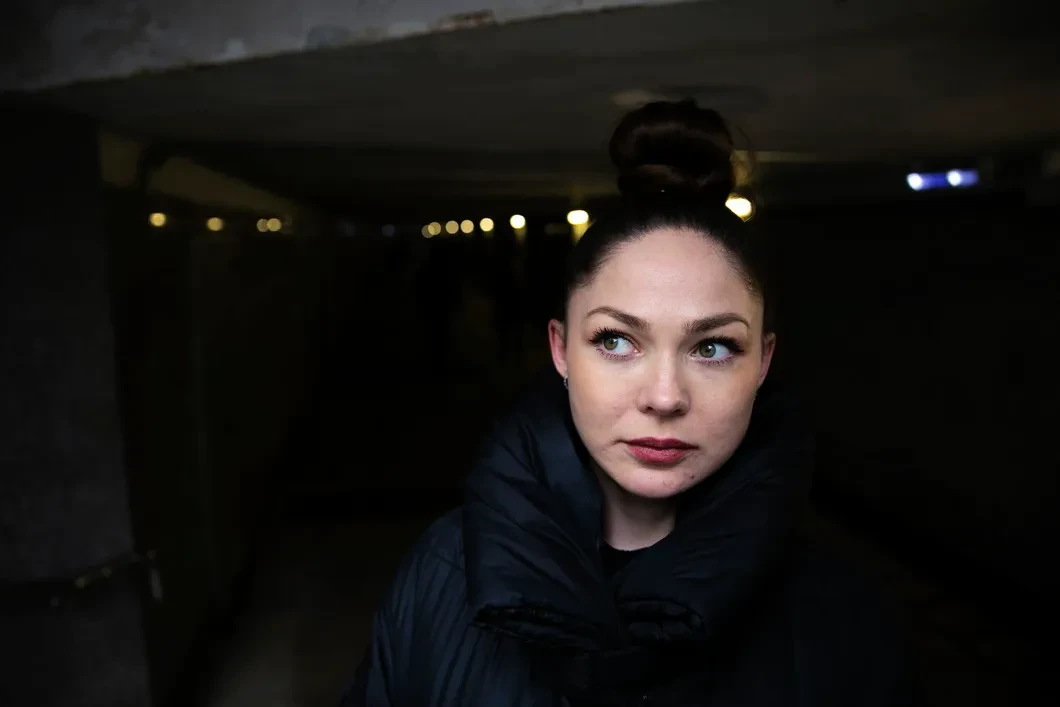
— Вы, в принципе, собираетесь дальше политическими делами заниматься?
— На самом деле эта деятельность в какой-то степени затягивает. Во-первых, появляется все-таки какая-то определенная публичность, но это не самый принципиальный момент. А принципиальный момент в том, что ты сталкиваешься с таким количеством людей, профессионалов, в том числе адвокатов, которые очень давно этим занимаются. Это много дает. Если бы я в этом не оказалась, то никогда с ними бы не пересеклась и лишила бы себя такого огромного пласта интеллекта, опыта, знаний и просто общения.
Еще ты понимаешь, что ты вроде как не один. Когда ты как адвокат работаешь по делу, ты всегда один, у тебя нет никакой общественной поддержки, а тут возникает ощущение не то что сплоченности, но командной игры какой-то. Вроде бы ты и тут один несешь ответственность за защиту, но вроде как ты и не один. Это очень важно, это дорогого стоит.
— А минусы есть?
— Выкачивает очень сильно эмоционально все-таки, что с Емельяновым было, что сейчас с Андреем Баршаем. Со вторым и личный момент присутствует, потому что у меня сын старший такого же возраста, он тоже учится в Бауманке, он такой же физик. И я понимаю, ну в какое СИЗО Баршая, какой вообще срок, за что? Ему нельзя там находиться просто. Поэтому это очень тяжело, это очень серьезная ответственность. Когда у тебя подзащитный где-то что-то с мошенничеством, то это одно, а здесь ты понимаешь, что ничего нет вообще, ну какое тут насилие, нет насилия.