
Translated material
Dejavu with a cigarette case
or why Samsung Z Flip has a great future
“He had a manner when he sat down in a cafe or restaurant, immediately lay a cigarette case and lighter on the table.”
V.V. Nabokov, "Camera of Obskura"
Trolling manufacturers rolling out folding smartphones for the second year in a row, acts on the writing fraternity as a hub. The media are starting from the half -turn, the most mannered include pathos with a claim to the irony, the rest are panting to set a trend, frightening the layman:
"Well, I quickly ran to buy!"
It is funny that the layman does not share enthusiasm, voting a wallet against a folding misunderstanding.
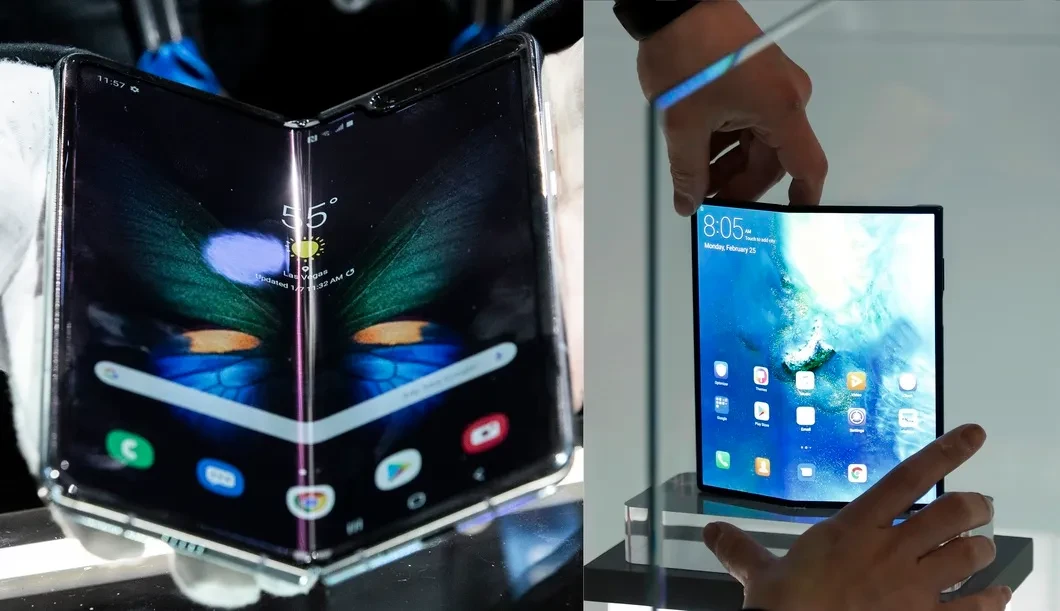
Exactly a year ago, the Korean Samsung shuddered the world with a Galaxy Fold smartphone-rally, and after a couple of days he pulled up the Chinese Huawei with Mate X. Both gadgets depressed with practical inappropriateness, multiplied by the wildness of the design: in a folded Galaxy Fold, a smartphone of 10 years of antiquity (4.6 ”) with a fat frame, and Mate X completely came out of the freak: 6.6 inches - on the one hand and 6.4 inches - on the other.
In the expanded form, both Asian shutdocks of 2019 turned into a square tablet, with which it is not clear what to do: a similar screen format distorts any application.
Huawei decided to finish the market to the end, so he forced the Mate X screen not inward, but out: apparently, in order for the user to get rid of the uncertainty and the screen of his smartphone, finding himself in a pocket with keys, scratched in any layout.
At some point, it was hidden that Galaxy Fold would give the soul to God even before it reaches the store shelves: hot Korean clashes, transferred to the testers immediately after the presentation, broke together the very next day. The CNBC journalist stopped working half of the screen. The Bloomberg observer has completely out of order. The specialist The Verge has swollen and went in stripes of the fold place.
Samsung, however, asked for the right to touch the “new chapter in the history of mobile technologies” (I quote the presentation) of 1980 dollars, so I rested a horn, twisted something in the conservatory and still rolled out a cot in late autumn on the market. If you believe the statistics of Yandex.Market, in the last two months
Galaxy Fold bought 308 people in Moscow. 150 thousand rubles apiece.
Huawei is also not behind: today Mate X is ready to give in good hands almost for nothing-for some miserable 320 thousand rubles. Unfortunately, I can’t bring statistics on sales: while I wrote this text, the only offer on Yandex.Market was removed from the showcase.
However, I can cite for comparison the numbers of sales of smartphones in which screens do not know how to fold: say, 5147 people bought 5147 people for the same two months of the iPhone 11 Pro, and the Galaxy S10+ 2270 people. I think that we can assume that the people voted for the coslets with a wallet. Rather, not for, but against.
I foresee the bewilderment of the reader:
What kind of unicorn is this-a smartphone-rally? Where did he come from?
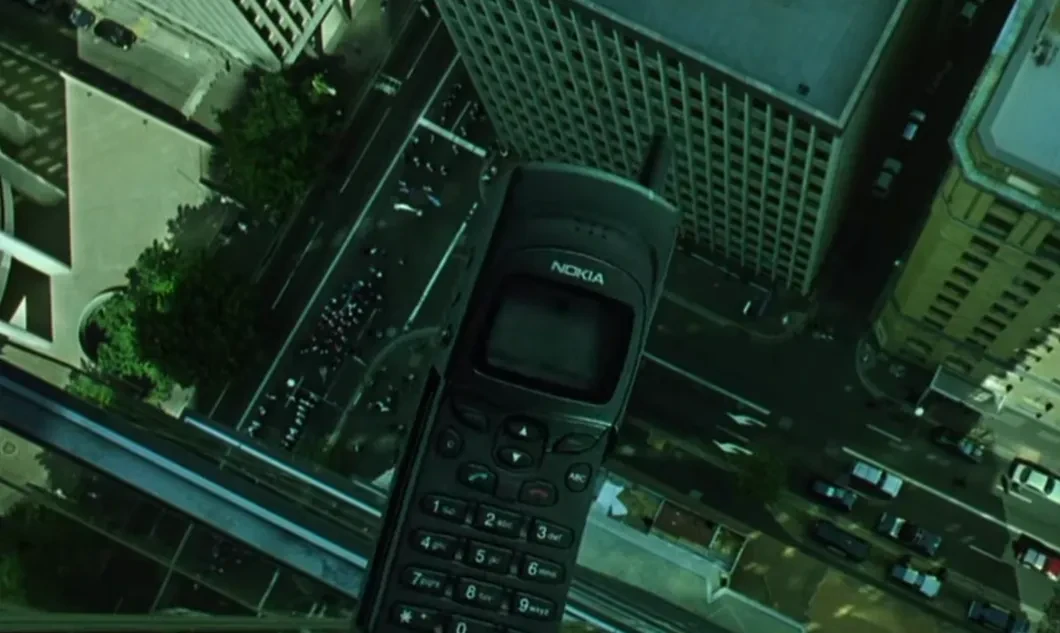
For scenario reasons, I will start from afar - with mobile phones. A cult trend with stirring designs was set by the legendary “matrix”: remember the episode in which neo crawls outside the skyscraper window, and then drops down the Nokia production playing?
The Nokia 8110 model, lit up in the “matrix” and is among the people “banana” (because of the form), is considered a cladder (Flip in English) of the first generation: its body did not fold a shell (clamshell), but was closed by a retractable cover that protected the keyboard. The first full -fledged shell was the 1996 Motorola Startac model, which set the fashion trend for the full decade.
In 2006, the expansion of smartphones with a touch screen, led by the iPhone, seemed to closed the theme of the cot, because there was nothing to slam: the physical keyboard gave way to virtual. It turned out, however, that the motor neurosis of a modern person, which demands to constantly add, move and move, is stronger than common sense, so experiments with smartphone layers organically continued the telephone tradition.
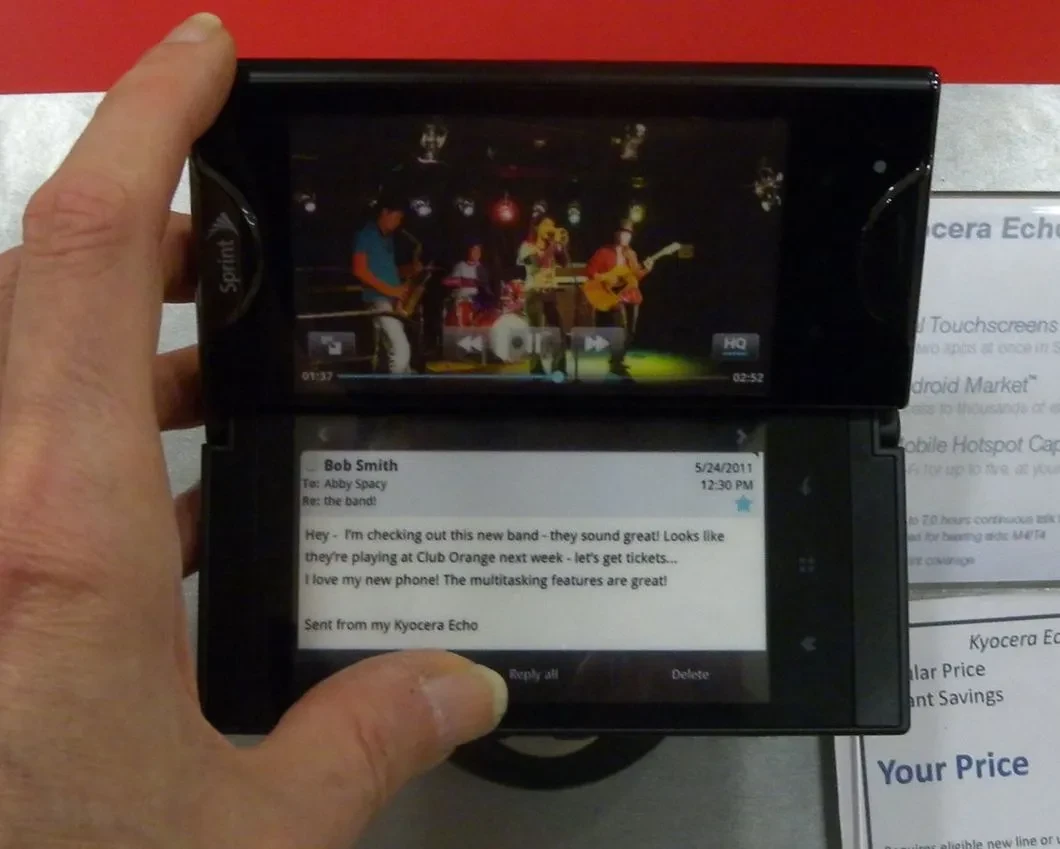
The first, if the memory does not change, was the Japanese Kyocera Echo, released in 2011 for the American mobile operator Sprint. This funny smartphone had two 3.5-inch screen, which were laid out using a patented system of articulated loops in a semblance of a single screen with a size of 4.7 inches and a resolution of 480 x 800.
The image on one screen flowed onto another screen, creating the illusion of integrity. However, only the illusion, because the screens did not physically come into contact with each other.
Nevertheless, the symbolic trend in smartphones was set, and the main technological task in the following years was the creation of a full -fledged flexible screen, which can be folded and lay out as a whole.
It was possible to technically bend the screens already in the middle of the zero: prototypes on IT exhibitions at different times represented Siemens (2005), LG (2006), Philips (2006), Sony (2007), TDK (2010), Auo (2011) and other manufacturers. The first finished models of smartphones with curved screens on the retail market were released in 2013 by Korean Samsung (Galaxy Round) and LG (FLEX).
In terms of the aesthetics, Galaxy Round and Flex looked terrible, but addiction to bend the screens seemed to affect some special strings of the Korean national soul, therefore, once starting, they never got fat.
Samsung, who managed to disfigure the entire flagship line, was particularly fiercely borne by the whole flagship: if the Galaxy S6 and S7, except for curved EDGE, also offered versions with normal screens, then starting with the S8 all the top -end andrphones of this manufacturer became non -alternatively convex.
The prototype of a fully folding screen in the form, as we know it today, patented in 2017 Sharp, and two years later, in addition to the mentioned Galaxy Fold and Mate X, the smartphones-rangers lit up in the models of the Motorola Razr 2019, Royole Flexpai, as well as in the dozen Chinese noname'ov.
We already know about how the market accepted the clashes. It is significant that the sales figures in the Yandex.Market statistics are no exception, but the most optimistic that you can find in the world: a post -Soviet person, financially not rooted in reality, is distinguished by a unique craving for any technological innovation. Making an ordinary American or European exchange his smartphone of the average price level for the latest flagship Apple or Samsung classic design is a non -trivial task. Buying a cot at a price that starts from 2 thousand dollars, borders on political incorrectness.
As Greta says: "How Dare You?!"
Now we came close to the intrigue of my whole replica. It turned out that no depressing sales figures are able to stop the motor Korean itch, so the other day Samsung rolled out a new generation cot - Galaxy Z Flip.
It is characteristic that together with the model with a folding screen, the flagship line of traditional smartphones that demonstrate this year by truly revolutionary characteristics: the frequency of updating of the screens of the new Galaxy S20 is 120 hertz, and the S20 Ultra top model is equipped with a 108-megapixel sensor capable of filming a video with a resolution Zooming.
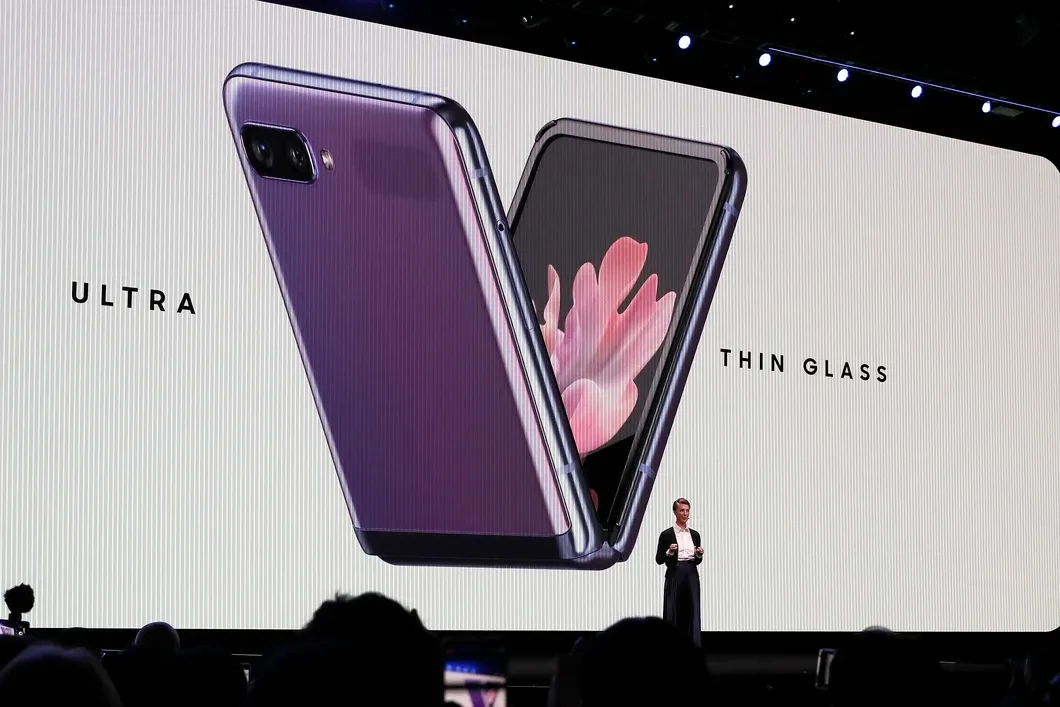
There are no such bells and whistles in the Galaxy Z Flip cot. There is a flexible, but modest 6.7 ”screen. There are 8 gigabytes of RAM, a dreary battery of 3300 mAh, more than modest cameras with a resolution of 12 and 10 megapixels. And yes, they ask for this kit one and a half times more money than for the Galaxy S20 Ultra, - -
120 thousand rubles.
Nevertheless, I almost have no doubt that Galaxy Z Flip will become a sales hit. How is this possible, taking into account last year’s voting with a wallet that demonstrated the indifference of the market for smartphones-rallys?
My hypothesis is built on a form factor. Rather, on the revolution in the understanding of the form factor made by the Galaxy Z Flip model. All that we have seen to the present was a failure attempt to port the idea of a radical phone to the smartphone market, which was inadvertently interpreted at the level of functionality. For some reason, the manufacturers decided with amazingly blind unanimity that the cot in new realities should certainly turn the smartphone into a tablet!
This fatal error cost producers of hundreds of millions of dollars spent on the development and production of chimer, the culmination of which became the 2019 models - Huawei Mate X and Samsung Galaxy Fold. As a result, we received heavy, bulky and uncomfortable smartphones that are laid out in funny tablets with square screens.
Manufacturers forgot that consumers have long gained harmony in both markets. Modern classic smartphones - thin, weightless, with a luxurious battery that provides full day of work, with chamber quality and screens amazing in quality - are supplemented by no less advanced tablets. For folding hybrid freaks doomed to be mediocre smartphones and mediocre tablets in one bottle, there was simply no room on the market. Especially at sky -high prices.
It’s truly: everything new is well forgotten old. Mobile phones-rallys at one time attracted the consumer not with functionality, but a form factor. They were compact! And the shell also protected the screen from external mechanical damage
(Hello Huawei, who managed to fold the smartphone's screen out!).
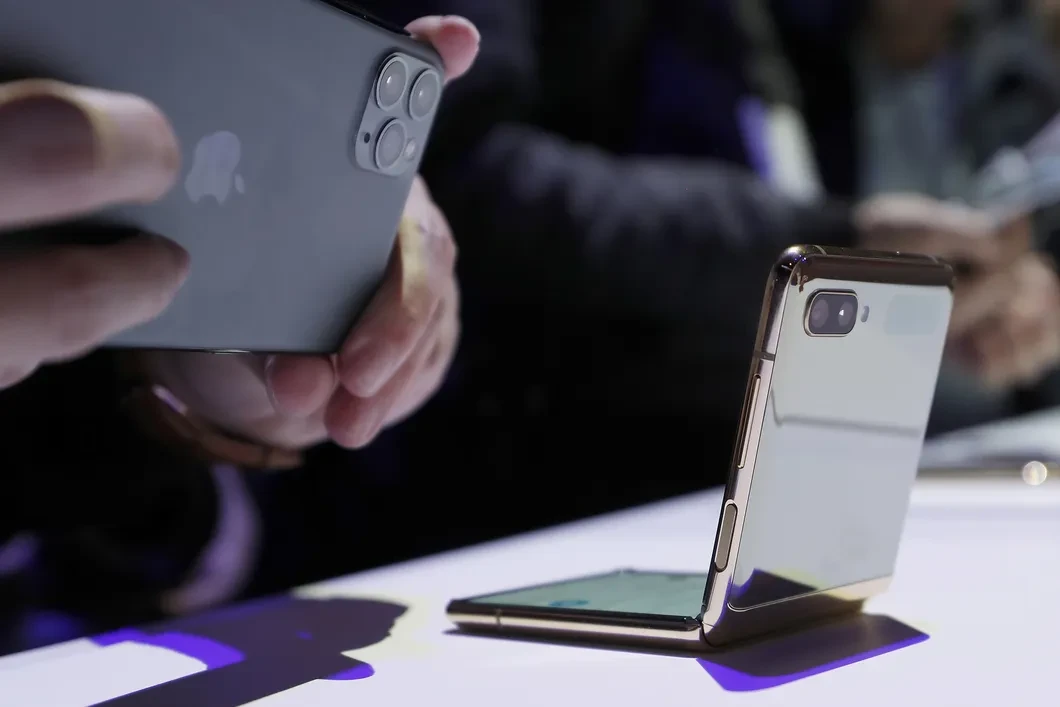
And then Samsung engineers committed the impossible: they invariably overestimated the past and folded 2+2. As a result, the world's first smartphone-porigar was born! In the folded state of the Galaxy Z Flip, the smartphone is smaller. It is thin, flat, light, beautiful. With an open screen, it turns into Galaxy S20+.
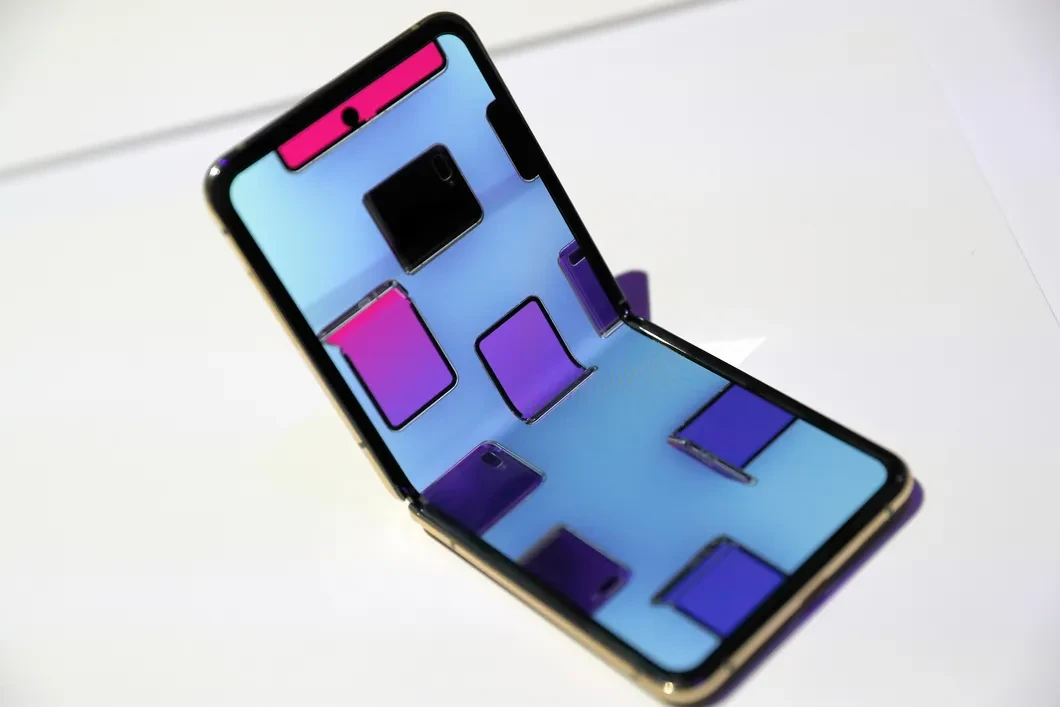
From a category that has no chance to compete with smartphones and tablets in functionality, Galaxy Z Flip has moved to the category of miniature image gadgets. This cot is not intended to measure megapixels, but in order to put it on the restaurant’s table with a careless gesture of the Nabokovsky Bruno Bruno and with indifferent appearance to eagerly catch the envious and lubric glances of others.
It’s even better to put the lining on the table, but put it on the priest: samsung foresaw this functionality and provided for the possibility of a selfie using a gesture.
In short, all of us, supporters of a functional attitude to gadgets, are waiting for difficult times: the Koreans have just released such hellish show off from the bottle of the genie that it will have to suffer from its courage for more than a decade!