
Translated material
Pedestal
Antiquity as a bomb shelter
- Category: Time skin. Read all materials
Last time I disappeared in Venice. But before that he managed to say, alas, publicly, that we would still envy ourselves.
“Let at the White House,” I reasoned frivolously at the microphone, “there will be no worst troubles than the talkative girl in a blue dress.”
Moreover, I was right when, in the process of new impeachment, it turned out that - according to Chekhov - it is better to change his wife than his homeland. But then, twenty years ago, the trial of the president seemed not to be a too decent joke, a frivolous scandal that imposed on society a epistemological discussion about the nature of sex and the meanings of the verb to be.
The yidllia stood in the yard. The calendar completed the euphoric 90s, and I dreamed that the XXI century would deduct the XX to get into the blessed XIX with its leisurely, but the unstoppable course of progress. The date of September 11 was still no different from the neighboring ones, communism disappeared from the agenda, and Clinton’s pranks did not threaten the measured course of things. Having reassured myself with these considerations and listeners, I went to Venice to celebrate a silver wedding.
Meanwhile, someone, considering this point of view blasphemous and insulting for America, clicked on my optimism directly into the congress, which requested the translation and printout of the unfortunate broadcast. This once again confirmed my thought that in those days Washington had nothing more to do. Legislators, however, did not find seditions in my words, and the incident was exhausted. But the main thing is that I did not know anything about him. In those days, mobile communications did not interfere with anyone yet, I didn’t take the computer with me, and lived for two weeks by the lagoon, not knowing about the storm that rattled over my head in distant America.
The happiness of Venice is that it is closed on itself, it is not available to the rest of the world: it is fine ships in the lagoon, the horsemen are deep, for the news too beautiful.
No one comes here to read newspapers. Venice should be visited only with serious intentions: to live, love, die.
At that time I was saved by geography, but usually I have enough history.
I live today, but a spare, unhealthy, completely extraneous story helps me to survive it, in which I am not looking for analogues, but all the more less than the lesson, but just a break. So, in the terrible 1919th, Tsvetaeva wrote a play about Casanov.
I have a custom to set a date on the books that I read or re -read. Disassembleing my library, I seem to be leafing through an intimate diary, although not written by me. From it you can find out where I took refuge from the bombing of the news. This is indicated by the dates on books from the coveted cabinet with antiquity.
Putch of the 91st-and I read Fukidida all three fateful days. A raid on New York skyscrapers-and I am leaving for Herodotus. The capture of the Crimea - and I am in the trembling of Aristophanes. The war in the Donbass - and I grab the cherished chapter, where Odysseus meets the flirty princess Nasikai. The downed Malaysian Boeing - and I am with the Hoplites of Xenophon. Well, with the victory of Trump, I tirelessly interfere with the newspaper Plato to remind myself of the misses of democracy.
This, of course, is nothing special. Antiquity for many was a reserve homeland. Allegory's seedling, a forge of symbols, a mine of masks and a pseudonyms mine, ancient civilization served every eyelid in its own way, but always true and good. We are no exception.
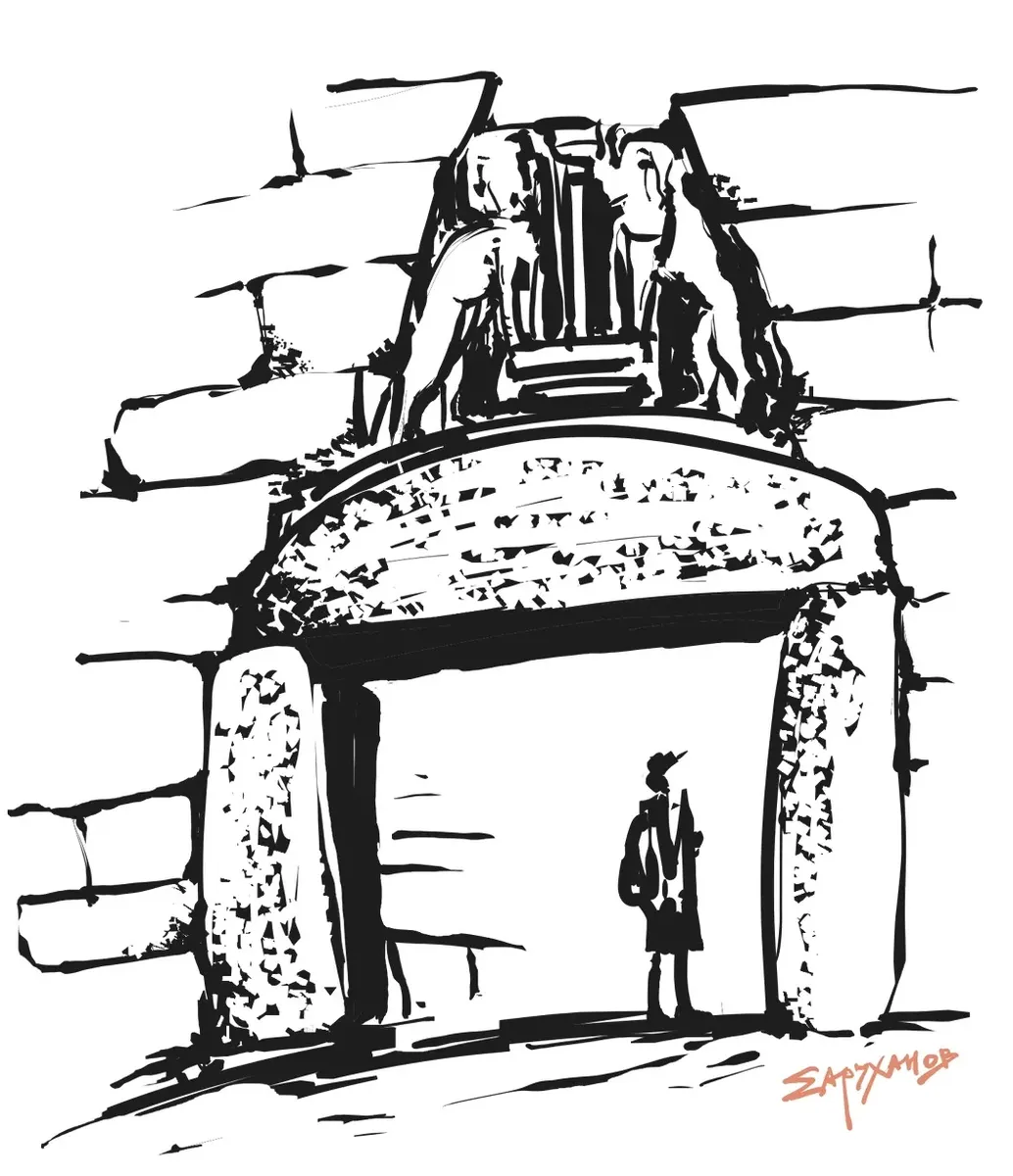
I came to America at the peak of the Cold War, which ruined the best of the Greek joys - the Olympics. As if in return to the United States, several marble bas -reliefs from Parthenon were brought to her. The exhibition did not hide its political background, promising the victory of Western democracy over oriental totalitarianism. The key to this triumph is efube, beautiful young men on reared horses. Neglecting the saddle and a bridle, doing without stirrups (they have not yet been invented), they, without even holding on to the mane, controlled the horses almost telepathically, clean will.
“Such,” the curators interpreted, “the ideal of democracy: it releases the dark power of the crowd and shoes it with the upbringing of the mind and the drill of the body.
The best horseman, like a perira, did not deceive the horse like populists, and did not strangle him like tyrants, but ruled them in mutual harmony.
I must say that Reagan perfectly understood the ideological message of this image that inspired him to fight the Empires of Evil. After all, he himself was an excellent rider and knew well that the horse was not subordinate to violence, but to the suggestion of the rider, imposing his will, capable of trampling him.
Looking at the Ephesus in the museum, I first believed Solzhenitsyn, who predicted the fall of the Soviet regime and Reagan, who promised to end the Cold War so that both warring parties that got rid of the deadly threat of communism would win.
Such - instructive - antiquity built states, wrote them the constitution, inspired the generals and seduced the architects. No wonder in Washington and St. Petersburg there are more columns than throughout Hellas. But I need chamber antiquity, such as I can imagine, so that it is convenient to hide in it, like a blanket - with my head.
Everyone creates private antiquity by its measurement of utility material, not paying attention to scientific authorities and previous experience. Erudition, but only when it is pretty diluted with ignorance, helps this vital process, is undoubtedly helped.
“The incompleteness is productive,” Goethe said, “I wrote my Iphigenia, having studied Greek mythology, but my knowledge was incomplete.” If they were exhaustive, the play would have remained unwritten.
The masterpiece created according to this recipe is Satyricon, but not Petronius, but Fellini, who created his own antiquity from the gaps, not pretending to him - and to us - is available for understanding.
“It is in fragmentation,” he justified the incomprehensible, “I see the true attractiveness of the world shown in the film.” He is like an unfamiliar landscape behind a dense veil of fog, which, at times breaking, allows you to see something briefly.
Inhabiting the “satirikon” by copyright phantoms, Fellini exaggerated the incomprehensible - languages, gestures, costumes, dancing, rituals, customs, and most importantly - an extraordinary attitude to the past, which has not yet opened the refuge of Christianity. Therefore, there is no horizon in his Rome: you can’t get out of it - how to get out of the destroyed metro. So Fellini did not only addition, but also subtracting.
From antiquity, we really have slippers and scraps, but in this both bitterness and temptation. We know so little that we can arbitrarily sculpt it not in our image and likeness. The last world is not just the opposite of ours, it is completely different, which means that it can serve as an alternative, it can be hidden in it, as in a bomb shelter. What I do.
When the modernity behaves in an unbearable way, I grab onto the ancient books indiscriminately. They have invaluable therapeutic properties for me.
Perhaps because in antiquity everything was the first - epic, prose, history, thought, even love. Of course, starting from scratch, she accelerated faster than Mazerati, but still did not go too far from the start, allowing to look at herself, in any case, the one that was locked in my bookcase. I love antiquity and envy it because the world itself seemed young then, and everything in it was equal to interesting and deserving greedy attention. Actually, this is familiar to me myself. Therefore, I always dreamed of starting the book as Elian did in his unpretentiously called “variegated stories”: “The polyps are surprisingly gluttonous,” he wrote on the first page, “and destroy everything indiscriminately.
New York