
Translated material
New official
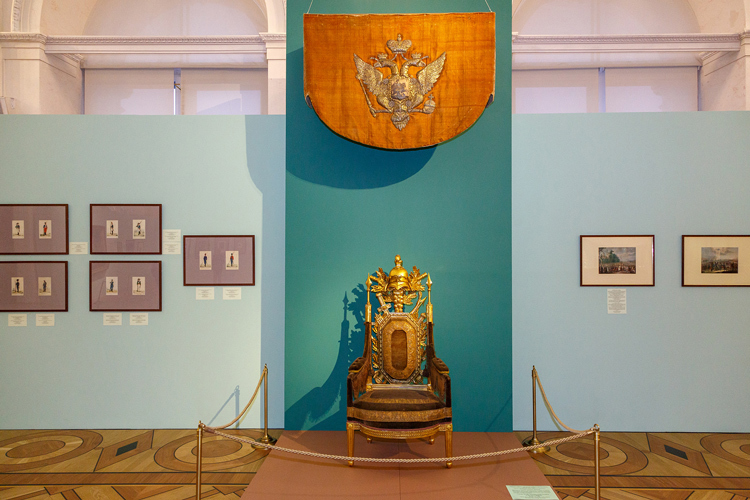
“We all lost something
In this crazy war.
By the way, where are your wings
Which I liked? "
Ilya Kormiltsev
The text of Ilya Kormiltsev is probably harsh in the context of this material. But let it be a beacon-predicting: the main feelings for what I want to call a “new officialdom” (besides curiosity) is (until a certain moment) sympathy and fear. Sympathy - because I am sincerely fascinated by all systemic, especially the revived corpse of a mechanism called "cultural policy." Fear - because in the fascinity of this Frankenstein it is easy not to notice the glass cap of the “official”, in which the mentioned corpse will equip the greenhouse in order to lovingly raise films about tanks and “upward movements”. We do not love films about tanks, but we will quite coexist with them: after all, the greenhouse is warm and comfortable, the sun and the sky are visible through the cap. Sometimes check how you breathe - if you are not in the greenhouse. When you begin to bear fruit with films about tanks, it will be too late.
The formulations of “official art” and “unofficial art” are something from the history of the subject, from the 20th century, where there were so many terrible “hot” wars that in XXI we switched to hybrid semi -finished products. Today, fighting, you can drink lavender Latte, watching the glass hipsters ringing with cleanliness in oversize, overwhelming with snow -white soles along the grim of the tile of the buried Moscow. We are for separate garbage collection, against forest fires, for conscious consumption, we have paid subscriptions for streaming services and even some media. Are we-with our awareness-we can sell some kind of “official”?
First, yes. Because (and this is secondly) the keyword is here-“Sell”. By “officialdom”, many by inertia understand something from the 20th century, infected with ideology and to the opposite of the ubiquitous, while the other, “present”, we must “get”, buy. In other words, officialdom seems to be available without effort, and on something outside the matrix you need to spend resources.
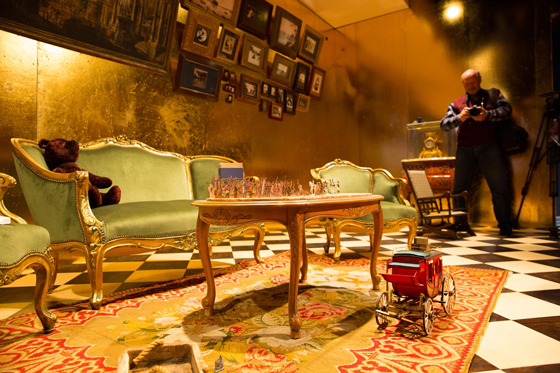 © GMZ "Tsarskoye Selo" The performance-exhibition "Store forever"
But, as was said, we are dealing with a hybrid. In the system of conscious consumption, every waste of resource (time, money, mental strength) offers the acquired product to a height. That is, the requirements for the quality of lavender Latte and oversize are different than those who once read samizdat and fell into the apartment by all by crook. To these (market) circumstances, our officialdom has adapted. No one called the Dinek/Samokhvalov exhibition in the St. Petersburg arena of poorly made - on the contrary, everyone admired the "quality of the product." In addition, they feel “there” well: in addition to quality, the product should be saturated, but not material. After all, we try to buy new things less often (and cellophane bags - never at all), listen to podcasts and prefer to rent housing instead of acquiring our own - we need sensations, impressions and photos on Instagram. And large museums sell them, they arrange titanic exhibitions of at-recall the symptomatic collaboration of the BDT with suburban palaces-museums in St. Petersburg.
So after all, this is all, you say, fine: the personge, and the BDT, and the blockbusters exhibitions. And officialdom is from the time of the total Azopov language, when the song “Striptease” of the Nautilus Pompilius group was passionate and fierce, but not about striptease. So what is the "official" culture in 2020?
Let us return to the "market" realities: demand gives birth to a proposal. We “read the signals” in the president’s speeches, guess what he is pushing for disinterestedness and nostalgic feelings in New Year's circulation. Why didn't you bathe in baptism? We analyze large museum projects similarly (yes, this is the place of the meeting of “Officiaz” with the authorities): what do they want to say with such a weight? Choice of work? The theme of the exhibition? We are looking for an “official position”.
In 2014-2015, Semyon Mikhailovsky organized an exhibition “After the war at the Academy of Arts. 1945–1956 ". This exhibition of student works from the Academy funds is now seen a breakdown of the pen before its recent Dainek/Samokhvalov project, and then the effect was intensified by the freshness of the things presented - they have been stored for decades in the institute’s funds, being considered methodological material. At the end of 2014, everything came together - Mikhailovsky’s flair on the actualization of “official” art, the effect of the “Russian spring”, compared with the still hot feeling of victory among the youth of the post -war period, and, as a result, airy, glowing, exciting socialist realism. Catalogs parted like hot pies. Nevertheless, it was, rather, a parallel, a statement of the nature of a certain rise in society and a variant of its illustration. Yes, and student works are much more straightforward than venerable Deineki and Samokhvalov.
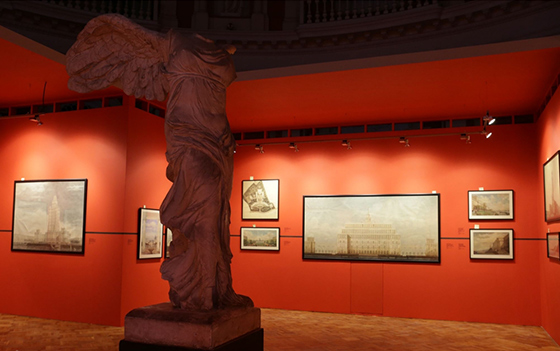 © S. Shagulashvili "After the war. To the 70th anniversary of the Great Victory "
It is interesting that in the fall of 2015 an exhibition was opened in the Moscow Manege about another era: “Romantic realism. Soviet painting of 1925-1945 ” -with a much more thorough approach to the topic, with the works of Isaac Brodsky, Deineki and Petrov-Vodkin. Then they wrote and said that ideology is not all, look at artistic value. And in general: such exhibitions loves a foreign spectator, it would be nice to play positions in socialist realism and in the home arena. As in the case of Dynek/Samokhvalov, this approach does not take into account the injuries of the native viewer, inconsistencies between the Soviet families experienced in the 20th century and socialist realism. The wounds were left uninhabited-we should again find strength to believe in a bright future, for some reason broadcasting this faith from the ambiguous past. In parallel in the arena, the project “1914–1945. From the great shocks of the Great Victory ” , organized by the Patriarchal Council for Culture: in this exhibition they proposed to see the“ Heroes of our country ”(the words of the Chairman of the Synodal Department for the relationship between the Church with the Society and the Media of the Moscow Patriarchate Vladimir Lehoda), in fact recognizing the task of pushing history behind the exposition. The question is at the reference point - it should be far enough for the superstructure of the myth.
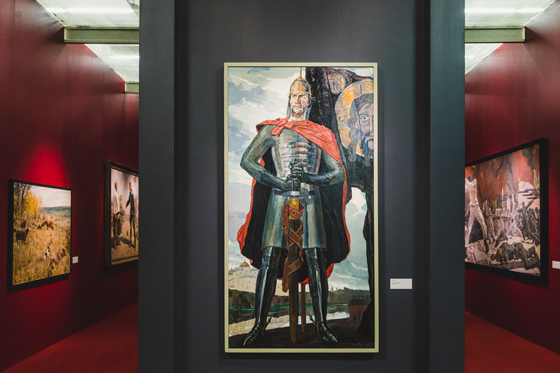 © Museum and Exhibition Association "Mange" "My History. 1914–1945. From great shocks to the Great Victory "
When in 2017 the Russian Museum showed the anniversary exhibition of Vasily Vereshchagin , carpets and mannequins in Central Asian costumes appeared in the halls of Benois Corps - a sort of trophy colonial luxury. In his lifetime, the artist himself made out his exhibitions in the same way: as an attraction. The fact that the timing and now uses the achievements of the century before last is not so much says that Vereshchagin as a manager was ahead of time, but about the fact that the 19th -century coordinate system remains the most comfortable, a kind of residence permit of the “official” culture. The basis of that very glass cap. Even with socialist realism, curators are more accurate - it is more convenient to build a myth from a century before last.
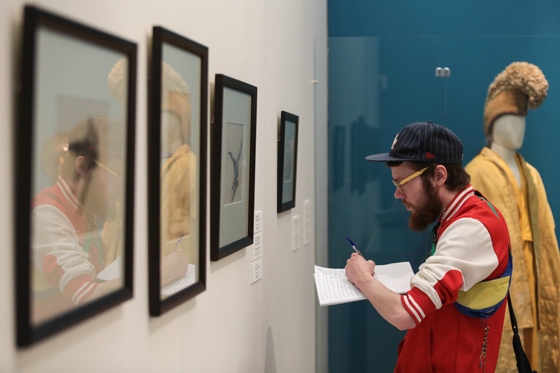 © Anatoly Bear / RIA Novosti "Vasily Vasilievich Vereshchagin. By the 175th birthday "
As it happens in a long and painfully flapping empires, in Russia, it would seem, polar processes in Russia. On the one hand, part of the society is cemented: half -tones disappear, every position requires control, and its carrier must join one of the “sides”. Yesterday's liberals (if you want, “liberals”) go to work on RT , a circle of conditionally “handshakes” are wide as never before, but it is difficult to get rid of the feeling of circular bail in it, from a sense of massive deal with a personal conscience in the name of collective conscience. Yes, all this is subjective: fleeting “bells” in someone’s posts and comments on Facebook, decisions of loved ones that are not taken on social networks. But, perhaps, this is the main impression of the near -cultural life of recent years.
At the same time, like any frantically centralizing system, with all the monstrousness (enlargement of institutions that absorb bright personnel, and this is ambiguous “cementing”) the Russian vertical is becoming increasingly fragile. The mentioned request for “official” does not imply explanation “what later” - even in small print.
One of the recent spectacular phenomena of the “official” that captured the masses in St. Petersburg and came around in Moscow (which is always an indicator) is “Deineka/Samokhvalov” in the St. Petersburg arena. Much has been spoken and written about the exhibition, more or less all agreed that cheers-socialism today is presented to the viewer in a modified form-with its help they form a completely different statement. I decided for myself that the ratio of propaganda with reality now is approximately like the very thawing era with the series of the same name. The construct of fragmented subjective sensations served through a warm childhood filter, which, whatever one may say, is more often happy than not. This is an irrational approach that works only with a deep internal conviction of the authors of the project. If it is - a spectacle (whether it is an exhibition or a series) becomes dangerously manipulative.
Colleagues wrote that in the works of Moscow and Leningrad masters they see horror at times - from the awareness of a great lies, semantic forgery, replacing the living and bodily “wax” and “gypsum”. Inaccurate white -skinned energetic women of Aryan appearance load coal and build the metro. It is difficult not to admire them, but you will implicitly understand that now it is a cute postcard, a “thaw”, which is now supposed to take a picture of another background for an energetic woman. The current state is overtaken by the “sacredness” around the image of the mother: after all, if then it was necessary to employ women and build the metro, now there is a state order to improve demography. Previously, we were shown how glorious to be an asphalt, now - a mother of many children. Needless to say, propaganda images - what then, that now - warmed mannequins in a difficult relationship with reality. And today, with some kind of capitalism, the state nevertheless makes the purchase as expected-it issues maternity capital.
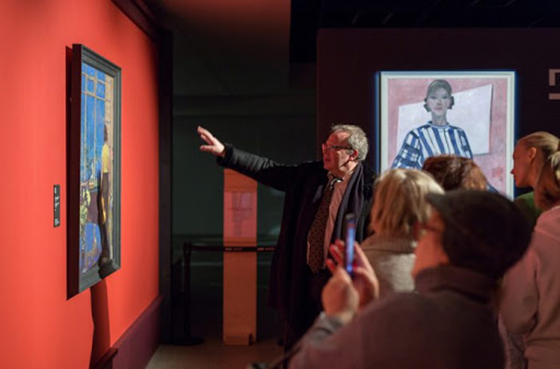 © Central Exhibition Hall "Manege" "Deineka/Samokhvalov"
However, this is all about the meaning, subtext and excessive reflection. If we talk about what we see and feel at the exhibition, then this is ... delight (remember about manipulativeness). The main thing that charges me in painting is technical skill (yes, the notorious “product quality”). I do not understand reproaches in the spirit of “cold technicalness”, for me the technique is a set of tools of expression: the better the artist owns them, the more powerful and attractive than his work. Technique is a priori Hot . As for a dancer, a body possession or for a singer is a voice, a technique is not a goal, but a means; When it is brought to virtuosity, I cannot but be delighted. So with the exhibition in the arena: it is impossible to calm the glee and stop devouring your eyes with your eyes, even knowing that something is wrong here.
And what, in fact, is wrong? Discussing the exhibition with a friend on the social network, I found out that the problem of “falsehood” is really. “Socialist realism fascinates and scares me at the same time,” wrote Lena. -All these smiles, powerful bodies, light colors ... We understand that Soviet reality, especially in the 20s-30s, was not so cheerful and cloudless ... And in reality, how many those men returned from the war? And how many of them have retained their beautiful muscular bodies, and did not become disabled? " I noticed this that we and in the cinema, the audience love a happy ending. “To at least there. So with painting, especially official. ” “Yes, I understand my head, but when looking at some paintings, I can’t be amazed at their beauty and falsehood ...”-“And I had more mundane emotions. Talent in conjunction with active self -realization gives aesthetically impeccable things. When I watch such painting, I just high. In my opinion, they write without violence against themselves. These things may not correspond to our ideas about the same thirties, but this is not a problem of painting. ”
Not a problem of painting. Not a problem of talent. When they begin to scold me, for example, a “harsh style” (as an example of “officialdom”), and with it academicism (that is, academic painting in its current form, which in a strange way inherits precisely the “harsh style”, and not to the salon academicism and not even the mobility), I will give two surnames as counterarguments: Korzhev and Moiseenko. Heliy Korzhev - the mighty master of the “harsh style” (however, “Channel One” called him the “classic of socialist realism” - in a report from a large exhibition of a master organized in Tretyakov Gallery after his death in 2012). That is, this artist fits into the plot of the story about the "our great past", the benefit is not fan with ideology. But his work is far from what we usually read as “official”. The “classic” Korzhev has strong compositions, dense shapes, as if compressed emotions are some kind of natural severity, everything is real, honestly. But the main thing is his heroes. The series “scorched by the Fire of War” could be considered the quintessence of the patients with the fever of the war of the 20th century, if at the end of the century the same Korzhev did not come back in a new way. He created (here, it seems, the dry word “wrote”) “mutants” does not fit. It was as if the ugly inhabitants of the bottom of the endless Sea of beautiful bodies of socialist realism burst into the canvases. Heliy Korzhev became inaccessible for discussion about the “official” and “unofficial” - they smaller against his background.
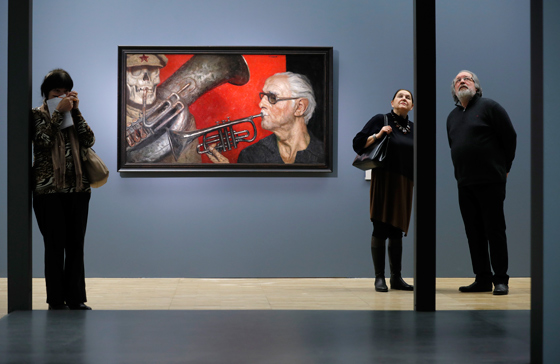 © AP / TASS "Heliy Korzhev"
Evsey Moiseenko (1916–1988) - teacher of the academy, front -line soldier. At the institute, he was another “pole” in relation to Andrei Mylnikov. As a result, it seems that it was the manner of the soap workshop that was fixed as the main one for the current academic painting, but Moiseenko is revered here at least: three years ago the museum was a large exhibition of the master, published a large catalog. Why am I saying about seemingly intracademic affairs? The fact is that the Academy is a system that is always stronger than personalities. An old and traditionally conservative mechanism. Curator "Deineki/Samokhvalova" Semen Mikhailovsky - rector of the Institute named after Repin. God himself ordered the Academy to be a mouthpiece of “official”: where else to hone the technique, if not in these blessed walls. But look at Moiseenko's Victory. Something does not converge, right? Cinema about tanks does not work. “Victory” is when the soldiers support the dying combat comrade at the wall of the Reichstag.
Such examples of seemingly “official” art give hope-because of them I want to continue to sympathize with systemic phenomena. But, of course, there is "but." Recently, the film critic Andrei Plakhov, reflecting on the refusal of Russian producers to finance the new projects of Andrei Zvyagintsev, announced the mechanism of the self -censorship of Russian culture, when there is no need to directly prohibit: some information that is worn in the air is enough. The same Plakhov wrote about the general “environmental friendliness” of culture, about the necessary conjuncturalness - not to offend anyone's feelings. So, if Disney’s “environmental friendliness” is expressed in the unspoken (or, conversely, vowel) racial quotas and feminism of Princess Jasmine in the Aladdin remake, then we have in demonstrative non -resistance, if you please, “owing”, which is logical from diagnosed society with the same Zvyagintsev’s dislike. “Nevyna” is both producers who are retreating from new films not about tanks, and Konstantin Bogomolov, rejoicing in the burial of Moscow. It is not feminism (with all the sympathies to “fidelity” it is not about this at all), not a stain of multiculturality, but an “environmentally friend” Union with the authorities, the achievement of a fragile balance, the very mass conditional handshake in which the main agenda of the Russian culture is concentrated [1] .
So, the “ecological union” - about the desire with the least losses to climb under the glass dome, bask in the greenhouse. Andrei Zvyagintsev, they want to leave to freeze outside, but what to take from him-he certainly will not be born films about tanks. The struggle does not go for him, but for young people with colored hair. The idea is not new, in our society this mechanism is always launched after the centralization of the system. The dying empire is a much more cruel state than prosperous. The “Eco-Union” is expressed in the obvious: large institutions that carry “official” messenger absorb bright personnel, master the virgin lands-what was once considered “unofficial”. They make a steep product, skillfully adapt to demand, give lavender latte in the buffet. See how evenly the “great Russian” artists are shown to us, how many narrative-historical and pseudo-historical projects, finally, how many cool and fashionable projects are promoted by museums, not to mention theaters, what lines for exhibitions. I do not consider a priori “officialdom” everything that the major institutions of culture are doing. They are really multi-layered, polyphonic-directly the illustration of wisdom about the "non-black and white" life. The main thing is not to be gray, because the ubiquitous, flying self -censorship is a subtle instrument of the current enveloping, hybrid official. And we probably have no immunity from him.
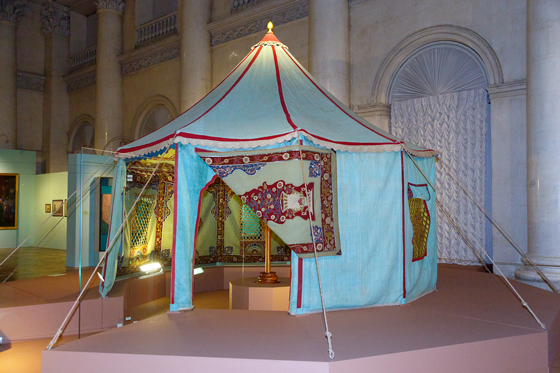 © State Hermitage "" This is Potemkin itself! " To the 280th anniversary of the Serene Prince G.A. Potemkina-Tauride "
In December 2019, an orchestra thundered over the Jordanian staircase of the Winter Palace. A dense stream of people slowly squeezed into the Nikolaev hall. They threw up their hands with smartphones from the crowd - everyone wanted to shoot a elegant military orchestra, the same one who rattled the marches well. Здесь открывали масштабную (если не сказать — титаническую), повествовательную и помпезную выставку «“Это сам Потемкин!” К 280-летию Светлейшего князя Г.А. Потемкина-Таврического». Гвоздем программы стала разбитая посреди зала трофейная турецкая палатка Светлейшего. Бесконечные холсты про обретение Крыма, взятие Очакова и прочие славные виктории. К палатке выстроилась очередь — все хотят сфотографироваться с трофеем. Я тоже сфоткалась. Выставка напоминает «Сагу о Романовых» Русского музея (серию экспозиций, посвященную императорам и императрицам России), но Эрмитаж, как с ним это случается, берет размахом. Тут и портреты любовниц князя, и книги из его личной коллекции, и сервиз, не говоря о трофейном оружии и палатке, и, главное, общая интонация — такой «высокий стиль» в «варварском» понимании, оглушительный, как тот марш. А в 2017 году в этом зале была страшно модная и фотогеничная выставка, посвященная столетию революции.
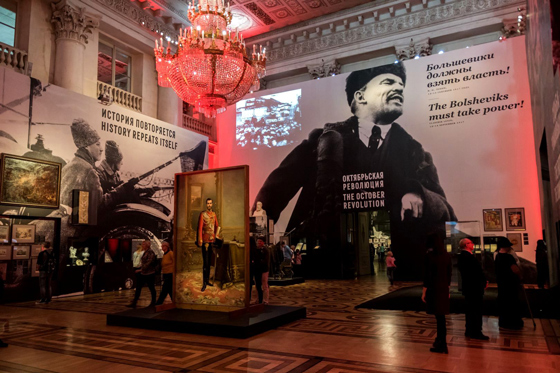 © Государственный Эрмитаж «Зимний дворец и Эрмитаж в 1917 году. История создавалась здесь»
Я считаю, «официальное», что бы нам ни мерещилось в этом слове, должно быть. Про тот же Крым государству хорошо бы обозначить нечто среднее между сухими «российскими интересами» от МИДа (реплики, направленные вовне) и развесистой трэш-клюквой с «сакральностью» для внутреннего потребления. И не Крымом единым. Что-то цельное, системное — что помогает зрителю/читателю/слушателю себя идентифицировать, а для среднего «деятеля культуры» будет маршрутной картой, теплым местом, если хотите. Это ведь нормально, человечно — и да, экологично. Так почему я (и не я одна) не нахожу себе места в этом контексте? Не могу поставить себя на позицию ни производителя, ни потребителя контента в этой системе. Лучше мерзнуть за стенами оранжереи — в компании Андрея Звягинцева.
Не так давно «культурная общественность» ликовала по случаю ухода Владимира Мединского с поста министра культуры. Все нашли старый пост в ЖЖ, где Ольга Любимова признается в нелюбви к опере, балету, экскурсиям — бьет по триггерным точкам, в общем. Некоторые бурчали, но самые-самые прогрессивные радостно щебетали: наконец-то живой человек на должности! Смотрите, какое хорошее интервью она дала «Медузе». А оперу с балетом мы, если честно, и сами не очень… Если мы принимаем как факт существование «нового официоза», надо принять и то, что прямо сейчас мы с ним самозабвенно срастаемся. Министр Мединский нелепыми высказываниями в духе «история пишется в интересах» и обезоруживающим в своей искренности признанием в любви к мифу, а не к истории сигнализировал, что значит «официальное» сегодня, сейчас. В одном контексте с таким чиновником не хотелось быть никому. В контекст новой чиновницы все вписались сами и с удовольствием. Пора, наверное, запасаться билетами в кино — на фильмы про танки. Илья Валерьевич, простите, мы все про∗бали.
[1] Мне, как всегда, не нравится, как звучит это словосочетание. То, что люблю, я про себя называю «русской культурой». Хотя тут слышен XIX век, мне кажется, так правильнее: «российская культура» дает именно официозную привязку к государству.