
Translated material
The price of immunity
The best presidential guarantee is a fair court, not lifelong immunity

The working group to prepare proposals on amendments to the Constitution proposed to consolidate the inviolability of the president who completed the execution of authority-exactly the same as prescribed in the 91st article of the Constitution for the current head of state.
Like, it is the principle of inviolability of the president that allows him to “take all constitutional measures to protect the sovereignty of Russia, performing domestic and foreign policy” (from the speech of the head of the Union of Russia by Ekaterina Lakhova). If so - according to her, this norm “should also apply to the president who ends the authority, because it will be a constitutional guarantee of the independence of his activity, including in the performance of the duties of the head of state of the current.”
In other words, Ms. Lakhova believes that
The current president can do everything he wants, knowing firmly that then he will not be anything for it.
In fact, it should be exactly the opposite: the current president must firmly know that then for everything that he deeds he will really “be”.
The inviolability of the president is spelled out in the Constitution extremely lapidarously: “has inviolability” - and that’s all.
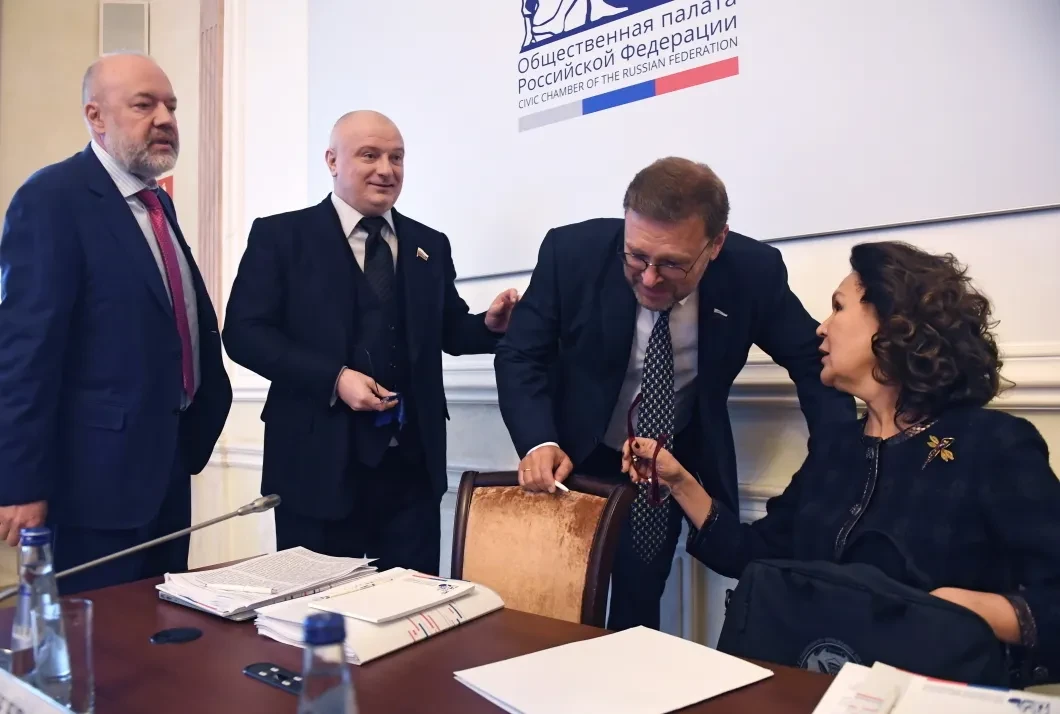
For deputies of the State Duma and members of the Council of the Federation, the concept of immunity is disclosed in the Constitution in the 98th article: they “cannot be detained, arrested, searched, except cases of detention at the crime scene, and also subjected to personal inspection, except when it is provided for by federal law.”
But for the president, everything is different: not a single law that would reveal this concept exists. At the same time, almost all the comments of lawyers say that
The inviolability of the president is the inability to bring him during the execution of powers to any responsibility, neither criminal, nor civilian, and the inability to detain him, arrest, interrogate, and so on.
The only form of responsibility provided for the president is impeachment. Theoretically recorded in the Constitution, but practically in the current political system is not realized.
As for the former presidents, there is a special law of February 12, 2001 N 12-ФЗ “On Guarantees to the President of the Russian Federation, which has stopped fulfilling their powers and members of his family”.
In his key positions, he repeats the very first decree of Vladimir Putin, issued by him in the rank of acting President December 31, 1999, immediately after the announcement of Boris Yeltsin on the resignation. Publishing this decree, Putin probably fulfilled the main condition in which the power was transferred to him - to ensure the inviolability of Yeltsin and his “family” (both in the narrow and in a broad sense).
The law establishes that the ex-President “cannot be brought to criminal or administrative responsibility for the acts committed by him during the execution of the powers of the President of the Russian Federation, and also detained, arrested, subjected to search, interrogation or personal search if the indicated actions are carried out during the proceedings related to the fulfillment of the President’s powers.”
It is possible to deprive the ex-president of immunity, but difficult. For this, a criminal case should be instituted against him on the fact of a serious crime, after which the chairman of the UK sends the State Duma an idea of deprivation of immunity. If the Duma gives consent, the documents go to the Council of People's Commissars, who should also give their consent. And only after that the criminal proceedings begin. The refusal of any of the chambers to give this consent "is a circumstance that excludes the proceedings in the relevant criminal case and entails the termination of such a case."
Now the working group proposes to equate from the point of view of the inviolability of the former presidents with the current ones - providing them with almost complete immunity from judicial persecution. And write it down in the Constitution.
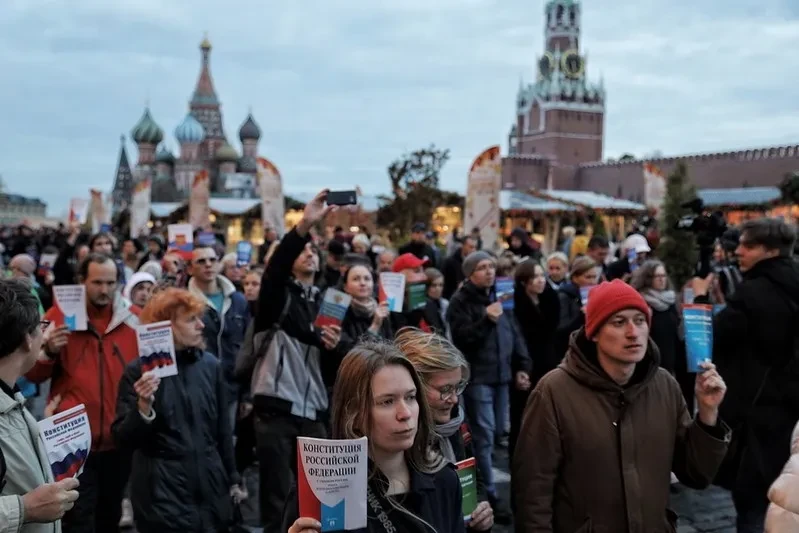
The consequences will be simple: knowing that he will not bear any responsibility for the deed, the president who serves can confidently create everything. But it should be the other way around: the president must be sure that after leaving his post he will become an ordinary citizen and will answer for everything he did.
And that the only guarantee that he will have is a fair trial. So, as it is in most countries in Europe, the USA, South Korea, and many other countries where there are no inviolability of former presidents. And their condemnation for the deed is not uncommon.
About four years ago, I remember, a discussion unfolded: is it necessary to pursue the former elite after changing the regime?
Do not offer them a deal: “We are security for you, you are a peaceful transition of power to us”?
Supporters of this approach were Mikhail Khodorkovsky, Dmitry Gudkov, Alexei Navalny and some other politicians. Assuring that "it is necessary to carry out reforms in the country, and not do accounts."
Even then, I did not agree with this approach, believing that many troubles in our country precisely from the fact that the former authorities did not bear the slightest responsibility for their actions.
And today I repeat: the inviolability of evil is too expensive. Those who are doing evil today must know that tomorrow it will be inevitably punished, and not generously forgiven. And the presidents here are no exception.