
Translated material
"Call the translator." How indigenous peoples are fighting for the preservation of the language
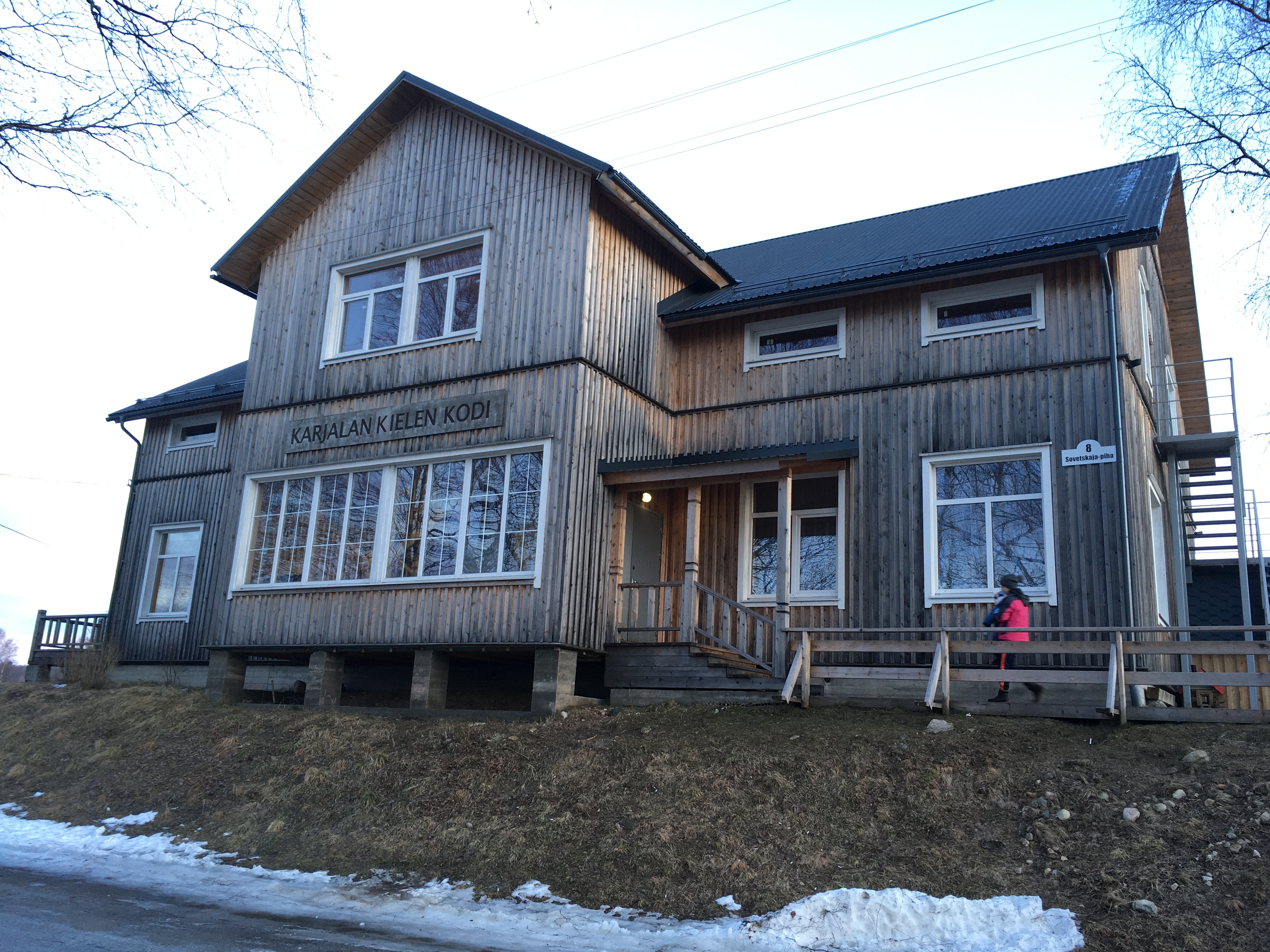
February 21 - International Day of the Native Language. In the north-west of Russia there are two national republics: Komi and Karelia. In both the language of the title people today is without the necessary support of the state. And if the Komi language at least has the status of the second official, then in Karelia the language of the indigenous people has no status.
Correspondents of the North. Realities met with local activists and learned how they are fighting for the rights of their native language and people.
Karelsky: The only one without status
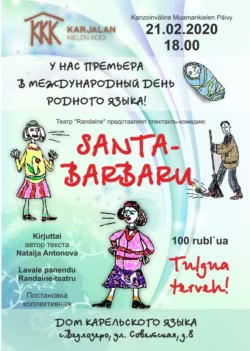
In the House of Karelian language - a full house. In the Karelian village of Vedlozero on the International Day of the Premiere of the Premiere of the play "Santa Barbara". The text was written by Natalya Antonova - a “national” activist in Karelia, promoting the status of the Karelian language. Spectators, from small to great, enthusiastically monitor the development of the plot. It is based on real scenes from the life of the Karelian village in the artistic processing of the author. Mostly these are ordinary female stories, once heard and retold Antonova, including about divorces, betrayals, illegible ties. The author has not forgotten about the context , for example, about "the attitude of ordinary people to politics." But subtle political nuances, unlike "simple" scenes, are not clear to all the audience - only to those who know well, "understands" the Karelian language. Even in the Vedlozer, the old Karelian village, there are few such people left.
Today, 614 thousand people live in Karelia, of which 45 thousand are representatives of the titular nation - Karelians. Of these, several thousand speaks in Karelian. In Soviet times, in the second half of the twentieth century, the Karelian language existed on its own, the state did not support it in any way: training in his native language in schools was not welcomed. The situation has not changed in the new Russia: the Karelian language has no official status, there is no intelligible policy to promote and support.
Natalia Antonova calls himself a language activist. She was born and grew up in an old Vedlozer. For the past seven years, it has been coordinating the projects of the Karelian house, in which many call it the mistress. The regional authorities are not interested in the development of the Karelian language, excessively careful in this matter, she is sure.
The government is trying to avoid this issue. They say: you can develop a language without status if you want
- The status of the Karelian language is today the most inconvenient question that the Congel Congress raises before the authorities. Karelia today is the only republic where the language of the title nation has no status at all - neither state nor regional, no other formal. The government is trying to avoid this issue. They say: you can develop a language without status if you want. But for all Karelian national organizations, for all activists, this is a fundamental moment. The position of the Karelov Congress (in March in Petrozavodsk will take place of the IX Congress of Karelians) is unchanged in the last three decades: the status is needed, and if not full-fledged, state, then at least some, Antonov says.
According to her, the federal law is such that only languages with the Cyrillic basis can become state. Karelsky is not such, it is based on Latin letters.
The Federal Center will not allow the development of the Karelian language in the border region
- It is good if the regional authority lobbies the issue (and the current legislation allows this) about the adoption of a separate law governing national languages on a non -Irillic basis. But the leadership of the republic does not do this - neither the governor nor the Legislative Assembly. Why is the question open. My opinion: the federal center will not allow the development of the Karelian language in the border region, a language that is too close to Finnish, which they speak in neighboring Finland, ”says Natalya Antonova.
However, activists in Karelia not just do not give up, but rather, make more and more efforts to develop the language - not thanks, but contrary to. Karjalan Kielen Kodi House in the village of Vedlozero is one of the most striking examples and the initiative unique for Russia.
House of the Karelian language
The "Multifunctional Center" is the name of the Karelian house in the leader in its owners. In 2012, local residents realized that only at home in Karelsky, even in a conversation with neighbors, they were increasingly moving into Russian. So there was an idea to open a place where Karelsky native speakers could meet and communicate in their native language with each other, preserving the culture of the Karelians. The local administration gave activists the old building of the former kindergarten: it was impossible to repair it, so the residents of the Vedlozer decided to build a new one.
The architectural bureau in Petrozavodsk helped to develop a project of the house - together with Finnish architects, they made a sketch of the building. On October 13, 2013, the foundation was laid, but the authorities did not have enough money for more money, activists opened funds from funds. When the first floor was ready: the walls, the roof, windows, stoves were installed, the floor was made, the first circles for local residents opened in the Karelian house. Today there are many of them: these are several circles of the Karelian language, needlework mugs, children's and adult theatrical groups.
- All that is inside the house is gifts, they themselves did not buy anything - chairs from Petrozavodsk, furniture - from Finland, cabinets - from the sparzhin school. The kitchen was made to us by the master from Finland, he bought materials in Petrozavodsk, and did it on the spot here, ”says Olga Gokkoeva, one of the creators of the house.

The collection of donations does not stop: money is constantly needed for electricity, land rent, maintenance of the house. For 8 years, activists raised almost 8 million rubles.
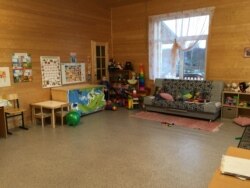
The main pride of the Karelian language house is a "linguistic nest" for children. In fact, this is an ordinary municipal kindergarten, but educators and nannies, native speakers and traditions, speak with children only in Karelian.
Antonova admits that at some point they faced a problem: graduates of the "nest", going to school, lose this language environment. So that the children grown in the “nest” do not forget the language at school, activists opened the “Karelian” extension, where schoolchildren can continue communication in their native language.
- We would like him to become the language of education in schools along with Russian. We would like services to be carried out on it. We would like it to become the language of family communication and the language that is passed down from generation to generation. This program has completely stopped, ”says Natalya Antonova.
Komi: State language without support
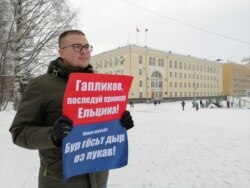
- Communist Zhelch, Sisim Das Kerka, apartment Kvait Oksmam Kvait, - a student of Syktyvkar State University (SSU) Nikolai Udoratin dictates his home address to the policeman. He pretends to understand him, writes something in a notebook. In October 2019, the Internet went around a video in which the future teacher of history and law Udoratin with a poster in defense of ShiES activists refuses to talk in Russian with representatives of the authorities.
If the police go in pairs, then at least one of them should speak on Komi
- This is the state language! I can speak as much as I like. If the police go in pairs, then at least one of them should speak to Komi. If not, call the translator, ”the student of the North. REALIAL correspondent explained his position.
Nikolai Udoratin was born in the village of Derevyansk in the south of the Komi Republic, local residents communicate on Komi there. Nikolai grew up in a bilingual environment: he talked to Komi with his relatives, friends, studied Russian as a second language at the school, Nikolai began to engage in the fourth year of the institute, joining the Syktyvkar branch of the Communist Party and the Democratic Association “Doryy ISNYӧS” (in translation from Komi “protect ourselves”).
"Doriyam ICNOMӧS" advocates the development of the ethnic population, the preservation of rural schools and ecology of the republic. Activists take part in rallies against the construction of a garbage training ground at ShiES station in a neighboring Arkhangelsk region, and demand that the authorities build a new building of the National Theater in the capital, since the old roof flows.
One of the paragraphs of the Association Program is to change the tax regime for companies mining resources in the Komi Republic. Among them is Lukoil PJSC, which develops the Neftithane field in Ukhta, as well as the Austrian group of Mondi. She owns one of the largest paper manufacturers in Europe - the Syktyvkar forestry complex (LPK). According to activists, billions of rubles in the form of income taxes are settled at the place of registration of corporations in Moscow and abroad, bypassing the republican budget.
- We propose to create a special fund for supporting the traditional activities of the local population, where oil workers and timber manufacturers would pay contributions. So that the Komi Voitsyr (the unification of the people with the right of legislative initiative following the results of the congress that passes once every two years) did not run to the administration and did not beg for 50 thousand rubles for the organization of events, ”says Nikolai Udoratin.
They did not ask anything
In the Republic of Komi, 854 thousand of them live 25% - representatives of the ethnic group. The local language is owned by 135 thousand Komi, as well as 15 thousand inhabitants related to other nationalities.
The Komi language is the second state in the republic, along with the Russian. Despite this, in 2018, schools were canceled by a mandatory study of the Komi, together with amendments to the Federal Law "On the Education of the Russian Federation". On the Internet then two petitions appeared at once - one in defense of the Komi language, the other for the abolition of its obligatory study. Parents -performers insisted that the Komi speak only within the republic and no additional homework needs to load children. Defenders insisted on preserving the original culture of the Komi, which cannot be developed without a language. The opponents won.
There is a local law - on the languages of the Komi Republic of 1992. It follows from it that residents can communicate at the request of one of the two languages in state institutions, at enterprises and in the retail outlets of the region.
This rule in March 2018 was used by the activist of "Doryy ICNYӧS" Alexei Ivanov , who distributed political leaflets in Syktyvkar. When the police approached him, he began to communicate on Komi. After the phrase in your native language, “I don’t understand you, you don’t understand me” the young man was kept in a special -reception for two days. According to the Ministry of Internal Affairs of Syktyvkar, the detention did not occur because of the language, but for disobedience to representatives of the authorities.

- In Tatarstan, about 70% of the indigenous population - there the majority speak the local language there and for the police it is not a problem to understand it. The fundamental position of the directors of many Tatar schools - we still will not stop learning our language as a native. And we only have rewriting the protocols and complaints about the extra costs that the parents of schoolchildren bear to learn the Komi language, says Urodatin.
He proposes "if you do not return the obligatory study of the language" in the schools of the republic, then at least introduce a system of bonuses for students - to calculate additional points in the exam, pay an increased scholarship in universities to those who know the subject.
Translation difficulties
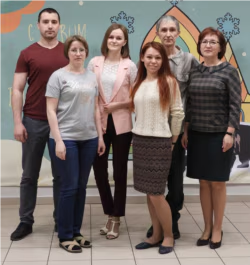
Unlike the Udmurt and Mari languages, Komi did not enter the Yandex.-translator synchronous translation program and the local children of the Komi Language were decided to be engaged in local guys: a programmer, a design manager and three philologists-emitter of Syktyvkar University. These are employees of the Center for Innovative Language Technologies (TsiaT) under the state institution "House of Friendship of the Peoples of the Komi Republic." A team of five people is developing an online Komi language doll and modules for Internet browsers, with which you can translate individual words on a web page.
- We presented the contextual dictionary in January and already included it in the browsers of Google Chrome, Internet Explorer and Mozilla. We are waiting for an answer from the "opera" and from "Yandex". A full -fledged translator from the Russian language in the Komi is planned. We are gradually going to him, ”says North. Reali , Marina Fedina , head of tion.
The organization is partially funded from the budget of the republic, partly at the expense of grants, as well as orders of the same administration for transfers of citizens' appeals in the Komi language. The center of the center is free. According to Fedina, they do not make business in their languages, this is a fundamental position.
- There are not enough resources, both human and financial, because all developments are constantly updated and supplemented. It is unrealistic to do this by the forces of five people, but we attract volunteers, students, activists on a voluntary basis, ”she adds. - Our developments are used not only with us, but also abroad, because you yourself understand that life is unthinkable without the Internet. As they say, if the language is not represented on the Internet, then it does not exist for the current generation.