
Translated material
"The problem was and remains only in money"
Producer Ilya Stuart - about sudden departure from the Zvyagintsev project, Farsi Lessons and Petrovs in the GRIPP
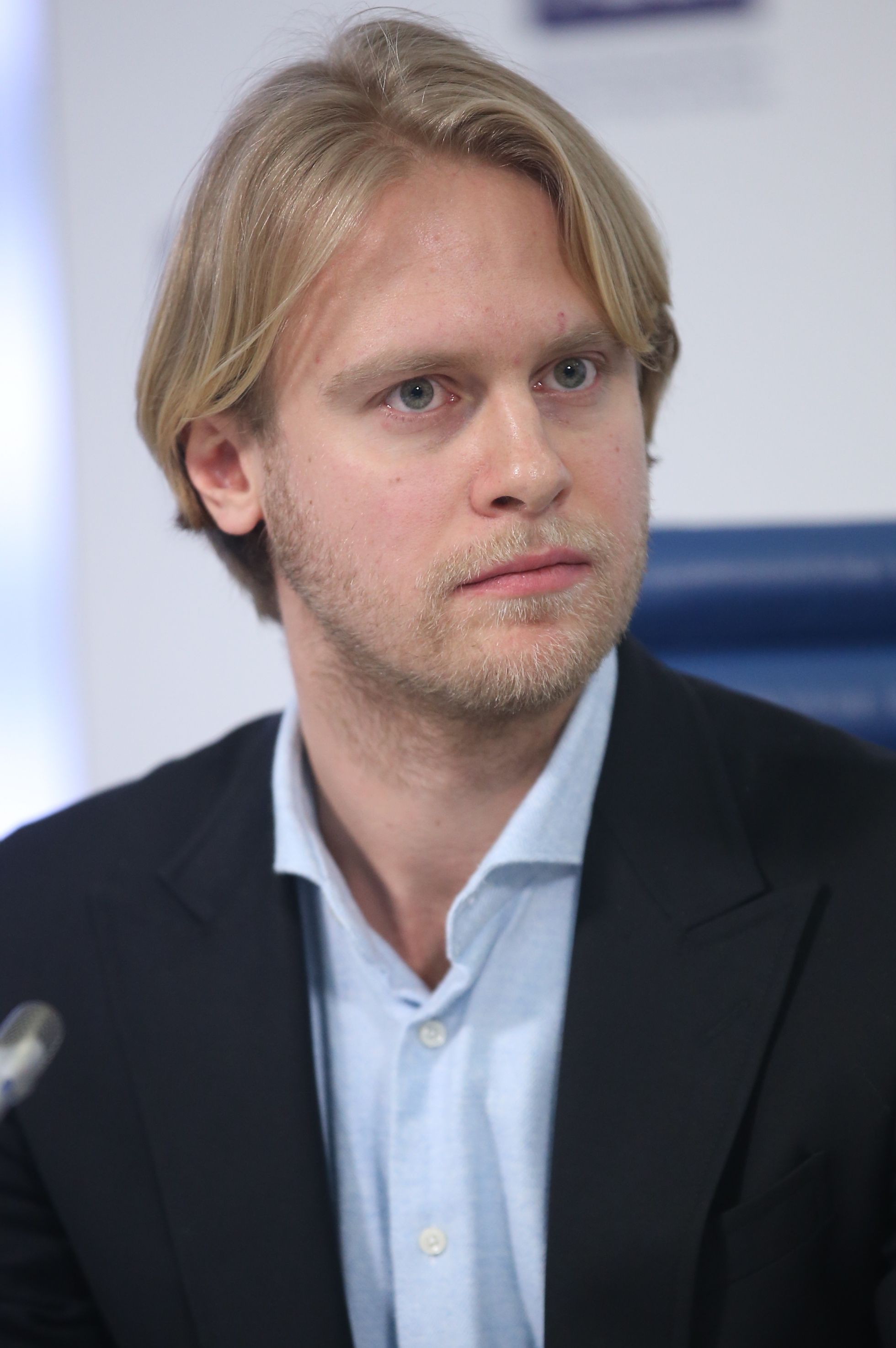
On February 22, the Berlin Film Festival will show a picture of the American director of Ukrainian origin Vadim Perelman “Farsi Lessons” - the story of a Jew, who imposed himself as a Persian during the Holocaust. Ilya Stuart promotes the film, the Russian producer of Hype Film, the name of which is connected, including with the iconic projects of Kirill Serebrennikov (he worked on the films “Summer” and “Student”, and now he is busy with the film adaptation of Roman Alexei Salnikov “Petrovs in the GRIPP”) and with a scandal around the new picture of Andrei Zvyagintsev , who is not the director who has not yet It is possible to remove - Stuart suddenly left the project. Before the Berlin Premiere of Farsi Lessons, Anton Dolin met with Stuart - and asked him about new projects and censorship against Zvyagintsev.
-This is a very unusual situation, although this has happened a couple of times in the latest history of our cinema: the Russian producer goes to the international festival with a film made in co-products with other European countries, not in Russian. I'm talking about Farsi Lessons. How was this project born?
- The project has long existed, many years ago it was invented by the author of the script Ilya Timur Bekmambetov. They have been engaged for many years. At some point, the project has stopped. The already when Vadim Perelman was attracted to him as a director, they showed me the script of “lessons” as an example of what I would like to do together. To which I, of course, said: let's do just that. Quite quickly, Timur and I agreed on joint work, and that our studio will lead production.
Our fundamental offer was made to make a film in German; The script was written in English. In this case, the action takes place in Europe. More precisely, in one of the unnamed European concentration camps. It was important, in my opinion, to do this as reliable as possible. Actually, I have a thought that everything was interpreted for a long time as youthful maximalism, and we turned into the ideology of our company: we can engage in international cinema. Despite where we are. Our office is in Russia, but I want to make a movie in the language that is required for history.
- It sounds impractical. Any producer in any country, if he is not a crazy millionaire investor, should think about what will happen to the project that he does. An international multilingual project is good for a person living and working in Europe, but not in Russia. This seems to be a deliberately risky thing. Or do you have a larger ambition - to be a member of the World Cinema Ingra, for example, at the Berlin festival?
- On the one hand, this is not a pragmatic solution, but on the other, I saw what I try to see in every script for which we take. This is a universal story. The pre -sale at the stage of the script proved this - we sold the film before the release of forty territories. And a lot where the rental will be quite wide. The only surprise and feature of the project is that Russian investments and producers are dominant, but Russia is not a key territory of filming. “Farsi lessons” will come out, we hope, at a fairly wide box office in Germany, in the USA, not to mention France. The actors who are involved there are quite large stars in their countries.
- Who exactly?
- The main two roles are played by Lars Idinger and Nauel Perez Bickery. The Idinger is known for the Russian public from the film by Alexei Matilda, Matilda, but at the same time he became a rather large serious star at home during our production period. Although, when we started our shooting, he was not yet in this status. Now he is known from commercial comedies. At the same time, Lars has long been a brilliant artist recognized by many. It exists in tandem with Bickery, which is known for the festival viewer from the film by Roben Campiyo “120 beats per minute”, who won the Grand Prix in Cannes. For him, Bisker received Cesara as the best young actor. For me and our studio, this was the first experience, we, at the expense of these names, “packaging”, financed the film and prevailed to many territories. And thereby minimized production risks. A unique situation for the Russian project.
- That is, only from the outside the project seems risky? In fact, everything is quite well calculated, and the business model is already working?
- This is true. Because in Western cinema there are names, unlike Russian. There is a Spanish distributor, a big fan of Noel Perez Bisker, he buys his films in principle - just as an example. Accordingly, it is important for me to play with Russian cinema in the history of pre -sale and “packaging”.
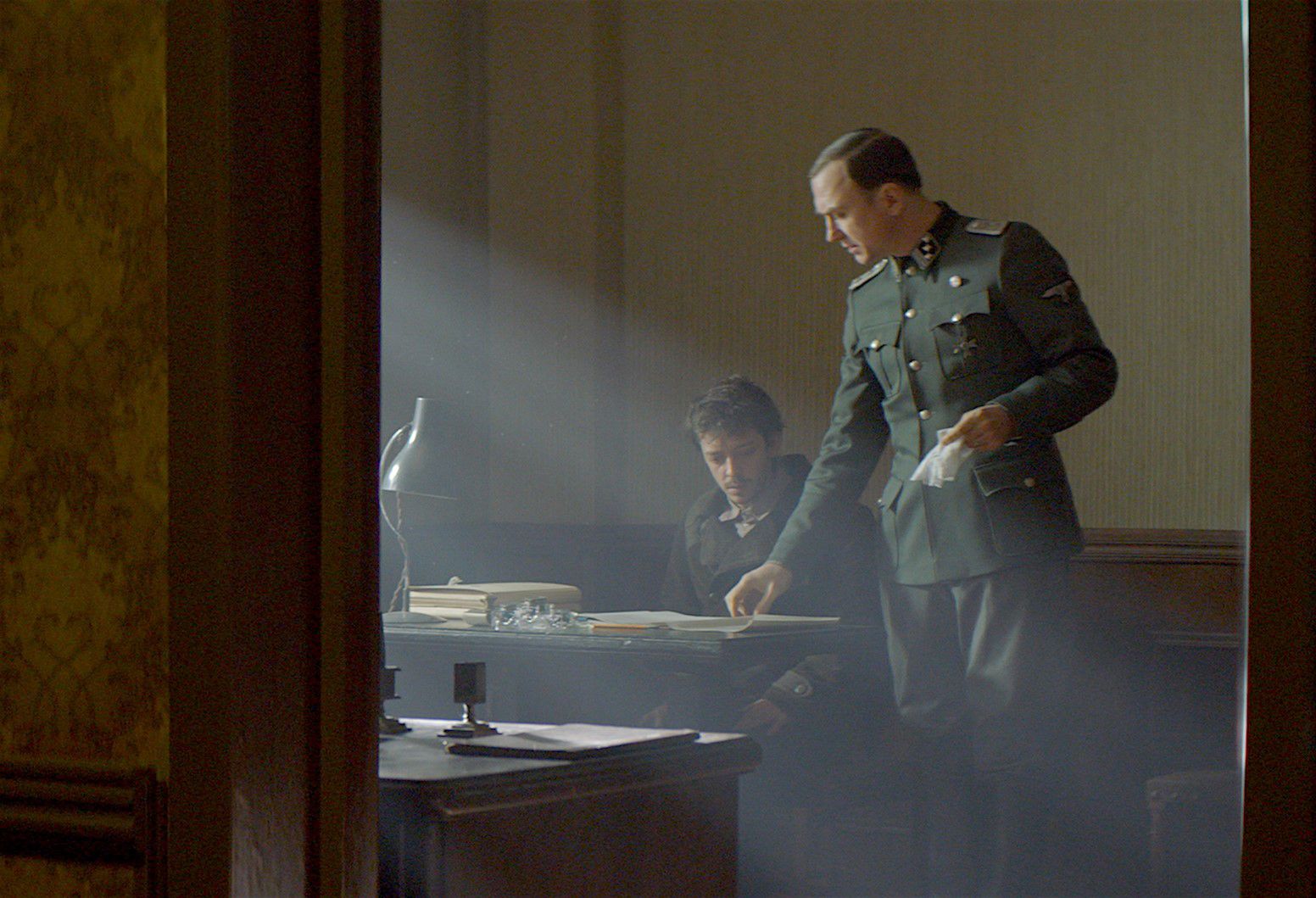
- In Russia, there is an unconditionally false, but stable and possibly invincible opinion that in Europe and even partly in America to make a film about the Holocaust means to get to the festivals, get an Oscar and have a great success in general. Because this topic is win -win. In reality, we know that the situation is almost the opposite. In order to attract attention in Europe with the film about the Holocaust, you need to find a very unexpected angle. As this, for example, Laszlo Nemesh did in the “son of Saul” or Pavel Pavlikovsky in “Ide”. How bothered you this aspect? To what extent the story, which is told in the film, answers this request-to talk about a topic that does not become obsolete and is always important, something that people have not heard yet?
-Like many, I reacted to this script because of his unexpectedly new approach to the topic of the Holocaust. Throughout the filming, we began to understand that we have a rather commercial film, the audience, which is quite uncharacteristic for our studio and generally for festival cinema. The fact that he was invited to [program] Berlinale Special Gala is also talking about something. We found the perfect balance, in fact. And we have the premiere of the film about the Holocaust in Germany, where this topic does not lose its relevance. With one of the main national stars in the title role!
The canvas there is quite simple - to survive, our main character Gilles Kremon, a Jew, pretends to be a Persian. We observe the unexpected union of the prisoner with the jailer, played by Lars Idinger: he is a cook in a concentration camp who wants to leave and open a restaurant in Iran after the war. He spares our protagonist, so that he will help him learn Farsi. The only problem is that Farsi Gilles does not know was his fiction. The whole film is observed as it is on the verge of life and death.
- A real story or a completely invented plot?
-History is based on a short story by a German famous author, published back in the 1960s. But it is interesting that we allow ourselves to use credits - they say, it is inspired by real stories. After all, really such stories were completely nearby. I hope that one of our partners will not be offended by me: he gave consent to financing on the basis of the fact that his grandfather survived in a concentration camp, pretending to be Georgian. This, it seems to me, emphasizes the versatility of the project.
- How do you decide for yourself this ethical dilemma? The Holocaust is the history of the tragedy of millions of people who, or whose relatives often react painfully to the idea of those events as a fairy tale, a certain fiction. Even the “Schindler list”, which is undeniably based on real history, earned these reproaches. It seems that you are traditionally answered by this: well, this is a movie, fiction. But this does not work with any material.
- Here is the most striking example - “life is beautiful”, which a flurry of criticism fell on just for the angle that the film allowed himself, namely a comedic one. I just love this film very much, but our director Vadim Perelman and screenwriter Ilya Tsofin, like our entire creative team, very carefully approached this issue. We have no lightness in any case. In my opinion, we managed to not go beyond the line and make a serious story. This is a parable told with great respect for a huge tragedy.
- Berlin is a large beginning of the cinematic year and the festival season. Ahead of the Cannes and, of course, we hope that the “Petrova in the flu” Kirill Serebrenikov will land there. This adaptation of the novel by Alexei Salnikov cannot be too specific Russian? The Summer had the following property: many Europeans simply did not understand it.
- In my opinion, just “summer” is not what they usually expect from Russian directors. In the new film of Serebrennikov, the story is very personal, about the soul of Russia, told by the big author - I certainly talk about Salnikov’s book “Petrova in the GRIPP”. This is the meaning of large festivals, such as Cannes and Venice: they unite the most diverse, including unexpected statements that reflect the picture of what is happening in the world. In our cinema, Kirill Semenovich talks about the personal in general, about the soul, about his inner world.
“You can imagine that a man comes to Cannes, say, from Lyon, Bologna or Buenos Aires.” And he thinks: yes, yes, I imagine the same family of Mendoza in Buenos Aires, instead of the Petrovs. Or a family of some Perry in Lyon. Or will he watch and think: again the Russians came up with some purely Russian game and hton?
- A difficult question. It seems to me that here the question is in the author’s innovative statement. Kirill Serebrennikov is a separate cinema. It was in the "Petrov" that he seems to me fix it. The language is as important as the topic itself is important. In the cinema, the plot can be very difficult and incomprehensible to a wide viewer, but he will be able to feel the film. This is the directing of Kirill Serebrennikov - to make a person feel. That is why I am a big fan as a spectator, and I am proud of our union.
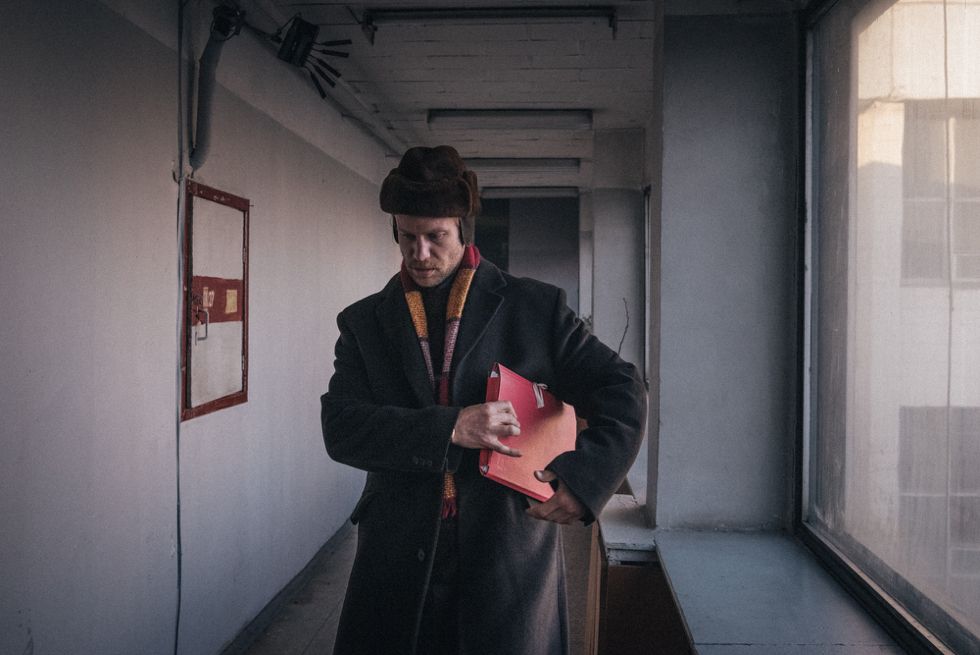
As for the process of creating the film, after all, we suggested that Kirill Semenovich write a script and film this book, but it turned out that such a performance was already being prepared in the Gogol Center. There was no doubt that it was the material perfect for him. The picture was shot contrary to daily court hearings, in difficult circumstances, thanks to the incredible cohesion of the creative group, which united around the artist with a unique vision.
- Will the film look like a performance?
- No. In general, we were all very surprised at how one could interpret the same text in a completely different way! The text of Salnikov is so deep and strong that it could be so.
- You spoke about the universal language of the movie. It is no secret that in such a language Andrei Zvyagintsev speaks, with whom you have a relationship, even before you shot at least one film. What exactly happened?
- We met on the basis of the project about the war that Andrei Petrovich tried to launch. After reading the script and delving into it, we quickly realized that our participation is impossible - for the totality of reasons. Then we moved to the creation of another project. For quite some time they were looking for financing and invented configurations for implementation, but faced with production problems and were forced to suspend the participation of our studio. In fact, it was a standard problem, we are faced with the inability to make a project.
- Was the problem primarily in money?
- Certainly. The problem was and remains only in money. For example, we suggested Andrei Petrovich to make the same scenario, but in another language. This option did not suit him, and I respect it endlessly. Of course, he is a big author and has the right to do as he wants. In a situation where not one of the solutions, whether it was optimizing the budget or shooting in another language, was suitable for the director, I, to my great regret, was forced to leave the project.
- Was the script really so politically tough that the state refused to take part in this? Or was there any reason to assume that if the state was offered, then it would refuse?
- There were reasons to assume, but we simply did not reach, to be honest, to discuss this option. There were many potential investors who, for various reasons, refused. Subscribed by the desired Russian investors, and international funds, refused. For some, it was a budget issue, for someone-other considerations.
- Among these reasons were political? When it was not a pity, and investors considered the topic of risky, dangerous, unpleasant.
- Basically, it was the impossibility of widely skipping the film in Russia. There were a lot of investors throughout the year with something that we were engaged in this project. We heard a lot of "no." Someone had personal reasons, for someone-a reluctance to engage in pure philanthropy.
-Were there those situations when someone said “yes” at first, and then sharply changed his mind under the influence of unknown factors?
- In our case, there is definitely not. And with the Foundation "Kinopraim" the situation is also simple: there is a certain limit, the ceiling of the money that they can give. Only this money was not enough for the Russian component of the budget.
- We summarize. You, as a studio, wanted to make a film, but too many investors did not dare to invest in it, for various reasons, but mainly because of the fear that the invested money would not return. So?
-I can’t talk about all investors, express a common position. There were many of them, and for various reasons they fell off until the moment when we were left without the opportunity to finance it [Zvyagintsev’s film]. Private investments in copyright cinema are , in principle , very difficult. I encounter this very often. There are a variety of people. Someone wants a red carpet, someone is creative self-realization, someone wants to earn money, someone just wants to help the development of the industry. Everything has the right to refuse, since the money is private. Of course, I wanted to prolong the film Zvyagintsev, I have great respect for his work. Nevertheless, when it became clear that this is simply impossible without sufficiently radical solutions - for example, change the language, change the context of the final or optimize the estimate - I was simply forced to suspend our participation. That's all.
- Do you think inaccurate when in this situation they talk about censorship? Because there are different forms of censorship, except for a direct state ban.
- There is still such a thing as a market. I am engaged in copyright cinema, but in any case, I must show any investor market logic. This applies not only to the Russian industry. We came across situations where something is too expensive for someone, for someone thematically uninteresting: for the same funds-European, progressive. The task of the producer is to find at any cost of like -minded people who will join the project.
- As a producer and, in this case, as an expert, what do you think, in addition to the change of political power in Russia, can make this and other non -implemented Zvyagintsev projects possible? The situation is absurd when the most famous director in the country is experiencing one breakdown after another and can not get to work.
-It seems to me that one of the potential decisions of this truly unfair situation is the growth of online platforms and streaming stvers. We are now observing it in the West: films such as Roma Alfonso Kuaron, before in life, would never have been financed, but now it became possible. Before Netflix appeared, such a project looked completely inappropriate, and did not fit into any model. In the Western industry, as you know, the war of platforms and the struggle for names began. Until this happens with us - and there are all the prerequisites to think that the market is moving towards this - there will be no way to carry out such budgets in such films: bold, creative and non -profit. Unfortunately, in our case, with Western platforms, we were not able to find a similar solution, since they are not very interesting to the territory of Russia and potential subscribers here. All hope for their Russian colleagues.
Anton Dolin