
Translated material
Living story
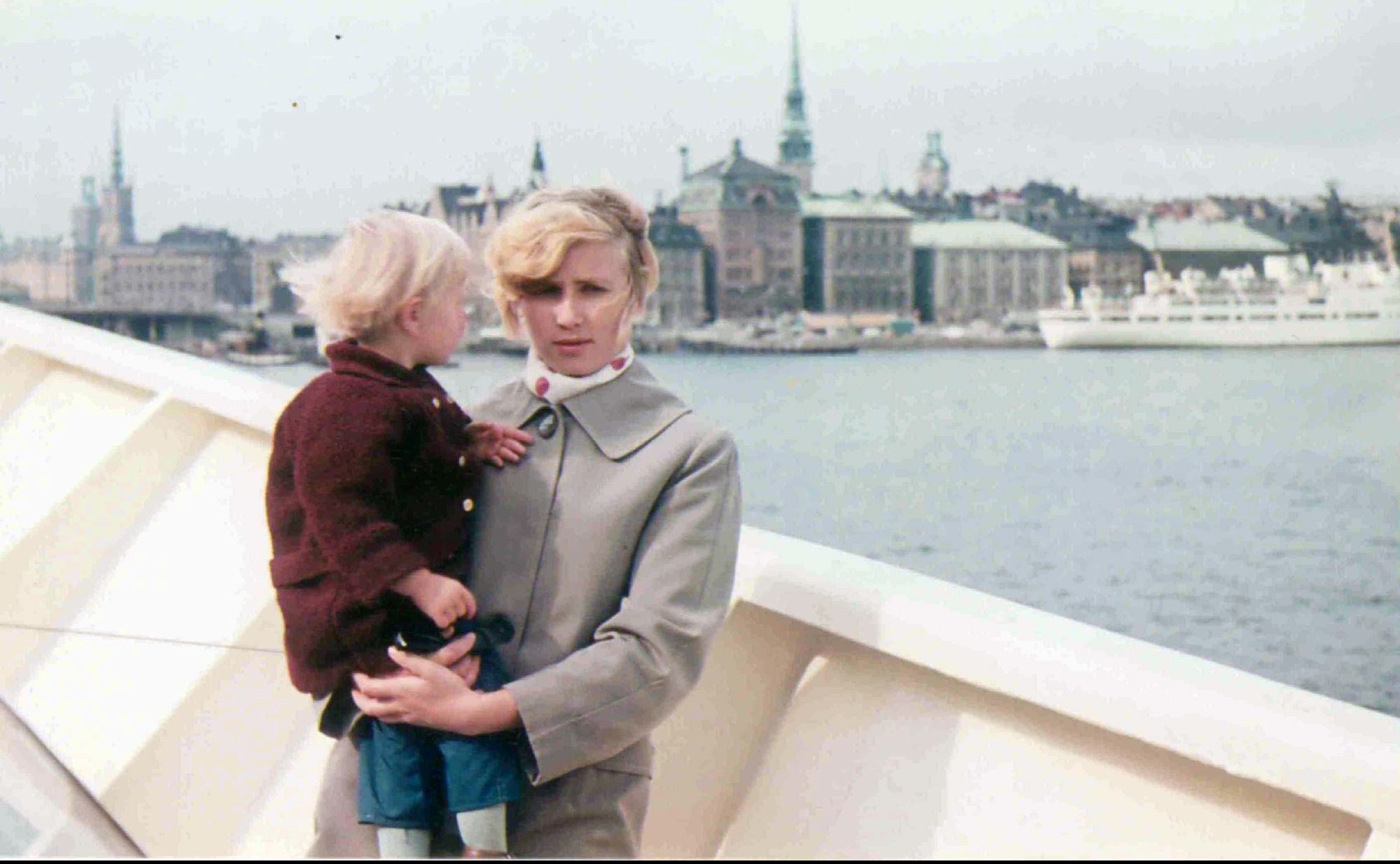
My grandmother, Raisa Pavlovna Povskaya, will turn 80 this year. She lived an amazing life, saw North Korea, worked for many years in Paris. For a long time, everyone in the family dismissed her memories, because they knew them quite well. But at some point I realized: what she says is just a story
How my mother died
I was born in the village of Bogdanovka in Mordovia before the war-in 1940. The father died at the end of 1941 near Leningrad-this was one of the first attempts to break through the blockade, and the mother died a year later, in the fall. She worked on the collective farm, and they were unexpectedly kicked out into the fields to dig out of the snow some crop remains. She washed her head before that, but it was impossible to refuse. She went - and caught a cold. These vegetables, which they dug up, of course, were also not for us - they did not see them in the village later.
There are three sisters left of us, I was the youngest. Grandfather and grandmother raised us. The grandfather before the revolution was a cook in the famous gymnasium in Petrograd, he took out a family from there in 1918 to escape from hunger. I remember about him that it was a tall, stately old man - he constantly read books.
I remember the village itself little, there were very cold winters, and we have one short fur coat for three. We put it in turn, if it was necessary, for example, to run to the toilet. Valenks, however, had their own.
Immediately after the war, in 1947, we were sent to the orphanage and my middle sister to Moscow. The eldest - she was already a teenager - stayed with her grandparents. We were not afraid, and we did not ask especially where we were being taken. We were even happy, it seems that we were leaving.
Non -Soviet doll
In Moscow, we got into a good orphanage. He was on Taganka, in a large pre -revolutionary building on the former Ulyanovsk, and now Nikolayamskaya Street.
It was believed that it was helping the orphans of war, but it seems that there were still children of repressed. It was the so -called school house, that is, first -graders were accepted into it, not younger. Only girls lived in it, and we went to a regular secondary school. And we-I understand it now-were dressed in European very. We always had gifts for the New Year, and birthdays were celebrated. They waited for several people to get, and arranged a whole holiday. They gave gifts - I remember, they gave me a doll. Non -Soviet.
An orphanage was patronized by the Foreign Ministry. We spent summer in our own camp near Rublevka, in the village of Lesopornka, where the so -called general cottages were built in the neighborhood (they exist today). The cottages were intended, including for the employees of the Soviet Foreign Ministry, Vyacheslav Molotov with his wife Polina Pearl rested there.
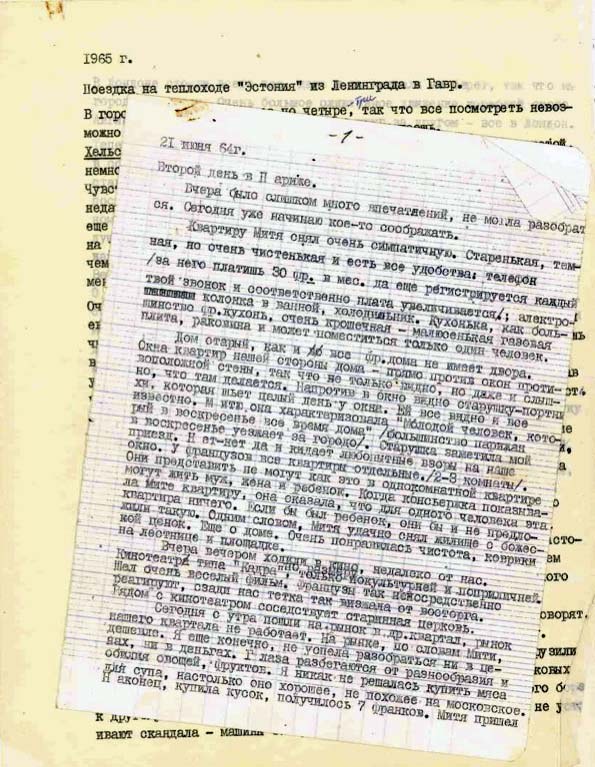 Pages of the Diary Photo: From Personal Archive
“We were often taken to them to congratulate them on the holiday or, say, happy birthday. We could come to the house on the embankment, to the Foreign Ministry or to them in the country. There, Molotov met us, but he did not particularly communicate with us. Polina Semenovna was mainly engaged in us. She represented us all, said: “This is from the orphanage.” To whom did you imagine? Well, for example, guests or acquaintances when we walked around the “general” village. ”
In addition to patrons from among the Soviet leadership, members of foreign delegations were brought to the orphanage and to the summer camp. Probably to show how good everything is. We were not offended, but before such visits they were specially brought up. Then we, of course, did not understand this, it seemed to us that all orphanages look like that. ”
Some pupils of the “chefs” sometimes took to them at night. But I was never lucky with an overnight stay. This seems to be the only remembered childish resentment: it was not clear why some girls were taken home to live, and I, an excellent student and activist, no.
Dimitrova, Molotov and Polina Pearl
Among the high -ranking patrons who came to the orphanage and were engaged in the children there, there was also a Rosa Dimitrov - a former Austrian journalist, an emigrant and second wife of Bulgarian Lenin Georgy Dimitrov. Dimitrov himself died in 1949 (according to one version, he was poisoned), and his widow lived in Moscow, in the house on the embankment. Her apartment went to the Moscow River, the stairs in the entrance were covered with red carpets.
But most of all the children were engaged in Polina Pearl. She was the real Grand Dama of the Soviet Union.
The wife of the closest ally of Stalin Vyacheslav Molotov, she was closely friends with the first wife of the leader, Nadezhda Alliluyeva, and held a number of high posts. During the war years, Polina Zhemchuzhina (her real name is Pearl Karpovskaya) headed the Jewish Anti -Fascist Committee, and in 1948, during a diplomatic reception in Moscow, she actively talked with the first ambassador of Israel Golda Meir. Soon after, the pearl was excluded from the party, in 1949 - arrested on charges of treason and Soslan. He was released in 1953, shortly after the death of Stalin. At the time of her arrest, her grandmother was nine years old, at the time of return - about thirteen years old. The grandmother preserved a photograph of Polina as a pearl, taken at the end of 1953 - a few months after her release.
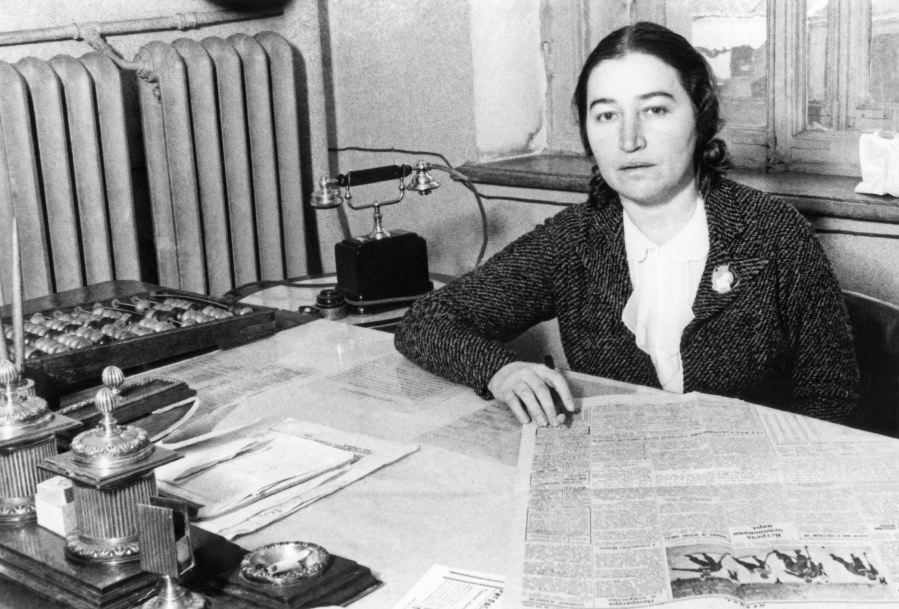 Soviet party and statesman Polina Semenovna Zhemchuzhina (Perl Semenovna Karpovskaya) Reproduction of Photochronics TASS
“Polina Semenovna was stately, always a well -groomed woman. She usually came to us at ZIS (or what limousines were then) - such a large black car. There was always a guard with her. At some point, I remember, she disappeared. Then, a few years later, appeared again-and was some kind of pale. After many years, I found out that she was also repressed. ”
The last time my grandmother saw the pearl after the release.
“A few years later I was in some sanatorium, apparently along the line of the Foreign Ministry. And there I saw her on the alley. I went up to her, I say: "Hello, Polina Semenovna, remember me?" She was delighted, turned somewhere, exclaimed: “Slavochka, look who is here!” And Molotov just sat on a bench with a wand, already so stiff. But he also raised his head, smiled. "
Embassy in North Korea
In 1957, my grandmother graduated from a decadent and left the orphanage. She was eighteen years old. She dreamed of entering the chemical faculty, but at the exams at Moscow State University she was short of a score. In those years, the priority in those years was in the army, and in the entrance exams, according to her, in the audience she was "the only pigal among many healthy guys in form."
In the orphanage, she was offered to go to the courses of the engineers operating at the Meda - this was the last portion of the “chef” help. She studied there for two years and, by distribution, got into the Soviet embassy in North Korea.
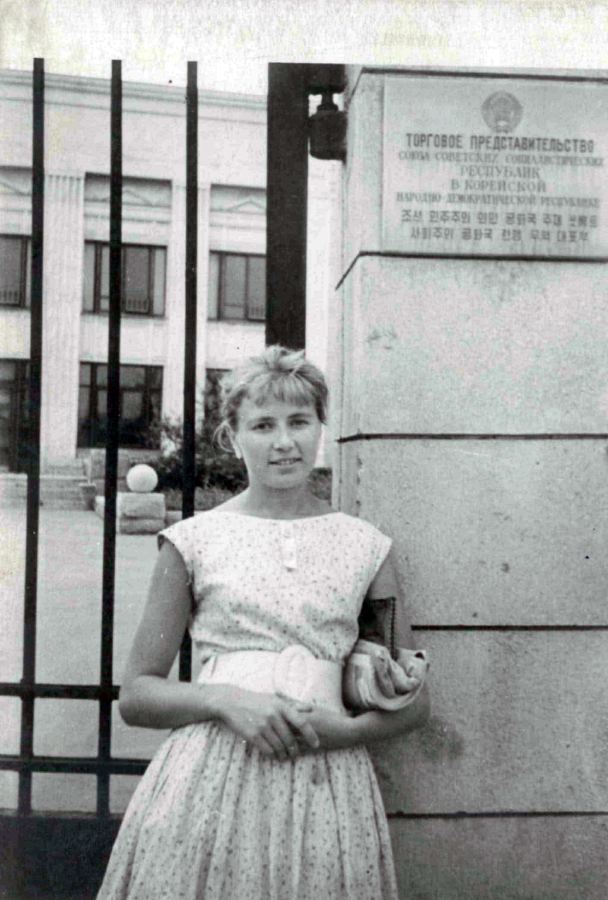 Korea, Torgship photo: from personal archive
“North Korea and I were very friends then, but the direction for diplomats was considered not prestigious. Young experts were sent there without ties or high-ranking officials who were guilty of something and fell out of favor. With me, the ambassador there was Alexander Puzanov - he did not speak the language, he generally knew nothing about the country.
The plane flew there - basically he supplied the embassy. There were almost no products in Korea itself. And most employees went by train. The train went regularly. It was the composition that went to the Far East, then one car was disconnected and went to Pyongyang. There were only one wagon.
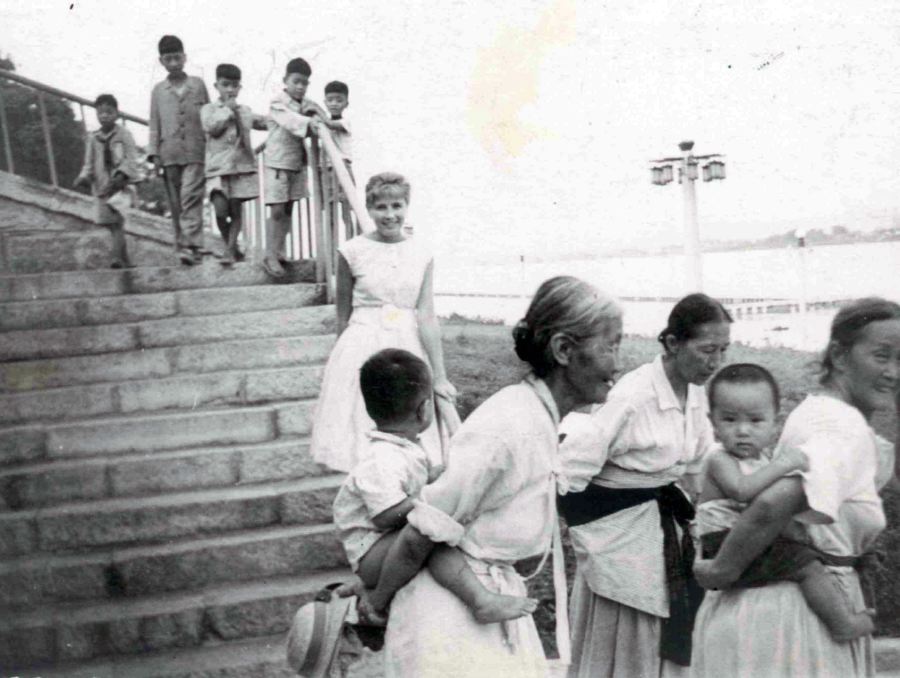 Pyongyang Photo: From Personal Archive
The first impression is poverty. Poverty there was in everything - during the Korean war, Pyongyang was completely destroyed. The war ended in 1953, I arrived in 1959. By this moment, he was already completely rebuilt. They rebuilt with our help, so the city was entirely hidden on the Soviet pattern. Everywhere there were such low-rise houses as our five-story buildings, only three-story and for some reason with flat roofs. The streets were empty. There were no shops. Cafe, restaurants too. But everywhere, posters with political slogans and portraits of Kim Il Sen were hung everywhere.
The food was given only by cards, and, in my opinion, only Fig. Sometimes it was given bags - and then they carried these bags on their heads. They generally almost all things, even heavy, wore on their heads. Once I saw a Korean woman who carried a bucket on the head from which the tail was hanging. There was a dog.
We lived in a kind of reservation, we did not particularly go outside the embassy, and there was nowhere to go out. But it was very fun, because the team was wonderful - young smart people who were not spoiled by connections. We tried to entertain ourselves, staged performances.
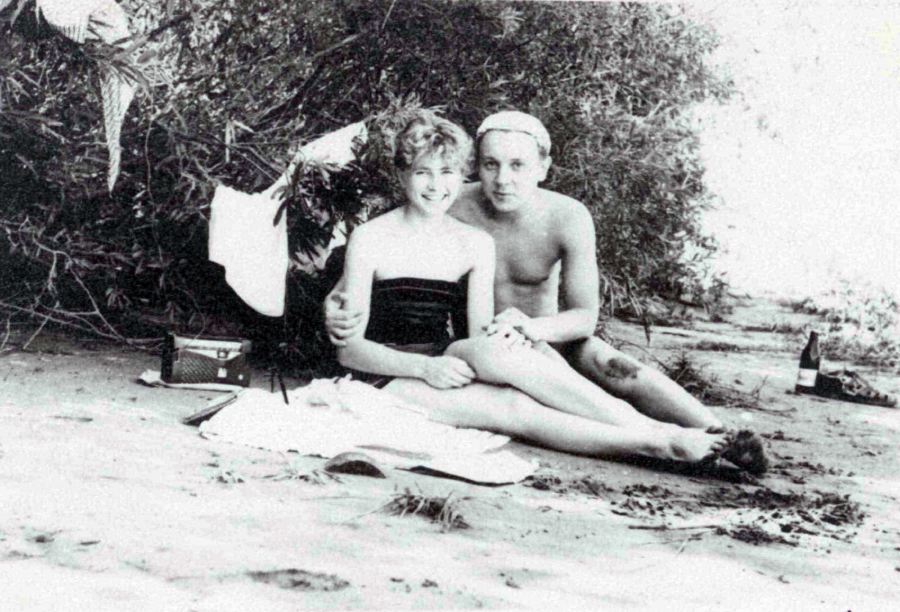 With her husband at sea in Korea photo: From a personal archive
There I met a future husband, a young translator and diplomat. He was an orientalist and should not have received a direction to the west, but after returning he was unexpectedly sent to UNESCO. I went after him and, of course, went to work. I was twenty-four years old, we only got married, I didn’t have time to learn how to lead life in Moscow, but here-Paris.
The first time
The Soviet embassy was then located on Grenel Street - this is a very respectable area. Employees, who rented apartments, settled nearby. The apartments were “transferred” to each other by acquaintance or searched through realtors - as now. My husband came to Paris earlier (I stayed in Moscow with a little daughter) and rented a small one -room apartment. Then the realtor, who showed her, said that if she knew that he was not a bachelor, she would never advise her: the French could not imagine how the three of them could live in a small “odnushka”.
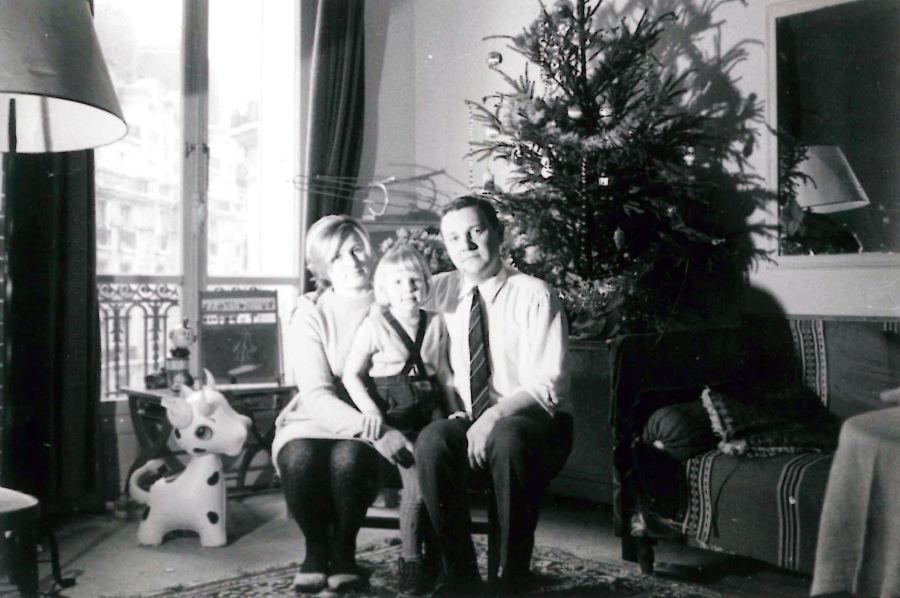 Apartment in Paris Photo: From Personal Archive
We went to the market in the morning. In the market, according to Mitya, it is cheaper. Of course, I still did not have time to figure out either prices or money. Eyes scatter from the variety and abundance of vegetables and fruits. I did not dare to buy meat for soup - it is so good, not like Moscow. And the pork legs are on the counter! Pinky, almost pedicures on the hooves.
“I didn't like the metro. Dirty, shabby. Of course, we must take into account that it was built in the last century. Railway tickets are thrown right on the floor. On the first day, I carried a ticket with me for a long time, looking for where to throw it. But, not finding the urn, she also threw it on the floor. ” (June 1964)
“We saw a wonderful, unforgettable performance“ Sound and Light ”. This spectacle is organized by some ancient monuments-Notre Dama, the Palace of Disabled and the Old Castles in the Province. We saw Notre Dame.
Spectators are located on the embankment of the Seine, opposite the cathedral. His story, the history of France, is told and shown. Moreover, the sound is stereo and the light, being in harmony, transfer you to the XII century. The sounds of axes, the voices of people, the capacity of the hooves of horses are heard. It is told about the kings, their voices are heard. The text is compiled with such love and pride in the “Parisian woman”, which is eight hundred years old.
I thought: I would have to organize the same thing in our Kremlin, on Ivanovo Square, to tell about the history, about the events that happened there. ”
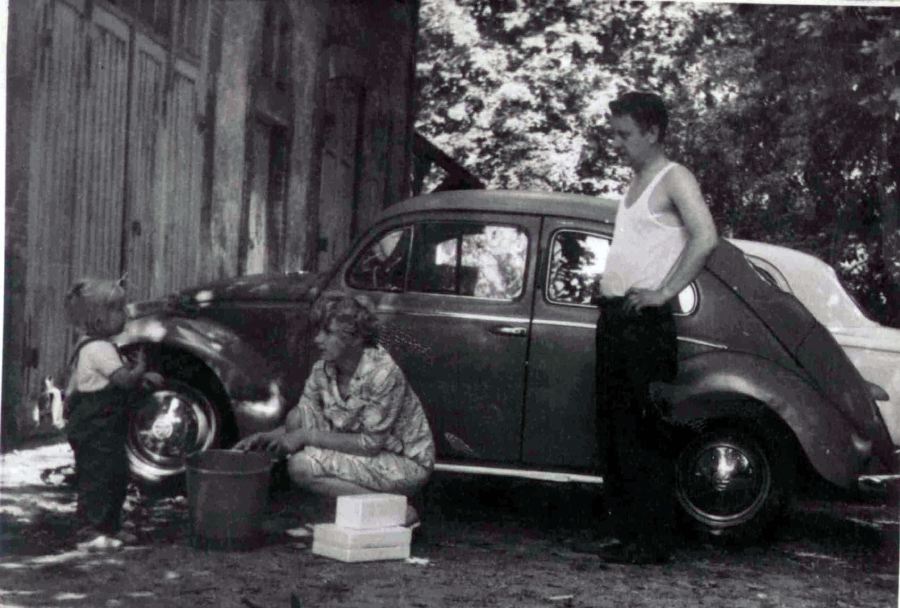 In the rest house for employees of the embassy in France photo: from personal archive
“With difficulty, they got a Christmas tree for the New Year. The French have a Christmas tree and Christmas decorations are sold to Noel - Christmas, December 24. Our neighbors Miroshnikov had to buy a huge Christmas tree - three and a half meters, less was no longer. And Leva has a tiny machine, like our Muscovite. This Christmas tree completely covered his car. And the French turned and smiled: “What a fool buys a Christmas tree after Christmas, and even so huge.”
How we worked in UNESCO
Getting to France, especially in UNESCO, even for employees of the Ministry of Foreign Affairs was very difficult then. But we did not have the feeling that this trip was something supernatural. Everything was very carefully planned for us, my husband did it. The task was to walk as much time as possible, watch, travel to find out the country.
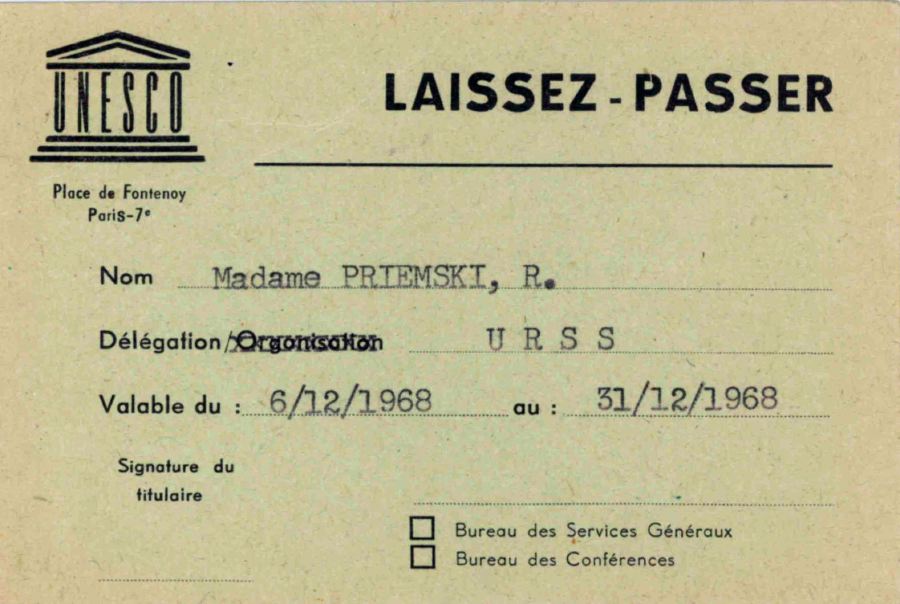 UNESCO Certificate Photo: From Personal Archive
“UNESCO is a very peculiar organization. Here you can be at the same table with a Chankayshist, and a gray-haired black man is sitting nearby-a personal friend of Chombe (president of the state of Katanga in 1960-1963, Prime Minister of the Republic of Congo in 1964-1965) or Indiana in bright sari. At lunchtime - it lasts two hours - employees, mainly women, go to the terrace to sunbathe. Sometimes film amateurs appear to capture them. ”
Employees of the Soviet delegation in UNESCO were listed at the embassy, but lived better and more freer than the embassy. Although we, of course, were also looked after us.
I worked as a driver in the secretariat [UNESCO], and the large load was only during sessions, the rest of the time we were relatively free. In addition, the French had many long holiday weekends, at that time we traveled around the country.
They paid more in UNESCO. Part of the salary had to be given to the embassy, but not as much as the embassy were given. I received about 300 francs per month, of which about 80 it was necessary to give.
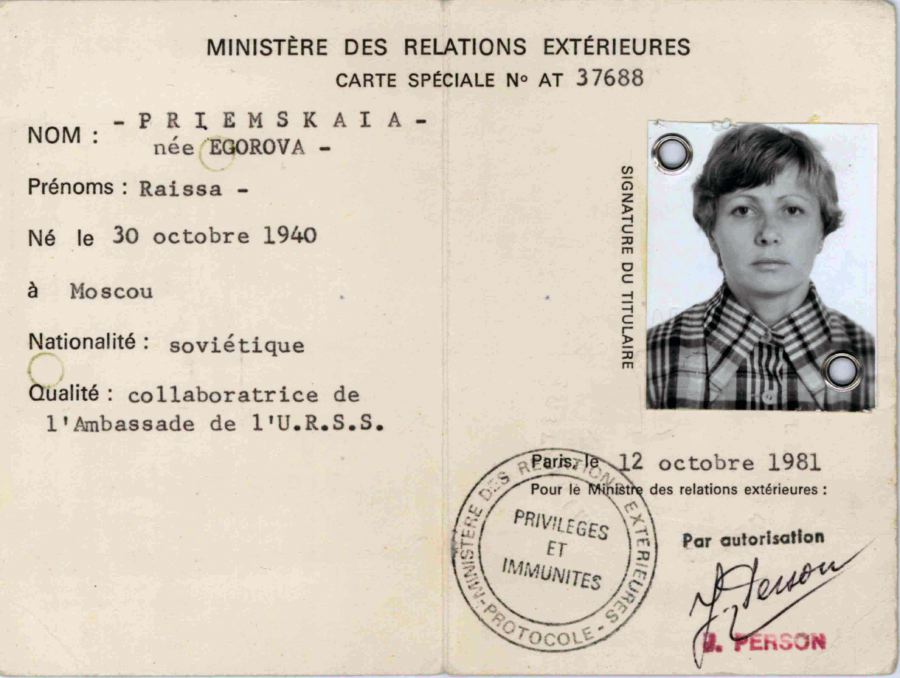 Such cards of the French Ministry of Foreign Affairs issued diplomats, technical employees of embassies and diplomatic missions living in the country, as well as those who worked in representatives of international organizations photo: from personal archive
“The architecture of the building is very interesting - in the form of a triangle. Very modern, light. It is difficult to get used to the atmosphere of ease, lightness and simplicity in the work of this office. Two Russian women work in the translation department, who spent almost all their lives in Paris. They speak Russian with an accent. Outwardly, very friendly and sympathetic.
Madame Olga Tikhanovich from the translation department addresses all the “gentlemen”. She brings with her a dog - a huge old dog that lies next to her all day under the table. The French generally love dogs. Every second has dogs. You can appear with them everywhere - at work, in cafes and in stores. ”
A neat strike
The first business trip to Paris lasted from 1964 to 1969. This time coincided with a crisis in France. President de Gaulle, whom everyone adored after the war, sharply began to lose popularity. There were a lot of protests, strikes - inscriptions made by activists appeared on the buildings, sometimes leaflets were handed out. All this then, of course, was very strange.
“Today is a universal strike. There is no electricity, water, transport does not work, only the latest news and music are transferred on radio and television, schools are closed. Either teachers also strike, or because of the light. As always, strikes are organized, the proletariat does not rush. The newspapers reported in advance that it would work, that no. Today I went out with Katya for a walk - there are no light in stores, candles are burning. It’s calm on the streets, there are no traffic jams, the park is full of children, since schools do not work. ”
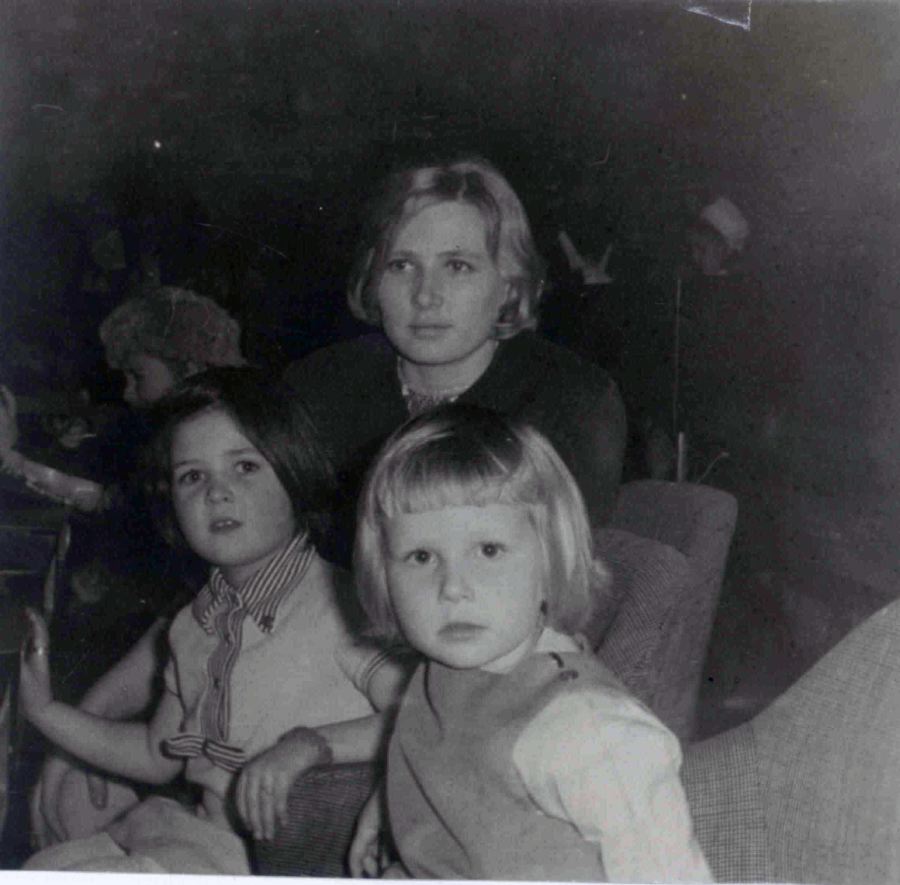 Morning for children UNESCO employees photo: from personal archive
“The election campaign in connection with the elections to the National Assembly. On the street we saw the following picture: a huge, in the entire wall, a portrait of de Gaulle “Vote for the fifth republic!” On the face, at an altitude of three meters, a poster is glued: “Fin de Seri”, the end of the series. These are usually glued to shop windows, where the sale is held at the end of the season. ”
“Today I bought milk for Anyuta [youngest daughter] in a pharmacy. Two months ago, a bank of this milk cost 5 francs 4 centimas, today there are already 5 francs of 30 centimas. Recently, prices for newspapers and magazines have risen. I'm not talking about the subway. So imperceptibly, according to centimas, prices are rising. That is why strikes with a demand to increase the salary. It rises. "
Merry revolution
In May 1968, a student revolution occurred in Paris. I remember that it was more fun. Of course, we were warned [at the embassy] that it was undesirable to go to protesters. But we lived in a rented apartment, and not on the territory of the embassy, so we still went. Our quarter was very respectable, and we specially went to the "student" areas, closer to the Sorbonne to look at it.
There were barricades, but the students laughed a lot, smiled. They took hands and drove large round dances. They could grab someone from passers-by or even from the police, drag into a circle and dance around-it was their form of protest. I remember that even my husband and I participated in such a round dance.
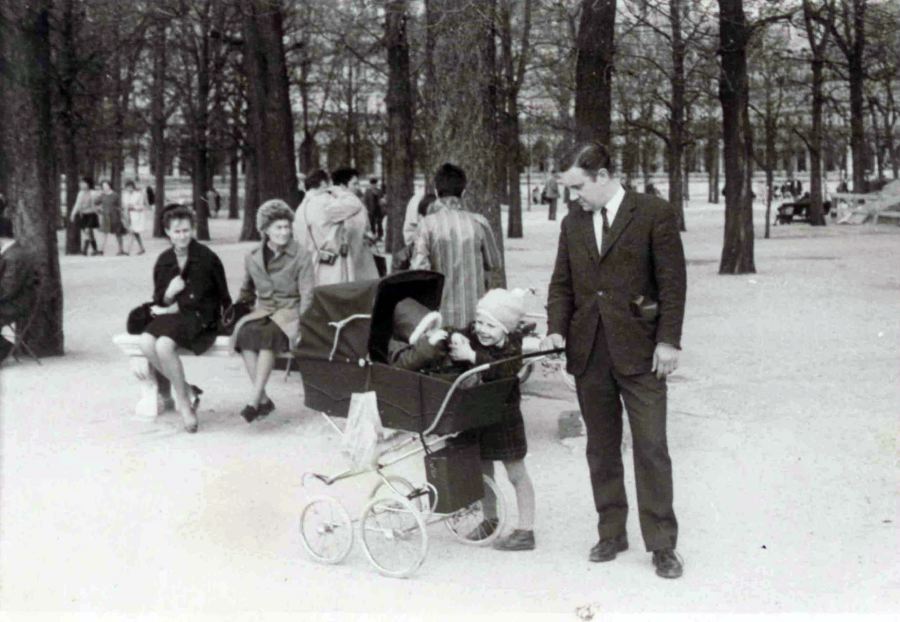 In the garden of Tuilers with the youngest daughter, 1968 photo: from personal archive
There was a lot of police, but everything looked somehow friendly. It was May, the streets are warm. At some point, almost nothing worked in the city due to strikes, but the feeling was festive.
It was not terrible. The only thing we were afraid of when we went there was what ours recognize.
“They were yesterday in the Latin quarter. A group of students gathered on the embankment of the Seine, sing, play the guitar. The view is cut off, extravagant. The guys have hair to the shoulders, beards, in torn shoes on the bare foot, their legs are dirty. Girls in trousers, smoke. Complete freedom of individuality. "
How did we treat us
“I go to engage in Alliance Francaise - preparatory courses at the Sorbonne. Everyone can engage in people by paying money. Whoever you can’t meet there: all the nationality of the world, except for the Soviet ones. Therefore, when they find out that you are from Moscow, they are very surprised and cannot believe. One little one, having learned about this, groaned and ahala - she thought that the Russians were all black. When I said that we have mainly fair -haired, she said that in Siberia, all behind the Urals, everything is black. For some reason, everyone knows about Siberia. One American immediately called the writers of Russians, whom he knows: Tolstoy, Dostoevsky, Chekhov and Yevtushenko. "
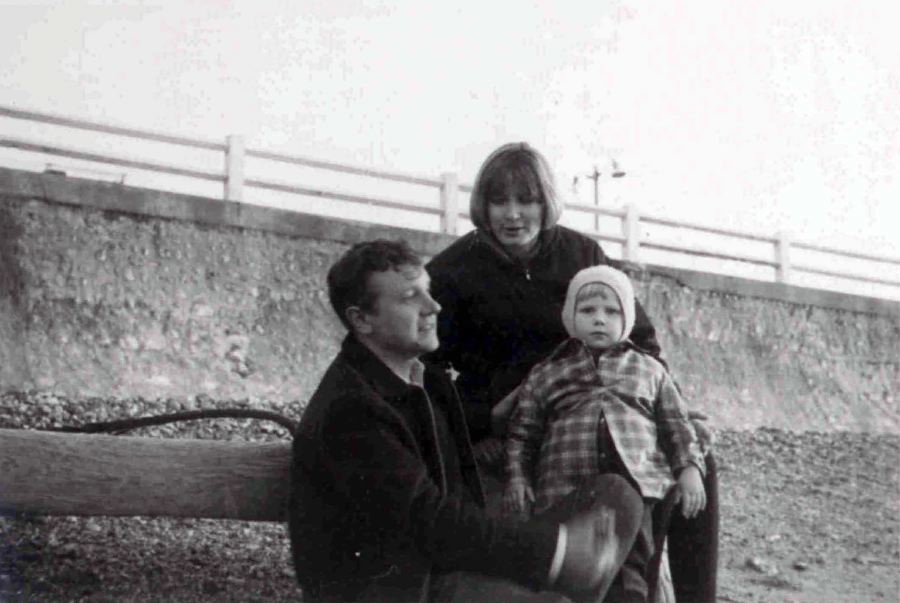 На берегу Ла-Манша Фото: из личного архива
На занятия в Alliance Francaise мы с мужем бегали тайком — после работы или в перерывы. Вообще-то, это не поощрялось, но курсы стоили недорого, и мы платили за них сами. Там в том числе с нами учились люди из стран Восточной Европы, в которой тогда начиналось движение за независимость. Они, конечно, смотрели на меня с неодобрением. А преподаватели, французы, наоборот, очень старались поддерживать в группе нейтралитет и всегда любезно ко мне относились. Просили что-то рассказать о стране. Но ко мне обращались russe — русская. А я всегда гордо отвечала: «Не russe, a sovetique!» Мне казалось, это принципиально, потому что в Париже тогда были советские, а были русские и эмигранты.
«Утром мы посмотрели на улицу — Бог мой, на дворе русская зима. Все покрыто снегом, даже сугробы намело как в Москве. Мы с Катей скорее пошли гулять в парк. Детей там почти не было. Парк красивейший, деревья, ели зеленые и покрыты снегом, как в подмосковном лесу. Невиданное зрелище в Париже. Мы обмениваемся восклицаниями. Какая-то старушка останавливается, прислушивается и говорит по-русски: «Можно подумать, что мы в России».
Вообще, к советским относились очень по-разному, но чаще доброжелательно и с любопытством. К концу 1960-х это начало меняться. В 1968 году мы как раз ввели войска в Чехословакию, напряжение росло.
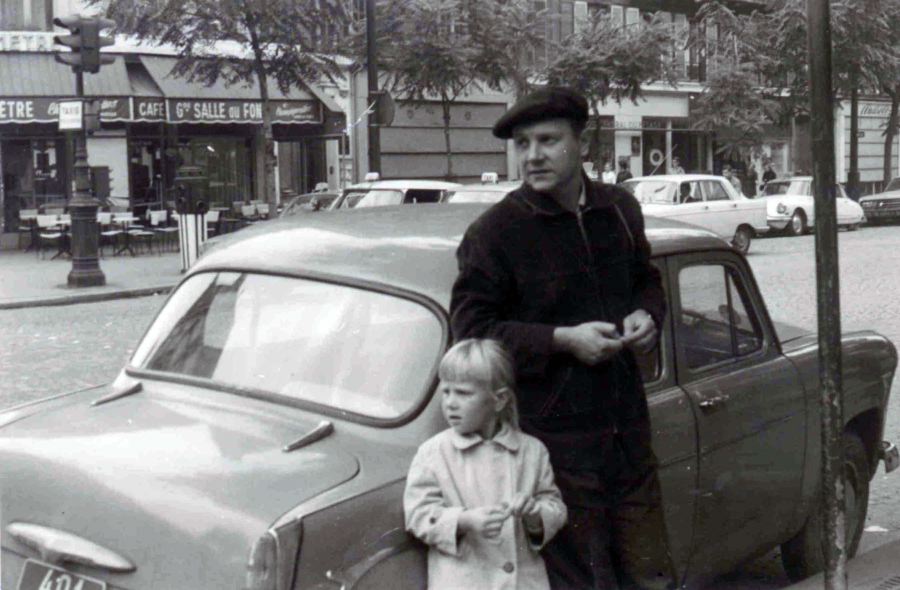 Муж Дмитрий и старшая дочь Катя в Париже. «Москвич» за их спинами Дмитрий купил в СССР на сэкономленные в командировках деньги и гонорары, полученные за переводы, а потом самостоятельно перегнал во Францию Фото: из личного архива
Тогда все сотрудники посольства экономили командировочные, чтобы купить машины. Покупали чаще подержанные иномарки, потом их старались перегнать в СССР, где выяснялось, что ездить на них невозможно — запчастей ведь нет. У нас тоже сначала был маленький «Фольксваген», а потом мой муж после одного из отпусков пригнал из Москвы новенький «Москвич». На нем мы объездили почти всю Францию. У этой машины была эмблема красная, с Кремлем. И в конце 1960-х иногда кто-то мог подойти, погрозить машине кулаком, плюнуть или даже стукнуть.
«СССР — убийца»
Обратно в СССР мы решили возвращаться тоже на машине. Подъехали к советской границе, а там полная темнота, все спят. А пограничники ведь все друг друга знают. И те, что были с западной стороны, сказали: «Мы, конечно, вас пропустим, но там никого не будет». Но мы все равно проехали на нейтральную территорию. К нам, конечно, никто не вышел, и мы заночевали прямо там, в машине, на ничьей земле.
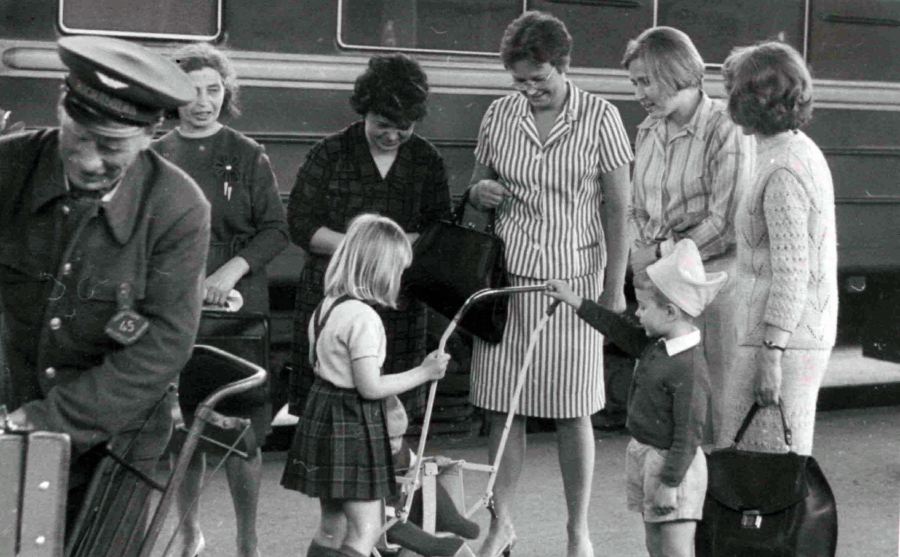 Встреча с родственниками на вокзале в Москве: все сотрудники посольства должны были съездить домой как минимум раз в год, чтобы не было сомнений в их благонадежности. Те, кто оставлял в СССР детей, ездили, конечно, даже чаще Фото: из личного архива
А утром вышел наш пограничник — он был весь какой-то заспанный, одутловатый, в форме и в домашних тапочках. Смотрит на нас — и не может ничего понять, что происходит. Тогда ведь все-таки очень мало людей так ездили. Потом он увидел наши дипломатические паспорта, поднял шлагбаум — и мы проехали.
После этого я приезжала в Париж еще несколько раз. В качестве сопровождающей при советских делегациях, как учительница в школе при посольстве и еще от школы, в которой я работала в Москве, — она была на Красной Пресне, а Красная Пресня была побратимом города Иври из «красного пояса» Парижа. Там был мэр, который всегда нас очень хорошо встречал.
Когда в Польше подавляли движение «Солидарность», я как раз работала учительницей в школе при посольстве. У посольства собирались протестующие, и в одну из ночей по всему периметру — а территория была огромной, — сторонники движения натянули огромное белое полотнище, на котором было выведено черной краской повторяющееся слово Solidarite. У посольства, конечно, была охрана, но она ничего не могла сделать. Наверное, потому, что это было формально за пределами территории.
А я жила через дорогу от посольства, и мне утром нужно было на уроки. Что делать — я подошла к входу, постояла, потом приподняла полотнище и нырнула на территорию.
После ввода войск в Афганистан тоже было очень много возмущения. Это было уже очень непохоже на 1960-е, когда нам многие радовались, нами интересовались. Иногда на улицах, на стенах домов можно было увидеть надписи: USSR Assassin («СССР — убийца»).
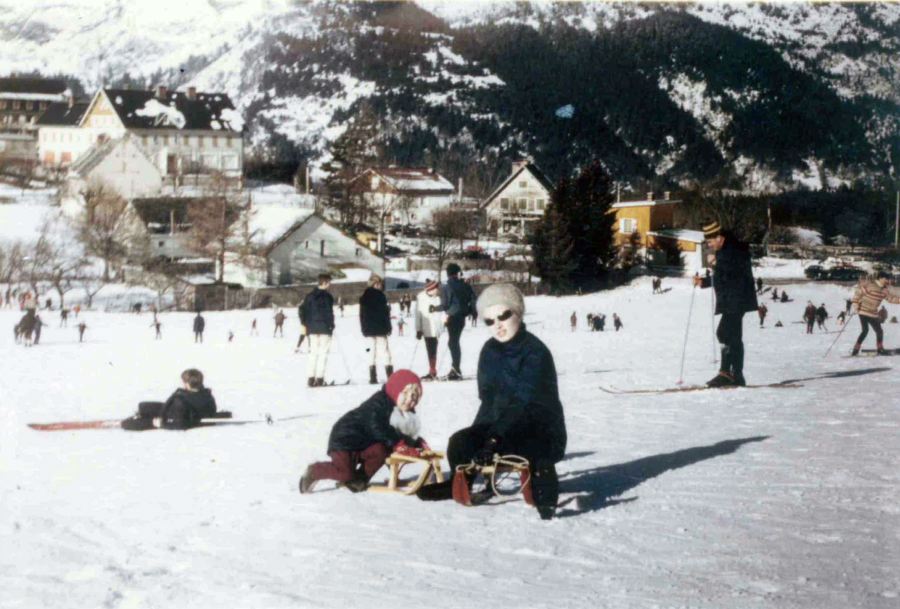 Поездка в Альпы Фото: из личного архива
Один раз я приезжала во Францию с советским цирком. Это были уже 1980-е, в стране ничего не было почти. А у французов были очень строгие нормы по поводу того, как кормить животных. У них было четко прописано меню, в котором были продукты, которые наши люди на полагавшиеся им командировочные в жизни бы себе позволить не смогли. Медведю, например, полагалось несколько килограммов орехов, каши, мясо, мясные бульоны, мед. И я помню, что дрессировщик забирал у медведя по чуть-чуть всего. Потом представитель со стороны французов что-то заподозрил, но поскольку циркачи по-французски не говорили, стал спрашивать меня. Я дрессировщика, конечно, не сдала — я понимала, что ему тоже нужно есть. Но было очень стыдно.
Баночки из-под йогуртов
Когда у нас с мужем были дипломатические паспорта, оформлять ничего не надо было, все поездки устраивались за нас. Когда я ездила одна, мне нужно было проходить стандартную процедуру. Сначала нужно было писать характеристику с работы — это была, конечно, полная профанация, потому что ее все писали себе сами. Потом нужно было проходить собеседования в райкоме, горкоме и наконец на Старой площади. Туда приходили в том числе и те, кто получал возможность купить путевку и платил за нее свои деньги, — тогда такая возможность уже была.
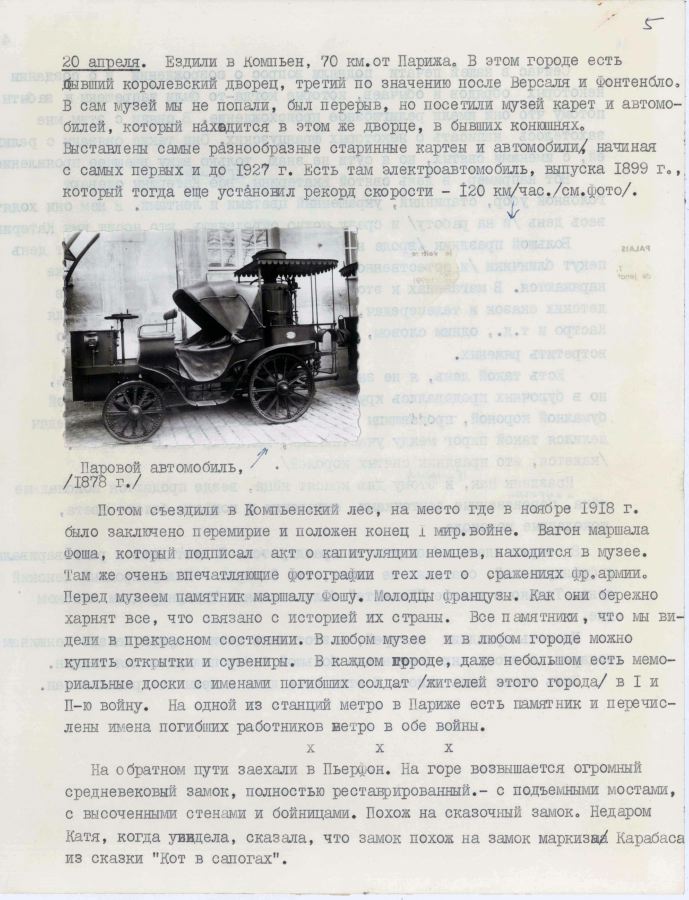 Фрагменты дневника Фото: из личного архива
Как-то передо мной сидела в очереди группа работяг — им предложили путевки на заводе, они за них сами заплатили. Из кабинета они вылетали красные как раки и очень злые. Один из них бросил: «Откуда я [нецензурно] знаю, кто там глава компартии? Вот поехал бы и узнал!» Думаю, их в итоге пропустили — это было унизительно, скучно, неприятно, но пропускали всех.
Друзья и родственники обычно ничего не заказывали. Все и так знали, что везти. Во-первых, совершенно не было колготок. Поэтому я везла колготки, которые, к сожалению, рвались. Вообще, везли в основном одежду. Потом, в 1980-е, везли пластиковые стаканчики из-под йогуртов. Empty. Это было дешево, полезно и приятно. Они пользовались огромным спросом.
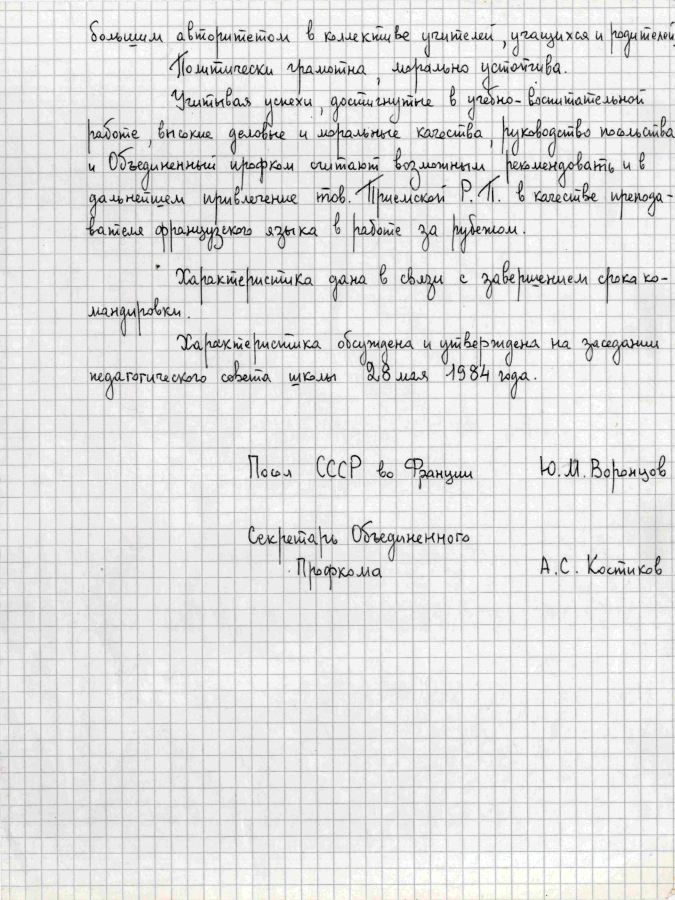 Отрывок из характеристики (написана для перепечатки на машинке) Фото: из личного архива
Я еще привозила книги и учебники. В Москве я преподавала в гимназии французский, а в СССР тогда во всех учебниках была одна сплошная биография Ленина, это было неинтересно. У меня был очень хороший класс, мы просто закрывались, я доставала французские учебники и занималась с ребятами по ним. В школе, конечно, знали, но закрывали на происходящее глаза. Это был уже конец 1980-х.
Отрывок из характеристики, выданной по итогам последней командировки во Францию, май 1984 года
«Принципиальна, общительна, в быту скромна, пользовалась авторитетом в коллективе учителей, учащихся и родителей. Политически грамотна, морально устойчива. <…> Руководство посольства и Объединенный профком считают возможным рекомендовать и в дальнейшем привлечение тов. Приемской Р. П. в качестве преподавателя французского языка в работе за рубежом».
Посол СССР во Франции Ю. М. Воронцов
Секретарь Объединенного профкома А. С. Костиков.
В тексте использованы фрагменты дневников Раисы Приемской 1964—1969 годов.
женщины историческая память