
Translated material
On March 2, 90 years old, human rights activist Sergei Kovalev
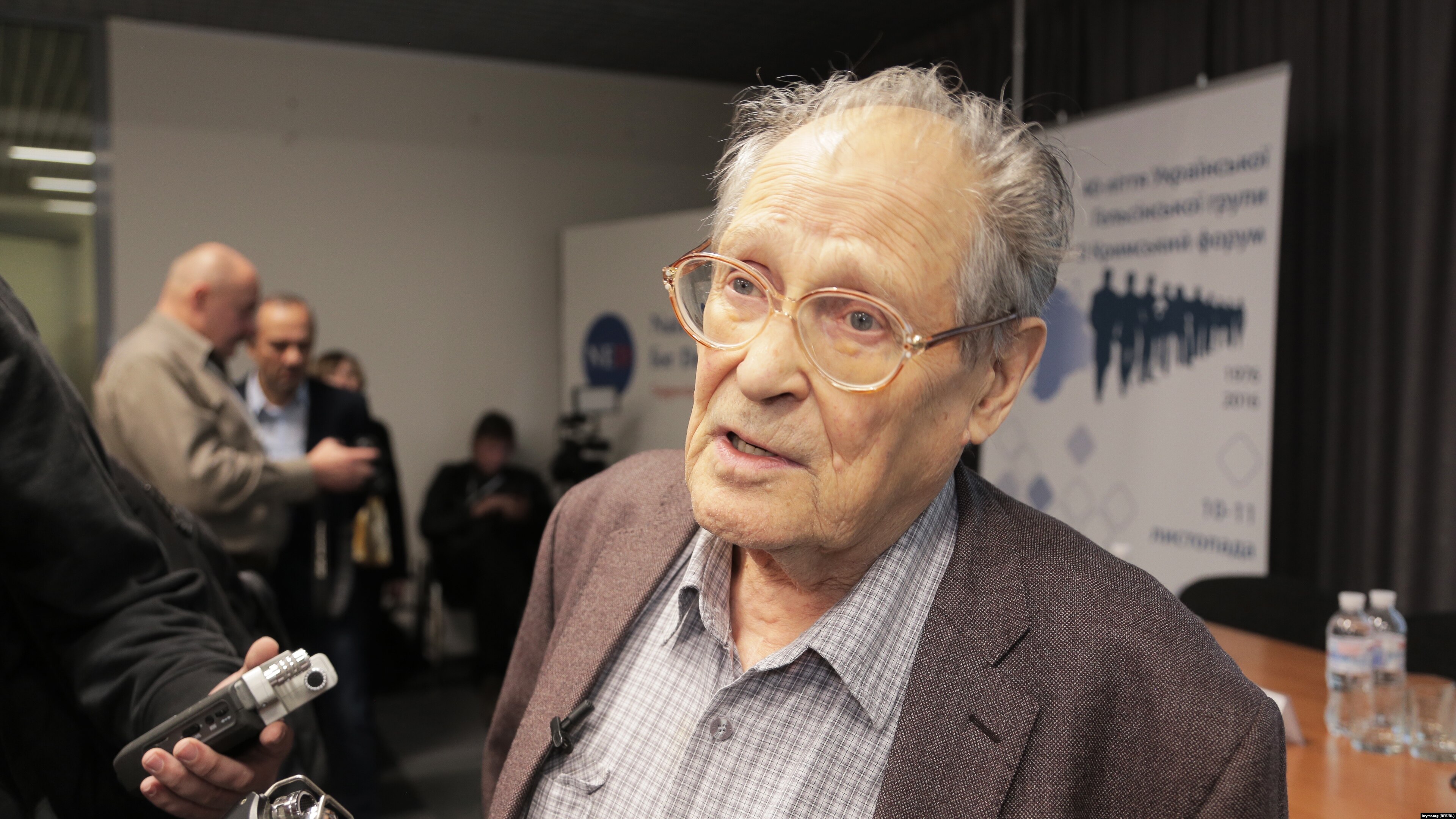
The Human Rights Center "Memorial" published a message "International Memorial" on the 90th anniversary of the birth of Sergei Kovalev. Probably such a strict genre is the most concise remedy for the most complete and accurate story about Sergey Kovalev.
"On Monday, March 2, 2020, 90 years old, Sergey Adamovich Kovalev, a biogue scientist, one of the most famous participants in the human rights movement in the USSR, political prisoner, state and public figure, political thinker, publicist.
All social activities of Sergei Kovalev are determined by the three properties of his personality: with disgust for lies and injustice, the unity of thought and action, fearlessness in defending his views. These properties forced the young scientist-biologist to take part in the struggle against the "Lysenkovshina", and later made him a noticeable figure in the public movement of protest against the persecution of dissenters.
In 1969, Sergei Kovalev became a member of the country's first independent human rights association - an initiative group to protect human rights, since 1972 he worked in the Samizdat information ballot of the “ Chronicle of current events ”. In December 1974, he was arrested and sentenced to 7 years in camps and 3 years in exile, which left “from call to call”.
Returning to Moscow, he took an active part in the democratic initiatives of perestroika years. On the advice of Andrei Sakharov, in 1990 to deputies of the Congress of People's Deputies of the RSFSR in 1990. He became a member of the Supreme Council of the RSFSR, chairman of the Parliamentary Committee on Human Rights and a member of the Presidium of the Supreme Council. Subsequently, twice - in 1995 and 1999 - elected to the State Duma.
When working in the committee, he prepared and conducted a number of important legislative acts, in particular - the Declaration of Human Rights in the Russian Federation and the Law “On the Rehabilitation of Victims of Political Repressions”. Kovalev played a leading role in the preparation of the 2nd chapter of the new Russian Constitution ("Rights and freedoms of man and citizen") . After the October events of 1993, he was appointed chairman of the Commission on Human Rights under the President of Russia, and in 1994 the State Duma elected him the first Ombudsman (the Commissioner for Human Rights) of the Russian Federation.
Sergei Kovalev gained national and universal fame during the First Chechen War, acting as a rigid and consistent critic of the actions of the federal forces in the Chechen Republic, for which in March 1995 he was shifted by the Duma from the post of Ombudsman. In the summer of 1995, with the mediation of Kovalev, it was possible to achieve the liberation of hostages captured by Chechen militants in Budyonnovsk. In January 1996, in protest against the Chechen policy of Yeltsin, Kovalev resigned from the post of chairman of the Presidential Commission on Human Rights, and since then did not hold any government posts.
Many of his journalistic articles printed in the Russian and foreign press are collected in his book “Peace, Country, Personality” (M.: Izographer, 2000). Sergey Kovalev is one of the most sharp and irreconcilable critics of the domestic and foreign policy of President Putin.
Sergey Kovalev’s memoirs “The Flight of the White Crows” are published in German (Der Flug des Weissen Raben. Berlin: Rowohlt, 1997).