
Translated material
"Monstrous failure of justice"
The cassation did not dare to completely cancel the sentence to Konstantin Kotov and went to the Mosgorsud
The Second Cassation Court of General Jurisdiction left the sentence to the activist Konstantin Kotov, convicted of repeated violation of the rules of mass shares. The college of judges, canceling the decision of the appeal, sent the case to the Moscow City Court for a new consideration. At the same time, before a second consideration of the appeal of the cats, which is now in the colony, will remain in custody.
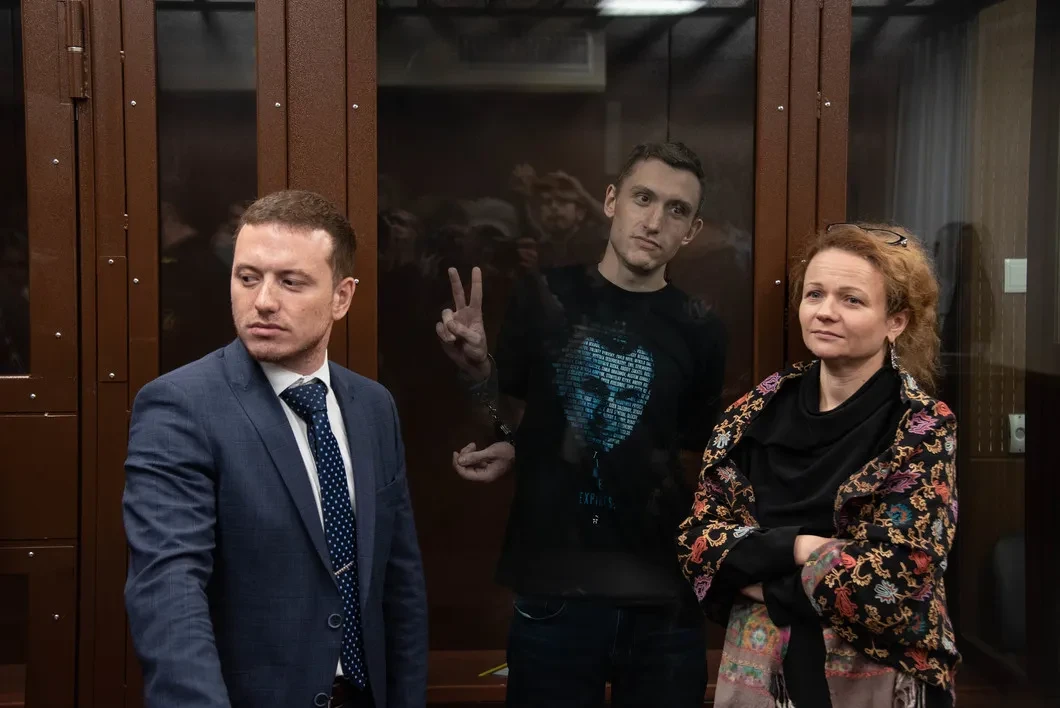
In early September last year, the Tver court of Moscow sentenced the 34-year-old Kotov to four years in a general regime colony. He became the second convict under Article 212.1 of the Criminal Code, known as Dadinskaya. Kotov’s case was investigated in record terms: on August 13 he was charged, and on the 15th, the SK announced the end of investigative actions. The consideration of the case in court took only two days. In October, the Moscow City Court upheld the decision and confirmed the legality of the sentence. Kotov did not plead guilty.
In January, according to the results of a large press conference, the president instructed the new Prosecutor General Igor Krasnov to verify the legality of the sentence issued by Kotov. Soon the Constitutional Court (KS) determined to revise the verdict, indicating that Art. 212.1 of the Criminal Code was applied to him incorrectly - this is possible only with a confirmed fact of riots. In turn, the Prosecutor General’s office asked to mitigate the sentence until the year of the colony.
The cassation appeal against the verdict of the Tver court of Moscow filed 14 lawyers. Several dozens of support from the support group came to the meeting, among them were clergymen, the former defendant in Moskovskoye, Samariddin Rajabov, accused of the “New Greatness” case Pavel Rebrovsky, ex-deputy of the State Duma Dmitry Gudkov and others. Parents and mother -in -law also came to support him, the mother of the defendants in the “new greatness” and his wife Anna Pavlikova Julia Vinogradova. Almost a hundred people got along with reporters. The largest hall was allocated for the meeting, but everyone was still not enough for everyone. Later for listeners and the press, the hall with a video broadcast was opened.
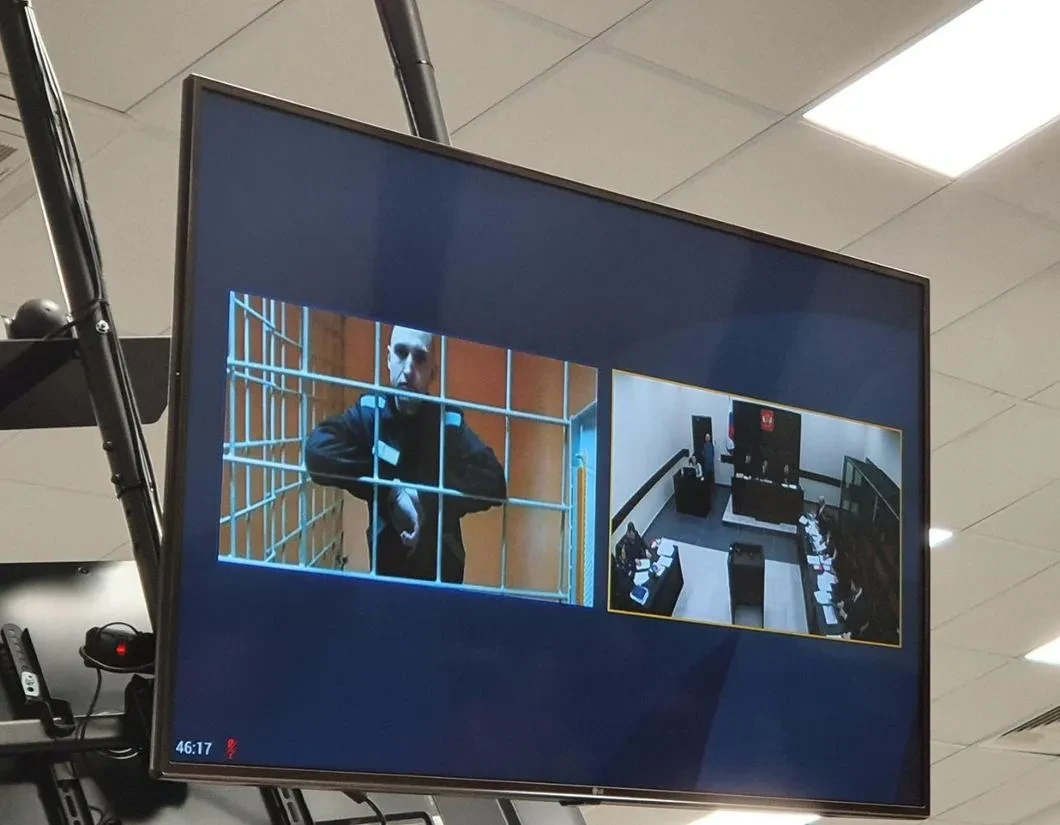
Kotov participated in the video from IK-2, Pokrov, Vladimir Region. He, stubbornly shaved, in a gray prison robe, joyfully waved to all the audience. As soon as the meeting began, the three judges almost immediately announced a break - almost at the last moment an additional cassation appeal was received from the Commissioner for Human Rights in the Russian Federation Tatyana Moskalkova. Protection was provided extra time to study documents.
After the hour break, the judges handed the floor to two representatives of the prosecutor's office. They asked to change the punishment of Kotov due to excessive severity. The state prosecutor noted that the punishment is close to the most strict and proposed to reduce the term of punishment to a year of imprisonment.
“The court of first instance did not properly take into account the mitigating and lack of aggravating circumstances in Kotov,” the representative of the prosecutor's office explained.
However, the state prosecution insisted that the court satisfy only their complaint, and not defense. They objected against the complete abolition of the sentence. According to the supervisory authority, the court found Kotov guilty, he was more than two times in half a year to administrative responsibility for violations of order at rallies.
Having asked to reduce the sentence, the prosecutors referred to the fact that, when sentenced by the punishment, the court of first instance did not fully take into account data on the personality of the activist. In particular, Kotov was not previously convicted, positively characterized, and assisted elderly parents.
The representative of the Commissioner for Human Rights Igor Gavrilyuk read out the petition of the Ombudsman Tatyana Moskalkova. She asked to send Kotov’s case for a revision “for legality and validity”. In her opinion, the court of first instance did not take into account a number of circumstances and imposed an overly severe punishment.
“In fact, Kotov’s actions were peaceful. The composition of the crime is under a big question. We ask you to verify the legality of court decisions, ”said Gavrilyuk.
The defense demanded to cancel the sentence, stop criminal prosecution and immediately release Kotov.
According to lawyer Maria Aismont, one repeated administrative offense under Article 20.2 of the Code of Administrative Offenses is not enough to prosecute criminal liability. The fact must be proved that there was a real threat to the health of citizens and harm during the action. She noticed that the KS repeatedly explained these violations that were committed when pronouncing Kotov.
“The fact that we gathered in the cassation court today speaks of a monstrous failure of justice,” the defender said.
Eismont’s lawyer believes that the verdict of the Tver District Court and the appeal ruling of the Moscow City Court are illegal and are not subject to “cosmetic editing” - only cancellation.
“These decisions are contrary to the logic of common sense,” concluded Eismont lawyer. She was fully supported by other defenders.
Lawyer Anna Stavitskaya said that the procedural opponents of state prosecutions often choose a compromise position and agree to the reduction in the deadline proposed by the prosecutor's office. “Then the wolves are full and the sheep are intact. Everyone understands why this is happening. When a person is in prison, it is difficult for him to be in prison, he wants to quickly go free, ”the lawyer explained, assuring that in the case of Kotov this will not happen.
“We will not rejoice when our client will simply be released, we will rejoice when an illegal criminal case is closed,” added Stavitskaya.
Defender Mikhail Biryukov noticed that Kotov was arrested with a gross violation - without the sanction of the head of the Directorate of the Investigative Committee. This permission was necessary, since the activist at the time of the detention had the status of a member of the election commission.
“I think everyone has the feeling that something is wrong with this matter. As, in fact, with the country, ”the lawyer Yuri Kostanov grinned. The defender noted that twice the Constitutional Court of the Russian Federation spoke out on the complaints of the accused under Article 212.1 of the Criminal Code and each time none of them in the case found signs of “public danger”.
“It is not clear to me why again, my colleagues and I are trying to explain that twice two to four, that the solutions of the Constitutional Court are required for execution. Who gave the district courts the right to ignore them? You will not find anywhere that Kotov violates someone else's rights anywhere and creates a threat, ”lawyer Eldar Haroz was indignant.
Defender Alexei Lipzer, who was the initiator of the application in the Constitutional Court in the case of Ildar Dadin (the first convicted of 212.1 of the Criminal Code of the Russian Federation), noted that the judge sentenced the verdict with gross violations:
“We have repeatedly kept repeating that we cannot hold accountable for participation in peaceful pickets and promotions. The KS even found that amendments to the law were made, but this was not done and the work was initiated again. ”
Lawyers noted that the second cassation court had previously “demonstrated decency” when he made a ruling to the chairman of the Moscow City Court Olga Egorova. The defense also asked to make a private decision to the judge of the Tver court Stanislav Minin, who examined the case against Kotov in a couple of days and appointed four years in the colony.
Kotov himself expressed confidence that he was convicted of participation in peaceful actions, he asked to cancel the sentence and release.
“The case was supposed to fall apart at the investigation stage. But the authorities continued the mockery of common sense. The peaceful protest was not at all peaceful, they say.
I, who went out with others for the rights of people, it turns out, despised these rights. Today, the court has the opportunity to interrupt this absurdity. My business is not unique, the repressive car does not stop, ”the activist said.
After his performance, the judges' college retired to the deliberative room. There they stayed for half an hour. The court decision: the decision of the appeal instance can be canceled and send for a new consideration to the Moscow City Court.
As the defenders explained, the verdict of Kotov is again considered not to enter into force. In this regard, a convicted activist can be transferred from a colony to one of the Moscow pre -trial detention center, Eismont lawyer explained.
She is sure that the defense will achieve the abolition of the sentence, the termination of the case on rehabilitating grounds and the release of the activist. “The only question is when this will happen. We would like the number of instances that we will have to go minimal for this, but if there are as many of them, we are ready to pass them all until we come to the only possible legal, fair decision that could be, ”Eismont said.
According to her colleagues, Anna Stavitskaya, the judges of the cassation instance did not want to take responsibility and decided that the Mosgorsud should correct the mistakes: “We will ensure that the court of appeal finally put an end to and stops the illegally initiated case.”