
Translated material
Gray crusaders
How Moscow in attempts to maintain its influence in the Balkans fueles church protests in Montenegro
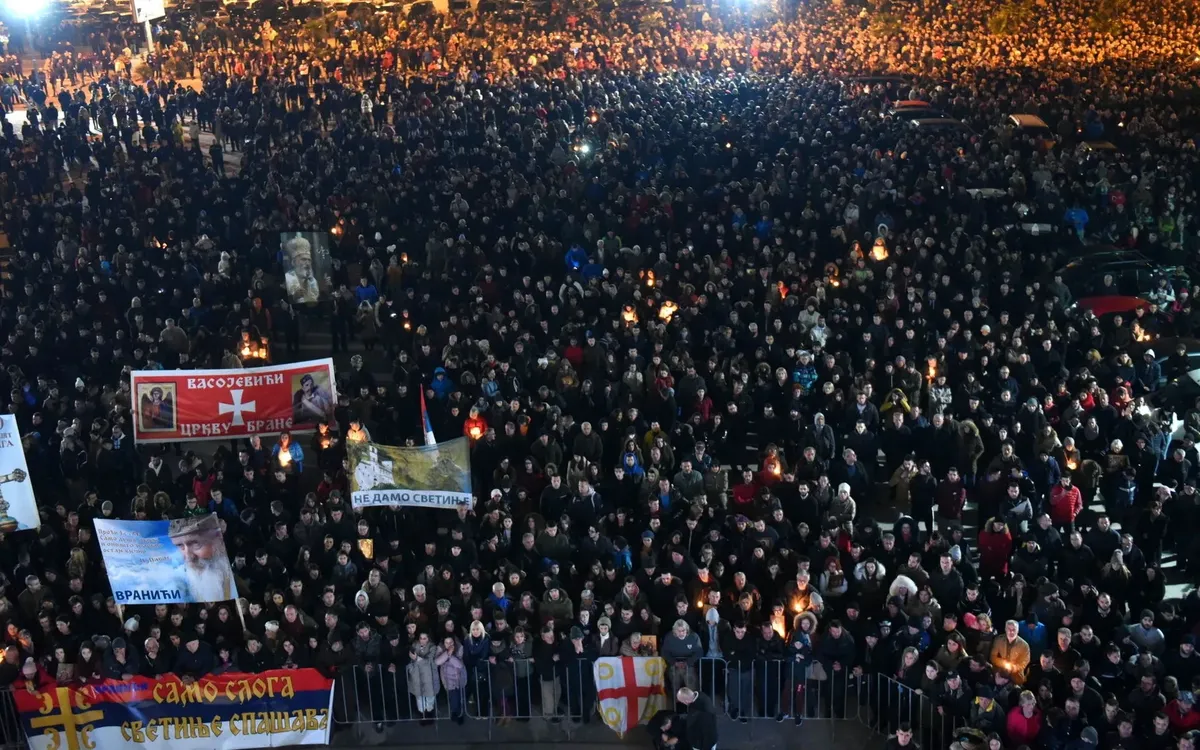
The church factor can cause political destabilization in the very center of Europe, inside NATO. Protests against the new law on religion have not subsided in Montenegro for the third month. The parties to the conflict admit that without the active participation of Moscow there was no ...
“The same hand acts in Montenegro and Ukraine,” the “Minister of Foreign Affairs” of the Russian Orthodox Church Metropolitan Hilarion (Alfeev), visiting Belgrade on February 18, put it mysterious. The Russian Orthodox Church considers the Serbian Patriarchate of the Russian Orthodox Church as his main ally, after almost all the official Orthodox churches of the countries of Eastern Europe “betrayed” it, crossing the side of the “pro -American” Patriarchate of Constantinople. And the small resort Montenegro, where the Russians willingly acquire summer cottages at sea, is no exception.
In 2017, the country joined NATO, despite the year made a year earlier with the participation of Russian agents, the attempt of the coupling (this is stated in the verdict of the Supreme Court of Montenegro, who condemned the citizens of the Russian Federation Eduard Shishmakov and Vladimir Popov). Now the country's authorities are striving to return the symbolically significant status of autocephaly of the National Orthodox Church, freeing it on postcolonial dependence on the Serbian Patriarchate (SP).
By chance or not, but almost simultaneously with Hilarion, Belgrade was visited by the Minister of Defense of the Russian Federation Sergey Shoigu. Serbia, albeit with reservations, remains the last strategic stronghold of the Russian Federation in the Balkans. However, pro -European forces are gaining weight in the country, and it is becoming increasingly difficult for Moscow to hold Belgrade in the zone of influence.
The “church theme” in this case can be very useful, since it appeals to the very basics of Serbian national identity and post -Persian syndrome - similar Russian nostalgia for the lost “great power”. The Russian Orthodox Church and the Russian Ministry of Foreign Affairs urge the Serbs to “not give shrines” in Montenegro, arguing that the leadership of this young independent state betrayed Serbian national unity “to please the West”.
The parallel with the Russian-Ukrainian agenda is obvious, and Metropolitan Hilarion predicts: President Montenegro Dzhukanovich “will finish as Poroshenko”.
The influential Arab television channel Al-Jazis states that Montenegro has become a new target in the geopolitical game of Moscow: “Because of this, a sluggish war has been waged in Ukraine for the sixth year, and Georgia has lost large territories ... Russia has been waging its hybrid war in Montenegro with alternative imperialist methods, using Orthodoxy.”
The history of the issue
Until 1918, when Montenegro was annexed by Serbia, the Chernogorsk church had actual autocephaly. Her relationships with Serbian neighbors either worsened, then improved, but at the end of the XIX - early twentieth century the Montenegrin Metropolitan was ordained in St. Petersburg without the participation of Serbia. Until the middle of the XIX century. The Montenegrin principality remained the only theocratic (more precisely-hocratic) state in the Balkans: they were ruled by princes-militants. In the days of the Quasiimpersky Serbian state - first of the monarchical and then socialist - all the monasteries and temples of Montenegro took control of the Serbian Patriarchate, which in its current form was formed only in 1920
Among the adherents of this patriarchy, the denial of the independence of the Montenegrin people and the state is widespread, just as they like to talk about the “Russian world” and the “trinity of the Russian people” in the Russian Orthodox Church.
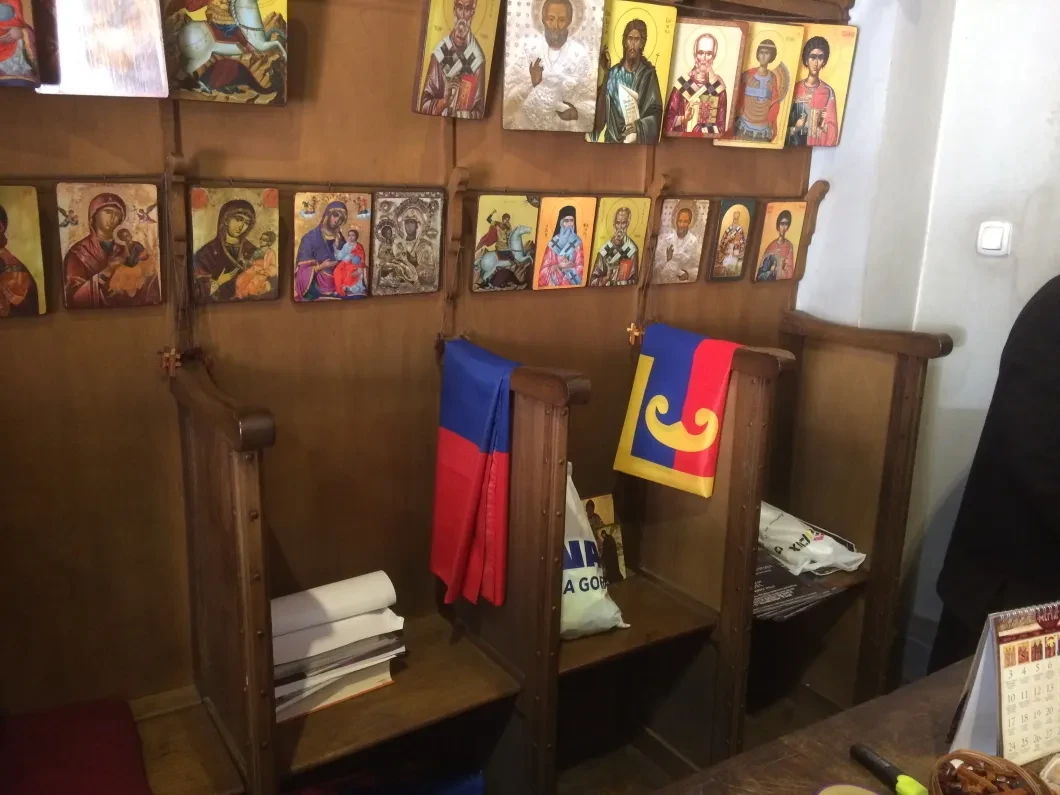
During the collapse of Yugoslavia, Montenegro retained the unity with Serbia longer than the rest of the “Union” republics - up to the referendum on the independence of 2006. But the group of Montenegrin clerks and laity announced the revival of ancient church autocephaly much earlier-since 1993, since 1997, the “unrecognized” Chernogorsk church has been headed by its current Primate Metropolitan Mikhail (Dedeich). In almost 30 years, this church managed to get from the authorities or build only about 15 temples. The number of church objects in Montenegro exceeds 650!
Being the largest religious association of the country, the joint venture stubbornly evades the Montenegrin state registration, and its Serbil priests refuse to reside in Montenegro and do not pay taxes, in fact being in an illegal situation. The remaining 20 religious associations of Montenegro are safely registered. Another oddity. The country has 4 dioceses of SP, but only one of them is completely located within the country. 3 others cover the territories of both Montenegro and neighboring Serbia or Bosnia and Herzegovina. This condemns the followers of the joint venture in Montenegro into a systemic conflict with the state.
Metropolitan against the president
President of Montenegro Milia Dzhukanovich accuses the joint venture of his intention to preserve a religious monopoly in a country that has long been independent of Serbia and moves a different geopolitical course. In his struggle for the recognition of the Montenegrin Church, he promises to take an example from Ukraine. At the initiative of Dzhukanovich in the late evening of December 27, 2019, the bought -up - Parliament of Montenegro - adopts a new law on freedom of religion. Like Petro Poroshenko, who played a key role in recognizing autocephaly of the Ukrainian Church, Dzhukanovich acts in the conditions of timekeeping: in 2020, parliamentary elections will be held in Montenegro. Among the population of the northern and central regions of the country, Provery moods are growing, so the danger of the defeat of the party of Dzhukanovich is great. Thus, the Proserg and Anti -Emerb forces in Montenegro were equally interested in the aggravation of the situation to mobilize the electorate.
The law in parliament was adopted only after a fight arranged by 17 Proserg deputies, whom the police eventually detained and led out of the hall. Spears are breaking around the 62nd article of the Law, which declares state property all church buildings belonging to Montenegro until December 1, 1918-the moment of its annexation by Serbia. Now the spontaneous joint venture owns approximately 650 buildings, with the status of which the cadastral service will be dealt with during the year. “Religious community,” the law says, “continues to use the objects and land to be registered, until the decision of the state body authorized to make decisions about ... by disposal by these objects and land.”
These lines turned out to be enough for the Serbian patriarch Irine to declare “state terrorism” by Montenegro,
And tens of thousands of people throughout the country began to go out into the streets under the Serbian flags and with the same type of posters: "We will not give our shrines!" It is clear that the Montenegrin state is not going to and physically will not be able to “drive out” believers of the joint venture from hundreds of temples. It is only about streamlining the status of real estate, followed - already legal - transfer to communities.
The Chernogorsk police does not conduct official statistics of protest against the new law. And the organizers “raise the bar” all the time: if at first they talked about 70 thousand participants throughout the country, then last Sunday, February 23, they beat the record. More than 200 thousand people allegedly entered the evening procession-summer with the population of Montenegro at 630 thousand. Promotions are arranged only in the evenings, when it is already darkening, on Thursday and Sunday, and look very spectacular. They are mandatory in the capital - Podgorica, and in other cities - in turn (there are not enough participants for each action in each city). For those who want to come to the capital, it is not known who are provided with free buses, the promotions are invited “pop stars”.
For example, on February 23, Archimandrite Savva from Kosovo, who urged the Serbian language and faith, was “not to be like in Kosovo” in Podgorica on February 23. The next prayer is notified by colorful posters printed in printing house, hanging in temples, on lampposts and bus stops. In many temples, state flags of Serbia and the same type of posters are displayed for shares. The level of organization of protest will be envied by any political party.
As Metropolitan Mikhail (Dedeich) told the “new” Primate of the Montenegrin Church, each participant in the shares is paid a modest reward - 70 euros, and if he gives his wife and children at least 100.
Money is transferred in cash across the Serbian-Chernogorsk border, which is protected quite weakly. At the same time, the attendance of church services in Montenegro has fallen in Montenegro. According to a priest from Kotor, who is popularly called “Pop Moma”, the liturgy comes two times less people - parishioners take care of “prayer forces” for evening protests.
The local oppositionist of Montenegro, local media call the 82-year-old Metropolitan Amphiloche (Radovich), who heads the Montenegrin-Primorsky diocese of the joint venture since the time of socialist Yugoslavia. His rhetoric can envy the most radical politician. The elder constantly calls the president of the country the atheist and the criminal, calls for the people to overthrow the authorities, which allegedly "takes the church." At the same time, amphilochia refuses to go direct negotiations with the president, and even more so with the “schismatics”.
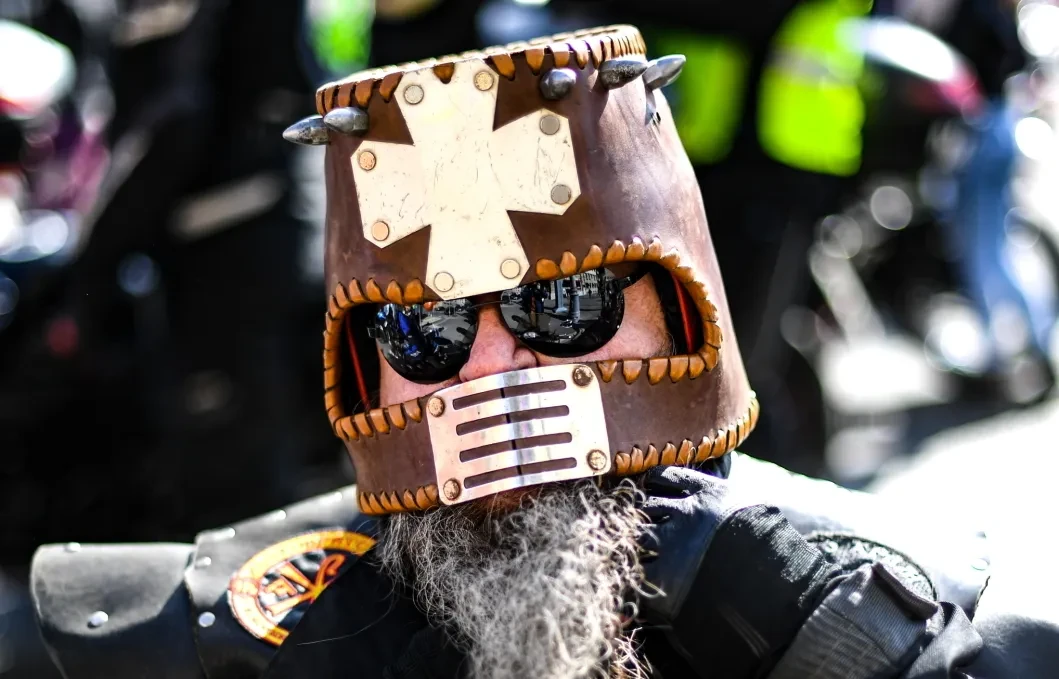
In past years, amphilochia regularly visited bikers from the Night Wolves club, close to the Kremlin with their “motorbikes”.
As one of them told Novaya, once Amphilochia openly complained to the financing of his diocese from Moscow in an interview with bikers.
Russian trace
It is not surprising that the Montenegrin law causes maximum discontent in Moscow. Already on December 28, the day after the adoption of the law, Patriarch Kirill announced a meal in a monastery in Lubyanka that the purpose of the law is “the struggle against Russia”. Cyril gave the propaganda media installation: to represent what was happening as a “all church real estate from the canonical Montenegrin diocese of the Serbian Orthodox Church to schismatics” two days later, on December 30, a statement by the Russian Orthodox Church Synod was adopted, which, however, was not gathering for his meeting on this day. Turning to the entire world community, the Synod announced "the violation of the rights of religious communities in Montenegro." The new law is called in the document "an act of support for the split by weakening the canonical church and an attempt to put it into a humiliating and dangerous dependence on the state."
The Bishop of the Russian Orthodox Church has not yet been decided to come to Montenegro, so the bishops of its Ukrainian branch, the UOC MP, perform a delicate mission. On January 27–28, Bishop Victor, Bishop of Baryshevsky, spoke at the anti -government protest in Podgorica, accusing the persecution of Orthodoxy ... Patriarchate of Constantinople. On February 29, a visit to Podgoritsa of the head of the UOC MP, a permanent member of the Synod of the Russian Orthodox Church, Metropolitan Onufry (Berezovsky), accompanied by four bishops, is planned. On the eve of Great Lent, he will serve in the main temple of Montenegro Patriarch Irinea.
The rhetoric of both Primate comes down to the fact that in Montenegro you need to take revenge for the "defeat" in Ukraine.
“Everyone who helps the Ukrainian schismatics is an enemy of not only the Russian Church and the“ Russian world ”, but also all the Orthodox Slavic peoples, and the entire Orthodox world,” the Serbian Patriarch claims.
Official Russian authorities use similar formulations. Expressing “serious concern”, the Russian Foreign Ministry in a special statement on the Montenegrin Law on Religion predicted “complete squeezing out of Montenegro” by the Serbian Church. The Foreign Ministry, like Patriarch Kirill, has no doubt that the Montenegrin state will seize all 650 temples in Montenegro at the joint venture and transfer them to the church, which the Russian Federation qualifies as "non -canonical." The Montenegrin Foreign Ministry regarded such assessments as the intervention of the Russian Federation in the internal affairs of this country and just in case reminded of the country's membership in NATO.
***
Given this geopolitical factor, it is difficult to assume that the current protests will return Montenegro to the Union with Serbia and the Russian Federation. However, most likely, the Montenegrin authorities will have to “play back” a little. The controversial law on religion is already considered by the Constitutional Court of the country, which will most likely soften some of its articles. However, the main strategic vector will remain unchanged - the churches of the countries of the former Yugoslavia, as well as the churches of the countries of the former USSR, should become independent, autocephalous.
The Patriarchate of Constantinople (Ecumenical) is ready to recognize the autocephaly of the Church of Northern Macedonia, and in the case of Montenegro takes a wait-and-see one-in the calculation of the fact that either the Serbian clergy of Montenegro itself will ask for autocephaly, or the Serbian Patriarchate, wanting to maintain its integrity, will become an ally of Constantinople and will come out of dependence Moscow. When this happens, a matter of time.