Date
Author
Source

Preserved copy
Translated material
The Moscow Art Theater opened America, America - Moscow Art Theater
"Difficulties of translation" with Vladimir Abarinov
- When Melpomena was a Cinderella of American muses
- What did everyone learn from Chekhov
- How the Moscow Art Theater instilled in America a new aesthetics
- Stanislavsky on Broadway
-Nemirovich-Danchenko in Hollywood
Alexander Genis: In today's episode of the cycle of Vladimir Abarinov, "Transfiguration Difficulties" we will talk about fateful for American culture and an important meeting of the Moscow Art Theater with American spectators for the Russian theater. About how sensation she turned around, how she passed and how it ended, we will now hear. But first a few words about the context.
The theater in America, as, in fact, in all English -speaking countries, is primarily Shakespeare. Everyone puts it everywhere, not just professionals. Even during the life of Bard, says in his wonderful biography Peter Akraid, the English sailors showed amateur Hamlet to the natives of equatorial Africa - with great success, although they did not understand a word.
Something similar, according to Mark Twain, took place in provincial America. In any case, in the "Gek Finn", the charlatans treated the audience with such supposedly Shakespearean monologue:
Be or not to be? That's the catch!
Is it to endure the calamities of such a long life
While the Birnamo forest goes to Dunesin,
Or against the sea of angry to arm yourself?
Macbeth stabbed a dream, an innocent dream,
That's why the trouble is so durable!
In fact, Shakespeare from the very beginning of the American Republic played a huge role, because it was believed that his drama teaches rhetoric, without which democracy is impossible. The shadow of the great Shakespeare in a certain sense was inhibited by the spread of the new theater. One way or another, Melpomena was a Cinderella in the family of local muses: America was very behind Europe, who experienced a theater revolution at the turn of the 19th and 20th centuries, especially in Russia. Only on the eve of the famous Moscow Art Theater, the so -called "little theaters" appeared in America, which will be discussed today, where mainly amateur troupes with an experimental repertoire worked. One, the most famous, theater is still standing in the provincial. I watched there "Who is afraid of Virginia Wulf?" Edward Alby in a half -sulfur production, which I liked more than the film with Elizabeth Taylor herself.
Such a theatrical America was struck by Stanislavsky. It is believed that it was in the United States that the system or, as it is called here, the "method of Stanislavsky" made a decisive revolution in the acting game. Henry Fund, James Stuart, Paul Newman, Marilyn Monroe and countless other stars went through training according to the Stanislavsky system.
I don’t have to argue with this, but I have doubts about the results. The fact is that two trees grew out of one root, strikingly different from each other - like pine and birch. Each culture has great actors, but they are great in different ways. Having lived for more than forty years in America, I began to react stronger to differences in the acting manner. We are talking about the emotional level. The Americans as a whole play quieter, less often tear passions into shreds and more often hide their feelings, allowing them only to guess. Having seen enough of such actors, you take restraint for the norm. That is why both Brodsky and Dovlatov treated the actors of America with such enthusiasm. The first, Brodsky, preferred the “color of water”, the second, Dovlatov, assured that there are no bad actors in America, because everyone knows how to reveal the character of the character without words, with one gait. (At the same time, Sergei very much like showing how his beloved Nick Nolta walks.)
Perhaps I will carefully express my consideration, the point here is not so much the influence of the Stanislavsky system, which we are used to relate to skepticism because of Bulgakov, but in the playwright, which became the banner of the Moscow Art Theater, which opened the Chekhov America.
In it, Chekhov really occupies a special place special and comparable with the same Shakespeare. He is not considered a purely Russian author, as the great Tolstoy and Dostoevsky, he is just Chekhov. It was his drama that turned out to be consonant with all that fundamental lack of conference, which distinguishes the Atlantic aesthetics.
They said about Chekhov that in his plays realism was brought to the symbol. This drama teaches the theater: it is so perfect that it is difficult to adequately put. In fact, the conflict in the Chekhov plays is insoluble, the replicas are empty, the pauses mean more words, the events do not change anything. Since everything is really important cannot be expressed, then the dance of the wisen and omissions begins, funny and terrible. At the same time, the Chekhov play includes all your life, and having gone through it, you become, if not wise, then wise. And one more thing: Chekhov is sorry for everyone, like Hemingway - irony and pity.
Maybe all this was learned by America from the Moscow Art Theater. I admit that, of course, the best Chekhov production that I saw is called "Vanya on the 42nd Street."
Well, now we, with the help of the author of the “difficulty translation” cycle, Vladimir Abarinov, we will go with Stanislavsky to the American tour of the Moscow Art Theater.
Vladimir Abarinov: In the history of Russian-American cultural interaction there are amazing pages. One of them is the birth of an American acting school. This school is the native daughter of the Stanislavsky system. It would seem, what is the system? What is it at all? As Bulgakov said, if Lyudmila Silvestrovna cannot play, no theory will help her. Was there no theaters and actors before Stanislavsky's arrival in America? But what about the actor John Wilks Boot, who was shooting in Lincoln, shining in Shakespearean roles? And John Barrimor, "American Hamlet", who created an unforgettable double image of Dr. Jekyl and Mr. Haid in the cinema?
Nevertheless, the situation was just like that. Unlike Europe, which with Chekhov no longer surprise where his bright theater was, primarily German, and his own vivid drama, in America, Stanislavsky and his theater produced a splash. How did this all happen?
In September 1922, the troupe of the Art Theater, headed by Stanislavsky, went on tour abroad. It was not easy - they took it and went. For the trip, funds were required. Impresario paid for the road, accommodation, delivery of the props by advance, this money was then deducted from the fees due to the theater. Bulgakov found a theater, drowning in luxury, but it was later, and in 1921 poverty was such that Stanislavsky and Nemirovich-Danchenko turned to the American administration of assistance to the starving (Ara) with a request to send canvas, paint, electric bulbs and so on. Chaliapin sends Stanislavsky 25 pounds, and Stanislavsky sustainly thanks him. Secondly, abroad was released very tightly, with a great analysis. The decision was made by the Politburo. In the end, they still released.
First Berlin, then Prague, raked, finally Paris. From France - to America.
The interest in the theater is huge. The interviewers are overcome by Stanislavsky, he is being taken around the city with a police motorcade with flashing lights, as we would say now, and then there were no flashing lights, the police were just whistling in a whistle.
"New York in the 20s" (1961). The film shot for the CBS television company "XX Century". The camera shows noble visitors who arrived on a transocean liner: British actress Gertrude Lawrence, writers Herbert Wells and Rebecca West, French tennis player Susann Lenglen, Tenora John McCormak and Enriko Caruso, Stanislavsky ...
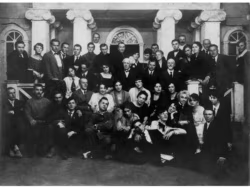
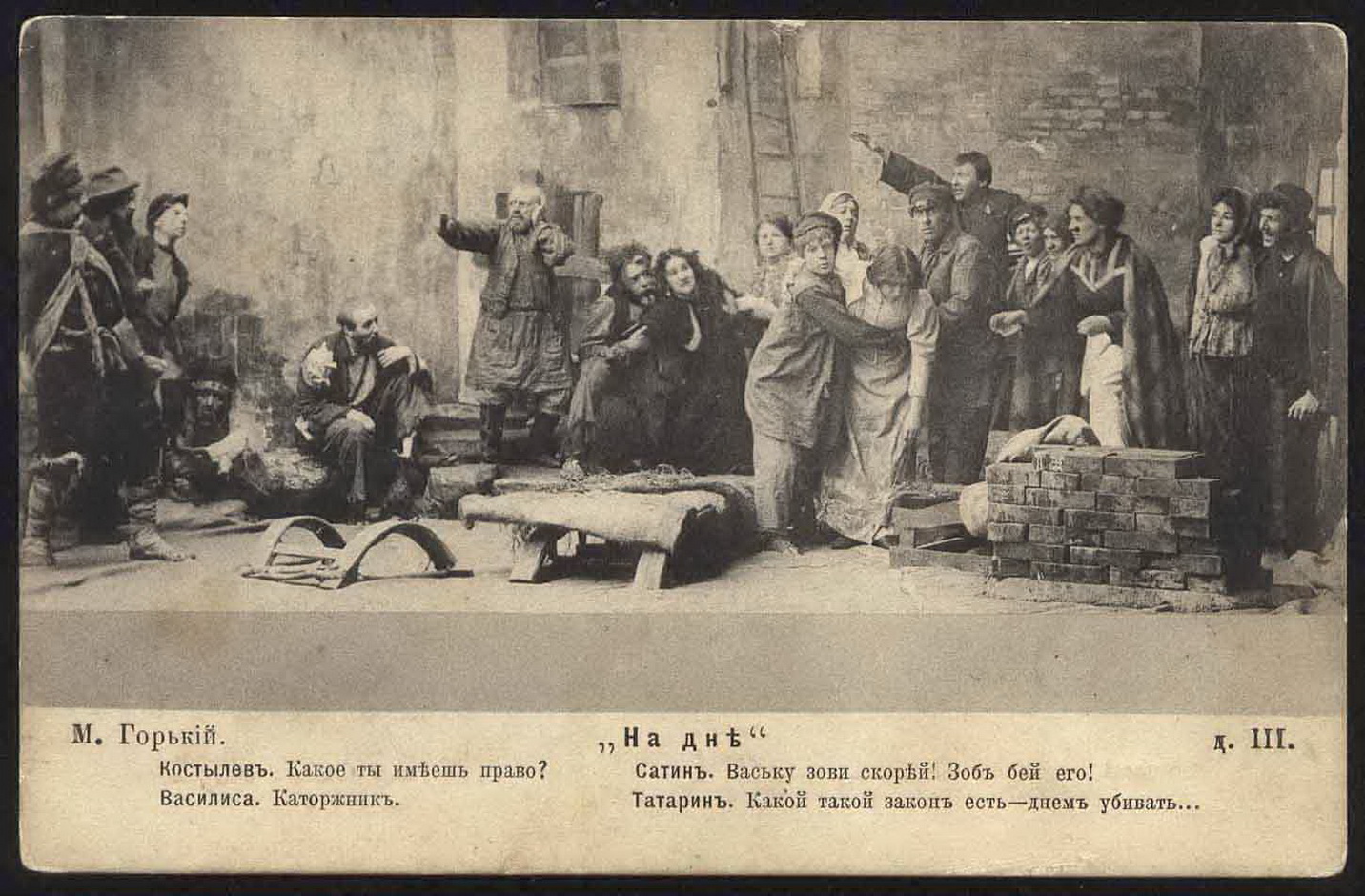
And he, barely settling in the hotel, continues to rehearse the play "Tsar Fedor Ioannovich" with Kachalov in the lead role. The performance is not new, please note that the Moscow Art Theater began with this performance. Stanislavsky himself plays Prince Ivan Petrovich Shuisky. The last rehearsal ends deep after midnight already on the day of the premiere. The success is huge, applause, enthusiastic reviews. And he continues to rehearse. After "Fedor Ioannovich" - "at the bottom" with Tarasova in the role of Nastya and with Stanislavsky in the role of satin. Sensation again. America fell in love with the rising star of the Moscow Art Theater Alla Tarasova. American Hamlet John Barrimor says that "he left the theater shocked and intoxicated and with the most modest opinion of himself as an actor."
America first saw such an ensemble. Indeed, in America there was no repertoire theater then, there was an entreprise, which all held on one actor-prime or actress. And here, as they wrote, a performance can be built around each actor. "Cherry Garden", "Three Sisters" - a complete full house, enthusiasm that Stanislavsky himself did not expect. Moreover, for each performance - the pilgrimage of American actors: they come to study, understand the secret of this success. This, by the way, is a very American approach to business: if they don’t know how to do something, they go to study and at the same time sacredly believe that you can teach and learn anything. The arguments about some irrational beginning do not convince them at all.
"Cherry Orchard" in the production of Stanislavsky and Nemirovich-Danchenko. Gaev-Stanislavsky, Ranevskaya-Olga Knipper-Chekhova, Firs-Mikhail Tarkhanov. Premiere-1904.
For a conversation about the American tour of the Moscow Art Theater and their consequences for both the Moscow Art Theater and America, I invited my old friend and colleague Leonid Velekhov, the author and leading program "The Cult of Personality". In his first specialty, he is a theaterman, a candidate of art history. We are almost peers. I now cooled down to the Drama Treasor, he stopped clinging to me for the living, but in my youth I was an avid theater. Then, in the Moscow Art Theater, there were still Chekhov plays in the production of the founders. I must say, I never understood and did not like Chekhov’s drama, but really wanted to understand. And so I looked and did not understand anything. Tickets to the Moscow Art Theater were then sold in a load on other, popular theaters. The performances were so hackneyed, they kept purely on acting equipment. There was absolutely no theater magic in them, which then for me was in the performances of Efros, Zavadsky, Goncharov.
Lenya, tell me, did you ever manage to feel the directing of Stanislavsky so that she really excites you?
Leonid Velekhov: She still hooked me as you put it, although for obvious reasons I did not find Stanislavsky and Nemirovich. And what went on in the 1960s, 1970s and was signed at the poster with their surnames, these were renewal, restoration. But the theater is not a painting where you can restore the picture. This is the art of living people, who first born in the lively interaction of the director and actors, and then gaining full life and breathing already in the interaction of the scene and the hall. And the director at the Theater of the twentieth century is such a demiurge of the theater universe. That is how Pasternak describes the director in a poem dedicated to another genius of the Russian theater, Meyerhold:
So played before the ground young
Gifted one director,
What was worn, like a spirit, above the water
And rib crushed ter.
And the performance is alive, while this demiurge, creator, director is alive. It is no coincidence that such directors, as it were, to say, my heart - Meyerhold, Lyubimov, Ravensky - always came to all their performances that have been going on for many years.
So. It is impossible to judge in the poster of Stanislavsky and Nemirovich for the performances that were in the Moscow Art Theater at the Poster during our childhood, youth. I also reviewed them all in childhood. It was an absolute dead. But I grew up in a theater family. And we all lived the theater. The theatrical gods of mom and father were different. Mom - Meyerhold and Vakhtangs, dad, who actually grew up in the family of the closest associate of Stanislavsky and Nemirovich, Vasily Grigoryevich Sakhnovsky - in the Theater Roman, which you and I both love, this is the chairman of the directorial corporation Ivan Alexandrovich Poltoratsky with the Roman’s profile, if I cute exactly ...
Vladimir Abarinov:
Vasil Grigoryevich Sakhnovsky
Direct, brave, honest husband.
But he is such an alcoholic
That the back was drank from the Dead Souls.
Leonid Velekhov: Yes, of course, there was such a sin behind him, but he was a completely brilliant person, adored, and one of the few who really loved Bulgakov and helped him, and Bulgakov paid reciprocal. So dad with his background of theatrical gods had the Moscow Art Theater, but this is not important. The magical impact of the best performances of the Moscow Art Theater - "Days of the Turbins", "Three Sisters", "Anna Karenina" - was in both memory of both. And my parents somehow gave me a set of grampes with records of the performances of the Moscow Art Theater of the 1930s and 40s. And here this magic touched me with its wing, although it was just a gram of gramus, very imperfect quality. And I could not tear myself away. I just didn’t go to the holes. And the voice of Nikolai Palych Khmelev - Tuzenbach, Karenin, Alexei Turbin still sounds in me, although 50 years have passed since at least the last listening. Not just by heart - I remember all these intonations: "Irina, I was drinking coffee today." So his Tuzenbach spoke before leaving for a duel on which he would die. "The case is yellow ... Thank you for saying. I don't like your business trip." These are turbines.
But the fact of the matter is that this is not just a voice, words and intonation in memory. I had the whole full -fledged image from this voice woven. The complete feeling that I saw these performances. This, as I think, is the Stanislavsky system, the most perfect embodiment of which, according to many, judges of decisive and strict, was, along with Mikhail Chekhov, Khmelev.
Vladimir Abarinov: Now we will hear this truly inimitable voice, a voice that cannot be confused with anyone else. Excerpt from the play "Uncle Dream". In the role of Marya Alexandrovna Moskaleva-Olga Knipper-Chekhova. Prince is Nikolai Khmelev. 1939 entry.
(Phonogram)
Vladimir Abarinov: Let us return to America of 1923. So, the theater triumph, but, surprisingly, in the midst of this triumph, Stanislavsky writes Nemirovich that the theater, in essence, dies:
"We must get used to the idea that the art theater is no more. You seem to understand this before me, I had been flattered by hope all these years and saved the trumped remnants ..."
What is the benefit if I or you put five more plays that will be a huge success; But without us, our students will not even be able to repeat the productions ... I have no one to convey what I would like! (Yes, and you too). We have no choice but to write and, perhaps, illustrate in cinema what is not transmitted with a pen. With this work, we can conclude our artistic life.
This is amazing. After all, there are also “days of the turbines”, and the ill -fated “moliere”, and “Figaro”, and “Resurrection”, and the new brilliant acting generation that you and I, Lenya, also found alive: Androvskaya, Prudkin, Yanshin, Mushrooms. But we now know that the Moscow Art Theater has many more bright pages ahead. And then Stanislavsky was just a funeral from his theater. Where does this feeling of an insoluble crisis come from?
Leonid Velekhov: I will try to explain where he got this feeling of a crisis. The 20s is the heyday of art, including theatrical, in Soviet Russia. Everything sparkles. Meyerhold, Vakhtangov, Moscow Art Theater with Mikhail Chekhov, Tairov ... Moreover, this is such a total flowering of arts: a movie with innovators as Eisenstein and Dzig Vertov, the painting of the Russian, Soviet avant-garde, literature, poetry ... We can criticize the consequences of the 1917 revolution, but this revolution was waiting for it, it was foreseen and foreshadowed by this revolution. The young and not even very young geniuses of what we call the Silver Age, the genius of the avant -garde of this Russian pre -revolutionary were in a hurry. Although many understood everything in advance. You remember: “And you, who will destroy me, meet me with a welcoming anthem,” Bryusov wrote.
I think the fact is that Stanislavsky was confused before this pressure and triumph of new art. He actually found himself in a very strange situation. He was never a conservative. He was a fantastic innovator. The birth of the Art Theater in 1898 turned all the ideas about how the theater could be, what directing is and what acting is. He was the first to disclose that the theater is a synthetic art that acts totally with all its components, from the actor’s game to musical design, lighting and some noise there, according to which he had great specialists who knocked crumbs and sang nightingales.
Vladimir Abarinov: "And he still had a passion: he loved to portray birds behind the scene. When there were plays, where the action in the village was in the village, he always sat in the backstage on the step -up and whistled by the nightingale." And the theater still begins with the hanger.
Leonid Velekhov: And from the hanger, of course. And this was the discovery of world significance. It was the reform of the whole theatrical art. He in the theater committed the fact that in dramaturgy he committed Chekhov who was unloved by you and my beloved. But Chekhov was not alone. In the West, a new drama arose in parallel. Ibsen, Hauptmann, Meterlink. And the art theater was so alone. And suddenly the young Stanislavsky himself, in the prime of life, was he in 1917 how much? 54 years. The theater is not even 20 years old. And it turns in the eyes of many into a symbol of traditionalism, conservatism, just not routine. The art theater was born into a refutation of small, and now they are written through a comma, as a stronghold of an old culture. Mayakovsky with his "commune house instead of a hut! Mass action replace the Moscow Art Theater!" All innovators at the same time - Meyerhold, Vakhtangov, Tairov - his students. А их ему противопоставляют как новое старому, он вроде как уже и не нужен. Живой труп, который надо сбросить с корабля современности. Есть от чего растеряться. Он почувствовал себя на обочине.
Владимир Абаринов: Фрагмент еще одного легендарного мхатовского спектакля 1926 года – "Дни Турбиных". Елена – Алла Тарасова, Шервинский – Марк Прудкин.
(Фонограмма)
Владимир Абаринов: В 1924 году театр, перезимовав в Европе, снова приезжает в Америку. Каждый вечер Станиславский выходит на сцену, причем часто в эпизодических ролях, чуть ли не в массовке, чтобы зарядить эту самую массовку, которую набирали на месте, своей энергией. Он очень устает – никогда не работал в таких жестких условиях. Тем не менее он считает Америку единственным местом, где театр способен выжить. Во-первых, потому, что нигде не может быть таких сборов. Во-вторых – потому что нигде нет такой публики, наивной, восприимчивой, доброжелательной.
"Я полагаю, что без Америки нам не обойтись, и почти уверен, что Америка теперь без нас не обойдется. Эта необходимость создалась не столько в прошлом году, когда мы имели крикливый, шумливый, так сказать, общий, уличный успех. Она создалась во вторичном приезде этого года, среди настоящей интеллигенции и среди немногих американцев исключительной культурности и жажды настоящего искусства".
Так он пишет Немировичу. Ведь и книгу свою он писал по договору с американским издательством, и вышла она прежде по-английски. Причем в гостинице он писать не может, мешают телефонные звонки, визитеры, и ему выделяют комнатку в Нью-Йоркской публичной библиотеке. У него масса планов, связанных с Америкой. Он хочет оставить в Америке хотя бы часть труппы в качестве "насоса для долларов", чтобы кормить театр в Москве. У него есть предложение, и он его серьезно рассматривает – проект создания оперной студии в Нью-Йорке. Сдается мне, что в Америке он нашел отдушину от спертого воздуха Советской России, Америка спасла Станиславского от депрессии, уныния, разочарования в своем деле.
Леонид Велехов: Я не знаю, на что он рассчитывал, когда он туда ехал, но получил он как раз вот это совершенно новое дыхание, потому что в Америке его оценили как новатора, и он очень точно формулирует свои упования на Америку – ты мне прислал цитату, я ее выписал себе: "Американский народ – способный к театру. Он как никто понимает, чувствует, оценивает индивидуальность". Individuality. То есть то, на что в искусстве новом, революционном совершенно не делалась ставка.
Владимир Абаринов: Так или иначе, театр вынужден вернуться. В своих письмах из Америки Станиславский вынужден оправдываться, опровергать сообщения советских газет о его участии в каких-то антисоветских сборищах, а в апреле 1924 года получает строгую телеграмму от Немировича:
"По поручению Наркомпроса сообщите всем под расписку: отсутствие к сроку в Москве каждого члена поездки без моего специального разрешения будет квалифицировано как политическое бегство. Свидетельства болезни не примутся".
Между прочим, Ленин умер, пока они гастролировали. Они возвращались в другую страну. Никакого "насоса для долларов". Станиславский отвечает, что, конечно, вернутся, а до этого в письме предупреждает:
"Знайте, что к Вам вернется в Москву усталое, разбитое и дезорганизованное войско, на плечи которого нельзя уже возлагать тяжелых ранцев и больших обуз".
Станиславский и его труппа уехали из Америки в мае 1924-го, а в декабре 1925-го туда же, в Америку, приехал Немирович-Данченко со своей музыкальной студией. Его тоже ждали с большим интересом, но первые же спектакли разочаровали американскую публику, не произвели впечатления на Нью-Йорк, который, как писал ему Станиславский, каждый день видит и слышит лучших певцов мира. Импресарио говорит о провале гастролей и собирается их отменять. Но третий спектакль, "Карменсита и солдат", переделанная "Кармен", спасает положение.
Леонид Велехов: Немирович – это ведь совсем другой человек и другой тип художника, режиссера, нежели Станиславский. Все-таки это прежде всего очень опытный, мудрый администратор и такой политик. Собственно, благодаря Немировичу во многом МХАТ и прирос к советской власти, и все сложилось. И Станиславский ведь его на те, первые гастроли всячески зазывал, а Немирович не поехал, потому что он считал необходимым свое присутствие в Москве, где он налаживал вот эти вот отношения с новой властью, поэтому даже не хотел, чтобы они оставались на второй сезон, все боялся, что это будет сочтено каким-то политическим жестом и эмиграцией. А вот когда он все отладил и выстроил, когда МХАТ стал священной коровой советской культуры, он сам отправился в Штаты с этой музыкальной студией. Ну, он все-таки там много экспериментировал, ставил нечто среднее между оперой и опереттой. В нем были свои достоинства и недостатки, но я думаю, что это был такой русский советский феномен.
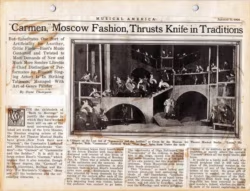
Владимир Абаринов: В "Карменсите" он постарался сделать из оперы музыкальную драму, то есть чтобы это были не просто певцы, наряженные испанцами, а чтобы они играли так, как играют в драме. В наше время этим никого не удивишь, современные оперные солисты – блистательные драматические актеры, а тогда было иначе: выходила примадонна к рампе и пела свою арию, делая эффектные жесты. Так что тогда драма в опере – это была новость.
Леонид Велехов: А что такое эта идея? Это идея ввести систему в музыкальный театр. И Станиславский, у него же была своя оперная студия, занимался тем же самым. Та самая студия, в которой он пытался спасти Мейерхольда, когда закрыли его театр, и он его пригласил там работать. То есть это те же самые эксперименты по внедрению системы Станиславского в музыкальный жанр. Но то, что произвело фурор в качестве драматического спектакля... может быть. публика американская была не готова, но я и не думаю... понимаешь, Немирович все-таки не был великим режиссером в отличие от Станиславского. У него были другие достоинства. А вот того, что, как мы говорили, мог Станиславский – привнести свою невероятно талантливую, наивную, открытую душу, – этим Немирович не был одарен.
Владимир Абаринов: Послушаем фрагмент одного из музыкальных спектаклей Немировича. Ария Серполеты из оперетты Роберта Планкетта "Корневильские колокола". Поет Надежда Кемарская, оркестр театра имени Немировича-Данченко, дирижер Григорий Столяров. Запись 1934 года.
(Фонограмма)
Владимир Абаринов: Будучи в Америке, Немирович получает приглашение поработать в Голливуде. Предложение исходило от Джозефа Майкла Шенка (в Российской империи он был Иосифом Михайловичем Шейнкером), кинопродюсера, второго президента студии United Artists. Считается, что Шенк – прототип героя "Последнего магната" Монро Стара, продюсера-диктатора, к чему совершенно не привыкли в России, где главным на площадке всегда считался режиссер. Уже отсюда можно понять, что сработаться им было очень сложно. "А что я там буду делать?" – спросил Немирович. "Все, что захотите", – ответил Шенк. Никаких конкретных обязанностей контракт не предусматривал. Немирович проводил труппу, а сам отправился в Голливуд.
"Голливуд за кадром", 20-е годы, кинохроника.
Владимир Абаринов: Его пребывание там, а он пробыл там год, оказалось совершенно бесплодным. Немирович очень быстро почувствовал несовместимость своих методов работы с кинопроизводством. Он постоянно жалуется на бездуховность, на штампы в актерской игре и режиссуре: "Можно захлебнуться в банальности". "Американское кино не только не воспитывает публику, а развращает ее", – пишет он Шенку. А вот письмо другу, Александру Южину:
"Америка, Саша, выжимает все соки. Она, еще не создавшая сама духовных ценностей, жадно набрасывается на все, что ей кажется для нее нужным, но платит с огромной требовательностью. Все эти россказни о легкости наживы в Америке – сплошная ерунда. Люди бьются, буквально как рыба об лед. Есть имена (я говорю об артистических) зарабатывающих много, но таких имен 20–30 на всю Америку. Живут экономно, с большой сдержанностью, работают все до устали, до измору…"
Тем не менее он не сидит сложа руки, пытается быть полезным. Пишет, например, сценарный план о Пугачеве по повести Пушкина "Капитанская дочка" и пьесе Тренева "Пугачевщина", которую он ставил во МХАТе. Потом увлекается мыслью написать сценарий для Мэри Пикфорд по "Снегурочке" Островского. Предлагает экранизировать "Игрока" Достоевского. Все три проекта Шенк отклоняет, "Пугачева" – на том основании, что сюжет заканчивается казнью героя. Вот если бы Екатерина, "плененная красотой Пугачева, в финале, видя его в клетке, простила бы его и дала ему свободу – это уж было бы лучше!" Немировича такие требования просто бесят. Вот его письмо Луначарскому:
"Поражает резкое несоответствие между сногсшибательной роскошью оформления с великолепной фотографической техникой и бедностью содержания, не только идеологического, но даже просто элементарно-психологического. При выборе содержания руководствуются так называемыми "американскими вкусами". … Высшая точка американских вкусов: счастливый конец. Тут доходит уже до невероятных курьезов, вроде того, что Анна Каренина получает развод от самого царя и выходит замуж за Вронского или что она уходит в монастырь".
Немировичу казалось, что он придумал смешной анекдот, но "Каренину" с хеппи-эндом действительно сняли в 1927 году. Причем, что интересно: для Европы сделали правильный, трагический финал, а для проката в США – поцелуй в диафрагму.
"Love". Экранизация "Анны Карениной". Анна Аркадьевна Каренина – Греба Гарбо, Вронский – Джон Гилберт. Режиссер – Эдмунд Гулдинг. Студия MGM, 1927
Владимир Абаринов: Немирович пытается работать с актерами, просит устроить ему серию бесед с Пикфорд, Глорией Свенсон, Фернбексом, работающими на студии. Но это совершенно невозможно – они все заняты. Фербенкс ему говорит: "Не забывайте, что все мы не только артисты, но банкиры, дельцы и землевладельцы. Шенк держит у себя в руках всю местную политику, влияет на городские выборы и т. д." Бэрримор тоже отказался, но направил к нему молодую актрису Марселин Дэй, свою партнершу, чтобы Немирович "прошел" с ней ее роль. Марселин пришла один раз, а потом сказала, что у нее в контракте никаких лекций не предусмотрено, и пусть ей за встречи с Немировичем платят отдельно. Он ходит на съемки, пытается давать советы – режиссеры и актеры его избегают…
Леонид Велехов: Опять же повторяю: он не был гениальным режиссером. Ничуть не умаляю достоинств Немировича, но они были в другом. Они были в том, что он как-то умел, что называется, всю жизнь Художественного театра обставить. А в Америке он оказался один как перст. Чего он мог? Режиссером великим он не был. Актером? Он показать ничего не мог, он показом вроде никогда и не работал. Лекции читать, тем более через переводчика, – опять же вся эта система и методология, работа актера над собой – это все Станиславский. Но мне единственное кажется, что, может быть... вот вспоминаю, он как-то сказал, в интервью каком-то, что ли, вернувшись в СССР, что творить можно только в России, продавать в Америке, отдыхать в Европе. Вот так он сформулировал. Но между прочим, ему очень там в Америке нравилось. Мы же помним "Театральный роман", когда Аристарх Платонович в Индии и явно не торопится оттуда возвращаться, шлет оттуда бесценные советы, в какую дверь входить героине, так что ему там было на самом деле очень комфортно...
Владимир Абаринов: Он действительно писал подобные письма из Голливуда, это почти не пародия!
Леонид Велехов: И, если я правильно помню, он там очень удачно пристроил своего приемного сына. У него был родной, но родной ушел где-то там на Дон и так и остался, в эмиграцию ушел. А вот его приемный сын, самый любимый, Михаил, он снялся в трех голливудских фильмах под псевдонимом Мишель Дантон, что-то в этом духе.
Владимир Абаринов: Да, мне этот псевдоним попадался в справочниках.
Леонид Велехов: Так что я думаю, гений Немировича-Данченко – это был гений делового человека, администратора, дельца, политика, и в этом его огромная заслуга и в рамках МХАТа, и вот в том наведении мостов с Голливудом, которые потом плодотворно были освоены.
Владимир Абаринов: В этой перемене ролей есть какая-то ирония: художник Станиславский принял эту американскую деловую хватку и был готов ей соответствовать, а делец Немирович решил учить их духовности.
Леонид Велехов: Ну а что же он, будет учить американцев деловой хватке? Это было бы как-то ненужно. Я все-таки думаю, что он там впервые оказался в каком-то творческом одиночестве. Потому что хоть и писал Булгаков, что они не разговаривали со Станиславским с 1895 года, хотя МХАТ образовался в 98-м, но тем не менее это все-таки было постоянное творческое взаимодействие и взаимодополнение, а здесь он один. И чего ему там делать? Он в одиночку ставить спектакли особо не умеет.
Владимир Абаринов: Он уехал из Голливуда с чувством обиды, которая долго не утихала. Уже в Москве он дает интервью, делает доклад об американском кино. Выводы неутешительные:
"Американский кино-мир весь пропитан коммерцией и спекуляцией… Кроме техники – у них учиться нечему; столько глупости, столько чепухи ставится в американских фильмах. Есть, конечно, ряд очень талантливых актеров (на первое место я ставлю Лилиан Гиш), много талантливых режиссеров, но руль, которым управляется американское кино, находится в таких руках, от которых ничего хорошего ждать нечего".
Леня, подведем итоги. Что же дали эти гастроли Америке и что Америка дала театру?
Леонид Велехов: Они, я думаю, пробудили интерес к этому театру – совершенно нового для Америки, для России уже в ту пору не нового типа. И к театру, и к драматургии, потому что тот же Юджин О'Нил при всей твоей нелюбви к Чехову – наследник, конечно, именно этой традиции. Чехов тоже не родился бы вне контакта с МХАТом и со Станиславским. И Немировича тут мы не должны недооценивать, потому что Чехов – это все-таки в очень большой степени... как я вспоминаю, Немирович сказал, он же драматург в прошлом: "Чехов – это талантливый я". Так что они пробудили интерес к поискам театральным именно в этом направлении, к этой системе актерской работы. А потом уже Михаил Чехов все это развил, превратил в систему, его система была все-таки несколько отлична от системы Станиславского, и вот так вот это все продолжалось.
Владимир Абаринов: С нами был Леонид Велехов, не только мой коллега по Радио Свобода, но и кандидат искусствоведения, специалист по истории театра. Мы слушали отрывки из спектаклей МХАТа в исполнении Ольги Книппер-Чеховой, Николая Хмелева, Аллы Тарасовой и Марка Прудкина, а также музыку Ильи Саца к спектаклю "Синяя птица", Большой симфонический оркестр Всесоюзного радио и Центрального телевидения, дирижер Леонид Пятигорский. А сейчас слышим марш Моисея Вайнберга к спектаклю театра "Современник" "Три сестры", 1982 год.
(Music)