
Translated material
Metempsychosis
Series as the afterlife life of the novel
- Category: Time skin. Read all materials
1.
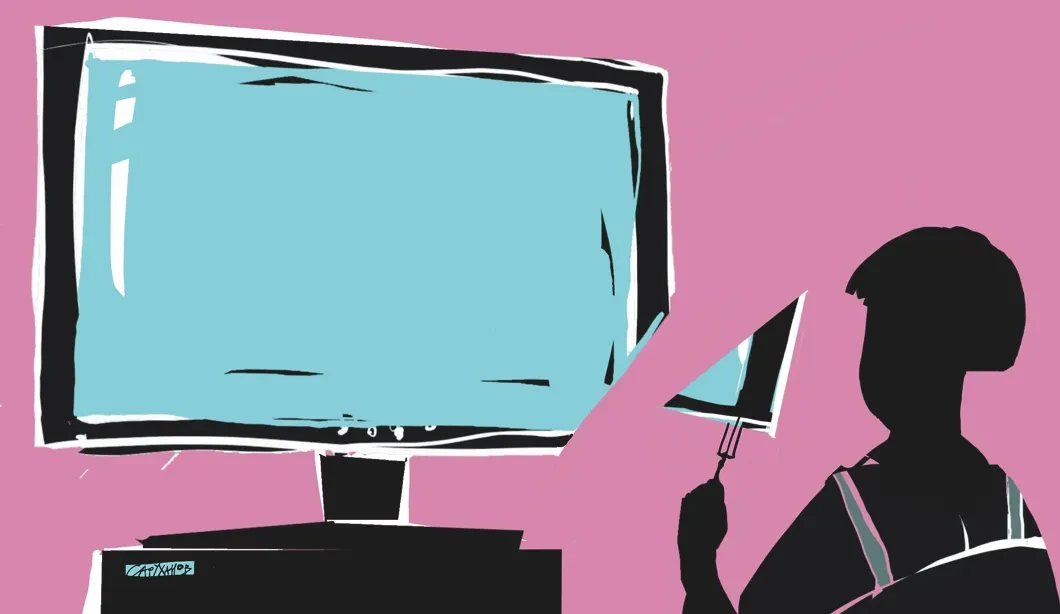
Last year, more than 5,000 television dramas were published in America. Of course, no one, including critics, could see them all, but this is not required. There are so many series that they involuntarily repeat each other, especially detectives. If you, like me, love to watch them, and not read, then while they are just building an exposition on the screen, anyone can guess who the killer and who can not be. Previously, the first referred to the first, and the second - blacks. Now the scheme has been branched, but not so much as not to identify the criminal in the character who is most difficult to suspect. It can be a deaf old old woman-governess or a humble-autistic boy, but never a criminal with a thieves tattoo or a villain with black antennae, deceiving his wife and kicking a dog. For the rest of the time we are doomed to monitor how a rude detective (now more often a detective with an uncomplicated personal life) is in turn convinced of the innocence of those who generously throw a shadow of the script.
So that we can still distinguish one series from another, we are entertained along the way in detail. The French make murders in the most beautiful environs of their happy country. Italians take busty beauties to the police. The Scandinavians drink firmly, the British constantly joke, the Americans are fighting for the equality of races, sexes and intelligence, and I don’t understand Russians poorly, because the actors play Stanislavsky and speak long and with meaning.
But nothing helps to cope with involuntary plagiarism. The crisis of the imagination is guilty of it, caused by a frantic explosion of interest in the series. The TV lacks original dramas, ideas, authors. In the five millionth Denmark, which supplies the best series to the whole of Europe, such a shortage of scriptwriters was discovered that universities introduce new faculties, and producers analyze students who barely managed to finish them. And all because you will not attack us.
2.
The fact that in the nineteenth century there were novels, and in the XX - cinema, in the XXI were series.
The novel was universal for a long time. He hugged his life and included it all: life and being, religion and philosophy, natural sciences and love shashons. For three centuries, novels were taught to take themselves seriously, even when they allowed themselves to laugh at. (In a good novel, as in Shakespeare's plays, there is always a comic character, often a storyteller, and sometimes the author.) Reading replaced education, raised feelings and taught anything. It is not surprising that Roman is accustomed to feel the king of literature, and yes, today he is still reigning, but no longer rules. Democracy of the genres abolished that usurpathic power over reality, which was called realism in my school, and now in no way.
Of course, the novel began to bury the novel for a long time, and each time he turned around, offering something that seized humanity and was considered a world bestseller. Say, “Hundred Years of Loneliness”, “Name of Rose”, “Code of Da Vinci”, “Harry Potter”. But already this list of books almost at random shows a curve descending the stairs leading up.
Saying goodbye to the second decade of our century, I looked at the list of the best novels published during this time in America. There is no point in bringing it, because still no one will remember these books either in ten or even more so after a hundred years. Meanwhile, if we look back at the last century, we will find that the 1910s were the birthplace of great modernist literature, starting with a large trinity: Joyce, Proust, Kafka. Today there are no such and there will be - too many competitors. In the fight against them, the novel, like metal in bridges, is experiencing fatigue of the genre. Every time I see a new chubby romance, I am terrified before the prospect of killing a month to read.
The young people are still worse. Recently, I spoke with one millennial, which admitted that their generation not only books, but already films seem long.
“Two hours of emotional stress,” she said, “too high price to find out how it all ends.”
And then, spitting on a flagrant contradiction, she said that the series is another matter: you watch for weeks, and at the weekend - in one gulp.
To unravel this paradox, it must be assumed that the series give what other types of art used to offer, that is, a massive illusion of reality, insinuating immersion in a fictional life, a measured rhythmically organized composition, an alternation of narrative activity and temperamental bursts, an ocean of entertaining details and a sea of interesting persons. In short, all that we were given by the thick books of Dickens and Tolstoy. Actually, they, along with all the authors of “Romanes with a continuation” and were the ancestors of the series.
That is why the classics are so easily moved to a small, and not to a large screen. The latter cripples them, turning the epic into an episode inserted into the narrative arch. The plot should be closed throughout the two to three hours that, as Hitchcock said, the viewer releases the bladder. By the way, the maestro himself filmed only stupid books, because in an absurd plot and absurd interchanging he saw a challenge to his skill. A good romance rarely lends itself to moving in the cinema and often - to the TV. So, England built a powerful television industry on the exploitation of its own literature, pressing with special excitement on Jane Austin.
This path is already so well protopyled that soon every literature will double the national canon due to the series. However, this does not exhaust world resources of elegant literature.
3.
Having reached Borges, I, with delight and envy, exhausted the whole three -volume with pencil, but one paragraph also circled a felt -tip pen, seeing in it a guide to action.
“The best literary heroes, like Don Quixote,” wrote the Argentinean Prophet, “are so good that they can easily get out of the binding and heal a separate life, participating in new adventures that are not described by the author.”
Bores is undoubtedly right. The ingenious literary characters, which are placed by grateful readers, are very rare and invaluable wealth. Not every writer manages to create this, albeit a great in other respects (Nabokov always comes to my mind here). It is clear why superheroes are not sitting on a book shelf. And don't!
The best example of posthumous life is Sherlock Holmes and Dr. Watson. Since Conan Doyle filmed countless times, this pair has again materialized on the blue screen in the 21st century to continue their life in a categorically different environment, revealing new ones, almost not related to the original crime. The inventors of the British series with a magnificent Cumberbatch not just suffered the original text in our time, but made a methampsichosis - the resettlement of a literary soul in unreasoned plots, in another era and in foreign circumstances.
This experience fits into the current environmental paradigm with its requirement of the secondary use of not only material, but also spiritual raw materials.
In any case, as they say now, I stocked up with popcorn (in fact I don’t take my mouth) and wait for my TV to reaches lively heroes of my favorite books. The list of the first dozen series is offered below.
Huck Finn in Harlem of the 1960s.
Smok Bellew and gold fever in Silicon Valley
Pickwick with friends in the Brexit era
Faust and a plot of pharmacists
Ostap Bender and Perestroika
Chichikov in Hollywood
Khlestakov in the Duma
Oblomov in stagnation
Chonkin in Afghanistan
The elderly hippies Gargantua and Pantagruel in the Telemic monastery with the Charter “Do what you want”.